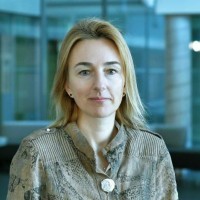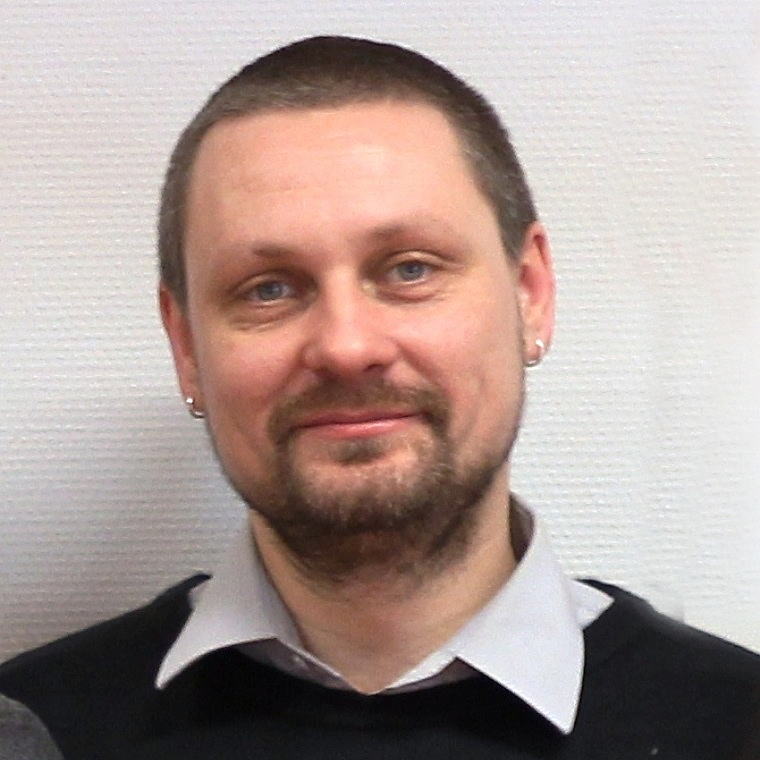
Professor Povilas Treigys is a Senior Researcher and Group Leader at the Image and Signal Analysis Group within the Institute of Data Science and Digital Technologies at Vilnius University's Faculty of Mathematics and Informatics. With extensive experience in digital signal processing and machine learning applications, he leads research efforts in medical image analysis, speech processing, and maritime traffic modeling. Dr. Treigys earned his Doctor of Science in Computer Science Engineering in 2010 with a dissertation on "Development and application of graphical methods for analyzing ophthalmological and thermovision data." His academic journey has been marked by significant contributions to interdisciplinary research connecting computer science with medical applications. His research primarily focuses on digital signal processing across multiple domains including medical imaging (MRI, eye fundus), audio signals, and maritime traffic data. A key emphasis of his work is the development and application of deep learning methods to solve real-world problems in healthcare diagnostics, retail automation, and transportation safety. His recent work demonstrates a strong trend toward explainable AI in medical applications and sophisticated time series analysis for prediction tasks. Professor Treigys serves in numerous leadership roles including as a EuroHPC JU Board Member representing Lithuania, VU MIF representative on the Lithuanian Quantum Technology Association board, and as a delegate to multiple professional committees. He is an active reviewer for several prestigious journals including Computer Science, Nonlinear Analysis, Baltic Journal of Modern Computing, MDPI Sensors, and MDPI Electronics. His laboratory focuses on bridging theoretical machine learning advancements with practical applications, particularly in medical diagnostics where his team has made significant contributions to prostate cancer detection, arrhythmia classification, and ophthalmological image analysis. The group maintains strong international collaborations and regularly presents findings at major conferences in computer vision, medical imaging, and artificial intelligence.