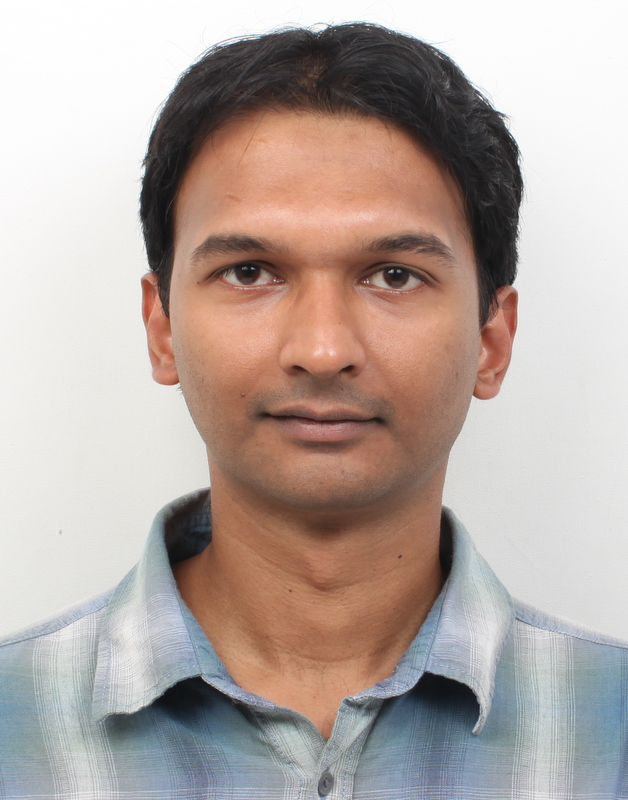
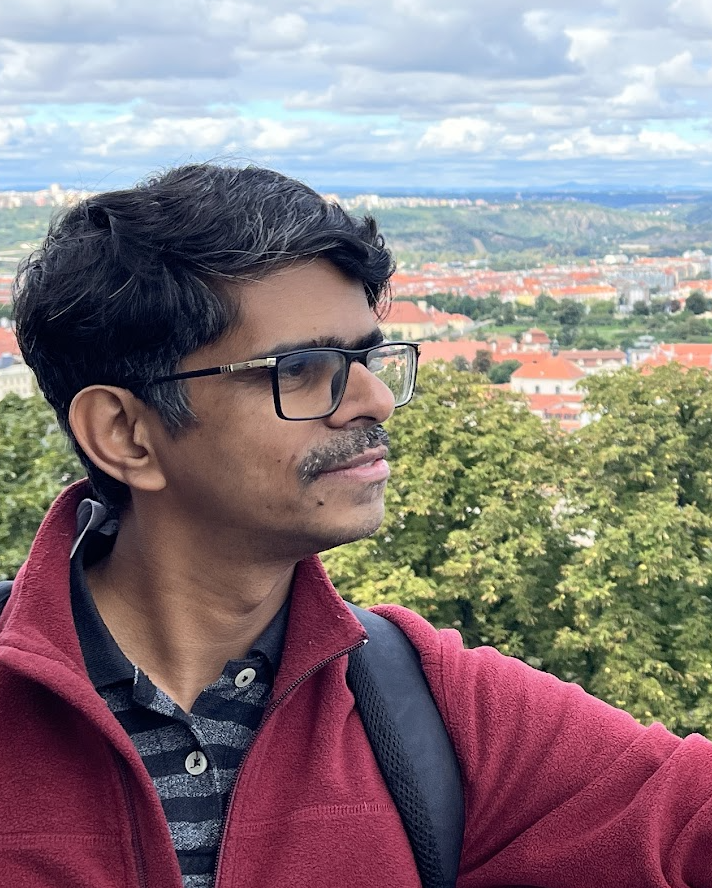
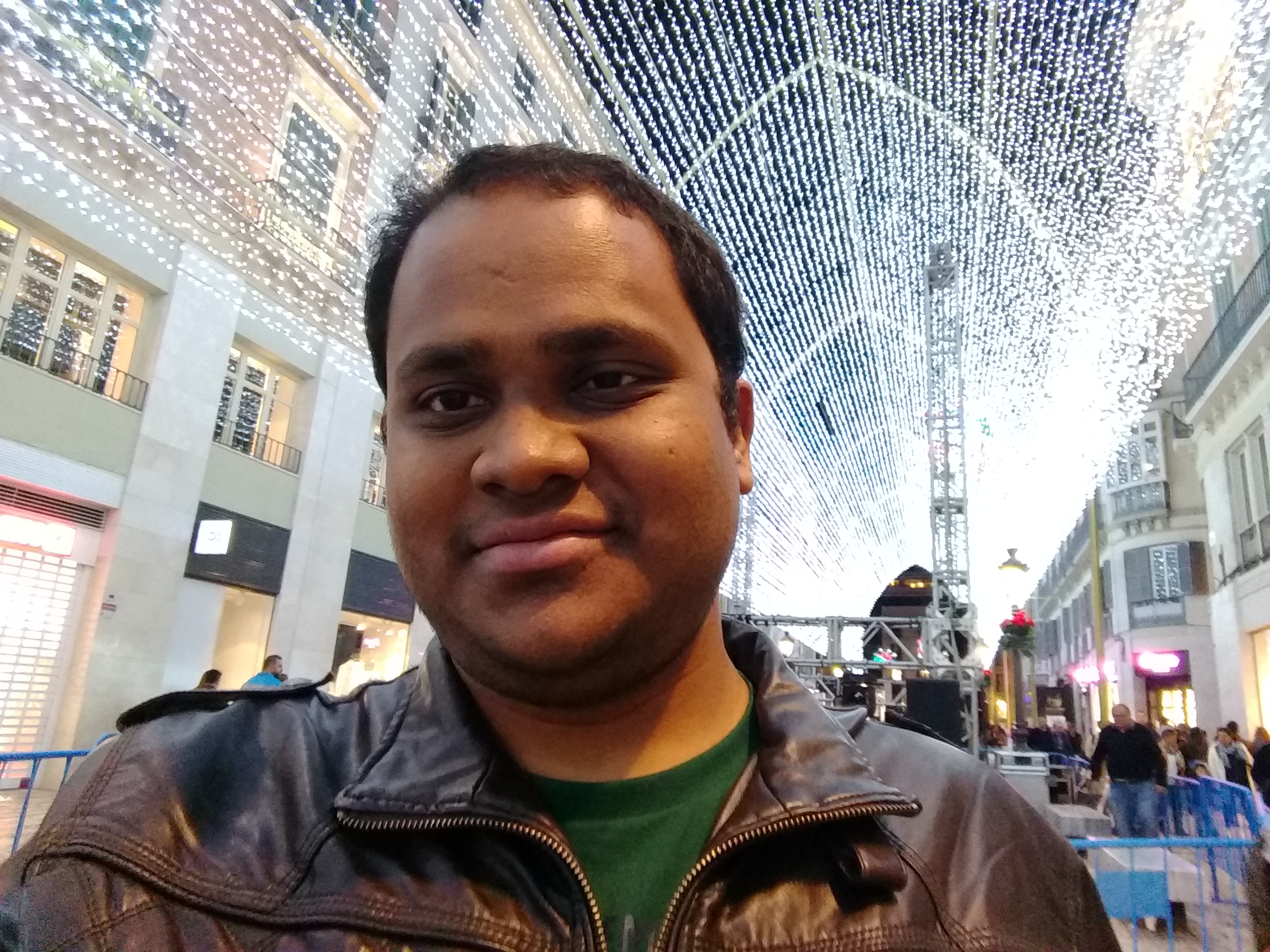
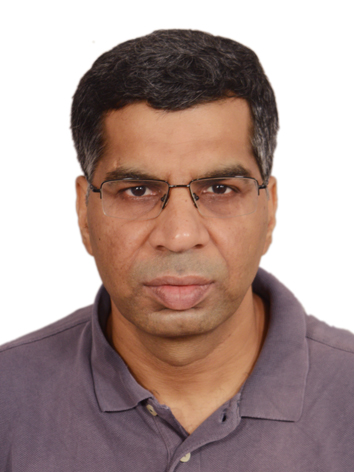
Shivaram Kalyanakrishnan is an Associate Professor at the Department of Computer Science and Engineering , Indian Institute of Technology Bombay , specialising in Artificial Intelligence and Machine Learning . His research spans sequential decision making , multiagent learning , multi-armed bandits , and humanoid robotics , with applications in robot soccer , computer games , and online advertising . He teaches advanced courses like CS 747: Foundations of Intelligent and Learning Agents and CS 748: Advances in Intelligent and Learning Agents , focusing on end-to-end system design and theoretical analysis. His scientific awards include the Best Student Paper Award at RoboCup International Symposium 2006 and nomination for Best Student Paper Award at AAMAS 2007 . His work on reinforcement learning and policy iteration has been published in leading venues such as IJCAI , ICML , and COLT , with recent contributions to railway scheduling and bandit algorithms. While no explicit list of advisees is provided, his research projects and publications suggest mentorship of students in collaborative efforts. Contact : shivaram@cse.iitb.ac.in .
Ishan Sharma is a Professor in the Department of Mechanical Engineering at the Indian Institute of Technology Kanpur (IIT Kanpur), specializing in Mechanics and Applied Mathematics. His research focuses on granular materials, planetary science, contact mechanics and adhesion, soft materials, dynamics, structural vibrations, wave propagation, stability, and fluid-structure interaction. Dr. Sharma's research interests include modeling granular systems for geophysical and industrial applications, with specific emphasis on dynamics of granular minor planets and segregation in granular mixtures. His work bridges theoretical mechanics with practical applications in both space science and engineering contexts. The research spans multiple disciplines, connecting planetary science, materials science, and mechanical engineering through mathematical modeling and computational approaches. His scholarly contributions demonstrate significant trends in applying mechanical principles to celestial bodies and industrial processes. The work on granular materials has important implications for understanding asteroid formation, while his contact mechanics research informs material science and engineering design. His publications reveal a consistent focus on stability phenomena across different physical systems. INAE Young Engineer Award Dr. Sharma leads the Mechanics and Applied Mathematics research group at IIT Kanpur, supervising research projects that examine fundamental properties of materials under various mechanical conditions. His work combines theoretical analysis with computational methods to address complex mechanical problems with both academic and practical significance. He maintains an active research program with ongoing projects examining the mechanical behavior of granular systems in space environments. Based in office NL-102 in the Department of Mechanical Engineering, Dr. Sharma contributes significantly to the academic community through his teaching, research supervision, and scholarly publications in high-impact journals.
Supratik Chakraborty serves as the Bajaj Group Chair Professor in the Department of Computer Science and Engineering at Indian Institute of Technology Bombay. He maintains dual affiliations with the Centre for Formal Design and Verification of Software and the Centre for Liberal Education at IIT Bombay, demonstrating his cross-disciplinary engagement. Professor Chakraborty's research spans formal methods with focus on formal verification, rigorous analysis of system models, and automated synthesis of systems from specifications. His work bridges theoretical foundations with practical applications, particularly in developing mathematically provable guarantees for increasingly complex hardware, software, and intelligent systems. Current research interests include constrained counting and sampling, scalable formal verification of software and hardware systems, automated synthesis of programs and circuits, and applications of automata, logic and finite model theory to practical verification challenges. His publication trajectory shows a significant evolution from traditional hardware and software verification toward addressing verification challenges in machine learning and AI systems. Recent work increasingly focuses on interpretability of black-box models, verification of neural networks, and synthesis techniques applicable to intelligent systems. The research demonstrates strong interdisciplinary connections between formal methods, programming languages, and artificial intelligence. IIT Bombay Excellence in Thesis (CSE) Award 2011 (for Bhargav Gulavani's thesis) IIT Bombay Excellence in Thesis (CSE) Award 2017 (for Abhisekh Sankaran's thesis) Best Paper in Algorithms and Architecture track at IEEE International Conference on Computer Design: VLSI in Computers and Processors, 1998 Professor Chakraborty has successfully supervised 11 doctoral students, with research spanning formal verification techniques, Boolean functional synthesis, constrained counting, and applications to hardware and software systems. His students have gone on to positions at major institutions including Microsoft Research, TCS Research, Georgia Tech, and BARC, reflecting the strong industry and academic impact of his mentorship. Current research directions show increasing emphasis on verification challenges posed by machine learning systems and AI. His research group at IIT Bombay, while not explicitly named in the materials, appears to focus on formal methods with strong connections to the Centre for Formal Design and Verification of Software. The group maintains active collaborations with international researchers including Moshe Y. Vardi at Rice University, and has made significant contributions to verification tools like VeriAbs that bridge theoretical advances with practical applications.
Arpit Agarwal is an Assistant Professor in the Department of Computer Science & Engineering at the Indian Institute of Technology, Bombay. He previously held postdoctoral positions at FAIR Labs (Meta) working with Max Nickel and at the Data Science Institute at Columbia University hosted by Prof. Yash Kanoria and Prof. Tim Roughgarden. He completed his PhD from the Department of Computer & Information Science at the University of Pennsylvania under the guidance of Prof. Shivani Agarwal. His research focuses on the intersection of human behavior and machine learning systems, with particular interest in learning from implicit, strategic, and heterogeneous human feedback. His work spans multiple dimensions of human-AI interaction including understanding long-term dynamics between humans and AI systems, designing responsible AI, and studying misalignment between user preferences and system objectives. His research methodology often combines theoretical machine learning with practical applications in recommendation systems and social AI. His recent publications reveal a strong focus on bandit algorithms, preference learning, and recommendation systems, with increasing attention to responsible AI design and human-centered considerations. His work demonstrates expertise in theoretical machine learning with applications to real-world problems, particularly in understanding how humans interact with and are influenced by AI systems over time. Dr. Agarwal teaches advanced courses including CS767 Theoretical Machine Learning (Autumn 2025) and CS6103 Human-Centered AI: From Learning Models to Responsible Systems (Spring 2025), which covers topics such as AI alignment, learning from pairwise comparisons, crowdsourcing, human-in-the-loop decision making, recommendation systems, interpretability, privacy, fairness, causality, and AI governance.
Krishna Jagannathan is a full-time Professor in the Department of Electrical Engineering at the Indian Institute of Technology Madras (IIT Madras), India. He specializes in stochastic modeling, communication networks, information theory, and queuing theory. He obtained his B.Tech from IIT Madras in 2004, followed by S.M. and Ph.D. degrees from MIT in 2006 and 2010, respectively. After post-doctoral positions at Caltech and MIT, he joined IIT Madras in 2011. Education: B.Tech in Electrical Engineering, IIT Madras (2004) S.M. in Electrical Engineering and Computer Science, MIT (2006) Ph.D. in Electrical Engineering and Computer Science, MIT (2010) Research Interests: His research focuses on stochastic modeling and analysis of communication networks , information theory , and queuing theory . He has made significant contributions to understanding network performance, resource allocation, and risk-aware decision-making in complex systems. He leads the Networks and Stochastic Systems lab at IIT Madras, mentoring a large cohort of Ph.D. and M.S. students working on cutting-edge problems in networking, optimization, and stochastic systems. Scientific Awards: Best Paper Award at WiOpt 2013, Tsukuba, Japan Young Faculty Recognition Award for Excellence in Teaching and Research, IIT Madras (2014) Teaching & Mentorship: He has taught a wide range of courses including Probability Foundations , Stochastic Modeling and Queuing Theory , Convex Optimization , and Signals & Systems , consistently receiving high teaching evaluations. He has supervised over 15 Ph.D. and M.S. students to completion and continues to guide several active researchers.
Naveen Tiwari is a Professor in the Department of Chemical Engineering at the Indian Institute of Technology Kanpur. His research focuses on transport phenomena, instabilities in micro-scale free surface flows, flow through porous media, and numerical modeling and simulation. He maintains active research collaborations and has published extensively in leading fluid dynamics journals. His research interests encompass Transport Phenomena , Instabilities in micro-scale free surface flows , Flow through porous media , and Numerical modeling and simulation . His work primarily investigates thin liquid film dynamics, interfacial phenomena, and stability analysis of coating flows over heterogeneous surfaces. His research has significant applications in coating technologies, microfluidics, and thermal management systems. His recent publications demonstrate a strong focus on Thin film stability analysis over heated surfaces Effects of substrate topography on liquid film behavior Nonlinear dynamics of volatile liquid films Dip-coating processes on patterned surfaces His work bridges fundamental fluid dynamics with practical engineering applications. His notable scientific achievements include: Young Scientist Research Award from the Department of Atomic Energy (2014) Membership in the Honor Society of Phi Kappa Phi (2007-2008) Invitation to present at the International Union of Theoretical and Applied Mechanics symposium in Bangalore (2014) Prof. Tiwari received his PhD from the University of Massachusetts Amherst (2003-2008) with a thesis on 'Dynamics and Stability of Non-Inertial Coating Flows over Heterogeneous Surfaces' under Prof. Jeffrey M. Davis. Prior to his current position, he worked as a Senior Research Engineer at Saint-Gobain, MA (USA) from 2008-2012, where he worked on Diesel Particulate Filter regeneration modeling, methane ignition modeling, sapphire crystal growth, and solid-oxide fuel cells.
Nitin Saxena is a Professor in the Department of Computer Science and Engineering at the Indian Institute of Technology Kanpur. He holds a PhD from IIT Kanpur (2006) and a B.Tech from the same institution (2002). His academic career has been centered at IIT Kanpur, where he has made significant contributions to theoretical computer science. His research focuses on Theoretical Computer Science, particularly Computational Complexity Theory, Algebra, and Algebraic Geometry. His work bridges computer science with advanced mathematical concepts, creating innovative approaches to computational problems. His research has established important connections between algebraic geometry and computational complexity, advancing our understanding of fundamental computational limits. Saxena's publication record shows consistent high-impact research from 2004 through 2012, with multiple papers appearing in top theoretical computer science venues including STOC, ICALP, and IEEE Conference on Computational Complexity. His work spans circuit complexity, identity testing, algebraic independence, and primality testing, demonstrating both depth and breadth in theoretical computer science. Best Paper at ICALP Conference 2011 IEEE Conference on Computational Complexity Best Paper Award 2006 IEEE Conference on Computational Complexity Best Student Paper Award 2006 Goedel Prize 2006 Fulkerson Prize 2006 Distinguished Alumnus Award of IIT Kanpur 2003 Global Indus Technovators Awards 2003 Professor Saxena has received prestigious recognition for his work, most notably the Goedel Prize and Fulkerson Prize in 2006 for the groundbreaking 'PRIMES is in P' paper, which resolved a fundamental question in computational number theory. His research has been consistently supported by the academic community through invitations to special journal issues following conference presentations. Based in Room 203 of the Department of Computer Science and Engineering at IIT Kanpur, Professor Saxena continues to contribute to theoretical computer science through research, teaching, and academic service.
Kumar Vaibhav Srivastava is a Professor in the Department of Electrical Engineering at the Indian Institute of Technology Kanpur (IIT Kanpur). His research focuses on electromagnetic theory, meta-materials, and antenna design, with significant contributions to the field of computational electromagnetics and microwave engineering. Dr. Srivastava received his B.Tech from Kamla Nehru Institute of Technology, Sultanpur U.P. in 2002, followed by an M.Tech from IIT Kanpur in 2004. He completed his PhD at IIT Kanpur in 2008 with a thesis titled "Studies on Inhomogeneous Dielectric Resonators for Improved Mode Separation in MIC Environment using Efficient FDTD Algorithm and its Application to Band-pass Filter" under the supervision of Prof. Animesh Biswas. His research interests span a wide range of topics in electromagnetics, with particular expertise in Meta-Materials , Microwave Antennas , Microwave Absorbers , Microwave Cloaking , and the Finite-Difference Time-Domain (FD-TD) Technique . Dr. Srivastava's work has significant applications in wireless communications, radar systems, and electromagnetic compatibility. His innovative approaches to meta-material absorbers and antenna design have garnered attention in both academic and industrial circles. Dr. Srivastava's recent publications demonstrate a strong focus on advancing meta-material absorber technology and antenna design. His work shows consistent innovation in bandwidth enhancement techniques, polarization independence, and compact antenna designs for ultra-wideband applications. His research bridges theoretical electromagnetic principles with practical engineering solutions. Cadence Gold Medal-2005 for Best M.Tech. Thesis Best Teaching Assistantship Award (2005-06) Appreciation Letter from GE Global Research Centre Young Research Fellowship (Class of 1979) Best Paper Award at ATMS Conference (2013) IEI Young Engineer Award 2014 Dr. Srivastava has supervised numerous research projects and students in the field of electromagnetics and antenna design. His work with industry partners, including GE Global Research Centre, demonstrates his ability to translate theoretical research into practical applications. He maintains active collaborations with researchers both within IIT Kanpur and internationally. Based in the Advanced Centre for Electronic Systems (ACES) at IIT Kanpur, Dr. Srivastava works within a vibrant research ecosystem that supports cutting-edge work in electronic systems and electromagnetic applications. His laboratory focuses on computational electromagnetic simulations and experimental validation of novel meta-material structures and antenna designs.
Chester Rebeiro is an Associate Professor at the Department of Computer Science and Engineering within the Indian Institute of Technology Madras . His work spans hardware and software security with a focus on cryptographic implementations and microarchitectural vulnerabilities. Research interests include hardware security, applied cryptography, side channel analysis, and operating system security. He develops frameworks for automatic vulnerability detection and mitigation in cryptographic systems. Editorial Board: Associate Editor at Journal of Hardware and Systems Security (Springer, 2021-2024) Conference Leadership: General Co-Chair for SPACE 2024, Program Co-Chair for ATS 2024, and Program Co-Chair for INDOCRYPT 2023 Professional Activities: Organizer of e-CTF Embedded Capture The Flag and contributor to cybersecurity workshops across India and abroad Scientific contributions highlight two major awards: a Distinguished Paper Award at USENIX Security 2024 and a Best Paper Award at IEEE HOST 2020. His research focuses on practical security solutions for processors and cryptographic systems. Advising includes mentoring 11 PhD students and 7 MS by Research candidates, with notable co-guided projects in fault attack detection and side-channel mitigation. He actively contributes to educational initiatives through courses on Secure Processor Microarchitecture and Operating Systems.
Angshuman Karmakar is an Assistant Professor in the Department of Computer Science and Engineering at the Indian Institute of Technology Kanpur, India. His research focuses primarily on Post-Quantum Cryptography (PQC) and Computation On Encrypted Data (COED), which are critical areas in modern cryptography and computer security. Dr. Karmakar received his Ph.D. from Katholieke Universiteit Leuven (KU Leuven), Belgium, where he worked under Prof. Ingrid Verbauwhede in the COSIC research group. He was awarded the prestigious Erasmus Mundus fellowship for his doctoral studies and the FWO (Fonds voor Wetenschappelijk Onderzoek – Vlaanderen) fellowship for his post-doctoral research at KU Leuven. His research spans theoretical development of cryptographic schemes, implementation algorithms, side-channel and fault attack analysis, and countermeasure development. Dr. Karmakar has established extensive international collaborations with researchers and engineers worldwide to address complex challenges in cryptography and security. Recent publications demonstrate a strong focus on practical post-quantum cryptographic implementations with particular attention to hardware and software efficiency, side-channel resistance, and novel attack methodologies. His work bridges theoretical cryptography with real-world implementation challenges across diverse platforms from IoT devices to high-performance computing systems. Erasmus Mundus fellowship for doctoral studies at KU Leuven FWO fellowship for post-doctoral study at KU Leuven Google India Research Award for work on practical transition to post-quantum cryptography Dr. Karmakar is actively seeking graduate students and postdoctoral researchers to collaborate on cutting-edge research in cryptography and computer security. His work has significant implications for securing future communication systems against quantum computing threats, with applications spanning blockchain technologies, IoT security, and general-purpose computing systems.
Rajesh Ranjan is an Assistant Professor in the Department of Aerospace Engineering at the Indian Institute of Technology Kanpur. His academic career spans multiple prestigious institutions including Ohio State University and Jawaharlal Nehru Centre for Advanced Scientific Research. Dr. Ranjan completed his PhD (2016) from Jawaharlal Nehru Centre for Advanced Scientific Research, Bengaluru, ME (2007) from Indian Institute of Science, Bengaluru, and BE (2005) from Bihar Institute of Technology, Sindri where he achieved First Rank with Roll of Honor. His educational background laid the foundation for his expertise in fluid dynamics and computational methods. His research focuses on fundamental and applied aspects of fluid dynamics with specialization in turbomachinery flows, applied aerodynamics, stability and flow control, transition and relaminarization phenomena, and high performance computing applications. Dr. Ranjan employs a multidisciplinary approach combining theoretical analysis, advanced computational techniques, and experimental validation to address complex fluid flow problems in aerospace engineering. His work has significant implications for improving efficiency in turbomachinery design and understanding fundamental flow physics in complex geometries. Dr. Ranjan's publication record reveals a strong trajectory in computational fluid dynamics with recent work spanning traditional aerospace applications like turbomachinery and aircraft aerodynamics while also demonstrating adaptability through interdisciplinary research such as his data-driven approach to modeling the COVID-19 pandemic. His publications consistently demonstrate rigorous methodology and innovative approaches to complex fluid flow problems. All India Rank-3, Graduate Aptitude Test in Engineering (GATE), India (2005) Roll of Honor (First Rank), B.E., BIT, Sindri, India (2001-2005) Outstanding Performance Award (thrice), TATA CRL, Pune, India (2008-10) ICAM International Travel Award, Institute for Complex Adaptive Matter (2013) International Travel Support Award, DST, Govt. of India (2014) Best Poster Award, JNCASR In-house Symposium, Bengaluru, India (2015) Dr. Ranjan has mentored multiple students through research projects at IIT Kanpur and previously at Ohio State University. His research has been supported by institutional funds and travel awards from national agencies including the Department of Science and Technology, Government of India. He maintains active collaborations with researchers in India and internationally to advance computational fluid dynamics methodologies and their application to real-world engineering problems.
Dr. Arnab Samanta is an Associate Professor at the Department of Aerospace Engineering , Indian Institute of Technology Kanpur. His research focuses on fundamental and applied aspects of fluid mechanics and aeroacoustics. PhD in Theoretical & Applied Mechanics (2009), University of Illinois at Urbana-Champaign ME in Aerospace Engineering (2004), Indian Institute of Science BE in Mechanical Engineering (2001), Jadavpur University His research interests include: Fluid mechanics of complex flows Aeroacoustics and noise prediction Hydrodynamic stability analysis Wave mechanics in compressible flows Active flow control strategies Recent publications highlight work on vortex ring stability, swirling jet dynamics, supersonic flow acoustics, and jet instability modeling. His laboratory (Low Speed Aerodynamics Lab - A02) serves as a hub for aerospace research and student training.
Om P. Damani is a Professor in the Department of Computer Science and Engineering at Indian Institute of Technology Bombay. He serves as Faculty In-Charge of the Sustainable Development unit of the Center for Policy Studies and is also associated with the Centre for Technology Alternatives for Rural Areas (CTARA). His work bridges computer science with social development challenges, focusing on practical applications for rural communities. Dr. Damani's research interests span Technology for Development of the bottom 80%, System Dynamics: Modeling and Simulation for Social Development, System Architecture, and Data Science. His work demonstrates how computational approaches can address complex development challenges through projects like GramDrishti (for detecting rural infrastructure in satellite images), JalTantra (for optimizing water distribution networks), and FAI (Farm Assessment Index for holistic farming practice evaluation). His publications reveal a consistent focus on applying computer science to solve real-world problems in water management, agricultural systems, and rural infrastructure. His research has been recognized with significant awards including the IIT Bombay Industrial Impact Award 2010, IIT Bombay Impactful Research Award 2019, and Best Poster Award at Agriculture Science Congress 2017. Dr. Damani has successfully translated theoretical research into practical tools that address development challenges, particularly in water resource management and agricultural systems. As an educator, he has mentored numerous PhD students including Chintan Tundia, Shreenivas Kunte, Nikhil Hooda, Sivamuthu Prakash Murugan, Dipak L. Chaudhari, Prateek Kapadia, and Manoj K. Chinnakotla. His teaching portfolio includes courses on System Dynamics: Modeling and Simulation for Development (CS 752), Program Derivation (CS 420), and ICT for Development. Dr. Damani's educational background includes a Ph.D. in Computer Sciences from the University of Texas at Austin (1994-1999), B.Tech. in Computer Science and Engineering from IIT Kanpur (1990-1994), and prior professional experience at IBM T J Watson Research Lab and Akamai Technologies.
Indranil Chowdhury is an Assistant Professor in the Department of Mathematics and Statistics at the Indian Institute of Technology Kanpur. He holds a Ph.D. from Tata Institute of Fundamental Research, Centre for Applicable Mathematics in Bengaluru (2017) and has previously served as a Postdoctoral Researcher at University of Zagreb, Croatia (2020-2022) and Norwegian University of Science and Technology, Trondheim, Norway (2018-2020). Ph.D: Tata Institute of Fundamental Research, Centre for Applicable Mathematics, Bengaluru, India (2017) PG: Tata Institute of Fundamental Research, Centre for Applicable Mathematics, Bengaluru, India (2012) UG: St. Xavier's College, Kolkata, India (2010) Dr. Chowdhury's research focuses on the theory and numerical analysis of partial differential equations, with particular expertise in nonlocal and fractional order problems and fully nonlinear equations. His work bridges theoretical mathematics with practical applications in areas such as mean field games, optimal control, and mathematical modeling. His research program demonstrates a consistent trajectory of advancing the mathematical understanding of complex nonlocal phenomena through rigorous analytical techniques and innovative numerical methods. His publication record reveals a strong focus on fractional calculus, nonlocal diffusion processes, and mean field games. The research shows progression from foundational work on fractional Poincaré inequalities to increasingly sophisticated studies of fully nonlinear mean field games with both local and nonlocal diffusions. His recent work (2023-2025) demonstrates continued innovation in the field, particularly in addressing strongly degenerate cases and establishing precise error bounds for numerical approximations. Dr. Chowdhury maintains an active research program with consistent publication output in high-impact journals such as Foundations of Computational Mathematics, SIAM Journal on Numerical Analysis, and Discrete and Continuous Dynamical Systems. His collaborative work with researchers across international institutions reflects the global significance of his contributions to the field of nonlocal partial differential equations.
Naren Naik is a Professor in the Department of Electrical Engineering at the Indian Institute of Technology (IIT) Kanpur, specializing in computational tomographic reconstructions and analysis for subsurface imaging and shape/target tracking. His educational background includes: PhD from the Indian Institute of Science (IISc) Bangalore in 2000 M.E. in Electronics and Communication Engineering from IISc Bangalore in 1992 B.Sc. from Bangalore in 1988 Professor Naik's research focuses on development and analysis of reconstruction algorithms for nonlinear tomography , with particular emphasis on shape-based and dynamic tomography, tracking and battlefield surveillance, and numerical solutions to partial differential equations in electromagnetics. His work spans multiple imaging modalities including subsurface imaging with Ground Penetrating Radar (GPR), fluorescence optics, electrical impedance tomography, and photoacoustic tomography. His research bridges theoretical mathematics with practical applications in electromagnetic imaging and target tracking systems, addressing complex inverse problems in computational imaging. His publication record shows a clear progression from electromagnetic tomography to advanced Kalman filtering techniques for target tracking applications. The most recent works focus on wireless sensor networks and maneuvering target tracking, demonstrating his ability to adapt theoretical frameworks to evolving technological contexts while maintaining mathematical rigor in solving inverse problems. His professional recognition includes: Invited presentation at the special session on advances in model based inversion at the 2011 IEEE AP-S International Symposium on Antennas and Propagation Professor Naik maintains an active research program with consistent publication output in high-impact journals and conferences. His work demonstrates strong interdisciplinary collaboration, particularly with researchers in electromagnetics, signal processing, and imaging sciences. His research has significant applications in defense technology (battlefield surveillance), medical imaging, and subsurface exploration systems, contributing to both theoretical advances and practical implementations in these fields. He is based in Office 303A ACES (Advanced Centre for Electronic Systems) at the Department of Electrical Engineering, IIT Kanpur, where he leads research activities in computational imaging and tomographic reconstruction.