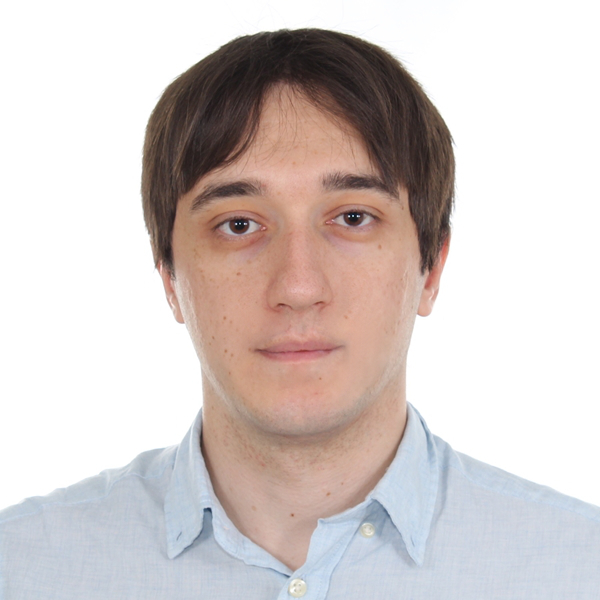
Jun Yang is a Tenure Track Assistant Professor at the Department of Mathematical Sciences, University of Copenhagen. His research spans computational statistics and machine learning, with a focus on high-dimensional inference, time series analysis, and Monte Carlo methods. Current Position: Tenure Track Assistant Professor, University of Copenhagen (2023–present) Previous Role: Florence Nightingale Bicentennial Fellow, University of Oxford (2020–2023) Education: Ph.D. in Statistics, University of Toronto (2020), advised by Daniel M. Roy and Jeffrey S. Rosenthal Research Interests: Jun’s work addresses the intersection of computational statistics and machine learning, including: - High-dimensional Markov chain Monte Carlo (MCMC) algorithms - Bayesian variable selection in complex models - Spectral inference for nonlinear time series - Quantitative bounds and complexity analysis for MCMC Publications: His publications highlight advancements in high-dimensional sampling, time series analysis, and algorithm design. Key contributions include: - Dimension-free mixing results for Bayesian variable selection - Stereographic projection techniques for MCMC - State-domain change point detection in nonlinear regression Awards: Florence Nightingale Bicentennial Fellow, University of Oxford (2020–2023) Collaborations: Jun collaborates with researchers like K. Łatuszyński, G.O. Roberts, and J.S. Rosenthal, advancing statistical theory and applications in econometrics, machine learning, and stochastic processes.
Henrik Myhre Jensen is a Professor at the College of Engineering , Aarhus University, specializing in Mechanics of Materials , Solid Mechanics , and Mechanical Engineering . His research focuses on fracture mechanics, composite materials, and computational modeling of structural behaviors. Research Focus Fracture mechanics in composites and layered materials Computational modeling of kink band propagation Surface wear and coating technologies Ultrasound imaging applications in mechanical systems Notable Contributions Henrik has contributed to understanding crack propagation in cantilever beams, developed numerical methods for simulating delamination in composites, and explored buckling instabilities in solids. His recent work connects machine learning (holomorphic neural networks) to traditional fracture mechanics problems. Key Projects MAGFLY (2017-2021): Magnets for Flywheel Energy Storage InnoVacc (2009): Pressure Testing of Vacuum Chambers Simulation of composite structures (2011-2020): Micro-mechanical modeling
Konstantin Wernli is an Assistant Professor in the Department of Mathematics and Computer Science at the University of Southern Denmark, affiliated with the Quantum Mathematics research group. His research focuses on quantum field theory, geometric quantization, and mathematical physics, with a particular emphasis on topological field theories and perturbative methods. He has contributed to foundational work in Chern-Simons theories, BV-BFV formalisms, and geometric analysis. His research interests include quantum field theories, algebraic geometry, and the intersection of topology with physics. Notably, he explores combinatorial approaches to quantum field theory, geometric quantization frameworks, and the application of advanced mathematical tools to solve problems in theoretical physics. Recent work includes studies on partition functions, constrained dynamical systems, and the globalization of sigma models. His articles often bridge abstract mathematics with physical applications, such as analyzing heat kernels, theta invariants, and entanglement polytopes. Wernli is a project participant in the Sapere Aude grant 'FROM PERTURBATIVE TO NON-PERTURBATIVE QUANTUM FIELD THEORY BY CUTTING AND GLUING' (2024–2028), which aims to advance non-perturbative QFT techniques. He has advised on research projects involving heat kernel analysis and geometric quantization, though no formal student advisees are listed.
Andrea Crovetto is an Associate Professor at the Technical University of Denmark (DTU), affiliated with the National Centre for Nano Fabrication and Characterization and the Department of Nanofabrication. His research focuses on advanced materials for photovoltaic applications, including solar cell technologies, thin films, and semiconductor materials. His work contributes to UN Sustainable Development Goals related to affordable and clean energy. Key research interests include photovoltaic materials discovery, tandem solar cell design, and semiconductor characterization. Notable achievements include developing monolithic selenium/silicon tandem solar cells and pioneering studies on phosphosulfide semiconductors. He has authored over 90 publications and datasets, including high-impact articles in journals like JPhys Energy and PRX Energy . Dr. Crovetto has received the Young Scientist Award (2016) and actively supervises PhD students in projects such as Experimental Discovery of Phosphosulfide Materials for Solar Cells and Thiophosphate Thin Films for Quantum Technology . His research also involves collaborations on material synthesis, computational modeling, and device fabrication. He has presented at international conferences, including talks on monolithic tandem solar cells and materials discovery methodologies. His lab, based at DTU’s Produktionstorvet , integrates experimental and theoretical approaches to advance sustainable energy technologies.
Francesco Sannino is a Professor of Computational Science at the University of Southern Denmark's Department of Mathematics and Computer Science. He is affiliated with the Danish Institute for Advanced Study (DIAS) and holds a Ph.D. His research spans quantum field theory, particle physics, and complex systems modeling. Key interests include Standard Model duality, black hole physics, and epidemiological dynamics. Education: Ph.D. in Physics (not explicitly stated in provided text, inferred from title). Research focuses on theoretical physics, including conformal field theories, gauge dynamics, and applications of quantum chromodynamics (QCD). Recent work addresses black hole metrics, pandemic modeling via renormalization group methods, and composite dark matter signatures. His studies often bridge high-energy physics and complex systems. Main Research Trends: Over 15 years, Sannino has produced 333+ publications, emphasizing: Black hole physics and effective metrics Standard Model extensions and dualities Quantum field theory at conformal windows Epidemiological modeling of pandemics Awards: Elected Member of the Finnish Academy of Science and Letters (2015) EU Excellence Grant in Theoretical Physics (2005) International Referee for Austrian Science Fund Grants & Projects: Leader of the DG Center for Particle Physics Phenomenology (2014–2019) Carlsberg Foundation Semper Ardens grant (2023–2029) Coordinator for Danish CERN Instrument Center (2017–2019) Labs/Teams: Active in CP³ - Center for Particle Physics Phenomenology and DIAS, collaborating globally on projects like gravitational wave detection and pandemic modeling.
Abdulkadir Çelikkanat is an Assistant Professor in the Department of Computer Science at Aalborg University, Denmark, where he is part of the DKW (Data Science and Knowledge) research group. His research focuses on genome representation learning, graph representation learning, and machine learning applications in bioinformatics and network science. Research Interests: His work lies at the intersection of artificial intelligence and biological data analysis, with a strong emphasis on scalable methods for genome and metagenome representation using k-mer profiles, as well as modeling dynamic and complex networks. He develops novel machine learning models to capture the structure and evolution of graphs over time. Recent Research Trends: His recent publications, appearing in top-tier venues like NeurIPS, AAAI, and AISTATS, demonstrate a consistent focus on improving scalability and effectiveness in representation learning. Key themes include revisiting traditional k-mer methods for modern deep learning, modeling citation dynamics, and developing continuous-time node embedding techniques. His work bridges theoretical advances with practical applications in genomics and network analysis. Scientific Awards: Best Paper Award, TGL Workshop @ NeurIPS 2023 Top Reviewer, LoG 2024 Conference Advising and Grants: While current advisees are not listed, he is actively leading research projects as evidenced by his recent publications and project organization (e.g., Nordic ProbAI summer school). His work is supported through institutional affiliations and likely competitive research funding, given the high-impact venues of his publications. Labs and Teams: He is affiliated with the DKW group at Aalborg University. Previously, he was part of the Inria OPIS team and the Centre for Visual Computing during his Ph.D., and worked in the Section for Cognitive Systems at DTU Compute as a postdoctoral researcher.
Mogens Fosgerau is a Professor at the Department of Economics, University of Copenhagen, with a research focus on discrete choice theory, rational inattention, transportation and urban economics, congestion modeling, and entropy-based frameworks. He has held an ERC Advanced Grant (2017-2023) and completed a Grand Solutions project for the Innovation Fund Denmark (2016-20). Education: Mathematical Economics (Aarhus University, 1990), PhD in Mathematics (University College London, 1992). Current affiliations: Department of Economics (University of Copenhagen), Faculty of Social Sciences. Former roles: Guest Professor at DTU (2022-2023), member of the Commission for Green Transition of Passenger Cars (2019-2021). His research explores the intersection of information theory and discrete choice models, addressing complex substitution patterns and endogeneity issues through generalized entropy frameworks. He applies these models to transportation planning, urban economics, and climate policy analysis. Recent publications focus on perturbed utility models, inverse product differentiation logit, and rational inattention in spatial choice contexts. His work bridges theoretical econometrics with practical transport and environmental policy challenges. Awards: Recipient of the 2021 Transportation Science Meritorious Service Award. Former Editor-in-Chief of Economics of Transportation (2012-2020). Advising and Grants: Leads research projects funded by the European Research Council and Innovation Fund Denmark. Has participated in policy committees including the Danish Environmental Economic Council (2019-2025) and the Committee on Public Transport Mobility (2023-24).
Georgios Arvanitidis is an Associate Professor at the Technical University of Denmark (DTU) in the Department of Applied Mathematics and Computer Science, specifically within the Section for Cognitive Systems (CogSys). He has established himself as a leading researcher in geometric machine learning, focusing on the application of differential geometry principles to enhance machine learning models. His work bridges theoretical mathematics with practical applications in artificial intelligence, with particular emphasis on understanding the geometric structure of data manifolds and latent spaces. Dr. Arvanitidis completed his educational journey with a Bachelor's degree from the Department of Informatics at the Aristotle University of Thessaloniki, followed by a Master's degree in Computer Science from Saarland University supported by the Max Planck Institute for Informatics. He earned his PhD at DTU's Cognitive Systems section under the supervision of Søren Hauberg, with additional research experience at Philipp Hennig's Probabilistic Numerics group. Prior to his current position as associate professor, he was a PostDoc at the Max Planck Institute for Intelligent Systems working with Bernhard Schölkopf. Dr. Arvanitidis's research primarily focuses on differential geometry in machine learning , where he explores how geometric structures can enhance representation learning and statistical modeling. His work in generative models investigates how learning the geometry of data manifolds can improve deep learning architectures. In the domain of deep learning theory , he examines why deep learning models generalize effectively on unseen data, with particular attention to the curvature properties of loss landscapes. His research in approximate Bayesian inference applies geometric principles to improve uncertainty quantification in neural networks. Through his innovative approaches, Dr. Arvanitidis has established himself as a leading researcher in geometric machine learning, contributing to both theoretical foundations and practical applications across various domains including robotics and life sciences. The publication trends of Dr. Arvanitidis reveal a consistent and evolving focus on geometric approaches to machine learning problems. His recent work (2023-2025) demonstrates increasing sophistication in applying Riemannian geometry to deep learning architectures, with particular emphasis on latent space geometry, optimization on manifolds, and geometric interpretations of neural network behavior. A notable pattern is the progression from foundational work on geometric representations to more applied research in areas like robotics and causal inference. His publications span top-tier conferences including NeurIPS, ICML, ICLR, and AISTATS, reflecting the high impact of his research. The interdisciplinary nature of his work is evident in collaborations across mathematics, computer science, and robotics domains, with recent papers addressing challenges in multimodal sampling, safety guarantees for dynamical systems, and counterfactual explanations. Dr. Arvanitidis has received several notable scientific awards and recognitions: Sapere Aude starting grant from the Independent Research Fund Denmark (DFF) GADL funding i-Rase, Pathfinder, and EIC (European Innovation Council) funding Best reviewer award for NeurIPS 2019 Best reviewer award for NeurIPS 2018 Best student paper award at Robotics: Science and Systems (R:SS) 2021 Dr. Arvanitidis actively mentors PhD students and researchers, currently supervising Alejandro Valverde, Johanna Gegenfurtner, and Albert Kjøller Jacobsen. He has previously co-supervised Alison Pouplin's PhD and worked with research assistant Georgios Pantis. His group receives substantial funding through multiple prestigious grants including the Sapere Aude starting grant from the Independent Research Fund Denmark, as well as European Innovation Council funding. He has been instrumental in creating opportunities for students interested in geometric machine learning, offering BSc and MSc thesis projects focused on generative models, deep learning theory, and optimization techniques. Dr. Arvanitidis also contributes significantly to the academic community as a reviewer for top conferences including ICLR and TMLR, and as an area chair for NeurIPS, ICML, AISTATS, and UAI. He co-organized the Machine Learning Summer School 2020 in Tübingen, further demonstrating his commitment to education and community building. Dr. Arvanitidis leads a vibrant research group focused on geometric machine learning within the Cognitive Systems section at DTU. His team includes multiple PhD students working on cutting-edge research at the intersection of differential geometry and artificial intelligence. The group has developed notable software tools, including the "geometric_ml" GitHub repository with over 70 stars, which contains implementations for applying Riemannian geometry in machine learning. His research has practical applications in robotics, where geometric approaches enable more robust motion planning, as evidenced by his work on "Reactive Motion Generation on Learned Riemannian Manifolds" which received a best student paper award. Additionally, his methodologies have found applications in life sciences, as mentioned in his 2022 AISTATS paper. The collaborative nature of his work is evident through extensive partnerships with researchers at institutions including the Max Planck Institute for Intelligent Systems, University of Cambridge, and various European universities. His recent news items indicate active engagement with the academic community through talks, conference presentations, and ongoing supervision of new PhD students joining his group.
Sadegh Talebi is a Tenure Track Assistant Professor in the Machine Learning Section at the Department of Computer Science, University of Copenhagen . His research focuses on theoretical aspects of reinforcement learning, Markov decision processes, online learning, stochastic multi-armed bandit problems, and resource allocation in networks. Education BSc in Electrical Engineering (minor: Electronics) from Iran University of Science and Technology (IUST) (2004) MSc in Electrical Engineering (minor: Communication Systems) from Sharif University of Technology (2006) PhD in Electrical Engineering from the Department of Automatic Control at KTH Royal Institute of Technology (supervised by Alexandre Proutiere and Mikael Johansson) Research Specializes in theoretical foundations of reinforcement learning and online learning Key contributions in stochastic optimization, MDPs, and bandit algorithms Collaborates on applications in resource allocation and quantum computing Publications include high-impact work on offline RL, differentially private exploration, and scalable MDP solutions in journals like Neural Processing Letters and conferences such as NeurIPS and UAI.
Luka Radic is a Researcher in the Machine Learning Section at the Department of Computer Science, University of Copenhagen. His work bridges theoretical and applied research in machine learning, with a focus on quantum machine learning , large language models , and fairness in AI systems.
Ken Pfeuffer is an Associate Professor in the Department of Computer Science at Aarhus University, affiliated with the Faculty of Science. His research focuses on Human-Computer Interaction (HCI) , particularly in Virtual Reality (VR) , Augmented Reality (AR) , and Extended Reality (XR) systems. He leads projects like the Interdisciplinary Center for Extended Reality (ICXR) and the XCB Lab , exploring multimodal interaction techniques, eye tracking, and user authentication in immersive environments. His work emphasizes gaze-based interaction , multimodal input fusion , and user interface design for AR/VR applications. Recent studies investigate consumer behavior in virtual retail environments and the integration of touch, gaze, and gesture inputs for natural user experiences. Pfeuffer collaborates on adaptive UI toolkits and practical methods for mobile eye-tracking systems, prioritizing real-world usability and accessibility. Key contributions include Depth3DSketch for VR sketching, PinchCatcher for multi-selection, and EyeGuide for gaze-assisted 3D sketching. His research bridges theoretical HCI principles with industry applications, addressing challenges in immersion , accuracy , and user safety in XR systems.
Shachar Carmeli is a researcher in the Department of Mathematics at the Weizmann Institute of Science. He previously held a postdoctoral position at the University of Copenhagen's Department of Mathematical Sciences, working with the Copenhagen Centre for Geometry and Topology. Carmeli earned his PhD from the Weizmann Institute under the supervision of Professor Dmitry Gourevitch, focusing on advanced topics in algebraic topology and representation theory. His research interests span homotopy theory, chromatic homotopy theory, algebraic geometry, and representation theory, with a current emphasis on higher semiadditivity in chromatic homotopy theory and its connections to algebraic K-theory. He also explores Nash stacks and geometric representation-theoretic frameworks. Notable collaborations include work with Tomer M. Schlank, Lior Yanovski, and Allen Yuan on cyclotomic extensions, redshift phenomena, and categorified trace constructions. Carmeli's recent publications highlight contributions to topics like chromatic Fourier transforms, descent in algebraic K-theory, and the topology of crystalline materials. His work bridges abstract algebraic structures with geometric and topological applications, often leveraging tools from higher category theory and spectral algebraic geometry.
David Krakauer is President and William H. Miller Professor of Complex Systems at the Santa Fe Institute (SFI), a leading center for interdisciplinary research in complex adaptive systems. He leads SFI’s scientific vision and contributes actively to research on the evolution of intelligence, information processing, and problem-solving matter across biological and cultural domains. Research Interests: David’s work explores how life and intelligence emerge and evolve, focusing on the mechanisms of memory, communication, and computation in genetic, neural, social, and cultural systems. His research integrates mathematical modeling, computational frameworks, and empirical data to understand collective intelligence, niche construction, and the thermodynamic and evolutionary foundations of cognition. He investigates deep questions about the relationship between physical laws and information processing in living systems. Recent Research Trends: His recent publications analyze optimal learning rates in ecological niches, the outsourcing of memory through environmental modification, and theoretical visions for the future of complexity science. These works collectively emphasize the role of information efficiency, metabolic constraints, and collective computation in adaptive systems. Scientific Awards: Wired Magazine Smart List 2012 - One of 50 people who will change the world Entrepreneur Magazine Visionary Leader 2016 - Advancing global research and business Advising and Grants: While specific students are not listed, Krakauer has mentored numerous researchers through SFI programs, workshops, and collaborative projects. He has led major interdisciplinary initiatives, including those on the origins of life, AI and cognition, and complexity in law and regulation. His leadership in founding the Wisconsin Institute for Discovery and directing collective computation research indicates substantial grant acquisition and team leadership. Labs and Teams: He co-directed the Center for Complexity and Collective Computation at the University of Wisconsin–Madison and founded the Wisconsin Institute for Discovery. At SFI, he leads the Science Steering Committee and Science Board, shaping the institute’s research agenda through collaborative working groups and long-term projects in complexity science.
Søren Eilers is a Professor at the Department of Mathematical Sciences , University of Copenhagen. His research focuses on Operator Algebras , particularly the classification of C*-algebras related to discrete and low-dimensional structures. He is a member of the FNU network 'Automorphisms and Invariants for Operator Algebras' and advocates for experimental mathematics using computational methods in pure mathematics. Education: MS in Mathematics and Computer Science, University of Copenhagen (1993) PhD in Mathematics, University of Copenhagen (1995) Research Interests: Operator Algebras K-theory Symbolic Dynamics Discrete Mathematics Experimental Mathematics Recent Publications (2016-2024) demonstrate expertise in graph C*-algebras , symbolic dynamics , and computational approaches to pure mathematics, with key collaborations in Denmark, Japan, Canada, and the U.S. Scientific Leadership: President, Danish Mathematical Society (2006-2008) Principal Investigator, Villum Fonden (2012-2016) Main Organizer, Mittag-Leffler Institute Program (2016) Advisory Roles: Supervised 28 master's theses and mentored 9 PhD students/postdocs (2003-2022) across institutions in Denmark, Canada, Japan, and the U.S.
Joachim Kock is an Associate Professor at the Department of Mathematical Sciences, University of Copenhagen, with research focusing on category theory, homotopy theory, combinatorics, and algebraic geometry. His work explores intersections with probability theory, mathematical physics, and computer science, particularly through decomposition spaces, operads, and categorical structures. Education: Not explicitly mentioned External Employment: Professor Titular at Autonomous University of Barcelona Research Areas: Category theory and higher structures Homotopy-theoretic combinatorics Decomposition spaces and incidence algebras Applications in computer science and mathematical physics Recent Publications: 2024: ∞-operads as symmetric monoidal ∞-categories 2022: Tracelet Hopf Algebras and Decomposition Spaces 2022: Infinity-Operads as Analytic Monads 2021: Every 2-Segal space is unital 2021: Operadic categories and decalage Editorial Activities: Editor, Theory and Applications of Categories (since 2017) Editor, Higher Structures (2016–2022) Editor, Compositionality (since 2018)