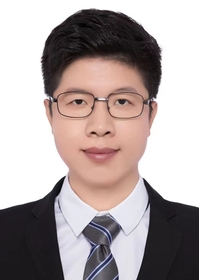
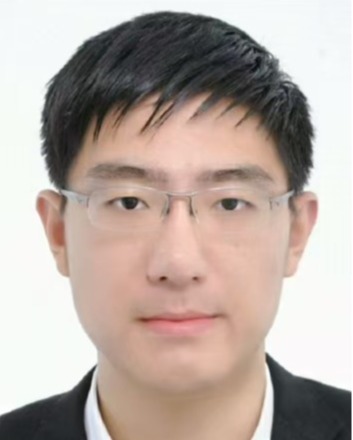
Xiaoyi Wang is a Research Professor at the Department of Electronic Science & Technology, Tongji University, Shanghai. B.S. in Electronic Science and Technology from University of Electronic Science and Technology of China (UESTC), Chengdu (2011) M.S. in Communication and Information System from Fudan University, Shanghai (2014) Ph.D. in Electrical Engineering from Polytechnique Montréal, Canada (2020) His research focuses on theoretical, computational, and applied electromagnetics , with a particular emphasis on metamaterials and metasurfaces , aiming to advance electromagnetic wave manipulation and device design. Scientific Awards: Student Paper Competition Award of AP-S (2019) URSI Young Scientist Award (2020)
He Kong is an Associate Professor at Southern University of Science and Technology (SUSTech), affiliated with the School of Automation and Intelligent Manufacturing, where he also serves as Deputy Director of the SUSTech Institute of Robotics. Previously, he was an Assistant Professor in the Department of Mechanical and Energy Engineering at SUSTech from January to May 2022. Prior to joining SUSTech, he was a Research Fellow at the Australian Centre for Field Robotics, University of Sydney (2016-2021), and at Cranfield University's Advanced Vehicle Engineering Centre (2015-2016). He received his Ph.D. in Electrical Engineering from the University of Newcastle, Australia (2014), M.E. in Control Science and Engineering from Harbin Institute of Technology (2010), and B.E. in Electrical Engineering and Automation from China University of Mining and Technology (2004). His research focuses on robotic intelligent perception and decision making, robot audition, optimal filtering and estimation, and advanced control methods. Specifically, he works on active multi-mode perception, parameter calibration of robot audition systems, optimal filtering under unknown inputs, and fully actuated system approaches. His work has significant applications in precision agriculture, environmental monitoring, and robotic inspection of hazardous industries such as chemical and mining operations. His recent publications reveal a strong emphasis on multi-modal perception systems, particularly combining visual and auditory sensing for robotic applications. His research shows a progression from theoretical control methods toward practical implementations in field robotics, with increasing focus on real-world applications in agriculture and hazardous environments. Finalist for Youth Author Prize, IFAC Workshop on Robot Control (2019) Fifth China Robotics Academic Annual Conference Best Poster Award (2024) 14th International Conference on Indoor Positioning and Indoor Navigation Best Paper Award (2024) The Equity Scholarship, Council of International Students Australia (2011) Outstanding Postgraduate Students Award, Harbin Institute of Technology (2010) Professor Kong actively supervises numerous PhD and Master's students and has established a productive research group focused on active intelligent systems. His laboratory is equipped with advanced facilities including over 30 motion capture systems, Unitree humanoid robots, robot dogs, wheeled mobile robots, and custom-developed platforms like Cubli and acoustic perception systems. He serves on editorial boards for several prestigious journals including IEEE Robotics and Automation Letters and IEEE Sensors Letters, and has been an Associate Editor for major robotics conferences such as IEEE ICRA and IEEE/RSJ IROS.
Derong Liu is a Chair Professor at Southern University of Science and Technology (SUSTech) in Shenzhen, China, holding dual appointments as Full Professor of Electrical and Computer Engineering and Computer Science at the University of Illinois at Chicago. He is a distinguished scholar with multiple prestigious recognitions including Member of Academia Europaea, Fellow of IEEE, Fellow of International Neural Network Society, and Fellow of International Association for Pattern Recognition. His academic journey spans multiple institutions across China and the United States, with significant contributions to control theory and artificial intelligence. Ph.D. in Electrical Engineering from University of Notre Dame (1994) M.Sc. in Automatic Control Theory from Chinese Academy of Sciences (1987) B.Sc. in Mechanical Engineering from East China Institute of Technology (1982) Liu's research focuses on Adaptive Dynamic Programming and Reinforcement Learning, Intelligent Control and Information Processing, Modeling and Control of Complex Industrial Processes, Neural Networks and Computational Intelligence, and Smart Grid technologies. His work bridges theoretical foundations with practical applications in industrial control systems, particularly in automotive engine control and energy management. He has pioneered significant methodologies in neural network design and adaptive control systems that have become foundational in the field. His publication record demonstrates a consistent trajectory of high-impact research, with recent articles focusing on event-triggered control systems, neural architecture search, fault tolerant control, and multi-agent game theory applications. The research spans both theoretical advances in control algorithms and practical implementations in complex industrial systems, showing a clear evolution from foundational neural network research to sophisticated adaptive control frameworks. Member, Academia Europaea (2021) IEEE Computational Intelligence Society Neural Network Pioneer Award (2022) Dennis Gabor Award from International Neural Network Society (2018) Highly Cited Researcher by Clarivate (2017-present) Editor-in-Chief of Artificial Intelligence Review (2014-present) Liu has mentored numerous students and researchers throughout his career, serving as Editor-in-Chief for major journals and leading significant research initiatives. His work has been supported by multiple grants from the National Science Foundation of the United States and the National Natural Science Foundation of China. His research group continues to push boundaries in adaptive control systems and neural network applications. Currently, Liu leads a research group at SUSTech focusing on intelligent control systems, with active projects in adaptive dynamic programming, reinforcement learning applications, and smart grid technologies. His laboratory serves as a hub for interdisciplinary research connecting theoretical control frameworks with practical industrial implementations.
Jiang Ruoqing serves as an Assistant Professor in the Department of Economics at Tsinghua University's School of Economics and Management since 2025. His office is located in Room B626, Lihua Building, with contact email jiangrq@sem.tsinghua.edu.cn. He teaches undergraduate courses including 'Artificial Intelligence Foundations and Data Thinking' and 'Principles of Economics'. Education: PhD in Economics, Columbia University (2019-2025), thesis: 'Essays on Econometric Inference with High-dimensional Factor Models' (Defense Committee: Jushan Bai, Simon Lee, Zhiliang Ying, Bernard Salanié, Haoge Chang) Master of Science in Statistics, Stanford University (2015-2018) Bachelor of Economics (International Program in Economics and Finance), Tsinghua University (2012-2015) Department of Electronic Engineering, Tsinghua University (2011) Research Focus Dr. Jiang's primary expertise lies in Econometrics and Statistical Machine Learning, developing advanced methodologies for high-dimensional data analysis. His secondary research spans Empirical Finance, Empirical Macroeconomics, Digital Economy and Finance, and Chinese Economy studies, with emphasis on financial market applications and computational economics. His work bridges theoretical statistical frameworks with practical economic modeling. Publications Insight His forthcoming 2025 Operations Research article on ORLM framework demonstrates interdisciplinary convergence between optimization theory, large-scale AI systems, and econometric modeling. The research establishes new methodologies for automated optimization in financial engineering contexts, reflecting his dual expertise in machine learning and economic applications. Academic Contributions No scientific awards or grant details were specified in the source material. His professional trajectory shows progression from MIT Financial Engineering Laboratory research (2017, supervised by Andrew W. Lo and Kathryn M. Kaminski) to his current faculty position.