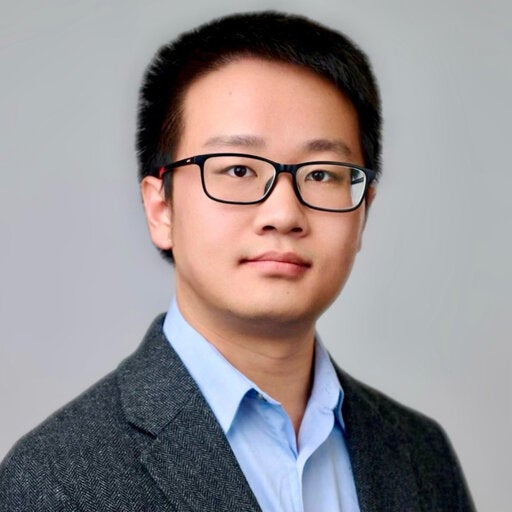
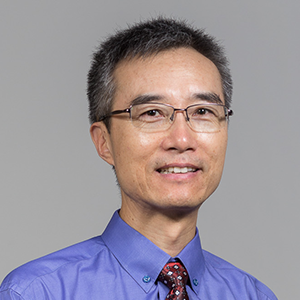
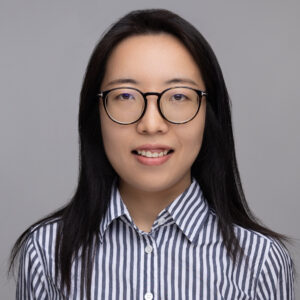
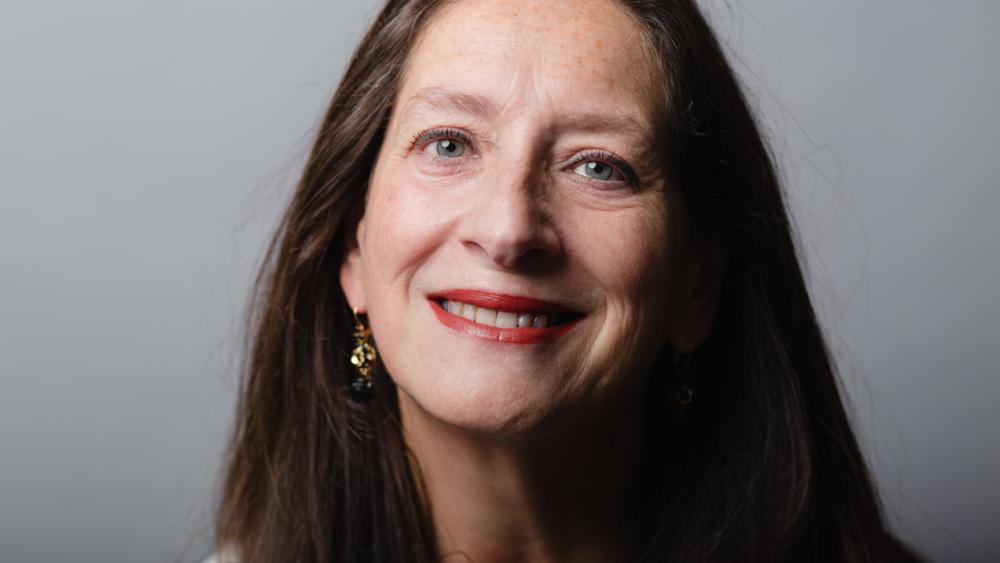
Dr. Peichen Zhong is an Assistant Professor in the Department of Materials Science and Engineering at the National University of Singapore (NUS). He leads the Applied Machine Learning and Materials Modeling (AM³) Group, focused on advancing computational methods for clean energy technologies. His research integrates machine learning with atomistic simulations to tackle challenges in battery materials, disordered materials, and sustainable energy systems. Education: B.S. in Physics from University of Science and Technology of China (2018); Ph.D. in Materials Science from UC Berkeley (2023, advised by Prof. Gerbrand Ceder); Postdoctoral training at Lawrence Berkeley National Lab and BIDMaP, co-advised by Persson, Cheng, and Krishnapriyan. Research Interests: Computational modeling of battery cathodes/electrolytes, AI-driven interatomic potentials, statistical mechanics in disordered materials, and generative models for scientific discovery. Key areas include Li/Na-ion batteries, solid-state reactions, and sustainable energy materials. Awards: BIDMaP Emerging Scholar Fellowship (UC Berkeley CDSS, 202?), 2023 Rising Stars in Materials Science (CMU/MIT/Stanford). Labs/Teams: The AM³ Group at NUS MSE focuses on interdisciplinary research combining theory, computation, and AI4Science. Current openings include PhD students and postdoctoral researchers.
Maria Gorlatova is an Associate Professor of Electrical and Computer Engineering at Duke University's Pratt School of Engineering, where she leads the Intelligent Interactive Internet of Things (I3T) Lab. She also holds a secondary affiliation as Faculty Network Member of the Duke Institute for Brain Sciences and has previously served as Assistant Professor of Computer Science. Dr. Gorlatova earned her Ph.D. in Electrical Engineering from Columbia University (2013), following M.Sc. and B.Sc. (Summa Cum Laude) degrees in Electrical Engineering from University of Ottawa, Canada. Prior to joining Duke, she was an Associate Research Scholar in the Electrical Engineering Department and Associate Director of the Princeton EDGE Lab at Princeton University (2016-2018). She also has industry experience with Telcordia Technologies, IBM, and D. E. Shaw Research. Her research focuses on advancing intelligent behavior in Internet of Things systems and applications, particularly in mobile pervasive systems and the Internet of Things. Her work crosses traditional discipline boundaries, requiring thinking across multiple layers of system and protocol stacks. Current research themes include breaking barriers for technologies that enable fundamentally new deployments and experiences, such as energy harvesting, artificial intelligence adapted to IoT constraints, and augmented reality. Her lab specifically develops edge- and IoT-enabled intelligent augmented reality platforms, with applications in healthcare and human-robot collaboration. Analyzing her recent publications reveals a strong focus on augmented reality systems, particularly for medical applications. Her work spans computer vision for AR, spatial tracking, SLAM systems, vision-language models for AR security, and VR/AR applications in neurosurgery and rehabilitation. A significant portion of her recent work addresses challenges in mixed reality for medical procedures, demonstrating the translational impact of her research. Google Anita Borg USA Fellowship Canadian Graduate Scholar CGS NSERC Fellowships Columbia University Presidential Fellowship Columbia University Jury Award for Outstanding Achievement in Communications ACM SenSys Best Student Demonstration Award IEEE Communications Society Young Author Best Paper Award IEEE Communications Society Award for Advances in Communications Best Research Artifact Award, IEEE IPSN (2020) N2 Women Rising Star, Networking Networking Women (N2Women) (2019) Dr. Gorlatova's research has been supported by various funding sources that enable her work on edge computing for augmented reality, IoT systems, and medical applications. She actively mentors graduate students who frequently appear as first authors on her publications, indicating strong student involvement in her research. Her I3T Lab at Duke focuses on creating human-facing pervasive mobile computing platforms that enable transformative applications, with recent emphasis on creating advanced augmented reality platforms that integrate edge computing and IoT technologies. The I3T Lab is developing next-generation AR systems with capabilities in edge AI, collaborative spatial awareness, AR user cognitive context sensing, and AR QoS/QoE evaluation. Current projects include applications in healthcare (particularly neurosurgery guidance and rehabilitation) and human-robot collaboration scenarios, demonstrating the lab's focus on real-world impact of pervasive computing technologies.
WANG Ye is an Associate Professor in the Department of Computer Science at the School of Computing, National University of Singapore (NUS). He holds a PhD in Information Technology from Tampere University of Technology, Finland, and has been a tenured faculty member at NUS since 2002, following his industry research role at Nokia Research Center. He is the director of the Sound and Music Computing Lab at NUS, leading cutting-edge research in AI-driven music and health technologies. PhD, Information Technology, Tampere University of Technology, Finland (2002) MSc, Telecommunications, Braunschweig University of Technology, Germany (1993) BSc, Telecommunications, South China University of Technology, China (1983) His research is centered on Sound and Music Computing for Human Health and Potential (SMC4HHP) , with a focus on eHealth, eLearning, mobile/wearable computing, and music information retrieval. His work spans AI for stroke rehabilitation, language learning through singing, singing voice synthesis, and automatic music transcription. He has pioneered systems like SLIONS (language learning via karaoke), CocoLyricist (AI co-creation for stroke recovery), and SinTechSVS (expressive singing voice synthesis). The latest articles highlight a strong trend in AI-driven music and health technologies , particularly in controllable lyric generation, singing voice synthesis, automatic pronunciation assessment, and multimodal music transcription. The research increasingly integrates large language models, explainable AI, fairness, and real-world deployment, reflecting a shift from theoretical exploration to practical, human-centered applications in healthcare and education. Dr. Wang has received numerous scientific honors, including: Best Paper Awards at ACM MM, ISMIR, IEEE ISM, and CHI First Prize, Asia Pacific Assistive, Rehabilitative, and Therapeutic Technologies Challenge (2015) Faculty Teaching Excellence Award, NUS School of Computing (2024) Top Paper Award, ACM Multimedia 2022 AI in Medicine Collaborative Grant for CocoLyricist project He has supervised over 11 PhD and 20 MComp students and is currently guiding six PhD candidates. His grants come from MOE, NRF, A*STAR, Nokia, and Smule. He has served as General Chair of ISMIR2017 and TPC Co-Chair of ICOT2017, and is on the editorial boards of IEEE Transactions on Multimedia and Journal of New Music Research. He has also developed and taught the first course on Sound and Music Computing in Singapore. Dr. Wang leads the Sound and Music Computing Lab (SMC Lab) , a multidisciplinary team exploring the synergy of music computing, AI, mobile technology, and cloud systems for health and education. The lab actively collaborates with medical institutions such as NUS Yong Loo Lin School of Medicine, Singapore General Hospital, and Harvard Medical School, and is currently working on projects in AI-supported language learning, stroke rehabilitation, and intelligent music interfaces.
Judy Hoffman is an Associate Professor in the College of Computing at Georgia Institute of Technology, with a joint appointment in the School of Interactive Computing and affiliation to the Machine Learning Center . She received tenure in April 2025 after joining Georgia Tech as an Assistant Professor. Her research focuses on enabling AI systems that are reliable, fair, and resource-efficient. PhD in Electrical Engineering and Computer Science (2016, UC Berkeley) Postdoctoral Fellowships at Stanford (2017) and UC Berkeley (2018) Former Research Scientist at Facebook AI Research Her work intersects computer vision and machine learning , with specialization in domain adaptation , adversarial robustness , and algorithmic fairness . She has published over 40 peer-reviewed articles, including the award-winning DeCAF (ICML 2024 Test of Time Award) and co-founded Women in Computer Vision (2015), which has sponsored ~40 women annually to premier conferences. ICML Test of Time Award (2024) NSF CAREER Award (2022) PAMI Distinguished Young Researcher (2023) Samsung AI Researcher of the Year (2021) Dr. Hoffman has served as Program Chair for CVPR 2023, Associate Editor for T-PAMI (2021-2023), and co-organizer of workshops at major AI conferences. She has delivered over 70 invited talks and contributes to open-source projects like cycada_release (567 stars) and lsda (47 stars).
Tim G. J. Rudner is an Assistant Professor in the Department of Statistical Sciences at the University of Toronto, a Faculty Member at the Vector Institute, and a Title A Fellow at Trinity College, University of Cambridge. He was previously an Assistant Professor and Faculty Fellow at New York University. University: University of Toronto School: Faculty of Arts and Science Department: Department of Statistical Sciences Affiliation: Vector Institute, Trinity College (Cambridge) He holds a PhD in Computer Science and an MSc in Statistics from the University of Oxford, where he was advised by Yee Whye Teh and Yarin Gal, and a BS in Applied Mathematics and Economics from Yale University. PhD: Computer Science, University of Oxford MSc: Statistics, University of Oxford BS: Applied Mathematics and Economics, Yale University His research focuses on building robust, transparent, and trustworthy machine learning systems, particularly for high-stakes applications. He develops probabilistic models that improve generalization under distribution shifts, provide reliable uncertainty estimates, and enable fair and interpretable predictions. His work spans generative models, large language models, healthcare, and biomedical discovery. The recent publications highlight a strong trend toward function-space modeling, Bayesian regularization, and AI safety. Tim's work emphasizes principled uncertainty quantification, robustness to subpopulation and semantic shifts, and the development of frameworks for AI governance and specification. His research bridges theoretical advances with real-world applications, especially in safety-critical domains like medicine and defense. Tim has received numerous accolades including being named a Rhodes Scholar, Qualcomm Innovation Fellow, and 2024 Rising Star in Generative AI. He was awarded a $700,000 Foundational Research Grant and a $30,000 Apple Seed Grant for improving LLM trustworthiness. Rhodes Scholar Qualcomm Innovation Fellow AISTATS Notable Paper Award (2024) Outstanding Paper Award, ICLR GenAI4DM Workshop (2024) Apple Seed Grant ($30,000) Foundational Research Grant ($700,000) NeurIPS Spotlight Talk 2024 Rising Star in Generative AI He actively mentors students, particularly first-generation and low-income scholars, and has contributed to major policy frameworks including the OECD AI Classification Framework and a series of CSET issue briefs on AI safety. His work demonstrates a strong commitment to responsible AI development, combining technical rigor with societal impact. Tim leads research efforts at the intersection of machine learning theory and practical deployment, with ongoing projects in generative modeling, reliable LLMs, and AI governance. His lab produces high-impact work regularly published at top-tier conferences such as NeurIPS, ICML, and AISTATS.
Professor Hassan Rivaz is a Full Professor and Concordia University Research Chair in Medical Imaging with Deep Learning at Concordia University's Gina Cody School of Engineering and Computer Science. He holds appointments in the Department of Electrical and Computer Engineering and is cross-appointed to the Department of Computer Science & Software Engineering. Dr. Rivaz serves as the Founding Director of the IMPACT Lab and actively supervises PhD students in Electrical and Computer Engineering and Computer Science programs. Dr. Rivaz received his PhD from Johns Hopkins University in 2011, Master's degree from the University of British Columbia, and Bachelor's degree from Sharif University, followed by postdoctoral training at McGill University. His academic journey includes prestigious awards such as the NSERC Post-Doctoral Fellowship and Jeanne Timmins Costello Post-Doctoral Award. His research focuses on advancing medical image analysis through deep learning techniques, particularly in ultrasound imaging applications. Dr. Rivaz has made significant contributions to quantitative ultrasound, cancer detection, lymphedema assessment, and ultrasound elastography. His work bridges theoretical algorithm development with practical clinical applications, addressing challenges in medical image denoising, segmentation, registration, and tissue characterization. The IMPACT Lab under his direction develops innovative solutions for medical imaging problems with direct clinical relevance. Analysis of his recent publications reveals a strong emphasis on deep learning applications for ultrasound image processing, with particular focus on denoising techniques, elastography improvements, and segmentation algorithms. His work consistently addresses the challenge of working with real clinical data rather than simulated environments, contributing to more practical medical imaging solutions. Dr. Rivaz has received numerous prestigious awards including: Concordia University Research Chair in Medical Imaging with Deep Learning (2023–2028) QBIN/RBIQ Rising Star in Bio-Imaging in Quebec (2022) Concordia University Research Chair in Medical Image Analysis (2018-2023) Petro-Canada Young Innovator Award (2016–2018) He actively mentors graduate students, with many recipients of competitive scholarships including NSERC CGS, FRQNT, and FRQS awards. Dr. Rivaz serves on editorial boards for top journals including IEEE Transactions on Medical Imaging (since 2017), Medical Image Analysis (since 2025), and IEEE Transactions on Ultrasonics, Ferroelectrics and Frequency Control (since 2018). He has organized major conferences including IEEE EMBC 2020, ISBI 2021, and IEEE IUS 2023, and served as Area Chair for MICCAI from 2017 to 2024. As Founding Director of the IMPACT Lab, Dr. Rivaz leads a multidisciplinary research team focused on innovative medical imaging solutions. The lab maintains strong collaborations with hospitals and research institutions to translate imaging technologies into clinical practice. Current projects include developing AI-powered ultrasound analysis tools, quantitative imaging biomarkers for cancer diagnosis, and advanced techniques for ultrasound elastography with applications in tissue characterization and disease detection.
Tian Li is an Assistant Professor of Computer Science at the University of Chicago. She holds a Ph.D. in Computer Science from Carnegie Mellon University and undergraduate degrees in Computer Science and Economics from Peking University. Her research focuses on distributed optimization, federated learning, and trustworthy machine learning, emphasizing algorithm design that addresses accuracy, scalability, and privacy concerns in practical systems. Key areas of expertise include federated learning systems, privacy-preserving technologies, and scalable distributed algorithms. She has contributed to foundational work on tilted empirical risk minimization and decentralized knowledge propagation. Notable achievements include winning the Best Paper Award at the ICLR Workshop on Secure Machine Learning Systems and First Place in the U.S. Privacy-Enhancing Technologies Pandemic Challenge (2023). Her academic trajectory includes recognition as a Rising Star in Machine Learning/Data Science and participation in prestigious workshops like the EECS Rising Stars Program. Her work bridges theoretical advancements with practical applications, aiming to enhance both the robustness and accessibility of machine learning systems.
Lucia Dolce serves as the Numata Professor of Japanese Buddhism within the Department of Religions and Philosophies at SOAS University of London, part of the School of History, Religions and Philosophies. Her academic base is room 342 in the Russell Square: College Buildings campus. Her educational background includes: Laurea MA (University of Venice) PhD (Leiden University) Professor Dolce's research centers on two interconnected projects: first, the discourse on the body in medieval Japanese Buddhist rituals and its connections to continental Tantric practices, emphasizing ritual fluidity and performative theory applications; second, contemporary Buddhism-Shinto syncretism with focus on revival of premodern practices in Kyoto shrines. She also examines Tokyo's urban pilgrimage routes like the Seven Gods of Fortune, analyzing institutional negotiations and religious marketing dynamics. Her journal articles (1992-2023) consistently explore ritual knowledge transfer in Japanese Buddhism, with recent works on scriptural repurposing and tantric exegesis highlighting material culture and practice-centered approaches. Earlier publications establish foundational studies on Nichiren Buddhism's esoteric dimensions, astrological cults, and celestial body worship, revealing enduring thematic threads across three decades of scholarship. Scientific awards: No awards listed in provided text Advising and grants: She currently supervises four PhD candidates: Rachel Williams (Japanese Secularity), Haruka Saito (Repentance Rituals), Sooyeun Yang (Korean Astrological Buddhism), and Yeonju Lee (Korean Nationalism). Previous supervisees include twelve PhD graduates such as Emanuela Sala (2022, Sannō Shintō), Ronit Wang (2022, Thai Hell Parks), and multiple 2011 completions. Dolce led the Newton Fellowship-associated project 'The Lucky Gods of Tokyo' (2014-2016), investigating spatial politics in Buddhist-Shinto pilgrimage networks.
Dr. Mbita Mbao is an Assistant Professor in the School of Social Work at Salem State University, where she teaches courses including SWK 700 (Human Behavior), SWK 704/705 (Social Work Practice), and aging-focused courses like SWK 871. Her teaching philosophy emphasizes experiential learning and valuing student experiences. Dr. Mbao's research focuses on behavioral health, aging populations, workforce development, and immigrant issues. She actively works to expand aging-related curriculum and services through her involvement with the Older Adults Behavioral Health Network and Salem for All Ages initiative. Her education includes a BSW from Bowling Green State University, MSW from Rhode Island College, and PhD from Simmons University. As a Licensed Clinical Independent Social Worker, she maintains a clinical practice providing in-home therapy to older adults. Honors include: 2025 North Star Collective Fellow 2019 AGESW Pre-Dissertation Fellow 2021 GSA MCDTAW Early Career Diversity Fellow
Hilary Greaves is a Professor of Philosophy at the University of Oxford and Supernumerary Fellow at Merton College. She holds visiting appointments at the Institute for Futures Studies (Stockholm) and the University of Michigan. Her research focuses on ethics, formal epistemology, and philosophy of physics, with particular emphasis on consequentialism, population ethics, effective altruism, and AI ethics. She previously directed the Global Priorities Institute (2018–2022). Education: PhD in Philosophy (Rutgers University, 2008); BA in Physics and Philosophy (Oxford, 2003, First Class Honors). Awards include the Leverhulme Research Fellowship (2018–2020) and the British Academy Rising Star Engagement Award (2015–2017). Research interests span moral philosophy, including aggregation debates, existential risk analysis, and interdisciplinary work with economics. She has published extensively in journals like Philosophy and Phenomenological Research and Mind , and contributed to edited volumes on consequentialism and population ethics. Teaching includes graduate courses on effective altruism, population ethics, and undergraduate modules in moral philosophy and philosophy of physics. She has supervised eight DPhil theses and organized workshops on global priorities research and population ethics. Grants include a £1.2M Leverhulme Trust project on population ethics (2014–2018) and collaborations with the Oxford Martin School on human rights for future generations. Her lab, the Global Priorities Institute, focuses on longtermist ethical frameworks and policy applications.
Moira Jardine is Professor of Astronomy at the University of St Andrews School of Physics and Astronomy, where she became the first female physics professor in 2010. Education: Ph.D. Applied Mathematics, University of St Andrews B.Sc. Astronomy and Astrophysics, University of St Andrews Research investigates stellar magnetic activity to understand planetary habitability and solar system evolution. Uses magnetic field measurements to model stellar winds, coronal X-ray emissions, and their impact on planetary atmospheres. Work supports exoplanet detection initiatives including JWST, GAIA, and WFIRST. Publications focus on stellar coronae, magnetic confinement processes, star-planet interactions, and coronal rain dynamics. Current projects model magnetic interactions in systems like AB Dor and HD 189733. Collaborates with international consortia including MagIcS and Bcool for stellar magnetic field surveys. Awards: Fellow of the Royal Society of Edinburgh and Suffrage Science Award (2019).
Professor Guan Cuntai serves as Deputy Dean of the College of Computing & Data Science and holds the President's Chair in Computer Science and Engineering at Nanyang Technological University (NTU), Singapore. He also maintains a courtesy appointment as Professor at the Lee Kong Chian School of Medicine. His leadership extends to multiple research institutes including serving as Director of the Artificial Intelligence Research Institute (AI.R) and Co-Director of both S-Lab for Advanced Intelligence (2020-2025) and the Rehabilitation Research Institute of Singapore (2015-2018 & 2024-2025). Professor Guan's research focuses on Brain-Computer Interfaces (BCI), Machine Learning, Neural Signal & Image Processing, and Artificial Intelligence. His work at the Centre for Brain-Computing Research (CBCR) investigates deep learning algorithms for motor activity decoding, cognitive mechanism understanding, and explainable AI for brain decoding modeling. His research spans applications in motor decoding, attention and emotion detection, silent speech decoding, and olfactory response analysis from brain signals. His significant contributions to the field have been recognized through numerous awards: Annual BCI Research Award (First Prize) King Salman Award for Disability Research Nanyang Research Award IES Prestigious Engineering Achievement Award Achiever of the Year (Research) Award Finalist of the President Technology Award Professor Guan has delivered over 100 keynote speeches and invited talks globally, including at the opening ceremony of the 7th International BCI Meeting and IEEE International Conference on Rehabilitation Robotics. His extensive publication record includes 420 refereed journal and conference papers, and he has secured significant research funding resulting in 26 granted patents and patent applications, with 17 technologies licensed to six companies across Singapore and USA. He leads the Centre for Brain-Computing Research (CBCR) which focuses on fundamental and applied BCI research, and previously established the Brain-Computer Interface research program and founded the Department of Neural & Biomedical Technology at the Institute for Infocomm Research, A*STAR before joining NTU in 2016.
Iain Robert Smith is a Senior Lecturer in Film Studies at King’s College London, specializing in transnational cinemas, cult film studies, and transnational adaptation. He previously held a Senior Lecturer position at the University of Roehampton (2010–2016). His research challenges hegemonic views of cultural globalization by examining how Hollywood films are remade and adapted across cultures. He co-founded the SCMS Transnational Cinemas group and led the AHRC-funded 'Media Across Borders' research network (2012–). Smith holds a PhD and MA in Film Studies (Distinction) from the University of Nottingham and a First-Class MA (Hons) in English Literature and Film Studies from the University of Glasgow. His research interests include Transnational Cinemas post-1945, Global Hollywood, Popular Cinemas of Asia (especially India and Turkey), and Cult/Exploitation Horror Cinema. He co-edited Transnational Film Remakes (2017) and Media Across Borders (2016), and authored The Hollywood Meme (2016). Current projects include a book on global Batman adaptations and a decolonizing critique of cult film studies. Awards: AHRC/BBC New Generation Thinker (2018), Senior Fellow of the Higher Education Academy (2018) Teaching: Specializes in film history, world cinema, and cult/exploitation cinema. Organized festivals like the Turkish Film Remakes event (2022) and the Turkish Star Wars UK tour (2018). Publications: Over 30 peer-reviewed articles and edited volumes, with recent focus on global horror dynamics, decolonizing film studies, and transnational giallo remakes. He serves on editorial boards for Transnational Screens and Intensities: Journal of Cult Media , and founded the 'Remakesploitation Film Club' at The Cinema Museum. His work bridges academic research with public engagement through film screenings and director Q&As.
Kent Yagi is an Associate Professor in the Physics Department at the University of Virginia, specializing in theoretical astrophysics, gravity, and cosmology. His research focuses on using gravitational waves from compact objects like black holes and neutron stars to probe fundamental physics, including testing General Relativity in strong-field regimes and determining the equation of state of nuclear matter. Position: Associate Professor (2023-present), previously Assistant Professor (2017-2023) Education: Ph.D. in Physics from Kyoto University (2012) Prior positions: Postdoctoral Research Scholar at Princeton University (2015-2017), Postdoctoral Research Associate at Montana State University (2012-2015) Yagi's research centers on theoretical modeling of neutron stars and gravitational wave physics. He is particularly known for discovering the 'I-Love-Q' universal relations among neutron star observables that are insensitive to the equation of state. His work enables testing strong-field gravity and probing nuclear physics through gravitational wave observations. He also investigates binary pulsar systems as precision laboratories for testing gravitational theories beyond General Relativity. His research has significant implications for multi-messenger astronomy, connecting gravitational wave observations with electromagnetic counterparts to extract fundamental physics. The field has evolved rapidly since the first gravitational wave detection in 2015, and Yagi's theoretical predictions have helped shape how we interpret these observations to test gravity and nuclear physics in extreme conditions. NSF CAREER Award (2023) Sloan Research Fellowship (2019) IUPAP Young Scientist Prize (2019) Mead Honored Faculty (2018-2019) Yagi leads an active research group at UVA with multiple graduate and undergraduate students. His group collaborates with researchers across departments, including high energy physicists, nuclear physicists, astronomers, and researchers at the National Radio Astronomy Observatory. Current research directions include multi-band gravitational wave tests of general relativity, constraining nuclear matter parameters with GW170817, and developing parameterized post-Einsteinian gravitational waveform models for various modified gravity theories. The group has received multiple student research fellowships and awards, demonstrating strong mentorship and training of the next generation of physicists.
Prof. Tobias Müller is a Professor at the Bernoulli Institute for Mathematics, Computer Science and Artificial Intelligence at the University of Groningen. His academic journey includes previous positions at Utrecht University, CWI (Centrum Wiskunde & Informatica), Tel Aviv University, and Eindhoven University of Technology, with a doctorate from the University of Oxford under Colin McDiarmid. His research focuses on combinatorics, probability theory, random graphs, percolation, discrete and stochastic geometry, and combinatorial game theory. He has contributed extensively to understanding complex networks, hyperbolic models, and geometric random structures. Research Interests: Random Graphs and Percolation Theory Discrete and Stochastic Geometry Hyperbolic Network Models Probabilistic Combinatorics Geometric Probability Graph Algorithms and Connectivity Notable Contributions: Analysis of Voronoi and Poisson-Voronoi percolation in hyperbolic planes. Studies on Mallows random permutations and their cycle structures. Research on component games and logical limit laws in graph theory. Investigations into the geometry and properties of random geometric graphs. Grants & Collaborations: Active in organizing workshops and conferences on random graphs and geometric networks, including the BIRS Workshop on Random Geometric Graphs and the STAR Workshops series. Labs/Teams: Member of the Bernoulli Institute’s research groups, focusing on stochastic studies, combinatorics, and algorithmic methods.