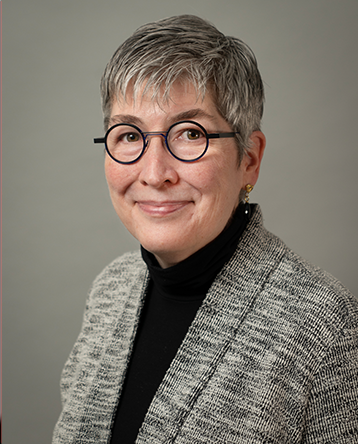
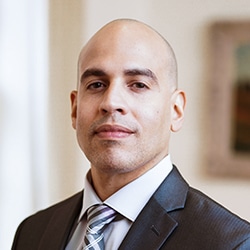
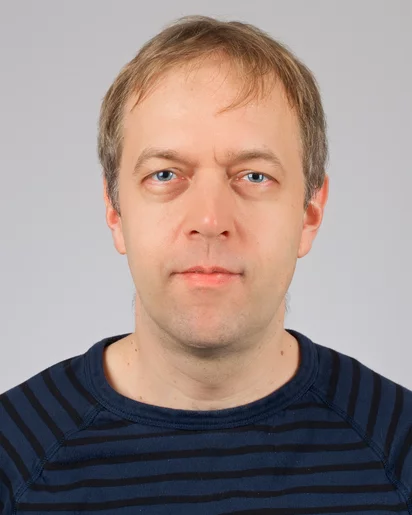
Dr. Penny Brotja is a Lecturer in the School of Science at RMIT University, specializing in Nutrition, Sensory and Food Technology. Her research focuses on Food Sciences, Chemical Engineering, Nutrition and Dietetics, and Horticultural Production. She has conducted studies on sensory analysis of foods such as chocolate-flavored milk, rice, and strawberries, emphasizing methodology comparisons and consumer preference modeling. Her work explores flavor profiling, texture analysis, and product development through advanced sensory techniques. Dr. Brotja supervises research projects, including the 2024 study on asparagus fiber utilization. While no scientific awards are listed, her publications demonstrate impactful contributions to food science methodologies. Her collaborations include investigations into sensory evaluation techniques and food quality assessment. She is contactable at penny.brotja2@rmit.edu.au and holds an ORCID: 0009-0000-8684-3807.
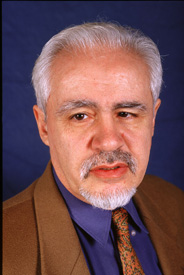
Elizabeth Holm is Professor and Department Chair of Materials Science and Engineering at the University of Michigan. Her research employs computational methods to study microstructural evolution, with expertise spanning atomic-scale molecular dynamics to continuum-scale modeling. Education includes a PhD in Materials Science and Scientific Computing from University of Michigan. Research focuses on computational materials science with emphasis on grain boundary dynamics, machine learning applications in materials, and additive manufacturing characterization. Recent publications develop AI methods for microstructure prediction, grain growth modeling, and automated analysis of material images. Work integrates machine vision with physics-based models to understand material behavior across scales. National Academy of Engineering Member (2025) ASEE Mike Ashby Outstanding Materials Educator Award (2022) AIME Honorary Member (2022) ASM Edward DeMille Campbell Memorial Lecturer (2021) The Minerals, Metals & Materials Society Fellow (2019) Professor Holm leads research on computational design of hierarchical materials and has held leadership positions including President of The Minerals, Metals & Materials Society (2013).
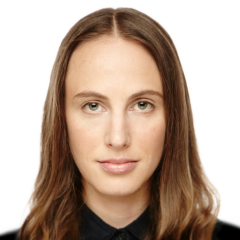
Robert Azencott is a Professor of Mathematics at the University of Houston and holds the title of Emeritus Professor at École Normale Supérieure in France. He specializes in interdisciplinary research at the intersection of mathematics, biosciences, and imaging. His work spans stochastic processes, data mining, and medical imaging applications such as 3D-echocardiography analysis and deformable shape matching. Azencott has contributed to probabilistic methods for bacterial genetic evolution models and financial market microstructure analysis. His research also addresses texture classification, kernel-based learning, and stochastic differential equations (SDEs) in finance and biology. Research Interests Genomics & Proteomics : Sparse modeling of gene interactions, microRNA impact on cancer survival, proteomic mass spectra analysis. Bacterial Evolution : Stochastic models for genetic evolution with periodic selection and large deviations theory. Medical Imaging : 3D-echocardiography strain analysis, deformable shape dynamics via diffeomorphic matching, and ROI reconstruction in X-ray tomography. Probability & Statistics : SDE parameter estimation, kernel-based clustering, and applications to algorithmic trading and option pricing. Labs & Collaborations Azencott collaborates on projects such as digital stains for live-cell microscopy and intra-cardiac echography analysis to assess myocardium deformations. His work intersects with teams in cardiology, computational biology, and financial engineering.
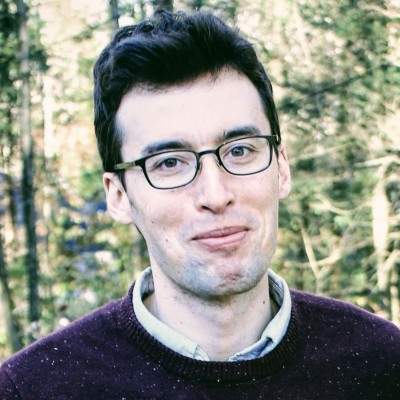
Jennifer Jacobs is an Assistant Professor at the University of California, Santa Barbara (UCSB), affiliated with both the Media Arts and Technology (by primary appointment) and Computer Science (courtesy) departments. She directs the Expressive Computation Lab and is part of the Center for Visual and Interactive Computing. Her research focuses on integrating computational tools with traditional art, design, and craft practices to enhance manual-digital fabrication workflows. Jacobs holds a PhD from MIT's Media Lab and has postdoctoral experience at Stanford University. Education: PhD in Media Arts & Sciences (MIT), MFA (Hunter College), BA (University of Oregon). Research interests span computational art/design, human-computer interaction, and systems engineering. Notable projects include developing systems like Millipath for surface texture fabrication, Knotation for macramé design, and CoilCAM for clay 3D printing. She also investigates ethical AI frameworks rooted in cultural heritage and Black community archives. Her work has been showcased at venues like SIGGRAPH, CHI, and DIS, earning awards such as the NSF Early CAREER Award and Best Paper distinctions. Jacobs teaches courses on computational fabrication and expressive technologies, emphasizing hands-on learning. Her lab collaborates with craft professionals and educational institutions to bridge creative practices with computational methods.
Ian Stevenson is an Associate Professor in the Department of Psychological Sciences at the University of Connecticut. He earned his Ph.D. from Northwestern University in 2011 and leads the UConn Statistical Neuroscience Lab. His affiliations include the Behavioral Neuroscience Program, Department of Biomedical Engineering, and CT Institute for the Brain and Cognitive Sciences. Stevenson's research bridges computational neuroscience and neural data analysis with two primary focus areas: Developing computational tools to model neural dynamics, interactions, and adaptation mechanisms Linking neural activity patterns to perception, behavior, and learning processes His recent publications demonstrate strong trends in Bayesian neural decoding methods and synaptic plasticity modeling, with applications spanning auditory processing, neural connectivity inference, and educational neuroscience. Computational approaches dominate his research, particularly for analyzing high-dimensional neural datasets. He maintains active collaborations through shared data repositories and tools for neural data analysis. His lab is currently seeking undergraduate and graduate students interested in computational neuroscience research.
Camilo Ruiz, MFA, is an Assistant Professor in the Film & Media Arts Department at Regent University. He holds a B.S. in Media Arts & Animation and an MFA in Animation & Visual Effects from The Academy of Art University in San Francisco. With over 10 years of experience, Ruiz combines creative practice and education, focusing on traditional and digital art techniques. His research emphasizes drawing, traditional painting, sculpting, and advanced digital media practices. Education: B.S. (Media Arts & Animation), MFA (Animation & Visual Effects) from Academy of Art University Ruiz’s teaching spans 2D animation to digital portfolio development. He actively publishes comic series The Wild Warriors through True Independent Comics. Professional affiliations include memberships in the Creative Talent Network (2008–2013), Cartoonist Society of America (2008–2012), and National Association of Photoshop Professionals (2008–2018). His work bridges traditional art forms with modern digital tools, aiming to cultivate self-motivated professionals in creative industries. Current affiliation with St. Gregory the Great Catholic Church in Virginia Beach highlights his community engagement.
Professor Ke Chen is an applied and computational mathematician at the University of Strathclyde, Department of Mathematics and Statistics. His research focuses on developing imaging analysis techniques, including variational models, PDEs, iterative solvers, and AI algorithms for medical imaging (e.g., segmentation, co-registration). He holds an honorary clinical consultant position at Clatterbridge Cancer Centre (NHS) and has previously directed research centers at the University of Liverpool. His current projects include multimodal data integration and vision-language modeling with AI. He supervises several PhD students in areas like medical imaging and computational mathematics. Education: PhD from Plymouth University (1990), MSc from Manchester University (1986). Research interests span medical imaging, deep learning, and computational mathematics with applications in healthcare. Collaborations include industries and NHS institutions.
Matthew Wilson is a Senior Lecturer at the University of Adelaide's School of Agriculture, Food and Wine within the Faculty of Sciences, Engineering and Technology. His research focuses on food quality, preservation, horticulture, plant physiology, and sustainability, with a notable emphasis on commercializing the native Australian species Tasmannia lanceolata. He teaches courses such as Sensory Evaluation of Foods III, Food Chemistry III, and Innovations in Food Processing, contributing to both undergraduate and postgraduate programs. Research Interests: Dr. Wilson’s work explores the intersection of environmental conditions and food quality, including microbiological, instrumental, and sensory assessment methods. His projects span crop development (e.g., perennial wheat), disease resistance in Tasmannia lanceolata, and postharvest technologies like modified atmosphere packaging. Recent studies include evaluating native seafood alternatives and optimizing iodine biofortification in crops. Awards/Grants: No specific awards or grants are explicitly listed in the provided texts. Advising & Labs: Eligible to supervise Masters and PhD students in Food Science and related fields. Affiliated with the Plant Genomics Centre at the Waite campus. Education: While not detailed here, his PhD focused on commercializing Tasmannia lanceolata, indicating advanced expertise in plant-based product development.
Klaus Hinrichs is a Professor at the University of Münster. His work focuses on computer graphics, medical imaging, virtual reality, and scientific visualization. He leads research in interactive visualization techniques, geometric algorithms, and human-computer interaction, with applications in medical diagnostics, astrophysics, and immersive environments. His research interests include 3D reconstruction, volume rendering, gesture-based interfaces, and redirected walking in VR. He has contributed to projects like VIPAR for histopathology analysis and the Voreen framework for interactive volume visualization. Recent work explores touch interaction with stereoscopic objects, haptic feedback systems, and biometric authentication methods for mobile devices. His publications span over 30 years, emphasizing interdisciplinary approaches to visualization and user interface design.
Thilo Wellmann is a Research Fellow at the Humboldt University of Berlin's Department of Landscape Ecology within the Faculty of Mathematics and Natural Sciences. His primary role involves advancing urban remote sensing techniques to support nature-based solutions (NbS) in urban planning, focusing on climate change adaptation and biodiversity preservation. He holds a doctoral degree from Humboldt University (2023) and has conducted research at the Helmholtz Centre for Environmental Research in Leipzig as a Guest Scientist. His research integrates remote sensing data with ecological and social factors to create actionable tools for urban sustainability. Notable initiatives include founding RemoteSensingForCities.org to bridge science and policy in urban remote sensing. He has received the 2020 BUND Research Prize for his work on sustainability. Teaching includes lectures on green infrastructure at Humboldt University and master's workshops on sustainable cities in Stockholm and Riga. Key publications focus on drought impacts on urban trees, urban mammal ecology, and frameworks for integrating NbS into policy. Grants: DBU Scholarship (2019-2022), BMBF Initiative (2023-present), EU H2020 CLEARINGHOUSE Project Labs/Teams: Landscape Ecology Group, ESIS/Imalys Software Development Team
Dr. Mamoru Okamoto is a Research Fellow in the Department of Agricultural Science at the University of Adelaide, affiliated with the Plant Genomics Centre located at the Waite campus. His research focuses on enhancing crop productivity through molecular and genetic approaches targeting nitrogen use efficiency (NUE), plant stress resilience, and metabolic signaling pathways. Key research interests include GABA signaling in stomatal regulation, nitrogen recycling mechanisms, and the interplay between drought and nutrient stress in cereals. He employs advanced phenotyping platforms, genetic mapping, and transgenic approaches to improve crop traits like grain yield and protein content under variable environmental conditions. Recent studies highlight contributions to understanding malate/GABA transporter dual functions, RNA catabolite roles in nitrogen recycling, and neural network-based wheat spike detection. His work bridges fundamental plant biology with applied agricultural science, emphasizing sustainable crop improvement strategies. Dr. Okamoto collaborates on projects involving national variety trials and multi-environment analysis, contributing to evidence-based breeding practices. His research also explores innovative fertilizer application techniques and stress memory mechanisms in plant guard cells.
Elizabeth Turner is a Full Professor at the Harquail School of Earth Sciences at Laurentian University, where she has been faculty since 2005. Her research career spans over 30 years of remote field work in northern Canada, with expertise in Proterozoic to Paleozoic sedimentary systems and their economic potential. Dr. Turner earned her PhD from Queen's University in 1999, following a BSc in Geology (1991) and a BA in Languages (1988), both from the University of Toronto. Prior to joining Laurentian, she worked as a Research Scientist at the Canada-Nunavut Geoscience Office (2001-2005) and completed post-doctoral fellowships at the University of Chicago and University of Alberta. Her research focuses on tectonostratigraphic analysis of Proterozoic to lower Paleozoic sedimentary basins, with particular emphasis on paleobiological, geochemical, paleoenvironmental, sedimentological, and diagenetic evolution across more than a billion years of Earth history. Current projects include geological evolution of Mesoproterozoic, Neoproterozoic, and Paleozoic basins in northern Canada; sedimentary-rock-hosted ore deposits; carbonate facies and stratigraphy; carbonate and siliciclastic diagenesis; and early evolution of eukaryotes. Analysis of her recent publications reveals a strong focus on Precambrian geology, particularly the Mesoproterozoic and Neoproterozoic eras. Her work spans economic geology (particularly Zn-Pb-Cu deposits), paleoenvironmental reconstruction using geochemical proxies, early life evolution, and basin analysis. The research demonstrates interdisciplinary approaches combining field geology, geochemistry, paleontology, and economic geology. 2020 - Geological Association of Canada, Howard Street Robinson Medal for excellence in Precambrian geology 2010 - Canadian Journal of Earth Sciences Best Paper award for her 2009 work on Mesoproterozoic carbonate systems 2001 - PALAIOS Honourable mention for best paper on Neoproterozoic reefal stromatolites 1999 - Best Canadian PhD Thesis in Sedimentary Geology from the Canadian Society of Petroleum Geologists Dr. Turner actively mentors graduate students and post-doctoral fellows, currently supervising PhD student Chaneil Wallace, MSc students Christian Frost and Charlotte Stone, and post-doctoral fellow Jordan Mathieu. Her recently completed students include R. William Scott, Jordan Mathieu (PhD), Philippe Trudel, Quinn Dabros, Melanie Bouchard, and Katherine Hahn (post-doc). Her research has been supported by numerous grants enabling extensive field work in Canada's north and international collaborations, particularly in the Democratic Republic of Congo. Her work involves extensive field research in northern Canada (Nunavut and Northwest Territories), with a focus on carbonate systems and their relationship to mineral deposits. She collaborates with researchers across Canada and internationally, particularly on projects related to Precambrian life evolution and sedimentary-hosted mineral deposits.
Matthias Kurt Muntwiler is a Researcher at the Paul Scherrer Institute (PSI) in the Photon Science Division's Laboratory for X-ray Nanoscience and Technologies (LXN). He manages the PEARL beamline at the Swiss Light Source and is a member of the Swiss Nanoscience Institute, supporting user experiments across Europe. He earned his diploma (2000) and PhD (2004) in experimental physics from the University of Zurich, Switzerland, followed by postdoctoral work at the University of Minnesota under Prof. Xiaoyang Zhu focusing on ultrafast polaron dynamics. Muntwiler specializes in surface and interface science of ultrathin films, organic semiconductors, and two-dimensional materials. His expertise spans photoelectron spectroscopy for chemical analysis, band mapping, atomic structure determination, and dynamic processes, emphasizing structure-property relationships. He also develops software for experiment control and machine learning-based structural modeling. His publication record (2008-2020) reveals consistent focus on advanced synchrotron-based characterization of nanomaterials, particularly using photoelectron diffraction to resolve atomic-scale interfaces in systems like h-BN nanomeshes, metal-organic networks, and ferroelectric materials. As designer and manager of the PEARL beamline, Muntwiler integrates soft X-ray spectroscopy with scanning tunneling microscopy to enable atomic-resolution studies of novel materials and molecular adsorbates.
Isabella Pignatelli is a Senior Lecturer at the Faculty of Science and Technology, Université de Lorraine, France. She specializes in crystallography and mineralogy, focusing on the relationship between mineral properties and their formation conditions. Research Interests: Multi-scale study of terrestrial and extraterrestrial minerals, aqueous alteration processes, hydrothermal synthesis, and advanced analytical techniques like X-ray tomography, electron microscopy, and vertical scanning interferometry. Her work spans cosmology to biomineralogy. Publications: 15 most recent articles highlight trends in gemstone formation, mineral polytypism, and fluid-rock interactions. Key themes include crystal growth mechanisms, mineral alteration, and hydrothermal synthesis. International Roles: Consultant, International Union of Crystallography (since 2014) Chair, European Crystallographic Association SIG-05 (since 2023) Member, International Committee on Irradiated Concrete (since 2015)
Dr. Ivan Kaban is a Group Leader in the X-ray Diffraction research group at Leibniz IFW Dresden, Institute for Complex Materials. His work focuses on experimental studies of phase formation and microstructure development during non-equilibrium solidification of metallic alloys, utilizing high-speed video observation and in-situ X-ray diffraction. He investigates heterogeneous nucleation, liquid-liquid phase separation, and composite material fabrication from metallic glasses. Dr. Kaban's research explores solidification processes in Fe-Co-Ni-Mo, Ti-Cu-Al-Zr, and Al-Si-TiB2 systems, with emphasis on cryogenic rejuvenation, shear banding, and flash annealing techniques. His publications span journals like Acta Materialia, Nature Communications, and Advanced Science, covering topics from atomic structure in chalcogenide glasses to thermodynamic assessments of alloy systems. Recent trends in his work include additive manufacturing of high-strength composites, phase transformation mapping in CuZrAlCo alloys, and corrosion behavior of Ti-based metallic glasses. He collaborates extensively with institutions across Europe and Asia, contributing to studies on liquid metal wetting, nanocrystalline alloys, and electromagnetic levitation applications in space-based solidification.