Paul S. Blaer is a Senior Lecturer in Discipline at Columbia University's Computer Science Department, with adjunct roles in the Robotics Laboratory. He directs computing research facilities and teaches courses in data structures, robotics, and computer programming. His research develops autonomous systems for 3D site modeling and robotic navigation. Key projects include view planning algorithms for large-scale environments (e.g., Governors Island), hybrid topological localization using vision and WiFi, and educational tools for Java/MATLAB programming. His AVENUE robot platform enabled automated urban mapping. Teaching awards include the Columbia Engineering Alumni Distinguished Teaching Award (2018) and multiple Outstanding Teaching Assistant awards. Grants support robotics curriculum development and NSF-funded research in geometric computation.
Marianne Liebi is a Tenure-Track Assistant Professor at the École Polytechnique Fédérale de Lausanne (EPFL), affiliated with the School of Engineering’s Institute of Materials. She leads the Structure and Mechanics of Advanced Materials group at the Paul Scherrer Institute (PSI) within the Photon Science Division. Her research focuses on developing advanced X-ray imaging techniques, particularly small-angle X-ray scattering (SAXS) tensor tomography, to study hierarchical materials such as biomimetic composites, cellulose-based materials, and bone tissues. She has held positions at Chalmers University of Technology (Sweden) and Empa, and her work bridges materials science, biomedical engineering, and nanotechnology. Education: PhD in Food Science from ETH Zurich (2013), followed by postdoctoral research at the Swiss Light Source. Professional roles include Assistant Professor at Chalmers University (2017–2020) and Scientific Group Leader at Empa (2020–2021). Research interests emphasize imaging complex structures across scales, with applications in 3D printing, industrial plastics, and biological tissues. Key methods include SAXS, ptychographic tomography, and X-ray fluorescence. Her group collaborates widely, addressing challenges in material design, medical diagnostics, and sustainable polymers. Advising and grants: While specific grants are not detailed, her leadership roles and publications indicate active research funding. Labs/teams: PSI’s Laboratory for Condensed Matter and Materials Science, with ongoing collaborations at synchrotron facilities like ESRF and MAX IV.
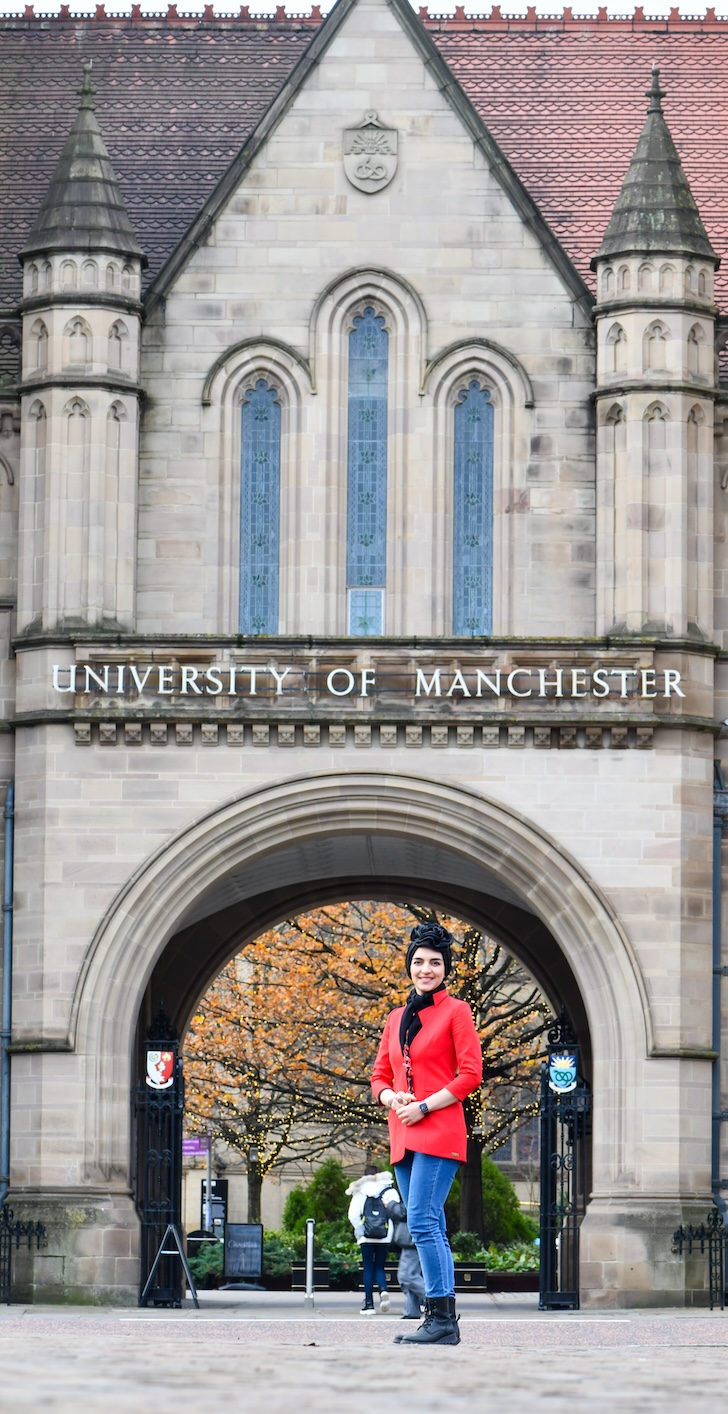
Zahra Montazeri is a Lecturer (Assistant Professor) in the Department of Computer Science at the University of Manchester. Her research focuses on physics-based computer graphics, particularly photorealistic rendering and appearance modeling for complex materials like cloth, hair, and fur. She holds a PhD in Computer Science from the University of California, Irvine (UCI), and has industry experience at Disney Research, WetaDigital, Industrial Light & Magic (ILM), Pixar, and Luxion. **Education:** PhD in Computer Science (UCI, 2015–2021) M.Sc. in Computer Science (UCI, 2015–2017) B.Sc. in Computer Engineering (Sharif University of Technology, Iran, 2010–2014) **Research Interests:** Zahra’s work bridges academic and industrial applications, emphasizing practical and efficient rendering techniques. Her key areas include physics-based rendering, material modeling for fabrics, and virtual reality optimizations like foveated rendering. She collaborates with industry leaders such as WetaDigital and has contributed to movies like The Mandalorian and Avatar: The Way of Water . **Articles Trends:** Recent work focuses on texture-free cloth rendering, dynamic BTF synthesis, and neural-based material models. Her research often addresses computational efficiency while maintaining photorealism, with applications in film, gaming, and VR. **Awards:** Best Paper Award at EGSR (2023) Best Visuals Award at EGSR (2023) UCI Doctral Fellowship (2015) LightSpeed Venture Partners Summer Fellowship (2016) **Advising & Grants:** Advises four PhD students and has one alumni (David Petrescu). Her group actively collaborates with industry and explores applied research in rendering and virtual environments. She serves on program committees for PG, EGSR, and I3D. **Labs/Teams:** Leads a research group at Manchester focused on graphics and virtual environments, with interdisciplinary projects in computer vision, AI, and material science.
Dr. Jing Ren is affiliated with the Department of Computer Science at ETH Zürich, holding a role within the Professorship for Computer Science. Their research focuses on computational geometry, 3D reconstruction, and computer graphics, with notable contributions to shape analysis, non-rigid matching, and fabric modeling. Dr. Ren’s work bridges theoretical advancements with practical applications in textile design, architectural modeling, and medical imaging. They collaborate extensively on projects involving functional maps, optimization algorithms, and geometric morphometrics. Key research interests include: Non-rigid shape correspondence and matching Computational modeling of woven fabrics and textiles 3D face and building reconstruction techniques Efficient spectral and discrete optimization methods Recent publications (2022–2024) emphasize innovations in fabric parameterization, Gaussian noise distribution, and rethinking 3D face reconstruction benchmarks. Their work often employs machine learning and functional map frameworks to solve geometric problems across disciplines. Laboratory and team affiliations are not explicitly detailed in the provided materials, but their research aligns with ETH Zürich’s broader initiatives in computer science and engineering. No grants or advising activities are specified in the current data.
Matteo Valsecchi is an Associate Professor at the Department of Psychology 'Renzo Canestrari' of the University of Bologna since 2022. His research focuses on experimental psychology, particularly visual attention, perception, and motor control, with emphasis on eye movement dynamics. He holds a PhD in Cognitive Science and Education from the University of Trento and a Psychology degree from Università Vita-Salute San Raffaele. Education: PhD in Cognitive Science and Education, University of Trento (2004–2007) Psychology Degree, Università Vita-Salute San Raffaele, Milan (2000–2004) Research Experience: Senior Researcher at University of Bologna (2019–2022) Postdoc Fellowships at Justus-Liebig University of Giessen (2011–2019) His work explores mechanisms underlying visual perception, attentional control, and sensorimotor integration. Office hours: Wednesday 9:30–10:30 at Viale Berti Pichat 5, Bologna, or via Teams by arrangement.
Kurt Aasly is an Associate Professor in Process Mineralogy at the Department of Geoscience, Norwegian University of Science and Technology (NTNU). He specializes in mineral characterization, geometallurgy, and marine mineral resource management. His research focuses on unconventional mineral deposits, concrete durability issues related to sulfide minerals, and valorization of mine tailings for critical raw materials. Current projects include AVANTIS (vanadium/titanium extraction), EMINENT (energy minerals for net-zero transition), and Safe Use of Local Aggregates in Concrete. He has supervised numerous PhD candidates, including Nikolas Oberhardt (concrete sulfide analysis) and Nikita Malafeevskiy (tailings revalorization). Key research areas span automated mineralogy applications, deep-sea mining technologies, and optimizing industrial mineral production flowsheets. Notable contributions include studies on pyrrhotite degradation mechanisms in concrete aggregates and mineralogical approaches to rare earth element recovery. Labs/Teams: Norwegian Laboratory for Mineral and Materials Characterisation (MiMaC), AVANTIS Project Team Grants/Advising: Main supervisor for 3 ongoing PhDs, co-supervisor for 1, with completed theses on geometallurgical workflows and flotation optimization
Sugata Banerji is an Associate Professor of Computer Science at Lake Forest College and Director of the Applied Data Center. His research focuses on computer vision, scene understanding, and machine learning, with applications in medical imaging and image retrieval. He holds a PhD in Computer Science from New Jersey Institute of Technology (2013) and a Postdoctoral fellowship in Computer Vision at George Mason University (2013–present). His educational background also includes a BE in Information Technology from West Bengal University of Technology. Research Interests include image processing, pattern recognition, and novel descriptors for object and scene classification. His work spans deep learning for medical diagnostics, efficient feature extraction methods like EFM-HOG, and geo-localization of buildings using computer vision. He has received the Department of Computer Science Travel Award (2012) and served as a Teaching Assistant (2008–2013). Key contributions include advancements in HOG descriptor variants (e.g., HaarHOG), color-based feature integration, and solar energy growth modeling. He teaches courses such as Roadmap to Computing with Python and Introduction to Computer Science, emphasizing practical programming and graphics problem-solving.
Renata Raidou is an Associate Professor in Biomedical Visualization and Visual Analytics at the Research Unit of Computer Graphics, Institute of Visual Computing & Human-Centered Technology, TU Wien, Austria. She previously held positions at the University of Groningen and TU Wien as a postdoc. Her research focuses on medical visualization, uncertainty visualization, and data physicalization for healthcare applications. Raidou has received prestigious awards including the Dirk Bartz Prize (2017) and EuroVis Young Researcher Award (2022). She coordinates TU Wien's BSc in Digital Health and MSc in Medical Informatics. Education: PhD in Medical Visualization (Eindhoven University of Technology, 2017), MSc in Biomedical Engineering (TU Delft), Diploma in Electrical and Computer Engineering (NTUA). Professional Roles: Editorial Board member of Computer & Graphics , Steering Committee member of EG VCBM, and member of EASAC's AI in Healthcare working group. Research Interests: Medical visualization strategies for P4 medicine, anatomical edutainment through physicalization, and uncertainty-aware visual analytics in radiotherapy. Her work bridges visual computing, machine learning, and medical applications, emphasizing clinical decision support and public health education. Awards: Over 10 awards including Best Paper recognitions at IEEE Vis and EuroVis, and the EuroVis Best PhD Award. Her contributions span visualizing anatomical variability, ensemble data exploration, and interactive medical training tools. Grants & Projects: Leads the Health Virtual Twins project (2024–2028) for personalized stroke management. Active in interdisciplinary collaborations, including the Shonan Meeting on Formalizing Biological Visualization. Labs/Teams: Head of the Visualization Group at TU Wien, developing tools like Vologram (holographic medical data physicalization) and Slice and Dice anatomical crafts. Collaborates on edutainment systems and AI-driven healthcare visualization.
Paolo Paron is a Senior Lecturer in Earth Science and Remote Sensing at IHE Delft, specializing in geomorphological mapping, hydro-meteorological hazards, and low-cost remote sensing technologies. He leads Mapping and Remote Sensing activities within the River Basin Development chair group. His research focuses on open-source software applications, unmanned aerial systems (UAS), and structure-from-motion (SfM) techniques for river morphology and ecosystem service mapping. He has extensive field experience in developing countries including Kenya, Mozambique, and Ethiopia. Paron holds a MSc in Geology from the University of Roma3 (2000) and a PhD in Fluvial Geomorphology from the University of Chieti (2005). He edited two UN FAO atlases for Somalia and an Afghan digital atlas for NGOs, and chairs sessions at international conferences like EGU. He serves as Associate Editor for the Journal of Maps and Topic Editor for the ISPRS International Journal of Geo-Information . Key research areas include free/low-cost remote sensing data applications, sediment dynamics, and sustainable development in arid regions. His work involves 40+ countries across Africa and Asia, emphasizing humanitarian preparedness and environmental monitoring. Paron collaborates with global institutions like IAHR on drone technology and contributes to projects such as WiODER. His expertise bridges geoscience with practical field applications, addressing water resource challenges and disaster risk reduction in data-scarce regions.
Renata Georgia Raidou is an Associate Professor in Biomedical Visualization and Visual Analytics at TU Wien's Institute of Visual Computing & Human-Centered Technology. She leads the Research Unit of Computer Graphics and serves as Curriculum Coordinator for the Bachelor in Informatics (Specialization Digital Health) and Master in Medical Informatics programs. She holds prestigious awards including the EuroVis Young Researcher Award (2022), Best PhD Award (2018), and Dirk Bartz Prize (2017). Her research focuses on medical applications of Visual Analytics, with emphasis on uncertainty visualization, comparative visualization, and anatomical edutainment through physicalizations. She explores how visual tools can enhance decision-making in precision medicine, particularly in radiotherapy and cancer treatment. Her work bridges visualization, machine learning, and image processing to address clinical challenges. Raidou's recent projects include developing predictive visual analytics systems for radiotherapy planning and creating tactile physicalizations for anatomy education. She actively contributes to the field through editorial roles (Associate Editor of Computer & Graphics ) and policy advising via EASAC's 'AI in Healthcare' initiatives. Key Projects: Health Virtual Twins for Stroke Management, PREVIS for Radiotherapy Decision Support, Pelvis Runner for Anatomical Variability Analysis Teaching: Courses on Medical Visualization, Data Analytics in Health Sciences, and Visual Computing Grants: European Commission-funded projects (2024–2028) Her lab develops interdisciplinary tools for clinicians, researchers, and educators, emphasizing both technical innovation and real-world impact.
Rémi Allègre is an Associate Professor in Computer Science at the Institute of Technology Haguenau (IUT Haguenau), affiliated with the University of Strasbourg (France). He conducts research at the ICube CNRS laboratory within the Geometric and Graphical Computing (IGG) group. Department: Multimedia and Internet Professions (Internet and multimedia technologies) Research Lab: ICube - UMR 7357, CNRS Contact: remi.allegre@unistra.fr | +33 (0)3 88 05 34 39 His research focuses on Geometric Modeling , Appearance Modeling , and Texture Synthesis , with applications in 3D data processing, procedural modeling, and biomedical imaging. Key trends include: Developing differentiable point process models for inverse procedural modeling Creating GAN-based data augmentation techniques for histopathological images Advancing semi-procedural texture synthesis methods Improving dynamic surface reconstruction algorithms Investigating hybrid representations (implicit surfaces, meshes, point sets) Multiscale label-map extraction for structured texture synthesis Scientific recognition includes: AFIG 2005 Best Article Award He supervises doctoral students such as Pascal Guehl, Florian Allender, Guillaume Baldi, Steve de Rose, and Maximilien Nowak. Collaborations span the ICube laboratory and biomedical imaging projects.
Dr. Joana Barros is a Senior Research Fellow at Birkbeck, University of London's School of Social Sciences. Her expertise spans urban planning, geographic information science, and spatial analysis, with a focus on socio-spatial inequalities in Global South cities. She holds a PhD in Planning Studies from the University of London (2004), a Master's in Urban Planning from Federal University of Rio Grande do Sul (1999), and a BSc-equivalent in Architecture from Federal University of Pelotas (1998). Her research examines urban segregation, transport accessibility, informal settlements, and urban growth through geospatial analytics. Key projects include: RESOLUTION (ESRC/FAPESP): Comparative analysis of London and São Paulo's transport inequalities SIMETRI (ESRC/NWO/NF): Sustainable mobility in megacity regions (London, Randstad, Pearl River Delta) She directs the Geo-Analytics and Modelling Group and holds an honorary position at UCL's Centre for Advanced Spatial Analysis. Recognitions include: Fellow of the Royal Geographical Society Fellow of the Higher Education Academy As primary supervisor, she mentors doctoral researchers studying segregation dynamics and urban accessibility. Her grant portfolio supports international collaborations across UK, Brazil, Netherlands, and China.
Abdallah Reza is a Postdoctoral Researcher at the University of Oxford's Department of Engineering Science, associated with Trinity College. His work focuses on material performance evaluation in extreme environments, particularly nuclear reactors and aircraft engines, using advanced techniques like laser-induced transient gratings. Education: DPhil (Oxford), MSc (Imperial College London), BSc (University of Colombo) Research Focus: Sustainable energy materials, thermal transport analysis, non-destructive evaluation of irradiation effects, and nanoscale defect characterization His recent publications explore thermal diffusivity degradation in ion-irradiated alloys and tungsten, non-contact material characterization methods, and defect analysis in fusion-relevant materials. These studies highlight the application of transient gratings spectroscopy in nuclear and aerospace material performance assessment. Abdallah collaborates with Oxford's Materials Engineering research group, including Professor Felix Hofmann, and contributes to advancing material evaluation techniques for reactor-relevant conditions.
Christopher Dostal is an Assistant Professor and holds the Frederick R. Mayers Professorship in Nautical Archaeology II at Texas A&M University. He serves as Director of the Conservation Research Laboratory, Analytical Archaeology Laboratory, and Center for Maritime Archaeology and Conservation. His research focuses on historical maritime archaeology in North America and Western Europe, conservation of waterlogged artifacts, in situ preservation of underwater sites, and digital imaging/3D modeling techniques. He teaches courses such as Historical Archaeology, Conservation of Archaeological Resources, and Analytical Methods in Archaeology. Education: PhD (2017), MA (2015) in Anthropology from Texas A&M University; BA (2011) in Anthropology from the University of Colorado. His publications emphasize shipwreck analysis, conservation methodologies, and digital archaeology. Notable projects include the Gaspé Maritime Archaeology Project and studies on 18th-century wooden ships. He actively engages in public outreach and educational initiatives. Current graduate students include Kimberly Breyfogle, Megan Crutcher, and others. His labs focus on innovative conservation techniques and digital heritage preservation.
Nam Hee Kim is a doctoral researcher in the Department of Computer Science at the School of Science , focusing on interdisciplinary research at the intersection of Deep Reinforcement Learning , Image Synthesis , and Physics-Based Animation . He contributes to advancements in Virtual Character Animation and Motion Control using Machine Learning techniques, with recent work on fatigued movements and controllable face synthesis. Research Interests : His work spans Deep Reinforcement Learning , Motion Capture , and Neural Network Optimization , addressing challenges in Computer Graphics , Robotics , and Bioinformatics . Key themes include Realism in Animation , Controllable Generative Models , and Epigenomic Analysis . Publications Trends : Kim's recent contributions (2021–2023) emphasize Motion Control and Face Synthesis , leveraging Reinforcement Learning and Generative Adversarial Networks . Earlier work (2020–2021) explores Stepping Stone Skills , Dynamical Systems Correspondence , and Epigenomic Data Analysis .