Ayesha Ramachandran is an Associate Professor of Comparative Literature at Yale University, specializing in early modern European literature and cultural history. Her research examines transnational encounters, globalization, and the interplay between literature, science, and visual culture. She holds affiliations with the Faculty of Arts and Sciences and actively participates in interdisciplinary initiatives. Her first major work, The Worldmakers (2015), won prestigious awards including the MLA Scaglione Prize and the Sixteenth Century Studies Association’s Founder’s Prize. Current projects explore lyric form’s role in shaping selfhood and modernity, bridging early modern and modernist writing. Supported by a Mellon New Directions Fellowship (2016), she expands her work into Persian and South Asian materials. Teaching spans comparative literature, maps in literary imagination, skepticism, and race/class/gender studies. Notable courses include co-taught seminars on modernities and critical theory. Recognized with the Poorvu Family Award for Interdisciplinary Teaching (2016), she emphasizes collaborative and visually engaged pedagogy. Her scholarship integrates global perspectives, with recent publications addressing African and Asian influences on Renaissance studies, lyric poetry’s philosophical dimensions, and early modern epistemologies. Awards reflect her impact on comparative literature, while her Mellon-funded research highlights methodological innovation.
Sarah Blacker is a Sessional Assistant Professor in the Department of Social Science’s Health & Society Program at York University’s Faculty of Liberal Arts & Professional Studies. Her work critically examines intersections of race, health equity, and settler colonialism. Currently on leave until May 2024, she holds affiliations with York University’s Robarts Centre for Canadian Studies and previously held postdoctoral fellowships at the Max Planck Institute for the History of Science and the University of Alberta. Education: PhD (University of Alberta), MA (McMaster University), BAH (University of King’s College). Research focuses on racialization in biomedicine, environmental justice, Indigenous knowledge governance, and data justice in health care. Her book project Warding off Disease: Racialization and Health in Settler Colonial Canada explores colonial legacies in healthcare systems. Recent publications address citizen science ethics, algorithmic discrimination, and racialized environmental health inequities. Professional background includes roles as SSHRC Postdoctoral Fellow (York University, 2019-2021), Lecturer at Munich Center for Technology in Society (2015-2019), and Research Associate at Robarts Centre. Her work critiques systemic racism in healthcare policies and advocates for decolonizing scientific practices.
Prof. Carmen Meinert holds the Chair for Central Asian Religions at Ruhr University Bochum's Center for Religious Studies (CERES), a unique position in German academia. She specializes in Buddhist Studies, Tibetan Studies, and Sinology, focusing on Central Asian religions' systematic development through international cooperation. Deputy Director of CERES and Principal Investigator of the ERC-funded BuddhistRoad project, her research integrates fragmented disciplines into comparative religious frameworks, emphasizing Central Asia's historical and cultural crossroads. Education: Studied at Universities of Bonn, Hamburg, Peking, Sichuan (Chengdu), Vienna, and the Institute of Advanced Study in Essen. Previously held roles as lecturer, substitute professor, and Visiting Research Fellow at the Käte Hamburger Kolleg. Research interests include medieval Buddhist transmission across Central Asia, tantric traditions, manuscript studies (e.g., Dunhuang, Kharakhoto), and contemporary issues like Buddhism and human rights, environmental/climate change. She co-edits the Climate and Culture series and leads projects on metaphors of religion (CRC 1475) and Dzogchen textual history. Publications focus on Buddhist networks, tantric rituals, environmental studies, and comparative religious dynamics. Recent works include Buddhism in Central Asia III (2023) and contributions to Brill’s Dynamics in the History of Religions series. Labs/Teams: Leads CERES research projects, collaborates with international networks, and coordinates the BuddhistRoad initiative. Her work bridges philological rigor with broader cultural and environmental contexts.
H-Dirksen Bauman is a Professor of Deaf Studies at Gallaudet University, affiliated with the Arts and Humanities School. His work centers on Deaf cultural studies, audism, and the intersection of disability studies with broader sociocultural frameworks. He has contributed significantly to redefining academic discourse through concepts like 'Deaf Gain,' emphasizing the value of deafness as a mode of human diversity rather than a deficit. Bauman’s research spans sign language literature, sensory politics, and architectural design for Deaf communities (DeafSpace). He has taught courses such as Language, Culture, and Power and Enforcing Normalcy: Deaf and Disability Studies , reflecting his commitment to critical pedagogy. His scholarly contributions include foundational texts on audism and co-editing Deaf Gain: Raising the Stakes for Human Diversity . He has held leadership roles including Director of ASL Connect and advisor to the Deaf Studies Digital Journal. Awards include the Maryland State Arts Council’s Independent Artist Award and recognition for bilingual literary works. His work bridges academia, artistry, and activism to challenge ableist norms and advocate for deaf-centered frameworks in education, architecture, and policy.
Associate Professor Meg Samuelson is affiliated with the School of Humanities at the University of Adelaide. Her research focuses on postcolonial literatures of the Indian Ocean world, African diasporic narratives, and environmental humanities. Key interests include oceanic cultural studies, maritime histories, and the intersections of ecology with literary form. Her work often engages with questions of spatiality, displacement, and cosmopolitanism in texts from South Africa and beyond. Her scholarly contributions emphasize transoceanic networks, material textuality in colonial contexts, and the reimagining of global literary geographies. Notable projects explore amphibious narrative forms shaped by coastal and littoral environments. She has published extensively on authors such as Abdulrazak Gurnah, Zoë Wicomb, and K. Sello Duiker, analyzing how their works negotiate postcolonial identities through oceanic frameworks. Recent publications (2023) investigate containerization's environmental impact and blue focalization techniques in contemporary fiction. Earlier works (2020-2010) address urban imaginaries, ecocritical perspectives, and the role of coastal spaces in shaping cultural memory. Though no formal awards are listed, her impactful scholarship has influenced critical debates in postcolonial and world literature studies. Her academic profile reflects a sustained engagement with the University of Adelaide's humanities initiatives, with research office located in the Napier Building on North Terrace campus. No student advisees or grant details are explicitly noted in current records.
Florin Curta is a Professor in the Department of History at the University of Florida, within the College of Liberal Arts and Sciences. He is a leading scholar in medieval history and archaeology, with a focus on Eastern and East Central Europe between 500 and 1250. He is the founding member of the Medieval and Early Modern Studies program and the director of the Certificate in Medieval Archaeology at UF. Curta received his Ph.D. from Western Michigan University in 1998 and an M.A. in Medieval Studies from Cornell University. His academic journey reflects a deep engagement with both historical and archaeological methodologies, positioning him at the forefront of interdisciplinary medieval studies. His research interests center on migration, identity, ethnicity, and material culture in the early Middle Ages. He is particularly renowned for his work on the formation of Slavic identities and the archaeology of the Avar period. His scholarship challenges traditional narratives and emphasizes the complexity of ethnogenesis and cultural interaction in medieval Eastern Europe. The most recent articles highlight his ongoing focus on the Avar age, Slavic ethnogenesis, and critical reinterpretations of Eastern European medieval history. His publications span archaeological analysis, historical synthesis, and theoretical reflection, demonstrating a consistent commitment to advancing the understanding of medieval societies through interdisciplinary lenses. Herbert Baxter Adams Award, American Historical Association, 2003 Membership in the Institute for Advanced Study, Princeton, 2007 Fellow, Dumbarton Oaks, 2006/2007 ACLS Fellowship, 2006/2007 NEH Fellowship (declined), 2006/2007 Waldo W. Neikirk Professor, 2013–2014 University of Florida Term Professor, 2017–2020 Teaching Award of the Year, College of Liberal Arts and Sciences, 2014 International Educator of the Year, 2012 Honorary member, Romanian Academy, 2023 Florin Curta has advised numerous graduate students and has been actively involved in mentoring visiting scholars and international researchers. He has directed multiple archaeological field schools across Europe and has played a key role in fostering academic exchange through programs such as Erasmus+ and Fulbright. His editorial work includes leadership of the Brill series East Central and Eastern Europe in the Middle Ages and the Palgrave Macmillan series New Approaches to Byzantine History and Culture , significantly shaping scholarly discourse in the field. He leads the Certificate Program in Medieval Archaeology and has organized numerous international academic events, including conference sessions at Kalamazoo and workshops on material culture and heritage. His work bridges academia and public engagement, particularly through initiatives in heritage tourism and digital humanities.
Dr Carly Watson is a Lecturer at the Department for Continuing Education and the Faculty of English at the University of Oxford. She directs the MSt in Literature and Arts (MLA) and the DPhil in Literature and Arts (DLA), while teaching graduate courses in bibliography, book history, and scholarly editing. PhD in English from the University of Birmingham (2014) MA and BA in English from Oxford University Her research focuses on late seventeenth- and eighteenth-century poetry, print culture, book history, and digital humanities. She specializes in the role of poetry in the literary marketplace and the intersection of material texts with cultural, societal, and technological developments. Carly’s publications leverage data from the Digital Miscellanies Index , a database she managed postdoctoral research for, to analyze trends in miscellany publishing. Her forthcoming monograph, Miscellanies, Poetry, and Authorship, 1680-1800 , redefines the miscellany form by challenging modern author-centric approaches. Notable scientific awards include the Balliol-Bodley Scholarship (2010) for archival research. Her collaborative projects include workshops at Thomas Bewick’s birthplace, funded by the Novel Impressions network (led by Dr Helen Williams). Carly’s teaching spans eighteenth-century literature, manuscript/print culture, and graduate-level bibliography courses. She integrates material texts from English Faculty libraries into classroom instruction and offers an optional course on editing practices.
Rev. Prof. Dr. Hab. Henryk Drawnel is a leading scholar in biblical theology and Qumran studies at the Institute of Biblical Studies, Faculty of Theology, John Paul II Catholic University of Lublin. His work bridges Second Temple Judaism with Aramaic literature, focusing on Enochic texts and their Mesopotamian influences. Education: Studied at Salesian seminaries in Cracow and Cremisan, Israel; Pontifical Biblical Institute (Rome); École Biblique (Jerusalem); Harvard Divinity School. His research centers on Aramaic manuscripts from Qumran, particularly the Book of Enoch and Levi Document , examining intersections with Mesopotamian astronomy, priestly education, and apocalyptic traditions. Key projects include critical editions of 4Q201-212 Enoch fragments and Mesopotamian influences on Jewish angelology. Recent publications (2025–2010) analyze literary structures of Enochic texts, lunar calculations, and Fallen Angels' theology. His 2011 monograph on the Aramaic Astronomical Book earned the Minister of Science award. Scientific Awards: Bronze Cross of Merit (2021) Minister of Education and Science Award (2021) KUL Internal Award for Top Publications Minister of Science and Higher Education Prize (2011) Drawnel's editorial roles include Journal for the Study of the Pseudepigrapha and Biblical Annals . He has organized major conferences, such as the 2017 Qumran Scrolls 70th Anniversary Symposium.
Dr. Elizabeth Dawson is a Lecturer in Medieval History at Carlow College, specializing in early medieval Irish religious history. Previously, she held academic positions at University College Dublin and Queen’s University Belfast. Her research focuses on the Christianization processes in medieval Europe, particularly saint veneration practices and the development of Patrician/Brigidine cults in Ireland. She is the author of the forthcoming monograph Lives & Afterlives: The Hiberno-Latin Patrician Tradition 650-1100 (Turnhout, 2023) and has contributed to peer-reviewed journals like Peritia and Doctrine and Life . Her work integrates textual analysis with archaeological perspectives, collaborating with institutions such as the Discovery Programme and the Royal Society of Antiquaries of Ireland. Awards include the NUI Early Career Grant and an IRC Postdoctoral Fellowship. She co-founded the Irish Association of Professional Historians to advocate for academic standards in historical practice. Research interests prominently feature the interplay between religious narratives and political authority, exploring how hagiographic texts shaped Ireland’s cultural identity. Recent articles analyze saints’ cults as mechanisms of jurisdictional claims and national identity formation. Her scholarship bridges literary and material cultures, emphasizing interdisciplinary approaches to medieval studies.
Carine Lounissi is a Lecturer at the University of Rouen Normandy within the UFR Letters and Human Sciences. She holds an HDR (Accreditation to Supervise Research) and a PhD in English Studies from Université Paris 3 – Sorbonne Nouvelle (2006). Her research focuses on revolutionary cultures of the 18th century, particularly the interplay between the American and French Revolutions, Atlantic history, and republican political thought. She has published extensively on Thomas Paine's role in transatlantic revolutionary movements, including monographs like Thomas Paine and the French Revolution (2018) and edited volumes exploring republican ideas. Her recent work examines how French intellectuals interpreted American Revolution events, influencing anticolonial and antislavery discourse in the 1780s. Lounissi is co-editor of the Revue française d'études américaines and serves on editorial boards for journals such as XVII-XVIII . She actively organizes academic events, including the REDEHJA seminar series and conferences on transatlantic revolutionary connections. Her teaching includes courses on American democracy's origins and civil rights history, contributing to teacher training programs like CAPES and Aggregation preparation. Her research networks include leadership roles in organizations like REDEHJA and participation in international projects such as America2026. Lounissi's work bridges historical analysis with contemporary debates about revolutionary legacies, emphasizing textual circulation, ideological transfer, and the global dimensions of Enlightenment thought.
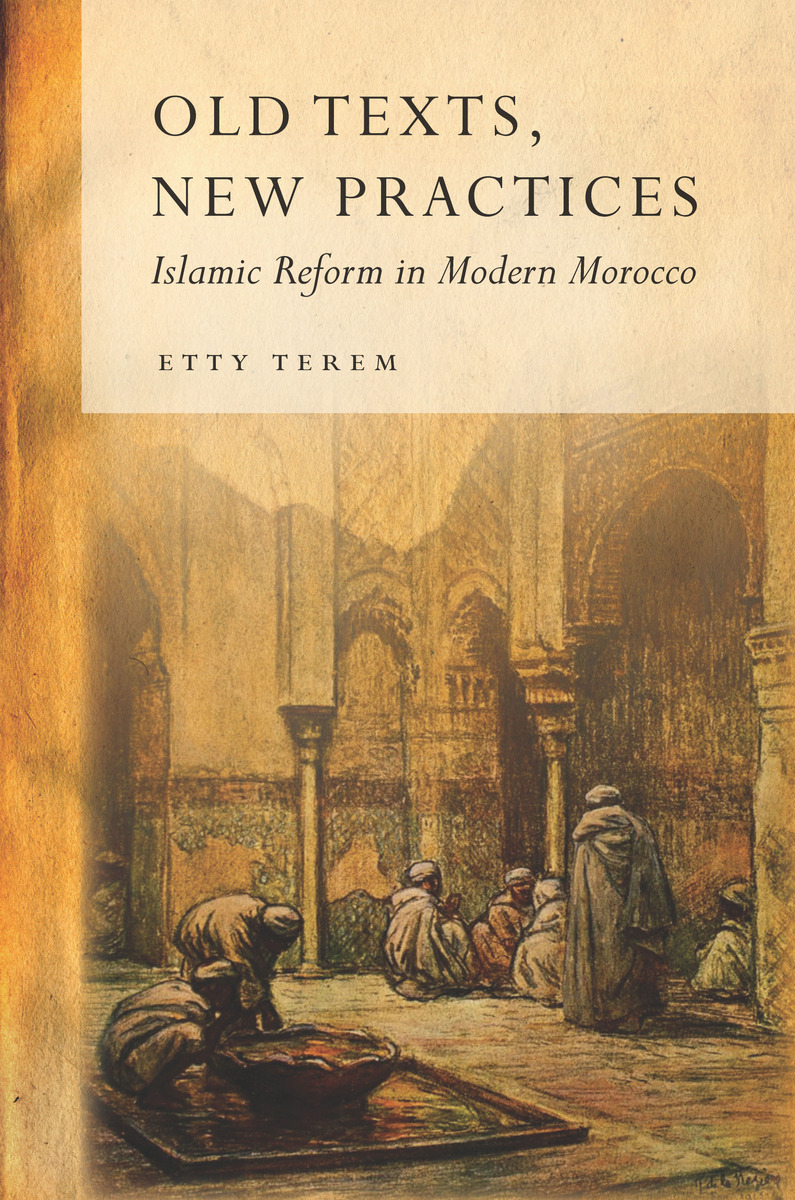
Etty Terem is Professor of History and J.J. McComb Chair of History at Rhodes College, specializing in Modern Middle East and North Africa with emphasis on Morocco. She teaches courses including The Making of the Modern Middle East and The Algerian Revolution , fostering critical analysis of historical presuppositions and contemporary relevance. Her educational credentials feature: Ph.D. in History, Harvard University (2007) M.A. in History, Tel Aviv University (1998) B.A. in History, Tel Aviv University (1993) Terem's research interrogates Islamic modernity through Moroccan reform movements, examining tradition-modernity dynamics, gender in colonial contexts, and Muslim perspectives on change. Her work critically analyzes primary sources to uncover historical content of transformation in Muslim societies, with increasing focus on women's roles in Maghribi modernization. Her 12 publications (2007-2023) reveal consistent engagement with Moroccan history across precolonial, colonial, and postcolonial eras. Key trends include Islamic legal reinterpretation, gendered modernity, cultural appropriation, and statecraft evolution. Recent works (2021-2023) intensify focus on women's agency in identity formation and decolonization. As an educator, Terem mentors undergraduate researchers in historical methodology and critical theory. While specific grant details are unreported, her sustained scholarly output demonstrates active research engagement. She also contributes to academic discourse through specialized book reviews in major historical journals. Terem maintains field expertise through extensive Middle Eastern travel including Jordanian trekking, Moroccan expeditions, and cultural immersion in Cairo and Istanbul, complementing her scholarly focus with firsthand regional experience.
Dirk Van Hulle holds the position of Professor of Bibliography and Modern Book History within the University of Oxford's Faculty of English, with significant cross-institutional leadership roles. Chair of the Oxford Centre for Textual Editing and Theory (OCTET) Director of the Centre for Manuscript Genetics at the University of Antwerp Co-director of the Beckett Digital Manuscript Project Editor of the Journal of Beckett Studies Series Editor for Cambridge UP's 'Elements in Beckett Studies' His research centers on Beckett Studies, James Joyce Studies, and textual scholarship methodologies, specializing in genetic criticism to trace literary creation through manuscript evolution. Van Hulle bridges traditional bibliography with digital humanities, examining how modernist authors like Beckett and Joyce transformed drafts into finished works, with particular focus on material textuality and archival preservation. Analysis of his major publications reveals consistent emphasis on digital approaches to manuscript analysis, especially regarding 20th-century literary giants. Works like Modern Manuscripts (2014) and James Joyce's Work in Progress (2016) demonstrate methodological innovation in reconstructing compositional processes through digital archives, highlighting the Beckett Digital Manuscript Project's role in advancing genetic criticism. His scholarly recognition includes: 2019 Prize for a Bibliography, Archive or Digital Project from the Modern Language Association (MLA) Van Hulle directs the Oxford Centre for Textual Editing and Theory (OCTET), which develops interdisciplinary frameworks for textual scholarship, and the University of Antwerp's Centre for Manuscript Genetics, specializing in genetic analysis of literary manuscripts. The Beckett Digital Manuscript Project under his co-direction provides a comprehensive digital archive of Beckett's manuscripts, integrating high-resolution images with transcriptions and scholarly annotations to enable global research access.
Helena Reckitt is a Reader in Curating at the Department of Art, University of London Goldsmiths. She is a curator and researcher with international expertise in feminist and queer curatorial practices, affect theory, and social reproduction in art. Her work critically engages with revisiting historical feminist and queer movements to address their underrepresentation in Anglo-American canons, using translation, re-enactment, and collective reading as methodologies. Previous Roles : Senior Curator at The Power Plant (Toronto), Senior Director at Atlanta Contemporary Art Center, Head of Talks at ICA London. Professional Engagement : Co-founder of Feminist Curators United (fCu), member of the Women’s Art Library, and editorial board member for Goldsmiths Press. Research Focus : Reckitt investigates the undetonated potential of radical feminist and queer movements, examining their implications for contemporary curatorial practice. She analyzes the sexual politics of artistic labor, particularly how curators and students are interpellated as feminized, and explores care ethics in institutional settings. Scientific Awards : Curatorial Writing Award / Prix des Textes de Conservation, Ontario Association of Art Galleries (2011). Grants & Collaborations : Her projects have been funded by the Arts Council of England, Andy Warhol Foundation, Creative Capital Foundation, and others. Collaborative initiatives include the Feminist Duration Reading Group (2015-2021) and exhibitions like Habits of Care and Getting Rid of Ourselves .
Kenneth Yu is an Assistant Professor in the Department of Classics at the University of Toronto, with additional affiliation to the Department for the Study of Religion. His research intersects Imperial Greek literature, ancient religious frameworks, and classical scholarship methodologies. University of Toronto (St. George Campus) Department of Classics & Department for the Study of Religion Academic rank: Assistant Professor Yu's scholarly focus spans three key areas: Analysis of Greek religious epistemology and its disciplinary history Commentary practices in antiquity across philosophical and literary texts Evolution of aetiological reasoning from Homeric hymns to Imperial ethnography His recent publications and projects include: Problems in Greek Religion: Constructing the Gods between Thauma and Philology (monograph) Co-edited volume The Oxford Handbook of Global Commentary (2020-25 SSHRC-funded) Titles in Ancient Greek Literature: Forms, Practices, and Theories (2022-25 SSHRC-funded) Yu has held distinguished fellowships at: Collège de France Hardt Foundation (Switzerland) Institute of Classical Studies (University of Leuven) Center for Hellenic Studies (2022-23) His academic credentials include: AB & PhD in Classics, University of Chicago
Maria Sanchez-Ortiz is a Senior Lecturer in Translation and Interpreting Studies at the School of Language, Literature, Music and Visual Culture (LLMVC), University of Aberdeen, where she has been actively contributing since 2016. She serves as Programme Director for both the on-campus and distance learning MSc in Translation Studies and co-directs the Centre for Multilingual Research. She previously directed the Centre for Translation and Interpreting Studies from 2020 to 2023 and coordinated the undergraduate programme in Modern Languages and Translation from 2017 to 2020. Her educational background is extensive and interdisciplinary: PhD in Translation Studies, University of Bradford (2006) MSc in Dubbing, Subtitling & Localization, Instituto Superior de Estudios Lingüísticos y Traducción, Spain (2019) Postgraduate Certificate in Academic Practice, University of Salford (2015) Diploma in Audiovisual Translation, Universidad de Educación a Distancia, Spain (2014) Diploma in Public Service Interpreting, CIoL (2007) MA in European Studies, University of Bradford (1994) Diploma in Spanish with Translation and Interpreting, CIoL (1992) BA in English Language and Literature, University of Granada, Spain (1989) Maria's research focuses on Translation and Interpreting Studies, with particular emphasis on literary translation, audiovisual translation, translator training, sociolinguistics, dialect translation, and the impact of AI on translation professions. She has supervised multiple PhD students to completion and actively welcomes new doctoral candidates in Spanish and Latin American Studies. Her work consistently bridges theory and practice, with a strong pedagogical orientation. Her 15 most recent publications span from 1996 to 2024, reflecting a sustained engagement with core issues in translation. The articles reveal a deep interest in the pragmatics, ethics, and cultural dimensions of translation, particularly in literary and dialectal contexts. A recurring theme is the translator's agency and the challenges of preserving stylistic and sociolinguistic nuances. More recently, her work has addressed gender, multiculturalism, and the evolving role of technology in translation. She has received numerous teaching accolades, including: Awarded 'Best Undergraduate Lecturer', University of Aberdeen (2024–2025) Awarded 'Funniest Lecturer', University of Aberdeen (2023–2024) Awarded 'Best Taught Postgraduate Lecturer', University of Aberdeen (2018–2019) Nominated for 'The Most Inspiring Lecturer' (2019–2020) and Excellence in Teaching awards Maria Sanchez-Ortiz is an active supervisor, mentor, and curriculum developer. She has served as an external examiner for MA and BA programmes at several UK universities, including Manchester, Open University, Portsmouth, Durham, and Bath. She is a Fellow of the UK Higher Education Academy (since 2015) and a member of key professional bodies such as the Institute of Translation and Interpreting (ITI) and the International Association for Translation and Intercultural Studies. She also contributes to academic journals as a member of editorial and advisory boards. She leads and co-directs major research centres at Aberdeen, fostering interdisciplinary collaboration and innovation in multilingual research. Her leadership in the European Graduate Placement Scheme and membership in the PACTE Research Group highlight her commitment to international cooperation and empirical research in translation competence.