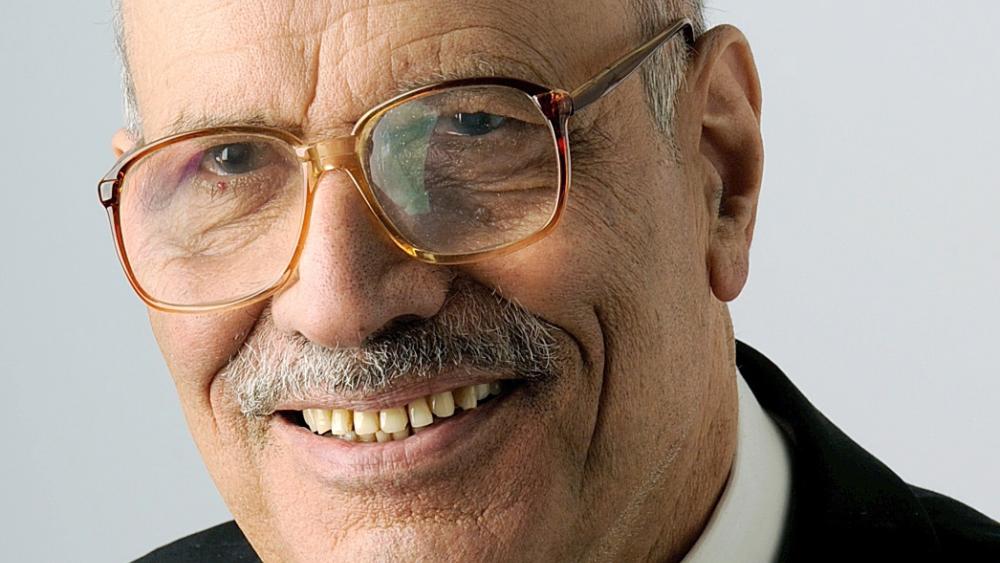
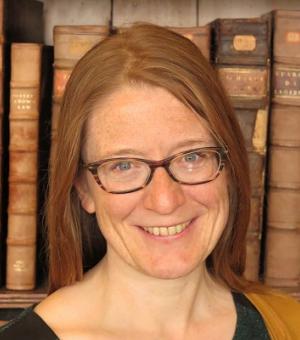
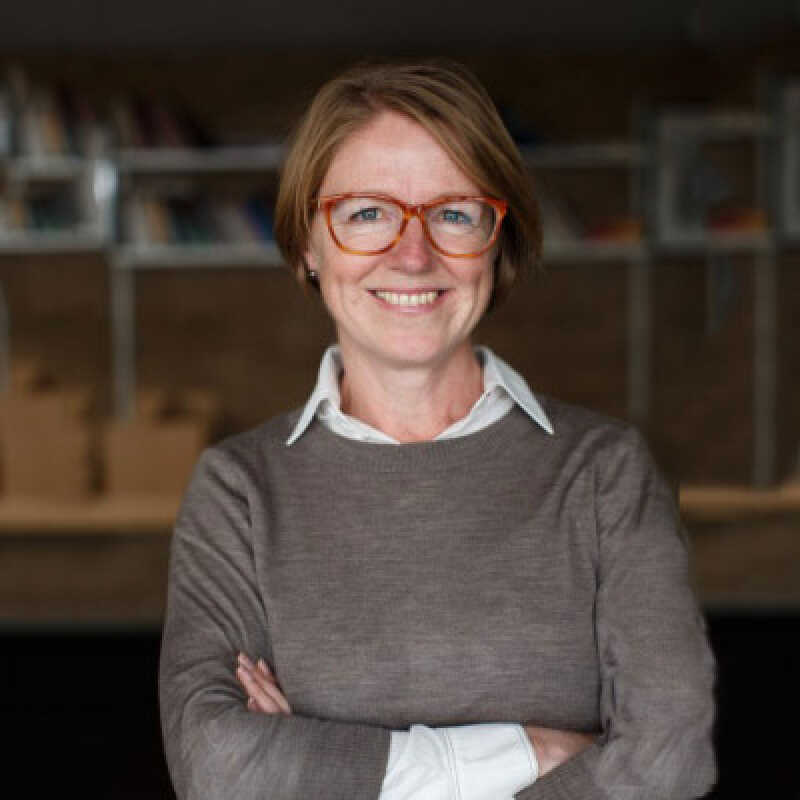
Professor Muhammad A S Abdel Haleem, OBE, is the King Fahd Professor of Islamic Studies at SOAS University of London, within the School of Languages, Cultures and Linguistics. He holds a BA from Cairo University and a PhD from the University of Cambridge (Cantab), with additional qualifications including FCIL (London). His research focuses on Quranic language, style, and translations, alongside Islamic family law and Arab society. Key interests include Qur’anic exegesis, comparative religious studies, and the intersection of scripture with contemporary issues like disability ethics and interfaith relations. Professor Haleem has supervised numerous PhD candidates exploring topics such as divine states in Sufism, gender relations in the Quran, and charitable work in multicultural societies. He has authored over 60 works, including translations of the Quran and influential studies on Quranic structure and theology. Awards: Order of the British Empire (OBE) Publications: Over 60 books and articles, including Understanding the Qur'an: Themes and Style and translations of the Quran. His work bridges academic theology with practical ethics, emphasizing contextual interpretation and intercultural dialogue. Current research continues to explore Quranic coherence, legal hermeneutics, and the Quran’s role in modern society.
Prof Andrew Peacock holds the Bishop Wardlaw Professorship in the School of History at the University of St Andrews. His research focuses on Islamic and Middle Eastern history, with a particular emphasis on medieval Anatolia, Persian manuscripts, and the cultural exchanges in Southeast Asia and the Indian Ocean. He has supervised PhD students including Hebah Alheem, Ali Shapouran, and Weijie Xu. His recent publications explore Arabic literary culture in 17th-18th century Southeast Asia, Melaka’s historical sources, and the memoirs of Safavid ruler Shah Tahmasp I. Key projects include the ERC-funded 'IslamAnatolia' initiative (2012-2017) and a British Academy grant for studying Arabic language in early modern Southeast Asia. His work often bridges historical analysis with material culture, such as his edited volume on medieval Islamic inscriptions (2023). Prof Peacock’s research also engages with transnational themes, including Ottoman-Darfur diplomacy and the role of urban notables in medieval Anatolia.
Richard Walsh is Professor in the Department of English and Related Literature at the University of York, where he leads the Interdisciplinary Centre for Narrative Studies and founded the British and Irish Association for Narrative Studies. His research bridges literary theory, cognitive science, and complex systems, examining narrative as a fundamental mode of human cognition. His research focuses on three interconnected domains: The rhetorical theory of fictionality and its cultural manifestations Interdisciplinary approaches to narrative cognition and sensemaking Complexity science applications to narrative structures across media This work extends to innovative fiction, digital narratives, and cross-cultural storytelling. Analysis of Walsh's recent publications reveals strong emphasis on narrative cognition, interdisciplinary methodologies, and emerging topics in AI storytelling. Thematic clusters include: Foundational studies in fictionality and rhetorical frameworks Complexity theory applications to narrative dynamics Interdisciplinary intersections with cognitive science and digital media His scholarly recognition includes the distinguished Institute of Advanced Study Research Fellowship at Durham University (2016) Walsh directs multiple research groups including the Narrative and Complex Systems Group (NarCS) and supervises doctoral projects on narrative theory. He leads collaborative initiatives like the RIDERS project on emergent narrative and the Threshold Worlds project on dream cognition.
Rachel Marion Scott is a Professor and Chair of the Department of Religion and Culture at Virginia Polytechnic Institute and State University, within the College of Liberal Arts and Human Sciences. She is also affiliated with ASPECT (Alliance of Social, Political, Ethical, and Cultural Thought), reflecting her interdisciplinary engagement with political and ethical theory in Islamic contexts. Her research centers on Islamic political thought, modern Islamic law, constitutional development in Muslim-majority countries, and personal status law. She has made significant contributions to understanding the interplay between religion and the nation-state, particularly in Egypt. Her scholarly work explores how religious authority is negotiated in constitutional frameworks, the evolution of Islamic legal thought, and the role of institutions like al-Azhar and the Muslim Brotherhood in shaping political discourse. Professor Scott’s publications reveal a sustained focus on the dynamics of Islamic law in modern governance, with a particular emphasis on Egypt’s constitutional history and legal reforms. Her work bridges religious studies, political science, and legal theory, addressing themes such as secularism, religious pluralism, citizenship, and hermeneutics. The articles show a trajectory from broader studies of political Islam to more nuanced analyses of constitutionalism, gender, and religious authority. She has authored two major monographs: The Challenge of Political Islam: Non-Muslims and the Egyptian State (Stanford University Press, 2010) and Recasting Islamic Law: Religion and the Nation State in Egyptian Constitution Making (Cornell University Press, 2021), both of which are central to contemporary scholarship on Islam and governance. While no formal list of awards is provided in the text, her publications with leading academic presses indicate recognition and scholarly impact in her field. Rachel M. Scott advises graduate students and contributes to academic mentorship through her leadership roles. As department chair, she oversees curriculum development, faculty collaboration, and interdisciplinary initiatives. There is no explicit mention of external grants, but her research output suggests engagement with funded scholarly projects or institutional support. She is affiliated with research initiatives related to Islamic studies, political thought, and constitutional law, particularly through her work with ASPECT and the Department of Religion and Culture. These affiliations support collaborative scholarship on ethics, cultural thought, and the role of religion in public life.
Vincent Brown serves as the Charles Warren Professor of American History and Professor of African and African American Studies at Harvard University, based in the Center for Government and International Studies (CGIS) South Building. His academic work centers on Atlantic history with a focus on the African diaspora and slavery in the Americas. His research expertise spans Atlantic History, African Diaspora Studies, and Slavery, with deep engagement in Digital History methodologies, Early American History, Imperial History, and Race studies. Brown examines power dynamics, resistance movements, and cultural identity formation within 17th-18th century Atlantic contexts, particularly in the Caribbean. His interdisciplinary approach integrates spatial analysis and digital tools to reinterpret historical narratives of slavery and empire. Analysis of his publications (2011-2024) reveals sustained focus on slave revolts as transnational phenomena, spatial history through digital mapping, and multimedia scholarship. His work demonstrates evolution from textual analysis in The Reaper's Garden (2008) to immersive cartographic projects like the Jamaican slave revolt mapping (2012-2016), culminating in documentary production ( Herskovits at the Heart of Blackness , 2009; The Bigger Picture , 2022). Recent outputs show increasing engagement with public history and interdisciplinary connections between political geography, racial terror, and cultural memory. The source materials do not specify details regarding student advising, grant funding, or laboratory teams.
Pauline Lemaigre-Gaffier is a Lecturer in Modern History at the University of Versailles Saint-Quentin-en-Yvelines (UVSQ), affiliated with the Institute of Cultural and International Studies (IECI) and the Department of History. She co-leads the VoCriPat project (2023–present) and participates in the DIM PAMIR committee (2022–present) and ANR ACADEC project (2022–present). Her research focuses on European court societies (festivals, ceremonies, urban interactions) Cultural history (material culture, documentary writings) Political history (public finance, administrative practices) Economic history (privileges and businesses) Heritage sciences Her 15 most recent publications explore topics like archival practices in early modern Europe French court administration of the arts economic networks of privileged enterprises royal household logistics spanning 2015–2024, with upcoming works on economic history and heritage sciences in 2025. She has received the Benabou Prize (2012) and was a Thiers Foundation scholarship holder (2009–2010) . Her career includes editorial roles at Entre-Temps (2021–2023) and educational management for the 'Music, Performance, and Heritage' degree (2014–2016). She collaborates with institutions like the Centre de recherche du Château de Versailles and the Heritage Sciences Foundation.
Professor Kathryn Murphy is an Associate Professor in the Faculty of English Language & Literature at the University of Oxford and a Fellow and Tutor at Oriel College. Her research focuses on seventeenth-century literary and intellectual culture, blending literature, philosophy, theology, and art. She explores the interplay between form (poetic, rhetorical, and artistic) and thought, with a particular interest in essays, still-life painting, and the relationship between form and idea. Her recent projects include a biography of Robert Burton (author of The Anatomy of Melancholy ) and a study of metaphysical prose in the seventeenth century. She has also edited On Essays: Montaigne to the Present and writes essays on art, including analyses of still-life painting and devotional imagery. Her work frequently bridges literary studies and medical humanities, collaborating with the Oxford Health Biomedical Research Centre and the TORCH Medical Humanities Hub. She has curated exhibitions such as Melancholy: A New Anatomy (2021) and is preparing a 2026 exhibition on natural history. Murphy is a series editor for Edinburgh Critical Studies in Renaissance Culture and serves on the editorial boards of Cambridge Quarterly and Edinburgh Critical Studies . She contributes art criticism to Apollo and reviews Czech literature for the Times Literary Supplement . Her research emphasizes interdisciplinary exploration, examining how form—from sentences to paintings—serves as an instrument of thought. Current projects include a book on still-life painting and the immanence of meaning in objects, alongside ongoing studies of attention, distraction, and decision-making in early modern texts.
Si Nae Park is an Associate Professor at Harvard University's Faculty of Arts and Sciences and Director of Graduate Studies for Regional Studies East Asia. Her research focuses on the interplay between cosmopolitan Literary Sinitic and vernacular Korean in premodern East Asia, examining genres like yadam (vernacular stories) and sosŏl ŏrokhae (fiction glossaries). Affiliation: Department of East Asian Languages and Civilizations, Harvard University Role: Director of Graduate Studies for Regional Studies East Asia Her work explores inscriptional ecologies, vernacular reading practices, and the materiality of texts in Chosŏn Korea. She has written on the Tongp’ae Naksong and the evolution of vocal reading practices. Publications include her monograph The Korean Vernacular Story (2020) and peer-reviewed articles on Confucian classics (2019), yadam heritage narratives (2021), and Chosŏn manuscript culture (2022). She co-organized a 2022 Harvard conference on Korean book history. Her current project, Within Earshot , investigates oral-aural dimensions of reading in Chosŏn Korea, analyzing how auditory practices shaped textual authority and literary production. She has contributed to translations of premodern Korean prose and Japanese studies on the Sinographic Cosmopolis.
Muzaffar Alam is the George V. Bobrinsky Professor at the University of Chicago's South Asian Languages and Civilizations (SALC) , within the Division of the Arts & Humanities. He has taught at UChicago since 2001, following a three-decade tenure at Jawaharlal Nehru University (JNU). His expertise spans Mughal political history, Indo-Islamic culture, and pre-colonial South Asian religious and literary traditions. He is fluent in Persian, Arabic, Urdu, and Hindi, and actively supervises students in medieval South Asian studies. Education: Ph.D. in History, Jawaharlal Nehru University (1976) Studies at Jamia Millia Islamia and Aligarh Muslim University Research focuses on Mughal governance, Indo-Persian cultural exchange, and textual studies. He has held visiting positions at the Collège de France, Leiden University, and the EHESS (Paris). Courses taught include Mughal India, South Asian Islam, and advanced Urdu/Persian seminars. Publications include seminal works like The Mughal State 1526-1750 and Indo-Persian Travels in the Age of Discovery . His scholarship bridges history, philology, and comparative Islamic studies from an Indian perspective. Labs/Teams: Actively involved with SALC's research initiatives and textual analysis projects. Supervises advanced language studies and historical manuscript work.
Professor Catherine Richardson serves as Professor of Early Modern Studies and Director of the Institute of Cultural and Creative Industries at the University of Kent. She joined the university in 2007 from The Shakespeare Institute and has held significant leadership positions including Associate Dean for Research and Innovation (Humanities) (2017-20), Deputy Head of School of English (2014-7), and Director of Research for the School of English (2012-7). Her research centers on the relationship between texts and material circumstances of production and consumption in early modern England, with particular focus on how material culture shaped social and cultural practices. Richardson examines the birth of creative industries in drama and performance cultures, skilled craft practices influenced by international migration patterns, and the evolution of cultural practices from the sixteenth century to present. She currently leads the AHRC-funded project 'The Cultural Lives of the Middling Sort, writing and material culture 1560-1660' in collaboration with The Shakespeare Birthplace Trust and Weald and Downland Living Museum. Richardson's extensive publication record reveals consistent scholarly engagement with material culture studies, with recent works increasingly incorporating digital humanities approaches. Her scholarship spans monographs, edited collections, and numerous journal articles examining domestic life, object biographies, and the intersection of physical artifacts with cultural narratives in early modern England. Her notable recognitions include: Fellow of the Royal Historical Society (2018) AHRC Peer Review and Strategic Review College Member (2017-22) The Malone Society council member (2002-) and Orders Secretary (2002-22) Pasold Research Fund Governor (Expert Member since 2019, 2021-present) As a dedicated supervisor, Richardson welcomes graduate students working on interdisciplinary projects related to early modern dramatic, social and cultural history. Her current AHRC project represents significant grant activity, developing digital resources that explore inclusion/exclusion dynamics in early modern English writing practices. She also serves as General Editor for the Oxford Complete Works of Christopher Marlowe and Series Editor for Arden Studies in Early Modern Material Culture. Through her directorship of the Institute of Cultural and Creative Industries, Richardson fosters research that bridges historical material culture studies with contemporary creative industry practices, creating innovative pathways for engaging with historical materials through modern technological approaches.
William H. Nienhauser, Jr. is the Halls-Bascom Professor of Classical Chinese Literature in the Department of Asian Languages and Cultures at the University of Wisconsin–Madison, College of Letters and Science. He is a leading authority on early Chinese literature, historiography, and poetry, with a particular focus on Sima Qian’s Shiji and the poetry of Du Fu. He has held visiting and research positions in China, Japan, Germany, and Taiwan, and remains academically active, including a 2018 appointment as Visiting Professor at Nankai University. His research interests include early traditional Chinese fiction, historiography, chuanqi and zhiguai tales, and the application of modern Western critical theories to Chinese literary texts. He is deeply engaged in the translation and annotation of classical works, especially the Shiji , often in collaboration with graduate students. His scholarship bridges philology, literary theory, and historical contextualization, contributing significantly to the global understanding of pre-modern Chinese literature. Nienhauser’s publications reveal a sustained focus on textual analysis, narrative structure, and the interplay between history and literature. His work spans from early Shijing poetry to Tang dynasty fiction, with a strong emphasis on Sima Qian’s historiographical methods and legacy. He has also contributed foundational reference works and critical editions, shaping the field of Chinese literary studies. His scientific awards reflect the international recognition of his scholarship: Woodrow Wilson Fellowship ACLS Fellowship NEH Fellowship Fulbright-Hayes Fellowship Japan Foundation Fellowship German Research Foundation Fellowship Alexander von Humboldt Foundation Fellowship Humboldt Foundation Lifetime Achievement Award (2003) Nienhauser has advised numerous graduate students in collaborative research projects, particularly on the Shiji and Du Fu. He has secured major fellowships and grants from prestigious organizations including the NEH, ACLS, Fulbright-Hayes, and the Humboldt Foundation, enabling extended research and translation work. His editorial roles, especially as a founding editor of Chinese Literature: Essays, Articles, Reviews (CLEAR), have been instrumental in advancing the field. While no formal lab or research center is mentioned, Nienhauser leads a major international collaborative translation project on the Shiji , involving scholars and students across institutions. His seminars and graduate courses foster a close-knit research community focused on classical Chinese texts.
Katrin Bromber is a German Researcher at the Centre for Modern Oriental Studies in Berlin, where she has led the research group "Progress and its Discontents: Ideas, Practices, Materiality" since 2014. Her career spans senior research roles at ZMO and academic teaching positions at the University of Vienna. Nationality: German. Language skills: Native German, fluent English/Swahili, moderate Amharic, good reading knowledge in French/Russian, basic Tigrinya. Habilitation (2009–): African Studies, University of Vienna PhD (1993): African Linguistics, University of Leipzig MA (1988): Swahili Studies, University of Leipzig Katrin Bromber's research interrogates intersections of body politics , sports history , Swahili linguistics , and Ethiopian modernity . Her work traces how physical culture, media representation, and colonial/imperial narratives shape national identities across Africa and Asia. Current focus: "Progress" as contested concept in Ethiopian and Gulf urbanism. Key article trends reflect her translocal methodology: 2017 studies on Ethiopian stadiums and fitness culture ; 2014-2013 publications analyzing East African military press , sports branding in the Gulf , and Swahili poetry ; 2007-2000 works on colonial linguistic politics , Indian Ocean slavery , and German colonial Swahili promotion . Recurring sub-fields: body as political text, translocal modernity, media historiography. Scientific Awards: Research Grant of the Berlin City Council (1999-2000): Gendered Slavery study Service to the Scientific Community: Chairwoman, Academic Association for Horn of Africa Studies (2012–) Editorial Advisory Board - Stichproben. Vienna Journal of African Studies (2015–) Editorial Advisory Board - Studies of Department of African Languages and Cultures (2015–) Teaching Experience: Textlinguistics, Mediacommunication, African Linguistics, Swahili (elementary/advanced), Swahili Literature, Swahili in Arabic Script at Leipzig, Humboldt-Berlin, Free Berlin, and Vienna universities Anthropology of the Body at Mekelle University Summer School Field Research: Tanzania (1993-2003): Swahili Poetry, Intellectual History Kenya (2005): Indian Ocean WW2 UAE/Bahrain (2009): Sports and Body Cultures Ethiopia (2009-2015): Sports, Body Politics
Chloe Estep is an Assistant Professor of Modern Chinese and Sinophone Literatures at the University of Pennsylvania's School of Arts & Sciences, affiliated with East Asian Languages and Civilizations. She holds a PhD from Columbia University, an MA from the University of Michigan, Ann Arbor, and an AB from Princeton University. PhD, Columbia University MA, University of Michigan, Ann Arbor AB, Princeton University Her research interrogates the intersections of classical/modern Chinese poetics, media theory, material culture, and gender/sexuality studies. She explores how traditional artistic forms are reinterpreted in modern contexts, with a particular focus on manuscript culture, calligraphic aesthetics, and translation practices. Recent publications examine scroll painting interpretation, Republican-era adaptations of classical poetry, and the politics of prosody. Her work appears in the Journal of Chinese Literature and Culture and Nan Nü: Men, Women, and Gender in China , with forthcoming contributions in Comparative Literature .
Dr Estara Arrant is a Cambridge University Library Leverhulme Early Career Research Fellow and Trinity Hall Postdoctoral Research Associate. She merges Semitic linguistics with data science to study medieval Jewish and Islamic textual cultures. PhD (University of Cambridge, 2021): Computational analysis of Cairo Genizah Torah codices MPhil (University of Oxford, 2018): Linguistic structure of Qur’ānic creation narratives BA: History & Modern Hebrew Her groundbreaking work combines machine learning and bioinformatics algorithms to analyze textual evolution. Current projects include: Developing the first NLP model for medieval Judaeo-Arabic Creating digital tools for computerized stemmatology She actively teaches Python and R as an Cambridge Digital Humanities associate, and her research has been published by Open Book Publishers and Brill .
Simon Swain is Professor of Classics and Greco-Arabic at the University of Warwick, concurrently serving as Vice-President (Engagement) at the university and Vice-President (Research and Higher Education Policy) at the British Academy. His leadership roles include former positions as Pro-Vice-Chancellor (International), Chair of the Faculty of Arts, and multiple terms as Head of the Department of Classics. His educational background includes: MA, Oxford (Pembroke College), 1980-1984 D.Phil., Oxford (Wolfson College), 1987 Swain's research centers on the reception of Greek thought in the Islamic Middle Ages and the social-cultural history of the Greek East during the Roman period. He investigates the transmission of ancient Greek science, medicine, and political thought into Islamic scholarship, employing interdisciplinary approaches that bridge Classics, History, and Islamic Studies. His work emphasizes textual transmission, cultural adaptation, and the socio-political contexts of knowledge transfer. Analysis of his publications reveals consistent engagement with Greco-Roman intellectual history and its Islamicate legacy. Key thematic trajectories include the evolution of medical knowledge from Galen to medieval Arabic texts, political theory in imperial contexts, and sociolinguistic dynamics of bilingualism. His editorial projects demonstrate increasing focus on cross-cultural transmission, particularly through critical editions of foundational texts like Ibn Abī Uṣaybiʿah's medical biographies. His honors include: Fellow of the British Academy (2015) Wellcome Trust Collaborative Investigator Award Swain supervises postgraduate research in Greek world studies, late antiquity, and Greco-Arabic scholarship. He has secured major funding from AHRC, Leverhulme, Wellcome, and EU bodies for collaborative projects examining ancient knowledge systems. Current initiatives like the "Streamlining Galen" project support early-career researchers while investigating how canonical medical texts were adapted for medieval Islamic pedagogy. He actively leads research collectives including the "Streamlining Galen" project team, which analyzes condensed medical texts that facilitated the teaching of Galenic medicine in medieval Islamic institutions. His collaborative approach extends to mentoring networks that connect Warwick with international scholars across Classics and Islamic Studies disciplines.