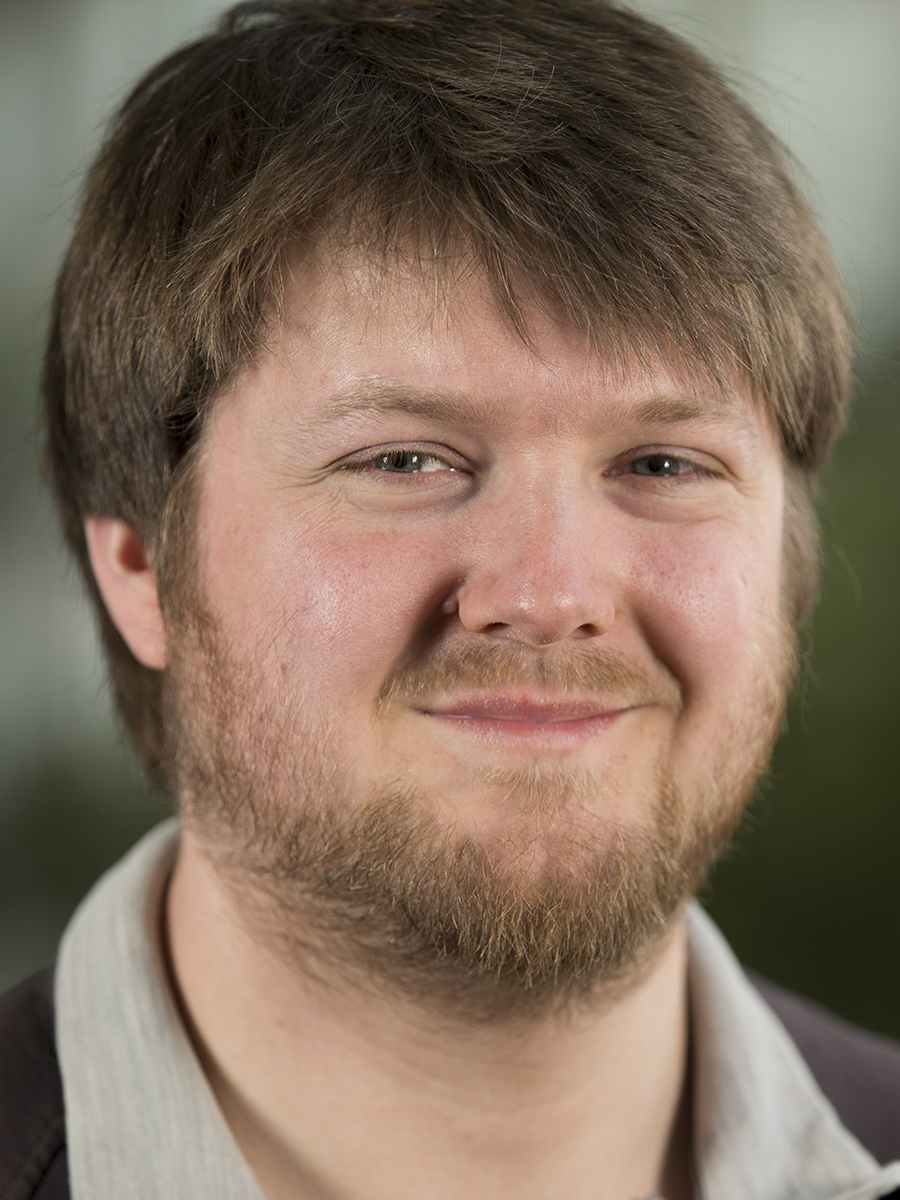
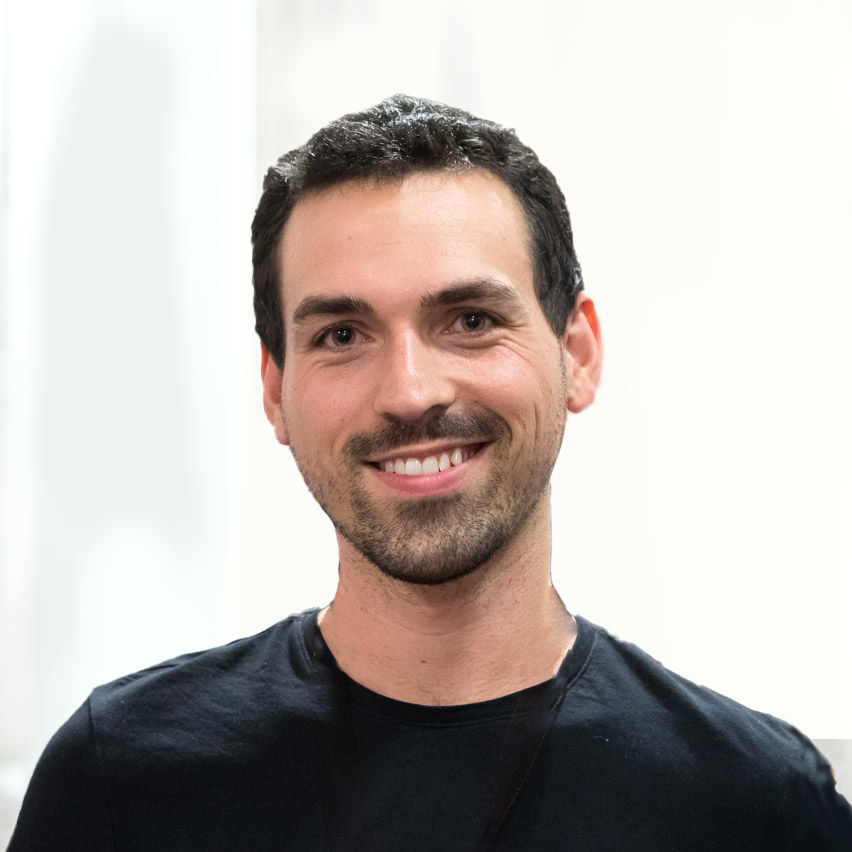
Ke Huo is a researcher focused on advanced interactions in Augmented Reality (AR) , Robotics , and Sensor Systems . His work bridges physical and digital environments through innovative tools like GhostAR , V.Ra , and iSoft , enabling intuitive authoring of context-aware applications. Research Interests : Augmented Reality (AR) systems for collaborative task planning Soft sensor technology with multimodal sensing Context-aware robotics and IoT integration 3D design ideation in mixed reality Autonomous driving decision-making frameworks Publication Trends : 2014–2024: 15+ papers on AR, sensor design, and human-robot collaboration Key venues: UIST , CHI , Sensors , ACM DIS Collaborations with Karthik Ramani, Yuanzhi Cao, and Sang Ho Yoon
Dr. rer. nat. Agnes Grünerbl is a researcher at the Embedded Intelligence group within the German Research Center for Artificial Intelligence (DFKI), focusing on Human-Computer Interaction (HCI) and artificial intelligence applications. She contributes to interdisciplinary projects like STELEC (Sustainable Textile Electronics) funded by the European Innovation Council (EIC). Her work explores the integration of Generative AI (GenAI) and "Large Whatever Models" in HCI methodologies, as well as sensor-based state detection for mental health applications. Recent research includes participation in key conferences such as CHI-2024 , UbiComp-2024 , and MobileHCI-2024 , where she presented studies on AI-driven interface design, mental care standards, and mobile cognition-altering technologies. Her projects emphasize sustainability and human-centered design in emerging computing paradigms. Agnes Grünerbl is affiliated with the Embedded Intelligence lab, which develops innovative wearable and textile-based electronic systems. Her collaborations span institutions like the University of Kaiserslautern and international researchers, reflecting her focus on interdisciplinary approaches to computational challenges.
Peter P. Pott is a Professor at the Institute for Medical Device Technology (University of Stuttgart), specializing in mechatronic systems for medical applications. His work spans medical robotics, sustainable technology, piezoelectric actuators, and biomedical imaging. Key roles: Faculty member, research leader, and innovator in medical robotics. Affiliation: University of Stuttgart, Germany. Research Expertise Pott's research focuses on: Medical robotics (endoscopic and surgical systems). Piezoelectric drive technology and its clinical applications. Sustainable management in medical technology. Biomedical sensor development and impedance imaging. Microscopy and actuator systems. His recent publications highlight advancements in robotic scrub nurse systems, assistive exoskeletons, and needle navigation technologies. Collaborative Impact He collaborates with institutions like Imperial College London and clinical partners in Germany, contributing to: Endoscopic robotics. Medical device automation. Training programs for physicians and engineers.
René Schäfer is a Researcher at RWTH Aachen University's Department of Computer Science, specializing in Human-Computer Interaction (HCI). His primary focus is countering deceptive patterns in user interfaces and developing ethical design strategies. He has contributed to projects like RIME (textile interfaces) and ARPen (mid-air interaction), and coordinates the university's Fab Lab. As the i10 librarian, he manages publication databases and library systems. His research spans dark patterns, accessible AI applications, and tactile interfaces. He has supervised over 30 student theses, emphasizing deceptive pattern mitigation and HCI ethics. Schäfer actively reviews for top conferences like CHI and NordiCHI, and co-organizes academic workshops. His work bridges theoretical HCI research with practical tools, such as Flowboard for embedded programming education and tactile slider evaluations. Key contributions include cross-cultural studies on linguistic barriers in HCI, collaborative strategies against online booking deceptive practices, and developing generative AI solutions for digital accessibility. His 2020 master’s thesis on ARPen interaction design showcases his long-standing interest in innovative UI paradigms.
Denys J.C. Matthies is a Professor at the University of Applied Sciences Lübeck , specializing in Human-Computer Interaction . His research spans multiple domains including haptics, wearable technology, and biomedical engineering applications. Human-Computer Interaction Haptics & Tactile Feedback Wearable & Mobile Technology Assistive & Biomedical Interfaces His recent publications focus on novel haptic toolkits like CoTacs , intraoral interfaces such as Chewit , and health monitoring systems like GutIO and StressFoot . Key technologies include shape-memory alloys, in-ear sensors, and foot-based biometric interfaces. Notable collaborations include researchers from the National University of Singapore , Monash University , and Fraunhofer IGD . His work appears in top-tier venues such as the CHI Conference and journals like ACM Transactions on Human–Computer Interaction .
Philipp Wacker is an academic alumni from RWTH Aachen University's Media Computing Group, where he served as a researcher and deputy head until late 2022. His work focuses on Human-Computer Interaction (HCI), particularly in Augmented Reality (AR), mid-air interaction techniques, and 3D modeling. He holds a PhD (2021) and M.Sc. (2015) in Computer Science from RWTH Aachen. Education: PhD in Computer Science (2021), RWTH Aachen University; M.Sc. in Technical Communication (2015), RWTH Aachen University. Research Interests: Philipp’s research spans AR interfaces, mobile interaction, and tangible computing. He has developed systems like ARPen for mid-air 3D modeling and FLApp, an AR-based tour guide. His work emphasizes user-centered design in wearable and handheld AR applications. Publications: His recent work includes studies on textile sliders (CHI 2022), AR menu techniques (MobileHCI 2020), and mid-air pen visualization (CHI 2020). These contributions highlight innovations in interaction design and usability evaluations. Teaching & Advising: Philipp supervised over 15 student theses on topics like ARPen accuracy and AR menu interfaces. He taught courses on iOS development and HCI at RWTH Aachen. Labs/Projects: He contributed to labs like the Future Lab Aachen (FLApp) and the Personal Photonics project, advancing photonics-based interaction tools for non-engineers.
Marc Teyssier is a Post-Doctoral Research Fellow at the Human-Computer Interaction Lab within the Department of Computer Science at Saarland University. He holds a Ph.D. in Computer Science from Télécom Paris – Institut Polytechnique de Paris and a Master’s degree in Interaction Design. His research focuses on developing creative hardware and software that bridges technology and human nature, emphasizing anthropomorphic devices, sustainable materials, and affective communication. Education: PhD in Computer Science, Télécom Paris – Institut Polytechnique de Paris (France) Master’s in Interaction Design Research Interests: Teyssier explores how technology can be made more human-centric through projects like Skin-On Interfaces (artificial skin-covered devices), MobiLimb (robotic smartphone attachments), and Eyecam (an anthropomorphic webcam). He combines prototyping, digital fabrication, and user research to reimagine device design, emphasizing sustainability (e.g., bioplastics) and ethical implications of sensing technologies. Key Contributions: Developed open-source projects like PolySense (smart textiles) and Eyecam (critical design for surveillance devices). Published at top venues including CHI and ICRA, with work on human-like artificial skin sensors and emotion-conveying touch interfaces. Recipient of ERC Stg InteractiveSkin funding and EPSRC grants. Labs & Groups: Leads the Resilient Futures research group at De Vinci Innovation Center and collaborates with Saarland University’s HCI Lab.
Dr. Marion Koelle is a Professor of Human-Computer Interaction at Hochschule RheinMain's Department of Design, Computer Science and Media in Wiesbaden, Germany. Previously, she led the Personal Pervasive Computing Group at OFFIS - Institute for Information Technology (2022-2025), was a Post-Doc at Saarland University, and held research positions at the University of Duisburg-Essen and Carl von Ossietzky University Oldenburg. PhD in Media Informatics (summa cum laude, University of Oldenburg 2019) M.Sc. in Media Informatics (LMU Munich 2013) B.Sc. in Media Informatics (LMU Munich 2010) Her research focuses on designing sustainable, ethical, and socially acceptable wearable/embodied technologies , with particular emphasis on: Co-designing technologies with diverse audiences Interactive bioplastics and biomaterials Privacy-preserving wearables Electrical Muscle Stimulation applications Body-based interfaces Digital fabrication for wearable tech Recent work includes biohybrid devices (UIST'23), 3D-printed haptics (ACM Trans. Hum. Robot Interact. 2025), and women's health data sovereignty (CHI'24). Her publications on social acceptability and privacy in wearables have received multiple awards including the Digital Female Leader Award 2024 . She has collaborated with leading institutions like: Saarland University (HCI Lab) OFFIS - Institute for IT University of Oldenburg TU Munich (FAR Group) Her projects often involve international partnerships and have been exhibited at Dutch Design Week (2024) and ESC Medien Kunst Labor (2024). Marion Koelle's work balances technical innovation with human-centered ethics , seeking to create technologies that empower users while respecting social norms.
Pia Scharf , a product designer and researcher at Hochschule für Gestaltung Offenbach , explores the intersection of design philosophy and digital systems. As a member of the agora° collective , she investigates subversive aesthetics and the role of games in shaping social values. Doctoral candidate in philosophy (Dr. phil.) at HfG Offenbach Co-founder of agora° collective (since 2016) Key symposiums with Museum Angewandte Kunst Frankfurt Her research focuses on: Evolution of interfaces in Industry 4.0 environments Philosophical implications of autonomous systems Empathy mechanisms in artificial intelligence Design's role in social negotiation processes Recent projects examine: Game theory applications in public space Material innovation with responsive leather systems Philosophical frameworks for human-technoid interaction Thermosiphon mechanics for sustainable design Her work has been presented at: Artificial Empathy symposium (2017) Digital Playgrounds lecture series (2018)
Amy Zhu is a researcher affiliated with the University of Washington. She actively contributes to the fields of programming languages, formal methods, and embedded systems through publications in conferences like SPLASH, FARM, and POPL. Research Interests: Equality saturation and term rewriting for program optimization. Domain-specific language design for embedded systems and textile engineering. Automated reasoning in compiler construction and formal verification. Recent Contributions: Published work on modular equality saturation frameworks (SPLASH 2023). Explored self-embedded knitting programs via Twine (FARM 2023). Developed rewrite rule inference techniques (SPLASH 2021).
Jan O. Borchers is a Professor at RWTH Aachen University's Media Computing Group within the Faculty of Mathematics, Computer Science and Natural Sciences. He also maintains an affiliation with Stanford University's Computer Science Department. His research spans multiple areas of Human-Computer Interaction with particular focus on tangible interfaces, smart textiles, and deceptive design patterns. His research interests center around innovative interaction techniques, particularly in the domains of wearable computing, smart textiles, and spatial user interfaces. Borchers has pioneered work in textile-based interfaces, exploring how fabrics can serve as input devices, and has recently focused on deceptive design patterns (dark patterns) and how to defend against them. His work bridges the gap between physical materials and digital interaction, creating novel user experiences that leverage the properties of textiles and other materials. His recent publications show a clear trend toward understanding and combating deceptive interface designs while continuing innovation in textile-based interaction. The research spans from fundamental perception studies to practical design tools, with applications ranging from smart homes to educational technologies for children. Borchers has been instrumental in developing frameworks for understanding deceptive patterns in interfaces, creating countermeasures, and building educational tools to increase user awareness. His work with children assessing deceptive designs represents an important contribution to understanding how different age groups perceive and interact with potentially manipulative interfaces. His academic advising has produced numerous PhD and Master's students who have become active researchers in the HCI community, particularly in the areas of textile interfaces and deceptive design patterns. His research group has secured significant funding for projects exploring the intersection of physical materials and digital interaction, with applications in smart homes, education, and accessibility. The Media Computing Group under Borchers' leadership operates state-of-the-art facilities for prototyping textile interfaces, augmented reality systems, and deceptive pattern research environments. The lab combines expertise in computer science, design, textile engineering, and psychology to create holistic interaction experiences.
Prof. Frank Rief is a Professor of Media Design at the Mediadesign Hochschule München, specializing in interface design and visual communication since 2012. He holds a Master of Arts in Communication Design and has over two decades of professional experience in brand and corporate communication through his agency, rief media design GmbH. His teaching focuses on conceptual, visual, and technical development of human-machine interfaces, with research exploring future interface possibilities through student collaboration. Education: Multimedia Design Studies, Mediadesign Hochschule München Master of Arts in Communication Design, HTWG Konstanz (thesis in China's Brand Communication) Research Interests: Interface design evolution, interactive systems, generative design, and sustainable construction communication. His work bridges academic research and industry application, such as the Brandschutznavigator project for TU München and the Zimmerer Bayern app for the carpenters' guild. Key Projects: Developed the LIV App for Bavarian carpenters, integrating offline functionality and compliance tools. Corporate identity redesign for holzbauGU GmbH and arstekton . Academic collaborations include Invisible Lines (interactive dance) and Smart Home Interface student projects. Advising & Grants: Advised multiple student projects (e.g., TEO App for rare disease patients, Daylight visualization tool). No explicit grants mentioned, but projects often involve industry partnerships. Labs/Teams: Directs rief media design GmbH (agency) and collaborates with Media Design Hochschule's academic teams on applied design research.
Shin'ichi Warisawa is a prominent researcher at the University of Tokyo's School of Engineering, Department of Computer Science, specializing in robotics, virtual reality (VR), and multisensory feedback systems. His work bridges human perception and technological innovation, with recent projects focusing on haptic and thermal feedback in VR, stress monitoring, and robotic systems for surgical and agricultural applications. Over his career, he has collaborated extensively with colleagues like Yuki Ban, Rui Fukui, and Juro Hosoi. His research interests span robotics, virtual reality, haptics, human-computer interaction, and biomedical engineering. Key contributions include developing novel VR haptic devices (FurAir, VWind), stress detection systems using physiological signals, and modular rail structures for hazardous environments (Rail DRAGON). He has also explored pseudo-haptic weight perception, vocal agency in VR, and olfactory simulation techniques. Recent publications highlight advancements in cross-modal sensory integration, with 16 articles in 2024 and 16 in 2025. These works emphasize VR applications for emotional and physiological user experiences, including wind sensation replication, paranormal visual phenomena, and vocal stress reduction systems. His 2023-2025 studies on WearSway and volumetric fur stroking showcase cutting-edge wearable haptics and visuo-haptic modeling. Warisawa's collaborative projects span surgical robotics (remote ultrasound systems), agricultural automation (tomato volume estimation robots), and neurosurgical tools. While no explicit awards are listed, his prolific output in top venues like IEEE Robotics and Automation Letters, Frontiers in Virtual Reality, and SIGGRAPH Asia Emerging Technologies underscores sustained impact. His work with institutions across Japan and internationally demonstrates multidisciplinary engagement in teleoperation, sensory engineering, and affective computing.
Dr. Marion Koelle is a researcher at the University of Oldenburg and affiliated with the OFFIS Institute for Information Technology , the University of Duisburg-Essen , and the Embedded Interactive Systems Lab at University of Passau. Her work focuses on Human-Computer Interaction (HCI) , with particular emphasis on privacy-preserving wearable technologies , body-based interfaces , and social acceptability of emerging technologies . Marion Koelle's research explores how users interact with augmented reality , smart home ecosystems , and biomaterials for interactive devices . She investigates methods to balance technological innovation with ethical considerations , including gender-specific FemTech and privacy policy design . Her work often incorporates haptic feedback , electrical muscle stimulation , and biodegradable materials for sustainable interfaces. Recent publications highlight her leadership in privacy-preserving systems and socially acceptable wearable design . Koelle collaborates with institutions across Germany and internationally, contributing to journals like Proc. ACM Hum. Comput. Interact. and conferences such as CHI , MUM , and TEI . She actively explores biomaterials for prototyping and privacy mediation in public settings.
Yu Jiang is a doctoral researcher at Saarland University's Department of Computer Science, affiliated with the Human-Computer Interaction Lab. With a Bachelor's degree in Global Studies, Computer Science, and Intelligent Environment from Carnegie Mellon University, Jiang focuses on compliant and (re)programmable shape-changing materials, AR/VR perception manipulation, and their integration into daily life. Educational Background: B.Sc. in Global Studies, Computer Science, Intelligent Environment (Carnegie Mellon University) Current Affiliation: Human-Computer Interaction Lab, Department of Computer Science, Saarland University Jiang’s research bridges embodied interaction and computational materials, with recent publications emphasizing wearable textiles (Texergy, Embrogami), VR embodiment (Handavatar), and perceptual design (Color-to-depth mappings). Projects explore programmable metamaterials, haptic feedback, and accessibility-focused interfaces. Key trends in Jiang's publications include shape-changing interfaces, passive energy systems for wearables, avatar embodiment in virtual environments, and accessibility innovations. The work leverages interdisciplinary approaches combining material science, HCI, and immersive computing. Contact: yjiang@cs.uni-saarland.de | Office: E 1.7 Room 2.02 | Lab: Human-Computer Interaction Lab