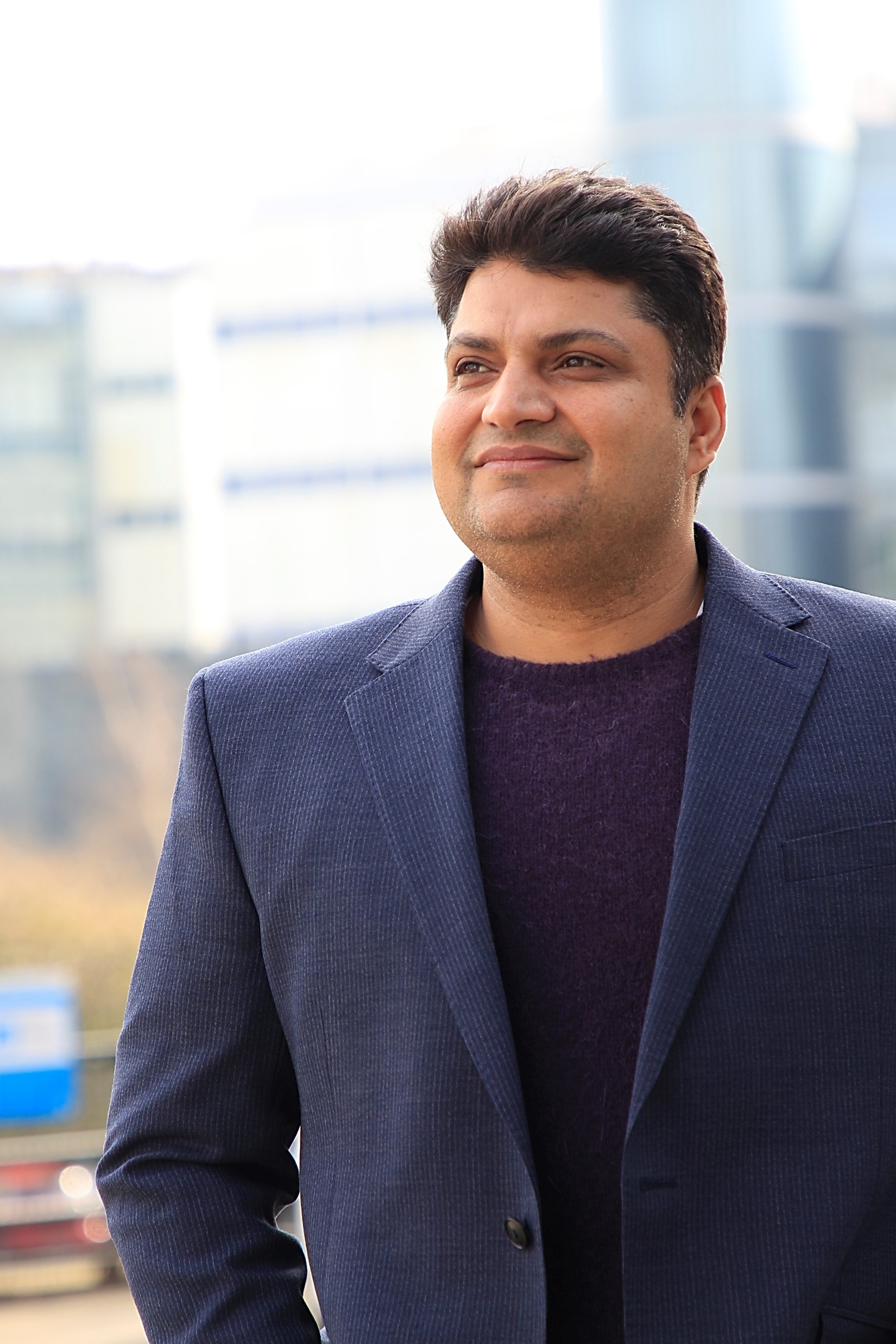
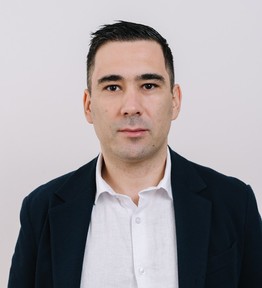
Dr. Shahid Rasul is a researcher at Northumbria University, specializing in energy materials and sustainable technologies. His work focuses on developing efficient energy conversion and storage devices through photo-electrochemical processes, with a particular emphasis on CO 2 electrochemical reduction and advanced battery technologies. He holds a PhD in Engineering (2012) and is a Fellow of the Higher Education Academy (FHEA). Research Interests: Energy Conversion, CO 2 Utilization, Supercapacitors, Lithium/Sodium-Ion Batteries, Sustainable Fuels. Supervision: Currently mentoring two PhD students researching water electrolysis systems and energy storage applications. His research spans material design, electrocatalysis, and renewable energy systems, with contributions to high-performance battery electrodes, CO 2 reduction catalysts, and eco-friendly composites. Recent publications highlight advancements in tri-metallic electrocatalysts, sodium-ion cathodes, and biodegradable hydrogels.
Subhadeep Paul is a Researcher at Northumbria University, focusing on polymer science, fibres and textiles, physical chemistry, and material characterisation. His work integrates nanotechnology and sustainable practices to enhance textile properties. He holds a PhD awarded in March 2024. Research interests include electrospinning of bioengineered fibres, functional finishing techniques, and net-zero strategies for wool industries. Education: PhD (2024), Northumbria University Key research areas involve advancing textile materials through nanotechnology, optimising dye interactions with wool fibres, and developing sustainable healthcare textiles. Recent publications explore bacterial cellulose fibres, superhydrophobic coatings, and CAD applications in sustainable design. His work bridges fundamental material science with industrial textile innovation. Publications span interdisciplinary topics from biomaterials to medical textiles, emphasizing practical applications of advanced material characterisation. Collaborations include industry partners for net-zero textile solutions. No awards or grants explicitly stated, but research actively contributes to Northumbria's materials and sustainability themes.
Victoria Jowett is a Senior Teaching Fellow at the University of Portsmouth within the Faculty of Creative & Cultural Industries, specifically in the School of Architecture, Art and Design. Her role integrates teaching and research in sustainable fashion education, contributing to the UN Sustainable Development Goals through innovative textile practices. Her research focuses on sustainable fashion systems, emphasizing natural dye processes, biomaterial applications, and zero-waste garment construction. She investigates how material science principles can enhance the longevity of upcycled textiles while maintaining aesthetic and functional performance in fashion design. Dr. Jowett led the 2024-2025 project on natural dye integration for upcycled garments and has organized multiple practical workshops at the University of Portsmouth: Subtraction Cutting 'Crazy Tubes' and 'Upscale' workshops with 'Body Language' Zero Waste Masterclass (February 2024) Subtraction Cutting & Graffiti Painting Masterclasses for Level 4 students with exhibition (November-December 2023) Subtraction Cutting and 'Body Language' Zero Waste Masterclasses for Level 4 students (February 2023)
Professor Cevza Candan is a faculty member in the Department of Textile Engineering at Istanbul Technical University. Their research focuses on textile innovation, sustainability, and functional material development. Key areas include UV-protective fabrics, radiation shielding composites, and eco-friendly textile technologies. Research interests span nanotechnology applications in textiles, acoustic material design, medical textile engineering, and sustainable fashion practices. Notable projects include developing hemp-based eco-friendly textiles and X-ray protective materials. They have received three 'Publication Incentive' awards between 2012-2014. Recent work emphasizes wearable medical devices like sensor-integrated knee braces and lifecycle assessments for denim recycling. Over 30 projects have been led, including studies on sound-absorbing nanofiber composites and compression stockings for medical use. Collaborations include industry partnerships for sustainable design solutions.
Professor Nevin Çiğdem Gürsoy is a faculty member at the Department of Textile Engineering, Istanbul Technical University (ITU). Her research focuses on textile engineering advancements, including sustainable bleaching processes, conductive polymer integration in textiles, plasma-based material modification, and smart textile applications like biosensors and EMI shielding. She leads projects funded by institutions such as TTO and BAP, emphasizing innovation in textile technology and environmental sustainability. Academic Affiliation: Department of Textile Engineering, ITU Notable Contribution: Development of novel bleach activators for cotton and conductive textile materials Her work bridges fundamental chemistry and engineering principles with practical textile applications, addressing challenges in energy efficiency, antimicrobial treatments, and functional fabric design. Current projects include fetal heart rate monitoring via textile-based biosensors and improving composite materials for defense industry applications. Research Output: 22 publications spanning 2000–2022 Supervised 13 theses Grants include high-capacity digital printing machine development and fiber-reinforced composite material research for defense sectors. Her projects often involve interdisciplinary collaboration, leveraging plasma technology and organic synthesis for textile innovation.
Lotta Riikka Ruippo is a Researcher at the Department of Economics and Management , University of Helsinki, affiliated with the Doctoral Programme in Sustainable Use of Renewable Natural Resources . She contributes to projects like BioColour (bio-based dyes) and ConPaSS (sustainable packaging systems), with funding from the Academy of Finland and Strategic Research Council. Her work bridges consumer studies, sustainability, and bioeconomy transitions. Research interests focus on consumer-material interactions in textile and packaging industries, emphasizing bio-based alternatives , chemical safety , and circular economy . Recent articles explore consumer skepticism toward plastic packaging, bioeconomy business models, and educational pathways for sustainability competencies. Her projects highlight cross-disciplinary collaboration with researchers like M. Autio and E. Kylkilahti. Despite limited direct mentorship data, her roles in grant-funded research and conference presentations (e.g., PLATE 2023, BioColour workshops) underscore her active academic engagement. Email: lotta.ruippo@helsinki.fi
Luciana José Ribeiro Pereira is an active Assistant Researcher at the Department of Biological Engineering, School of Engineering, University of Minho, Portugal, where she has been continuously employed since 2008. Her research focuses on environmental biotechnology applications, particularly in bioremediation and wastewater treatment using innovative approaches involving nanomaterials and anaerobic processes. She leads multiple national and international research projects and maintains collaborations with institutions including the Engineering Faculty of Porto University and several Brazilian Universities. Education: PhD in Environmental Biotechnology (2004), Technische Universität Graz, Austria (Marie Curie Fellowship) Bachelor's in Biological Engineering (2000), University of Minho, Portugal Degree in Nutritional Sciences (2021), Universidade Católica Portuguesa Dr. Pereira's research interests center on sustainable bioprocesses for environmental applications. She has pioneered work on the application of nanomaterials in biotechnology, particularly examining how carbon-based materials can enhance anaerobic digestion processes for treating industrial wastewater. Her work bridges fundamental microbiology with practical engineering applications, focusing on textile effluents, emerging contaminants, and developing sustainable solutions for water reuse. She has significantly contributed to understanding how conductive materials influence microbial communities involved in methane production. Her extensive publication record reveals a clear progression from fundamental studies on enzyme mechanisms to applied research on industrial wastewater treatment. Recent work shows increasing focus on emerging contaminants like pharmaceuticals and PFAS, along with innovative approaches using nanomaterials and photocatalysis. She has maintained a consistent output across multiple high-impact journals in environmental engineering and biotechnology. Dr. Pereira actively supervises PhD and MSc students and has served as Principal Investigator and Co-PI on numerous national and international projects funded by the Portuguese Foundation for Science and Technology (FCT) and European programs. She participates in course evaluation, manuscript reviewing, and conference organization within her field. She currently directs the laboratory at the Centre of Biological Engineering, University of Minho, and is involved in multiple collaborative research platforms including BioNEXT (Integrated Platform for Sustainable Biotechnologies and Digital Transition) and the Blue Bioeconomy Hub Platform. Her team works at the intersection of microbiology, materials science, and environmental engineering to develop next-generation bioremediation technologies.
Dr. hab. Magdalena Barbara Jaszek is a Professor in the Department of Biochemistry and Biotechnology at the Faculty of Biology and Biotechnology, Maria Curie-Skłodowska University (UMCS) in Lublin, Poland. She is an active researcher with a strong focus on fungal enzymes, particularly laccases from white-rot fungi such as Cerrena unicolor . Her work spans biochemistry, environmental biotechnology, and pharmaceutical applications of fungal metabolites. Her research interests include: Fungal laccase production and characterization Bioremediation of synthetic dyes and pollutants Enzyme immobilization and biocatalysis Antioxidant and antimicrobial properties of fungal extracts Genetic regulation of enzyme expression Applications in biosensors and green chemistry The 15 most recent articles reflect a consistent trend in utilizing fungal enzymes for environmental and biomedical applications, with strong emphasis on laccase functionality, stability, and industrial scalability. Her work bridges fundamental biochemistry with practical biotechnological solutions. Scientific recognition is evident through her publication record of 69 papers, 10 patents, and an h-index of 17 across major databases. While specific awards are not listed, her high bibliometric scores and ministerial evaluation score of 5,065 indicate national recognition. She actively supervises research and likely mentors graduate students, although a formal list of advisees is not provided. She has secured research funding, as inferred from her extensive publication and patent output, though specific grants are not detailed. She maintains a laboratory focused on fungal biotechnology and enzyme research, contributing to both academic and applied science.
Prof. Mariusz Barczak is a full professor at the Department of Theoretical Chemistry within the Faculty of Chemistry at Maria Curie-Skłodowska University (UMCS) , where he has worked since 2004. His research focuses on the synthesis and design of nanoporous materials for environmental and biomedical applications. Primary institution: Maria Curie-Skłodowska University (UMCS) Faculty: Faculty of Chemistry Department: Department of Theoretical Chemistry Role: University professor and mentor in the TopMinds program Research Interests : Nanoporous Materials: Synthesis of silica-, titanium-, and carbon-based materials via sol-gel methods for environmental protection. Surface Chemistry: Functionalization of materials for specific applications, including adsorption of heavy metals, pharmaceuticals, and toxic vapors. Biomaterials: Development of natural and supramolecular hydrogels for drug delivery and wound healing. Adsorption Processes: Removal of pollutants like uranium, hexavalent chromium, and dyes using advanced sorbents. Environmental Remediation: Application of carbon textiles and MOFs in water purification and air filtration. Key Trends in Publications: Recent work highlights functionalized nanoporous silicas, carbon-based adsorbents for pharmaceuticals, and stimuli-responsive hydrogels. His articles emphasize experimental-theoretical synergy, scalable synthesis methods, and environmental applications. Mentor in the TopMinds program since 2017 Active in the Top 500 Innovators association, including roles in management (2017-2018) and audit commissions Collaboration with Stanford University for experience in innovation ORCID: 0000-0002-1177-7267 Advising and Outreach: He mentors students through the TopMinds program and promotes interdisciplinary innovation platforms in Poland. Labs and Teams: Involved in the Bionanogel project and the Bionanogel.eu initiative, focusing on hybrid materials for environmental and biomedical uses.
Joanne Gibson is a Lecturer in Fashion Management at Southampton Solent University. She holds a BA (Hons) in Fashion Promotion (2011) and an MA in Visual Communication (2025, distinction). Her teaching focuses on fashion buying, product development, sustainable practices, and international retail management. She is a member of the Art, Environment and Social Change research group, exploring regenerative textile production and human-nature relationships through clothing. Research interests include supply chain ethics, local sourcing, and place-based sustainability. Her creative work, Field Studies: Artifacts of Place , used plant/mineral dyes and eco-photography, exhibited at Brighton Photo Fringe OPEN Eco Exhibition. She integrates industry experience (Monsoon, River Island) into live industry collaborations and active learning strategies. Awards include HEA Fellowship and academic distinctions. She led product development for an international home improvement firm pre-academia, with expertise in European market analysis and tradeshows.
Lisbeth Åberg-Bengtsson is a Senior Professor at the University of Borås, affiliated with the Faculty of Librarianship, Information, Education and IT and the Department of Educational Work. Her research focuses on educational strategies involving graphical representations (e.g., graphs, charts) in primary education and the dimensionality of large-scale educational assessments. She holds a PhD in Educational Research from the University of Gothenburg (1998) and has held academic roles at institutions including Mid Sweden University. Key research interests include cognitive development in children’s understanding of scientific concepts, such as the water cycle, and the use of illustrative tools in teaching. Her work integrates socio-semiotic and cultural-historical frameworks to analyze learning processes. Recent publications span educational methodologies and interdisciplinary collaborations in sustainable textile technologies, reflecting her broader engagement with applied research. Publications highlight studies on children’s reasoning about scientific phenomena, innovative dyeing methods for textiles, and advancements in biomedical sensor adhesives. While no awards or grants are explicitly listed, her contributions to pedagogical and material science research underscore her academic impact. She is actively involved in collaborative projects and serves as a key figure in her department’s educational research initiatives.
Dragana Grujić is a full professor at the Faculty of Technology, University of Banja Luka, specializing in textile engineering and functional materials. She leads research on antimicrobial textiles, dielectric properties of materials, and sustainable textile processing. Her work integrates chemical, physical, and biomedical approaches to enhance textile functionality. University: University of Banja Luka Faculty: Faculty of Technology Department: Department of Textile Engineering Her research focuses on antimicrobial treatments using plant extracts and nanomaterials, dielectric behavior of modified textiles, and thermal comfort in sports apparel. She has pioneered methods for optimizing textile finishing processes and developed automated tools for material testing. Recent projects include studies on bentonite-modified textiles, inkjet printing parameters for fabric properties, and UV-resistant antimicrobial materials. Her work has been published in journals like Journal of Materials Science , Cellulose Chemistry and Technology , and Antioxidants . Dr. Grujić has secured grants for projects such as 'Dielectric Properties of Polymer Composites' and 'Phase-Change Materials in Textile Finishing'. She collaborates internationally on bio-based materials and antimicrobial solutions. Her contributions span over 100 peer-reviewed articles and several textbook chapters on textile technology and material science.
Prof. Dr. Ljiljana Topalić-Trivunović is a full professor at the Faculty of Technology, University of Banja Luka. She specializes in antimicrobial materials, textile science, and plant biology with a focus on their applications in healthcare and environmental contexts. Her research integrates natural products, functional textiles, and sustainable processing techniques. Affiliations: Faculty of Technology (primary), cross-department collaborations with Natural Sciences and Mathematics, Medicine, and Agriculture. Research: Develops antimicrobial textiles using plant extracts and nanomaterials, studies phytochemicals in medicinal plants, and investigates environmental impacts on microbial and plant systems. Her work spans 70+ peer-reviewed articles, focusing on topics like wine microbiology, functionalized fabrics, and urban ecology. Notable projects include improving food safety via microbial analysis and wastewater treatment using constructed wetlands.
Biljana Pećanin is an Assistant Professor at the Faculty of Technology, University of Banja Luka. She holds a position in the Department of Materials Science and collaborates with the Faculty of Natural Sciences and Mathematics. Her research focuses on materials science, polymer chemistry, and textile engineering, particularly investigating dielectric properties of modified materials and antimicrobial textile applications. She has contributed to projects involving bentonite composites, functionalized textiles, and natural extracts for biomedical applications. Pećanin participates in several national and international research projects, including enhancing functional properties of dairy products with plant extracts, developing nutrient-enriched bakery products using agro-waste, and synthesizing phase-change materials for antimicrobial textile treatments. She has co-authored peer-reviewed articles on dielectric relaxations in modified bentonites and antimicrobial insole technologies. Projects: Leads roles in projects like 'Development of phase-change materials and bentonites for antimicrobial textile treatment with herbal extracts' and 'Synthesis and characterization of high-permittivity polymer and textile composites.'
Prof. dr Mladen Stančić is an Assistant Professor at the Faculty of Technology, University of Banja Luka, specializing in Graphic Engineering. His research focuses on digital printing technologies, textile materials science, and color management. He leads projects on antimicrobial textiles, eco-friendly packaging, and thermal properties of printed fabrics. His work includes over 50 peer-reviewed articles and co-authored books such as *Procesni parametri štampe tekstilnih materijala* and *Veb dizajn: praktikum za vježbe*. Key research interests include UV inkjet printing, color stability analysis, and textile durability under environmental stress. He collaborates with institutions like the University of Novi Sad and the University of Maribor. Active in grants, recent projects include improving digital printing quality standards and developing eco-friendly antimicrobial fabrics. His contributions span 15+ international conferences and 20+ scientific projects. Current roles include heading research on critical quality control in printing industries and advancing digital printing lab infrastructure. Lab facilities focus on textile and packaging innovation.