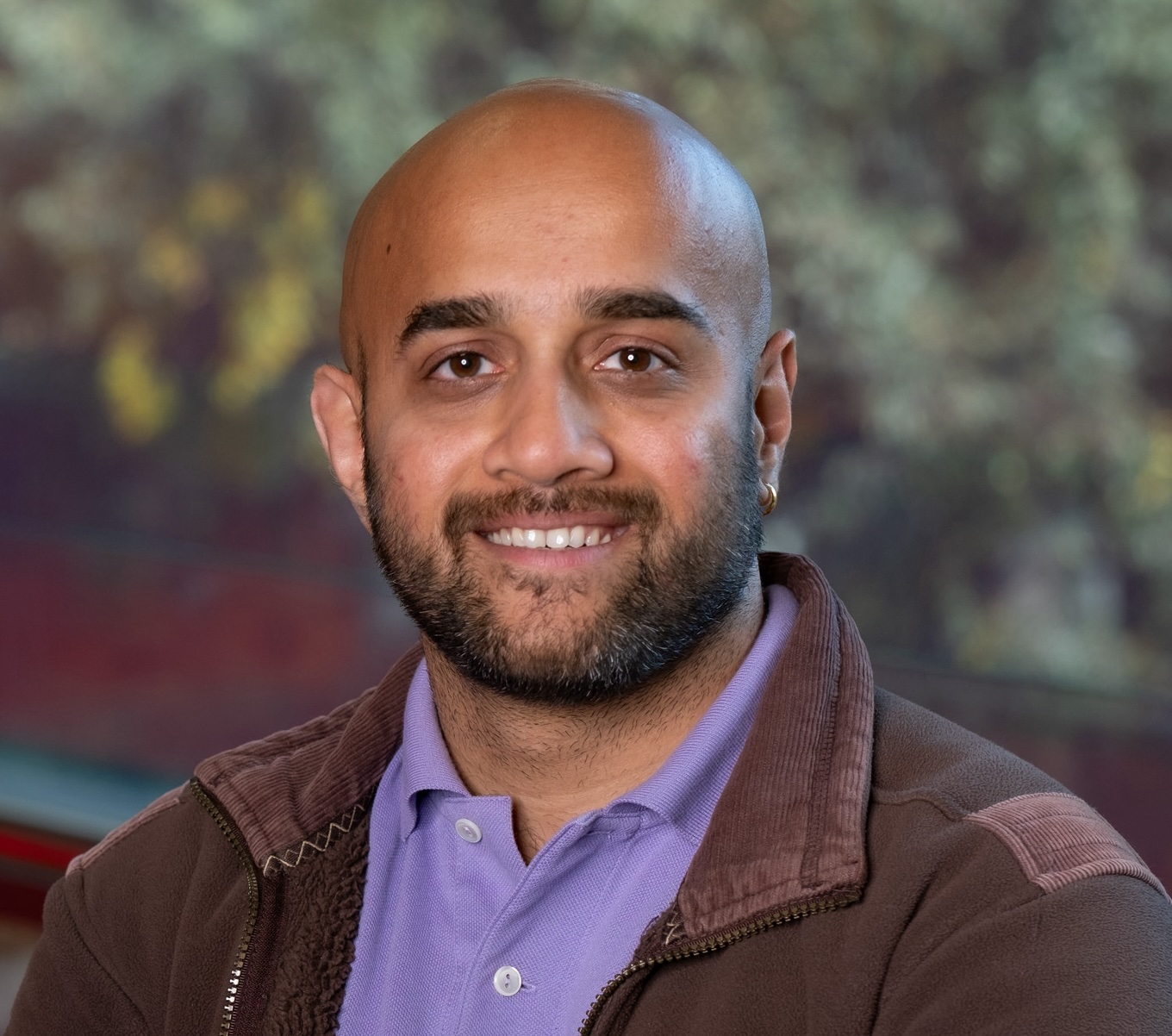
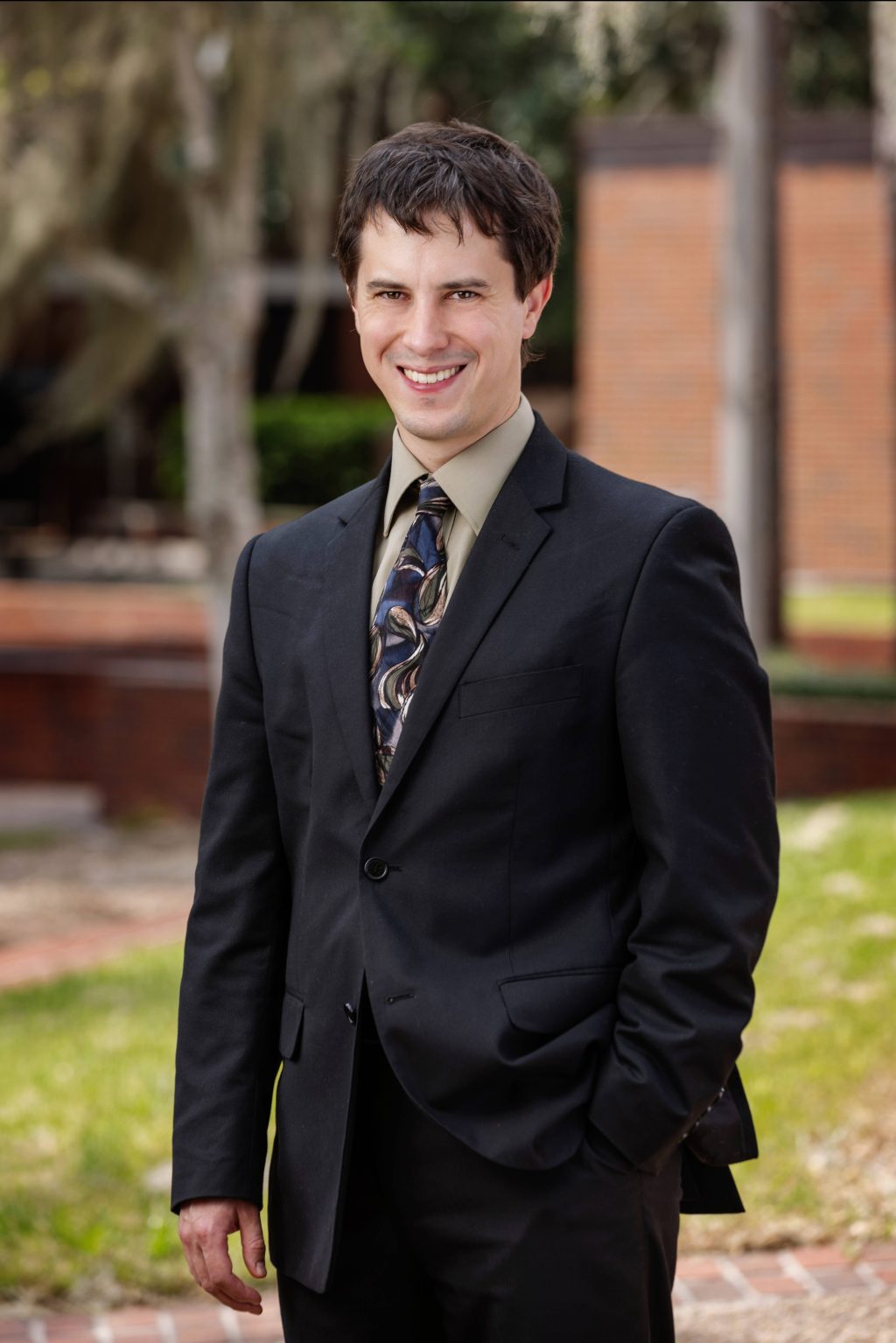
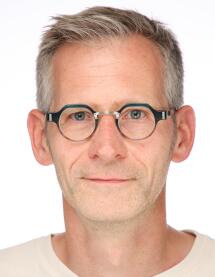
David Bamman is an Associate Professor in the School of Information at UC Berkeley, specializing in applying Natural Language Processing (NLP) and machine learning to cultural and social science questions. He leads research in born-literary NLP, computational humanities, and cultural analytics, with affiliated roles in EECS, Linguistics, and Computational Precision Health. Bamman holds degrees from Carnegie Mellon (Ph.D., 2015), Boston University (M.A., 2006), and University of Wisconsin-Madison (B.A., 1998). His work is supported by NEH, NSF, and industry grants. Educations: Ph.D. in Computer Science (2015), Carnegie Mellon University M.A. in Applied Linguistics (2006), Boston University B.A. in Classics (1998), University of Wisconsin-Madison Research Interests: NLP for underserved domains (e.g., literature, social media), coreference resolution, cultural analytics, and computational methods for studying literature and culture. Projects include LitBank and BookNLP datasets. Grants & Awards: Hellman Fellow (2019), Amazon Research Award (2017), NSF CAREER Award, and NEH funding. Teaching: Courses include Natural Language Processing (Info 159/259), Computational Humanities (INFO 190), and Applied NLP (INFO 256). His research group explores topics like racial representation in high school literature, Hollywood diversity metrics, and the sociocultural implications of LLMs. Bamman advises multiple PhD students and collaborates on datasets like CMU Book Summaries and 11K Latin Books.
Dr. Aditya Joshi is a Senior Lecturer in the School of Computer Science & Engineering at the University of New South Wales (UNSW). He specializes in Natural Language Processing (NLP), with a focus on sarcasm detection, dialectal NLP, and ethical AI applications in public health and cybersecurity. He joined UNSW in 2023 following industry roles at SEEK, Notiv, and Fractal Analytics, where he developed NLP systems for recommendation engines and meeting analytics. His research has garnered over 3,000 citations (h-index 26) and secured $3.1M in grants, including Defence Trailblazer and Google exploreCSR awards. Education: Joint PhD (2018) from IIT Bombay (India) and Monash University (Australia); MTech in CSE (2011) from IIT Bombay. Research Interests: Making NLP models robust for non-native English speakers and the LGBTI+ community, algorithmic enhancements to transformers, and applications in public health, cybersecurity, and societal issues. His work spans epidemic intelligence (collaborations with EPIWATCH and IFCYBER), cybersecurity tools like AuditNet, and inclusive AI initiatives such as queer-inclusive workshops funded by Google. He designed UNSW's new NLP course (COMP6713) and co-authored a Wiley textbook on NLP. Notable grants include the A$1.4M 'Comprehensive Defence Data Platform' (Lead CI) and A$92K Google exploreCSR grant for benchmarking dialectal sentiment. His awards include the Best PhD Thesis from IITB-Monash and Best Paper accolades at FAccT 2023 and MoMM 2020. He supervises projects on kernel-based attention reformulation, prompt-based sarcasm detection, and multilingual small-scale LLMs. His service roles include Executive Committee Member at ALTA and arXiv moderator for computational linguistics.
Padhraic Smyth is a Distinguished Professor and Hasso Plattner Endowed Chair in Artificial Intelligence at the University of California, Irvine (UCI), holding joint appointments in the Department of Computer Science and Department of Statistics. He leads the DataLab research group, focusing on machine learning, AI, and their applications in climate science, healthcare, and education. His research spans probabilistic modeling, deep learning, and human-AI collaboration. Education: PhD in Electrical Engineering from the California Institute of Technology (1988), MSEE (1985), and BEng (1984). Prior to UCI, he worked at NASA's Jet Propulsion Laboratory (1988–1996). Research Interests: Machine learning, AI, pattern recognition, Bayesian methods, climate science applications, algorithmic fairness, and human-AI interaction. He has published over 200 papers and co-authored textbooks like Modeling the Internet and the Web . Awards: ACM Fellow, IEEE Fellow, AAAI Fellow, AAAS Fellow, and ACM SIGKDD Innovation Award recipient. He has held leadership roles in UCI's Center for Machine Learning and Data Science. Key Projects: Human-AI collaboration frameworks, robustness in deep learning, climate modeling using spatio-temporal data, and AI fairness with missing attributes. Collaborates with institutions like NASA and industry partners (e.g., Google, eBay). Labs/Teams: Director of UCI’s Data Science Initiative and HPI Research Center in Machine Learning. Supervises a vibrant PhD program with over 30 alumni in academia and industry.
Sophie Salvo serves as an Assistant Professor in the Department of Germanic Studies at the University of Chicago, where she has taught since 2018. Holding a Ph.D. from Columbia University (2017), her scholarship bridges German literary studies, gender theory, and the history of linguistic thought, with primary focus on the nineteenth century and extending to contemporary political literature. Her acclaimed monograph Articulating Difference: Sex and Language in the German Nineteenth Century (University of Chicago Press, 2024) examines how gendered conceptions of language shaped intellectual discourse and literary production. Education Ph.D. in Germanic Studies, Columbia University, 2017 Salvo's research investigates the historical interplay between sex, gender, and language in German intellectual history, tracing how gendered tropes influenced linguistic analysis from Grimm's grammatical gender theories to modernist literary experiments. Her work reveals how patriarchal frameworks became embedded in linguistic science while highlighting women's contributions to language studies despite systemic exclusion. Current projects include an edited volume on the 'Reinvention of Patriarchy' around 1800 and a book analyzing twenty-first century political novels across the ideological spectrum. Her 2019-2024 publications demonstrate consistent interdisciplinary rigor, connecting historical linguistics with feminist theory and political analysis. Articles like 'Father is Always Uncertain' (2024) on Bachofen's patriarchal epistemology and 'The Sex of Language' (2021) on Jacob Grimm collectively chart how gendered assumptions permeated linguistic discourse, influencing both nineteenth-century scholarship and contemporary debates about inclusive language. Salvo actively mentors graduate research on topics including sexuality in Realism, women's writing, Holocaust representations in East German textbooks, and the rise of right-wing politics in post-reunification Germany. As co-organizer of the German Studies Scholarly Seminar at the Newberry Library, she facilitates interdisciplinary dialogue through regular events featuring scholars from institutions nationwide. Her teaching encompasses courses on Robert Musil, gender and sexuality studies, and contemporary political literature, reflecting her commitment to connecting historical analysis with urgent contemporary issues.
Dr. Oliver Raaz is a Research Associate at the Institute for Media and Communication Studies , part of the Department of Political and Social Sciences at Freie Universität Berlin. His work focuses on organizational communication, public relations, and the intersection of media theory with strategic discourse. University: Freie Universität Berlin School: Department of Political and Social Sciences Department: Institute for Media and Communication Studies Email: oliver.raaz@fu-berlin.de His research interests span organizational communication , public relations , transparency theory , critical post-structuralism , non-standardized research methods , and digital media in chronic disease management . He actively contributes to academic discourse through publications in peer-reviewed journals and edited volumes. Recent publications highlight trends in PR historiography , organizational transparency , digital media ethics , polyphony theory , and complexity frameworks . His work often integrates critical theory with empirical analysis.
Prof. Dr. Johanna Heitzer is a University Professor for Mathematics Education at RWTH Aachen University since 2011. She leads the Teaching and Research Area of Mathematics Education within the university's mathematics department. Her office is located in Room 352 of the Kreuzherrenstraße 2 building in Aachen. She serves as co-editor of the journal 'mathematik lehren,' co-author of the 'Mathematics - New Ways' textbook series, and holds numerous committee positions including membership in the Faculty Advisory Board and Structural Commission of the Center Council. 1989: High school diploma 1989-1994: Mathematics and Physics Teacher Training at RWTH Aachen 1994-1996: Traineeship at Aachen Teacher Training College 1997: Research assistant at University of Münster 1998-2007: Mathematics and Physics teacher at Korschenbroich Gymnasium 2007-2010: Scientific assistant and doctorate at RWTH Aachen 2011-present: University Professor at RWTH Aachen Professor Heitzer's research focuses on the training and further education of mathematics teachers, development of contemporary teaching materials, applied and interdisciplinary mathematics, and the transition from school to university. Her work emphasizes concept formation, linguistic communication in mathematics, and the historical development of mathematical ideas as teaching resources. She investigates mathematics-specific learning and cognitive processes through multiple research projects including the Aachen school-university project iMPACt. Her recent scholarly output demonstrates a strong trend toward integrating digital technologies in mathematics education, particularly 3D printing and e-learning tools. She has increasingly focused on the social relevance of mathematics, exploring concepts of fairness, sustainability, and citizen empowerment through mathematical modeling. Her work bridges theoretical mathematics education with practical classroom applications, maintaining a strong connection to both historical perspectives and contemporary educational challenges. Special prize from Sparkasse Bad Hersfeld-Rotenburg for best mathematics Abitur (1989) Borchers Plaque for doctoral examinations passed with distinction (2011) DMV honor as Mathemaker of the Month (2013) Brigitte Gilles Prize 2013 for the MINT-L4 Center Professor Heitzer has supervised numerous doctoral students, serving as primary or secondary advisor for at least nine PhD dissertations between 2016-2021. Her research projects include the School-University Project MathePlus Aachen (iMPACt), e-Learning 'Mathematics for Civil Engineers,' and the development of mathematics items for StudiChecks NRW. She has secured funding through the Quality Initiative for Teacher Education (both phases) and participates in the ComeIn project focused on digitalization in teacher training. Her grants consistently emphasize practical applications of mathematics education research with direct impact on classroom practice. As a founding member of the MINT-L4@RWTH center and initiator of the working group Mathematical Education for Sustainable Development, Professor Heitzer has established significant collaborative structures. She participates in the Subject Didactics Forum at the Teacher Training Center of RWTH Aachen and has served in leadership roles including Chair of the Center Council (2014-2016) and Board member of the Teacher Training Center (2014-2017). Her work connects with national and international networks through her membership in the Society for Mathematics Education (GDM), the German Association for Mathematics and Science Education (MNU), and the German Mathematical Society (DMV).
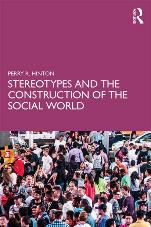
Perry Hinton is a Professor (Teaching Focused) in the Centre for Applied Linguistics at the University of Warwick, part of the Faculty of Social Sciences. He contributes to the interdisciplinary degree in Language, Culture and Communication, drawing on his expertise in psychology and cultural studies. University: University of Warwick School: Faculty of Social Sciences Department: Centre for Applied Linguistics Academic Rank: Professor Email: P.R.Hinton@warwick.ac.uk His research centers on the psychology of interpersonal perception, especially the interplay between cognition and culture. Key areas include stereotyping as a cognitive and cultural phenomenon and Western (particularly British) interpretations of Japanese culture, including media portrayals and anime. He also has a strong commitment to statistical education, having authored multiple textbooks on SPSS and data analysis. The recent publications reflect a consistent focus on cultural psychology, intercultural communication, and social representation. Themes include the construction of identity, media influence, cultural stereotypes, and cognitive biases in person perception. His work often takes a multidisciplinary approach, integrating insights from psychology, linguistics, and media studies. Perry Hinton has authored and co-authored several influential books in his field, particularly on stereotypes and statistical methods. While no formal scientific awards are listed, his sustained publication record in peer-reviewed journals and with major academic publishers (Routledge, Bloomsbury, Palgrave) indicates significant scholarly recognition. He has supervised or co-edited collaborative works, such as the 2023 volume on intercultural relations, suggesting advisory and mentoring roles. His career path includes positions at five British universities, progressing from lecturer to Head of Department, with extensive experience teaching psychology across disciplines including linguistics, education, and media studies. He joined Warwick's Centre for Applied Linguistics at the inception of its Language, Culture and Communication program in 2014. Hinton works within a multidisciplinary academic environment, contributing to a research culture that bridges psychology and applied linguistics. His collaborations, particularly with Troy McConachy, suggest active participation in intercultural research teams and scholarly networks focused on global communication and cultural understanding.
Professor Jill Atkins is a Professor of Accounting at Cardiff Business School, Cardiff University, with a distinguished career spanning accounting and finance. She also serves as a Visiting Professor at the University of the Witwatersrand in South Africa. As a leading academic in sustainable accounting, she has published over 50 journal articles and several influential books, establishing herself as a thought leader in the field of extinction accounting and biodiversity finance. Professor Atkins holds a BA Hons (First Class) in European Economics with a Licence ès Sciences Economiques from the University of Nantes, an MSc in Corporate and International Finance from the University of Durham, and a PhD in Finance from the University of Manchester. She is Series Editor for the de Gruyter Studies in Corporate Governance and has authored the leading international textbook "Corporate Governance and Accountability," now in its 5th edition. Professor Atkins' research focuses on three interconnected areas that have significantly contributed to sustainability accounting literature. Her work on private social and environmental reporting (SER) has evolved into "private integrated reporting," where institutional investor engagement processes increasingly integrate social, environmental, and financial issues. She has pioneered the development of "extinction accounting," creating a framework that has inspired extensive international academic research and influenced investment institutions' pollinator engagement strategies. Her third major contribution involves exploring the historical roots of environmental and ecological accounting, connecting accounting history with sustainability research across various historical periods from Victorian water pollution accounting to 18th century nature diaries. Analysis of Professor Atkins' recent publications reveals a clear trajectory toward increasingly specialized and urgent environmental accounting. Her work has evolved from general sustainability reporting to highly focused extinction accounting frameworks, with growing attention to historical precedents and cross-cultural applications. The publications demonstrate a sophisticated integration of critical accounting theory with practical applications in biodiversity conservation, showing how accounting mechanisms can serve as tools for species protection and environmental preservation. Her research increasingly incorporates interdisciplinary perspectives, drawing from ecology, history, art, and philosophy to develop comprehensive approaches to extinction governance. Professor Atkins has received significant recognition within the ESG investment industry and governance circles as a thought leader, regularly invited to give keynotes at international practitioner and academic events. She has led influential projects including a Nuffield Foundation-funded study on private SER and has developed innovative frameworks such as the extinction governance model that brings together accounting practices with governance mechanisms aimed at preventing species extinctions. Professor Atkins supervises doctoral candidates in extinction accounting, extinction governance, ESG investment, accounting for biodiversity, and corporate governance (qualitative research). She has established collaborative networks with leading practitioners in responsible investment, sustainability ratings, financial analysis, and reporting framework providers, including the Capitals Coalition, Moody's, Vigeo Eiris, AXA, and the WWF.
Mattias Gassman is an Assistant Professor of Humanities at the University of Florida's Hamilton School for Classical and Civic Education. His research focuses on the transformation of Roman religious ideas by Christianity, particularly in late antiquity. Previously, he held postdoctoral fellowships at the University of St. Andrews and the University of Oxford. He earned a PhD in Classics from the University of Cambridge (2017), and prior degrees from Oxford, Minnesota, and Iowa State University. His research emphasizes critical analysis of modern concepts like 'paganism' and 'secularity' through ancient lenses. His first monograph, Worshippers of the Gods (Oxford, 2020), examined fourth-century Roman religious debates. His current book project, Citizens of the Earth , analyzes Augustine's engagement with Roman religion across his works. He also co-authored a general-audience textbook on fourth- and fifth-century theological controversies. His articles explore topics such as Augustine's anti-pagan rhetoric, late antique preacher techniques, and the reception of classical texts. Recent publications appear in Journal of Early Christian Studies , Historia: Zeitschrift für Alte Geschichte , and Augustinian Studies . He teaches courses on ancient texts and religious history, including Immortality (Quest 1) and Great Books of the Ancient World .
Professor Simon Deakin is a Fellow and Director of Studies in Law at Peterhouse, University of Cambridge, specializing in private law (tort and contract law) and labour law. He teaches on the undergraduate Law Tripos and the LLM programme, with research focusing on law and economics, artificial intelligence, and historical legal analysis. Current research on Is Law Computable? and AI ethics Co-editor of computational law essay collection Developed Cambridge Leximetric Database for quantitative legal analysis His research spans tort law, corporate governance, digital economy regulation, and sustainability. Recent work explores the Anthropocene's legal implications and labour law's computational approaches. Scientific awards include the Cambridge Students' Union teaching prize (2023) He supervises doctoral students annually and contributes to legal education through widely used textbooks. As a Centre for Business Research (CBR) affiliate, he advances data-driven analysis of global labour regulation.
Benjamin Day is a Senior Lecturer in the Department of International Relations at the Coral Bell School of Asia Pacific Affairs, Australian National University (ANU). His research focuses on leaders' roles in foreign policy decision-making, particularly how leaders drive policy change. He co-authored *Foreign Policy Analysis: Classic and Contemporary Theory* (3rd ed., 2019), a leading textbook in the field. His recent work explores leaders' 'thinking practices' about global order, informed by elite interviews with over 100 politicians and policymakers. Education: BA (University of Queensland) BEcon (University of Queensland) MIS (University of Queensland) PhD (ANU, 2018) Research Interests: Political Decision Making and Foreign Aid Leaders and World Order Aid Policy Dynamics Elite Influence in Policymaking Academia-Policymaker Bridging Affiliations and Fellowships: Partners around the Globe Fellow, NATO Defence College (2025) Visiting Fellow, University of Edinburgh (2023) Australian National Fellow, King’s College London (2019) Centre Associate, ANU Development Policy Centre (since 2016) Contributions: Regularly publishes in platforms like *The Strategist*, *Devpolicy Blog*, and *The Conversation*. Designs courses for diplomats and public servants via the ANU Diplomacy Forum. Previously worked in international development for a decade, including health sector reform in Papua New Guinea. Labs/Teams: Active in the ANU’s Development Policy Centre and collaborates with institutions globally to advance policy-relevant research on foreign aid and leadership.
Dr. Antonie van Nistelrooij is an Assistant Professor at the Faculty of Social Sciences, Organization Sciences at Vrije Universiteit Amsterdam. He is affiliated with the Network Institute and Organization & Processes of Organizing in Society (OPOS). His academic background includes a PhD in Management Sciences from Radboud University Nijmegen, an MSc in Organizational Psychology from Tilburg University, and a BS in Business Studies from Eindhoven University of Technology. His research focuses on participative organizational change, social constructionism, systems thinking, and complexity science. He has authored over 60 publications, including the textbook *Embracing Organisational Development and Change* (2021). Key research interests include large-group interventions, narrative struggles in change processes, and the integration of interdisciplinary perspectives. He has received the Academy of Management Best Paper Award (2005) and serves on the editorial board of the *Journal of Change Management*. His teaching spans MBA programs and postgraduate courses on change management and organizational development. Van Nistelrooij’s work bridges academic and practical domains, with consulting roles in government and industry. He explores topics like urgency narratives in healthcare and cultural change, emphasizing dialogue and collective learning. His recent work highlights the interplay between temporal narratives and organizational safety, as well as the recursive dynamics of resistance in change processes.
Carmen Lamas is an Associate Professor at the University of Virginia, jointly appointed to the Department of English and the Department of American Studies. Her work bridges Latinx literary traditions with hemispheric American and Latin American studies, focusing on 19th-century to contemporary scholarship. PhD, University of Pennsylvania M.A., Georgetown University B.S./B.A., Florida State University Lamas specializes in Latinx literary cultures, translation practices, and historiography of the Americas. Her research interrogates the intersections of race, migration, and transnational identity through 19th-century texts, digital humanities projects, and collaborative editorial work. Her recent publications highlight the enduring relevance of 19th-century Latinx literature, emphasizing translation as both a creative and political act. Themes include hemispheric transformations, Afro-Latinx representation, and archival recovery of marginalized voices. LASA 2022 Latinx Studies Book Award MLA 2023 Book Prize All-University Teaching Award, 2022 Buckner W. Clay Award, 2021 Henry Luce Project Course Development Award, 2018 As co-founder of the Latina/o Studies Association and editor of Pasados , Lamas champions interdisciplinary collaboration. She has presented widely, including plenary addresses at MACLAS and the MLA Conference, and serves on editorial boards like J19 and Recovering the US Hispanic Literary Heritage .
Dr. Marie Hoepfl is a Professor in the Department of Sustainable Technology and the Built Environment at Appalachian State University. She is a prominent figure in technology and engineering education, with extensive experience in curriculum development, research methods, and educational leadership. University: Appalachian State University School: College of Fine and Applied Arts Department: Department of Sustainable Technology and the Built Environment Academic Rank: Professor Her research focuses on technology education, technological literacy, evaluation and assessment, and the societal implications of technology. She has contributed significantly to the advancement of standards-based education and teacher development in STEM fields. The analysis of her recent publications reveals a consistent focus on educational reform, curriculum design, and the integration of sustainability and ethics into technology education. Her work bridges theory and practice, emphasizing teacher preparation, student assessment, and the societal dimensions of technological advancement. Dr. Hoepfl has held leadership roles in key professional organizations: Past President, Council of Technology and Engineering Teacher Education (CTETE), 2016–2019 Member, International Technology and Engineering Educators Association (ITEEA) Member, Epsilon Pi Tau (Honor Society) She has mentored graduate students through courses such as TEC 5000 (Research in Technology) and TEC 5670 (Graduate Seminar), and has been involved in multiple research and development projects. Her work includes developing e-portfolios for general education assessment, promoting appropriate technology, and advancing renewable energy education. Dr. Hoepfl's contributions span over two decades, with publications ranging from journal articles to edited yearbooks and textbooks, reflecting her deep commitment to educational excellence and innovation in technology and engineering education.
Dr. Guido Hunze serves as Senior Academic Councillor (Akademischer Oberrat) at the Institute for Religious Education and Pastoral Theology within the Catholic Theological Faculty of Westfälische Wilhelms-Universität Münster since December 2012. He holds state teaching authorization for Catholic Religious Education at secondary levels and has been actively involved in teacher education and curriculum development. 1991-1997: Studied Physics, Catholic Theology, and Pedagogy at Rheinische Friedrich-Wilhelms-Universität Bonn 1997: First State Examination for Teaching (Sek. II/I) in Physics and Catholic Religious Education 2006: Doctorate (Dr. theol.) at Catholic Theological Faculty of University of Bonn 2005: First State Examination for Teaching (Sek. II) in Pedagogy Dr. Hunze's research focuses on innovative approaches to religious education, particularly through video analysis methodologies. His work emphasizes inclusive religious teaching practices, creation theology in dialogue with natural sciences, and religious education for sustainable development. He explores how digital technologies transform religious pedagogy while maintaining theological depth, examining how students experience religious learning in contemporary contexts. His scholarship bridges theoretical frameworks with practical classroom applications. His recent publications reveal a consistent focus on contemporary challenges in religious education, with increasing attention to digital transformation, diversity, and sustainability. The trajectory shows evolution from traditional religious pedagogy toward more interdisciplinary approaches integrating video analysis, inclusive education, and ecological theology. His work increasingly addresses how religious education can respond to societal crises and digital transformation while maintaining theological integrity. As an academic leader, Dr. Hunze serves as faculty advisor for teacher education programs, coordinates practical semesters for religious education students, and moderates training for the implementation of confessional-cooperative religious education in the Diocese of Münster. He has contributed significantly to textbook development for Catholic religious education in German schools. Dr. Hunze leads the TheoTVIST videography team and previously directed the GRUVI project, which develops fundamental competencies for religious education through video analysis of classroom instruction. These initiatives represent his commitment to evidence-based approaches to religious pedagogy and teacher development.