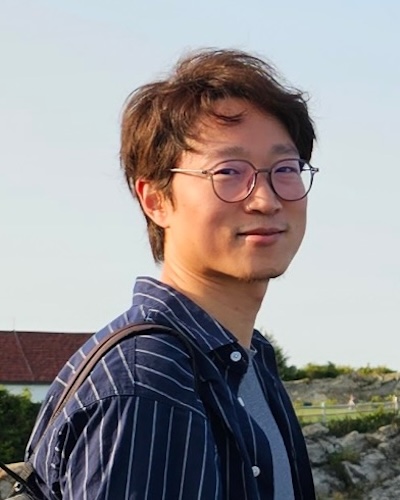
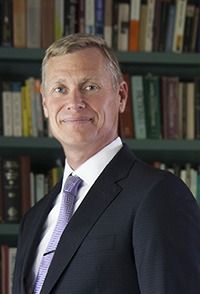
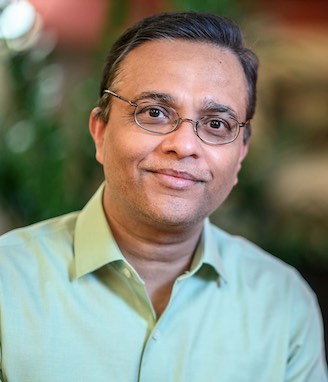
Xiaoke Jia serves as Senior Lecturer in Chinese Language and coordinator of the Chinese language program within Bowdoin College's Asian Studies Program. Holding an M.A. in Linguistics and Applied Linguistics from Beijing Normal University and a B.A. from Henan University, he brings extensive expertise in Chinese language pedagogy developed through teaching roles at Princeton University, Bowdoin College, and international programs. Education: M.A. in Linguistics and Applied Linguistics, Beijing Normal University B.A., Henan University Dr. Jia's research centers on language pedagogy, second language acquisition, and Chinese lexicology, with current focus on innovative program development strategies. He pioneers approaches integrating cultural experiences through project-based learning, incorporates Chinese literature into advanced courses, and cultivates international study partnerships. His work emphasizes authentic cultural exposure and leverages Chinese culinary traditions to deepen linguistic understanding. Analysis of his 13 conference presentations (2014-2023) reveals consistent specialization in advanced Chinese language instruction, particularly literary integration, writing skill development, and cultural contextualization. His research demonstrates evolving methodology from quantitative textbook analysis to creative literary applications, addressing challenges in teaching higher-level Chinese through avant-garde literature, rhetorical devices, and genre-based writing. Dr. Jia's teaching career spans Princeton University (2010-2013), Bowdoin College (2008-2010 and current), Princeton in Beijing program (multiple summers including 2020-2021), and Beijing-based institutions. He actively contributes to professional communities through the New England Chinese Language Teachers Association and ACTFL conferences, while connecting language learning with cultural immersion through Chinese culinary practices.
Dr. Viviana Cotik is an Associate Professor at the Department of Computer Science, Faculty of Exact and Natural Sciences, University of Buenos Aires. She also serves as Professor for the Master's Degree in Data Mining and Knowledge Discovery within the same department. Additionally, she works as an Assistant Researcher at the National Council for Scientific and Technical Research (CONICET) in Argentina. Artificial Intelligence Natural Language Processing (BioNLP) Information Extraction Machine Learning Biomedical Informatics Social Applications of AI Her research focuses on applying natural language processing techniques to biomedical domains, including negation detection in clinical reports, entity recognition in radiology texts, and cross-lingual information extraction. She investigates applications of AI in social inclusion and has developed methodologies for automatic classification of medical documents through machine learning and syntactic analysis. Her work also extends to data quality assessment frameworks and historical analysis of ICT education in Argentina. Recent publications highlight her expertise in Spanish and French language processing for biomedical texts, with applications in radiology report analysis and social implications of AI. She has contributed to multiple conferences including IberLEF, RANLP, ACL BioNLP, and IJCAI workshops, while also publishing in journals like International Journal of Information Quality and Fuzzy Sets and Systems . Scientific recognition: First prize in Estudiantiles Works Contest (undergraduate category), 33rd JAIIO, 2004 She has delivered numerous guest lectures internationally, including at Stanford's Women in Data Science chapter, Universidad Nacional de La Plata, and institutions in Peru, Germany, UK, and Spain. Her outreach activities include coordinating the Computer History Museum and organizing Drunk Talks for PhD students.
Kathleen Barker is a Professor in the Department of Psychology at Medgar Evers College, part of the City University of New York (CUNY) system. She holds a PhD in Social-Personality Psychology from The Graduate Center, CUNY, earned in 1990. Dr. Barker has served in various leadership roles within CUNY, including as Chair of the Medgar Evers Faculty Senate (2022-2024), Vice Chair of the University Faculty Senate (2016-2020), and member of the UFS Executive Committee (2012-2016). Dr. Barker's educational background includes a doctorate in Social-Personality Psychology from The Graduate Center of The City University of New York, completed in 1990. Her academic journey has positioned her as a social psychologist with expertise in both theoretical and applied aspects of the field. Her research interests span multiple domains within social psychology and beyond. As a social psychologist, she conducts multidisciplinary research focusing on nonstandard work arrangements, higher education systems, social justice issues, and methodological concerns in research. Her work on bibliometrics has been particularly influential, examining how citation analysis and impact factors can be used (and potentially abused) in academic personnel decisions. She has extensively studied self-efficacy as a construct for evaluating student outcomes, developing assessment tools like the Evaluation Self-Efficacy Scale. Her research also addresses gender issues in the workplace, particularly examining the experiences of women in full- and part-time employment. Analysis of her recent publications reveals a strong emphasis on bibliometrics and self-efficacy measurement within social work education. Her scholarly output demonstrates a consistent focus on methodological rigor and the application of psychological principles to real-world issues in education and employment. The interdisciplinary nature of her work bridges psychology, social work, education, and organizational behavior, with a particular emphasis on developing valid assessment tools and examining research impact through bibliometric analysis. Co-edited book 'Contingent Work: American Employment Relations in Transition' selected as noteworthy book in industrial relations and labor economics by Princeton University's Firestone Library Named to the American Psychological Association's 2005 and 2006 panels on the Work Force in Psychology Assisted in establishing the APA Center for Workforce Analysis through her panel work Contributed to the development of the Evaluation Self-Efficacy Scale, widely used in social work education assessment Dr. Barker has been actively involved in mentoring through her role as a professor and her service on university committees. Her leadership roles in the University Faculty Senate and Medgar Evers Faculty Senate have positioned her to influence academic policy and governance across CUNY. While specific grant information isn't detailed in the provided texts, her extensive publication record suggests successful research funding. She has served as a network member for the Alfred P. Sloan Foundation, indicating recognition of her expertise in workforce issues. Her leadership extends to committee work, including chairing the Committee on the Faculty Experience Survey of the University Faculty Senate, which produced the comprehensive FES:09 report documenting faculty experiences across CUNY. Dr. Barker has been instrumental in revitalizing the Medgar Evers College Faculty Senate, establishing its first web page and programming speakers on topics such as shared governance, budget processes, parliamentary procedures, and workplace bullying. Her work with the University Faculty Senate's Academic Affairs Advisory Committee and her participation on the CUNY Board of Trustees' Committee on Faculty, Staff and Administration demonstrate her commitment to institutional improvement. She has also served as Senior College Representative on the Executive Council of the Professional Staff Congress (the faculty and staff union) and as a Grievance Counselor, showing her dedication to faculty rights and workplace issues.
Carl G. Stahmer serves as Professor of English and Science and Technology Studies at the University of California, Davis, where he holds dual leadership roles as Executive Director of the UC Davis DataLab: Data Science and Informatics and Director of the English Broadside Ballad Archive—a position he assumed after 18 years as its Associate Director and Lead Developer. His research pioneers computational tools for Analytical Bibliography at scale, focusing on historical text and printed image analysis. With a career spanning since the mid-1990s, he has shaped digital humanities through foundational work with the English Short Title Catalog, NINES (Networked Infrastructure for 19th Century Studies), ARC (Advanced Research Consortium), and Project Quintessence (EEBO text analysis portal). Stahmer's initiatives have secured major funding from the Andrew W. Mellon Foundation, Alfred P. Sloan Foundation, Microsoft Research, National Endowment for the Humanities, and National Science Foundation. He teaches L-100: Digital Approaches to Bibliography & Book History, integrating his research into pedagogy. He directs the UC Davis DataLab and English Broadside Ballad Archive, fostering cross-disciplinary collaboration in digital scholarship infrastructure and data science applications for humanities research.
Dr Cuong Nguyen is a Lecturer in the Department of Mathematical Sciences at Durham University, specializing in Machine Learning, Artificial Intelligence, and Statistics. His research bridges theoretical foundations with practical applications, with particular expertise in Bayesian methods, transfer learning, and multimodal systems. His educational background includes a PhD in Computer Science or a related field (specific institution not mentioned in provided data), with research focusing on machine learning theory and applications. Nguyen has established himself as a researcher with publications spanning top conferences including NeurIPS, UAI, and ACM Web Conference. Research Interests: Nguyen's work centers on lifelong learning systems that overcome catastrophic forgetting, transferability estimation between tasks, and multimodal learning applications. His research integrates Bayesian principles with deep learning to create more robust and adaptable AI systems. Recent Trends: Analysis of his 15 most recent publications reveals a strong focus on practical applications of theoretical machine learning concepts, particularly in security (CAPTCHA systems), real-world problem solving (fake advertisement detection), and fundamental learning theory (transferability metrics). Dr Nguyen has made significant contributions to understanding the theoretical underpinnings of transfer learning and continual learning, with his work on LEEP providing a practical metric for transferability estimation. His research on CAPTCHA systems demonstrates both theoretical rigor and practical security implications. Advising: While specific students aren't listed in the provided data, his publications show collaborations with researchers across institutions, suggesting active supervision of PhD and Master's students. Research Groups: He is affiliated with the Statistics research center within Durham's Department of Mathematical Sciences, contributing to the university's strength in mathematical and computational research.
Paul P. Maglio is a Professor of Management and Cognitive Science at the University of California, Merced, where he is affiliated with the School of Engineering and the Department of Management of Complex Systems. As one of the founders of the field of service science, he has established himself as a leading researcher at the intersection of management, cognitive science, and information systems. His work spans from theoretical foundations of service systems to practical applications of service innovation. Maglio received his bachelor's degree in computer science and engineering from MIT and earned his Ph.D. in cognitive science from the University of California, San Diego. His academic journey reflects his interdisciplinary approach that bridges technical and social sciences. His research interests focus on human-computer interaction, distributed cognition, and service science, with particular emphasis on how technology enables service innovation and value creation. Maglio's work explores how cognitive principles can inform the design of service systems and how service systems can be understood through the lens of complex adaptive systems. His research has practical applications in digital service transformation, service design, and the integration of artificial intelligence in service contexts. Analysis of his recent publications reveals a clear trajectory toward understanding service systems in the age of AI. His work increasingly examines how autonomous technologies transform human-centered service systems, with particular attention to trust in AI systems, digital service transformation, and the ethical implications of data-driven business models. The publications show a consistent focus on service science as an interdisciplinary field that connects management, information systems, and cognitive science. Maglio served as Editor-in-Chief of INFORMS Service Science from 2013 to 2018 and is the lead editor of the Handbook of Service Science, Volumes I and II. He has published over 125 papers across computer science, cognitive science, and service science domains, establishing him as a prolific contributor to these fields. As an educator, Maglio teaches courses including Technology-enabled Service, Foundations of Management of Complex Systems, Service Science, and Service Innovation. His teaching reflects his research interests and commitment to developing the next generation of service science scholars and practitioners. His work with students likely focuses on the practical application of service science principles to real-world business challenges. Maglio directs research that examines the intersection of cognitive science and service systems, with particular attention to how people interact with and through service systems. His work on epistemic actions and distributed cognition provides theoretical foundations for understanding how humans and technology collaborate in service contexts.
Immo Trinks is Associate Professor (Privatdozent) at the University of Vienna and Head of the Vienna Institute for Archaeological Science . He coordinates a comprehensive teaching programme in archaeological prospection, archaeometry and scientific documentation, and leads large-scale geophysical projects across Europe. Education & qualifications: Dipl.-Geophys. (Diploma in Geophysics) PhD (awarded) Habilitation (Privatdozent, Austrian post-doctoral lecturing qualification) Research interests revolve around non-destructive mapping of buried archaeological landscapes . He specialises in ground-penetrating radar , magnetometry and multi-sensor robotic platforms , developing workflows that fuse high-resolution geophysical data with 3D archaeological interpretation. Coastal wetlands, Roman towns, Viking harbours and prehistoric pile dwellings serve as key study areas. Recent publications demonstrate a clear trend toward automated, large-coverage surveys and multi-method data fusion . Papers in 2022-2025 report motorised GPR arrays on snow-covered fields, semi-autonomous driverless systems, and integrated interpretation frameworks that combine magnetics, GPR and remote sensing to reveal Roman military compounds, Etruscan cities, Swedish war camps and Neolithic monumental landscapes. Scientific awards & honours: No specific awards are listed in the supplied text; however, his continuous funding and invited keynote contributions (e.g., ArchaeoProspection conference series) indicate international recognition. Teaching & student supervision: Regular courses: Introduction to Archaeological Prospection, Archaeometry, Magnetic Prospection, GPR Practical, Underwater Prospection, Human Evolution & Archaeological Science, LaTeX for Archaeologists Excursions: 2-day field schools at Alpine pile-dwelling sites and around Vienna Thesis seminars: continuous Master Thesis Topic Search & Exposé and final thesis colloquia every semester Labs & facilities: Trinks heads the Vienna Institute for Archaeological Science (VIAS), operating several motorized multi-channel GPR systems, high-resolution magnetometer arrays, electromagnetic induction sensors, underwater sonar and multi-spectral cameras. The institute maintains dedicated GIS/visualisation labs and field vehicles for pan-European surveys within the international ArchPro and Stonehenge Hidden Landscapes initiatives.
Jignesh M. Patel is a Professor in the Computer Science Department at Carnegie Mellon University, where he leads research on efficient data analysis methods. His work focuses on improving both system efficiency (e.g., high-performance data algorithms) and human efficiency (e.g., user productivity with data systems). Research Focus: Patel's group specializes in database systems, query optimization, hardware acceleration, and human-data interaction. Their interdisciplinary work spans: Transactional processing and real-time analytics Query optimization techniques Hardware-algorithm co-design Natural language interfaces for data systems Memory-efficient data processing Professional Activities: Co-founded four technology companies (Paradise, Locomatix, Quickstep, DataChat). Serves on program committees for premier conferences including SIGMOD and CIDR (as co-chair). Teaches database systems courses at CMU. Awards: Received Best Paper Award at DaMoN 2010 for work on cluster efficiency.
Professor Joshy Easaw is a Professor of Economics at Cardiff Business School, Cardiff University, where he joined in October 2014 after holding permanent appointments at Bath and Swansea Universities. He is currently a Visiting Professor at the Department of Economics, University of Bologna, Italy, and serves as the decolonisation of curriculum and research lead for the CARBS Race Equality Committee, which he helped found. His research spans macroeconomics, political economy, and development economics, with specific focus on bounded rationality , microfoundations of household expectations , professional forecasters' inattentiveness , and the interaction between economic and political institutions . His work examines how households form expectations about macroeconomic variables, how voters perceive policy competence, and the relationship between democracy, institutions, and economic growth in developing economies. Easaw's recent publications reveal strong trends in uncertainty modeling, household expectation formation, and historical economic analysis, particularly regarding the long-term impacts of the transatlantic slave trade. His methodological approaches combine theoretical modeling with empirical analysis using household surveys and professional forecast data. Leverhulme Trusts Research Fellowship (2007-2008) for research on 'Microfoundations of how households form subjective macroeconomic expectations: The role of news' Professor Easaw has successfully supervised nine PhD students whose careers span academia (including positions at the University of Manchester, Taiwan, and China) and international institutions (World Bank). His research has been supported by various grants, though specific current funding isn't detailed in the provided text. He actively contributes to the academic community as a member of the Royal Economic Society and has previously been a member of the American Economic Association and Econometric Society. His scholarly work spans multiple research teams and collaborations, with recent projects examining uncertainty spillovers in the euro area, the impact of the transatlantic slave trade on contemporary institutions, and innovative approaches to election forecasting using ensemble methods.
Professor Nesrin Okay holds a Ph.D. in Economics from The City University of New York and is affiliated with Bogazici University. Her research focuses on Financial Engineering, Economics, Econometrics, and Statistical Analysis of Financial Markets, with particular emphasis on Stock Market Modeling and Forecasting, and Time Series Analysis. Education: Ph.D. in Economics, The City University of New York Her research interests include advanced econometric methodologies applied to financial markets, particularly in the context of emerging markets like Turkey. She explores topics such as volatility modeling, liquidity risk analysis, and the impact of renewable energy on economic indicators. Her work also examines structural breaks in economic data and policy uncertainties affecting financial systems. Publications span over two decades, with recent works addressing renewable energy’s role in current account dynamics and the Turkish banking system’s stability. Earlier research includes volatility modeling in financial markets and empirical analyses of liquidity risks on the Istanbul Stock Exchange. No scientific awards are listed. Advising and grants details are not provided in the text. No specific labs or teams are mentioned.
Dr. Wei-Chin Ho is an Assistant Professor specializing in microbial genetics and evolutionary biology. His research integrates experimental, computational, and theoretical approaches to study how microorganisms adapt to environmental changes. Key focuses include mutation dynamics, phenotypic plasticity, genetic drift vs. selection, and the molecular mechanisms underlying traits like antibiotic resistance and biofilm formation. His research investigates topics such as mutation rate variation, metabolic adaptation, and evolutionary trade-offs in response to fluctuating resources. Recent work explores microbial survival strategies in feast-famine cycles and the reversibility of phenotypic changes during environmental adaptation. Dr. Ho’s studies emphasize understanding the interplay between genetic and environmental factors in shaping microbial evolution. His publications reflect a focus on experimental evolution, mutation analysis, and the genetic basis of microbial adaptation. Notable themes include hypermutator evolution, ecotype dynamics, and the limits of population genetic parameter estimation using temporal data. No scientific awards or grants are explicitly mentioned in the text. Advising and student mentorship details are not provided. Dr. Ho’s work is centered in microbial systems biology, with implications for understanding antibiotic resistance and environmental microbial responses.
Antonio Ladrón de Guevara is an Associate Professor at Universitat Pompeu Fabra. His research focuses on consumer behavior, diffusion models, and network effects in marketing and economics. He holds a PhD from Universidad Carlos III de Madrid and has published extensively in journals like International Journal of Research in Marketing and Review of Economic Studies. His work combines theoretical models with empirical applications, addressing topics such as hybrid consumption patterns, technology interactions, and price competition dynamics. Key areas of exploration include the impact of network effects on market diffusion and strategic rivalry analysis in multi-market environments. Ladrón de Guevara’s methodologies frequently integrate multivariate analysis techniques and optimization algorithms to solve complex market problems. His academic contributions span over two decades, with notable papers analyzing the Spanish loans market, telecom industry evolution, and consumer decision-making processes. While no specific awards are listed, his prolific publication record reflects sustained scholarly impact. His research often bridges economic theory and applied marketing strategies, offering insights into both theoretical frameworks and practical market phenomena. Though no formal grants or labs are mentioned, his work indicates involvement in collaborative research teams focused on quantitative modeling and interdisciplinary market studies. His advising activities and educational roles remain unspecified in the provided texts.
Florencia Malamud is a Researcher and Instrument Scientist at the Paul Scherrer Institute (PSI), leading the POLDI instrument in the Laboratory for Neutron Scattering and Imaging. Her work focuses on advanced neutron-based techniques for material characterization, including Bragg edge imaging, diffraction contrast imaging, and texture analysis. She specializes in studying crystallographic structures, phase transformations, and mechanical behaviors in materials such as high-Mn steels, superalloys, and superconductors. Her research integrates experimental methods like neutron diffraction and tomography to investigate industrial materials (e.g., additive manufacturing components) and historical artifacts (e.g., Napoleonic-era copper bolts). Key areas include optimizing material properties through composition and processing, and understanding deformation mechanisms in metallic materials. Malamud’s publications span materials science, metallurgy, and neutron scattering applications. She collaborates on projects involving nuclear-grade materials, aerospace alloys, and archaeological metallurgy. Her work emphasizes bridging fundamental physics with applied engineering challenges. No scientific awards are explicitly mentioned. Her advising and grants are not detailed in the provided texts. She is affiliated with PSI’s neutron scattering laboratory and contributes to instrumentation development for advanced materials research.
Sharifa Sultana is an Assistant Professor at the University of Illinois, holding affiliations in multiple interdisciplinary units including the Siebel School of Computing and Data Science, Health Care Engineering Systems Center, Coordinated Science Lab, School of Information Sciences, Center for South Asian and Middle Eastern Studies, Center for Digital Agriculture, and National Center for Supercomputing Applications (NCSA). Her research bridges social sciences, technology, and global development, focusing on marginalized communities in Bangladesh and the Global South. Her work addresses critical issues such as rural digital transformation, healthcare equity, ethical technology design, and sustainable agriculture. Notable contributions include studies on e-commerce impacts in rural China, gender barriers in healthcare access, and participatory design tools for automated vehicles. Her research outputs (35+ articles) span computer science, sociology, and public health, with a focus on participatory methods and culturally grounded solutions. She collaborates across disciplines to address challenges in technology adoption, environmental sustainability, and social justice in developing regions. Her lab affiliations and interdisciplinary roles reflect a commitment to applied research with real-world societal impact. Current projects explore AI ethics, fintech for marginalized groups, and HCI innovations in postcolonial contexts.
Duncan Farrow is an Adjunct Associate Professor at the School of Physics, Mathematics and Computing, University of Western Australia. His research focuses on fluid dynamics, mathematical modeling, environmental science, biomedical engineering, astrophysics, and hydrology. He has an h-index of 17 and has contributed to over 3 citations in his field. Farrow collaborates globally on projects addressing sustainable development goals, particularly in areas impacting environmental and health sciences. Education details are not explicitly provided in the text. Research interests include free surface flows, porous media interactions, retinal hydrogen dispersal models, and galaxy environment studies. His work often bridges theoretical models with practical applications, such as in biomedical systems and environmental fluid mechanics. Key research areas: Fluid Mechanics, Mathematical Modeling, Environmental Science, Biomedical Engineering, Astrophysics, Hydrology While specific grants or advising roles are not detailed, his publications suggest active engagement in collaborative research projects. Recent studies involve fluid flow into line sinks, hydrogen diffusion in biological tissues, and mid-infrared galaxy properties analysis. No labs or teams are explicitly mentioned in the provided text.