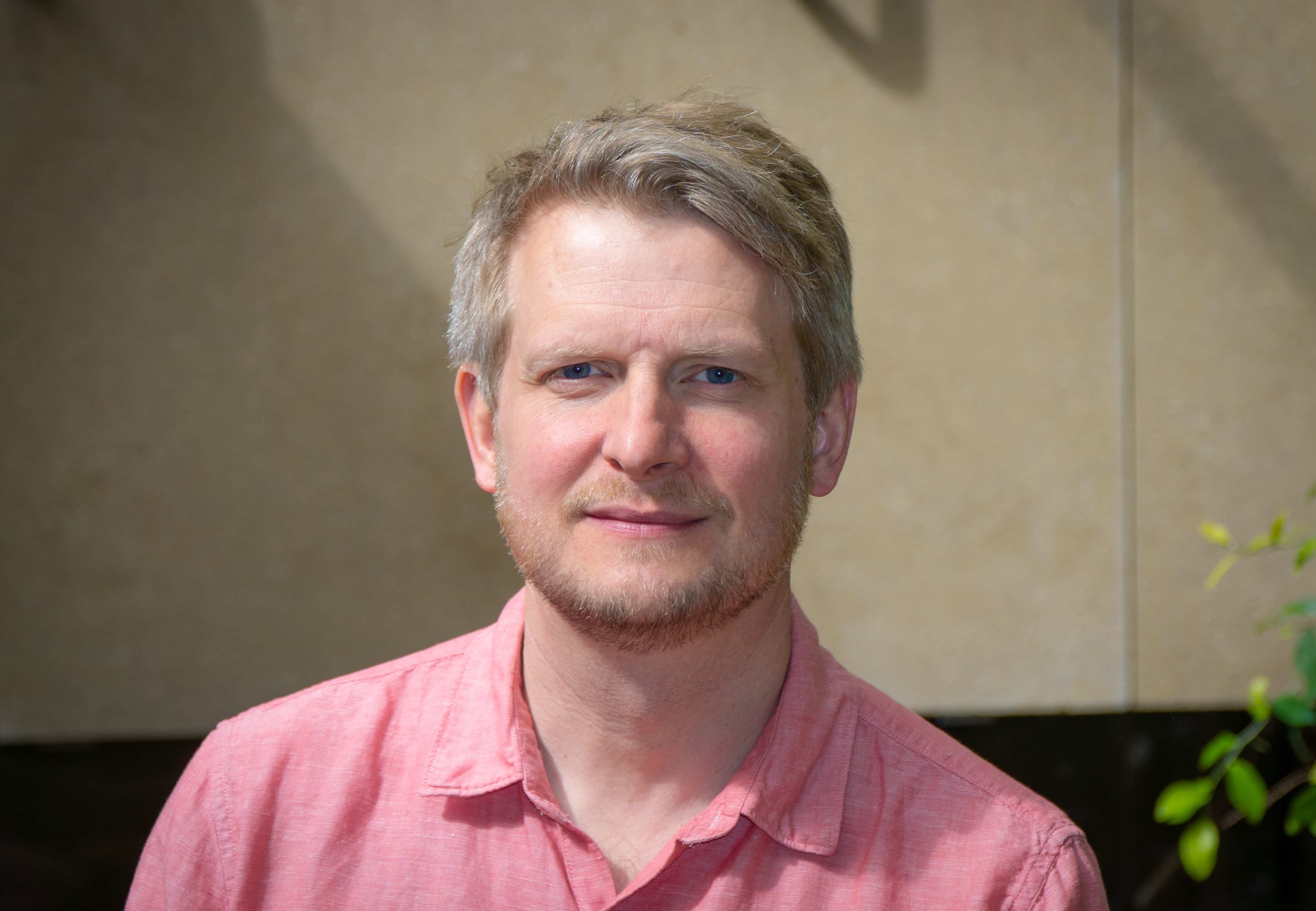
David Tosh is a Professor in the Department of Life Sciences at the University of Bath. His research focuses on cellular reprogramming, developmental biology, and regenerative medicine, with applications to cancer and stem cell therapy. He leads a lab investigating cell type conversions (e.g., pancreatic to liver cells) and their implications for disease like Barrett’s metaplasia. Current lab members include Heather Bone, Christopher Brimson, Zoe Burke, and others listed in the text. He collaborates on projects such as the NextGen-O2k High-Resolution Respirometry initiative and contributes to animal-free 3D tissue modeling. Key research themes include understanding transcription factors driving cell fate decisions, translational applications of reprogramming for therapy, and links between cellular plasticity and cancer progression. His work aligns with UN Sustainable Development Goals related to health and innovation.
Michael Brown is a Professor of Chemistry and Physics at the University of Arizona, holding a joint faculty appointment. His research focuses on atomic, molecular, and optical physics, biological physics, and nuclear physics. He holds a Ph.D. from the University of California at Santa Cruz (1975). His work explores membrane protein dynamics, lipid interactions, and the role of hydration in G-protein-coupled receptor (GPCR) activation. He employs advanced techniques like solid-state NMR, femtosecond X-ray scattering, and quantum mechanical/molecular modeling. Education: Ph.D., 1975, University of California at Santa Cruz Research interests emphasize understanding how lipid membranes, cholesterol, and water modulate protein function. Key areas include rhodopsin activation mechanisms, antimicrobial peptide interactions, and membrane stiffening effects of cholesterol. His interdisciplinary work bridges computational simulations and experimental techniques. Recent articles highlight studies on lipid-protein interactions, rhodopsin activation dynamics, and membrane mechanics, showcasing his focus on ultrafast biophysical processes and structural biology. Awards: None explicitly stated in provided texts. Advising and grants: No student advisees or grant details listed. Collaborations are central to his research, as seen in joint projects on lipid membranes and GPCRs.
Archontis Politis is an Assistant Professor in the Department of Computing Sciences at Tampere University's Faculty of Information Technology and Communication Sciences. His research focuses on signal processing, machine learning, and their applications in audio engineering, particularly in spatial audio, sound source separation, and parametric audio coding. He explores topics such as Ambisonics, reverberation control, and neural network-based approaches for audio processing. His work emphasizes spatial audio reproduction, including six degrees of freedom (6DOF) rendering, microphone array processing, and efficient compression techniques for higher-order Ambisonics. He also investigates sound event localization and detection, leveraging machine learning for real-world acoustic scenarios. His contributions span theoretical advancements in spherical harmonics and practical implementations of spatial audio systems. Recent research highlights include developing datasets for music source separation, improving synthetic-to-real generalization in classical music, and creating neural encoding models for irregular microphone arrays. His methodologies often integrate deep learning with traditional signal processing to address challenges in multi-speaker environments and dynamic acoustic scenes.
Scott Forbes is a Professor in the Department of Biology at the University of Winnipeg, affiliated with the Richardson College for the Environment and Science Complex. His research focuses on behavioral ecology, particularly family dynamics in birds, and fisheries management in Manitoba. He has conducted long-term studies on marsh-nesting blackbirds, exploring conflict and cooperation within families. Recent work investigates commercial potential of non-traditional freshwater fish species and bioproduct development. Forbes actively mentors graduate students and postdocs with funding opportunities. Research interests include avian behavior, reproductive strategies, and ecological impacts of fisheries. Theoretical work combines portfolio theory to model parental investment risks. Field studies emphasize red-winged blackbirds and brood parasitism in host-parasite systems. Publications span avian ecology, evolutionary biology, and environmental science. No scientific awards were explicitly noted in the provided texts. Advising and grants: Open to accepting funded graduate students. Research focuses on wetland birds and resource management, with field studies in Manitoba's freshwater ecosystems. Projects combine empirical and theoretical approaches to understand family conflict resolution, offspring competition, and ecological sustainability.
Jin-Seong Yoo is a Researcher affiliated with the Department of Nuclear Safety & Multiphase Flows at ETH Zürich. His role involves contributing to the professorship focused on nuclear safety and multiphase flow dynamics. He can be contacted at jinyoo@ethz.ch . His research interests center on advancing nuclear safety protocols and understanding complex multiphase flow phenomena, with applications in reactor design and thermal-hydraulic systems. His work bridges fundamental fluid dynamics principles with practical engineering solutions for nuclear energy systems. No specific awards, grants, or published articles are listed in the provided text.
Shashi Kumar is a doctoral student in the Doctoral Program in Electrical Engineering (EDDEE) at École Polytechnique Fédérale de Lausanne (EPFL) , affiliated with the School of Engineering (STI) and the IDIAP Research Institute (LIDIAP) . He holds the role of Doctoral Assistant at LIDIAP, contributing to research in speech technology and machine learning. His work focuses on advancing automatic speech recognition (ASR), optimal transport frameworks, and variational autoencoders for speech enhancement and signal processing. Research interests include speech recognition systems , multimodal task unification , far-field speech processing , and machine learning applications in signal processing and computer vision. His publications highlight contributions to SLAM-ASR performance analysis, joint speaker change detection, and PCB defect classification using image segmentation techniques. Shashi's research is anchored at the IDIAP Research Institute , where he collaborates on projects involving deep learning, audio signal processing, and speech technology. While no awards or grants are explicitly listed, his work reflects active engagement in international challenges like the Interspeech DiCOVA competition.
Nigel Bosch is an Assistant Professor in the School of Information Sciences (iSchool) at the University of Illinois Urbana-Champaign, with a joint appointment in the Department of Educational Psychology. He is also a faculty affiliate at the National Center for Supercomputing Applications (NCSA) and Illinois Informatics. His primary research focuses on machine learning and human-computer interaction applications in education, with particular emphasis on affective computing, metacognition, and online learning environments. Bosch holds a PhD in Computer Science from the University of Notre Dame, followed by a postdoctoral research position at the National Center for Supercomputing Applications. His research explores machine learning applications in education, including automatic emotion measurement in programming education, metacognition analysis through natural language processing, and ethical implications of AI in learning. He also investigates wearable technologies for health monitoring and algorithmic bias mitigation in educational data. Bosch’s work is supported by grants from the National Science Foundation (NSF), the Institute of Education Sciences (IES), and the University of Illinois. He leads the (Human + Machine) Learning lab, which develops innovative technologies for educational analytics, AI ethics, and human-centered computing.
Mathieu Tillier is a Professor of Medieval Islamic History at the Faculty of Arts and Humanities, Sorbonne University. He specializes in early Islamic judicial systems, papyrology, and interfaith legal dynamics in the Middle East. Tillier holds a PhD from Université Lumière-Lyon 2 (2004) and has held academic positions at Aix-Marseille Université and Oxford University, supported by a Marie Skłodowska-Curie fellowship. His research explores the evolution of Islamic legal institutions, particularly focusing on the role of qadis and the integration of religious minorities. Notably, he received the Sheikh Zayed Book Award (2023) for his groundbreaking work The Invention of the Qadi , which examines judicial pluralism in 8th-century Egypt. His research extends to Fatimid legal practices, early Quranic codices, and material culture analysis through papyrus and silk documents. Tillier collaborates extensively with institutions like the Institut français du Proche-Orient and co-authored studies on devotional texts and legal anthropology. His work bridges historical analysis with interdisciplinary methods, emphasizing textual and material evidence to reconstruct social dynamics in early Islamic empires. Education: PhD in History, Université Lumière-Lyon 2 (2004) Aggregation in Arab Studies (1999) Accreditation to Supervise Research (2013) Research Focus: Tillier’s work centers on the judicial reforms under Umayyad and Abbasid caliphates, papyrus-based legal records, and the coexistence of Islamic, Jewish, and Christian legal frameworks. He has pioneered studies on Fatimid marriage contracts, Quranic codices, and the socio-political role of qadis in medieval Egypt. His methodologies integrate textual analysis, material science, and comparative legal history. Grants & Collaborations: Supported by European Marie Skłodowska-Curie grants, Tillier has collaborated with Oxford University and the Institut français du Proche-Orient. His recent projects include co-authoring analyses on devotional texts with Naïm Vanthieghem and examining ink composition in early Quranic manuscripts. Awards: The Sheikh Zayed Book Award (2023) recognizes his monumental contribution to understanding early Islamic judicial systems. His work has been translated into multiple languages, influencing global scholarship on medieval Islamic studies.
Dr. Wenjing Jia is an Associate Professor at the University of Technology Sydney (UTS), affiliated with the School of Electrical and Data Engineering within the Faculty of Engineering and IT. She holds a PhD in Computing Sciences (UTS, 2007), Master's in Communications and Information Systems (Fuzhou University, 2002), and a Bachelor's in Communications Engineering (Jilin University, 1999). Her research focuses on image analysis, computer vision, and AI applications in healthcare, transport, and defense. Key areas include text detection in challenging environments, medical image super-resolution, and crowd surveillance systems. She leads projects with industry partnerships, securing over $900K in funding. Dr. Jia is also a recognized educator with 12+ years of teaching experience, specializing in internetworking subjects. She organizes international conferences (e.g., ICDAR2019, TrustCom-2017) and serves as a Cisco Certified Instructor Trainer. Awards include the Science and Technology Award and a finalist spot in the Cisco Women in IT Academia Award. Education: PhD in Computing Sciences, UTS (2007) MSc in Communications and Information Systems, Fuzhou University (2002) BEng in Communications Engineering, Jilin University (1999) Research Highlights: Developed algorithms for low-light text detection and medical image enhancement Advanced crowd counting and violence detection in surveillance systems Contributions to OCT image super-resolution and LiDAR point cloud analysis Teaching & Leadership: Lead CI of Teaching & Learning grants Legal Main Contact for UTS Cisco Networking Academy Deputy Head - Teaching and Learning (secondee) Awards: Excellent Thesis Award, Science and Technology Award (2019), and recognition in Women in IT Academia. Her work bridges academia and industry, with over 130 publications and active roles in conference organization and technology transfer.
Graeme Boone is a Professor of Musicology at the School of Music, The Ohio State University. Before joining in 1997, he held roles as Assistant and Associate Professor of Music at Harvard University and taught at Haverford College. His expertise bridges Renaissance music and American popular traditions, including folk instruments like guitar and banjo. Education: BA: University of California-Berkeley MA and PhD: Harvard University National Superior Conservatory of Music, Paris (Premier prix, histoire de la musique) Boone’s research delves into the interplay between poetry and song in fifteenth-century Europe, alongside analyses of rock and jazz music. He combines historical methodologies—such as paleography and manuscript studies—with explorations of non-Western and classical repertoires. His publications, including Patterns in Play (1999) and Understanding Rock (1997), reflect this interdisciplinary approach. Current projects include a co-edited jazz history volume (in preparation). Despite no explicit mentions of awards or grants, Boone’s academic career emphasizes teaching and publishing across diverse musical domains. He advises no named students in the text, though his courses span Renaissance, classical, and global music studies. No affiliated labs or teams are detailed in the provided information.
Lillian Lee is a Professor of Computer Science at Cornell University, affiliated with the College of Computing and Information Science. Her research bridges natural language processing (NLP) and social interaction, focusing on how computational methods can analyze and facilitate socially embedded processes. She co-developed the course “Natural Language Processing and Social Interaction” and leads the Cornell NLP Group. Her work spans sentiment analysis, computational social science, and multimodal interaction, with notable contributions to understanding language features in persuasion, online debate dynamics, and humor comprehension. Key research interests include analyzing digital traces of social interaction, evaluating AI systems through human-centered criteria, and exploring the interplay between language structure and societal influence. Recent projects examine pivotal moments in mental health counseling, cross-cultural historical narratives on Wikipedia, and the role of wording in message propagation. Awards: ACM Fellow, ACL Distinguished Service Award (2021), Test of Time Award, Fellow of the Association for Computational Linguistics Labs/Teams: Member of the Cornell Natural Language Processing Group Advising: Mentored numerous students whose work has driven impactful projects in NLP and computational social science
Kasper Welbers is an Associate Professor at the Department of Communication Science, Faculty of Social Sciences, Vrije Universiteit Amsterdam. He holds additional appointments at the Network Institute and the Communication Choices, Content and Consequences (CCCC) research group. He is co-Director of The Societal Analytics Lab, Vice Chair of the Computational Methods Division at the International Communication Association (ICA), and a scientific representative of the OPINION COST Action network. His research focuses on computational communication science, journalism, and political communication, particularly exploring how news spreads and the role of gatekeepers in media systems. He develops open-source tools for research and advocates for reproducible computational methods. Education and Academic Background: While formal education details are not explicitly provided, his academic trajectory is evident through his faculty role and publications. Research Interests: Welbers combines methodological innovations with substantive research on news diffusion, media gatekeeping, and computational text analysis. His work addresses topics like dark platforms' agenda-setting roles, automated content analysis techniques, and the impact of platform policies on data donation studies. He emphasizes ethical research practices and open-source infrastructure development. Grants and Awards: He received the Faculty of Social Sciences Dissertation Award (2017) and Teacher Talent Award (2019), highlighting both research and pedagogical excellence. Labs and Collaborations: His work is anchored in The Societal Analytics Lab, fostering interdisciplinary research on societal challenges through computational methods. Collaborations span global networks like the OPINION COST Action, addressing cross-cultural media dynamics. Teaching: He teaches courses such as Computational Analysis of Digital Communication and contributes to curriculum development in AI ethics and data science for societal issues.
Michael Anesko is a Professor of English and American Studies at Pennsylvania State University. His work centers on 19th- and 20th-century American literature, with a focus on Henry James, book history, and queer studies. He has edited multiple volumes of Henry James' letters and authored seminal works like Henry James Framed and Monopolizing the Master . Anesko's research explores textual scholarship, material culture, and the intersections of literature with cultural politics. His publications include critical monographs, edited collections, and articles on James' narrative techniques, queer filiation, and the sociohistorical contexts of American literature. Notable contributions include re-evaluating James' relationship with William Dean Howells and analyzing the construction of literary canons. Research Interests: Henry James studies, queer theory, textual editing, American literary history, material culture, and transatlantic cultural exchange. Editorial Work: Co-edited The Complete Letters of Henry James (multiple volumes), Cambridge Edition of Henry James' fiction. Key Themes: Queer filiation, literary collaboration, textual authority, and the socio-political dimensions of academic publishing. Anesko's articles often bridge literary criticism with historical analysis, emphasizing the materiality of texts and their cultural implications. His work on James' letters and correspondence underscores the importance of archival research in understanding authorial intent and literary reception.
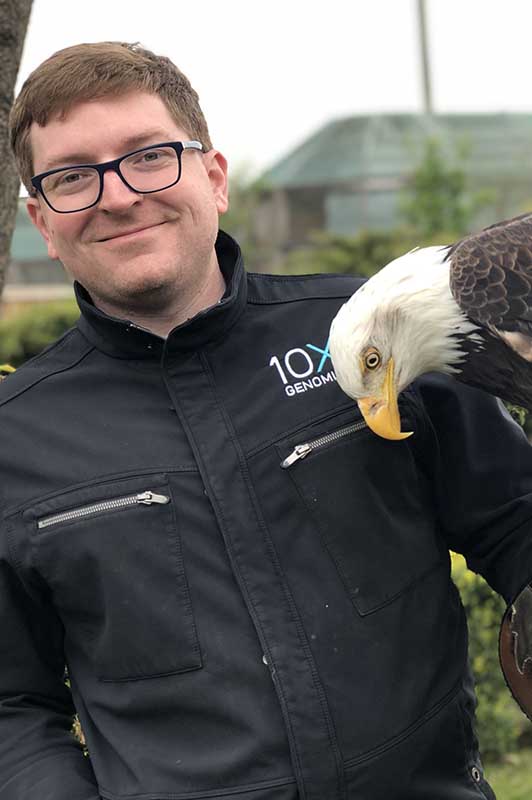
Haynes Heaton is an Assistant Professor in the Department of Computer Science and Software Engineering at Auburn University. He holds a Ph.D. in Computational Biology from Cambridge University, an M.D. from Brown University, and a B.S. in Computer Science from Brown University. His interdisciplinary work bridges computational methods with biomedical applications, focusing on genomic technologies for malaria research and single-cell analysis. Research interests include genome sequencing of malaria vectors (e.g., Anopheles mosquitoes), development of bioinformatics tools (e.g., LCSKPOA, Souporcell), and structural variation analysis in human and pathogen genomes. His work has contributed to chromosomal reference genomes for multiple malaria mosquitoes, advancing understanding of vector biology and disease transmission. Publications highlight innovations in genome assembly, single-cell RNA-seq deconvolution, and computational methods for genomic data analysis. While no explicit awards are listed, his research has been featured in Auburn Engineering news for breakthroughs in leukemia diagnostics via software development. He collaborates with medical and computational teams to translate genomic insights into clinical applications. No advising records or grants are explicitly detailed in the provided text.
Andrew Ireson is a Professor at the School of Environment and Sustainability, University of Saskatchewan, and a Member of the Global Institute for Water Security. His research focuses on subsurface hydrology, climate change impacts on water resources, land-water management, and sustainable natural resource development. He has contributed significantly to understanding soil moisture dynamics, infiltration processes in frozen soils, and groundwater-surface water interactions in boreal and prairie ecosystems. His recent work emphasizes advanced numerical modeling techniques for hydrological processes, including Richards’ Equation solutions and soil freezing dynamics. He has also developed frameworks for integrating water quality simulations with existing hydrological models (e.g., OpenWQ). His publications highlight themes like climate change adaptation, seasonal hydrology, and the role of ephemeral ponds in groundwater recharge. No scientific awards or grants are listed here, though his extensive publication record underscores his scholarly contributions. His advising roles are not detailed in the provided texts.