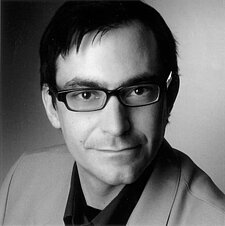
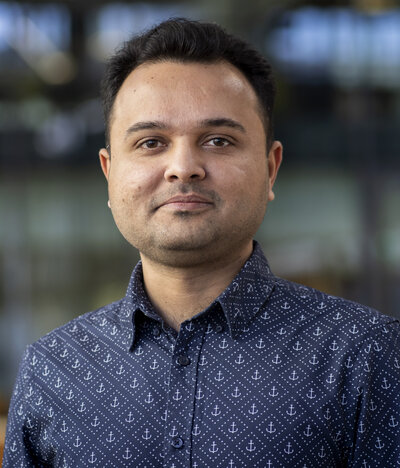
Prof. Dr. Markus Appel is a Professor and Chair holder at the Human-Computer-Media Institute at the University of Würzburg, specializing in Communication Psychology and New Media. His office is located in Room 02.004 at Campus Hubland Nord, Oswald-Külpe-Weg 82, Würzburg, Germany. Appel's research focuses on communication psychology, narrative transportation theory, social media effects, digital communication, and the psychological aspects of human-computer interaction. His work explores how media narratives influence self-concept, how digital environments shape autobiographical memory, and the psychological responses to emerging technologies like artificial intelligence. He has made significant contributions to understanding stereotype threat, media effects on cognitive processes, and the psychological mechanisms underlying narrative persuasion. His recent publications reveal a strong trend toward examining the psychological implications of artificial intelligence, particularly how people perceive and interact with AI systems. His work spans multiple disciplines including cognitive psychology, social psychology, media psychology, and human-computer interaction. Appel's research often employs experimental methodologies to investigate how digital media shapes human cognition, emotion, and behavior in the 21st century. Appel leads a research team that includes several doctoral researchers and postdoctoral fellows, including Dr. Fabian Hutmacher, Dr. Christoph Mengelkamp, and Dr. Tanja Messingschlager, among others. His work has been published in top-tier journals across multiple disciplines, demonstrating the interdisciplinary nature of his research program.
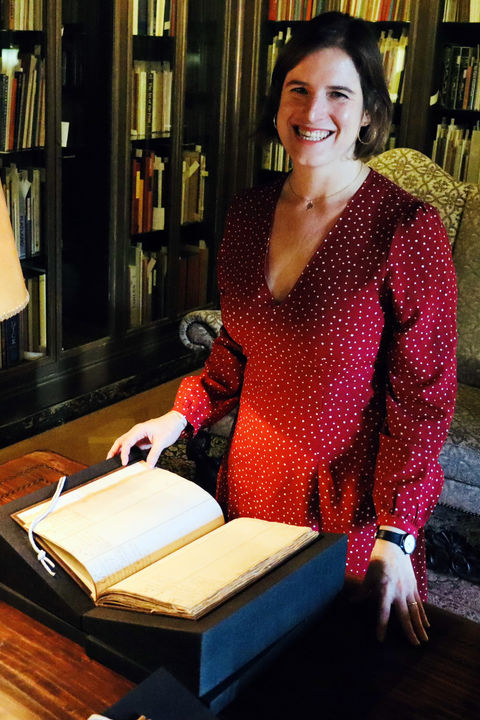
Marissa Nicosia is an Associate Professor of Renaissance Literature in the English Department at Penn State Abington, part of the Pennsylvania State University system. She also serves as an Associate Professor in the Writing Program. Her academic work bridges literary studies, food history, and digital humanities, making significant contributions to our understanding of early modern English culture through innovative interdisciplinary approaches that combine textual analysis with practical experimentation. Dr. Nicosia received her Ph.D. in English from the University of Pennsylvania in 2014 and her B.A. in English Literature and Creative Writing from Barnard College, Columbia University in 2007, where she was elected to Phi Beta Kappa. Before joining Penn State Abington, she taught at Scripps College, the University of Pennsylvania, and the University of the Arts in Philadelphia. Her research focuses on the intersections of early modern English literature, food studies, book history, and political theory. Dr. Nicosia examines how literary texts and historical documents reveal cultural practices, particularly around food and temporality. Her methodology combines historical formalism and critical bibliography to uncover how early modern writers engaged with questions of time, politics, and material culture. She has developed innovative approaches that bridge academic scholarship with public engagement through recipe reconstruction and digital humanities projects. Dr. Nicosia's publications demonstrate a consistent engagement with how historical texts can inform contemporary understanding across multiple formats. Her work spans academic monographs, edited collections, peer-reviewed articles, and public-facing digital humanities projects. She has established herself as a leader in bringing early modern studies to broader audiences through accessible scholarship that connects historical practices to modern experiences in meaningful ways. Franklin Research Grant, American Philosophical Society, 2024-2025 Dibner Research Fellow in the History of Science and Technology, The Huntington Library, 2024-2025 Faculty Senate Outstanding Research Award, Penn State Abington, 2023 Margaret Hannay Fellow, Folger Shakespeare Library, 2022-2023 Ogontz '65 Career Development Professorship, Penn State Abington, 2021-2023 Resident Scholar, Penn State Humanities Institute, 2022 Chief Ogontz Award, Penn State Abington, 2022 President's Award for Engagement with Students, Penn State, 2022 Dr. Nicosia has secured significant grant funding for her research, including a Summer Stipend from the National Endowment for the Humanities (2021) and the Pennsylvania Grants for Open and Affordable Learning (2021-2022). Her innovative teaching approaches have been recognized with multiple awards, including the President's Award for Engagement with Students from Penn State (2022) and the Faculty Senate Outstanding Teaching Award at Penn State Abington (2018). She has mentored numerous undergraduate students through research projects, particularly through her 'What's in a Recipe?' initiative that engages students with early modern manuscript transcription. Her public humanities project 'Cooking in the Archives' has gained national recognition, being featured in the Washington Post, HuffPost: Taste, Edible Philly, CNN.com, and on Talk of Iowa (NPR). This initiative curates transcribed and updated recipes from early modern English household manuscripts, creating a valuable resource for food historians, students, culinary enthusiasts, and the general public. The project has attracted approximately 300,000 visitors and demonstrates Dr. Nicosia's commitment to making academic research accessible and engaging for diverse audiences.
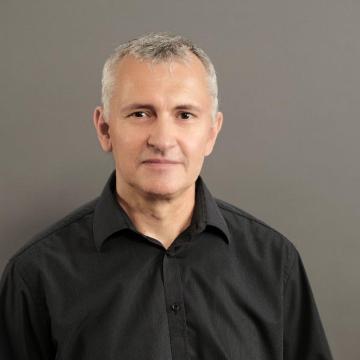
Tetsunori Kobayashi is a Professor in the School of Fundamental Science and Engineering at Waseda University, Japan, where he has served since 1997. He is renowned for pioneering research in human–robot interaction, spoken language processing, and multimodal conversational systems, leading to over 230 refereed papers and an h-index of 35 (Google Scholar). Education: 1980 B.Eng. in Electrical Engineering, Waseda University 1982 M.Eng. and 1985 Dr.Eng. from Graduate School of Science and Engineering, Waseda University Research Interests: His work spans intelligent robotics , perceptual information processing , pattern recognition , image and audio processing , and conversational AI . He develops algorithms for real-time dialogue systems, multi-party conversation facilitation robots, and non-autoregressive speech recognition leveraging CTC and pre-trained language models. Recent Publication Trends: Since 2020 his group has advanced non-autoregressive end-to-end ASR (Mask-CTC, Intermpl, BECTRA), noise-robust attention , multi-look-ahead conversational ASR , and neural speaker diarization . They integrate BERT-style pre-training with CTC losses to accelerate inference while maintaining accuracy. Parallel work explores vision-and-language topics such as scene-graph generation, video semantic indexing, and personalized summarization for spoken news delivery. Scientific Awards: IEICE Fellow 2023 – for multi-modal multi-party conversation research IPSJ Fellow 2016 – for pioneering robot conversation studies JST Award for Academic Start-ups 2024 Best Paper Awards from IEICE, IEEE BTAS, ACM SIGGRAPH VRCAI, and several IPSJ workshop prizes Advising & Grants: He has mentored dozens of PhD and Master’s students who now lead in academia and industry. Major funded projects include JST CREST on conversational robotics, NEDO and JST-support for AI-based speech interfaces, and industry collaborations with NHK, OKI, and NEC. Labs & Teams: Kobayashi heads the Perceptual Computing Laboratory at Waseda, conducting interdisciplinary research with domestic and international partners such as MIT, ATR, and NHK Science & Technology Labs.
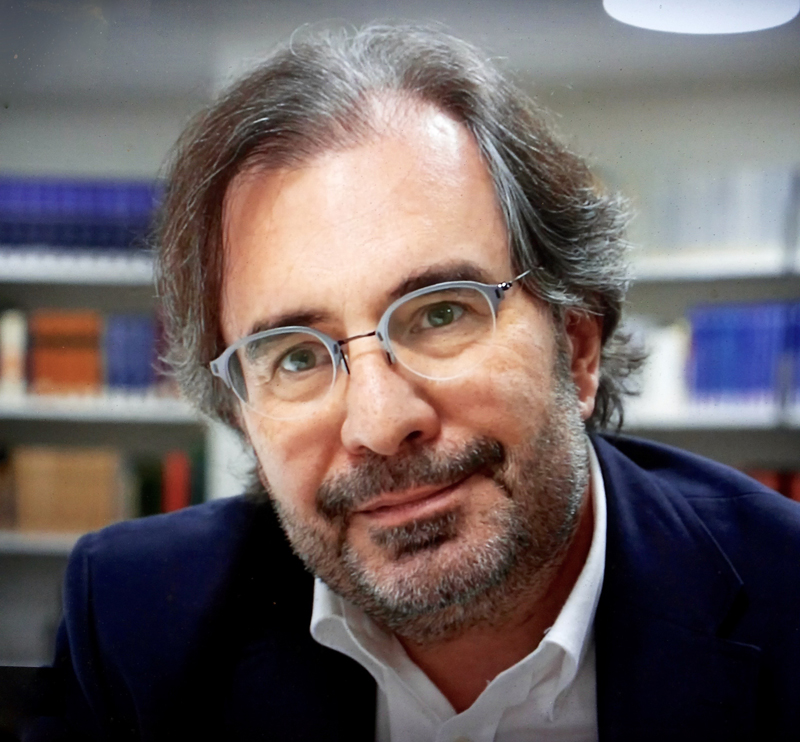
Darko Etinger is an Associate Professor and currently serves as the Dean of the Faculty of Informatics at Juraj Dobrila University of Pula in Croatia. His academic career spans over two decades with significant contributions to the fields of information systems, educational technology, and artificial intelligence. He teaches undergraduate courses including Artificial Intelligence, Business Information Systems, Business Process Management, ICT Fundamentals, Information Systems, Introduction to Artificial Intelligence, and Multimedia Systems. At the graduate level, he teaches Development of IT Solutions, IT Management, Modelling and Simulation, and Project Management. He also supervises doctoral research in Management of Information Technologies in Education. Dr. Etinger's research interests span several key areas in computer science and education technology. He has made significant contributions to understanding how information and communication technologies can support children with special educational needs, as evidenced by his 2024 and 2025 books on the topic. His work also focuses on business process management, educational data mining, and the application of artificial intelligence in educational contexts. His 2024 book 'Introduction to R and RStudio' demonstrates his commitment to data science education. Analysis of his recent publications shows a strong focus on practical applications of technology in education and business. His work spans educational robotics, learning management systems analysis, business process modeling, and the application of large language models in healthcare. He has a particular interest in how technology can be made accessible and beneficial for diverse learner populations, including those with special needs. His research often takes a human-centered approach, examining not just the technology itself but how it's adopted and used by end users. His 2025 bibliometric analysis of metaverse security demonstrates his ability to tackle emerging technological challenges. Associate Professor at Faculty of Informatics, Juraj Dobrila University of Pula Current Dean of Faculty of Informatics Author of multiple publications on educational technology and information systems Supervisor for numerous graduate theses on educational technology topics Active participant in EDIH Adria project as evidenced by 2025 publications Researcher in educational robotics implementation in Croatian schools Dr. Etinger has advised numerous students completing their theses, with a focus on educational technology applications. His research has been published in various international conferences and journals including IEEE Engineering Management Review, Procedia Computer Science, and System Dynamics Review. His current research appears to be heavily focused on the EDIH Adria project, which is a European Digital Innovation Hub initiative focusing on technology transfer and business innovation. He maintains an active research program with publications spanning from 2003 to the present, demonstrating sustained scholarly contribution to his fields of expertise.
Michael Basseler is an Adjunct Professor of Literary and Cultural Studies at the Graduate Centre for the Study of Culture (GCSC) at Justus-Liebig-Universität Gießen. He serves as the Managing Director of GCSC/GGK and has been the academic director since 2013. His work focuses on American literature and culture, particularly on African American literature, narrative theory, and interdisciplinary resilience studies. His educational background includes a PhD dissertation on cultural memory and trauma in contemporary African American novels and a postdoctoral dissertation (Habilitation) on literature as a form of "life knowledge" through short stories from the late 19th to early 21st century. Basseler's research interests span Literary and Cultural theory, African American literature and culture, Literature and knowledge, Narrative theory and cultural narratology, Interdisciplinary resilience studies, and genre theory and history. His recent projects focus on the concept of (cultural) resilience, issues of race and racism, and post-Cold War culture. His scholarly approach integrates literary analysis with cultural studies to examine how narratives shape and reflect cultural understandings of resilience, memory, and identity. His publications reveal a consistent focus on short literary forms, particularly the short story, and their evolving functions in contemporary culture. He has made significant contributions to understanding how literature serves as "life knowledge" and how narratives engage with concepts of resilience in times of crisis. His work often bridges theoretical frameworks with close readings of specific texts to illuminate broader cultural patterns. Reviewed works in Amerikastudien/American Studies Active member of Deutsche Gesellschaft für Amerikastudien (since 2009) Founding member of European Network for Short Fiction Research (since 2014) As a supervisor, Basseler has guided numerous doctoral students through their dissertations, with a focus on contemporary cultural issues including African American identity, Caribbean literary interventions, resilience narratives, and cultural memory. His current research projects include "Narrating Resilience, Achieving Happiness?" (since 2021) and "Short Forms Beyond Borders" (EU Strategic Partnerships, 2020-2023), which explores short forms as tools for cultural, educational, and social mediation in Europe. Basseler leads an international research group and collaborates with specialists from six European universities and a private firm to develop short forms as both tools and objects of pedagogical innovation and cultural mediation, recognizing the growing relevance of brevity in contemporary society across various media forms.
Travis D. Breaux is an Associate Professor in the School of Computer Science at Carnegie Mellon University, where he directs the Requirements Engineering Lab . His research bridges software engineering, privacy, security, and legal compliance, with a focus on developing formal methods to ensure software systems adhere to regulatory frameworks. He holds appointments in the Software and Societal Systems Department and directs the Masters of Software Engineering (MSE) Professional Programs. Breaux's research investigates privacy policy compliance , empirical extraction of legal requirements , and risk quantification in system design. His work employs AI, formal specification, and empirical methods to resolve ambiguities in policies and quantify privacy/security risks. Key themes include regulatory alignment, automated reasoning for compliance, and human factors in risk perception. Recent publications emphasize AI-driven requirements engineering , including LLM applications for goal modeling, legal requirement extraction, and automated question generation. His work consistently addresses the intersection of formal methods, policy analysis, and scalable compliance verification. Awards and Honors: NSF CAREER Award (2015) IEEE RE Distinguished Paper Award (2018) Distinguished Reviewer Awards (ICSE 2018, RE 2023) IEEE RE Most Influential Paper Award (Honorable Mention, 2016) Breaux advises PhD and Master's students in privacy engineering and requirements formalization. He has led NSF-funded initiatives including the Workshop on Designing Accountable Software Systems (DASS) . Current courses include Prompt Engineering and Artificial Intelligence for Software Engineering , focusing on LLM applications and AI ethics.
Milan Lovenjak serves as an Assistant Professor in the Department of History at the Faculty of Arts, University of Ljubljana. His academic responsibilities include teaching undergraduate and graduate courses in Ancient History, Latin Language (levels 1-4), Roman History, Epigraphy, and Late Antiquity, reflecting his expertise in classical studies and historical methodologies. Dr. Lovenjak holds a PhD, though specific educational institutions and dates are not detailed in the provided materials. His scholarly profile emphasizes rigorous engagement with primary sources, including inscriptions, legal texts, and chronicles from antiquity to the medieval period. Research interests span Ancient Roman history , epigraphy , Latin literature , and legal history , with significant contributions to understanding Flavian municipal law (Lex Irnitana), the trial of Gnaeus Piso, and the reception of classical texts in the medieval era. His work on the Roman water supply in Emona integrates archaeological science with historical analysis. Recent publications (2016-2021) reveal a focus on Roman legal documents and their historical context, alongside translations of medieval chronicles like the Chronicle of the First Crusade . This interdisciplinary approach combines textual criticism, archaeology, and historical narrative to illuminate connections between antiquity and the medieval world. No scientific awards or major research grants are explicitly mentioned in the available documentation. While specific doctoral advisees are not listed, Dr. Lovenjak's role as a core faculty member in Ancient History suggests active mentorship of students in the Department of History.
Minjoon Seo is an Associate Professor at KAIST AI, Korea Advanced Institute of Science and Technology. He holds a BS in Electrical Engineering & Computer Science from UC Berkeley and previously worked as a software engineer at Oracle. His research focuses on natural language understanding, large-scale end-to-end question answering, and multimodal AI systems combining language and vision. Research Interests: His work spans Natural Language Processing, Machine Learning, Deep Learning, and Language-Vision integration. He develops neural network architectures for machine comprehension and multimodal understanding, with applications in question answering systems and diagram interpretation. Publications: His research demonstrates a consistent focus on multimodal AI systems, with recent works advancing neural approaches to machine comprehension and diagram understanding. Publications show strong emphasis on NLP-CV integration and practical applications in healthcare and education. Awards: Best Paper Nomination at UbiComp 2014 for BiliCam research Professional Activities: Maintains active open-source contributions through GitHub repositories related to question answering systems and NLP research. Co-founded Config Intelligence while maintaining academic position.
Dr. Ninghao Liu is an Assistant Professor of Computer Science in the School of Computing at the University of Georgia, part of the Franklin College of Arts & Sciences - Division of Physical & Mathematical Sciences. He holds a Ph.D. in Computer Science from Texas A&M University (2021) and an M.S. in Electrical and Computer Engineering from Georgia Institute of Technology (2015). His research focuses on Explainable AI (XAI), Graph Mining, Model Fairness, Recommender Systems, and Outlier Detection, with notable contributions to foundational AI techniques and their applications in education, healthcare, and environmental sciences. Dr. Liu has secured significant funding, including a three-year NSF grant (2022–2025) for 'Graph-Oriented Usable Interpretation' and a five-year $10 million grant from the U.S. Department of Education (2024–2029) for the GenAI Empowered National Initiative for STEM+C Education. He has also been honored with the Outstanding Paper Award at ICML 2022, Best Paper Award Shortlist at WWW 2019, and other distinctions. His work emphasizes interpretable machine learning, graph neural networks, and addressing algorithmic bias. He collaborates across disciplines, contributing to radiology AI, climate-smart forestry, and pandemic prediction through knowledge-enhanced deep learning. His lab is based at the Boyd Research and Education Center, where he advances research in trustworthy AI systems and data-centric solutions.
Roles & Affiliations: Dagmar Gromann is an Associate Professor for Terminology Science and Translation Technology at the University of Vienna's Centre for Translation Studies. Previously, she served as a Research Associate at TU Dresden's International Center for Computational Logic (ICCL) and held postdoctoral roles in Barcelona within the ESSENCE Marie Curie Training Network. She completed her PhD at the University of Vienna under Prof. Gerhard Budin, focusing on ontology-terminology integration. Education: PhD in Computer Science and Linguistics, University of Vienna (2015) Postdoctoral Research, Artificial Intelligence Research Institute (IIIA), Barcelona (2015–2017) Research Assistant, Vienna University of Economics and Business (until 2015) Research Interests: Her work bridges computational linguistics, cognitive science, and terminology science. Key areas include: Ontology learning and neurosymbolic AI Image schemas in natural language processing Machine translation ethics and genderfair language Multilingual knowledge extraction and linked data Terminology modeling and semantic web applications Publications & Awards: Over 60 peer-reviewed papers in journals such as Future Generation Computer Systems and Journal of Lexicography . Notable awards include the Best Paper Award at MuC 2021 (GenderFairMT team) and the ISWC 2019 Best PC Award. Her research has pioneered methods for extracting embodied cognition concepts like image schemas from text. Grants & Leadership: PI of the European Language Grid (ELG) pilot project Text2TCS, member of the COST Action NexusLinguarum, and organizer of conferences like LDK 2023. Editorial board roles include the Semantic Web Journal and Applied Ontology . Labs & Teams: Former member of TU Dresden's ICCL and currently part of the University of Vienna’s translation technology initiatives. Active in interdisciplinary collaborations spanning computational linguistics, AI ethics, and multilingual systems.
Dr. Xiaohan Yu is a Lecturer in Artificial Intelligence at Macquarie University's School of Computing, joining in December 2023. Previously, he completed his doctoral studies at Griffith University and served as a Research Fellow at the ARC Research Hub for Driving Farming Productivity. His research focuses on Ultra-Fine-Grained Visual Categorization (Ultra-FGVC), Smart Farming, and Automated Crop Cultivar Identification, with over 70 publications in top-tier venues like ICCV, CVPR, and IEEE Transactions. He holds editorial roles at Pattern Recognition and SN Computer Science , and received the APRS Early Career Award (2022) and ACM MM 2024 Outstanding Area Chair distinction. Education: Completed doctoral studies in Artificial Intelligence at Griffith University, Australia. Research Interests: Ultra-Fine-Grained Visual Categorization (Ultra-FGVC) Smart Farming and Agricultural Robotics Computer Vision Applications in Healthcare (e.g., trachoma detection) Deep Learning, Continual Learning, and Domain Adaptation Key Contributions: Pioneered Ultra-FGVC research, developed frameworks like Mix-ViT and CLE-ViT, and contributed to benchmarking multi-object tracking in farming. His work bridges pattern recognition with real-world applications in agriculture and healthcare. Scientific Awards: Australian Pattern Recognition Society (APRS) Early Career Researcher Award 2022 ACM Multimedia 2024 Outstanding Area Chair Award Advising & Grants: Actively involved in editorial roles (Area Chair for ACM MM, IJCNN) and grant-funded research through ARC hubs. His work is supported by collaborations in agriculture and AI-driven solutions for crop cultivar identification. Labs & Affiliations: Member of Macquarie's Smart Green Cities Research Centre and Frontier AI Research Centre , advancing interdisciplinary AI applications.
Luca Zoppelli is a Professor of Musicology at the University of Fribourg, Switzerland, since 2000. Previously, he held academic positions at the University of Salento (1993–1998 as Lecturer, then Associate Professor) and taught at several Italian conservatories including Padua, Vicenza, and Lecce. His research focuses on 19th-century opera, Venetian music history, musical dramaturgy, and the aesthetics of Baroque music. He co-directs the critical edition of Vincenzo Bellini's works and served as editor of the Schweizer Jahrbuch für Musikwissenschaft / Annales Suisses de Musicologie (2008–2019). Education: Studied Musicology and Literature at Ca' Foscari University in Venice (B.A., 1984 under Giovanni Morelli). Specialized in Baroque music aesthetics, operatic narrative structures, and the interplay between music and drama. His work bridges historical analysis with contemporary musicological methodologies. Research interests prominently feature operatic composition processes, the role of narrative in music, and the socio-political dimensions of 19th-century Italian opera. His publications critically analyze composers like Rossini, Verdi, Wagner, and Bellini, with notable contributions to understanding musical dramaturgy and the evolution of operatic forms.
Aaqib Saeed is an Assistant Professor in the Department of Industrial Design at Eindhoven University of Technology. His research focuses on Human-Centric AI, Federated Learning, Self-Supervised Learning, and Audio Understanding, with applications in Personal Health. He holds a PhD (cum laude) from TU/e and an MSc (cum laude) from the University of Twente. Education: PhD in Computer Science (cum laude), TU/e (2021) MSc in Computer Science (cum laude), University of Twente (2018) Research Interests: Development of robust federated learning frameworks for decentralized data Self-supervised learning for audio and physiological signal analysis AI-driven solutions for healthcare monitoring Key Contributions: DeltaMask: Reducing communication overhead in federated fine-tuning FedNS: Mitigating noisy decentralized data in federated learning Labeling Chaos to Learning Harmony: Handling label noise in FL Professional Experience: Visiting Industrial Fellow, University of Cambridge (2023) Research Scientist, Philips Research (2019–2023) Research Internships: Google Research, TNO/EIT Digital Awards: UT Scholarship (MSc) Cum Laude awards for both PhD and MSc Labs/Teams: EAISI Health, EAISI Foundational, Computational Design Systems.
Per Krusell is an Adjunct Professor at Stockholm University's Department of Economics. His research focuses on macroeconomic dynamics and labor economics, particularly exploring rigid wage contracts and their implications. He has published in top journals such as the American Economic Review: Insights. Key affiliations include the Institute for International Economic Studies (IIES) at Stockholm University, as indicated by his email domain. His work contributes to understanding wage rigidities and their macroeconomic effects. No formal awards or grants are explicitly mentioned in the provided texts. Advising information is unavailable, but his research aligns with projects like IMWEL, though specifics are not detailed.
David Tosh is a Professor in the Department of Life Sciences at the University of Bath. His research focuses on cellular reprogramming, developmental biology, and regenerative medicine, with applications to cancer and stem cell therapy. He leads a lab investigating cell type conversions (e.g., pancreatic to liver cells) and their implications for disease like Barrett’s metaplasia. Current lab members include Heather Bone, Christopher Brimson, Zoe Burke, and others listed in the text. He collaborates on projects such as the NextGen-O2k High-Resolution Respirometry initiative and contributes to animal-free 3D tissue modeling. Key research themes include understanding transcription factors driving cell fate decisions, translational applications of reprogramming for therapy, and links between cellular plasticity and cancer progression. His work aligns with UN Sustainable Development Goals related to health and innovation.