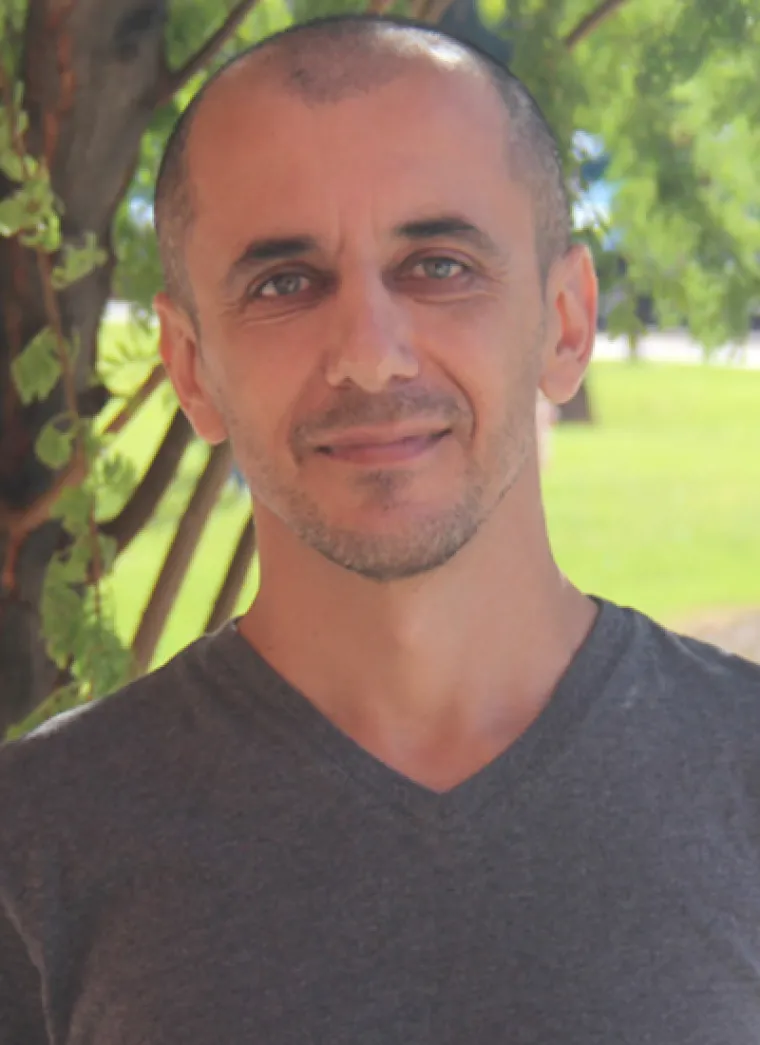
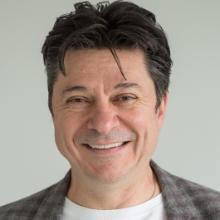
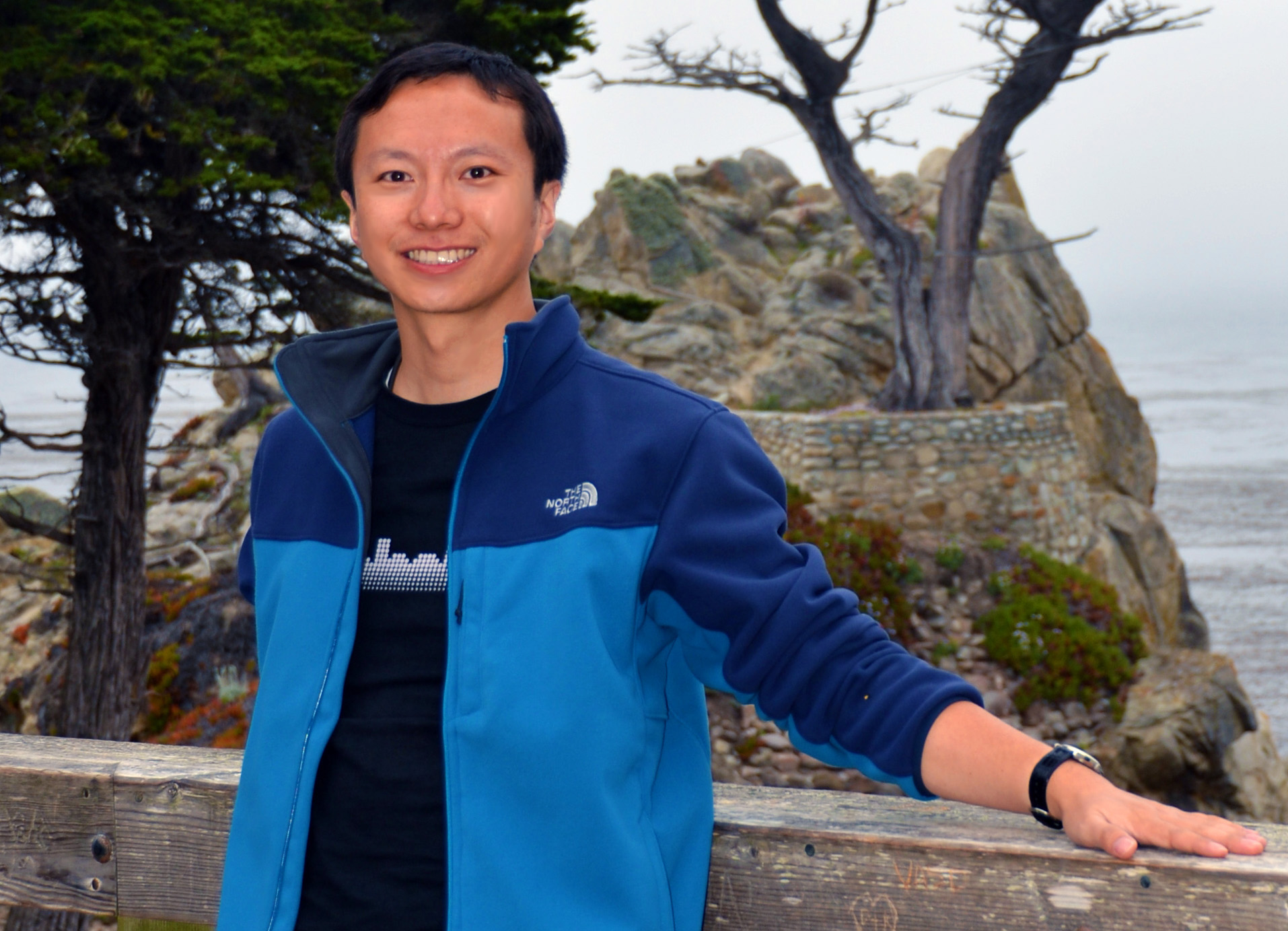
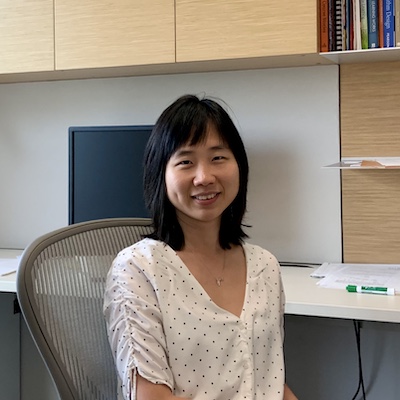
Mihai Surdeanu is an Associate Professor in the Department of Computer Science at the University of Arizona. His academic work focuses on advancing natural language processing and machine learning techniques, with a particular emphasis on large language models, information extraction, and model efficiency. He can be reached at msurdeanu@arizona.edu. Research Interests: Natural Language Processing Machine Learning Deep Learning Information Extraction Artificial Intelligence Scientific Trends: His recent work explores critical challenges in large language models, including data contamination detection, adversarial perturbation defense, quantization methods, and reasoning robustness. Publications highlight techniques like prompt chaining, layerwise optimization, and speculative generation to improve model performance and interpretability.
Stephan Hollander is a Full Professor of Financial Accounting at the Tilburg School of Economics and Management (TiSEM) at Tilburg University. He holds a position in the Department of Accountancy and focuses on corporate communication's role in capital market efficiency, regulatory changes' impacts, and computational linguistics applications in accounting. Prior to his academic career, he worked as an auditor at Deloitte. His research combines textual analysis with financial phenomena, addressing topics like tax policy expectations, epidemic disease effects, and Brexit's global economic impacts. Education: PhD (prior Deloitte tenure, though specific institution unmentioned) Research Interests: Corporate communication strategies in capital markets Technological advancements in financial reporting Computational linguistics for earnings disclosures Awards: Recognized with the 2018 Best Paper Award from the American Accounting Association for his work on automated earnings summaries. Advising & Grants: No explicit student advising records provided. His research has been featured in top journals like Journal of Accounting Research and Review of Financial Studies. Labs/Teams: Engaged with the Accountancy Research Group at TiSEM, collaborating on projects involving text-based analysis methodologies.
Carlos Badenes-Olmedo is a Post-Doctoral Researcher at the Polytechnic University of Madrid’s Faculty of Informatics, part of the Ontology Engineering Group (OEG). He holds a Master’s in Artificial Intelligence (2015) and a Computer Science Engineering degree (2006) from the same institution. Previously, he worked in industry for 8+ years as a software architect specializing in real-time data and M2M communications. He collaborates with the TEDECO group on data mining using Call Detail Records (CDRs). Research Focus: Ontology Engineering, Machine Learning, Information Retrieval, Exploratory Search, Recommender Systems, Multilingual Document Similarity, Public Procurement Analysis, and Clinical Data Mining (e.g., polypharmacy studies). His work includes developing cross-lingual search engines, knowledge graphs for public procurement (e.g., EU Contract Hub), and health-related ontologies (e.g., Drugs4Covid). Key Projects: Led development of the Corpus Viewer platform for analyzing research documents, created the FarolApp for light pollution monitoring using Linked Data, and contributed to the librAIry framework for distributed text mining. Active in public procurement transparency initiatives and biomedical knowledge graph construction. Skills: Natural Language Processing, Topic Modeling, REST APIs, Docker, Linked Data, and open-source tool development (e.g., TBFY Harvester). Collaborates internationally on EU-funded projects and publishes extensively in top venues like K-CAP, ISWC, and IEEE conferences. Teaching: Delivers tutorials on hybrid NLP techniques, cross-lingual document exploration, and semantic search. Involves in educational experiments like LEGO® Serious Play in software engineering education.
Benjamin Sung is a Visiting Assistant Professor at the Department of Mathematics, University of California, Santa Barbara (UCSB). He is affiliated with the College of Letters and Science. His role involves teaching and research in mathematics. Education details are not explicitly provided in the text, but given his position, it is likely he holds a PhD in Mathematics or a related field. His research interests, while not detailed here, are inferred to align with the broader fields of mathematics, potentially including areas such as algebra, analysis, or applied mathematics, as typical for the department. No specific awards, grants, or articles are mentioned in the provided text. His current academic contributions are summarized through his affiliation and role.
Ya Gao is a doctoral researcher at the Department of Computer Science, School of Science, Aalto University. Her work focuses on integrating machine learning with clinical applications, particularly adverse drug event detection and healthcare analytics. Research Areas: Graph Neural Networks, Large Language Models, Clinical Informatics, and Digital Healthcare. Projects: Active member of the EU-funded CLISHEAT/Marttinen project (2023–2025), targeting green and digital healthcare innovations. Publications: Recent contributions include knowledge-augmented graph models for clinical tasks and self-supervised summarization of medical records. Awards: Recipient of the Aalto SCI award for Teaching Assistants of the Year in 2023.
Risto Sarvas is a University Lecturer in the Department of Computer Science at Aalto University's School of Science, specializing in the Digital Ethics, Society and Policy (Digital-ESP) research area. His work bridges human-computer interaction, social media analysis, and the societal implications of digital technologies, with significant contributions to educational tools and public discourse through media engagements. Academic qualifications include: Doctoral degree in Engineering and Technology from Helsinki University of Technology (awarded December 18, 2006) Master's degree in Engineering and Technology from Helsinki University of Technology (awarded October 22, 2001) Sarvas's research trajectory evolved from foundational studies on domestic photography and metadata systems to contemporary investigations of digital ethics and educational technology. His early work analyzed photographic practices across technological eras (Kodak, Portrait, and Digital Paths), while recent publications apply natural language processing to social media health discussions and develop frameworks for transversal competences in Finnish high schools. This progression reflects a consistent focus on technology-society interplay, emphasizing ethical considerations and user-centered design in both historical and emerging contexts. Publication trends reveal a strategic shift from technical HCI and photography studies (2004-2011) toward societal applications in education and public health (2019-2020). His 33 publications demonstrate sustained expertise in metadata systems and mobile interaction, now channeled into solving real-world problems like curriculum design (EduHex tool) and health communication analysis. The Digital-ESP research area serves as the unifying framework for this applied ethical approach. Risto Sarvas maintains active public engagement through 16 media appearances addressing smart cities, student burnout, pandemic-driven professional development, and social media risks. His international collaboration is evidenced by visiting researcher positions at foreign academic institutions in 2003 and 2009. Within Aalto University, he contributes to the Digital-ESP research group's mission of examining ethical, societal, and policy dimensions of digital technologies, frequently partnering with Finnish high school educators to implement modular curriculum solutions.
Professor Marian Ursu holds the position of Professor of Digital Creativity at the University of York's School of Arts and Creative Technologies. He pioneered the Digital Creativity Labs with £16.5M UKRI funding and co-founded the XR Stories Creative Cluster, establishing York as a national leader in technology-driven creative practice. His research explores interactive storytelling, telepresence systems, immersive technologies, and AI applications in creative industries. Key achievements include securing over £85M in research funding, establishing undergraduate/masters programs in Creative Computing and AI for Creative Industries, and producing 350+ publications. He received the ACM IMX 2020 Best Paper Award and serves on the DCMS College of Experts. Research Focus: Developing intelligent technologies for narrative media and performance Creating personalized audience experiences through data-driven approaches Advancing telepresence for artistic and educational applications Exploring AI-mediated creative processes in screen industries
Peixiang Zhao is an Associate Professor in the Department of Computer Science at Florida State University (FSU). He holds a Ph.D. from the University of Illinois at Urbana-Champaign (UIUC) and completed his M.S. and B.S. at Peking University. His research focuses on data/network science, database systems, and graph analytics, with particular emphasis on managing and analyzing large-scale networked data. His work has been supported by AFOSR-YIP, ARO-YIP, NSF, and industry grants. He advises several doctoral and master’s students and teaches courses like Advanced Data Mining and Advanced Database Systems. His research group explores topics such as graph query optimization, graph summarization, and scalable computation in dynamic graph streams. Education: Ph.D., Computer Science, University of Illinois at Urbana-Champaign (2012) M.S., Computer Science, Peking University (2004) B.S., Computer Science, Peking University (2001) Research Interests: Graph query processing and optimization Graph summarization and learning Scalable computation in dynamic graph streams Data-intensive systems and analytics Awards: AFOSR-YIP (2021) ARO-YIP (2020) Teaching: CAP5778 Advanced Data Mining, COP5725 Advanced Database Systems.
Dr. Richard McCreadie is a Senior Lecturer in Computing Science at the University of Glasgow, specializing in Information Retrieval, Machine Learning, and Digital Finance. His research focuses on real-time data processing, financial asset recommendation systems, and crisis informatics. He leads the Information Retrieval Group and co-chairs the TREC Incident Streams initiative, advancing methods for actionable information extraction from social media during emergencies. Education: PhD in News Vertical Search using User-Generated Content (2012). Active collaborations include the FAR-AI platform for investment recommendations and the Event Tracker system for disaster response. Research Interests: His work bridges academia and industry, emphasizing practical applications in fintech, social media analysis, and event detection. Recent trends include leveraging large language models (LLMs) for personalized financial advising and robust vision transformers for crisis image classification. Grants & Projects: Key contributions include the TREC-IS track evaluations, Agile IR experimentation frameworks with Terrier, and the SUPER project for emergency management using social sensors. He has led over 75 publications in top venues like SIGIR and ECIR. Labs/Teams: Part of the Information, Data and Analytics section and collaborates internationally on AI-driven financial systems and disaster informatics platforms.
Dr. Suzanne Hall serves as Associate Professor of Music Education at Temple University's Boyer College of Music and Dance, where she teaches general music and music education introduction courses. With extensive K-5 teaching experience in Florida and Tennessee, she previously coordinated Augusta University's music education program and taught at the University of Central Florida. Her academic credentials include: PhD from University of Memphis MEd from University of Central Florida BME from University of Central Florida Dr. Hall's research pioneers the integration of music with language arts, focusing on pre-service teacher development and comprehensive musicianship. She examines how storybooks enhance music experiences while advancing literacy skills, with recent work emphasizing diversity and inclusion strategies. Her scholarship bridges cognitive theory with practical classroom applications across early childhood through K-12 settings. Analysis of her 2012-2020 publications reveals consistent exploration of music-literacy intersections, evolving toward stronger emphasis on cultural diversity after 2016. Her work demonstrates systematic progression from foundational parallel analysis to actionable diversity frameworks, featuring practical strategies like picture book sequencing and culturally responsive repertoire selection. Dr. Hall actively contributes to professional communities as advisory board member for the International Journal of Education and the Arts and committee member for the College Music Society's Cultural Inclusion initiative. She has delivered nationwide professional development workshops on music-literacy integration for school districts including Boston Public Schools and Philadelphia School District. Her research program includes curriculum development projects such as the language arts-integrated music curriculum commissioned by a Memphis charter school, with current work focusing on overcoming diversity barriers in music education through culturally responsive texts and inclusive pedagogical models.
Dr. Dunwei Wen is Associate Professor and Chair at the School of Computing and Information Systems within Athabasca University's Faculty of Science and Technology. With academic credentials from Ph.D. in Pattern Recognition and Intelligent Systems (Central South University) M.Sc. in Computer Science (Tianjin University) B.Eng. in Electrical Engineering (Hunan University) , he bridges theoretical AI research with practical implementations in information systems. His research program focuses on statistical learning and deep learning for Natural language processing Sequential data analysis Multimodal content understanding with applications spanning education, healthcare, and industrial domains. Publication trends show increasing emphasis on deep learning architectures for medical image analysis (SRTNet 2024), contextual topic modeling in education (2013-2015), and multimodal systems combining text/image analysis (2015-2018). Recent projects (2021-2022) center on self-supervised learning for natural language understanding. Professional engagements include Member, AAAI (Association for the Advancement of Artificial Intelligence) Member, ACM and ACM SIGAI Senior Member, IEEE Former CAAI Board Member (2001-2010) As academic advisor, he has supervised over 25 graduate students and interns, including Co-supervised 4 PhD candidates (Jilin University) Mentored 12+ Master's students (AU, Jilin University) Hosted 6 MITACS Globalink Research Interns with projects spanning from cardiac detection systems to educational data mining.
Dr. Dan Jurafsky is a Professor at the Department of Linguistics within Stanford University's School of Humanities and Sciences. His work spans computational linguistics, natural language processing, and AI ethics, with a particular focus on language model behavior, speech recognition, and ethical implications of anthropomorphism in AI systems. His recent research explores HumT for measuring human-like tone in LLMs, AnthroScore for anthropomorphism detection, and methods for improving low-resource language support through data augmentation and multilingual representation learning. He has also developed open-source tools like string2string for string algorithms. Jurafsky's publications address critical issues in NLP, including grounding gaps in conversational models, causal interpretability in linguistic tasks, and representational biases in multilingual models. His work emphasizes interdisciplinary applications, from educational NLP tools to Sumerian transliteration datasets, while advocating for rigorous statistical power analysis and ethical model evaluation.
Lecturer Dr. Erdal ÖZCAN is affiliated with the Department of Turkish and Social Sciences Education at the Faculty of Education, Sakarya University. He teaches undergraduate courses in Turkish language education, children's literature, drama in education, and teaching practice. His academic email is eozcan@sakarya.edu.tr. His research focuses on Turkish language education, particularly teaching Turkish as a foreign or second language. Key areas include digital technologies in language teaching, textbook analysis, teacher training, and language acquisition. He has published in journals and conference proceedings on topics such as gamification (e.g., ClassDojo), readability of textbooks, and academic Turkish for international students. His recent publications show a strong trend in integrating technology into language pedagogy, with studies on digital reality tools, online learning challenges, and use of apps in motivating foreign learners. He also examines curriculum design across countries and the linguistic challenges faced by bilingual Turkish students. Editor of Türkçenin Eğitimi-Öğretimi Üzerine Çalışmalar (2012) Editor of Türkçenin Eğitimi Öğretimi Üzerine Araştırmalar (2012) Editorial board member, Uluslararası Çocuk Edebiyatı ve Eğitim Araştırmaları Dergisi (2022) Dr. ÖZCAN has supervised teaching practice courses and coordinated academic programs such as the Farabi Exchange Program. He has organized academic events like the 'Dünya Dili Türkçe' symposium (2023) and led the Sakarya University Turkish Education Student Club. He has also contributed to national projects on online Turkish teaching for educators abroad. He is actively involved in curriculum development and teacher education, with no indication of part-time or retired status.
Adam Jatowt is an Associate Professor in the Social Informatics Department at Kyoto University. He is actively engaged in research and academic service, currently conducting a research visit to L3i until July 18, where he presented his work on across-time term similarity computation and explanation. Dr. Jatowt received his Ph.D. in Information Science and Technology from the University of Tokyo in 2005, with research focused on temporal document summarization. Following his doctoral studies, he worked for one year as a postdoctoral researcher at the National Institute of Information and Communications Technology (NICT). His research centers on information retrieval and knowledge extraction from document collections, with particular emphasis on the intersection of IR and text mining with digital history. Dr. Jatowt has developed significant approaches for estimating and explaining across-time term similarity to address the terminology gap problem in historical texts. His recent work has expanded into text comprehensibility estimation, city street attribute extraction, and pedestrian route recommendation. Dr. Jatowt maintains an active role in the academic community, having served as PC co-chair for IPRES2011, SocInfo2013, ICADL2014 and JCDL2017 conferences, as tutorial co-chair for SIGIR2017, and as co-organizer of three NTCIR evaluation tasks. He regularly participates on program committees for major conferences including WSDM, CIKM, SIGIR, JCDL, WISE, TPDL, DASFAA, SocInfo and COLING. He also serves as a thesis advisor, most recently as co-director for Mrs. Thi Tuyet Hai NGUYEN's doctoral research on improving access to historical documents through digitization enhancement at La Rochelle University.
Jessy Li is an Associate Professor in the Department of Linguistics at The University of Texas at Austin, specializing in computational linguistics and natural language processing (NLP). She actively engages in interdisciplinary research across discourse processing, language generation, and NLP applications in social and code-related contexts. Education: Ph.D. in Computer and Information Science, University of Pennsylvania (2017) Jessy’s research spans four core areas: Discourse Processing (analyzing discourse structure, pragmatics, and human/machine comprehension), Natural Language Generation (improving text generation through discourse models), Language and Society (exploring how self-perception and social context influence language use), and Language and Code (applying NLP to software evolution and documentation). Her recent publications align with these themes, emphasizing discourse-level analysis, generation evaluation, and interdisciplinary applications of NLP in software engineering and sociolinguistics. She received recognition for an Outstanding Paper at EMNLP 2024. She serves on the Graduate Studies Committee in the Department of Computer Science and leads AI initiatives at the NSF-Simons AI Institute for Cosmic Origins (CosmicAI) . Her service roles include Senior Area Chair for ACL 2025, Action Editor for Transactions of the Association for Computational Linguistics (TACL) , and co-organizing the Workshop on Computational Approaches to Discourse (CODI).