Sergiu Nisioi is an Associate Professor at the Faculty of Mathematics and Computer Science, University of Bucharest, with expertise in computational linguistics, machine translation, and text simplification. He bridges cognitive science with NLP through eye-tracking and EEG research, while also exploring sound art and digital autonomy via initiatives like HYPHA.ro. Current projects include PN-IV-P2-2.1-TE-2023-2007 (text complexity/readability), Legal Document Processing , and Europarl Dialectal Corpora Research spans computational psycholinguistics , LSTM-based translation models , and algorithmic composition for sound art His work integrates interdisciplinary methodologies, combining EEG signal processing for architecture data with the University of Architecture, and DSP for ecological projects at chlorophylla.live.
Professor Adam Dunn is a leading academic in Biomedical Informatics and Digital Health at The University of Sydney , where he established the Discipline of Biomedical Informatics and Digital Health in 2020. With nearly 20 years of experience, his work integrates machine learning , natural language processing , and computational social science to address challenges in public health , clinical epidemiology , and evidence synthesis . His research programs focus on: (1) improving health information access and trust, (2) analyzing misinformation uptake via digital traces, and (3) developing AI tools for systematic review efficiency. Current projects include generative AI applications in patient discharge instructions , fairness in multimodal health AI , and infodemic burden measurement toolkits for WHO. Recent publications span clinical NLP , vaccine credibility , and social media surveillance . Awards include global recognition in medical informatics and editorial leadership roles at npj Digital Public Health and npj Digital Medicine. He has supervised over 15 PhD scholars and served on NHMRC and MRFF grant review panels. Key Projects: WHO Infodemic Toolkit, NLM R01 grant on ClinicalTrials.gov integration Expertise: AI in health, systematic review methodology, health information trust
Michele Gattullo serves as an Assistant Professor within the Department of Mechanics, Mathematics & Management at the Polytechnic University of Bari, Italy, specializing in design methods for industrial engineering (ING-IND/15). His research bridges cutting-edge extended reality technologies with practical industrial applications, focusing on human-centered solutions for manufacturing, maintenance, and workplace design. Dr. Gattullo's research portfolio centers on Augmented Reality, Virtual Reality, and Biophilic Design, with significant contributions to Human-Computer Interaction in industrial contexts. He investigates how nature-inspired elements in virtual workspaces enhance employee well-being and productivity, while simultaneously developing practical AR tools for assembly guidance, technical documentation, and maintenance support. His work uniquely integrates ergonomics, cognitive psychology, and industrial engineering to optimize human-technology interaction in complex production environments. Analysis of his 15 most recent publications reveals two dominant research trajectories: biophilic design frameworks for virtual/metaverse workspaces (2023-2025) and industrial AR authoring methodologies. The biophilic stream establishes evidence-based guidelines for digital nature integration, while the AR stream delivers validated tools like ADAM and minimal AR approaches that streamline technical documentation creation. Both trajectories emphasize user experience validation through rigorous industrial studies, demonstrating strong interdisciplinary impact across computer science, industrial engineering, and environmental psychology. Scientific Awards: No awards or honors were documented in the available sources. Advising and Grants: The provided materials contain no information regarding graduate student supervision, research grants, or funding sources. His academic profile emphasizes publication output over mentoring activities or project financing details. Laboratories and Teams: While Dr. Gattullo's research involves advanced XR technologies, the source text does not specify laboratory facilities, research groups, or collaborative teams associated with his work at Politecnico di Bari.
Leo Wanner is a prominent Professor at Universitat Pompeu Fabra's Department of Information and Communication Technologies, specializing in Natural Language Processing. With a research career spanning over three decades, he has made significant contributions to computational linguistics, particularly in natural language generation, collocations, and hate speech detection. He has served as editor for multiple editions of the International Conference on Computational Linguistics (COLING) including the 2025 edition. Wanner's research interests encompass a wide range of topics in computational linguistics, with recent work focusing on hate speech detection, multilingual processing, and the capabilities of large language models. His work bridges theoretical linguistics with practical applications, addressing challenges in lexical semantics, syntax, and discourse analysis. Notably, he has pioneered research in collocation processing and has contributed to the development of frameworks for analyzing thematic progression in texts. His publication record demonstrates consistent productivity with significant contributions across multiple subfields. Recent work shows a strong focus on contemporary challenges in NLP, particularly hate speech detection and the capabilities of large language models. His research often takes a multilingual perspective, addressing challenges across different language families including Romance and Slavic languages. Wanner has led significant research projects including the development of FORGe, a multilingual deep sentence generator based on the Meaning-Text Theory, which achieved top performance in the WebNLG challenge. His work on multilingual surface realization has established important benchmarks in the field through shared tasks that have engaged researchers worldwide. As an academic leader, Wanner has mentored numerous researchers and contributed to building research infrastructure through corpus development and annotation schema design. His work on collocation resources, thematic progression analysis, and hate speech detection frameworks has provided valuable resources for the broader NLP community.
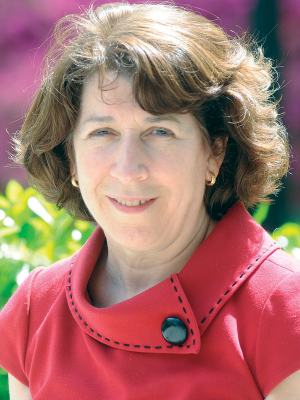
Kathleen R. McKeown is the Henry and Gertrude Rothschild Professor of Computer Science at Columbia University and the Founding Director of Columbia's Data Science Institute (2012-2017). She has been a faculty member since 1982 and served as Department Chair (1998-2003) and Vice Dean for Research in the School of Engineering and Applied Science. Her research focuses on natural language processing , text summarization , natural language generation , and social media analysis . Current projects include neural methods for extractive/abstractive summarization, electricity usage message generation via reinforcement learning, and social media sentiment analysis in low-resource languages like Uyghur. She leads the Columbia NLP Group and developed the long-running Newsblaster system (2001-present) for automated news tracking and multi-document summarization. Key scientific awards include NSF Presidential Young Investigator (1985) NSF Faculty Award for Women (1991) AAAI Fellow (1994) ACM Fellow (2003) ACL Founding Fellow (2012) Columbia Great Teacher Award (2010) Anita Borg Woman of Vision Award (2010) She has held leadership roles in major academic organizations: President of the Association for Computational Linguistics (1992), Vice President (1991), Secretary-Treasurer (1995-1997), and board member of the Computing Research Association with secretary role.
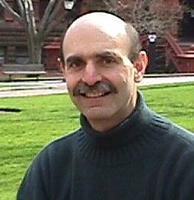
Stuart Shieber is the James O. Welch, Jr. and Virginia B. Welch Professor of Computer Science in the School of Engineering and Applied Sciences at Harvard University. He is a prominent researcher in computational linguistics and natural language processing, with significant contributions across multiple related fields including theoretical linguistics, computer-human interaction, automated graphic design, and the philosophy of artificial intelligence. Professor Shieber's research interests focus primarily on computational linguistics, examining natural language from the perspective of computer science. His work spans scientific and engineering goals, utilizing foundational formal and mathematical tools. He has made significant contributions to grammar formalisms, psycholinguistics, semantics, and synchronous grammars with applications in machine translation and sentence compression. Beyond computational linguistics, his research extends to automatic layout of charts and maps, novel interaction techniques for document reading and diagram layout, online auction mechanisms, library book access prediction, biological evolution tree reconstruction, and the philosophical basis for Turing's test for machine intelligence. His recent publications demonstrate a continued focus on neural language models, syntactic agreement mechanisms, readability assessment, conversational understanding, and bias detection in language models. His research has evolved from traditional grammar formalisms to incorporate modern neural network approaches while maintaining a strong theoretical foundation. The trend shows increasing attention to ethical considerations in NLP, particularly around bias detection and mitigation, alongside continued theoretical work on language structure. Presidential Young Investigator award (1991) Presidential Faculty Fellow (1993) John L. Loeb Associate Professorship in Natural Sciences (1993) Harvard College Professorship (2001) Fellow of the American Association for Artificial Intelligence (2004) Fellow of the Association for Computing Machinery (2014) Fellow of the Association for Computational Linguistics (2017) Professor Shieber has advised numerous PhD students who have gone on to successful careers at institutions including UCSD, Cornell University, Microsoft Research, Google, and various academic institutions. His work on open access and scholarly communication policy, particularly his development of Harvard's open-access policies, led to his appointment as the first director of the university's Office for Scholarly Communication. He is also the founding director of the Center for Research on Computation and Society and a faculty co-director of the Berkman Center for Internet and Society. His laboratory work has focused on advancing computational linguistics through both theoretical and applied research, with numerous patents and co-founding of Cartesian Products, Inc., a high-technology research and development company. His future work appears to be focusing on the intersection of neural network approaches with traditional linguistic theory, particularly in understanding and mitigating bias in language models, while continuing his long-standing interest in the theoretical foundations of language processing.
Munther A. Younes is the Reis Senior Lecturer of Arabic Language and Linguistics at Cornell University , affiliated with the College of Arts and Sciences, Linguistics Department, Near Eastern Studies, and the Religious Studies Program. He is also a Stephen H. Weiss Provost Teaching Fellow. PhD, University of Texas at Austin (Linguistics, 1982) Diploma, University of Jordan (English as a Second Language, 1975) B.A., University of Jordan (English Language and Literature, 1974) His research focuses on Arabic linguistics , including phonetics, phonology, morphology, sociolinguistics, and comparative/historical dialectology. He specializes in teaching Arabic as a foreign language , Qur'anic Arabic , and comparative Semitic linguistics , with a particular emphasis on integrating colloquial Arabic with Modern Standard Arabic (Fusha) in pedagogy. His publications, including books like Charging Steeds or Maidens Performing Good Deeds: In Search of the Original Qur’an (2019) and The Integrated Approach to Arabic Instruction (2015), highlight his work on Arabic language instruction and Qur'anic exegesis. His recent articles address CEFR guidelines, dialectal integration, and historical linguistic analysis. Stephen H. Weiss Provost Teaching Fellowship Sophie Washburn French Instructorship
Scott Weinstein is a Professor of Philosophy, Mathematics, and Computer Science at the University of Pennsylvania, where he also serves as Director of the Logic, Information, and Computation Program. His academic appointments span multiple departments within the College of Arts and Sciences, reflecting his interdisciplinary expertise. He holds a Ph.D. from Rockefeller University. Education: Ph.D. in Philosophy, Mathematics, and/or Computer Science from Rockefeller University Research Interests: Dr. Weinstein’s work focuses on foundational aspects of logic, philosophy of mathematics, cognitive science, and formal learning theory. His research bridges theoretical computer science, mathematical logic, and ancient philosophical paradoxes such as Zeno’s. He explores topics like truth detection models, inductive inference systems, complexity in finite structures, and the philosophical implications of theoretical terms in scientific inquiry. Articles Trends: His publications reflect a sustained engagement with formal methods in science and philosophy. Recent work (e.g., 2022) re-examines classical paradoxes through modern mathematical lenses, while earlier contributions (e.g., 1988, 1989) investigate inductive reasoning and computational models of scientific discovery. Key themes include the interplay between logic and empirical inquiry, the structure of scientific knowledge, and foundational questions in mathematics and computing. Awards: No scientific awards are explicitly mentioned in the provided text. Advising & Grants: While no formal advisees or grant details are listed, his role as Director of the Logic, Information, and Computation Program indicates leadership in interdisciplinary academic initiatives. His publications often involve collaborations with colleagues like Daniel Osherson and Michael Stob. Labs/Teams: As Director of the Logic, Information, and Computation Program, he oversees a collaborative research environment at the University of Pennsylvania, integrating philosophical, mathematical, and computational disciplines.
Orphée De Clercq is an Assistant Professor at Ghent University, specializing in language technology for educational applications. Her research focuses on leveraging Natural Language Processing (NLP) and Machine Learning (ML) to enhance computer-assisted language learning , readability prediction , and automated writing evaluation . She also explores sentiment analysis , emotion detection , and event coreference resolution in Dutch and multilingual contexts. Education : PhD in 2015 with groundbreaking work in readability prediction and fine-grained sentiment analysis for Dutch. Research Trends in her recent publications emphasize: Readability across domains and languages Emotion Detection using transformers and affect lexica Event Coreference in cross-document news Automated Writing Evaluation through NLP Implicit Sentiment Analysis in user-generated content Cross-Lingual Transfer with multilingual datasets She co-supervises four PhD students and contributes to interdisciplinary projects like Steunpunt Toetsen , SentEMO , and NewsDNA . Her teaching includes courses on digital communication and Computer-Assisted Language Learning .
Dilara Torunoğlu Selamet serves as a Lecturer in the Department of Computer Engineering within the Faculty of Computer and Informatics at Istanbul Technical University. Holding a PhD, she specializes in Natural Language Processing for Turkish, with research emphases on social media text normalization, named entity recognition, and sentiment analysis. Her academic credentials feature: PhD in Computer Engineering, Istanbul Technical University (awarded circa 2013) Master of Science in Computer and Information Sciences (Non-thesis), Doğuş University (2009-2013) Bachelor of Science in Computer Engineering, Doğuş University (2004-2009) Dilara's scholarship tackles the complexities of Turkish NLP, a language with rich morphology. She has made notable contributions to text normalization for social media platforms, named entity recognition in authentic datasets, and semantic smoothing techniques for sentiment classification. Her work often bridges theoretical NLP with practical applications, as seen in resource-building projects like the ITU Web Treebank and Turkish sign language corpora. Her publication record (2011-2021) demonstrates methodical growth: initial work on text classification (2011) evolved into named entity recognition (2013) and social media normalization (2014, 2017), then expanded to data augmentation (2020-2021) and sign language processing (2020). This trajectory reflects her commitment to advancing Turkish NLP through both foundational research and innovative resource development. While no specific awards are documented, her research impact is evidenced by an h-index of 4 and over 127 citations in Scopus. Available information does not indicate any students supervised or research grants obtained. She is affiliated with Istanbul Technical University's Department of Computer Engineering, but no laboratory or research team memberships are specified in public profiles.
Chenjuan Guo is an Associate Professor at the Department of Computer Science, Aalborg University, within The Technical Faculty of IT and Design. She is affiliated with the Data Engineering, Science and Systems group and the AI for the People initiative, and is part of the Daisy - Center for Data-intensive Systems. Her research focuses on machine learning, data engineering, spatio-temporal data analysis, and time series forecasting. Key projects include the Villum Foundation-funded 'Explainable AI for Complex Microbial Community Interactions and Predictions' (2021-2024) and the Astra project on time series analytics in spatial networks (2018-2021). Her research interests span representation learning, autoencoders, path representation, outlier detection, trajectory data analysis, and time series modeling. She has supervised 3 PhD students and contributed to over 60 publications, with a recent emphasis on transformer-based forecasting, neural architecture search, and continuous learning frameworks for spatio-temporal data. Her work bridges theoretical advancements with practical applications in environmental science, cloud computing, and urban mobility systems. Key achievements include developing frameworks like AutoCTS++ for automated time series forecasting and LightGTS for lightweight models. She actively collaborates internationally, contributing to conferences like ECML PKDD and CVPR. Her research is supported by grants from the Villum Foundation and other institutions.
Ahmed AbuRa'ed is a Researcher at the Department of Information and Communication Technologies (DTIC) at Universitat Pompeu Fabra (UPF), Barcelona. He is affiliated with the TALN research group and the Large-Scale Text Understanding Systems Lab. His work focuses on advancing knowledge in scientific text summarization, information extraction, and machine learning. Education: PhD in Computer Science (2020), UPF, Barcelona, Spain M.Sc. in Computer Science (2015), University of Trento, Italy B.Sc. in Computer Information Systems (2007), An-Najah University, Nablus, Palestine Research Interests: Natural Language Processing (NLP), Machine Learning/Deep Learning, Semantic Web, Information Extraction, Data Mining, and Scientific Document Summarization. His projects include developing systems for automatic generation of state-of-the-art reports, scientific text summarization, and cross-document relation discovery. Publications Focus: His 15 most recent articles (2016–2021) emphasize advancements in scientific literature analysis, including citation detection, text simplification, and cross-document summarization. Notable works involve systems like LaSTUS/TALN for scientific text processing and OlloBot for Arabic health dialogue agents. Labs & Teams: Active member of the TALN research group and the Large-Scale Text Understanding Systems Lab at UPF's DTIC department. Open to collaborations in NLP, Machine Learning, and related fields via email or Skype.
Yasir Zaki is an Assistant Professor of Computer Science at New York University Abu Dhabi and a Global Network Assistant Professor at the Courant Institute of Mathematical Sciences, NYU. He leads the Communication Networks Lab, focusing on next-generation communication systems, performance optimization, and digital equity. University: New York University Abu Dhabi School: Courant Institute of Mathematical Sciences Department: Department of Computer Science Academic Rank: Assistant Professor Email: yz48@nyu.edu Dr. Zaki holds an MSc and PhD in Communication and Information Technology from the University of Bremen, graduating with honors. His research centers on communication and wireless networks, cellular systems, congestion control, and enhancing internet access in developing regions. His work bridges theory and real-world impact, especially in digital inclusion and AI's role in education. His recent publications span top venues like PNAS, IEEE TCSS, and ACM IMC, covering topics such as satellite network performance, digital inequality (Lite-Web), AI in education, and Big Tech's global influence. These works reveal a strong trend toward socially impactful computing, network measurement at scale, and algorithmic transparency. Big Tech Dominance Despite Global Mistrust Perception of AI in Education YouTube's Political Bias Lite-Web for Digital Equity Satellite Network Analysis His research has been recognized through high-profile media coverage in Nature and The National , and his PhD student Hazem Ibrahim received the MIT Technology Review Arabia’s Innovators Under 35 MENA 2023 award. This reflects the lab's excellence in computational social science and AI policy. Dr. Zaki mentors students in the Capstone and Research Seminar courses and actively advises PhD and research assistants. He has secured research funding through NYUAD and collaborative projects, enabling field deployments in 56 countries. His lab, the Communication Networks Lab, fosters interdisciplinary work, involving researchers from computer science, social sciences, and policy.
Sandaru Seneviratne is a Research Fellow at the School of Computing , The Australian National University , focusing on Natural Language Processing (NLP), Machine Learning, Text Simplification, and Health Informatics. His work bridges advanced language technologies with healthcare applications. PhD in Computer Science, The Australian National University Bachelor of Computer Science and Engineering, University of Moratuwa Research Interests His NLP research emphasizes text simplification frameworks like TextSimplifier and Prompt-based methods for multilingual contexts (e.g., English-Sinhala translation). He investigates factuality error detection in simplified text and lexical substitution techniques for accessibility. In Health Informatics, he contributes to medical term identification using neural networks (CNNs/Transformers), CLEF eHealth evaluations, and diabetes management technologies for teens. Earlier work includes clustering word embeddings for knowledge graphs and restaurant domain information extraction. Publication Trends His publications span 2018–2024, with recent focus on multilingual text simplification, factuality in AI-generated text, and healthcare information retrieval. Technical methods include transformers, triplet networks, and hierarchical clustering, often applied to medical/health domains.
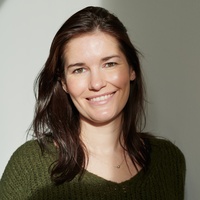
Dr. Jacqueline Wong is an Assistant Professor in the Department of Education and Pedagogy at the Faculty of Social and Behavioural Sciences, Utrecht University. Her academic work focuses on enhancing educational practices through evidence-based research in self-regulated learning and learning analytics, with particular applications in higher education contexts. Dr. Wong earned her Ph.D. (cum laude) from Erasmus University Rotterdam with a thesis entitled "Enhancing Self-Regulated Learning Through Instructional Supports and Learning Analytics in Online Higher Education," which received the Best Thesis Award 2021 from the Erasmus Graduate School of Social Sciences and the Humanities. She completed her Master's degree (cum laude) in Educational Psychology, where she examined the use of movements to support text comprehension. Prior to joining Utrecht University, she was a postdoctoral researcher at Delft University of Technology (2020-2022) working with the Program of Innovation in Mathematics Education (PRIME). Dr. Wong's research program spans several interconnected areas: the application of learning analytics to support self-regulated learning, the design of instructional interventions that promote metacognitive awareness, and the investigation of how emerging technologies like generative AI can enhance educational experiences. Her work frequently examines how technology can be leveraged to support students' metacognitive processes and goal-setting behaviors in both traditional and online educational settings. She has made significant contributions to understanding how conversational agents and learning analytics can provide personalized support for students' self-regulated learning processes. Analysis of her recent publications reveals a clear trajectory toward integrating emerging technologies with established educational theories. Her 2024-2025 work increasingly focuses on the intersection of artificial intelligence and educational psychology, particularly examining how generative AI tools can enhance academic text accessibility and provide adaptive support for learning. She also continues to investigate cognitive aspects of learning in educational games and augmented reality environments, with implications for both educational practice and learning theory development. Among her notable achievements, Dr. Wong received the Best Thesis Award 2021 from the Erasmus Graduate School of Social Sciences and the Humanities. This recognition highlights the significant contribution her doctoral work has made to the field of educational psychology and learning sciences. Her systematic reviews, including examinations of student engagement in mathematics education and gamification in MOOCs, have provided valuable syntheses of research in growing areas of educational technology. Dr. Wong has been an active research member of the Leiden-Delft-Erasmus Centre for Learning and Education (LDE-CEL) and the network for Self-Regulated Learning in Digitalised Schools (SeReLeDiS). Her collaborative approach to research is evident in her extensive co-authorship network across multiple institutions. Before joining Utrecht University, she worked with lecturers to promote student motivation and self-regulated learning in blended service mathematics courses and examined the effectiveness of technology tools for learning mathematics. Dr. Wong's work bridges theoretical frameworks with practical implementations, often involving close partnerships with educators to ensure research relevance to real-world classroom challenges. Her current research appears to be moving toward deeper integration of AI technologies with educational theory, particularly examining how generative AI can support metacognitive processes and self-regulated learning across diverse educational contexts.