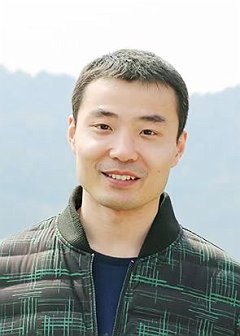
Matthias Weiter serves as an Honorary Professor at the Albrecht Daniel Thaer - Institute of Agricultural and Horticultural Sciences, Humboldt University of Berlin, with an office at Hannoversche Straße 27 (Building 12), Room 225, and postal address Unter den Linden 6, 10099 Berlin. His research spans core domains of: Agricultural Sciences Horticultural Sciences This focus aligns with the institute's mission in crop production, soil science, and sustainable horticulture systems. While the source text lacks granular publication trends or specific methodologies, his affiliation indicates engagement in applied agricultural research relevant to climate resilience and food security. Prof. Weiter's role includes academic supervision and teaching responsibilities, though no student names or grant details are documented. His normalized email (matthiasweiter@gmail.com) and direct phone line (030 2093-46814) confirm active institutional engagement.
Tanyasha Yearwood is a Professor in the Department of English Philology at the University of Göttingen's Faculty of Humanities. She holds an active teaching position with responsibilities spanning both the Department of English Philology and the Department of Romance Philology, teaching courses related to language teaching methodology, intercultural learning, and critical cultural awareness. Her primary research interests focus on Computer-Assisted Language Learning (CALL), Blended Learning approaches, and practical implementation of production-oriented learning and teaching methodologies. Yearwood's work particularly emphasizes the integration of technology in language classrooms, with special attention to creating learner-centered environments rather than technology-focused ones. She has extensively explored Activity Theory as a framework for understanding classroom dynamics in technology-enhanced language learning. Her publication record reveals a consistent trajectory in CALL research, with particular focus on how technology can be normalized in classroom settings to serve as complementary rather than central elements in language learning. Her work spans theoretical frameworks like Activity Theory to practical classroom implementations, especially in resource-constrained environments like single-computer classrooms. The evolution of her research shows increasing attention to cultural dimensions of language learning, particularly intercultural competence and critical cultural awareness. Yearwood maintains an active presence in international academic conferences, regularly presenting at major venues including EUROCALL, IATEFL, and specialized CALL conferences. Her teaching portfolio demonstrates comprehensive coverage of language teacher education across multiple semesters, with consistent offerings in research methods for language teaching and practical application of theoretical concepts.
Qing Huang is an Associate Professor in the School of Computer and Information Engineering at Jiangxi Normal University in Nanchang, China. His academic career focuses on bridging software engineering with artificial intelligence, particularly through the application of large language models to enhance software development processes. His research interests span multiple interconnected domains: Software Engineering Knowledge Graphs Human-Computer Interaction Programming Languages Artificial Intelligence applications in software development Dr. Huang's recent work demonstrates a strong focus on leveraging large language models (LLMs) to address fundamental challenges in software engineering. His research explores how AI can enhance code generation, API understanding, software testing, and knowledge representation in programming contexts. A significant portion of his work investigates the intersection of knowledge graphs and LLMs to create more intelligent software development tools. His publications reveal a consistent pattern of innovation in applying cutting-edge AI techniques to practical software engineering problems, with particular emphasis on improving developer productivity through better tooling and knowledge management. Dr. Huang has made notable contributions to the field of prompt engineering for software development tasks, exploring how natural language interfaces can serve as "APIs" for human-AI interaction. His work on AI Chains represents a novel approach to connecting human developers with LLM capabilities through structured knowledge representations. Additionally, he has conducted significant research on smart contract analysis, code reuse, and type inference in partial code contexts. His scientific contributions have been recognized through publications at major software engineering conferences including ASE and ICSE, with multiple papers accepted across different tracks (Research Papers, Journal-First, Tool Demonstrations). Dr. Huang serves as a Program Committee member for ASE 2025 in the Research Papers track, demonstrating his standing in the software engineering research community. Dr. Huang collaborates extensively with researchers from various institutions, including Data61 (Australia), Nanyang Technological University, and other Chinese universities. His work demonstrates strong interdisciplinary connections between traditional software engineering and emerging AI technologies.