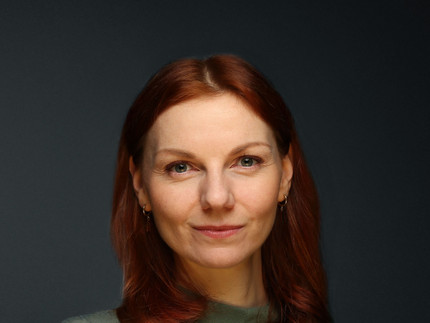
Martina Siebert is a researcher at the Max Planck Institute for the History of Science in Berlin, specializing in Chinese intellectual history and the history of science and technology from the 11th to 19th centuries. Her work bridges material culture, classification systems, and digital humanities, with a focus on Qing Dynasty botanical practices and technological narratives. PhD in Chinese studies and history of science (Free University of Berlin, 2002) Affiliated with Free University of Berlin, University of Würzburg, Beijing Normal University, Humboldt University, and State Library of Berlin Research Interests : Centers on Chinese intellectual traditions, particularly lotus cultivation in Qing imperial spaces, technological invention narratives (wuyuan), and classification schemes for animals . Her work examines how scientific thinking intersects with administrative regulation, material culture, and textual traditions in premodern China. Selected Projects : • Planning Plants: Growing and Organizing Lotus in Qing Imperial Spaces • Monumentalized or Marginalized, Writings about Technology in Chinese History • Historicized Innovation: Knowledge Tradition and its Encounter with the New Professional Activities : Active participant in international conferences including the Association for Asian Studies and History of Science Society meetings. Co-organized panels on translation processes and cross-cultural knowledge exchange in Asian science history.
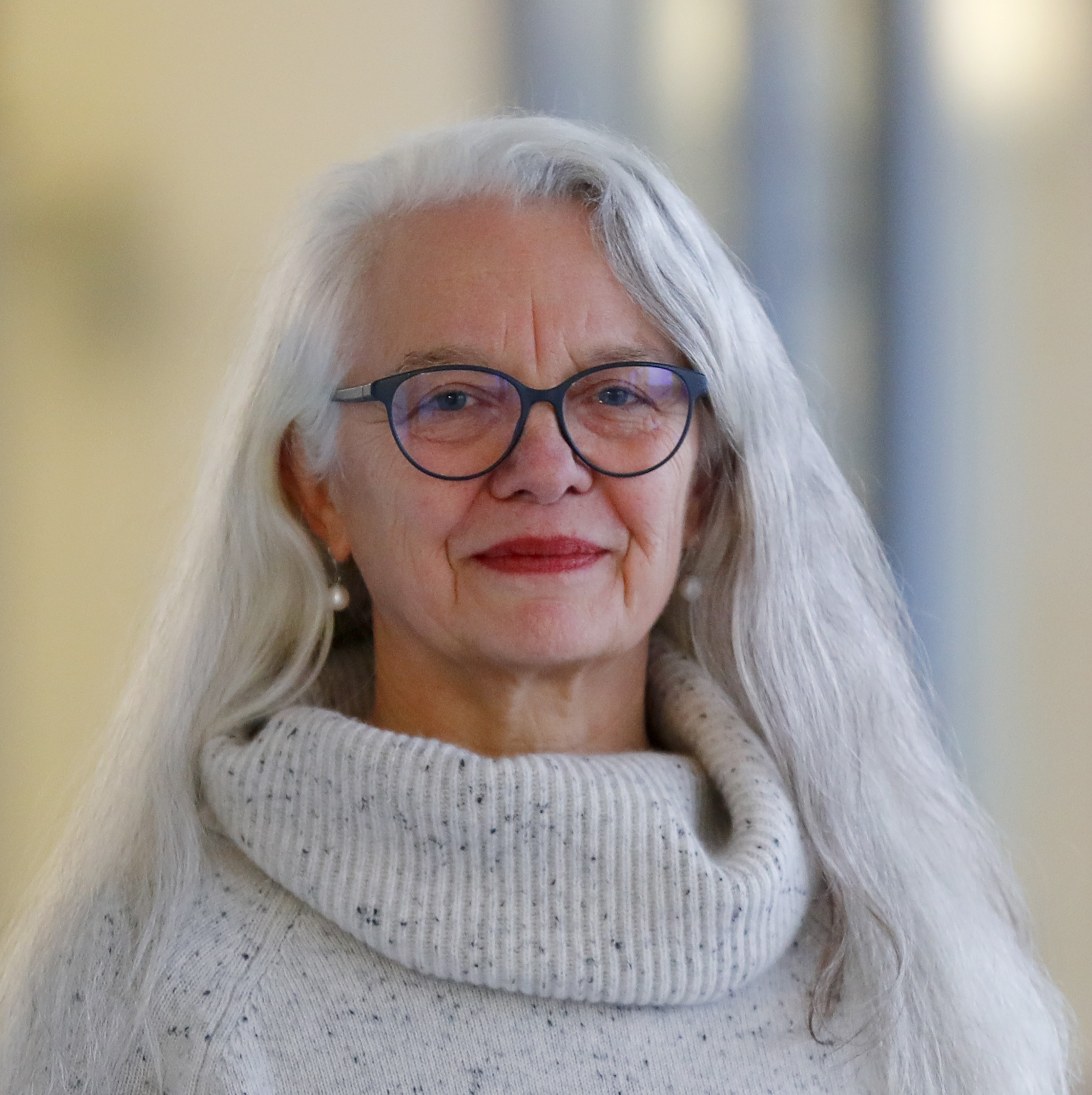
Astrid Magiera is a Lecturer and former Research Assistant at the University of Münster, specializing in American Literary and Cultural Studies. She holds an M.A. in English and American Studies from Goethe-University, Frankfurt. Her work focuses on queer theory, autobiography, and illness narratives, particularly examining HIV/AIDS narratives from the 1990s U.S. AIDS crisis through a queer lens. She was part of the GRK Life Sciences – Life Writing Research Program as an alumni (2017–2020), contributing to interdisciplinary discussions on life writing and life sciences. Education: M.A. in English and American Studies, Goethe-University, Frankfurt Research Interests: Magiera’s research interrogates how illness destabilizes identity and challenges normative frameworks, particularly in queer contexts. Her project, Critical Bodies: Autobiographical Illness Narratives in the Context of HIV/AIDS , explores how narratives of HIV/AIDS reflect queer activism and identity politics of the 1990s. She critiques medicalized identity interpellation and examines how illness narratives within marginalized communities (e.g., LGBTQ+ groups) resist normalization while engaging with feminist and activist legacies. Awards/Grants: None explicitly listed in the text. Advising & Grants: No advising or grant details provided. Labs/Teams: Associated with the GRK Life Sciences – Life Writing Research Program, collaborating across disciplines like literature, medicine, and cultural studies.
Florian Keßler is a researcher affiliated with the Chair for Sinology with a focus on the Intellectual and Cultural History of China at Friedrich-Alexander University Erlangen-Nürnberg (FAU). He holds a dual background in Computer Science and Sinology, having studied in Beijing, Aachen, Taipei, and Munich. His PhD project, supervised by Prof. Bréard and Prof. Evert, employs computational linguistics techniques to analyze algorithmic language in traditional Chinese mathematical texts, particularly contrasting 19th-century works with Western mathematical introductions. He teaches a tutorial on Classical Chinese for Sinology undergraduates at FAU. His research interests bridge computational methods and historical scholarship, focusing on: Algorithmic expression in pre-modern Chinese mathematics Comparative analysis of East-West mathematical traditions Application of NLP tools to ancient texts Recent publications emphasize digital humanities methodologies, including ancient math dataset creation, critical topic modeling frameworks for cross-cultural studies, and machine learning approaches to textual normalization in Classical Chinese. His work highlights interdisciplinary innovation at the intersection of programming, linguistics, and historical studies.
Niccolò Veltri is an Assistant Professor in the Department of Software Science at Tallinn University of Technology, Estonia. He is a member of the Logic and Semantics research group and co-organizes the Theory Seminar (TSEM). His primary research interests lie in Type Theory , Programming Language Semantics , Formalization of Mathematics , and Categorical Proof Theory . His work emphasizes rigorous formalization using proof assistants, particularly Agda, to develop and verify complex logical and computational systems. The recent publications highlight a consistent focus on foundational aspects of logic and computation. Key themes include the formalization and metatheory of substructural and non-commutative logics (e.g., Lambek calculus, skew monoidal categories), the use of focusing for proof normalization, the semantics of process calculi (CCS, π-calculus) in guarded and cubical type theories, and the constructive treatment of coinductive data and final semantics. The consistent use of Agda for formalization is a hallmark of his research output. No scientific awards were mentioned in the provided text. Niccolò Veltri advises several PhD students, including Michel Smykalla, Ioannis Andreou, Andrea Laretto, Michele De Pascalis, Philipp Joram, and Cheng-Syuan Wan, often in collaboration with Tarmo Uustalu and Fosco Loregian. There is no mention of specific grants in the provided text. He is a core member of the Logic and Semantics research group at the Institute of Computer Science, Tallinn University of Technology, which drives his collaborative research and the organization of the Theory Seminar (TSEM).
Dr. Martin Semmann serves as the Managing Director of the Hub of Computing and Data Science (HCDS) at the University of Hamburg since 2023. Previously, he worked as a Postdoctoral Researcher & Managing Director at ahoi.digital (2018-2023) and as a Scientific Staff Member in the IT Management and Consulting (ITMC) department at the University of Hamburg (2011-2018). His academic background includes an M.Sc. and B.Sc. in Business Informatics from Georg-August-Universität Göttingen. Dr. Semmann's research spans multiple interdisciplinary domains with a strong focus on Artificial Intelligence applications for social good , including democratic discourse monitoring, hate speech detection, and equitable access to medical knowledge. His work bridges Natural Language Processing with political science, ethics, and low-resource language processing, particularly focusing on Amharic language applications. He has made significant contributions to Digital Transformation research, especially in sustainable mobility and public transportation systems. His publication portfolio demonstrates expertise across multiple domains including Retrieval-Augmented Generation systems, multilingual polarization analysis, interdisciplinary collaboration frameworks, and decolonial AI approaches. These works show a consistent pattern of addressing societal challenges through technological innovation while emphasizing ethical considerations and cultural relevance. Dr. Semmann actively supervises numerous final theses across diverse topics including Digital Transformation, Benefit Management, and Service Systems. His current research projects include WizARd (knowledge networking through augmented reality) and Rescue-Mate (dynamic situation creation for emergency responders). Previously, he contributed to projects such as IGT (Information Governance Technologies), ExTEND, PROMIDIS, and ProduSE. As an active member of the academic community, Dr. Semmann serves on editorial boards and as a reviewer for prominent journals including Business & Information Systems Engineering, Communications of the AIS, and the European Conference on Information Systems. He is also a founding member of the Artificial Intelligence Center e.V. since 2019.
Prof. Günter Neumann is a Professor of Computational Linguistics at Saarland University and a Research Fellow at the German Research Center for Artificial Intelligence (DFKI) . He has over 30 years of experience in research software development, with a focus on language technology , information extraction , and question answering systems . PhD in Computer Science (1994) and Venia Legendi in Computational Linguistics (2004) from Saarland University Visiting researcher at Stanford , CMU , and MIT His research spans computational linguistics , artificial intelligence , and their applications in defence , healthcare , and education . He leads projects like AtLaS (AI-based NLP for low-quality data in defence), PRECISE4Q (predictive modeling in stroke medicine), and iREAD (personalized reading apps). Recent publications focus on low-resource language retrieval , cross-lingual transfer , and graph-based reasoning in biomedical domains. He has participated in numerous program committees (ACL, AAAI, LREC) and contributed to advancements in multilingual question answering , knowledge graph reasoning , and medical text de-identification . He has collaborated with institutions like Fondazione Bruno Kessler , econob , and NICE Systems . Current tools developed with his team power semantic search services for Informationsdienst Wissenschaft and the Deutsche Allianz Meeresforschung portal.
Dr. Rahel Puffert is a Professor of Art and Education at the Braunschweig University of Fine Arts (HBK Braunschweig) since 2020, leading the Institute for Performative Practice, Art and Education. Previously, she held a professorship in 'Art • Mediation • Education' at Carl von Ossietzky University of Oldenburg (2012–2020). Her research focuses on genealogies of art education, social functions of art, public space interventions, and art in migration contexts. She co-founded the Werkhaus Münzviertel (Hamburg), integrating pedagogy, art, and neighborhood work since 2013. Puffert actively curates exhibitions and has served as spokesperson for Lower Saxony State Art Education Group since 2021 and as senate spokesperson at HBK Braunschweig. Her academic career includes a doctorate (summa cum laude, 2013) and extensive publications on art pedagogy, migration, and institutional critique. Notable works include critical analyses of racism in art practices and explorations of empathy in educational frameworks. Education: Applied Cultural Studies (Lüneburg), Postgraduate in Curatorship (Krems/Vienna), Doctorate in Art Pedagogy (Leuphana University, 2013). Professional roles span teaching at institutions like Kassel Art Academy, Leuphana University, and University of Vienna, alongside curatorial projects such as the 'Cultural Agents for Creative Schools' exhibition. Her work bridges art, politics, and social justice, emphasizing participatory and inclusive practices. Publications highlight interdisciplinary approaches, with key texts exploring art mediation’s genealogies, urban art interventions, and migration’s impact on education. Recent works (2023–2024) address diversity in public spaces and the intersection of art with democracy. Awards include her doctoral thesis distinction. Puffert’s projects often involve collaborative frameworks, reflecting her commitment to collective knowledge production.
Prof. Dr. Uwe Hassler is a Professor of Statistics and Econometric Methods at Goethe University Frankfurt, affiliated with the Department of Economic Policy and Quantitative Methods within the Faculty of Economics and Business Economics. His research focuses on time series analysis, econometric methodology, long memory processes, and unit root testing. He holds an office at RuW 3.214 on Theodor-W.-Adorno-Platz 4 in Frankfurt. Key research interests include statistical inference, hypothesis testing pitfalls, and applications in financial econometrics. Recent work addresses self-normalizing tests, spurious correlations in random walks, and historical mathematical problems like the Basel conjecture. His contributions span theoretical advancements and practical methodologies in time series analysis. Publications emphasize rigorous testing frameworks, addressing issues like sample size determination, significance testing pitfalls, and long memory properties in economic data. Notable collaborations include work on inflation dynamics and cointegration analysis. No academic awards or grants are explicitly listed in provided texts. His team includes researchers like Tanja Zahn and lecturers such as Balázs Cserna, contributing to the Hassler research group.
Hongrae Lee is a researcher specializing in database systems, natural language processing, and data mining. His work bridges structured data management with language models, focusing on tasks like natural language to SQL translation, similarity joins, and efficient data processing. His research interests include: Database query optimization and similarity search Language model applications for text generation and hallucination correction Web data curation and structured data ecosystems Cloud storage optimization and distributed systems Hongrae Lee's recent publications (2022-2023) highlight trends in large language models (LLMs) for dialogue applications, attributed text generation, and acronym disambiguation with weak supervision. Earlier work (2016-2007) established foundational techniques in database scalability, LSH-based similarity estimation, and geographical data thinning. He has collaborated extensively with researchers at institutions like Google, Seoul National University, and University of British Columbia on projects such as WebTables, LaMDA, and Google Fusion Tables. His contributions span both theoretical advancements (e.g., variance-aware query optimization) and practical systems (e.g., CloudRAMSort, T5-based disambiguation).
Linda Merkel is a Professor at the University of Potsdam , affiliated with the School of Life Planning, Ethics, and Religious Studies (LER) and the Department of Didactics of LER . Her research focuses on narrative texts in education, interdisciplinary teaching, ethics and values education, and emotional reflexion in judgment formation. Education : Studium at Humboldt University Berlin (2007–2014), Auslandsstudium at University of Nottingham (2010–2011), Promotionsstudium in Philosophy Didactics (2016–2020). Professional Experience : Junior Professor at University of Potsdam (since 2021), Lehrveranstaltungen at Humboldt University Berlin (2018–2021), Secondary School Teacher in Berlin (2016–2021). Linda Merkel's research examines how narrative texts can advance ethical and philosophical judgment formation in LER education. She explores interdisciplinary integration, emotional reflexion, and conceptual change strategies in teaching. Her 2024–2025 publications analyze student attitudes toward religious studies, problem-oriented pedagogy, and narrative-driven ethical education. Her recent projects include the school initiative „Wie kann ich ICH sein? – Mit Geschichten philosophieren“ , where 9th-grade students engage with fictional texts to explore identity and ethical questions. This project, developed with teacher training students, was implemented in collaboration with the Campus Schools Network and informed by empirical studies on narrative text effectiveness.
Prof. Dr. Karin Birkner is a full Professor of German Linguistics at the University of Bayreuth, where she holds the Chair of German Linguistics within the Faculty of Linguistics and Literature. Since October 2018, she has served as Deputy University Women's Representative and as Contact Person for Protection against Sexual Harassment and Sexual Violence. Since January 1, 2024, she has been President of the Society for Applied Linguistics (GAL eV), one of the largest linguistic societies in the German-speaking world with over 800 members. Her office is located in Room 0.30, GW I at Universitätsstraße 30, 95440 Bayreuth, with office hours on Tuesdays from 2-3 PM during the 2024/2025 winter semester. Prof. Birkner's research spans multiple areas of linguistics with a particular focus on conversation analysis, medical communication, intercultural communication, grammar of spoken language, and construction grammar. Her work examines linguistic practices in institutional settings, particularly in medical contexts where she investigates doctor-patient interactions, neurological examinations in telemedicine, and the construction of medical knowledge. She has established significant research networks including the Medical Communication Working Group and the Transdisciplinary Research Network "Video Analysis of Religious Practice." Her research on language work with refugees demonstrates her commitment to addressing contemporary social issues through linguistic analysis. Prof. Birkner's publication record shows a consistent trajectory of high-impact research in conversation analysis and medical communication, with increasing focus on telemedicine applications in recent years. Her work bridges theoretical linguistics with practical applications in healthcare settings, demonstrating how linguistic analysis can improve medical communication practices. She has made significant contributions to understanding narrative structures in medical contexts, epistemic markers in therapy conversations, and the grammatical organization of spoken language across different contexts. Prof. Birkner actively supervises doctoral students and habilitation candidates, as indicated by the "Promotions" and "Habilitations" sections on her departmental website. She has secured research funding for multiple projects, most notably the DFG Project "Krankheitstheorien" (Subjective Theories of Illness in Conversation) which ran from October 2006 to March 2008. Her leadership extends to the Research Focus on Refugees (GAL eV), demonstrating her commitment to addressing migration-related linguistic challenges. She leads the Medical Communication Working Group and participates in the Transdisciplinary Research Network "Video Analysis of Religious Practice," creating collaborative spaces for interdisciplinary research that bridges linguistic analysis with medical practice, religious studies, and migration research. Her work with the German-Ukrainian German Studies Network further demonstrates her commitment to international academic collaboration.
Cédric Hammou Fadili is a researcher at the Conservatoire National des Arts et Métiers (CNAM) with a focus on Artificial Intelligence , Natural Language Processing , and Digital Humanities . His work bridges computational methods with sociocultural challenges, particularly in Amazigh/Berber language preservation and low-resource language processing . Active in chatbot development for education and language learning (2022-2024) Pioneering semantic wiktionaries for social sciences (2017-2022) Key contributions to blockchain-AI integration for model transparency (2020-2021) Research Trends : His 15 most recent publications (2019-2024) emphasize chatbot personalization , Arabic/Berber language normalization , and semantic knowledge organization . Technical approaches frequently combine deep learning (Bi-LSTM), ontological modeling , and linked open data frameworks. Collaborative Networks : Worked with institutions in Morocco (Rabat), Tunisia (Tunis), Egypt (Cairo), and France (CNAM, Inalco). Key collaborators include M. Chakiri (Berber ontologies), C. Jouis (contextual data exploration), and J-G. Ganascia (semantic mining). Long-Term Impact : His career spans from 1997 (SemioNet project) to 2024, consistently focusing on cultural preservation through digital methods , including semantic web applications (1998-2016), collaborative portals (2003-2008), and multilingual knowledge systems for Francophone regions.
Dr. Simon Ostermann is a Senior Researcher and Deputy Director at the Multilinguality and Language Technology (MLT) lab within the German Research Center for Artificial Intelligence (DFKI). He leads the research group on Efficient and Explainable NLP (E&E) , focusing on transparent and robust language models, particularly for low-resource languages and resource-constrained environments. Affiliation: DFKI, Saarland University Academic Role: Senior Researcher, Deputy Director, Research Group Lead His research emphasizes mechanistic interpretability , language model compression , and data-efficient learning . He contributes to projects like lorAI (Low Resource AI) and DisAI (Combating Disinformation), integrating methods from Explainable AI and multimodal learning . In teaching, he conducts seminars at Saarland University on topics such as Efficient NLP and Mechanistic Interpretability , expecting students to engage deeply with model internals and ethical deployment. Scientific contributions include organizing workshops (COIN, LowResNLP) and shared tasks (SemEval 2018, 2025), alongside advising multiple PhD and MSc students in areas like language model adaptation and XAI systems .
Yun Lin is a researcher affiliated with Shanghai Jiao Tong University, with a former position at the National University of Singapore's School of Computing. Their work focuses on software engineering, computer security, and machine learning. Key research interests include formal methods for program verification, adversarial machine learning, phishing detection, and deep learning applications in security. Lin has collaborated extensively with institutions like NUS and the Institute of High Performance Computing, producing over 70 publications since 2014 across venues such as ICSE, USENIX Security, and NeurIPS. Research interests span security (e.g., phishing detection, smart contract vulnerabilities), program analysis (bug localization, delta debugging), and AI-driven software development (code editing recommendations, LLM integration). Their contributions address challenges in software reliability, adversarial robustness, and scalable security solutions. Prominent publications include works on automated program refinement with LLMs, phishing webpage identification via deep vision models, and conflict resolution in version control systems. Lin’s collaborations emphasize interdisciplinary approaches blending formal methods with machine learning. No awards or grants are explicitly listed in the provided text.
Seid Muhie Yimam is a postdoctoral researcher and Technical Lead at the University of Hamburg's Department of Informatics under the Faculty of Mathematics, Informatics and Natural Sciences. He has been a Research Associate at the Language Technology (LT) lab since 2012, contributing to NLP tools like Par4Sem, WebAnno, and Network of the Day. He also assists in teaching and student supervision. Ph.D. in Natural Language Processing, University of Hamburg (2019) M.Sc. in Human Language Technology and Interfaces, University of Trento (2011) B.Sc. and M.Sc. in Computer Science, Addis Ababa University (2004, 2009) His research focuses on NLP technologies for social applications and low-resource languages, particularly Ethiopian languages like Amharic. He explores hate speech detection, sentiment analysis, machine translation, and semantic writing aids. The 15 most recent publications highlight his work across NLP domains: low-resource language processing, hate speech detection, sentiment analysis, and multilingual tools. Subfields include biomedical annotation, cultural emotion analysis, and interactive annotation frameworks. Seid has developed critical NLP tools such as GermaNER (German NER) and WebAnno (annotation platform). He has supervised master projects and practical NLP classes at the University of Hamburg.