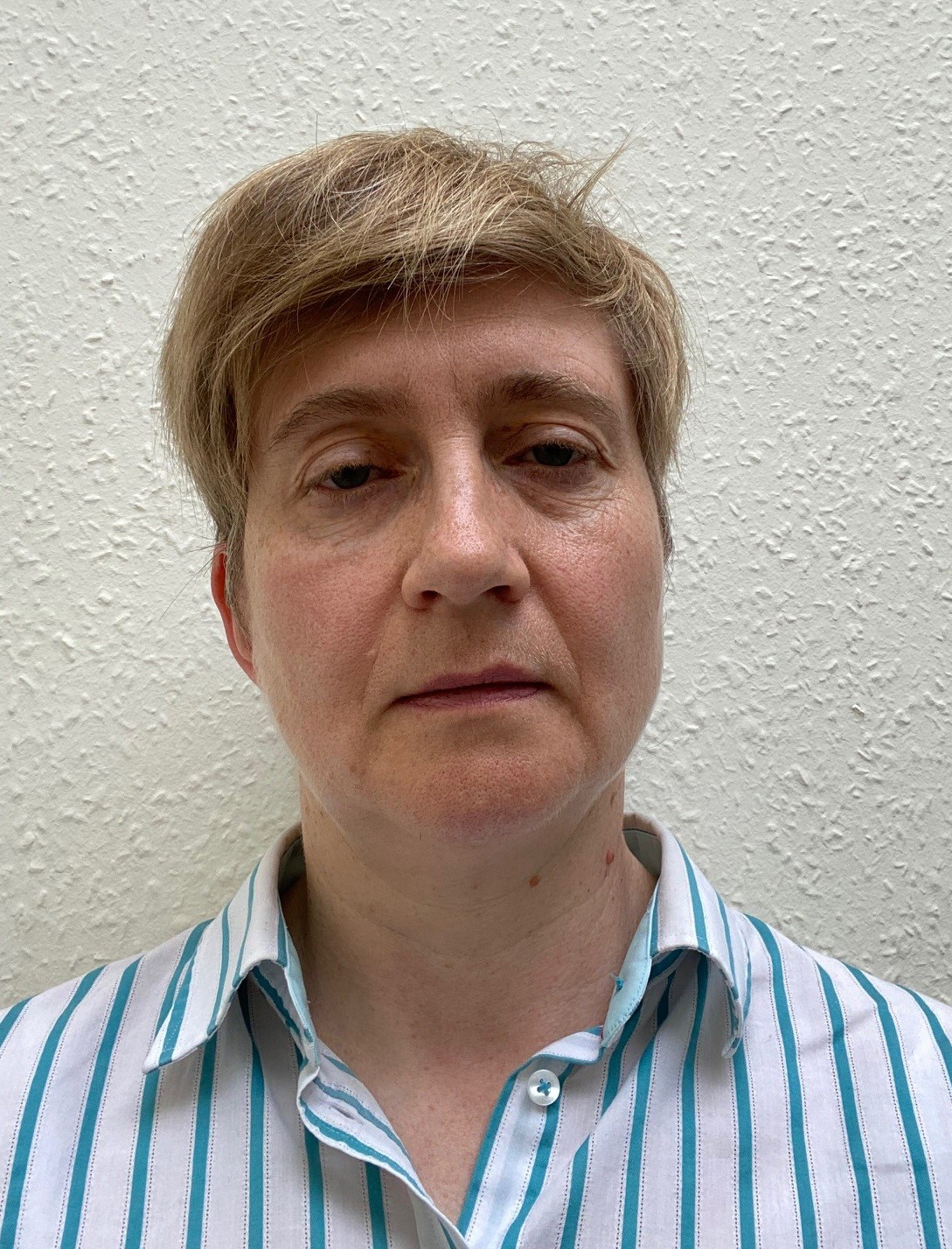
Professor Catherine Steel is a leading scholar in Classics and Ancient History at the University of Glasgow, where she has held the position of Professor of Classics since 2007. Her research focuses on Roman political history, rhetoric, and the works of Cicero, with notable contributions to understanding Republican Roman orators and the institutional history of the Senate. She earned her BA (1995) and DPhil (1999) from the University of Oxford. Her key achievements include a €1.1M ERC Starting Grant (2012–2017) for editing fragments of Republican Roman orators and a British Academy mid-career fellowship (2011–2012) investigating the Roman Senate's institutional legacy. She has authored or edited over 50 scholarly works, including monographs on Cicero and the end of the Roman Republic. Professor Steel’s awards include Fellowships of the Royal Society of Edinburgh (2023) and the British Academy (2022). She actively supervises PhD students on topics like Cicero’s just war theory, Severan monarchy, and rhetoric in Roman law. Her teaching spans Roman history and Latin prose literature, and she contributes to academic leadership roles in the UK classical community.
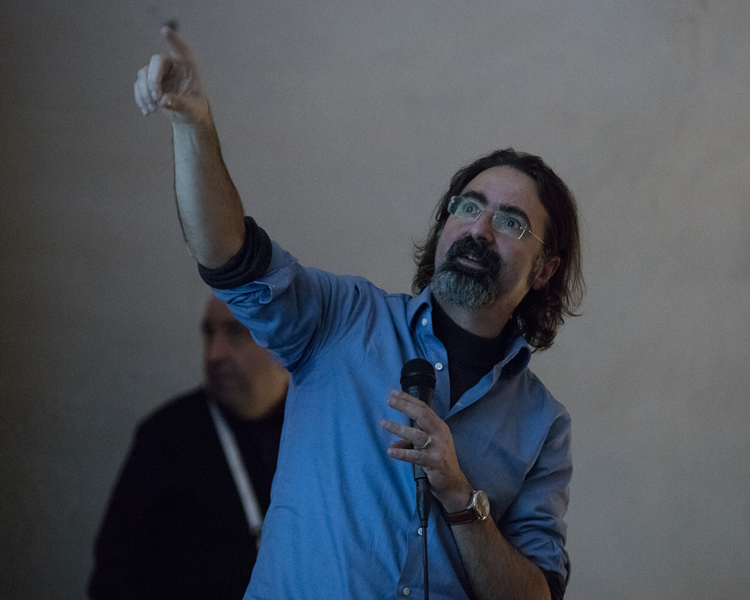
Francesco Stella is a Full Professor of Medieval Latin Literature at the University of Siena-Arezzo, where he also teaches Digital Philology and Translation Studies. He has held leadership roles including Head of the Department of Classics and Cultural Heritage (2004-2010), Director of the Center for Comparative Studies “I Deug-Su”, and Coordinator of the Master Program on Digital Edition since 2008. His research focuses on comparative literature, medieval Latin poetry, and digital philology. Education: PhD student at the University of Florence (1988-1990), Assistant in Latin Literature at University of Siena-Arezzo (1990-2000) Research interests include medieval Latin texts, digital humanities, and intercultural literary studies. He has coordinated major projects like the European TMR Poetry of Early Medieval Europe and the Digital Philology of Medieval Latin Texts (ALIM). Awards include the 2011 Ascoli Prize for his editorial work and the 1993 Certamen Capitolinum. He serves on scientific boards of journals like Mediaevalia & Humanistica and Medioevo Latino , and chairs international initiatives such as the ALIM archive. Collaborations include projects with Sorbonne, Prague’s Centre for Medieval Studies, and the Centre for Medieval Literature in Odense.
H-Dirksen Bauman is a Professor of Deaf Studies at Gallaudet University, affiliated with the Arts and Humanities School. His work centers on Deaf cultural studies, audism, and the intersection of disability studies with broader sociocultural frameworks. He has contributed significantly to redefining academic discourse through concepts like 'Deaf Gain,' emphasizing the value of deafness as a mode of human diversity rather than a deficit. Bauman’s research spans sign language literature, sensory politics, and architectural design for Deaf communities (DeafSpace). He has taught courses such as Language, Culture, and Power and Enforcing Normalcy: Deaf and Disability Studies , reflecting his commitment to critical pedagogy. His scholarly contributions include foundational texts on audism and co-editing Deaf Gain: Raising the Stakes for Human Diversity . He has held leadership roles including Director of ASL Connect and advisor to the Deaf Studies Digital Journal. Awards include the Maryland State Arts Council’s Independent Artist Award and recognition for bilingual literary works. His work bridges academia, artistry, and activism to challenge ableist norms and advocate for deaf-centered frameworks in education, architecture, and policy.
Dr. Zhao Na is a tenure-track Assistant Professor at the Singapore University of Technology and Design (SUTD), affiliated with the Institute of Sustainable Technology and Design (ISTD). She holds a Ph.D. in Computer Science from the National University of Singapore (NUS), where her thesis on 3D point cloud semantics earned the IMDA Excellence Prize. Her research bridges computer vision and machine learning, focusing on scene understanding, data-efficient learning, and domain generalization. Education: Ph.D. in Computer Science (NUS, 2021); Prior roles include Research Fellow at NUS. Research interests emphasize 3D scene analysis, object detection, semantic segmentation, and robust learning under noisy or limited data. Her work addresses challenges in multi-modal learning, continual learning, and open-world scenarios. Recent projects include geometry-semantics synergy in neural fields and cross-modal augmentation for visual grounding. Publications span top-tier venues like CVPR, ECCV, and ICCV, with a focus on 3D vision and AI. Key contributions include the PCTeacher framework for semi-supervised segmentation and Static-Dynamic Co-Teaching for incremental learning. Scientific Awards: IMDA Excellence Prize (2021). Active grants include a DSO Research Grant (2023–2026) and A*STAR MTC Grant (2023–2026). She leads the SUTD-ZJU Thematic Grant on 3D scene understanding (2022–2024). Laboratory/Team: Research group at ISTD/SUTD focuses on advancing AI-driven 3D perception and scene understanding systems.
Juliane Fürst is Professor of Modern History in the Department of Historical Studies at Central European University (CEU), Vienna, holding a joint appointment with the Center for Contemporary Historical Research (ZZF) in Potsdam, where she co-heads the department 'Communism and Society'. She has held academic positions in the UK, Germany, and Austria, with prior roles at the University of Bristol, St. John’s and Magdalen Colleges, Oxford, and visiting fellowships at Harvard and CEU. BA (First Class) in Modern History, Christ Church, University of Oxford (1997) MSc in Russian and Post-Soviet Studies, London School of Economics (1998) PhD in Government, LSE (2003), thesis: 'Stalin’s Last Generation - Youth, State and Komsomol 1945–1953' Habilitation, History Faculty, Humboldt University, Berlin (2020) Her research focuses on Soviet and post-Soviet history, particularly youth culture, dissent, non-conformism, emotions, subjectivity, and grassroots movements. She explores how individuals and communities negotiated identity and resistance under late socialism, with special attention to Soviet hippies, perestroika from below, and public memory. Her work bridges cultural, social, and emotional history, analyzing how personal experience shaped political change. The 15 most recent publications reflect a consistent focus on subcultures, emotional styles, and alternative lifestyles within the Soviet bloc. They span monographs, edited volumes, and journal articles, showing a strong engagement with transnational countercultural movements, generational identity, and the politics of memory. Her work reveals a thematic evolution from post-war youth socialization to the emotional and spatial dimensions of dissent in the Brezhnev and Gorbachev eras. Juliane Fürst leads several major research projects funded by Horizon Europe and the Leibniz Association, including Perestroika from Below , EUROPAST , and Legacies of Communism? . These initiatives involve international collaborations with institutions in Lithuania, Sweden, Luxembourg, and beyond. She has co-produced a documentary film and curated an exhibition on Soviet hippies, demonstrating a strong commitment to public history and knowledge dissemination. She mentors a team of postdoctoral researchers and temporary fellows but no individual PhD or Master’s students are named in the provided texts. Her leadership roles include coordinating interdisciplinary networks and public history initiatives aimed at strengthening democratic engagement with the past in post-dictatorial societies. She is actively involved in research labs and teams such as the 'Communism and Society' department at ZZF, the EUROPAST consortium, and the Perestroika from Below project team, which includes five core members and three temporary fellows. These collaborative structures support innovative, interdisciplinary approaches to understanding late and post-communist transformations.
Renaud Lambiotte is Professor of Networks and Nonlinear Systems at the Mathematical Institute, University of Oxford. He holds a PhD in Physics from Université libre de Bruxelles and has held research and faculty positions at ENS Lyon, Université de Liège, UCLouvain, Imperial College London, and the University of Namur. He is currently an active academic in applied mathematics and network science. His research focuses on complex systems, particularly dynamics on networks, temporal networks, and stochastic processes. He applies these to social and brain networks, data mining, and urban systems. His work bridges theoretical modeling and real-world data, emphasizing the structure and evolution of complex systems. His recent publications demonstrate strong trends in network theory, including hypergraphs, community detection, multidimensional dynamics, and data quality in network interventions. He also explores applications in urban air quality and gentrification, showing a commitment to socially relevant complex systems research. Scientific Awards: Prix Wernaers 2013 Prix Wernaers 2016 Prix Wernaers 2020 Verdickt-Rijdams 2016 de l'Académie royale de langue et de littérature françaises He is the co-founder of L’Arbre de Diane, a publishing initiative at the science-literature interface, which received multiple awards. He teaches advanced courses such as Differential Equations II and Networks. He is affiliated with the Machine Learning and Data Science and the Oxford Centre for Industrial and Applied Mathematics research groups. He has authored or co-edited key texts in the field, including A Guide to Temporal Networks and Modularity and Dynamics on Complex Networks , and has published around 130 peer-reviewed articles. His research is supported by ongoing collaborations and active publication output, indicating sustained academic leadership.
Dr Carly Watson is a Lecturer at the Department for Continuing Education and the Faculty of English at the University of Oxford. She directs the MSt in Literature and Arts (MLA) and the DPhil in Literature and Arts (DLA), while teaching graduate courses in bibliography, book history, and scholarly editing. PhD in English from the University of Birmingham (2014) MA and BA in English from Oxford University Her research focuses on late seventeenth- and eighteenth-century poetry, print culture, book history, and digital humanities. She specializes in the role of poetry in the literary marketplace and the intersection of material texts with cultural, societal, and technological developments. Carly’s publications leverage data from the Digital Miscellanies Index , a database she managed postdoctoral research for, to analyze trends in miscellany publishing. Her forthcoming monograph, Miscellanies, Poetry, and Authorship, 1680-1800 , redefines the miscellany form by challenging modern author-centric approaches. Notable scientific awards include the Balliol-Bodley Scholarship (2010) for archival research. Her collaborative projects include workshops at Thomas Bewick’s birthplace, funded by the Novel Impressions network (led by Dr Helen Williams). Carly’s teaching spans eighteenth-century literature, manuscript/print culture, and graduate-level bibliography courses. She integrates material texts from English Faculty libraries into classroom instruction and offers an optional course on editing practices.
Rev. Prof. Dr. Hab. Henryk Drawnel is a leading scholar in biblical theology and Qumran studies at the Institute of Biblical Studies, Faculty of Theology, John Paul II Catholic University of Lublin. His work bridges Second Temple Judaism with Aramaic literature, focusing on Enochic texts and their Mesopotamian influences. Education: Studied at Salesian seminaries in Cracow and Cremisan, Israel; Pontifical Biblical Institute (Rome); École Biblique (Jerusalem); Harvard Divinity School. His research centers on Aramaic manuscripts from Qumran, particularly the Book of Enoch and Levi Document , examining intersections with Mesopotamian astronomy, priestly education, and apocalyptic traditions. Key projects include critical editions of 4Q201-212 Enoch fragments and Mesopotamian influences on Jewish angelology. Recent publications (2025–2010) analyze literary structures of Enochic texts, lunar calculations, and Fallen Angels' theology. His 2011 monograph on the Aramaic Astronomical Book earned the Minister of Science award. Scientific Awards: Bronze Cross of Merit (2021) Minister of Education and Science Award (2021) KUL Internal Award for Top Publications Minister of Science and Higher Education Prize (2011) Drawnel's editorial roles include Journal for the Study of the Pseudepigrapha and Biblical Annals . He has organized major conferences, such as the 2017 Qumran Scrolls 70th Anniversary Symposium.
Elana Schlenker is a Lecturer in the Image Text Ithaca low-residency MFA program at Cornell University's College of Architecture, Art, and Planning since 2016. As principal of Studio Elana Schlenker (founded 2011), she leads a medium-agnostic design practice while co-running the cooperative studio Out of Office with Mark Pernice. Her work bridges academia and professional design through initiatives like Gratuitous Type magazine and the gender wage parity project Less Than 100. Schlenker's research centers on graphic design as a vehicle for social commentary, particularly gender equity in creative industries. She explores typographic innovation, visual identity systems for cultural institutions, and the intersection of image/text in digital and print media. Her practice demonstrates how design methodologies can address political and wellness themes through Visual identity , Branding , and Art direction projects. Recent publications (2021-2024) reveal a focus on modular design systems for art institutions and publishers, with heavy emphasis on interactive web experiences and context-specific typography . She frequently collaborates with photographers and galleries, translating complex narratives into visual communication frameworks that challenge traditional publishing formats. Awards received: Young Gun by The One Club for Creativity (2015) Print Magazine New Visual Artist (2013) In her academic role, Schlenker mentors MFA students in visual communication and design research. Her studio practice operates as a de facto research lab funded through high-profile client contracts with cultural institutions including Walker Art Center, Carnegie Museum of Art, and The New York Times. These projects serve as live case studies for her pedagogy. Schlenker directs Studio Elana Schlenker as her primary creative laboratory, with Out of Office functioning as a collaborative platform. She maintains long-term partnerships with specialists like Maria Adelaide (interactive design) and Élise Rigollet (editorial design), forming interdisciplinary teams for projects spanning academia, art, and technology sectors.
Jeremy W. Barrier is a Professor of Biblical Literature at Heritage Christian University, where he teaches courses in the New Testament, early Christianity, Greek, and Old Testament Studies. He is also a missions minister for the Madison (AL) Church of Christ, actively supporting churches across Europe, Asia, and South America. He regularly teaches in leadership training programs in India, the Philippines, Malaysia, Myanmar, Singapore, Vietnam, Sri Lanka, and Peru. His research focuses on the Pauline Epistles (especially Galatians and Corinthians), second-century ancient Christian novels like the Acts of Paul and Thecla, and Coptology. He has conducted extensive research on the Gospel of Judas and the concept of pneuma in early Christian thought. His scholarly work reflects a deep engagement with textual, historical, and social-scientific analysis of early Christian literature. The 15 most recent publications reveal a consistent focus on Pauline theology, particularly in Galatians, with recurring themes such as pneuma, circumcision, the evil eye, asceticism, and the reception of apocryphal texts. His research bridges biblical studies, patristics, and ancient philosophy, often employing interdisciplinary methods from social-scientific criticism and physiological theology. Scientific Awards and Honors: Research Fellowship from the Alexander von Humboldt Foundation (2012–13, 2018, 2023) Nominated Member of the Studiorum Novi Testamenti Societas (SNTS) Dr. Barrier has advised and collaborated on several academic projects, including co-editing major volumes on Thecla and contributing to encyclopedic works. He has received external research funding through competitive fellowships. While no formal graduate students are listed, his editorial and presentation roles indicate active academic mentorship and leadership. He has been involved with research groups such as the Berlin–Leuven–Regensburg Oberseminar and the Katholisch-Theologische Fakultät Oberseminar at the University of Regensburg, where he conducted research under Humboldt fellowships. These affiliations reflect his integration into international scholarly networks focused on New Testament and patristic studies.
Renato Miguel do Carmo is an Associate Professor in the Department of Sociology at ISCTE - University Institute of Lisbon and an Integrated Researcher at CIES-Iscte - Center for Research and Studies in Sociology. He serves as Coordinator of the research group on Inequalities, Work and Social Welfare and directs the Observatory of Inequalities, contributing significantly to national and international sociological research. He is also involved in the scientific coordination of COLABOR, a collaborative research initiative. PhD in Social Sciences (General Sociology), University of Lisbon Institute of Social Sciences, 2006 Aggregation in Sociology, ISCTE-University Institute of Lisbon, 2023 Master's in In-depth Sociology and Portuguese Reality, Nova University of Lisbon, 1997 Bachelor's in Sociology, Faculty of Social Sciences and Humanities of the New University of Lisbon, 1993 His research focuses on social and territorial inequalities, the welfare state, employment and labor markets, public policies, spatial mobility, and social capital. He has published extensively in journals such as Current Sociology , European Societies , Journal of Civil Society , and Geoforum . His work often employs mixed-methods approaches to analyze the impacts of economic and health crises on labor and social protection, particularly among youth and vulnerable populations. His recent publications center on precarious work, youth labor market integration, social protection erosion, and the socioterritorial dimensions of inequality in Portugal. Themes include the gig economy, pandemic effects on employment, and the persistence of dualistic labor markets. His research combines theoretical depth with empirical rigor, contributing to both academic and policy debates. 2023 João Ferreira de Almeida Award (1st edition) 2022 António Dornelas Award 2022 CIES-Iscte R&D Awards ISCTE-IUL Scientific Awards (2011, 2015, 2016, 2019) Bartolomeu Dias Award (2008) Special Jury Prize 2009 (Análise Social) Renato Miguel do Carmo has authored or edited 37 books and published numerous scientific articles. He has led and participated in multiple research projects, often in collaboration with institutions across Europe. His work has been supported by national research councils and policy bodies, including the Higher Council of Statistics (INE). He advises on public policy through his role in the Observatory of Inequalities and contributes to national debates on labor and social protection reform. He has no listed students in the provided text, but likely supervises graduate research given his senior academic position. He is actively involved in research networks and has contributed to edited volumes such as Faces of Precarity and national policy reports on social inequality indicators. His work bridges academic research and public policy, emphasizing the need for equitable and sustainable labor and welfare systems in contemporary Portugal.
Nuno Luis Madureira is a Full Professor in the Department of History at ISCTE – Lisbon University Institute, where he is also an Integrated Researcher at CIES-Iscte – Center for Research and Studies in Sociology. His academic affiliations include the School of Social Sciences and Humanities and the research group Historical Dynamics and Global Integration of the World . He has been a visiting scholar at Harvard University and the University of California, Berkeley, and serves on the review boards of the European Science Foundation, Research Foundation – Flanders (FWO), and the Netherlands Organization for Scientific Research (NWO). Madureira holds a PhD in Contemporary Social History from ISCTE-IUL (1996), a Master’s in Historical Economics and Sociology from the Faculty of Social Sciences and Humanities at UNL (1990), and a Bachelor’s in History from the Faculty of Arts at UL (1984). His research spans energy and environmental history, economic and business history, the history of technology and science, and historical occupations. He has authored thirteen books, including Key Concepts in Energy: Technology, Economy and History (Springer, 2014), and numerous peer-reviewed articles in journals such as Energy Policy , Technology & Culture , Business History Review , and Environment and History . His recent publications reflect a deep engagement with energy transitions, fossil fuel history, nuclearization, and the socio-political dimensions of energy systems. Themes such as energy paradoxes, oil pricing, and the historical development of electricity infrastructure recur throughout his work. He has also contributed to major encyclopedias and edited volumes in economic and social history. Madureira is the editor of Frontiers in Sustainability and has coordinated multiple collective research projects. He maintains an active research blog and is fluent in French and English. His work is interdisciplinary, combining historical analysis with insights from economics, engineering, and environmental sciences. Scientific Awards and Recognitions: Member of the permanent pool of referees of the European Science Foundation (2006–2013) Member of the College of Reviewers of the European Science Foundation (2016–2023) Member of the Research Foundation – Flanders (FWO) Review College Consultant for the Netherlands Organization for Scientific Research (NWO) He has advised on research policy and evaluation at national and European levels and is a member of ISCTE's General Board. His work on historical occupations and classification systems has been foundational in Portuguese social history. He has not advised any named PhD or Master’s students in the provided texts. He is not part-time, not retired, and currently active in research and teaching.
Dr. Tawhida Ahmed is a legal scholar specializing in European Union law, human rights, and minority rights. Her research explores the impact of EU governance on the protection of minority and linguistic rights, counter-terrorism policies affecting Muslim communities, and the intersection of climate change with international legal frameworks. She has contributed significantly through peer-reviewed articles and scholarly books published by reputable academic publishers such as Hart Publishing. PhD in Law (inferred from academic output) LLM or equivalent in International/EU Law (inferred) Legal Education in United Kingdom or comparable jurisdiction (inferred) Her research interests center on human rights protection within the EU , particularly focusing on minority, linguistic, and religious rights . She critically analyzes EU legal mechanisms, governance structures, and their real-world impact on marginalized communities. A recurring theme in her work is the tension between security policies and civil liberties, especially post-9/11 counter-terrorism measures affecting Muslim minorities. Additionally, she engages with broader international legal challenges, including climate change, where she examines competing legal narratives and criminological consequences. The recent publications demonstrate a strong focus on EU legal integration and human rights compliance , with a particular emphasis on the protection of identity, cultural rights, and effective legal remedies . Her work bridges theoretical legal analysis with practical implications for policy and justice. She frequently contributes to edited volumes in prestigious legal series, indicating active participation in scholarly discourse. Scientific Awards: No awards mentioned in the provided text. Dr. Ahmed has advised or supervised students in the fields of human rights, EU law, and international legal studies, though specific names are not listed. Her research has likely been supported by academic grants related to human rights, EU policy, or climate law, given the thematic depth and publication quality. She may be affiliated with research centers focusing on human rights law or European legal studies. She is likely associated with research groups or academic networks in international law, possibly contributing to collaborative projects on minority rights or climate justice. Her work suggests engagement with interdisciplinary teams combining legal, sociological, and political perspectives.
Tarjei Mandt Larsen is an Associate Professor of Philosophy and Methodology at the Department of Accounting and Law, UiS School of Business, University of Stavanger. His academic work bridges philosophy with methodology, particularly in the domain of phenomenology and epistemology. Position: Associate Professor Institution: University of Stavanger School: UiS School of Business Department: Department of Accounting and Law Email: tarjei.m.larsen@uis.no Office: EOJ SV-213 Phone: 51833757 His research focuses on Husserlian phenomenology, examining themes such as perceptual justification, intentionality, the epoché, and the constitution of experience. He has also extended his inquiry into the philosophy of computer games and virtual objects, exploring the ontological and experiential status of digital entities. The recent publications reveal a consistent trajectory in 20th-century continental philosophy, particularly in Husserl and McDowell. The works span journals like Mind , Studia Phenomenologica , and Norwegian Philosophical Journal , indicating high scholarly engagement. Keywords across these articles include phenomenology, epistemology, intentionality, and virtual reality, with sub-fields emphasizing transcendental analysis, cognitive justification, and digital ontology. No scientific awards are listed in the provided text. Larsen has co-authored books and chapters with scholars such as John Richard Sagang and Hallvard Fossheim, particularly in edited volumes on the philosophy of computer games and non-conceptual experience. While no direct mention of students or grants is made, his long-standing publication record since the 1990s suggests sustained research activity and academic leadership. He has participated in numerous research seminars and international conferences, indicating active involvement in the global philosophy community. He has contributed to public discourse through op-eds in Stavanger Aftenblad and other newspapers, discussing topics ranging from philosophy in society to educational initiatives. His work in dissemination reflects a commitment to making philosophical inquiry accessible beyond academia.
Stefan Iversen is Associate Professor at the School of Communication and Culture, Aarhus University, where he also serves as Director of the PhD programme for Art, Literature and Cultural Studies. His academic work bridges literary studies, rhetoric, and digital media, focusing on the evolving role of narratives in contemporary society. His research centers on narrative theory, rhetorical analysis, and the cultural implications of digital media. Key areas include fictionality , metanoic reflexivity , visual and multimodal rhetoric , political discourse , and cultural memory . He investigates how narratives shape identity, public debate, and democratic processes, especially in digital environments involving memes, AI-generated content, and campaign rhetoric. The trends across his recent publications reveal a sustained engagement with narrative disruption in politics, quantified storytelling on social media, and the theoretical foundations of fictionality. His work integrates literary theory with communication studies and digital humanities, reflecting an interdisciplinary approach to modern narrative forms. Aarhus University PhD Prize for 2008 He has supervised over 80 master’s theses and currently advises three PhD students in rhetorical studies. He teaches in the Rhetoric, Scandinavian Studies, and Humanistic Conflict Studies programs, and leads the international Summer Course in Narrative Studies. He is also a member of the national examination corps for Danish and Rhetoric. Stefan Iversen is actively involved in major research projects including the Center for Fictionality Studies , Humanistiske Konfliktstudier , and Globalisering og Kulturel Identitet , which reflect his commitment to interdisciplinary humanistic inquiry into contemporary societal challenges.