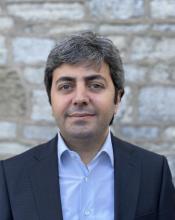
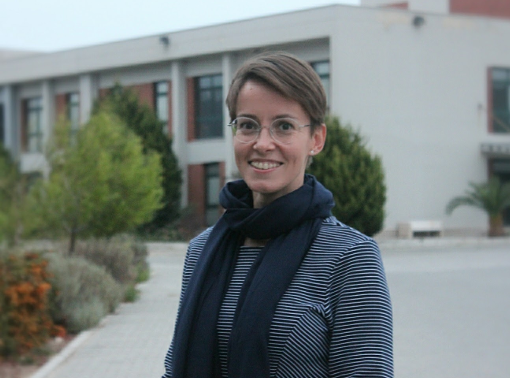
Prof. Hasan BULUT is a full-time faculty member at Ege University's Faculty of Computer and Information Sciences, Department of Computer Engineering. His primary research focuses on software engineering, parallel algorithms, computer networks, artificial intelligence, and algorithm design. He has contributed to fields like distributed systems, data structures, and bioinformatics through innovative algorithmic solutions. His academic work spans over two decades, with notable contributions to machine learning applications in energy forecasting, DNA sequence analysis, and cloud computing optimization. Key areas of expertise include hybrid machine translation models, real-time data clustering, and optimization techniques for computational problems. Prof. BULUT's recent publications emphasize interdisciplinary approaches, combining deep learning with traditional methods to solve challenges in healthcare informatics, financial prediction, and bioengineering. His work on network slicing techniques for 5G and beyond networks highlights cutting-edge contributions to modern communication systems. Despite an extensive publication record and collaborations within Ege University, no formal scientific awards or grant information is explicitly mentioned in the provided texts. His academic career includes supervising numerous research projects but specific student advisee details are not documented here.
Kenan Tekin is an Assistant Professor in the Department of Philosophy at Boğaziçi University, Faculty of Humanities and Letters. He holds a Ph.D. from Columbia University, USA, and his scholarly work focuses on Islamic and Ottoman intellectual traditions, particularly in the philosophy and history of science. His research bridges medieval Islamic philosophy with modern historiographical concerns. His research interests include: Islamic Philosophy Medieval Philosophy History and Philosophy of Science Philosophy of Religion Philosophy in the Ottoman Empire Postclassical Islamic Thought Avicennan Philosophy The recent publications (2022–2023) reveal a deep engagement with the structure and classification of sciences in Islamicate societies, especially through commentaries on logical and philosophical texts such as al-Kātibī’s Shamsiyya and Ibn Ḥājib’s works. His scholarship emphasizes textual analysis, translation, and the evolution of epistemological frameworks in Ottoman and postclassical Islamic contexts. He frequently explores how scientific knowledge was organized, debated, and transmitted across centuries. Scientific awards: No awards listed in the provided text. Kenan Tekin actively contributes to academic discourse through journal articles, book chapters, and critical reviews. He has translated significant works in Islamic thought into Turkish, enhancing accessibility. While no formal students or grants are listed, his editorial and collaborative projects (e.g., in the Routledge Handbook) indicate active participation in scholarly networks and knowledge dissemination. He is involved in research groups and intellectual history projects focusing on systems of knowledge in Islamicate societies. His work often intersects with manuscript studies, translation history, and the cultural dimensions of scientific thought in Ottoman and Arab contexts.
Hakan GÜLDAL is an Assistant Professor at the Faculty of Education, Trakya University, with a research focus on educational technology and data mining applications in education. He holds degrees in Computer Engineering (BSc, MSc, PhD) and teaches courses in Database Management Systems and Programming Languages . BSc, MSc, PhD in Computer Engineering from Trakya University Assistant Professor since 2018 Specializes in machine learning for educational analytics His research explores technology acceptance models, cloud-based learning systems, and classification algorithms applied to educational datasets. Recent work examines chatbots as educational tools and predictive modeling of student performance. Publications span 2010-2024, with a focus on Cloud computing in education Machine learning for student assessment Learning management system analysis He contributes to international conferences and journals in educational technology. Teaching includes foundational courses in database systems and programming languages, reflecting his technical background.
Cem Taşkın is an Assistant Professor at the Department of Computer Engineering, Trakya University, and has served as Department Head since January 2023. Previously, he was Assistant Professor at Tunca Vocational School (2011-2014) and held administrative roles as School Director (2013-2017) and Deputy Director (2012-2013). He earned his PhD in Computer Engineering from Trakya University in 2010. High School: Kırklareli Anatolian High School (1999) Bachelor's: Trakya University, Computer Engineering (2003) Master's: Trakya University, Computer Engineering (2006) PhD: Trakya University, Computer Engineering (2010) His research focuses on Computer Engineering , Multimedia Security , and Embedded Systems , with a strong emphasis on encryption techniques for MPEG video streams and mobile/web application development. Recent work includes applying interactive mobile applications for pediatric chemotherapy treatment (2022) and optimizing embedded systems as dashboards (2016). Publication trends reveal expertise in video encryption (I-frames, byte alignment, XOR operations), chaotic algorithms for sound data security, and software development for educational and administrative systems. His work bridges theoretical cryptography with practical implementations in multimedia and embedded environments. Supervised Master's Theses: Altuğ Yiğit - Human Insight in Business Processes with Deep Learning Temel Yavuz - Corporate Content-Information Management Systems Murat Emre Yücel - Text Classification with Active Learning Projects: Led initiatives at Trakya University on mobile application development laboratories (2016), campus automation systems (2016), and MPEG audio querying (2008). Participated in KOSGEB's R&D Innovation Project for Dream Cash Register/Barkot Systems (2012).
Prof. Dr. Senem Kumova Metin is an Associate Professor in the Software Engineering Department at İzmir University of Economics. She earned her B.S. in Electrical and Electronics Engineering (2001), M.S. (2005), and Ph.D. (2011) from Ege University. Her research focuses on Natural Language Processing and Computational Linguistics , with specific applications to Turkish language. Key areas include emotion detection , sentiment analysis , word embeddings , multiword expressions , and language modeling for agglutinative languages. Recent publications highlight advancements in emotion-enriched vector representations, transformer-based models for Turkish NLP, and hybrid methods for emotion detection in low-resourced languages. She also contributes to dataset expansion for multiword expressions and statistical analysis of Turkish lexical structures. Her academic output spans journals and conferences in computer science and linguistics , with emphasis on practical applications in NLP.
Dr. Atilla SUNCAK serves as an Assistant Professor in the Department of Computer Technologies at Kastamonu University's Vocational School, where he has held academic positions since 2014. Initially appointed as a Lecturer until 2025, he was promoted to his current rank in 2025. His expertise spans artificial intelligence applications with a specialized focus on Turkish language processing. His academic credentials include: PhD in Computer Engineering, Dokuz Eylül University (2016-2022) MSc in Computer Engineering, Dokuz Eylül University (2012-2016) BSc in Computer Engineering, Dokuz Eylul University (2007-2012) Dr. SUNCAK's research concentrates on Artificial Intelligence, Data Mining, and Machine Learning with distinctive emphasis on Natural Language Processing for Turkish. His work develops computational methods for detecting defective expressions in Turkish sentences and implements machine learning solutions across diverse domains including hospitality analytics and environmental education through mobile applications. His 11 publications since 2014 demonstrate consistent advancement in Turkish NLP, with recent works (2023-2025) focusing on deep learning optimization for language understanding. The research trajectory shows increasing sophistication in hyperparameter tuning and hybrid modeling approaches while expanding into practical applications like tree species identification and customer satisfaction prediction. No scientific awards or honors are documented in his academic record. While he has not supervised any thesis students, Dr. SUNCAK contributed as a researcher to the TÜBİTAK-funded project 'ÇAGRISIM: Educational Game for Developing Turkish and the Individual' (2013-2015). His teaching portfolio encompasses 104 courses including Object-Oriented Programming, Data Mining, and Mobile Programming. He maintains active research collaborations with Özlem Aktaş (9 joint publications), Çağdaş Can Birant (3 publications), and emerging partnerships with Fatma Selin Sak and Hilal Öztay Çağan, focusing on interdisciplinary applications of NLP and educational technology.
Duygu Bayram Kara is an active Associate Professor in the Department of Electrical Engineering at Istanbul Technical University's Faculty of Electrical and Electronics Engineering, where she has been a faculty member since 2016 after serving as a Research Assistant (2007-2015). Her career includes a brief industry role at Baytek Construction (2015-2016), but she remains a core academic staff member with office EEF 7311 and contact number +90-212-285-6956. She maintains active profiles on Scopus, Web of Science, Google Scholar, and ResearchGate with an ORCID (0000-0001-8184-8510). Education: PhD in Electrical Engineering from Istanbul Technical University (2009-2015) MSc in Electrical Engineering (with thesis) from Istanbul Technical University (2006-2009) BSc in Electrical Engineering from Istanbul Technical University (2001-2006) Research Interests: Her work integrates Machine Learning and Signal Processing with Electrical Machines and Energy Conversion to address critical challenges in electric motor reliability. She pioneers Kalman filter-based data fusion for aging monitoring and fault detection in motors, while simultaneously applying deep neural networks to characterize polymer nanocomposite films for electrical/optical applications. This dual focus bridges theoretical signal processing with practical energy systems and material science. Publication Trends: Her 23 Scopus-indexed outputs (2010-2025) demonstrate consistent innovation in motor diagnostics using wavelet transforms and neural networks, evolving toward sophisticated data fusion techniques. Recent work (2022-2025) heavily emphasizes deep learning for nanocomposite material analysis and Kalman filter applications in aging monitoring, with her 2020 nanocomposite conductivity paper accumulating 29 Scopus citations. The research shows increasing interdisciplinary collaboration and real-world validation in automotive and energy systems. Scientific Awards: No specific prizes, fellowships, or medals are documented in the provided materials. Professional recognition includes IEEE Senior Membership (2020-present) and standard IEEE Membership (2014-present), reflecting industry standing. Advising and Grants: She currently supervises one thesis in progress. As Principal Investigator, she secured two significant projects: Integrated Condition Assessment Using Kalman Filter-Based Data Fusion with Sensor Data from Different Environments and Recurrence Analysis-Assisted Aging Monitoring (TÜBİTAK, March 2024-May 2026) for advanced motor reliability Design and Development of Low Power Permanent Magnet Synchronous Motors in accordance with IE4 class (BAP, March 2018-October 2020) focusing on energy-efficient motor design Labs and Teams: Based at ITU's Ayazaga Campus, she operates within the Department of Electrical Engineering's research ecosystem, leveraging international collaborations (evidenced by global co-author networks) for projects involving electric motor diagnostics and nanocomposite analysis. Her work requires specialized facilities for motor testing, sensor data acquisition, and computational modeling, though specific lab names aren't disclosed in the text.
Nesli Erdoğmuş is an Assistant Professor in the Department of Computer Engineering at the Izmir Institute of Technology (IYTE) . She joined the faculty in 2016 after completing postdoctoral research at Idiap Research Institute in Switzerland and a PhD in Multimedia Communication from EURECOM and Telecom ParisTech, France. Her research focuses on biometric recognition, face and fingerprint authentication, and cybersecurity. Education: B.Sc. and M.Sc. in Electrical and Electronics Engineering, Middle East Technical University (2005, 2008) Ph.D. in Multimedia Communication, EURECOM & Telecom ParisTech, France (2012) Research Interests: Dr. Erdoğmuş leads the CSIGB research group, specializing in anti-spoofing techniques for biometric systems, 3D face recognition, and synthetic data generation for fingerprints. Her work addresses challenges in secure authentication, including spoofing attacks using 3D masks and deep learning-based intrusion detection. Grants & Projects: Synthetic Production of Latent Fingerprints (TÜBİTAK UİDB 2515) Landscape Image Recognition and Turkish Adaptation (TÜBİTAK BİDEB 2236) Labs/Teams: CSIGB Research Group, focusing on biometric systems and computer vision applications.
Sinan Uygur is a Professor of Turkish Language at Bandırma Onyedi Eylül University and previously held positions as Associate Professor at both Bandırma Onyedi Eylül University and Artvin Coruh University. He serves as Head of the Department of Modern Turkish Language and has held administrative roles including Dean Assistant and Department Chair at Artvin Coruh University. His academic work focuses on historical Turkish dialects, lexicography, and Ottoman/Chagatay texts. He has authored over 20 books including LUGÂT-I NEVÂYÎ, A DICTIONARY IN CHAĞATAY (2020) and contributed to critical editions of classical works like HASAN HALVETÎ'S DÎVÂN (2016). Research interests span Turkish philology, historical linguistics, and regional dialect studies. Recent articles include analyses of Mongolian personal names in 16th-century documents and morphophonological features in Artvin-Ahiska dialects. He has supervised 8 graduate theses on topics ranging from Ottoman manuscript analysis to dialectological studies. Awards include Certificates of Appreciation from the Turkish Ministry of Foreign Affairs for academic contributions. Teaching responsibilities include courses on Old Anatolian Turkish, Chagatay Turkish, and historical linguistics at both undergraduate and graduate levels. He actively participates in international conferences and editorial boards, contributing to journals such as SELÇUK JOURNAL OF TURKISH RESEARCH and INTERNATIONAL JOURNAL OF LANGUAGE, LITERATURE AND CULTURE STUDIES .
Dr. Sahip AKTAŞ is a Lecturer at Bingöl Üniversitesi’s Faculty of Islamic Sciences, Department of Arabic Language and Rhetoric. He holds a PhD in Arabic Language and Rhetoric from Bingöl University (2019), an MA (2015) and a BA in Theology (2002) from Uludağ and Bingöl Universities. His research focuses on Arabic literature, textual criticism of classical Islamic texts, and medieval scholars like Yûsuf b. Hüseyin el-Kirmâstî. He has published extensively in peer-reviewed journals and presented at international conferences on topics such as Arabic grammar and Islamic philosophical concepts. He has also participated in advanced courses in textual criticism and codicology. Currently, he continues his academic career at Bingöl University. Education: Bachelor’s: Theology, Uludağ University (2002) Master’s: Arabic Language and Rhetoric, Bingöl University (2015) PhD: Arabic Language and Rhetoric, Bingöl University (2019) Research Interests: Arabic literary genres, textual criticism of classical manuscripts, biography of medieval Islamic scholars, linguistic analysis of Arabic grammar, and theological metaphysics. His work often bridges philology and Islamic intellectual history, with a focus on understudied scholars like el-Kirmâstî. Publications: Over five peer-reviewed articles and conference papers, including studies on the *Ta'rib* phenomenon in Arabic syntax and the life/works of el-Kirmâstî. His 2024 article on the *Amil* theory in metaphysics showcases his engagement with Islamic philosophical discourse. Professional Development: Participated in advanced international courses on textual criticism (2016–2018), including the 7th International Tahkik Course and the YADEP program. Awards: Certificate of Participation in multiple international courses on classical Islamic studies.
Dr. Turgay KOÇ is a Lecturer at the Department of Electrical and Electronics Engineering, affiliated with the Faculty of Engineering and Natural Sciences at Middle East Technical University. He holds a doctoral degree in Electrical-Electronic Engineering from the same institution (2012) and a bachelor's degree from Nigde University (2001). His research focuses on Signal Processing, Speech Processing, and applications of AI in healthcare, including lung disease detection and vocal fold analysis. He has contributed to advancements in CNN-based denoising, medical image segmentation with U-Net architectures, and forensic audio analysis. His work spans over 15 years, with notable publications on nonlinear source-filter models and glottal inverse filtering techniques. Dr. KOÇ's research interests also encompass audio, image, and video processing techniques, particularly in biomedical contexts. His recent work (2020–2025) emphasizes AI-driven solutions for post-COVID-19 lung disease detection and spoofing attack identification. He has explored hybrid modeling approaches for signal denoising and developed algorithms for vocal fold segmentation in high-speed video imagery. His contributions bridge theoretical signal processing with practical medical and cybersecurity applications. No scientific awards or grants are explicitly mentioned in the provided texts. He has advised no listed students, and lab affiliations remain unspecified.
Dr. Tolga Berber is an Assistant Professor at the Faculty of Science, Karadeniz Technical University . With a PhD in Computer Engineering from Dokuz Eylül University, his academic career spans over 20 years, including roles as Deputy Head of Department (2013–2023) and extensive research in Computer Sciences, Artificial Intelligence, and Medical Informatics .
Dr. Mehmet Sadık Gür is an Assistant Professor in the Department of Eastern Languages and Literatures at Ankara Yıldırım Beyazıt University's Faculty of Humanities and Social Sciences. His academic roles include Deputy Head of Department (2025-Present) and former Head of Department (2014-2017). Arabic Language and Eloquence Islamic Mysticism Comparative Semitic Languages Classical Arabic-Islamic Cosmology History of Science Translation Studies His recent publications focus on Semitic language classification, Arabic manuscript translation, and cross-cultural analysis between Turkish and Jewish communities. He contributes to academic journals like Sufiyye as an editor and redactor, and has participated in international conferences on Middle Eastern studies.
Academic Overview Kristin Surpuhi Benli currently serves as an Assistant Professor in the Department of Software Engineering at Uskudar University's College of Engineering. With a research focus spanning facial expression analysis, machine learning applications, and data mining in medical contexts, her work bridges computational methods with interdisciplinary applications. Education Undergraduate Degree: Computer Engineering, Işık University (2005) Master Degree: Computer Engineering, Işık University (2007) Doctorate: Computer Engineering, Işık University (2013) Research Interests Her research spans multiple dimensions of computational science: Developing anatomically-informed facial expression recognition systems Applying machine learning to medical prognosis through blood test analysis Investigating programming self-efficacy in computer science education Exploring AI adoption in neuroscience and clinical decision-making Implementing image processing techniques for brain tumor detection Academic Contributions Dr. Benli has contributed to diverse research areas through her publications, including: Classification algorithms in stroke mortality prediction BERT-based stance detection in social media analysis Neuroscience applications of artificial intelligence Anatomical modeling for facial expression recognition Biometric data analysis through nearest neighbor methods Administrative Roles Deputy Head of Research Center (YAZAMER), since 2025 Member of Quality Commission (Faculty level), since 2023 Board Member of Faculty Administrative Council, since 2020 Deputy Head of Software Engineering Department, since 2019 She also maintains active student advisory roles and participates in various academic commissions.
Professor Mehmet Erol is affiliated with Gaziantep University , where he teaches in the Faculty of Arts and Sciences within the Department of Turkish Language and Literature and Department of Turkish Folk Literature . His academic career spans institutions including Kilis 7 Aralık University and Halep Üniversitesi . Contact: merol@gantep.edu.tr Professor (2019–Present) Associate Professor (2015–2019, Gaziantep University) Faculty of Arts and Sciences, Gaziantep University Education PhD in Turkish Language and Literature (2002, Çanakkale Onsekiz Mart University) MA in Turkish Language and Literature (1996, Erciyes University) Bachelor’s in Turkish Language and Literature (1991, Erciyes University) Research Interests include Philology , Turkish Folklore , Alevism and Bektashism Studies , and Anonymous Turkish Folk Literature . His work analyzes oral traditions, mythological narratives, and Turkmen cultural practices, with a focus on Sufi Folk Literature and Research Methods in Social Sciences . Projects include studies on Syrian Turkmen dialects , Kilis folk culture , and Non-Material Cultural Heritage . He has supervised theses on topics like Gaziantep Culinary Culture and Kirkuk Lodges .