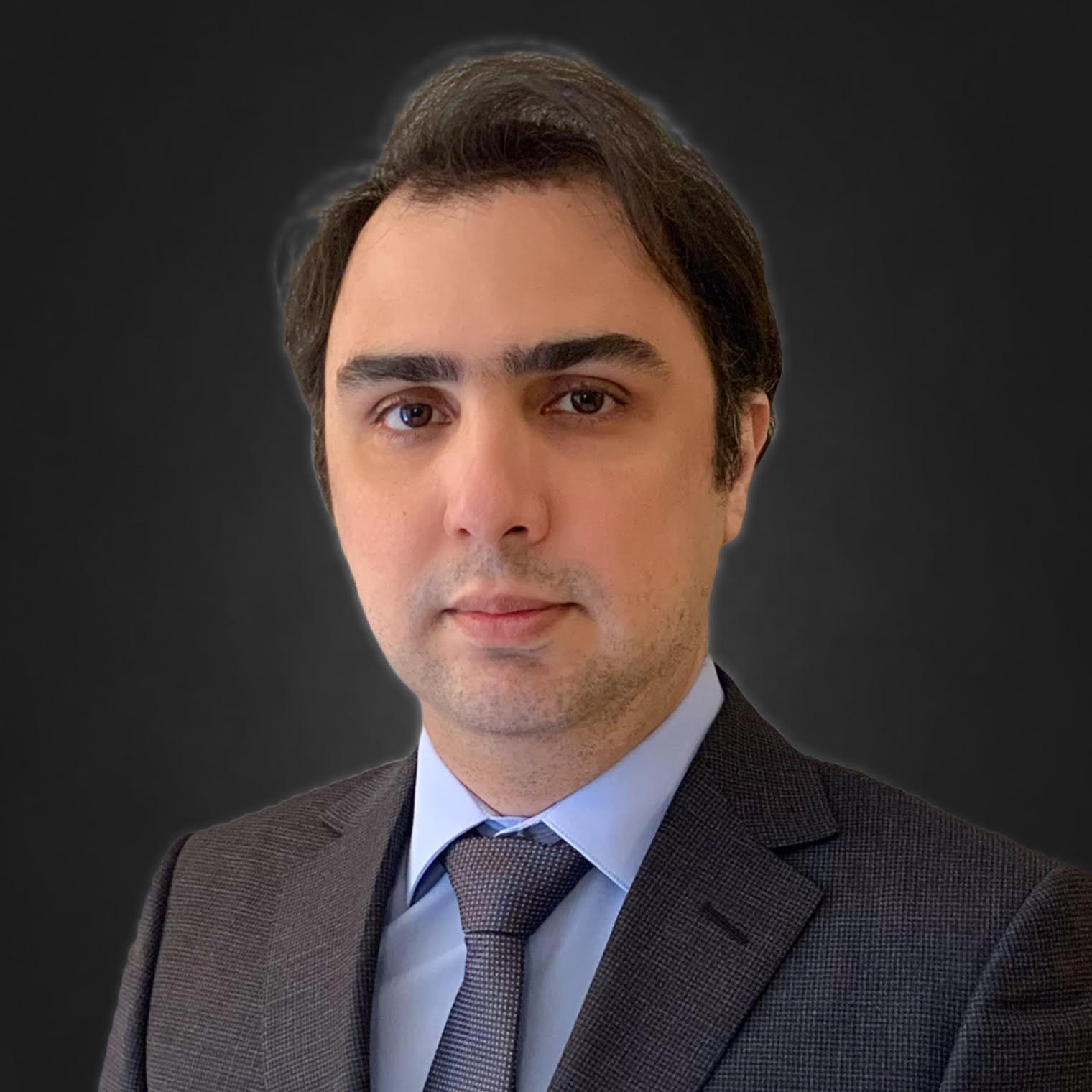
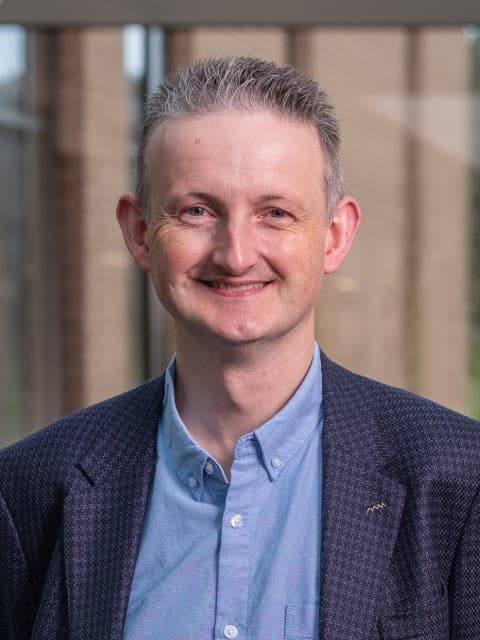
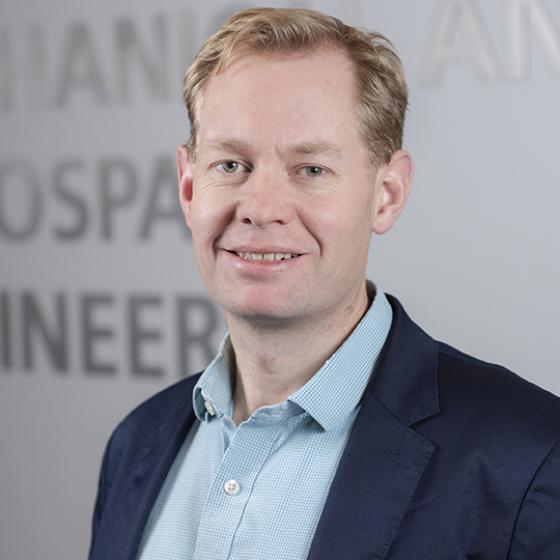
Anoosheh Heidarzadeh is an Assistant Professor in the Department of Electrical and Computer Engineering at Santa Clara University's School of Engineering. He holds a Ph.D. in Electrical and Computer Engineering from Carleton University (2012) and previously served as a Visiting Assistant Professor at Texas A&M University (2018-2022) and Associate Research Scientist at the same institution (2015-2017). His postdoctoral research was conducted at the California Institute of Technology (2013-2014). His research focuses on: Information and coding theory : Fundamental limits of data transmission and storage systems Private and secure computing : Protocols for confidential data processing in networked environments Fault-tolerant distributed systems : Resilient computation frameworks for large-scale applications Distributed machine learning : Scalable algorithms for collaborative learning architectures Recent publications (2021-2022) demonstrate strong emphasis on privacy-preserving computation (covering 73% of articles) and distributed coding techniques (67% of articles), with innovations in private information retrieval, matrix operations, and group testing methodologies. Theoretical contributions dominate (87%), while 13% address applied challenges like COVID-19 screening.
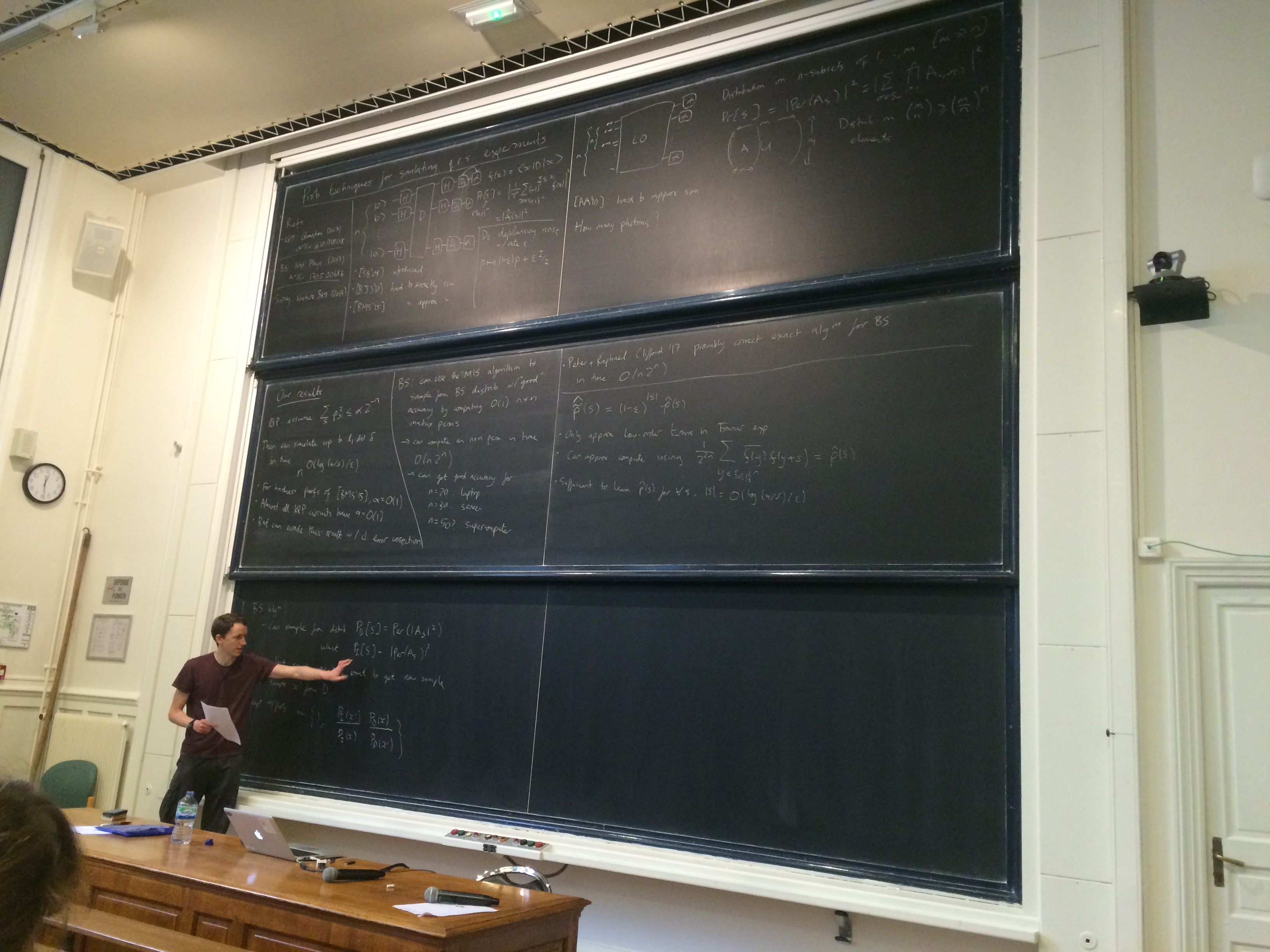
Ashley Montanaro is Professor of Quantum Computation in the School of Mathematics at the University of Bristol, and co-founder of the quantum software startup Phasecraft. He is a member of the Quantum Information Theory research group at Bristol. His research focuses on the theory of quantum computing, with particular interest in quantum algorithms, computational complexity, quantum query and communication complexity, and classical algorithms. His work spans both theoretical foundations and practical applications of quantum computing. Montanaro's research output shows significant trends toward quantum algorithms for optimization problems, quantum computational supremacy, and bridging theoretical advances with practical implementation challenges. His publications span foundational quantum information theory to applied quantum algorithms, demonstrating a versatile research program that connects computer science with quantum physics. Among his professional activities, Montanaro served on the QIP steering committee (2016-2018) and was an editor for the Quantum journal until 2019. He has been active in conference organization, serving on program committees for ITCS 2018, AQIS 2017 and 2015, QIP 2015, and TQC 2014 and 2013, reflecting his standing in the quantum computing research community. He has supervised numerous PhD students including Josh Blake, Jorja Kirk, Sheila Perez Garcia, Sami Boulebnane, Jan Lukas Bosse, Lana Mineh, Joao F. Doriguello, Chris Cade, Sam Pallister, and Stephen Piddock. His teaching includes Quantum Computation (MATHM0023) which he has taught since 2014 and Advanced Quantum Information Theory which he taught in 2015 and 2016. As co-founder of Phasecraft, Montanaro is actively translating theoretical quantum computing advances into practical software solutions, positioning him at the intersection of academic research and quantum technology commercialization.
Jouni Partanen is a Professor at Aalto University's Department of Energy and Mechanical Engineering within the College of Engineering. His research focuses on advanced production technologies including Additive Manufacturing (3D-Printing), modern laser processing, and micromachining. Research Group: Materiaaleista tuotteiksi Specialization: Integration of AI in manufacturing processes Sustainability emphasis: Biochar-reinforced materials and carbon footprint reduction His work spans from fundamental material behavior analysis to industrial applications, particularly in metal additive manufacturing and composite fabrication. Recent research explores corrosion resistance in lattice structures and multiscale photopolymerization techniques. Publications highlight interdisciplinary approaches combining mechanical engineering with biomedical applications (e.g., patient-specific implants) and environmental health studies on industrial 3D printing emissions.
Andrew Childs is a Professor at the University of Maryland, affiliated with the Department of Computer Science and the Institute for Advanced Computer Studies (UMIACS). He serves as Director of the NSF Quantum Leap Challenge Institute for Robust Quantum Simulation (RQS) and is a Fellow at the Joint Center for Quantum Information and Computer Science (QuICS). His research focuses on quantum algorithms for simulating physical systems, algebraic problems, and quantum walk protocols, with applications in quantum computing and computational complexity. University of Maryland Institute for Advanced Computer Studies (UMIACS) Joint Center for Quantum Information and Computer Science (QuICS) NSF Quantum Leap Challenge Institute for Robust Quantum Simulation Childs' research spans quantum simulation, quantum Fourier transform, phase estimation, and Hamiltonian dynamics. He has developed techniques to reduce quantum computational resources for simulating quantum systems and explored limitations of quantum computers through hidden subgroup problems and non-unitary dynamics. His publications cover diverse areas including quantum walk optimization, Hamiltonian simulation methods, and applications to cryptography and condensed matter physics. Recent works address spatial search algorithms, product formulas for commutators, and quantum routing protocols. As an educator, Childs has taught courses on quantum algorithms and information processing at both the University of Maryland and University of Waterloo, with lecture notes and materials spanning multiple years. Contact: amchilds@umd.edu | Office: ATL 3359 | Affiliated with University of Maryland's quantum research institutes.
Charalampos Papamanthou is an Associate Professor of Computer Science at Yale University, where he also serves as Co-director of the Yale Applied Cryptography Laboratory and a member of the Yale Institute for Foundations of Data Science. He holds affiliations with the Yale Center for Algorithms, Data, and Market Design. Additionally, he is Chief Scientist at Lagrange Labs. His research focuses on computer security and applied cryptography, particularly verifiable and privacy-preserving computations, leakage-abuse attacks on searchable encryption, and scalable blockchains/cryptocurrencies. He has advised numerous students and postdocs, and his work is supported by NSF, Protocol Labs, and JP Morgan. Research Interests: His primary areas include cryptographic protocols, privacy-preserving systems, blockchain infrastructure, secure cloud computing, and distributed consensus mechanisms. He has pioneered advancements in zero-knowledge proofs, private information retrieval, and dynamic searchable encryption. Awards: He has received prestigious awards such as the CCS Test-of-Time Award (2022), JP Morgan Faculty Research Award (2022), and NSF CAREER Award (2017). His contributions span over 140 publications in top venues like CRYPTO, CCS, and SODA. Teaching: He has taught advanced courses in cryptography, algorithms, and computer systems security at Yale and previously at the University of Maryland and Brown University. Recently, he chairs Yale’s PhD admissions in Computer Science. Labs & Teams: Leads the Yale Applied Cryptography Lab, focusing on real-world applications of cryptographic research. Collaborates with industry partners like Lagrange Labs to develop privacy-preserving technologies.
Prof. Dr. Timothy Roscoe is a Full Professor in the Department of Computer Science at ETH Zurich. His research focuses on operating systems, networking, and distributed systems. He was inducted as an ACM Fellow in 2014 for contributions to these fields. Previously, he worked at Intel Research Berkeley, UC Berkeley (Adjunct Professor), and Sprint Labs. His work includes foundational contributions to systems like PlanetLab, P2 Declarative Networking, and the Nemesis OS. Roscoe holds a PhD from the University of Cambridge and has led projects in cloud computing, wide-area network measurement, and secure systems design. His current research emphasizes hardware-software co-design, formal verification of systems, and scalable memory architectures. Education: PhD in Computer Science, University of Cambridge (1995) Key Roles: Principal Researcher at Intel Berkeley Lab, Visiting Researcher at National ICT Australia Research Highlights: Contributions to distributed systems (PlanetLab), declarative networking (P2), and secure microkernels (seL4 integration). Current projects address challenges in disaggregated memory systems, coherent interconnects, and trustworthy embedded systems. Awards: ACM Fellow (2014), numerous grants and industry collaborations. Labs/Teams: Systems Group at ETH Zurich, focusing on OS design, hardware architectures, and formal methods.
Wei Xiang is an Assistant Professor of Economics at the University of Michigan's Department of Economics, housed within the College of Literature, Science, and the Arts. He earned his Ph.D. in Economics from Yale University in 2024, focusing on international trade, macroeconomics, and environmental economics. His research bridges economic theory with applied analyses, addressing global trade dynamics, macroeconomic policies, and environmental sustainability. Education: Ph.D. in Economics, Yale University (2024). Research Interests: His work explores the intersection of international trade policies, macroeconomic stability, and environmental regulations. He examines how trade agreements influence economic growth and environmental outcomes, with a focus on empirical methodologies to assess policy impacts. Additionally, he investigates macroeconomic models to understand global economic fluctuations and their implications for sustainable development. Publications: His recent articles highlight contributions to vehicle communication systems, signal processing, and wireless technologies, reflecting interdisciplinary engagement with engineering applications. These include real-time prediction models for GPS errors and beamforming optimization in vehicular networks. Labs/Teams: Not explicitly stated, but his research collaborations likely involve interdisciplinary teams in economics, engineering, and environmental science.
Professor Mark King is a leading academic in Sports Biomechanics at Loughborough University, affiliated with the School of Sport, Exercise and Health Sciences, where he serves as Lead for the Sport Performance Research Theme. He holds a BSc (1993) and PhD (1998) in Mathematics and Sports Science from Loughborough, with career progression from Lecturer (1999) to Senior Lecturer (2006), Reader (2012), and Professor (2019). He is also Warden of Royce Hall since 1999, overseeing 375 students' welfare. Education: BSc in Mathematics and Sports Science (1993), PhD in subject-specific computer simulation of dynamic jumping (1998). Affiliations: England and Wales Cricket Board (ECB), International Cricket Council (ICC), Badminton World Federation, Lawn Tennis Association. His research focuses on optimizing elite sport performance through biomechanical analysis, particularly in cricket and badminton. Key areas include injury prevention (e.g., ACL risks in badminton, lumbar stress injuries in cricket bowlers) and technique optimization. He has pioneered ICC-accredited testing for illegal bowling actions and explored machine learning applications in data collection. His work highlights trends in cricket fast bowling kinematics, racket sports smash mechanics, and gender-specific performance metrics. He actively collaborates with national and international sports organizations to translate research into practical guidelines for athletes and coaches. Awards: None explicitly mentioned in the text. Grants/Advising: No listed advisees, but extensive industry partnerships support his research. Labs/Teams: National Centre for Sport and Exercise Medicine (NCSEM), part of his research infrastructure.
Michael McAlpine is a Professor in the Mechanical Engineering department at the University of Minnesota . He also holds affiliations with the Biomedical Engineering and Electrical and Computer Engineering departments. His research focuses on 3D printing functional materials & devices , Nanoscale inks , Biomedical devices , Bioelectronics , and Flexible Microsystems . Research Interests : 3D Printing, Biomedical Engineering, Nanotechnology, Flexible Electronics, Microfluidics Labs : ME 361/363 Contact : mcalpine@umn.edu , (612) 626-3303, ME 117 Recent Research Trends include 3D Printed Biomedical Devices , Flexible Electronics , and Bioprinting Applications . His work spans from Spinal Organoid Formation to Programmable Drug Release Capsules . Scientific Award : Circulation Research 2020 Best Manuscript Award
Patrick McDaniel is a Professor in the School of Computer, Data & Information Sciences at the University of Wisconsin-Madison. He is a Fellow of IEEE, ACM, and AAAS, and leads the MadS&P (UW-Madison Security and Privacy) group. His research spans computer and network security, adversarial machine learning, and technical public policy. Academic Affiliation : Tsun-Ming Shih Professor of Computer Sciences Key Research Areas : Mobile/IoT security, election systems security, AI policy Research Trends : His recent publications and funded projects focus on adversarial machine learning, SDN security, and robustness of AI systems. Keywords include cybersecurity, machine learning, network security, and privacy. Grants and Leadership : He has secured over $5M in NSF funding for end-to-end trustworthiness of ML systems and leads collaborative projects with Army Research and UW-Madison. Awards : Multiple best/most influential paper awards (ICSE 2015, PLDI 2014, ACSAC 2024, EthiCS 2023) Advising : Mentored 13+ PhD students and postdocs now at top institutions like Google, Purdue, and University of Toronto
Qi Alfred Chen is an Assistant Professor in the Department of Computer Science at the University of California, Irvine (UCI), within the Donald Bren School of Information and Computer Sciences. He also holds affiliations with the Department of Electrical Engineering and Computer Science (EECS), the Institute of Transportation Studies at UC Irvine (ITS-Irvine), the Center for Embedded and Cyber-physical Systems (CECS), the Institute for Software Research (ISR), and the UC Irvine Cybersecurity Policy & Research Institute (CPRI). His research focuses on network and systems security, with particular emphasis on autonomous vehicle and IoT security. Dr. Chen received his Ph.D. from the University of Michigan in 2018. His educational background has prepared him for his current research in security of critical computer systems. His work bridges theoretical security principles with practical implementations in real-world systems. Chen's research interests center on network and systems security , with a major focus on smart systems and IoT security , particularly in transportation and autonomous vehicle systems . His work addresses security challenges through systematic problem analysis and mitigation, discovering and mitigating security problems in next-generation transportation systems, smartphone OSes, network protocols, DNS, GUI systems, and access control systems. His research has high impact in both academic and industry contexts, with over 10 top-tier conference papers, a DHS US-CERT alert, multiple CVEs, and coverage in major news media like Fortune and BBC News. His publication record shows a clear evolution from foundational work on network protocols and smartphone security toward increasingly sophisticated security analyses of autonomous vehicle systems and AI-powered transportation technologies. The research trajectory demonstrates growing technical sophistication and real-world impact, with recent work focusing on physical-world adversarial attacks against autonomous driving perception systems, LiDAR spoofing, and security of multi-sensor fusion in autonomous vehicles. NSF CAREER Award (2022) on securing the AI stack in emerging autonomous and connected CPSs Chancellor's Award for Excellence in Undergraduate Research Mentorship, UC Irvine (2021) 5th place nation-wide at National CCDC competition (2021, as faculty advisor) 1st place (Gold Medal) at CCDC Western Regional competition (2021) ProQuest Distinguished Dissertation Award, University of Michigan (2019) Dr. Chen has mentored numerous successful students, including PhD candidates and undergraduates who have gone on to positions at major tech companies like Meta, Uber, Amazon, and Intel. His research group has secured significant funding, including an NSF CAREER award, and has made substantial contributions to the field through high-impact publications and vulnerability disclosures. He is also the co-founder of the ISOC VehicleSec Symposium and has organized the AutoDriving CTF contest at DEF CON. Chen leads the AV & IoAT Security Research Group at UCI, focusing on security challenges in autonomous vehicles and the broader Internet of Autonomous Things. His team has developed numerous attack demonstrations and security analyses that have received significant media attention and influenced industry practices. The group maintains an active YouTube channel showcasing their security research.
Daniel Abadi is the Darnell-Kanal Professor of Computer Science at the University of Maryland, College Park, with an appointment in the University of Maryland Institute for Advanced Computer Studies. He leads the Data Systems Lab at Maryland (DSLAM) and has made significant contributions to database system architecture and implementation, particularly in scalable and distributed systems. Prof. Abadi's research focuses on database system architecture, especially at the intersection with scalable and distributed systems. He is best-known for the development of the storage and query execution engines of the C-Store (column-oriented database) prototype, which was commercialized by Vertica and eventually acquired by Hewlett-Packard, and for his HadoopDB research on fault tolerant scalable analytical database systems which was commercialized by Hadapt and acquired by Teradata. His current work includes deterministic distributed systems like Calvin and SLOG, which provide strictly serializable, low-latency, geographically replicated database transactions. Analysis of his recent publications reveals a strong focus on modern database challenges including transaction processing, distributed systems architecture, data mesh concepts, schema evolution, and IoT data management. His work consistently addresses the tension between consistency, availability, and performance in distributed database systems, with recent emphasis on moving beyond traditional two-phase commit protocols and exploring novel approaches to data architecture like data mesh. ACM Fellow Sloan Research Fellowship Churchill Scholarship NSF CAREER Award VLDB Best Paper Award Two VLDB Test of Time Awards (for C-Store and HadoopDB) 2008 SIGMOD Jim Gray Doctoral Dissertation Award 2013-2014 Yale Provost's Teaching Prize 2013 VLDB Early Career Researcher Award PhD dissertation advisor for Alexander Thomson and Jose Falerio, whose dissertations won SIGMOD Jim Gray Doctoral Dissertation Awards in 2015 and 2020 respectively Prof. Abadi has advised multiple PhD students, including Alexander Thomson and Jose Falerio, both of whom received the prestigious SIGMOD Jim Gray Doctoral Dissertation Award. His research has been supported by numerous grants including NSF funding for projects like SLOG. He maintains an active presence in the database community through his widely-read blog DBMS Musings and through service on program committees for major conferences including SIGMOD, VLDB, and CIDR. He leads the DSLAM research group at the University of Maryland, which focuses on cutting-edge database system research with strong industry connections and practical impact.
David Erickson is the SC Thomas Sze Director and Sibley College Professor at Cornell University's Sibley School of Mechanical and Aerospace Engineering. He also holds a joint professorship in the Division of Nutritional Sciences. His research focuses on global health technologies, medical diagnostics, microfluidics, photonics, nanotechnology, and energy systems. He previously served as Associate Dean of Engineering for Research and Graduate Programs. Erickson leads the NIH-funded PORTENT Center for Point-of-Care Technologies in Global Health and has co-founded companies like Dimensional Energy and VitaScan to commercialize diagnostic and energy technologies. Education: B.Sc., Mechanical Engineering, University of Alberta (1999) M.A.Sc., Mechanical Engineering, University of Toronto (2001) Ph.D., Mechanical Engineering, University of Toronto (2004) Postdoctoral Scholar, Electrical Engineering, California Institute of Technology (2005) Research Interests: Erickson’s work spans global health diagnostics , nanobio applications , and clean energy innovation . He develops portable medical devices for low-resource settings, including smartphone-integrated diagnostic tools for malaria, iron deficiency, and cancer. His lab also pioneers photothermal reactors for CO2 conversion into sustainable fuels. Key areas include: Point-of-care testing for infectious diseases and nutritional deficiencies Nanofluidic and optofluidic technologies for biomolecular analysis Solar-driven energy systems for carbon-neutral fuels Awards: Presidential Early Career Award for Scientists and Engineers (2011) Fellowships from the Optical Society, ASME, and Canadian Academy of Engineering Carbon X-Prize Finalist (2019) for Dimensional Energy’s CO2-to-fuel technology Grants & Industry Collaboration: Erickson’s research is funded by NIH, NSF, ARPA-E, DOE, and USAID. His lab’s innovations have spun off start-ups addressing global health and energy challenges. Notable projects include: - Portable cancer diagnostics in sub-Saharan Africa using mobile phone-based systems - Solar-powered CO2 conversion reactors tested in Wyoming and Arizona Labs & Teams: The Erickson Lab collaborates with the Cornell Atkinson Center for Sustainability and the McGovern Center for Entrepreneurship. Key initiatives include the PORTENT Center and the Dimensional Energy CO2-to-fuel project.
Thomas R Overton serves as Department Chair and Professor of Dairy Nutrition and Management in the Department of Animal Science at Cornell University's College of Agriculture and Life Sciences (CALS). He also directs PRO-DAIRY, an extension program focused on enhancing dairy farm profitability and efficiency in New York through research-based strategies for transition cow management. Education: Doctorate, University of Illinois, 1998 Master of Science, University of Illinois, 1994 Bachelor of Science, Cornell University, 1991 Dr. Overton's research centers on the transition period (late pregnancy to early lactation) in dairy cows—the most critical phase for health and productivity. His work integrates nutritional physiology with practical farm applications, targeting hypocalcemia management, protein supplementation strategies, inflammation control, and biomarker validation for metabolic health. This research directly informs his extension efforts through PRO-DAIRY, which delivers actionable knowledge to dairy producers and industry professionals. Analysis of his 15 most recent publications (2022-2024) reveals consistent emphasis on transition cow nutrition, with growing focus on metabolic analytics, precision feeding, and real-world herd management. His work bridges controlled studies at Cornell's Ruminant Center with observational research on commercial New York dairy farms. Scientific Awards: 2024 Nutrition Professionals Applied Dairy Research Award (American Dairy Science Association) 2010 CALS Extension/Outreach Team Award (PRO-DAIRY) 2007 Foundation Scholar Award (American Dairy Science Association) 2007 CALS Extension/Outreach Team Award Dr. Overton advises undergraduate and graduate students in Animal Science while leading PRO-DAIRY's extension initiatives. His program secures industry partnerships and grants focused on improving dairy farm sustainability through nutritional science. The July 2025 'Farm of the Future' showcase at Cornell's Ruminant Center exemplifies his commitment to translating research into practical innovation. He operates within Cornell's PRO-DAIRY program and the Cornell University Ruminant Center—a living laboratory for dairy technology testing—collaborating closely with industry stakeholders to address emerging challenges in dairy production.
Carlos G. Levi is a Research Professor in the Department of Materials at the University of California, Santa Barbara (UCSB), part of the College of Engineering. He holds the additional title of Professor Emeritus. His research focuses on microstructure evolution in inorganic materials, particularly in the design of advanced coatings, composites, and alloys for extreme environments. He has contributed significantly to thermal barrier coatings, ceramic matrix composites, and high-temperature alloys for aerospace and energy applications. Education: Ph.D. in Metallurgical Engineering, University of Illinois at Urbana-Champaign (1981) M.Sc. in Metallurgical Engineering, University of Illinois at Urbana-Champaign (1977) Degree in Chemical Engineering, Universidad Autonoma de Nuevo Leon, Mexico (1972) Research Interests: Levi’s work addresses challenges in structural materials, including advanced thermal/environmental barrier coatings resistant to molten silicates, ceramic matrix composites, hypersonic materials, and high-temperature alloys such as multi-principal element alloys. His studies explore degradation mechanisms, phase stability under extreme conditions, and novel synthesis techniques like vapor-mediated melt infiltration. Awards and Honors: 2014 TMS Morris Cohen Award 2012 Fellow of the American Ceramic Society 2008 NIMS Award (shared) for breakthroughs in materials science for energy/environment 2004 DLR Wissenschaftspreis (collaborative paper) 2002 Alexander von Humboldt Research Prize Advising and Grants: No formal student advisees are listed, though his research group likely includes graduate students/postdocs. Grant details are not specified in the provided texts. Labs/Teams: Levi’s research is conducted within UCSB’s Materials Department, leveraging advanced characterization tools (e.g., TriBeam tomography) and computational modeling to study material behavior under extreme conditions.