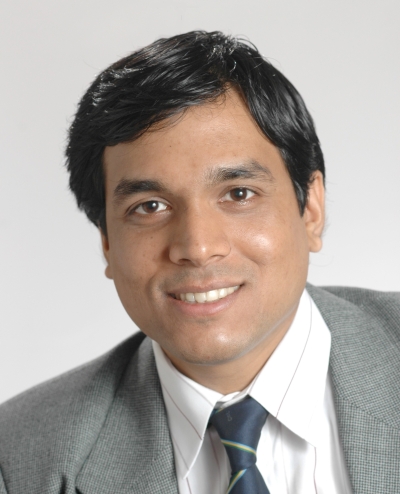
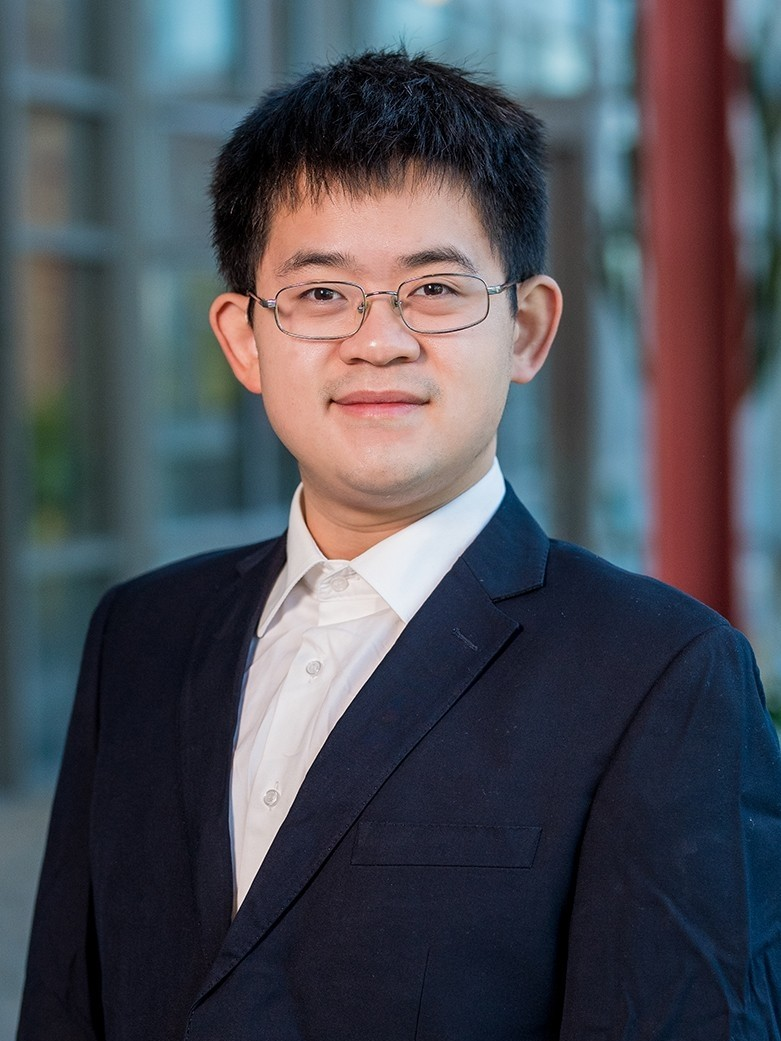
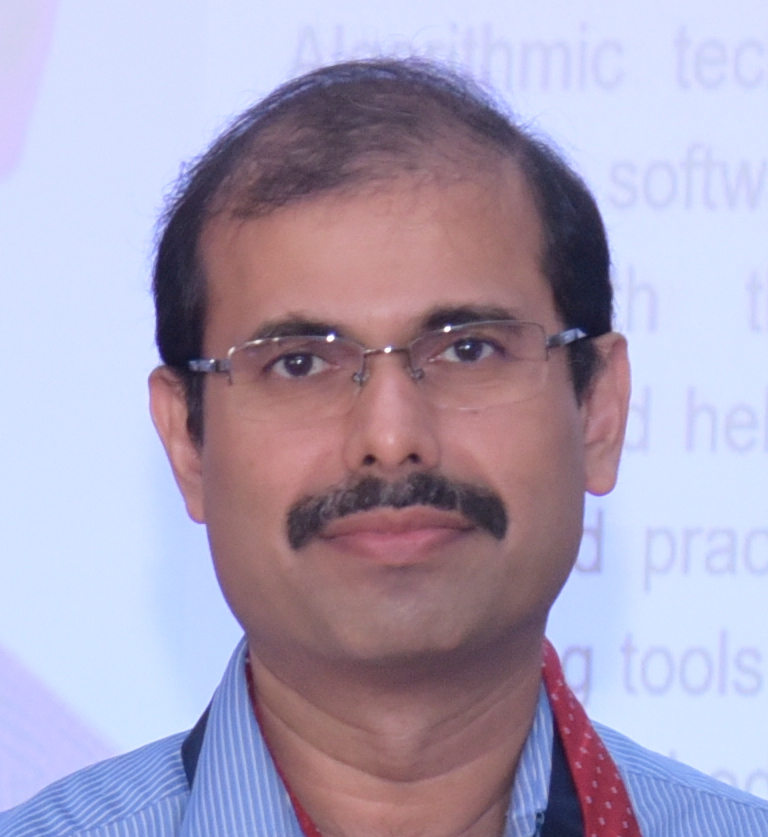
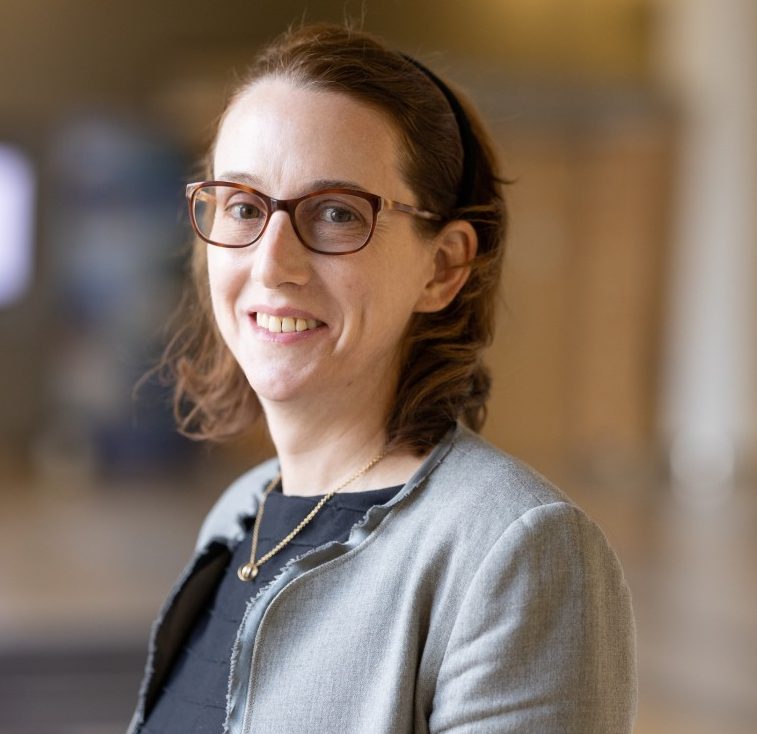
Sanjit A. Seshia is the Cadence Founders Chair Professor in the Department of Electrical Engineering and Computer Sciences at the University of California, Berkeley . He is affiliated with the Group in Logic and the Methodology of Science and participates in centers like the Industrial Cyber-Physical Systems Center , Berkeley AI Research , and the Simons Institute for the Theory of Computing . Research interests include formal methods for automated verification and synthesis of dependable systems, with applications to cyber-physical systems , AI-based autonomy , and computer security . His work spans SMT solving, model counting, syntax-guided synthesis, and algorithmic improvisation, with tools like UCLID5 , VerifAI , and Scenic for verifying autonomous systems and educational platforms like CPSGrader . Students and collaborators include notable researchers such as Dorsa Sadigh (Stanford), Daniel Fremont (UC Santa Cruz), and Hazem Torfah (Chalmers). He has co-founded startups like Decyphir and 20ⁿ Labs based on his research.
Linyi Li is an Assistant Professor in the School of Computing Science at Simon Fraser University (SFU), leading the Trustworthy Artificial Intelligence (TAI) Lab. His research focuses on certifiably trustworthy deep learning systems, combining machine learning and computer security. He holds a PhD from the University of Illinois Urbana-Champaign (UIUC) and a B.Eng. from Tsinghua University. Affiliations: Simon Fraser University, TAI Lab Education: PhD in Computer Science, UIUC, 2023 B.Eng (Cum Laude), Tsinghua University, 2018 His research interests include deep learning , trustworthy machine learning , large language models , and software engineering . He emphasizes rigorous certification of robustness, fairness, and numerical reliability in AI systems. Recent work includes the InfiBench benchmark for evaluating code LLMs and advancements in neural network verification. Recent Research Trends: His publications span certified robustness, fairness guarantees, and scalable verification techniques for deep learning models. He also explores scientific evaluation of foundation models and adversarial defense mechanisms. Awards: Rising Stars in Data Science AdvML Rising Star Award Wing Kai Cheng Fellowship Finalist: Qualcomm Innovation Fellowship (2022) Winner: VNN-COMP'23 Competition (Team α, β-CROWN) Advising & Grants: As a PI, he oversees the TAI Lab's research. Though no specific grants are listed, his work is funded through competitive awards and university resources. Labs/Teams: Leads the TAI Lab at SFU, focusing on foundational and applied research in trustworthy AI.
Prof. Anya Belz is Full Professor of Computer Science at Dublin City University's School of Computing and Science Lead at ADAPT Research Centre. A leading NLP researcher with PhD-level expertise, she specializes in natural language generation, evaluation methodologies, and multimodal systems. Recipient of multiple best paper awards and NAACL Test of Time Award nomination. Research innovations include foundational work on statistical language generation (deployed in weather forecasting systems), comparative evaluation frameworks, vision-language integration, and reproducibility quantification. Current EPSRC-funded ReproHum project coordinates 20 global labs studying evaluation consistency. Achievements : Developed industry-deployed generation systems for accessibility applications Pioneered cross-modal alignment techniques for image description Authored 100+ publications spanning generation, evaluation, and reproducibility
Prof. Dr. Barbara Kraus is the Chair of Quantum Algorithms and Applications at the Technical University of Munich (TUM), affiliated with the TUM School of Natural Sciences. She previously held academic positions at the University of Innsbruck, where she founded her research group in 2010. Education : Physics and Mathematics at the University of Innsbruck; Post-doctoral work at MPI for Quantum Optics and University of Geneva. Her research focuses on foundational problems in quantum information theory, particularly entanglement in multipartite systems, quantum simulation, and verification of quantum processors. She develops theoretical tools for quantum many-body systems and explores applications in quantum computing, emphasizing error characterization and experimental validation. Recent publications highlight advancements in Hamiltonian learning, symmetry-resolved entanglement detection, and multipartite state transformations. Her work bridges theoretical quantum physics with practical implementations, including Rydberg platforms and quantum metrology. Key Awards : START Prize (2010), Ignaz L. Lieben Award (2013), Boltzmann Prize (2011), Südtiroler Sparkasse Research Prize (2019). She supervises doctoral students and postdocs in quantum information theory, with a focus on stabilizer states, quantum networks, and entanglement measures. Her courses at TUM include Quantum Information , Quantum Algorithms , and workshops on entanglement manipulation.
Debjit Pal is a Post-Doctoral Associate at the School of Electrical and Computer Engineering, Cornell University, and a member of the Computer Systems Laboratory. His research focuses on machine learning techniques for hardware verification, SoC validation, and FPGA optimization. Education: Ph.D. in Computer Engineering (University of Illinois at Urbana-Champaign, 2019) M.S. in Computer Science (IIT Kharagpur, 2012) B.E. in Electronics Engineering (Jadavpur University, 2008) Research Interests: Machine Learning for Electronic Design Automation (EDA) System-on-Chip (SoC) Verification Edge Intelligence as a Service Compiler Optimizations for Reconfigurable and High-Performance Computing Scientific Awards: IEEE CEDA Student Research Award (2016) Best Paper Nomination (ICCAD 2015, DAC 2018, ASP-DAC 2019) E. J. McCluskey Best Doctoral Thesis Competition Semi-Finalist (2020) Travel Grants for ICCAD/DAC/ASPDAC (2018-2019) Professional Roles: Technical Program Committee Member (DAC, VLSID), Reviewer (IEEE TVLSI, DATE, ICCAD). Collaborates with researchers like Zhiru Zhang and Shobha Vasudevan.
Supratik Chakraborty serves as the Bajaj Group Chair Professor in the Department of Computer Science and Engineering at Indian Institute of Technology Bombay. He maintains dual affiliations with the Centre for Formal Design and Verification of Software and the Centre for Liberal Education at IIT Bombay, demonstrating his cross-disciplinary engagement. Professor Chakraborty's research spans formal methods with focus on formal verification, rigorous analysis of system models, and automated synthesis of systems from specifications. His work bridges theoretical foundations with practical applications, particularly in developing mathematically provable guarantees for increasingly complex hardware, software, and intelligent systems. Current research interests include constrained counting and sampling, scalable formal verification of software and hardware systems, automated synthesis of programs and circuits, and applications of automata, logic and finite model theory to practical verification challenges. His publication trajectory shows a significant evolution from traditional hardware and software verification toward addressing verification challenges in machine learning and AI systems. Recent work increasingly focuses on interpretability of black-box models, verification of neural networks, and synthesis techniques applicable to intelligent systems. The research demonstrates strong interdisciplinary connections between formal methods, programming languages, and artificial intelligence. IIT Bombay Excellence in Thesis (CSE) Award 2011 (for Bhargav Gulavani's thesis) IIT Bombay Excellence in Thesis (CSE) Award 2017 (for Abhisekh Sankaran's thesis) Best Paper in Algorithms and Architecture track at IEEE International Conference on Computer Design: VLSI in Computers and Processors, 1998 Professor Chakraborty has successfully supervised 11 doctoral students, with research spanning formal verification techniques, Boolean functional synthesis, constrained counting, and applications to hardware and software systems. His students have gone on to positions at major institutions including Microsoft Research, TCS Research, Georgia Tech, and BARC, reflecting the strong industry and academic impact of his mentorship. Current research directions show increasing emphasis on verification challenges posed by machine learning systems and AI. His research group at IIT Bombay, while not explicitly named in the materials, appears to focus on formal methods with strong connections to the Centre for Formal Design and Verification of Software. The group maintains active collaborations with international researchers including Moshe Y. Vardi at Rice University, and has made significant contributions to verification tools like VeriAbs that bridge theoretical advances with practical applications.
Mary Lanzerotti is a Collegiate Assistant Professor in the Bradley Department of Electrical and Computer Engineering at Virginia Tech. She specializes in signal processing, control systems, and medical evacuation technology. Her research focuses on hoist stabilization for MEDEVAC rescues, RF signal estimation, and material science involving liquid films. She is also deeply involved in educational initiatives, including hybrid course development and student advising strategies. Education: A.B. summa cum laude from Harvard College (1989), M. Phil. from the University of Cambridge (1991), M.S. and Ph.D. from Cornell University (1994–1997). Research Interests: Signal processing algorithms, mechanical stabilization of hoist systems, quantum computing verification, and integrated circuits design. Recent work includes gyroscopic data-driven control systems and multi-tier RF signal estimation methods. Service Roles: Member of faculty search committees, assessment committees, and the Graduate Honor System panel. Active in institutional accreditation and curriculum modernization efforts. Labs/Teams: Collaborates with interdisciplinary teams on projects involving aerospace rescue systems, laser material interaction studies, and microelectronics verification.
Nils Holzenberger is an Assistant Professor at Télécom Paris, France, since February 2023, affiliated with the Data Intelligence Graphs (DIG) research team within the Information Processing and Communication Laboratory (LTcI). His work bridges artificial intelligence, natural language processing, and legal domains through neuro-symbolic approaches to statutory reasoning, particularly in tax law. Education: PhD in Computer Science, Johns Hopkins University (2017-2022) Master's in Engineering, Mines ParisTech (2013-2017) Preparatory Classes, Lycée Louis-le-Grand (2011-2013) Holzenberger's research centers on legal artificial intelligence with emphasis on statutory reasoning limitations in large language models. He pioneered the SARA dataset for tax law reasoning and LegalBench benchmark, developing hybrid symbolic-neural frameworks that expose LLMs' shortcomings in precise legal interpretation. His work integrates Prolog solvers with NLP techniques to create executable tax code mappings and contract analysis tools, establishing foundational methods for verifiable legal AI systems. Analysis of his 15 most recent publications (2019-2024) reveals three dominant research thrusts: (1) Tax law reasoning benchmarks exposing LLM hallucinations, (2) Neuro-symbolic integration for statutory interpretation, and (3) Low-resource template extraction for legal documents. His work consistently demonstrates that pure neural approaches fail at precise legal reasoning, necessitating symbolic grounding for reliable legal AI applications. The DIG research team at Télécom Paris, where Holzenberger leads legal AI initiatives, is actively hiring faculty for neuro-symbolic projects. While specific grant details aren't public, his collaborations with HEC Paris, Copilex startup, and featured podcast appearances indicate substantial industry-academia engagement in legal tech development. Holzenberger directs the legal AI vertical within LTcI's DIG team, focusing on data intelligence for statutory reasoning. His group develops tools for tax minimization strategy discovery, contract analysis, and legal information extraction, maintaining close ties with legal practitioners through projects like the Prolog-based tax code interpreter. The team's infrastructure supports both academic research and startup partnerships in computational law.
Dylan Hadfield-Menell is an Assistant Professor in the Department of Electrical Engineering and Computer Science at the Massachusetts Institute of Technology, holding the Bonnie and Marty (1964) Tenenbaum Career Development Professorship. His research focuses on AI alignment and human-AI interaction within MIT's School of Engineering. His research interests center on agent alignment problems in AI systems, particularly examining uncertainty in objective optimization for human-robot teams and societal oversight of machine learning systems. Key areas include the principal-agent alignment problem , assistance games frameworks , and robust preference learning that accounts for hidden contextual factors in reinforcement learning from human feedback. His recent publications reveal strong trends toward multi-agent cooperation , formal contract mechanisms for resolving social dilemmas, and advanced evaluation methodologies for AI safety. The research spans theoretical frameworks like open-universe assistance games while addressing practical challenges in language model alignment and cultural bias assessment. Scientific awards include: AI2050 Early Career Fellowship from Schmidt Futures Berkeley Fellowship NSF Graduate Research Fellowship C.V. Ramamoorthy Distinguished Research Award His work bridges theoretical computer science with real-world AI governance challenges, as demonstrated through MIT's participation in AI policy white papers. Current research directions include developing frameworks for transparent AI systems and addressing fundamental limitations in aligning recommender systems with human values through interdisciplinary synthesis.
Dr. Abdullah Bal is a researcher at Georgia State University's College of Arts & Sciences, Department of Computer Science, with over 25 years of academic experience. He holds a Ph.D. in Electrical Engineering from Yildiz Technical University (2002) and has taught graduate and undergraduate courses in algorithms, machine learning, and optical pattern recognition. B.Sc., Electronics and Communication Engineering, Istanbul Technical University (1993) M.Sc., Electrical Engineering, Yildiz Technical University (1997) Ph.D., Electrical Engineering, Yildiz Technical University (2002) His research focuses on data science, machine learning, and hyperspectral imaging applications in fields ranging from forensic analysis to historical structure preservation. He has led projects funded by the U.S. Army Research Office and the Scientific and Technological Research Council of Turkey, including real-time target detection systems and digital imaging for historical structures. Recent publications demonstrate his expertise in kernel-based transforms, ensemble learning, and hyperspectral data analysis. His work spans food safety inspection, infrared target tracking, and biometric verification systems. Faculty Outstanding Research Publication Award (2006) Turkish Air Force Academy Science Competition Winner (2009) Best Paper Award at ICFCT (2016) Previously, he chaired YTU's Informatics Department (2009-2016) and participated in academic governance through the Electrical and Electronics College Executive Committee (2012-2015). You can contact him at abal@gsu.edu in room 739, 25 Park Place.
Emilio Frazzoli is a Full Professor at ETH Zurich’s Department of Mechanical and Process Engineering. He leads the Institute for Dynamic Systems and Control and the Center for Sustainable Future Mobility, focusing on autonomous systems, robotics, and socio-technical control frameworks. Current affiliations: ETH Zurich (Dynamic Systems and Control, Sustainable Future Mobility) Research: Autonomous mobility-on-demand, game theory for resource allocation, and safety verification in multi-agent systems His work bridges robotics, control theory, and economics, with projects like the open-source AMoDeus simulation framework for autonomous taxis and karma-based resource allocation systems. Recent publications emphasize trustworthy AI, reproducibility in autonomous vehicle control, and human-robot interaction challenges. Notable projects include nuReality (VR-based pedestrian interaction studies) and CARSI II (context-driven vehicle interfaces).
Prof. Dr. Sebastian Steinhorst is an Associate Professor (W3-level with tenure) at the Technical University of Munich (TUM) within the Embedded Systems and Internet of Things group at the TUM School of Computation, Information and Technology . His research focuses on advancing the security, predictability, reliability, and interoperability of smart connected and autonomous systems, particularly for applications in Internet of Things (IoT) , Industry 4.0 , and automotive systems . PhD in Computer Science (2011) from Goethe University Frankfurt Postdoctoral roles at TUMCREATE Singapore (2011-2016) and Aarhus University (2016) Joined TUM in 2016 as Rudolf Moessbauer Tenure Track Professor His research areas include decentralized embedded systems, hardware/software co-design, modeling and verification of cyber-physical systems, security protocols for automotive networks, and time-sensitive networking (TSN) for industrial applications. Recent work explores blockchain-based data sovereignty, zero-knowledge proofs for vehicle authentication, and resilient architectures for autonomous systems. Key scientific contributions include the 2019 ACM TODAES Best Paper Award and pioneering work on CyberSecDome , LeapChain , and Simutack frameworks. He serves on editorial boards and conference committees, including co-organizing the Autonomous Systems Design initiative at DATE. His teaching portfolio spans lectures on System Design for IoT , Software Architecture for Distributed Systems , and IoT Security across multiple semesters. He also leads advanced seminars on embedded systems and IoT.
Dr. Kyle Jamieson is a Professor of Computer Science at Princeton University, leading the Princeton Advanced Wireless Systems (PAWS) lab within the Department of Computer Science. He is also Affiliated Faculty in the Department of Electrical and Computer Engineering. His research focuses on wireless networking systems, 5G architecture, IoT networks, and quantum computing applications in wireless communication. He has pioneered work in reconfigurable intelligent surfaces, MIMO detection algorithms, and metamaterials for millimeter-wave networks. Dr. Jamieson has developed courses such as COS 597S: Recent Advances in Wireless Networks (graduate seminar), COS 463: Wireless Networks , and COS 418: Distributed Systems . His teaching emphasizes interdisciplinary approaches to networking challenges, including physical-layer design, computational structures for wireless processing, and cross-layer optimization. His lab’s research spans smart surfaces for 5G networks, quantum annealing for MIMO processing, and edge computing for live video analytics. Recent work includes deploying reconfigurable metamaterials for enhanced mmWave networks and developing tools like NR-Scope for 5G telemetry. While no awards are listed in the provided text, his contributions to wireless systems have advanced both academic and industrial applications in areas such as network resilience, IoT scalability, and quantum-enabled wireless processing. Dr. Jamieson’s advising focuses on graduate and undergraduate students working in wireless systems, though specific advisee names are not provided. His lab collaborates on projects like Wall-Street for roadside networking and Spider for multi-hop mmWave video analytics. External collaborations include work with Microsoft Research and guest lecturing roles at Berkeley. His research bridges theoretical foundations with practical implementations, often addressing real-world challenges in wireless infrastructure and next-generation communication systems.
Sean Welleck is an Assistant Professor at Carnegie Mellon University's School of Computer Science, Language Technologies Institute, leading the L3 Lab. His research focuses on bridging informal and formal reasoning with AI, spanning machine learning for mathematics and code, inference algorithms, and AI agents. PhD in Computer Science from New York University (advised by Kyunghyun Cho) Postdoctoral work at University of Washington (advised by Yejin Choi) His work explores AI-driven formal methods for mathematics and code generation, test-time compute scaling, and algorithms enabling AI improvement over time. Recent publications analyze reasoning evaluation, premise selection, and automated proof optimization in systems like Lean. Key article trends include neural theorem proving, code generation, and inference-time compute optimization. Awards: NVIDIA AI Labs Pioneering Research Awards (2017, 2018), NAACL 2025 Best Paper. Current advisees include PhD students Pranjal Aggarwal, Weihua Du (co-advised with Yiming Yang), Andre He (co-advised with Daniel Fried), and Seungone Kim (co-advised with Graham Neubig). He co-organizes workshops like Autoformalization for the Working Mathematician (ICERM 2025) and VerifAI: AI Verification in the Wild (ICLR 2025), and teaches Advanced NLP at CMU.
Caroline Lemieux is an Assistant Professor at the Department of Computer Science, University of British Columbia (UBC), with research focused on advancing software correctness, security, and performance through innovative testing and synthesis techniques. Her work bridges Programming Languages and Software Engineering , particularly in fuzz testing, specification mining, and program synthesis. PhD from University of California, Berkeley (2021), advised by Koushik Sen Postdoctoral researcher at Microsoft Research, NYC (2021-2022) Key contributions: FuzzFactory , CodaMOSA , Arvada , and Gauss Her research integrates machine learning with traditional testing methods, exemplified by projects like RLCheck (reinforcement learning for test generation) and AutoPandas (neural synthesis for dataframes). Recent publications analyze generator-based fuzzing challenges and propose hybrid strategies combining coverage feedback with AI-driven insights. Scientific Awards : ACM/SIGSOFT Best Paper Award (ESEC/FSE 2019) ACM/SIGSOFT Tool Demonstration Award (ISSTA 2019) ACM/SIGSOFT Distinguished Artifact Award (ISSTA 2019) NSERC Postgraduate Scholarship-Doctoral (PGS D) UBC Governor General's Silver Medal (2016) Teaching roles include: 2025W2: CPSC 539L - Topics in Programming Languages 2024W2: CPSC 410 - Advanced Software Engineering 2023W2: CPSC 410 (with Alex Summers) She supervises graduate and undergraduate researchers working on projects like ExploTest (automated unit test generation) and GRIMOIRE (grammar extraction from pseudo-rules). Her research team collaborates with institutions including Microsoft Research, Google, and academic partners in systems security and AI-driven testing.