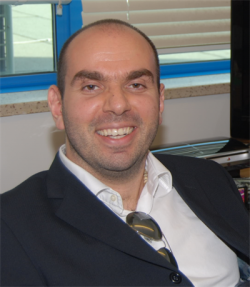
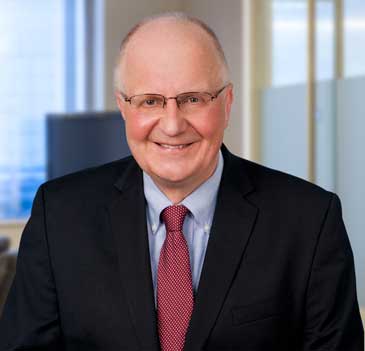
Michel Versluis is a Full Professor at the University of Twente, Netherlands, specializing in Physical and Medical Acoustics within the Physics of Fluids group. His work focuses on microbubbles and microdroplets for medical imaging and therapy, as well as microfluidic applications in medicine and nanotechnology. University of Twente, Physics of Fluids group His research bridges physics and biomedical engineering, with publications in high-impact journals like PNAS and IEEE Transactions. Recent work emphasizes ultrasound-driven microbubble dynamics, additive manufacturing of flow phantoms, and deep learning for super-resolution imaging. 2025 publications: vascular phantoms, PROTEUS simulator, acoustic microbubble control 2024 innovations: 3D-printed medical devices, immunogenic cell death optimization Contact: m.versluis@utwente.nl
Giuseppe Rizzo is a Full Professor at the Department of Maternal and Child Health and Urological Sciences, Sapienza University of Rome. His academic career focuses on Maternal Fetal Medicine, with expertise in ultrasound applications, fetal growth restriction, preeclampsia, and congenital anomalies. Research Interests : Delivery optimization, prematurity prediction, ultrasound diagnostics, and placental anomalies. Recent Publications : Over 15 high-impact studies in 2024-2025 on topics like umbilical cord abnormalities, cerebroplacental ratios, and gestational diabetes complications. Clinical Expertise : Prenatal counseling, Doppler ultrasound, and labor management protocols. Collaborations : Active in multicenter trials across Italy and Europe, with a focus on fetal neurosonology and high-fidelity obstetric simulation.
Danyang Zhuo is an Assistant Professor of Computer Science at Duke University, Trinity College of Arts & Sciences, with expertise in datacenter/cloud computing and machine learning systems. He joined Duke in 2020 after postdoctoral research at UC Berkeley under Ion Stoica and a PhD at the University of Washington advised by Tom Anderson and Arvind Krishnamurthy. Education: PhD in Computer Science (University of Washington, 2019) His research focuses on improving cloud infrastructure through systems like Phoenix (application-level abstractions) and Phantora (GPU cluster simulation). Recent work explores LLM verification, tensor compression via video codecs, and fairness in LLM serving. His 15 most recent publications span operating systems, machine learning, and networked systems conferences like HOTOS, NSDI, SIGCOMM, and OSDI. Scientific honors include NSF CAREER Award (2023), USENIX Security Distinguished Paper (2023), and multiple industry research awards. He has secured major NSF grants for projects including "OS-Managed Remote Procedure Call" and "Campus-level RDMA Networking." At Duke, he advises PhD students and teaches courses such as Introduction to Operating Systems (CompSci 310) and Systems for Machine Learning (CompSci 590.05). His work appears in leading conferences and journals, with collaborations across institutions including UC Berkeley, University of Washington, and industry partners.
Eric Y. Drogin is an Adjunct Professor and Honorary Professor with dual expertise in clinical psychology and law. He is affiliated with Harvard Medical School, serving on the staff of the Forensic Psychiatry Service at Beth Israel Deaconess Medical Center, and is involved in the Harvard Longwood Psychiatry Residency Training Program. He also teaches at the University of New Hampshire School of Law and lectures internationally at Prifysgol Aberystwyth (formerly University of Wales) in both Psychology and Law. His work integrates mental health and legal systems through research, education, and practice. Education: Doctor of Philosophy (Ph.D.) in Clinical Psychology – Hahnemann University Juris Doctor (J.D.) – Villanova University School of Law Dr. Drogin's research interests center on the intersection of psychology, psychiatry, and law, particularly in forensic assessment, expert testimony, ethics, and mental disability law. His work emphasizes multidisciplinary approaches to legal and clinical challenges, supporting both mental health professionals and attorneys. He regularly presents continuing education seminars across North America, Europe, Asia, and Australia. His scholarly publications span criminal and civil law applications of psychological evidence, guardianship evaluation, forensic assessment standards, and the role of mental health professionals in court. These works reflect a consistent focus on improving legal processes through scientific rigor and ethical practice. Scientific Honors and Professional Recognition: Fellow of the American Psychological Association Fellow of the American Academy of Forensic Psychology Diplomate, American Board of Forensic Psychology Diplomate, American Board of Professional Psychology Life Fellow, American Bar Foundation Dr. Drogin has held leadership roles in major professional organizations, including President of the American Board of Forensic Psychology, Chair of APA committees on Legal Issues and Professional Practice, and Co-Chair of the ABA’s Behavioral & Neuroscience Law Committee. He serves as Editor-in-Chief of The Journal of Psychiatry & Law and has co-authored over 250 publications. While formal student advising is not detailed, his instructional roles in residency programs and trial workshops indicate active mentorship. He is a key figure in advancing forensic psychology through education, policy, and interdisciplinary collaboration.
Dr. Joshua Brinkerhoff is an Associate Professor in Mechanical Engineering at the University of British Columbia Okanagan Campus. He serves as the Associate Director for Research & Industrial Partnerships in the School of Engineering and leads the UBC-Okanagan Computational Fluid Dynamics Laboratory. His research spans computational fluid dynamics, turbomachinery, multiphase flows, hydrogen safety, wind energy, and biofluid mechanics. He teaches courses in mechanics of materials, alternative energy systems, turbulence, computational fluid dynamics, and aircraft design. PhD, Aerospace Engineering (Carleton University, Ottawa, ON) BEng, Aerospace Engineering (Carleton University) Dr. Brinkerhoff’s research interests include: Computational Fluid Dynamics (CFD) for laminar-to-turbulent transition and instability analysis Wind energy systems and turbine aerodynamics Hydrogen storage and safety protocols for transportation Biofluid mechanics for respiratory diseases and aneurysm modeling Multiphase flows in industrial and environmental contexts His publications focus on CFD simulations for: Aerosol dispersion and mitigation in indoor environments Wind farm interactions and atmospheric gravity waves Cavitation and phase transitions in cryogenic and LNG systems Heat transfer optimization in industrial and thermal systems Instability dynamics in buoyancy-driven and swept flows Turbulent structures in fluidized beds and reactors Dr. Brinkerhoff has no listed scientific awards in the provided data but has extensive contributions to renewable energy, hydrogen safety, and medical fluid dynamics. His laboratory develops open-source tools like TOSCA for large-eddy simulations and investigates practical applications in urban air quality, dental aerosol control, and turbine wake modeling.
Univ.-Prof. Dr. Claus Staringer is Professor of Tax Law with a special focus on Corporate Tax at the Vienna University of Economics and Business Administration (WU Wien). He has served as Head of the Corporate Tax Group and Deputy Chairman of the Department of Austrian and International Tax Law since 2003, and as Director for legal Doctoral Studies since 2005. Additionally, he has been a Principal Consultant at Freshfields Bruckhaus Deringer since 2001, maintaining a strong connection between academic research and professional practice in international tax law. Staringer earned his Mag.iur. in Economics and Law from the Vienna University of Economics and Business Administration and University of Vienna, followed by a Dr. iur. with excellence (thesis: "Einlagen und Umgründungen") and habilitation in Tax Law (thesis: "Besteuerung doppelt ansässiger Kapitalgesellschaften"). His academic journey includes assistant positions at both WU Wien and the University of Vienna, blending academic rigor with practical insights from his work at Deloitte and Freshfields. His research focuses on international tax law, particularly corporate taxation, double taxation agreements, and European tax coordination. Staringer has made significant contributions to understanding dual resident corporations, cross-border reorganizations, and the interaction between EU law and tax treaties. His work bridges theoretical frameworks with practical applications in multinational tax planning and compliance. Staringer's publication record shows consistent scholarly output with emphasis on European tax developments, treaty interpretation, and corporate restructuring. His recent work addresses emerging challenges including digital economy taxation, minimum global taxation, and sustainability reporting implications for tax systems. The publications demonstrate methodological rigor with thorough analysis of case law from the European Court of Justice and international tax tribunals. Rudolf Sallinger Award (1994) for Doctoral Thesis Mitchell B. Carroll Prize of the International Fiscal Association (1999) Albert Hensel Prize of Deutsche Steuerjuristische Gesellschaft (1999) Gerhard Thoma Prize of German Institute of Tax Consultants (1999) Award for academic achievements from IFA National Committee (2000) Award for "Innovative Teaching" at WU Wien (2006) Staringer has been instrumental in developing the European Tax Moot Court program and has supervised numerous doctoral candidates through his role as Director of legal Doctoral Studies. His professional engagements include significant contributions to EU tax policy discussions, particularly regarding the Common Consolidated Corporate Tax Base (CCCTB) and the implementation of the OECD's BEPS recommendations in European jurisdictions. He leads the Corporate Tax Group at WU Wien, which has established itself as a leading research center for Austrian and international tax law. The group regularly organizes the Vienna Symposium on International Tax Law and contributes to major research projects on international tax coordination, including EU-funded initiatives examining cross-border tax challenges in the single market.
Dr. Anna Bobak is a Senior Lecturer in Psychology at the University of Stirling, UK. She holds a PhD from Bournemouth University (2016) and joined Stirling as a Research Assistant on an EPSRC project under Peter Hancock before transitioning to her current role. Her primary research focuses on individual differences in unfamiliar face recognition, particularly developmental prosopagnosia, and the reliability of face-processing assessments. She also investigates neurodiversity in women, emphasizing lived experiences of autism and ADHD, including camouflaging behaviors and societal awareness. Research Interests: Face Recognition: Examines perceptual strategies, diagnostic criteria (e.g., Balanced Integration Score), and technological applications in forensic contexts. Neurodiversity: Explores gender-specific manifestations of autism and ADHD, societal perceptions, and support mechanisms. Cognitive Methodology: Advances psychometric rigor in face-processing studies and critiques measurement validity. Her work bridges theoretical research and real-world applications, such as evaluating automated face recognition technology’s biases and collaborating on initiatives like #ScienceForUkraine to aid displaced academics. She is affiliated with the Cognition in Complex Environments research group and contributes to global security and resilience themes at Stirling.
Matthew B Potts, MD is an Associate Professor in the Department of Neurological Surgery at Northwestern University's Feinberg School of Medicine, with secondary appointments in Neurology (Ken and Ruth Davee Department) and Radiology. His clinical expertise spans cerebrovascular surgery, neurointerventional/endovascular procedures, and management of brain aneurysms, vascular malformations, stroke, and spinal vascular disease across multiple Northwestern Medicine hospitals including Shirley Ryan AbilityLab. Dr. Potts completed his BS at MIT (2000) and MD at UCSF (2007), followed by surgical internship (2008), neurological surgery residency (2013), and cerebrovascular fellowship at NYU (2015). BS: Massachusetts Institute of Technology (2000) MD: University of California, San Francisco (2007) Internship: University of California-San Francisco Medical Center, Surgery (2008) Residency: University of California-San Francisco Medical Center, Neurological Surgery (2013) Fellowship: New York University Medical Center, Endovascular/Cerebrovascular Surgery (2015) His research program centers on chronic subdural hematoma pathophysiology, emergency stroke thrombectomy process optimization, and aneurysm treatment outcomes. He employs clinical-translational approaches to improve cerebrovascular disease management through advanced surgical techniques and rigorous outcomes assessment. Recent 2025 publications reveal strong focus on hydrocephalus diagnostics, hematoma expansion biomarkers, vertebrobasilar anatomy, and dolichoectatic aneurysm natural history. These works demonstrate multidisciplinary collaboration across neurosurgery, neurology, and radiology to advance diagnostic precision and treatment efficacy in complex cerebrovascular disorders. Dr. Potts has received exceptional recognition for medical education, including three consecutive Outstanding Teacher Awards (2019-2021) and the John X. Thomas, Jr. Best Teachers Award (2020). His research contributions are honored by the NIH Rush L. Kirschstein Award (2012) and Howard Hughes Fellowship (2005). Outstanding Teacher Award, Northwestern University Feinberg School of Medicine (2021) Outstanding Teacher Award, Northwestern University Feinberg School of Medicine (2020) John X. Thomas, Jr. Best Teachers of Feinberg Award, Northwestern University Feinberg School of Medicine (2020) Outstanding Teacher Award, Northwestern University Feinberg School of Medicine (2019) Ivan Ciric Resident Teaching Award, Northwestern University Department of Neurological Surgery (2017) Best Scientific Presentation, UCSF Department of Neurological Surgery (2013) NIH Rush L. Kirschstein National Research Service Award, National Institutes of Health (2012) UCSF School of Medicine Alumni Scholarship Award, University of California, San Francisco (2006) Howard Hughes Medical Institute Medical Student Research Fellow, Howard Hughes Medical Institute (2005) UCSF Quarterly Research Fellowship, University of California, San Francisco (2005) MIT-Germany Program Research Fellowship, Massachusetts Institute of Technology (2001) As an educator, Dr. Potts mentors medical students and residents through Feinberg's neurological surgery program, evidenced by his resident teaching award. His research is supported by institutional resources and prior NIH funding, with current industry relationships including ownership in Rhaeos, Inc. He serves as Assistant Editor for Neurosurgery and Associate Editor for Operative Neurosurgery. He operates within Northwestern's integrated neurovascular team across multiple hospital sites, collaborating with neurologists, neuroradiologists, and rehabilitation specialists to deliver comprehensive care for complex cerebrovascular conditions, with ongoing work focused on improving health equity in stroke treatment and minimally invasive surgical innovation.
Professor Gary Edmond is a law professor at the University of New South Wales School of Law, directing the Program in Expertise, Evidence and Law. Holding a BA(Hons) from the University of Wollongong, LLB(Hons) from the University of Sydney, and PhD from the University of Cambridge, he bridges legal scholarship with forensic science expertise through extensive research grants and international collaborations. Education: BA(Hons), LLB(Hons), PhD Institutions: University of New South Wales, Australian Academy of Forensic Sciences His research focuses on the intersection of law and forensic science, examining expert evidence reliability, forensic reporting practices, and the adversarial legal system's limitations. With over $1.4 million in research funding since 2007, he leads interdisciplinary projects involving policing agencies and forensic institutions across Australia and international partners. Recent publications analyze judicial handling of expert evidence, cognitive biases in courtroom identification, and forensic science reform. His work has shaped evidence law understanding through the 6th edition of 'Australian Evidence: A principled approach to the common law and the uniform acts' and advisory roles in high-profile inquiries like the Goudge Inquiry. Awards: Fellow of the Royal Society of New South Wales As Chair of the Evidence-based forensics initiative and member of Standards Australia’s forensic science committee, he continues to influence policy while teaching core legal subjects including Courts, Procedure, Evidence and Proof, and Introducing Law and Justice.
Mihir Gupta, MD, is an Assistant Professor of Neurosurgery at Yale School of Medicine. As a fellowship-trained spine surgeon with dual expertise in neurosurgery and orthopedics, he performs both traditional and minimally invasive procedures for complex spinal disorders including degenerative conditions, deformities, tumors, infections, and trauma-related issues. Dr. Gupta also specializes in revision spine surgeries for patients with persistent or new problems following previous operations. Dr. Gupta's educational background includes a BA from Harvard College, an MD from Stanford University School of Medicine, neurosurgical residency at the University of California San Diego, postdoctoral studies at Harvard Medical School, and an orthopedic spine surgery fellowship at Johns Hopkins University. His clinical philosophy emphasizes understanding each patient's unique story through thorough evaluation and physical examination before developing personalized treatment plans. His research interests focus on understanding how genetics contribute to different spinal disorders and how care can be personalized. Dr. Gupta's publications demonstrate expertise across multiple domains including brain tumor diagnostics (particularly CNS lymphoma and glioblastoma), spine surgery outcomes, gender diversity in academic medicine, and neuroimmunology. His work often bridges clinical practice with molecular diagnostics, emphasizing rapid testing methods that accelerate treatment decisions for brain tumor patients. Dr. Gupta collaborates extensively with multidisciplinary teams including physical therapists, pain management specialists, anesthesiologists, and interventional radiologists to develop comprehensive treatment approaches. He emphasizes that surgery is often the last resort, prioritizing nonsurgical options when appropriate. His clinical work at Yale Medicine focuses on highly personalized spine procedures using advanced robotics, navigation, and minimally invasive techniques to tailor solutions for individual patients.
Joseph P. Romano is a distinguished Professor of Statistics and Economics at Stanford University, where he has been on the faculty since 1986. He holds joint appointments in both the Department of Statistics and the Department of Economics, reflecting his interdisciplinary research that bridges statistical theory with economic applications. Romano has established himself as a leading scholar in mathematical statistics with significant contributions to econometrics, climate science, and multiple testing methodologies. Ph.D. in Statistics, University of California, Berkeley (1986) M.S. in Statistics, University of California, Berkeley (1983) A.B. in Statistics, Princeton University (1982), Summa Cum Laude Romano's research focuses on the theoretical foundations and practical applications of statistical methods, particularly in nonparametric statistics, bootstrap and resampling techniques, and multiple testing procedures. His work addresses the challenges of analyzing massive datasets with complex structures, such as those found in biotechnology, clinical trials, and econometrics. He has developed universal statistical tools applicable across diverse fields including climate science, genetics, finance, and education. His recent work emphasizes methods for multiple testing and multivariate inference driven by the availability of massive datasets, where he tackles issues like unknown dependence structures, heterogeneity, and high dimensionality. Analysis of Romano's recent publications reveals a consistent focus on developing robust statistical methodologies for complex data structures. His work spans theoretical advances in U-statistics with growing dimensions, practical applications in seroprevalence studies, and innovative approaches to ranking inference across various domains. The interdisciplinary nature of his research is evident in publications spanning economics journals, statistics journals, and even behavioral science preprints, demonstrating the broad applicability of his methodological contributions. 2021 LGBTQ+ Scientist of the Year, Out to Innovate Fellow, International Association of Applied Econometrics (2020) Fellow, Institute of Mathematical Statistics Presidential Young Investigator Award, National Science Foundation The Canadian Journal of Statistics Award Romano has mentored dozens of doctoral students throughout his career at Stanford, serving as dissertation advisor, co-advisor, and committee member for numerous PhD candidates in Statistics. His research has been consistently supported by National Science Foundation grants, including recent funding for computer-intensive inference with applications to social sciences (2020-2023) and randomization inference for contemporary statistical problems (2013-2016). He has served in various administrative roles at Stanford including Associate Chairman and Chair of Committee on Faculty Affairs. Beyond his academic pursuits, Romano is actively involved in the 500 Queer Scientists visibility campaign and maintains a balanced life with passions in music (having performed at Carnegie Hall), competitive tennis (ranked nationally in his age group), cooking, and architecture.
Cesla Amarelle serves as Full Professor and Chairholder of Public Law and Migration Law at the University of Neuchâtel's Faculty of Law. Her academic leadership extends to co-directing the Swiss Center for Migration Law (CDM) and contributing to national research initiatives including the National Center of Competence in Research (NCCR) 'On the Move'. She concurrently holds significant public appointments as Chair of the Institute of European Law at the University of Fribourg and Federal Commissioner for Women's Issues, with recent expert designation to the Federal Round Table on signature collection integrity for 2024. Her academic foundation includes a law degree from the University of Lausanne (1996), LL.M. in European and International Economic Law from the University of Fribourg, and doctoral thesis from the University of Lausanne (2004). Her career progression at the University of Neuchâtel spans assistant professor (2009-2014), extraordinary professor (2015-2016), and full professor positions since 2016, complemented by earlier research roles at Swiss National Science Foundation and University of Fribourg. Professor Amarelle's research centers on migration law frameworks, human rights protections in asylum systems, and constitutional dimensions of European integration. Her work critically examines the intersection of migration governance with digital technologies, climate change impacts, and gender equality. Current projects analyze temporary protection regimes, non-refoulement principles in technological contexts, and the evolving relationship between Swiss migration law and European legal frameworks. Her scholarship consistently bridges theoretical legal analysis with practical policy implementation challenges. Her extensive publication record demonstrates evolving focus from foundational migration law codification toward contemporary challenges including digital discrimination, child rights in emergency contexts, and sustainable finance frameworks. Recent scholarship reflects increasing engagement with technological impacts on migration governance and the humanitarian dimensions of temporary protection systems, while maintaining rigorous analysis of constitutional and European law interfaces. Professor Amarelle actively contributes to academic and public discourse through leadership in the Swiss Center for Migration Law and participation in the NCCR 'On the Move' consortium. Her public service includes significant political roles as Vaud State Councilor for Education (2017-2022) and National Councilor (2011-2017), where she chaired key committees on political institutions and finance while representing Swiss higher education interests nationally. She maintains active engagement with professional associations including the Swiss Conference of Higher Education Institutions and Conference of Directors of Public Education.
Professor Alexander Koller is a leading academic in Computational Linguistics at Saarland University's Department of Language Science and Technology. He holds a courtesy appointment in Computer Science and contributes to the Saarland Informatics Campus - one of Europe's premier computer science research centers. He leads the Computational Linguistics group and serves as speaker for the DFG-funded Research Training Group 'Neuroexplicit Models of Language, Vision, and Action'. PhD in Computer Science (Saarland University) Former positions: University of Potsdam, Columbia University, University of Edinburgh Sabbatical experiences: Meta AI (Paris), Allen Institute for AI (Seattle) His research focuses on computational modeling of meaning and reasoning in NLP, combining neural and symbolic approaches. Key contributions include semantic parsing systems like the AM parser and Alto, neurosymbolic models, and the GIVE Challenge for NLG evaluation. His recent work explores LLMs' limitations in problem-solving and compositional generalization. Recent publications highlight diverse applications across semantic parsing, dialogue systems, and LLM evaluation. Awards include ACL 2020 Best Theme Paper and multiple Outstanding Paper recognitions at ACL conferences. 2025 - AI Action Summit keynote speaker 2023 - ACL Outstanding Paper Awards 2022 - ELLIS Faculty appointment He maintains the DialogOS system for spoken dialogue development and teaches advanced computational linguistics topics. His group includes multiple postdocs and PhD students working across LLMs, dialogue systems, and semantic modeling.
Christos Gatzidis serves as Executive Dean of Bournemouth University's Faculty of Science and Technology since October 2023, overseeing six departments including Computing and Informatics, Creative Technology, and Psychology. Previously Deputy Dean (2021-2023) and Head of Creative Technology Department (2016-2021), he was appointed Professor in Creative Technology in November 2019. The Faculty leads five REF Units of Assessment and secures funding from AHRC, NIHR, and Innovate UK for research spanning digital healthcare, gaming technologies, and cultural heritage applications. His educational qualifications include: PhD in Information Science, City University London (2010) PG Cert in Research Degree Supervision, Bournemouth University (2010) MA in Computer Animation, Teesside University (2003) BSc (Hons) in Computer Studies (Visualisation), University of Derby (2002) Professor Gatzidis specializes in computer graphics with research spanning virtual reality, serious games, and digital healthcare applications. His work bridges technical innovation and practical implementation, particularly in mindfulness prototypes for healthcare and stroke rehabilitation systems. Current projects focus on the multidisciplinary application of gaming technologies in medical contexts, emphasizing user experience and therapeutic outcomes through collaborations with industry partners. His publication record (2014-2025) demonstrates evolving expertise from foundational computer graphics research in terrain generation and deformation to applied work in healthcare, cultural heritage, and music education. Key trends include virtual reality for therapeutic mindfulness, usability studies in mobile gaming, and digital cultural presentation techniques, reflecting a trajectory toward socially impactful technological solutions with strong industry translation. No scientific awards are documented in the provided information. He has supervised PhD students and secured competitive research funding, including two Innovate UK Knowledge Transfer Partnerships. His principal investigator role in a virtual reality mindfulness prototype project exemplifies his approach to translating academic research into practical industry solutions, with current focus on expanding knowledge exchange activities to support the University's civic engagement mission. As Executive Dean, he leads faculty-wide research strategy across six departments, fostering interdisciplinary collaborations particularly in digital healthcare and cultural heritage. His personal research integrates computer graphics expertise with clinical applications through partnerships with healthcare providers and technology companies, driving innovation in therapeutic VR systems and educational gaming platforms.
Bruce Grohsgal serves as the Helen S. Balick Professor in Business Bankruptcy Law at Widener University Delaware Law School, where he joined the faculty in July 2014 after over 30 years of legal practice. His primary academic affiliation is with Widener University's Law School, where he teaches Bankruptcy, Contracts I and II, Secured Transactions, International Bankruptcy, and Financial Regulation. Prior to academia, he practiced at Pachulski Stang Ziehl & Jones, LLP in Wilmington, Delaware, representing major entities in high-profile bankruptcy cases including Solyndra, Global Home Products, and Trans World Airlines. Professor Grohsgal's research focuses on bankruptcy law with particular expertise in business restructuring, student loan dischargeability, and financial institution insolvency. His work critically examines the absolute priority rule, structured dismissals, and the legislative history behind student loan nondischargeability. He has extensively analyzed how bankruptcy courts handle debtor-creditor agreements, lease rejections, and the recharacterization of debt claims as equity. His scholarship consistently bridges theoretical legal analysis with practical restructuring challenges faced by practitioners. As Editor-in-Chief of the Norton Journal of Bankruptcy Law and Practice and the Norton Annual Survey of Bankruptcy Law, Grohsgal significantly influences bankruptcy scholarship. His recent publications (2020-2023) demonstrate a concentrated focus on student loan bankruptcy discharge mechanisms, evolving interpretations of the absolute priority rule, and procedural innovations in Chapter 11 cases. The articles reveal growing scholarly attention to consumer bankruptcy issues within traditionally corporate-focused bankruptcy scholarship. Professor Grohsgal actively engages with policy development through congressional testimony, including written submissions for H.R. 1667 (Financial Institution Bankruptcy Act of 2017). He directs the Institute of Delaware Corporate and Business Law and previously chaired the Delaware State Bar Association's Bankruptcy Section. His practical experience informs his academic work, particularly regarding first-day motions, asset sales in bankruptcy, and derivatives treatment in insolvency proceedings.