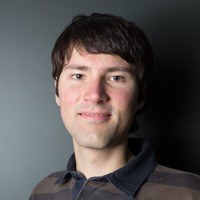
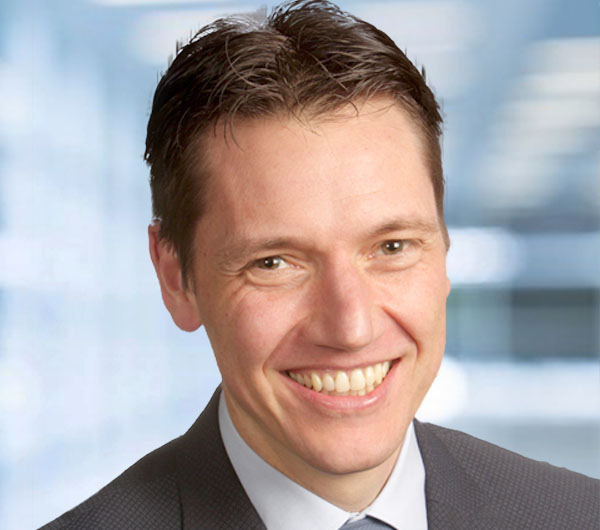
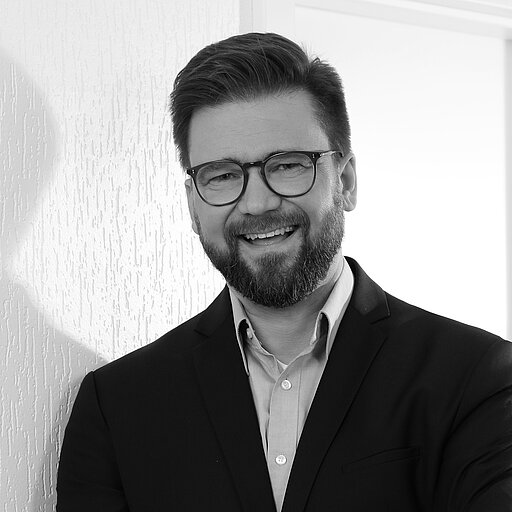
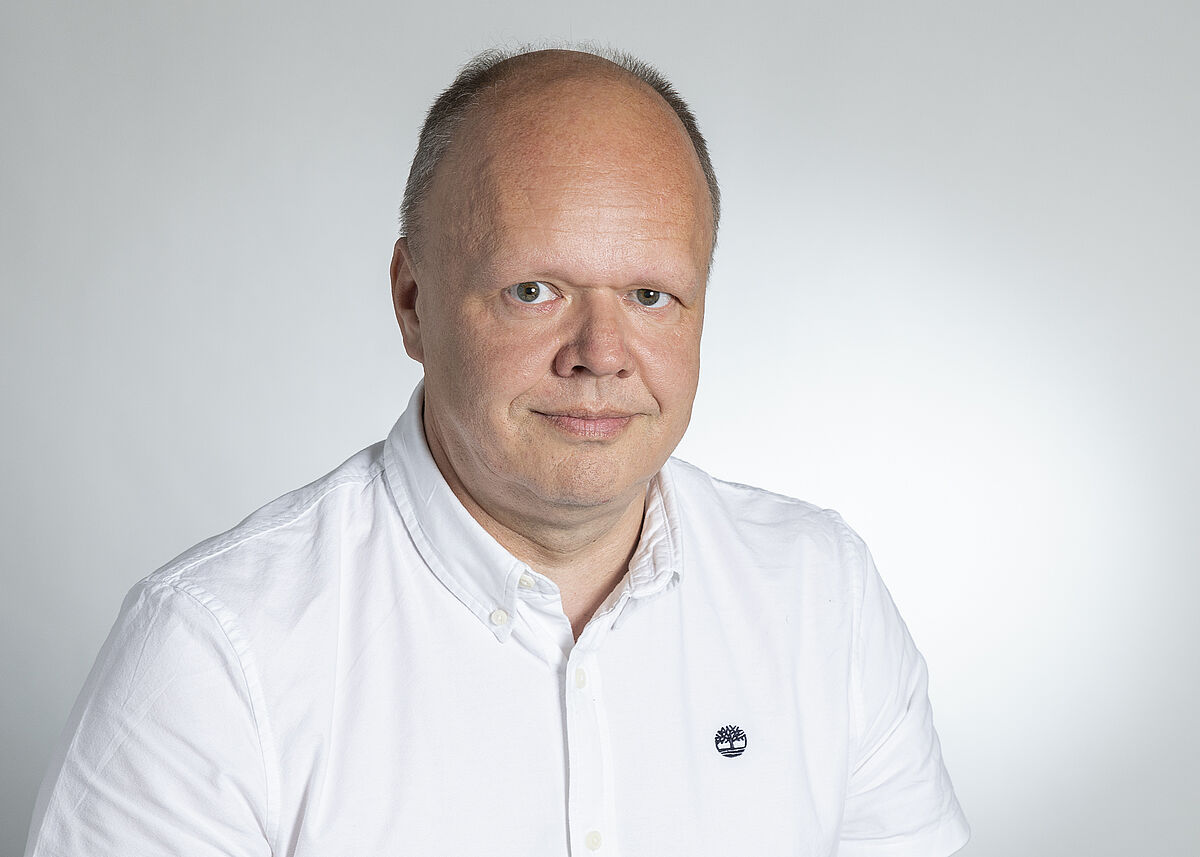
Philipp Wiesner is a Research Fellow at Technische Universität Berlin in the Distributed and Operating Systems (DOS) group led by Prof. Odej Kao. He completed his PhD at TU Berlin in June 2025 with summa cum laude honors for his thesis on carbon-aware optimization. Prior to academia, he worked as a Software and Data Engineer in Berlin. His research focuses on carbon-aware computing —aligning computational energy use with renewable availability—and intersects with distributed systems, machine learning infrastructure, and sustainable energy systems. Key methodologies include workload shifting, federated learning optimization, and simulation testbeds. Wiesner received the 1st prize in CarbonHack22 (2022) and his PhD distinction (2025). He led the Software Campus project SYNERGY (2022-2024), developing sustainable federated learning ( FedZero ) and carbon-aware testing tools ( Vessim ). He supervised TU Berlin's Master Project on Distributed Systems (2022) and served on the e-Energy 2026 Technical Program Committee. He collaborates internationally with institutions including the University of Glasgow, PUCRS (Brazil), and IRIT (France), and maintains active roles in workshops like LOCO'24.
Dr. Alpha Renner is a researcher at Forschungszentrum Jülich, specifically in the Neuromorphic Software Ecosystems group (PGI-15) within the Peter Grünberg Institute. He leads the Cognitive Localization and Mapping (CLAM) project, which is funded by the Volkswagenstiftung and is part of the Young Excellent Scientist Program (YESP). Dr. Renner's research sits at the intersection of neuromorphic computing, computational neuroscience, and artificial intelligence. His work investigates navigation and memory formation systems inspired by the entorhinal-hippocampal formation in the brain. The CLAM project aims to develop neuromorphic systems that leverage hyperdimensional computing to create cognitive maps, offering better generalization than current AI approaches that require massive training data. This brain-inspired approach enables more efficient continual learning and transfer learning capabilities. His research has significant implications for creating sustainable AI technologies that don't rely solely on ever-increasing computational resources. By grounding AI architectures in biologically inspired principles (NeuroAI), the CLAM project provides both a practical testbed for neuroscience theories and a path toward more efficient AI systems that leverage neuromorphic hardware features like massive parallelism, in-memory compute, and event-based processing. Volkswagenstiftung Grant for CLAM Project Dr. Renner mentors PhD student Sven Krauße and Master's student Erdi Kararmaz in his research group. He actively collaborates with external partners including Professor Melika Payvand from the University of Zurich and PostDoc Johannes Leugering from UCSD. He is scheduled to present his research at Science Online+ on January 22, 2026, and welcomes students interested in internships or final projects (minimum 3 months) in neuromorphic navigation research.
Michael Schluse is a Professor and Chair of the Institute for Human-Machine Interaction at RWTH Aachen University, where he also serves as Chief Engineer. His work bridges academic research and industrial application in digital systems engineering, with a physical presence at Im Süsterfeld 9 in Aachen's Former customs office building. His research centers on Experimentable Digital Twins (EDZ) – a paradigm enabling real-time interaction between physical systems and their digital counterparts. Key focus areas include: Human Digital Twin specification frameworks addressing stakeholder needs and transparency requirements Convergence of simulation and reality for lifecycle-spanning system validation Virtual testbed development for robotics, forestry, and construction applications Carbon balancing technologies in timber supply chains and environmental modeling Augmented reality systems for error-based learning (FeDiNAR project) His publication trends reveal a strategic shift from foundational simulation technologies (2000-2015) toward human-centered digital twin architectures since 2018. Recent work emphasizes practical implementation in Forestry 4.0, construction site modeling, and cybersecurity frameworks, demonstrating consistent translation of theoretical concepts into domain-specific solutions. The research shows strong interdisciplinary alignment between computer science, mechanical engineering, and environmental systems. As head of the Institute for Human-Machine Interaction, Schluse leads a research ecosystem developing runtime environments for experimentable digital twins. The institute maintains close ties with industrial partners through projects like ClusterWIS (forestry information systems) and Off-Highway-Twins, focusing on real-world validation of simulation technologies in mobile and distributed environments.
Dr. Giang T. Nguyen is an academic researcher affiliated with Dresden University of Technology (Germany), specializing in advanced networking technologies. His primary affiliation is with the College of Computer Science and the Department of Networking and Communication Systems. He collaborates extensively with Prof. Frank H. P. Fitzek and other researchers on cutting-edge projects. Research Interests: Giang's work focuses on Network Functions Virtualization (NFV) , Edge Computing , Time-Sensitive Networking (TSN) , 5G/6G Technologies , and In-Network Computing (COIN) . He explores applications in industrial automation, tactile internet, and immersive media delivery, with a strong emphasis on latency reduction and network reliability. Publications: His recent work includes advancements in programmable network coding, TSN testbed development, and latency-optimized architectures for XR and IoT systems. Over 100+ publications since 2013 reflect his contributions to edge computing frameworks, network simulation tools (e.g., ns-3, OMNeT++), and collaborative SLAM systems. Key Projects: He leads initiatives like the TSN-FlexTest measurement testbed and the NET Playground heterogeneous network lab. His research bridges theoretical networking concepts with practical implementations in industrial robotics and emergency response systems.
Fidan Mehmeti is a Senior Researcher and Lecturer at the Chair of Communication Networks at the Technical University of Munich (TUM), led by Prof. Wolfgang Kellerer. His expertise spans wireless networks, 5G/6G systems, edge computing, and network security. He holds a PhD from EURECOM/Telecom ParisTech and has held postdoctoral positions at institutions like the University of Waterloo and Penn State University. Education PhD, Institute EURECOM/Telecom ParisTech, 2015 MSc, University of Prishtina (Kosovo), 2009 BSc, University of Prishtina, 2006 Research Interests Fidan's work focuses on resource allocation, mobility management, edge computing, and AI-driven network optimization. He explores challenges like latency guarantees in 6G multi-domain networks and energy-efficient edge orchestration. His research bridges theoretical analysis (e.g., queueing theory) with practical applications in healthcare and autonomous systems. Recent Contributions Recent articles address mMTC traffic management, latency-critical 6G systems, and medical edge computing. He co-authored chapters on 6G architecture and healthcare applications in the upcoming '6G-life' book. Awards & Recognition Best Student Paper Award at IEEE/IFIP NOMS 2025 IEEE Senior Member (2023) Recipient of Best Paper Awards at CNSM 2024 and CCNC 2023 Grants & Projects He leads projects like '6G-ANNA' (BMBF-funded) and '6G-Life', addressing security, sustainability, and healthcare integration. Collaborations with industry partners like Nokia highlight applied research. Teaching Teaches courses on network modeling, optimization, and data networking at TUM. Recent offerings include 'Analysis, Modeling, and Simulation of Communication Networks' and 'Communication Networks Modeling and Optimization'.
Prof. Henning Trsek serves as Director of the Institute Industrial IT (inIT) at OWL University of Applied Sciences since 2024, leading research in Interconnected Automation Systems. He concurrently contributes to the Cybersecurity Training Lab, a Fraunhofer IOSB-INA collaboration, and teaches graduate courses in Network Security and Industrial Communication. His academic journey spans over two decades with deep industry integration through rt-solutions.de GmbH. Educational Background: PhD in Information Technology (2015, Otto-von-Guericke-Universität Magdeburg) MSc in Information Technology (2003-2005, Halmstad University/Aalborg University) Diploma in Electrical Engineering (2000-2003, Fachhochschule Lippe und Höxter) Trsek's research centers on industrial cybersecurity and intelligent automation , with seminal work in isochronous wireless networks and OT security frameworks . His current focus integrates large language models for automated risk assessment and TSN-based security architectures , addressing critical gaps in Industry 4.0 security validation. Recent publications demonstrate methodological evolution from protocol-specific analysis (2016-2020) toward holistic security automation (2023-2025). Analysis of his 15 most recent publications reveals dominant themes: automated security risk assessment (60% of works), industrial network security (25%), and emerging threat landscapes (15%). The research trajectory shows increasing emphasis on AI-driven security validation and modular security frameworks for flexible production systems. Scientific Recognition: Best Paper Award at ETFA 2012 Trsek actively supervises graduate theses through inIT's research projects while securing industry partnerships for applied cybersecurity initiatives. His committee leadership includes IEEE Industrial Electronics Society roles and technical program coordination for ETFA (2020-2025) and INDIN conferences. Current grants focus on AI-enhanced OT security validation through the Cybersecurity Training Lab collaboration. He directs the Interconnected Automation Systems research group at inIT, operating from Lemgo's Campusallee facility. The team maintains close ties with Fraunhofer IOSB-INA for industrial testbed development and participates in Germany's Allianz für Cybersicherheit for national security standardization.
Guido Dietl is a Professor of Satellite Communication and Radar Systems at the Julius-Maximilians-University of Würzburg, Germany, where he leads the Professorship of Satellite Communication and Radar Systems within the Institute of Computer Science. He previously served as Professor of Communications Engineering and Head of the Communications Laboratory at the Landshut University of Applied Sciences from March 2012 to March 2022, and worked as a Senior Researcher at DOCOMO Communications Laboratories Europe GmbH from 2006 to 2017. Dr. Dietl received both his Dipl.-Ing. and Dr.-Ing. degrees summa cum laude in Electrical Engineering and Information Technology from the Technische Universität München (TUM) in 2001 and 2006, respectively. During his academic journey, he was a Guest Researcher at Purdue University (Winter 2000/2001 and Summer 2004) and visited the Australian National University in Fall 2005. He also served as an Adjunct Lecturer at TUM from April 2010 to July 2011 and was a Guest Professor at Shanghai Normal University in September 2014. Dr. Dietl's research spans multiple cutting-edge areas in communications technology. His current work focuses on satellite networks for 6G and beyond, quantum communications, free-space optical communications, joint communications and sensing, radar signal processing, and dynamic wireless meshed networks. His earlier research concentrated on MIMO communications systems, interference management in wireless networks, and energy-efficient communication protocols. His work bridges theoretical advancements with practical implementations, particularly in the areas of satellite communications and radar systems. His extensive publication record demonstrates a clear evolution from foundational work in MIMO systems and wireless communications toward emerging technologies like quantum communications and next-generation satellite networks. Recent publications show a strong focus on quantum key distribution, satellite payload development for educational projects like UWE, and innovative approaches to energy-efficient networking. His work increasingly integrates satellite communications with terrestrial networks, reflecting the industry's move toward holistic 3D communication architectures for 6G and beyond. Dr. Dietl has received several prestigious awards throughout his career: 2001: VDE Award for Diploma thesis 2007: Kurt Fischer Award of the TUM for dissertation 2007: Förderpreis der ITG (an award of the Informationstechnische Gesellschaft) 2010: DOCOMO Euro-Labs Company Award for technology transfer in the area of multicell MIMO communications As an Associate Editor of the IEEE Transactions On Vehicular Technology in the area of Wireless Communications, Dr. Dietl plays a significant role in shaping the discourse in his field. His professional affiliations include being a Senior member of the Institute of Electrical and Electronics Engineers (IEEE) and a member of the Verband der Elektrotechnik Elektronik Informationstechnik e.V. (VDE, German Association for Electrical, Electronic & Information Technologies). His research has been supported by various academic and industry collaborations, including his tenure at DOCOMO Euro-Labs where he managed the Advanced Radio Transmission Team. Dr. Dietl leads the Satellite Communication and Radar Systems group at Würzburg University, which focuses on developing innovative communication payloads for small satellites, quantum communication systems, and advanced radar technologies. The group is actively involved in the UWE (Universität Würzburg's Experimental satellite) program, developing communication systems for educational small satellites. Their current work bridges theoretical research with practical implementations in satellite communications, with a particular emphasis on next-generation networks that integrate terrestrial and non-terrestrial components.
Philipp Rohde serves as a Researcher at the Scientific Data Management research group within the Leibniz Information Centre for Science and Technology (TIB) while pursuing his Ph.D. in Computer Science at Leibniz Universität Hannover. His work bridges academic research and practical implementation in knowledge graph technologies, with emphasis on query processing systems and data validation frameworks. Academic Background: Bachelor of Science (B.Sc.) in Computer Science, Leibniz Universität Hannover Master of Science (M.Sc.) in Computer Science, Leibniz Universität Hannover Research Focus: Rohde specializes in semantic data management with particular expertise in SHACL constraint validation during SPARQL query execution. His methodological contributions address critical challenges in knowledge graph reliability, including constraint propagation in distributed environments, healthcare data integration, and access control mechanisms. Recent work demonstrates innovative approaches to validate data constraints without compromising query performance through techniques like traversal optimization and runtime certification. Research Trends: Analysis of his publication history reveals a concentrated trajectory in knowledge graph validation technologies, with 85% of recent work (2021-2023) focused on SHACL-related constraint processing. His research increasingly intersects healthcare applications, as evidenced by the Knowledge4COVID-19 project, while maintaining strong foundations in distributed systems and semantic web standards. The emergence of certified query processing as a recurring theme indicates growing emphasis on verifiable data integrity in decentralized environments. Project Leadership: Rohde actively contributes to major EU-funded initiatives including: QualiChain (EU Horizon Europe): Developing blockchain-enhanced qualifications frameworks PLATOON (EU Horizon 2020): Creating energy data interoperability solutions P4-LUCAT (ERAMed): Advancing precision medicine for liver cancer iASiS (EU Horizon 2020): Building biomedical text-mining infrastructure Research Environment: As core member of TIB's Scientific Data Management group, Rohde operates within a specialized unit focused on scalable knowledge graph technologies. The team maintains strong connections with Leibniz Universität Hannover's computer science department, facilitating technology transfer between library science applications and academic research. Current infrastructure supports large-scale semantic processing through dedicated knowledge graph validation testbeds and healthcare data integration pipelines.
Dr.-Ing. Thomas Mundt is a Research Associate in the Department of Computer Science at the University of Rostock , Germany, where he has been affiliated since 2003. Born in 1974, he completed his studies in Computer Science at the same university from 1994 to 1999, followed by a doctorate in Engineering (Dr.-Ing.) in 2003. Education: 1994-1999: Study of Computer Science, University of Rostock 2003: Doctorate in Engineering (Dr.-Ing.), University of Rostock Research Focus: Dr. Mundt's research centers on cybersecurity in industrial and building automation systems , with particular emphasis on securing fieldbus networks and IoT devices. His work spans both theoretical foundations and practical implementations, addressing emerging threats in connected industrial environments. His primary research interests include: Security in fieldbuses for industrial networks and building automation Security of IoT systems Anomaly detection in network traffic Intrusion detection systems for industrial control systems LoRaWAN security for IoT deployments Research Trends: From 2002 to 2024, Dr. Mundt's publications demonstrate a clear evolution from foundational work in wireless mesh networks and positioning systems to cutting-edge research in industrial cybersecurity. His recent work (2018-2024) focuses heavily on practical security implementations for Industry 4.0 environments, including anomaly detection in maritime fieldbus systems and threat intelligence through honeypots in building automation. Current Projects: Dish-O-Klin GES 2021 (Current Project Manager) Former Projects: EMERGE IoT TopoTool SeBuNet Sindabus Wavehopper Contact Information: Room 363, Albert-Einstein-Str. 22, 18059 Rostock, Germany Phone: +49 (0)381 498 7505 Email: thomas.mundt@uni-rostock.de
Christian Derksen is a scientific assistant at the Faculty of Computer Science , University of Duisburg-Essen. He is affiliated with the ICB/Informatik department and actively involved in the SOFTEC team and IoT Lab cooperation. His research focuses on smart energy systems , multi-agent based simulation , and hybrid energy infrastructures , integrating engineering, economics, and computer science. Research Trends: Derksen's work emphasizes agent-based modeling for energy systems, smart grid development, and hybrid network simulation. His recent articles explore topics like energy conservation law applications, cross-domain resource allocation , and standardized control frameworks for decentralized energy networks. Advising: Supervised two theses in 2024: one on machine learning for energy models and another on cross-platform user interfaces for decentralized energy management systems. His methodological contributions include the Energy Option Model (EOM) and Agent.GUI simulation framework for hybrid energy systems and networks.
Dogukan Atik serves as a Researcher at the Chair of Communication Networks under Prof. Wolfgang Kellerer at the Technical University of Munich. His work focuses on next-generation network architectures and communication technologies within the university's Institute for Communications Engineering. His research spans critical domains in modern telecommunications including 6G network design, software-defined networking implementations, and network function virtualization. Current projects involve contributions to Bavaria's 6G Future Lab initiative and the European Research Council's Network Flexibility program, addressing challenges in network programmability and resource allocation. As part of TUM's Communication Networks research group, he operates within the FlexComNetsLab and 6G-IP Lab testbed environments. His technical work supports the development of open, intelligent cellular network frameworks with applications in both industrial automation and medical communication systems.
Yash Deshpande is a researcher at the Chair of Communication Networks at Technical University of Munich (TUM), focusing on reliable low-latency communication systems for AI-enabled robotics and industrial applications. He joined the chair in January 2021 after completing his MSCE at TUM. B.Sc./M.Sc. in Electronics, University of Pune (2016-2018) MSCE in Communications Engineering, TUM (2021) His research spans medium access protocols , digital twin latency modeling, and networked control systems . Current projects include 6G Future Lab Bavaria, AI.NET ANTILLAS, and 5G Testbed Bayern extensions. Recent publications address tree algorithms with interference cancellation , deterministic networking integration with 5G , and reproducible wireless channel emulation . Collaborative work includes industrial digital twins (AI.Fabrik) and network-aware timing bounds in precision protocols. He contributes to IEEE conferences (INFOCOM, GLOBECOM, CASE) and journals (IEEE Transactions on Communications, Information Theory), with emphasis on stochastic network models and learning-based MAC protocols .
Jorge Sá Silva is a Professor at the Department of Informatics Engineering within the Faculty of Sciences and Technology at the University of Coimbra, Portugal. With a prolific publication record spanning over two decades, he has established himself as a leading researcher in Internet of Things, Cyber-Physical Systems, and Human-in-the-Loop computing. His research has significant impact across multiple domains including smart cities, healthcare applications, industrial IoT, and privacy-preserving technologies. Professor Sá Silva's research interests focus on the intersection of human-centered computing and networked systems. His work particularly emphasizes Human-in-the-Loop Cyber-Physical Systems where humans actively participate in the sensing and decision-making processes. He has pioneered approaches to unobtrusive sensing, privacy-preserving frameworks for IoT applications, and edge-based AI systems that maintain user privacy while delivering intelligent functionality. His research spans theoretical foundations to practical implementations across various application domains including healthcare, smart cities, and industrial automation. His recent publications reveal a strong trend toward integrating edge computing with privacy-preserving AI techniques, particularly federated learning approaches applied to IoT systems. There's a clear progression from foundational networking research toward human-centered applications that address real-world challenges in healthcare, construction, and education. His work consistently bridges theoretical networking concepts with practical implementations in constrained environments, with a growing emphasis on sustainability and ethical considerations in technology design. Throughout his career, Professor Sá Silva has demonstrated strong leadership in academic advising and collaborative research. His publication record shows consistent mentorship of junior researchers, with many co-authored papers featuring doctoral students and early-career researchers. He has secured significant research funding through multiple EU and national projects focused on IoT, cyber-physical systems, and human-centered networking. His collaborative network spans institutions across Europe, South America, and Asia, reflecting the international impact of his work. Professor Sá Silva leads research activities within the networking and IoT group at the University of Coimbra, which maintains strong connections with industry partners in the telecommunications and industrial automation sectors. His team has developed several prototype systems including the Green Bear LoRaWAN-based platform for sustainable cities and the CONFLUENCE integration model for privacy-preserving IoT solutions. The research group maintains state-of-the-art testbeds for IoT experimentation and has been involved in numerous EU-funded research initiatives addressing challenges in the Internet of Things and cyber-physical systems domains.
Lukas Pirl is a researcher at the Hasso Plattner Institute (HPI), University of Potsdam, working within the Department of Operating Systems and Middleware. His research focuses on dependability, fault tolerance, and experimental assessments of distributed systems with particular applications in railway technology and IoT systems. His research interests span multiple domains including: Dependability and fault tolerance architectures & protocols Experimental assessments using software fault injection Environmentally aware computing and information management Symmetric peer-to-peer systems and storage operating systems Railway digitalization and safety-critical systems Lukas's recent publications demonstrate a strong focus on applying distributed systems research to railway technology. His work spans from digital train control systems (FlexiDug project) to railway crossing safety (Digital St. Andrew's Cross), and from blockchain applications in railway systems (RailChain, ZugChain) to IoT testing methodologies. A significant portion of his research involves using SUMO for railway simulations and developing test automation frameworks for railway components, showing an evolution from general distributed systems research toward specialized applications in critical infrastructure. He has co-supervised numerous Master's theses at HPI, working with students on topics ranging from railway simulation architectures to blockchain implementations for railway systems. His teaching activities include serving as a teaching assistant for courses on distributed systems, embedded operating systems, and trends in operating systems across multiple semesters. Lukas is actively involved in several major research projects: FlexiDug : Investigating reuse of rail infrastructures in former brown coal mining areas, focusing on software architectures for dependable digital train control and signaling systems RailChain : Exploring distributed ledger technologies for the railway sector with focus on timing predictability and resource constraints DiAK : Digitalization of railway crossings for increased safety through bridging V2X and C-V2X technologies Rail2X : Investigating vehicle-to-everything technologies for the railway sector with focus on wireless technology assessments
Michael B. Rahaim is a Researcher at Boston University , specializing in Optical Wireless Communication (OWC), Visible Light Communication (VLC), and Hybrid RF/VLC Networks . His work focuses on interference mitigation , dynamic field-of-view (FOV) receivers , and integration with 5G systems . He has developed open-source tools like the gr-owc toolkit for optical wireless research and extended ns-3 network simulator for VLC. His collaborations include researchers such as Thomas D. C. Little , Hany Elgala , and Abdallah Khreishah . His scientific contributions span MAC protocol design , outage probability analysis , and low-cost IoT communication systems . He has not been explicitly associated with teaching or administrative roles in the provided records.