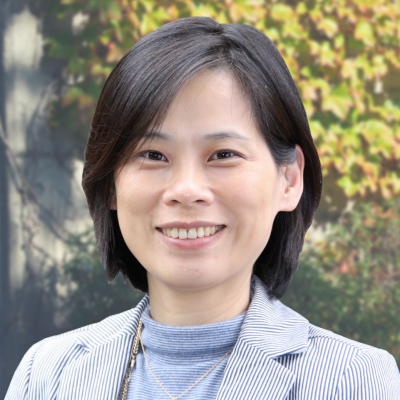
Professor Elena Papanastasiou is the Dean of the School of Education at the University of Nicosia, Cyprus, where she teaches Educational Research , Quantitative Methods , and Assessment . She holds a PhD in Measurement and Quantitative Methods from Michigan State University (2001) and an Honors B.Sc. in Elementary Education from Pennsylvania State University (1996). Her research focuses on educational assessment , structural equation modeling , multilevel modeling , and mixed methods research , with applications in international assessments like TIMSS and IEA . Recent publications analyze generative AI in education , test-taking metacognition , student well-being , and international schooling contexts in Cyprus, Europe, and the USA. She serves as Cyprus’ General Assembly representative in IEA and is a member of the IEA Standing Committee and Publications Committee , as well as the Professional Development Committee of the Association for Educational Assessment. Her consulting work on methodological frameworks supports research teams globally, emphasizing advanced statistical analysis and educational policy development.
Amery Wu serves as Associate Professor and ECPS Graduate Advisor for Admissions and Scholarship at the University of British Columbia's Faculty of Education, specifically within the Department of Educational and Counselling Psychology, and Special Education. Based in Scarfe Library Block 287, Dr. Wu specializes in advanced quantitative methods for educational and psychological measurement. Dr. Wu's research focuses on applied statistical modeling in educational contexts, with particular expertise in test item performance analysis , globalization of testing through internet platforms , and longitudinal assessment methodologies . Their scholarly work bridges psychometrics with practical educational applications, examining how test design impacts diverse learner populations across international contexts. Key methodological contributions include innovations in mixed-effects modeling, differential item functioning analysis, and validation frameworks for complex assessment systems. Recent publications demonstrate a clear trajectory toward integrating response process data with performance outcomes , particularly through Bayesian modeling and advanced visualization techniques for online assessments. The research consistently addresses measurement challenges in high-stakes contexts including immigration language testing (CELPIP), health literacy instruments, and inclusive classroom models. Dr. Wu's work emphasizes the ecological validity of assessments within their sociocultural contexts. Teaching responsibilities include core methodology courses: EPSE 423 (Assessment of Classroom Learning), EPSE 481 (Introduction to Research in Education), EPSE 482 (Statistics for Educational Research), EPSE 483 (Reading Educational Research), and advanced graduate courses EPSE 592 (Experimental Designs) and EPSE 596 (Correlational Analysis). As Graduate Advisor for Admissions and Scholarship, Dr. Wu shapes the quantitative training of future educational researchers.
Christina Wikström serves as Associate Professor in the Department of Applied Educational Science at Umeå University and Project Manager for Sweden's national higher education admissions test (SweSAT). Her academic work centers on validity issues in educational testing systems and admissions processes across multiple institutional contexts. Her research focuses on test design and validity, particularly regarding higher education selection mechanisms. She extends this expertise to specialized domains including police recruitment assessment, where she examines constructs like empathy and perspective-taking. Key areas encompass educational measurement theory, standardized testing applications, and the interplay between cognitive and non-cognitive factors in selection systems. Analysis of her 2016-2025 publications reveals consistent emphasis on educational assessment validity, with growing exploration of cross-context applications. Recent work demonstrates methodological rigor in comparing self-reported versus objective measurements and addressing equity considerations in test-based selection processes. Scientific Awards: No awards were documented in the source materials. Advising and Grants: No information regarding student supervision or research funding was provided in the available texts. Wikström contributes to the Measurement in Behavioral Sciences research group and led the "Perspective-taking in future police officers" project (2017-2020), which investigated training effects on cognitive empathy in law enforcement candidates through controlled experimental design.
Anna Lindström serves as Professor of Language and Social Interaction at Uppsala University's Department of Nordic Languages, where she conducts groundbreaking research at the intersection of linguistics and social dynamics. Her work examines how language structures human interaction across diverse institutional settings including healthcare, public services, and everyday encounters, with particular focus on medical communication and Swedish conversation practices. Her academic credentials include a PhD (Filosofie Doktor) in Nordic Languages, following which she advanced from Associate Professor to her current professorship. Educational background details indicate specialized training in conversation analysis methodology and Nordic linguistic frameworks. Lindström's research interests center on conversation analysis as a tool for decoding social interaction. She investigates how people coordinate actions through talk in medical consultations, public service encounters, and market transactions. Key areas include antimicrobial stewardship communication, epistemic stance marking in Swedish, and the organization of sensitive topics like sex assignment after childbirth. Her work reveals how micro-level linguistic choices construct social order, with significant implications for healthcare communication training and institutional practice improvement. Methodologically, she pioneers naturalistic observation techniques in clinical and care settings. Analysis of her publication trajectory shows consistent focus on medical communication (60% of recent work), particularly doctor-patient interactions regarding antibiotic use, diagnostic testing, and risk management. Secondary themes include Swedish conversational particles (25%) and institutional interaction in public services (15%). Her 2025-2022 publications demonstrate increasing cross-cultural collaboration with English healthcare systems, while maintaining strong Swedish empirical grounding. No scientific awards were documented in the source materials. No details regarding student supervision or research grants were provided in the available documentation, though her extensive publication record suggests significant research activity. Her collaborative patterns indicate frequent interdisciplinary partnerships with medical researchers and social scientists. Lindström operates within Uppsala University's Department of Nordic Languages, contributing to Sweden's leading conversation analysis research community. Her work connects with broader networks through collaborations with institutions like the Swedish Board for Study Support and primary care clinics, forming a research ecosystem focused on real-world interactional challenges.
Linda van de Burgwal is an Associate Professor at Vrije Universiteit Amsterdam, affiliated with the Faculty of Science's Athena Institute, Amsterdam Sustainability Institute, and Network Institute. She holds a cum laude PhD in societal impact of knowledge in life sciences and a cum laude master’s in health and life sciences management. Her research focuses on stakeholder interactions, knowledge valorisation, and societal entrepreneurship in healthcare innovation. She advises on ancillary roles in companies like Sovalacc BV and Genewity BV, emphasizing entrepreneurship and public health. Education: PhD (cum laude) and master’s (cum laude) from Vrije Universiteit Amsterdam. Teaching includes societal entrepreneurship for biomedical students and finance for health sciences growth. Research interests span blockchain in food systems, federated learning compliance, pharmaceutical R&D efficiency, and probiotic interventions. Awards include the 2015 Best PhD Student Presentation Award. She has supervised six PhD theses and led projects like Take Off Fase 1 Halbaarheid. Her work addresses UN SDGs related to health equity and sustainable systems.
Dr. Adriana Galvan is a Professor in the Department of Psychology within UCLA's College of Letters and Science. Her research focuses on adolescent brain development, with particular emphasis on reward processing, risk-taking behavior, and emotional regulation. She has published extensively on the neural mechanisms underlying adolescent decision-making and cognitive development. Dr. Galvan's research interests center on the developmental trajectory of the brain's reward system during adolescence. Her work investigates how frontostriatal circuitry matures and how these neural changes influence reward processing, risk-taking behavior, and emotional regulation in adolescents. She has made significant contributions to understanding why adolescents show heightened sensitivity to rewards and how this relates to increased risk-taking during this developmental period. Her research employs various neuroimaging techniques to examine the neural correlates of reward processing and decision-making across development. Analysis of Dr. Galvan's publication record reveals a consistent focus on adolescent neuroscience, particularly examining reward systems, risk behavior, and emotional regulation. Her work spans multiple methodologies including fMRI, developmental studies, and clinical applications. The research shows a progression from foundational work on adolescent brain development to more nuanced investigations of how socioeconomic factors, emotional states, and genetic variations influence neural processing during adolescence. Her recent work continues to push boundaries with the 2025 publication on evolutionary developmental perspectives of the adolescent brain. Dr. Galvan has made substantial contributions to our understanding of adolescent neuroscience through her extensive publication record spanning over two decades. Her work has significantly advanced knowledge about how the brain's reward system develops during adolescence and how this relates to behavior. Her research has important implications for understanding adolescent risk behavior, emotional development, and the neural basis of decision-making during this critical developmental period.
Dr. Susanne Schweizer is a Researcher in the Department of Psychology at the University of Cambridge, affiliated with the Developmental Cognitive Neuroscience Group. Her work focuses on cognitive and social determinants of mental health across the lifespan, emphasizing adolescents. Key areas include affective control mechanisms, cognitive training interventions for mental health improvement, and the neurobiological underpinnings of emotional processing in depression and anxiety. She leads projects like the Future Proofing Study, evaluating school-based programs for adolescent depression prevention, and explores perinatal mental health dynamics. Her research integrates behavioral experiments, neuroimaging, and longitudinal studies to address mental health challenges in vulnerable populations. Recent efforts involve developing gamified cognitive training tools and assessing interventions for social anxiety and trauma recovery. Education: Not explicitly listed, but inferred to hold advanced degrees in Psychology/Cognitive Neuroscience. Key Projects: Future Proofing Study, Affective Control Training (AffeCT), and studies on perinatal intrusions. Research Interests: Cognitive Neuroscience of Emotion, Developmental Psychopathology, Digital Interventions for Mental Health, Affective Working Memory, Trauma and Recovery. Her publications analyze behavioral and neural responses to social evaluation, cognitive control in PTSD, and the role of uncertainty tolerance in emerging adulthood. Collaborations involve clinical trials and community-based interventions targeting youth mental health resilience.
Matthias Köhler is a Research Professor at the Deutsche Bundesbank's Research Centre, located in Frankfurt am Main, Germany. He holds a position within the Directorate General Financial Stability, focusing on banking sector analysis and financial stability research. His research interests center on business models in banking, retail banking strategies, financial integration dynamics, and mergers & acquisitions (M&A) in the banking sector. Key themes include bank profitability, risk assessment, cross-border lending, and post-crisis regulatory adaptation. His work frequently examines German banking institutions, including savings and cooperative banks, addressing challenges posed by low interest rate environments and evolving regulatory frameworks. Dr. Köhler has published extensively in peer-reviewed journals such as Journal of Financial Stability , Credit and Capital Markets , and International Review of Economics and Finance . His research explores topics ranging from non-traditional banking revenue streams to systemic risk assessment, with a particular emphasis on how institutional structures and regulatory policies shape banking behavior. His academic contributions include analyzing the impact of ownership structures on bank risk-taking, cross-border merger barriers in the EU, and the evolving role of non-interest income in banking profitability. He has also authored working papers on topics like provision income strategies and future trends in retail banking. No scientific awards are explicitly listed, though his prolific publication record reflects sustained academic engagement. His professional activities include advising on financial stability matters and contributing to policy-relevant research at the Bundesbank.
Erkin Şeker, Ph.D. , is a Professor in the Department of Electrical and Computer Engineering at the University of California, Davis, where he also serves as Co-Director of the Center for Neuroengineering and Medicine and Chair of the Designated Emphasis in Neuroengineering . His research integrates micro- and nanofabrication, electrochemical biosensors, multifunctional neural interfaces, and microfluidic tissue chips to address challenges in healthcare and life-science miniaturization. Education: Ph.D. in Electrical Engineering, University of Virginia (2007) Research Interests Prof. Şeker’s group operates at the intersection of nanoporous metals , microfluidics , and device engineering . Current thrusts include: Nanostructured electrochemical biosensors for nucleic-acid detection in food safety, water quality, and medical diagnostics. Multifunctional biomedical device coatings that combine neural recording with on-demand drug delivery to combat epilepsy and other neurological disorders. Nanoporous metal morphology libraries for high-throughput investigation of structure–property relationships. Microphysiological models of neuroinflammation and gut–brain-axis interactions using tri-culture tissue chips. Publication Trends Over the past decade the group has produced >80 peer-reviewed articles spanning Analytical Chemistry , ACS Applied Materials & Interfaces , Advanced Functional Materials , Lab on a Chip , and Journal of Neuroinflammation . The work reveals a clear trajectory from fundamental studies of nanoporous gold mechanics and surface chemistry to translational applications in closed-loop neural control, nucleic-acid diagnostics, and tissue-level disease models. Scientific Awards & Honors NSF CAREER Award NIH NIBIB Trailblazer Award UC Davis Academic Senate Distinguished Graduate and Professional Teaching Award UC Davis Graduate Studies Distinguished Graduate and Postdoctoral Mentorship Award BMES Cellular & Molecular Bioengineering Young Innovator Next Level Research Award (College of Engineering) Fund for Medical Discovery Award (Massachusetts General Hospital) Elevation to IEEE Senior Member Advising & Funding Prof. Şeker has mentored >25 Ph.D. and M.S. students and numerous undergraduates. Active funding includes NSF, NIH (NIBIB, NINDS, NIA, NCCIH), USDA-NIFA, UC Lab Fees, and industry partnerships totaling several million dollars. He is PI or Co-PI on grants such as: "NeuralStorm: Taking Neuroengineering by Storm" (NSF NRT) "Closed-Loop Electro-Fermentation…" (USDA-NIFA) "Next-Generation Neural Interfaces Based on Axonal Confinement…" (NIH NIBIB Trailblazer) "A Scalable Primary Cortical Tri-Culture Model…" (NIH R03) Labs & Teams He directs the Şeker Research Group , a multidisciplinary team of graduate students, post-docs, and undergraduates housed in the UC Davis College of Engineering. Shared resources include College clean-room facilities, the Center for Neuroengineering and Medicine, and collaborative ties with the UC Davis Alzheimer’s Disease Research Center, Comprehensive Cancer Center, and Environmental Health Sciences Center.
Kyoungwon Seo is a Professor affiliated with Hanyang University, actively contributing to interdisciplinary research spanning Human-Computer Interaction (HCI), Machine Learning, and Cognitive Science. His work focuses on applying advanced technologies like VR, EEG analysis, and large language models to address challenges in healthcare diagnostics, education, and workplace design. Co-founded the Imagine Lab at Hanyang University, exploring innovative HCI applications. Expertise in gamification strategies for manufacturing workforce behavior modification. Pioneer in developing EEG-SSVEP based machine learning models for early detection of Mild Cognitive Impairment (MCI). His research bridges theoretical foundations in decision theory (e.g., ambiguity models) with applied work in educational technology, including AI-enhanced learning platforms and chatbot systems for career counseling and critical thinking assessment.
Assoc. Professor Michael O’Connell is affiliated with the School of Psychology at University College Dublin (UCD). He holds an Associate Professor position since 2005. His academic journey includes a BA (First Class Hons) from Trinity College Dublin, an M.Sc. from the London School of Economics, and a Ph.D. from Trinity College Dublin. He previously served as a Lecturer in Social Psychology at Trinity College Dublin (1993–1999) and UCD (1999–2005). His research focuses on social psychology, criminal justice system dynamics, education policy, socioeconomic disparities, and mental health. Notable studies include examining the impact of cognitive ability and genetics on educational achievement, disparities in sentencing preferences, and the role of prosocial video games in fostering empathy. He has received the Graduate Psychology Prize from Trinity College Dublin and served as Guest Editor for the Irish Criminal Law Journal. His teaching spans modules like Advanced Social Psychology, Psychology and Crime, and Topics in Psychological Science.
Jaime Sanmartín Arce is a Professor at the Universitat de València within the Faculty of Psychology and Speech Therapy , specializing in the Department of Behavioural Science Methodology . He leads the METRAS research group under the Univ. Research Institute of Transit and Road Safety (INTRAS) . Research Focus: Road safety, driver behavior, traffic accident analysis, and data methodology. Key Contributions: Development of the METRAS method for accident data collection, cyclist safety studies, and behavioral assessments for fitness to drive. Publications: 15 most recent works (2013–2022) address topics like sustainable mobility, fatigue-related driving errors, and accident underreporting in Latin America. Collaborations: Involved in international networks such as COST TU1101 and projects like ACCCES/ACCCES2. Education: Holds a PhD (1983) in Psychology from Universitat de València.
Shannon Roberts is an Associate Professor in the Mechanical and Industrial Engineering Department at the University of Massachusetts Amherst, leading research in Human Factors and Transportation Safety. Her work spans driver-vehicle interaction, automated systems, and equity-focused transportation design, with notable grants from NSF, Sloan Foundation, and UMass ADVANCE. Education: PhD and MS in Industrial Engineering (University of Wisconsin-Madison), BS in Mechanical Engineering (MIT) Research focuses on: Teen Driver Safety and Training Effectiveness Human Factors in Automated Vehicles Cybersecurity Response in Transportation Feedback Systems for Driver Performance Community-Centered Traffic Mitigation Recent publications analyze distraction patterns, automation impacts, and VR-based driver assessment. Her team has received multiple awards including the Bentzi Karsh Early Career Service Award and Stephanie Binder Young Professional Award . Students: Mentored 15+ undergraduate and graduate researchers including Meng Wang (PhD candidate), Jaji Pamarthi (PhD student), and alumni like Yalda Ebadi (New Relic) and Fangda Zhang (Ohio State University) Contact: scroberts@umass.edu | LinkedIn | Google Scholar
Volker Schoer is an Associate Professor of Economics at the School of Economics and Finance, University of the Witwatersrand (Wits), where he also serves as Research Director. He previously held the role of Assistant Dean of Research in the Faculty of Commerce, Law and Management. Additionally, he holds a Visiting Professorship at the School of Business and Economics, University of Tübingen, Germany, reflecting his international academic engagement. His research spans development economics with a focus on labor market and firm dynamics, skills development, and the economics and didactics of education. He is particularly interested in impact evaluations of educational and labor market interventions in South Africa and other developing contexts. The recent body of his work demonstrates a strong trend toward educational policy evaluation, especially in early-grade literacy and numeracy, vocational training (TVET), and youth employment. Many of his publications involve randomized control trials and large-scale system evaluations, such as the Reading Catch-Up Programme and the Gauteng Primary Language and Mathematics Strategy, showcasing his commitment to evidence-based policy research. His scientific contributions are widely recognized through publications in reputable journals and research platforms including Google Scholar, RePEc, Publons, and Scopus. He is actively involved in monitoring and evaluation, as evidenced by his editorial roles in the South African Monitoring and Evaluation Association conferences. Prof. Schoer has supervised or collaborated on various research projects, often involving partnerships with institutions like the World Trade Institute and the Centre for Researching Education and Labour (REAL). His work is frequently supported by research grants focused on education, labor, and development policy. He is associated with research initiatives such as the Gauteng Primary Language and Mathematics Strategy and the Reading Catch-Up Programme, which reflect a team-based, large-scale approach to improving educational outcomes in South Africa.
Jonathan Zhang serves as Assistant Professor of Public Policy at Duke University's Sanford School of Public Policy, applying quantitative economic methods to address critical health policy challenges affecting vulnerable populations including veterans, mental health patients, and immigrants. Academic Background PhD in Economics, Stanford University Undergraduate degree in Statistics Research Focus : Dr. Zhang's work centers on health economics with emphasis on: Mental health care access and outcomes Opioid crisis interventions and provider behavior Immigrant economic mobility across 15 destination countries Policy impacts on vulnerable populations during crises Veterans' health outcomes through VA collaborations His methodology combines quasi-experimental designs with large-scale administrative datasets from Veterans Affairs and Canadian health systems. Recent publications (2021-2025) reveal consistent themes: economic shocks affecting mortality, safety net program interactions, and pandemic impacts on substance use treatment. Awards : No scientific awards were documented in source materials. Mentorship & Collaboration : Dr. Zhang actively mentors policy students while expanding interdisciplinary work with VA's Office of Mental Health and Suicide Prevention. His research program leverages Duke's VA partnerships to translate findings into actionable health policies. Research Environment : Based at Sanford School, he participates in policy forums while developing community-engaged projects addressing Vancouver's opioid crisis legacy and Ontario's mental health systems.