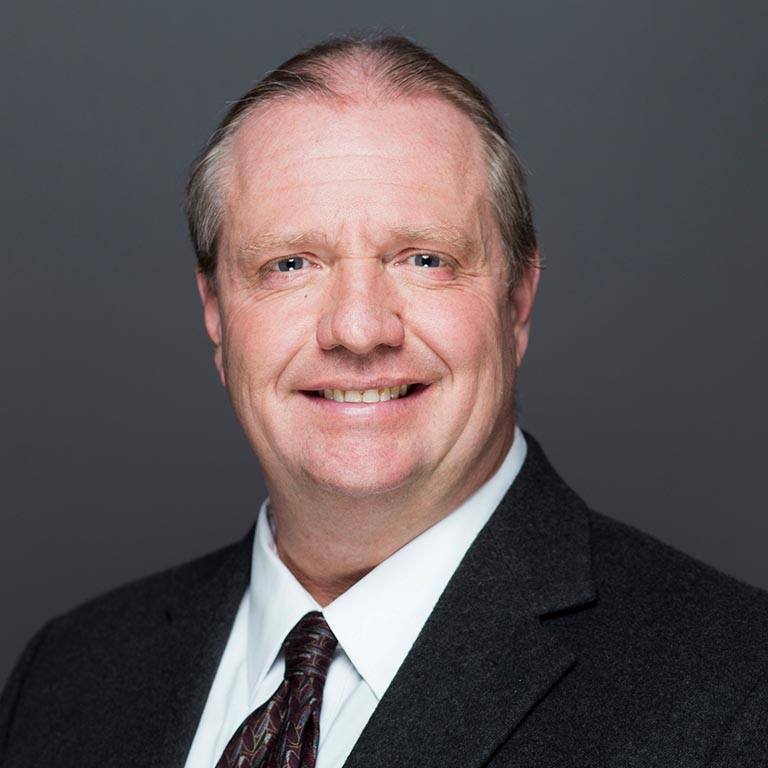
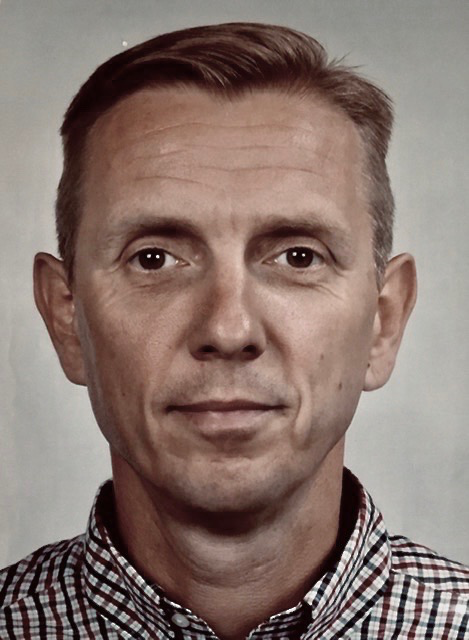
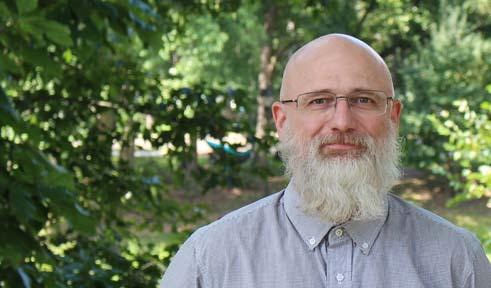
Denzil Fiebig is Professor in the School of Economics at UNSW Business School since 2001, with prior appointments including chair positions in econometrics at the University of Sydney. His international engagements include visiting roles at the University of Florida, University of Southern California, Tilburg University, Victoria University of Wellington, University of York, and Erasmus University. His research focuses on econometric methodology and applied health economics, particularly healthcare utilization and policy analysis. Recent publications demonstrate methodological innovation in analyzing healthcare systems, insurance markets, and economic behavior during health shocks. His work employs advanced econometric techniques including panel data models and discrete choice experiments to study physician behavior, health financing, and socioeconomic disparities in healthcare access.
Prof. Mangala Srinivas is a Full Professor and Chair of Cell Biology and Immunology at Wageningen University & Research (WUR, Netherlands). She is also a Chief Scientific Advisor to the European Commission, the first WUR appointee to this prestigious role. Her research focuses on multifunctional nanoparticles for in vivo imaging and immunomodulation, pioneering 19F MRI for cell tracking and developing translational diagnostic/therapeutic platforms. Her work involves integrating imaging modalities like fluorescence, MRI, and photoacoustics in cancer and cardiovascular disease studies. Key achievements include winning the Dutch Venture Challenge 2015 (leading to spin-off Cenya Imaging B.V.) and securing major grants including ERC, NWO VENI, and EU H2020 funding. She oversees a department of ~30 staff impacting 2000+ students annually and contributes to WUR's sustainability/inclusion policies. Beyond academia, she chairs initiatives on Open Science and gender equity through the Young Academy of Europe, speaking globally at UNESCO and EuroScience events. Education: PhD: Carnegie Mellon University (USA) BSc (Hons): National University of Singapore Research Interests: Multifunctional nanoparticle design for imaging and therapy 19F MRI and multimodal imaging techniques Immune cell tracking in disease models Grants & Awards: ERC Proof of Concept Grants (2019-2024) H2020-MSCA-ITN (€4.05M coordination) NWO Take-off Phase II (€250k) Policy Impact: EU Scientific Advice Mechanism (SAM) member Advocacy for researcher equity and Open Science Her lab integrates cutting-edge imaging technologies with clinical translation, emphasizing nanoparticle stability and safety. Recent work explores force sensing hydrogels and long-term nanoparticle stability, advancing personalized medicine applications. Collaborations span academia, industry (e.g., Cenya Imaging), and policymakers to bridge research and societal impact.
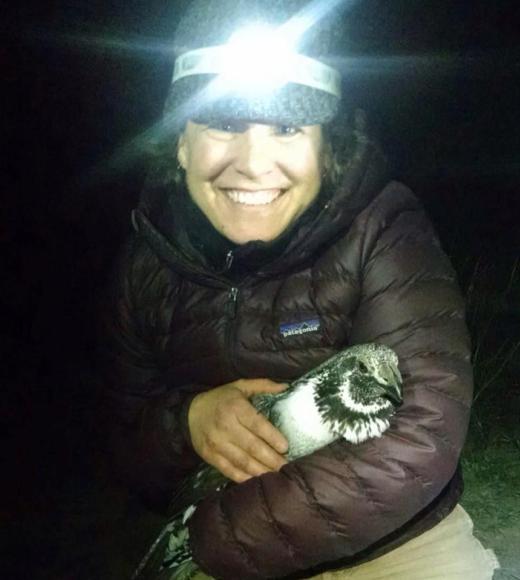
Gail Patricelli is a Professor in the Department of Evolution and Ecology at the University of California, Davis. Her research focuses on animal communication, sexual selection, and the impacts of anthropogenic activities like noise pollution on wildlife behavior and ecology. She employs innovative methods such as robotics, acoustic monitoring, and ecological observatory networks to study species like greater sage-grouse (Centrocercus urophasianus) and satin bowerbirds (Ptilonorhynchus violaceus). Her work bridges evolutionary biology, behavioral ecology, and conservation, with particular attention to how environmental changes affect mating systems and population dynamics. Patricelli’s research has examined how sage-grouse lekking behavior responds to habitat structure, social networks, and experimental noise pollution. She has pioneered the use of robotic females to study courtship negotiation and signal complexity in birds. Her studies on the physiological and behavioral effects of traffic noise on nestlings have advanced understanding of anthropogenic stressors in free-living populations. She also investigates the role of acoustic directionality and signal evolution in avian communication. Her lab’s interdisciplinary approach integrates field observations, experimental manipulations, and computational modeling to address questions in behavioral ecology. Key themes include sexual selection mechanisms, the evolution of communication systems, and conservation implications of human environmental impacts. Patricelli is affiliated with the Patricelli Lab at UCDavis and maintains an active research program supported by grants focused on biodiversity monitoring and sagebrush ecosystem management.
Dr. Margaret Reynolds serves as a Senior Research Fellow at Swinburne University of Technology's School of Social Sciences, Media, Film and Education. With ORCID identifier 0000-0003-2988-4279, she maintains an active research profile focused on critical housing issues affecting Australian communities, particularly older populations. Her work bridges academic research with practical policy applications through collaborations with government bodies and non-profit organizations. Reynolds' research interests center on urban and regional planning , housing policy , and human geography , with specific expertise in older people's housing security, homelessness dynamics, and sustainable urban development. Her work examines how housing precariousness affects vulnerable populations, particularly aging Australians navigating complex eligibility gaps in housing assistance programs. Through rigorous spatial analysis and longitudinal studies, she investigates the changing geography of homelessness and the structural drivers behind housing insecurity across Australian states and territories. Her recent publications reveal a strong focus on state-by-state analyses of older people's housing precariousness , examining regional variations in housing challenges from Queensland to Tasmania. Reynolds' work consistently connects housing issues with broader sustainable development goals, particularly SDG 11 (Sustainable Cities and Communities). Her research employs mixed methods including spatial analysis, policy evaluation, and demographic studies to understand housing market dynamics and their social impacts. Reynolds actively secures competitive research funding, currently leading multiple projects including Measuring Climate Change Vulnerability in Australia's Housing System (2025-2027) and Housing futures: ideal models for private rental systems beyond 2025 (2025-2026). Her grant portfolio demonstrates sustained funding from the Australian Housing and Urban Research Institute and Housing for the Aged Action Group, reflecting the policy relevance of her work. Though currently unavailable for supervision, her collaborative approach is evident through numerous co-authored publications with researchers like Wendy Stone, Phillipa Veeroja, and Shaun Parkinson.
Dr. Angelo Aspris is a Senior Lecturer in Finance at the University of Sydney Business School, specializing in financial intermediation, corporate finance, and market microstructure. His research examines corporate actions in capital markets with a focus on cryptocurrencies, decentralized finance, and market design implications. His research interests span financial intermediation , market microstructure , and cryptocurrency markets , with particular emphasis on DeFi lending risks, market fairness, and corporate governance implications. Key projects analyze price run-ups before takeovers, class action lawsuit impacts, and patent valuation dynamics. Recent publications reveal a strong trend toward cryptocurrency and decentralized finance research (2021-2025), while maintaining foundational work in market microstructure and corporate finance. His 15 most recent articles show increasing focus on blockchain applications, DeFi vulnerabilities, and crisis-era capital markets behavior, with methodological strengths in options market analysis and market design evaluation. Dean's Citations for teaching excellence University Strategic Education Grant (2018) As a research supervisor, Dr. Aspris has guided 4 PhD candidates, 1 Master of Philosophy student, and approximately 20 honors theses. His grant portfolio includes projects on decentralized lending (2023), Australian asset-price bubbles (2014), and financial reporting governance (2011). Current work focuses on cryptocurrency market structures and DeFi lending mechanisms, including an online course on Cryptocurrency and Financial Markets. He leads research initiatives examining market structure impacts on trading costs and DeFi liquidation mechanics, collaborating with international scholars on cryptocurrency market architecture analysis.
Hachem Kassem is a Lecturer in Ocean Engineering at the University of Southampton, affiliated with the School of Ocean and Earth Science. He specializes in coastal hydrodynamics, sediment dynamics, and nature-based solutions to climate-mediated geohazards. His current roles include leading the MSc Programme in Applied Coastal and Offshore Geoscience and managing coastal research laboratories equipped with flumes and sediment analysis facilities. Education and Career: Hachem holds a PhD and MSc in relevant fields, and has been a Fellow of the Higher Education Academy (FHEA). His career includes: 2022–present: Lecturer in Ocean Engineering, University of Southampton 2017–2021: Teaching and Research Fellow in Coastal Morphodynamics 2015–2017: Part-time Teaching Fellow in Coastal Morphodynamics and GIS 2010–2012: Lecturer in Civil Engineering at The London College Research Interests: Focus on coastal engineering, flow-structure interactions, and adaptive solutions for hazards like erosion and flooding. Key projects include Environment Agency-funded work in Pevensey Bay using X-band radar and autonomous systems, and collaborations on eco-reefs and subsea cable protection with industry partners. Teaching: Coordinates modules on coastal sediment dynamics and applied oceanography. Contributes to geoscience curricula and supervises student projects on coastal processes and engineering. External Roles: Serves as consultant for projects involving scour protection, seagrass health, and tidal interactions at nuclear sites. Leads the Nature-based Ocean Solutions Special Interest Group under the Southampton Marine and Maritime Institute. Labs & Infrastructure: Oversees coastal teaching/research labs with flumes and field monitoring equipment. Collaborates on geospatial data projects for nature-based solutions in Studland Bay.
K. David Hambright is a Regents’ Professor in the School of Biological Sciences at the University of Oklahoma. His research focuses on limnology, plankton ecology, and harmful algal blooms (HABs), with a particular emphasis on understanding the ecological interactions within freshwater systems. He leads the Plankton Ecology and Limnology Laboratory (PEL Lab), which employs field and laboratory experiments alongside genomic and remote sensing technologies. Dr. Hambright holds a PhD from Cornell University. His work examines the roles of planktonic microbes in nutrient cycling, the genetic basis of toxin production in HAB species like Prymnesium parvum, and the global patterns of cyanobacterial diversity. Recent studies include the impact of climate change on lake thermal regimes and the development of remote sensing for monitoring water quality. His research publications span topics from microbial community dynamics to the ecological consequences of invasive species. He actively mentors graduate and undergraduate students in aquatic ecology and evolutionary biology. Dr. Hambright’s contributions include groundbreaking analyses of Microcystis pangenomes and the global Microcystis interactome.
Andrew Scherer is the Pierre and Patricia Bikai Professor of Anthropology and Archaeology at Brown University, where he also serves as Director of the Joukowsky Institute for Archaeology and the Ancient World. His work focuses on Mesoamerican (particularly Maya) archaeology, integrating bioarchaeology, landscape analysis, and political studies to examine Classic Maya polities along the Usumacinta River. Co-directs interdisciplinary projects in Mexico/Guatemala (Lacanja Tzeltal, Piedras Negras, Tikal, El Zotz, Yaxha) Research themes: mortuary archaeology, ritual practice, warfare, political organization, and diet/subsistence Selected Publications : As the Gods Kill: Morality and Social Violence among the Precolonial Maya (2025), Mortuary Landscapes of the Classic Maya (2015), and co-edited volumes including Substance of the Ancient Maya (2024) and Embattled Bodies, Embattled Places (2014). Research Funding : Multiple NSF grants (2003-2015) National Geographic Society support (2009) Wenner-Gren and Heinz Trust grants Academic Affiliations : Society for American Archaeology, Dental Anthropology Association, Dumbarton Oaks (as Pre-Columbian Fellow 2008-2009) Teaching : Courses on human evolution, bioarchaeology, Maya violence studies, and archaeological principles at Brown University.
Dr. Meghan Gough serves as Associate Professor of urban and regional studies and planning at Virginia Commonwealth University's L. Douglas Wilder School of Government and Public Affairs. Her community-engaged scholarship focuses on building civic capacity and developing equitable planning frameworks for sustainable communities. She holds a B.S. in Biology from James Madison University, M.U.R.P. in Urban and Regional Planning from Virginia Tech, and Ph.D. in City and Regional Planning from Ohio State University. Her research examines: Civic engagement methodologies for marginalized communities Structural barriers to equitable planning processes University-community partnerships for sustainable development Policy implementation for climate-resilient cities Her publications demonstrate consistent focus on power dynamics in urban planning, with recent work examining cultural landscapes through racial equity frameworks, policy assessment methodologies for sustainability plans, and institutional partnerships for community wealth building. Research consistently integrates participatory approaches across diverse contexts from historic cemetery preservation to restaurant sustainability practices. She actively contributes to planning practice through collaborations with municipal governments, public gardens, and community organizations to advance equitable development frameworks.
Nicholas Port is a Professor at the Indiana University School of Optometry, where he has served since 2005. He holds a Ph.D. in Neuroscience from the University of Minnesota (1997) and completed postdoctoral training at the National Eye Institute's Laboratory for Sensorimotor Research. His research focuses on concussion/mTBI effects, athlete concussion epidemiology, neurobiology of brain injury, and human eye movement development. He is a key contributor to the NCAA-DoD CARE Consortium, advancing concussion assessment tools like VOMS and SCAT3. Education: Ph.D. in Neuroscience, University of Minnesota, 1997 Postdoctoral Training: National Eye Institute, 1997–2005 Research Interests: Concussion diagnosis and management in athletes Neurobiological mechanisms of TBI Developmental oculomotor systems Epidemiology of sports-related injuries His publications emphasize clinical and neuroimaging approaches to understanding concussion outcomes and athlete brain health. He teaches courses on ocular motility, biomedical systems, and neurobiology of concussion. His work bridges optometry, neuroscience, and sports medicine to address pressing health challenges in athletics. Advising & Grants: As a graduate faculty member with PhD committee leadership, Dr. Port mentors students in optometry and neuroscience. His research leverages interdisciplinary collaborations, such as the CARE Consortium’s large-scale athlete studies. Labs/Teams: Active in IU School of Optometry’s research programs, contributing to sensorimotor and vision science initiatives.
Prof. Markus Rudolf is a full Professor of Finance at WHU – Otto Beisheim School of Management since 1998, holding the Chair of Finance. He leads the WHU Center of Asset and Wealth Management and previously served as dean from 2015 to 2023. With a PhD and habilitation from the University of St. Gallen, his expertise spans banking, risk management, derivatives pricing, and Eurozone sovereign risk. He co-edits *Financial Markets and Portfolio Management* and advises major financial institutions such as Boeker & Paul AG. Research focuses include cryptocurrency dynamics, sustainable finance, and systemic risk. Notable contributions analyze market interdependencies, investor behavior, and regulatory frameworks like Basel II/Solvency II. His leadership roles include academic director of the Campus for Finance conference and supervisory board positions at financial firms.
Daniel Hanus is a Researcher at the Max Planck Institute for Evolutionary Anthropology in the Department of Comparative Cultural Psychology . He coordinates the Wolfgang Köhler Primate Research Center and Global Primate Study Network, with over 15 years of experience in African chimpanzee sanctuaries. His work spans Physical cognition Causal understanding Visual illusions Numerical competence Meta-cognition research in human and non-human primates. As an International Primatological Society member and ad hoc reviewer for journals like Animal Behaviour and Science , he contributes to methodological advancements. He teaches at the University of Leipzig and has held visiting positions at Free University Berlin and University of Tübingen. Hanus's research combines fieldwork at chimpanzee sanctuaries with controlled experiments to explore cognitive evolution. His 2025 publications in Nature Communications and Animal Behaviour examine neural precursors of language and social attention mechanisms, while 2023 work in Nature Ecology & Evolution reveals cognitive stability across primate development. 2009 Poster Competition Winner, Workshop on Cognition and Evolution, Rovereto 2003 Poster Competition Winner, German Primatological Society, Leipzig He coordinates research collaborations with Chimfunshi (Zambia) Tacugama (Sierra Leone) LCRP (Liberia) sanctuaries and maintains active research stays at Ngamba Island (Uganda) and Tchimpounga (Congo). Fluency in German, English, and French supports cross-cultural research initiatives.
Professor Gianluca Ranzi is a Professor in the School of Civil Engineering at the University of Sydney, serving as Chairman of the Centre for Advanced Structural Engineering. His expertise spans structural engineering, architectural science, and heritage conservation, with a focus on sustainable building technologies. He leads research on composite materials, energy-efficient structures, and the mitigation of urban heat islands. Research Interests: His work addresses the behavior of concrete and composite steel-concrete structures, building energy management systems, and heritage conservation strategies for twentieth-century concrete structures. He develops adaptive systems to enhance indoor comfort and building functionality while reducing energy consumption. Publications: Ranzi has authored/edited key texts including Design of Prestressed Concrete to Eurocode 2 (2017) and Structural Analysis: Principles, Methods and Modelling (2015). His recent articles explore topics like lithium slag composites, P2P energy trading, and dynamic characterization of historic structures. Teaching: He teaches courses such as CIVL3511/CIVL9511 (Basics of Integrated Building Engineering) and CIVL5531 (Advanced Integrated Building Engineering). Supervises PhD/Master's students on projects like composite brick-concrete construction and crack control in shotcrete linings. Affiliations: Member of Standards Australia committees (BD-002, BD-032), American Concrete Institute (ACI), and the International Association for Bridge and Structural Engineering (IABSE).
Prof. Dr. Nikos Chausidis is a Full Professor at the Institute of Art History and Archaeology, Ss. Cyril and Methodius University of Skopje. He has held academic positions since 1986, progressing from junior assistant to Full Professor (2012). His research focuses on semiotics, archaeology, and museology, with specialization in symbolic transposition of myths, religion, and pagan cultures of the Balkans and Slavs. Education: BA (1984), MA (1992), PhD (2002) in Art History and Archaeology from the University of Skopje. Affiliations: Long-term faculty member at the Institute of Art History and Archaeology; contributor to international archaeological projects (e.g., Neolithic studies, Slavic pagan traditions). Research Interests: Semiotics in archaeology/museology, symbolism in visual media, prehistoric and medieval Balkan cultures. His work bridges archaeology, folklore, and religious studies, emphasizing symbolic interpretations of artifacts and rituals. Publications: Over 150 works including monographs (e.g., Cosmological Images , Dualistic Images ), articles analyzing prehistoric house models, Slavic pagan symbolism, and Byzantine inscriptions. Recent trends focus on Neolithic artifacts, medieval religious iconography, and intercultural symbolism. Grants & Labs: Led projects on prehistoric Wetlands (NEENAWA 2016), Slavic mythological traditions, and interdisciplinary archaeology.
Gregory S. Springer is a Professor in the Department of Earth and Environmental Geosciences at Ohio University's College of Arts and Sciences. He has served in multiple leadership roles, including Department Chair (2016–2020), Faculty Senator (2023–24), and Leadership Fellow in the Mid-American Conference Academic Leadership Development Program (2023–24). His research is centered on karst systems, paleoclimate, and geomorphic responses to environmental change. Education: Ph.D. in Earth Resources, Colorado State University, 2002 M.S. in Geology, West Virginia University, 1994 B.S. in Geology, West Virginia University, 1991 Dr. Springer’s research lies at the intersection of geomorphology, hydrology, and paleoenvironmental science. His primary focus is on cave systems in the Appalachian region, where he uses speleothems, sediments, and geomorphic features to reconstruct past climates, flood events, and human impacts such as Native American land use. His work combines field-based observations with geochemical and sedimentological analyses to understand long-term landscape evolution. He teaches courses including Introduction to Geology, Natural Disasters, and Stream Geomorphology, both in-person and online. The 15 most recent publications reflect a sustained focus on karst processes, paleoflood hydrology, and paleoclimate reconstruction. These works span disciplines such as hydrology, sedimentology, and climate science, with recurring themes including speleothem isotope records, cave scallop hydraulics, and human-induced environmental change. His research often involves interdisciplinary collaboration and student participation, particularly in Appalachian cave systems. Scientific Awards and Honors: Fellow, National Speleological Society Leadership Fellow, Mid-American Conference Academic Leadership Development Program (2023–24) Dr. Springer has advised over 15 Master’s students, many of whom have pursued careers in environmental consulting, government agencies (e.g., EPA, USGS), and energy sectors. His research has been supported through institutional and collaborative grants, though specific grant titles are not listed. He actively engages in scientific outreach through public talks, media coverage, and open-access dissemination of research. He is a member of the Geological Society of America, American Geophysical Union, and the West Virginia Association for Cave Studies. His research projects often involve field teams working in cave systems across West Virginia, with a focus on Buckeye Creek and Culverson Creek cave systems. These teams include students and collaborators conducting hydrological monitoring, sediment sampling, and geomorphic mapping.




.jpg)