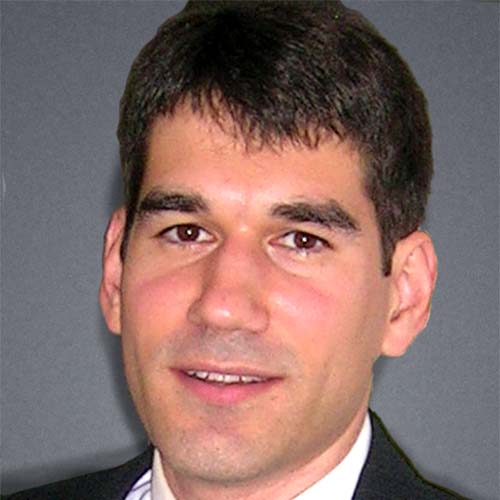
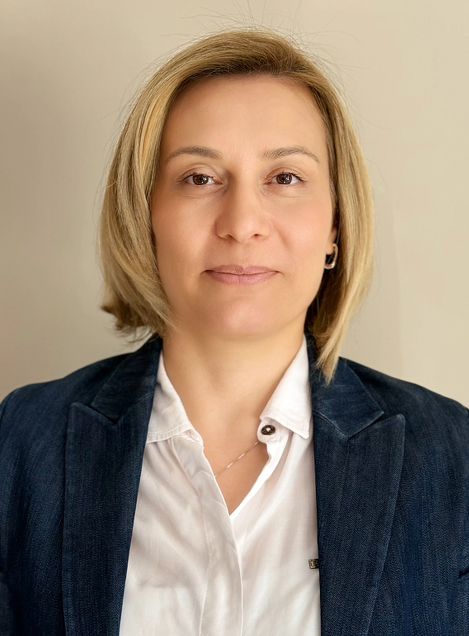
Samira Babalou is an active researcher affiliated with the University of Jena, Germany. Her work primarily focuses on ontology merging, knowledge graph management, and semantic data integration in the biodiversity and biomedical domains. She has developed tools like CoMerger and SimBio for ontology integration and similarity assessment. Education: PhD in Computer Science from University of Jena (2021). Key Contributions: Developed methods for handling inconsistencies during ontology merging, partitioning-based approaches for ontology aggregation, and tools for semantic similarity computation. Collaborations: Works with Birgitta König-Ries, Erik Kleinsteuber, and other researchers in semantic web and knowledge graph projects. Her recent publications (2020-2024) demonstrate expertise in provenance management, domain-specific knowledge graphs, and semantic annotation frameworks. She contributes to open science through systematic literature reviews and reproducible workflows for biodiversity data.
Ivan Avramovic is an Associate Professor in the Department of Computer Science at George Mason University, where he has been a full-time faculty member since 2018. He previously served as a term instructor, adjunct faculty member, and graduate teaching assistant in both Computer Science and Health Informatics programs. He currently holds the position of Graduate Teaching Assistant (GTA) Coordinator for the department. Education: • PhD in Computer Science, George Mason University • MS in Computer Science, George Mason University • BS in Electrical Engineering, University of Illinois at Urbana-Champaign Research Interests: Dr. Avramovic's research focuses on theoretical and applied aspects of computer science, including randomized algorithms, combinatorics, information dissemination methods, and network communication systems. His work bridges foundational computer science with practical applications in health informatics and educational technology, particularly exploring AI integration in computational pedagogy. Awards: Multiple Distinguished Teaching Awards for educational excellence Teaching & Advising: He has taught diverse courses including Analysis of Algorithms, Computer Systems Programming, Formal Methods, and Object-Oriented Programming. As GTA Coordinator, he oversees graduate teaching assistant training and curriculum development. No specific student advisees are listed. Professional Background: Prior to academia, he worked on programming and simulation projects at Science Applications International Corporation (SAIC) and maintains research collaborations with health informatics initiatives.
Szymon Antoni Głowania is a Researcher at the Department of Machine Learning within the Faculty of Informatics and Communication at the University of Economics in Katowice. Holding an MSc degree, he serves as a teaching and research assistant with his scholarly work focused entirely on information and communication technology (ICT) as documented by institutional records. His research expertise centers on Artificial Intelligence and Machine Learning , with significant contributions in Image Processing , Financial Risk Analysis , and Data Modeling . Głowania's work demonstrates strong interdisciplinary applications, connecting computer science with finance, cultural studies, industrial contexts, and chemistry as evidenced by his publication keyword profile which includes terms like 'sztuczna inteligencja' (artificial intelligence), 'ryzyko' (risk), 'finanse' (finance), and 'przemysł' (industry). Analysis of his 19 publications reveals a consistent research trajectory with increasing sophistication in applying machine learning techniques to practical problems. His work shows progression from foundational classification algorithms to specialized applications in financial risk assessment, industrial quality control, and cultural heritage preservation. The interdisciplinary nature of his research is particularly notable, bridging economic applications with technical AI implementations. Głowania has achieved an h-index of 3 according to both Scopus and Web of Science citations, with a total impact factor of 8.938 and a SNIP score of 5.077. His ministerial score of 1,035 reflects the significance of his contributions within the Polish academic system. As a teaching and research assistant, he contributes to academic programs within the Faculty of Informatics and Communication. While specific advising relationships aren't documented, his position suggests involvement in mentoring students within the Department of Machine Learning. His ORCID identifier (0000-0003-1137-4350) and presence across multiple academic platforms indicate active engagement with the international research community. His research appears conducted within the Department of Machine Learning's facilities, with practical applications particularly evident in finance and industrial contexts, aligning with the University of Economics in Katowice's mission to connect technical expertise with economic applications.
Jordi Tura i Brugués is an Associate Professor at the Leiden Institute of Physics (LION) and a Principal Investigator in the Applied Quantum Algorithms group. He holds a double degree in mathematics and telecommunications engineering from the Polytechnic University of Catalonia and a Master's in Applied Mathematics (Algebra and Geometry). Prior to joining Leiden, he completed his Ph.D. at ICFO - The Institute of Photonic Sciences under Prof. Maciej Lewenstein and Dr. Remigiusz Augusiak, followed by postdoctoral work at the Max Planck Institute of Quantum Optics under Prof. Ignacio Cirac. Research Focus : Quantum algorithms, device-independent quantum information, tensor networks, quantum machine learning, entanglement theory, and convex optimization. Funding : Supported by an ERC Starting Grant and former fellowships including Marie Curie, Alexander von Humboldt, and CELLEX-ICFO-MPQ. Collaborations : Active in international conferences (QIP, QCrypt) and collaborations visualized via his network graph. Scientific Awards : ERC Starting Grant CELLEX-ICFO-MPQ Fellowship Marie Curie Individual Fellowship Alexander von Humboldt Postdoctoral Fellowship Other Interests : Programming competitions, football (supporting FC Barcelona), and violin performance with orchestras like Bruckner Akademie Orchester.
Konstantin Korovin is a Reader at the Department of Computer Science, The University of Manchester. He has held various academic roles including Senior Lecturer (2015-2023), Royal Society University Research Fellow (2007-2015), and Research Associate (2004-2007). Current research focuses on automated theorem proving , machine learning integration , and verification of hardware/software . His work includes developing systems like iProver , iProver-ML , and SMLP , which combine formal methods with ML techniques. Key contributions span non-linear constraint solving , quantified Boolean logic , and DNA computing . He has won over 20 international awards, including SMT-COMP and CASC categories. Scientific Awards : Ackermann Award, Best Thesis Prize, Best Paper at FroCoS'19, CASC and SMT-COMP prizes. He supervises PhD and postdoc researchers, with alumni working at Intel, Google, and MathWorks. His tools are applied in industry, notably by Intel for hardware optimization.
Dr. Angela Russo serves as an Associate Professor at the Department of Energy (DENERG) of Politecnico di Torino, Italy, where she teaches "Fundamentals of Electrical Installations" for Electrical Engineering and "Industrial Electrical Systems" for Management Engineering across multiple academic cycles (2019/20–2025/26). Her research centers on modern power system challenges including active distribution networks and energy community integration. Her work demonstrates strong alignment with Sustainable Development Goal 7 (Affordable and clean energy), focusing on practical implementations of distributed energy resources and microgrid technologies. Recent publications reveal a consistent trajectory toward optimizing energy dispatch, storage systems, and market configurations within evolving grid infrastructures, with increasing emphasis on European energy transition frameworks. Prof. Russo actively contributes to academic governance as Publications Chair for major conferences including UPEC 2020 and IEEE PES ISGT Europe 2017, while serving on the editorial board of ENERGIES since 2017. She currently supervises PhD candidate Gulshan Mustafayeva and leads two significant research initiatives: EU-DREAM (2024–2027), an EU-funded project empowering energy consumers, and SUERTE TO GREEN (2023–2025), a PNRR Mission 4 project developing sustainable energy solutions for road tunnels operating as microgrids. As a core member of the GUSEE research group within DENERG, she bridges theoretical advancements with real-world energy system applications, particularly in distribution network modernization and renewable integration scenarios requiring advanced optimization techniques under uncertainty.
Michael David König is a Lecturer at the Department of Management, Technology, and Economics at ETH Zürich, specializing in Innovation Economics within the KOF Swiss Economic Institute. His research focuses on the intersection of network theory and economics, particularly examining R&D networks, technology spillovers, and innovation dynamics. König maintains an active research profile with publications spanning economics, network science, and computer science. König's research spans multiple domains including economic network analysis, innovation economics, and technology diffusion. He has made significant contributions to understanding how firms form R&D collaborations and how knowledge flows through these networks. His work combines theoretical modeling with empirical analysis of large-scale network data, revealing patterns such as oscillatory dynamics in R&D collaboration intensity. Recent research has also addressed practical economic issues, including firm responses to the COVID-19 pandemic and factors influencing R&D investment decisions in Switzerland. His interdisciplinary approach bridges economics with computational methods, reflecting his background in both theoretical and applied network analysis. König's publication record demonstrates a strong interdisciplinary trajectory, beginning with contributions to wireless network protocols and distributed systems before focusing more intensively on economic applications of network theory. A consistent theme across his career has been the study of how networks evolve and how these structures influence outcomes in various domains, from technology diffusion to economic fluctuations. His research often employs sophisticated modeling techniques to analyze the coevolution of networks and economic behavior, with particular attention to the dynamics of knowledge creation and diffusion. König teaches Introduction to Microeconomics at ETH Zürich, as evidenced by his listing in the Autumn Semester 2025 course catalog. His office is located at LEE G 224, Leonhardstrasse 21, 8092 Zürich, Switzerland. He is affiliated with the KOF Innovation Economics research group, which focuses on innovation, technological change, and their economic implications.
Mario Muñoz Organero serves as a Full Professor in the Telematics Engineering Department at University Carlos III of Madrid, concurrently directing the University Master's Degree in Connected Industry. His academic profile centers on leveraging computational intelligence to address complex challenges across healthcare, urban systems, and educational frameworks through rigorous interdisciplinary collaboration. His research spans Artificial Intelligence, Machine Learning, and Smart Environments with significant applications in Healthcare Informatics (pancreatic cancer registries, diabetes management), Transportation Systems (traffic flow optimization, commuter stress analysis), and Educational Technology (generative AI for learning, micro-credentials). He pioneers context-integrated neural network architectures for sensor data interpretation in real-world environments, emphasizing practical deployment in smart cities and clinical settings. Analysis of his 2023-2025 publications reveals a distinctive interdisciplinary trajectory where machine learning methodologies bridge traditionally separate domains. Recurrent and graph neural networks form the technical backbone for projects ranging from pandemic-influenced traffic modeling to blockchain-enabled agricultural trading in Colombia, while explainable AI frameworks increasingly inform educational applications. This cross-pollination of techniques demonstrates exceptional adaptability in addressing domain-specific constraints across medical, transportation, and pedagogical contexts.
İLKAY SİBEL KERVANCI serves as an Assistant Professor in the Department of Computer Engineering at Gaziantep University's Faculty of Engineering. Her academic career spans teaching and research in artificial intelligence, machine learning, and data mining with practical applications across finance and bioinformatics sectors. PhD in Computer Engineering, Çukurova University (2023) MSc in Informatics, Kahramanmaraş Sütçü İmam University (2017) BSc in Computer Engineering, Kocaeli University (2004) Her research centers on machine learning applications for cryptocurrency price forecasting using LSTM and GRU networks, neutrosophic logic implementations in regression problems, and drug-target interaction prediction. Recent work demonstrates expertise in hyperparameter optimization, time series analysis, and handling imbalanced datasets through hybrid feature reduction techniques. She actively contributes to advancing neural network architectures for financial and biomedical challenges. Publication trends reveal consistent focus on Bitcoin price prediction (6 publications since 2017), expanding into drug-target interaction modeling and neutrosophic applications. Her work bridges theoretical machine learning with industrial applications in cement manufacturing, stock markets, and pharmaceutical research through recurrent neural networks and optimization frameworks. Dr. Kervanci teaches graduate courses including Introduction to Artificial Intelligence Methods and Introduction to Data Mining Methods, alongside undergraduate courses such as Artificial Intelligence in Engineering and Discrete Mathematics, demonstrating commitment to computational education across academic levels.
András Frank is a Professor at the Department of Operations Research, Eötvös Loránd University, Budapest. As founder and leader of the MTA-ELTE Egerváry Research Group on Combinatorial Optimization (EGRES), he focuses on combinatorial optimization, matroid theory, submodular functions, matchings, graph theory, and polynomial-time algorithms. University: Eötvös Loránd University Department: Operations Research Research Group: EGRES (MTA-ELTE Egerváry Research Group on Combinatorial Optimization) His research addresses both theoretical and applied aspects of combinatorial optimization, including network flows, graph connectivity, and algorithmic applications. He authored the book Connections in Combinatorial Optimization (Oxford University Press, 2011), which explores polynomial-time algorithms and their role in graph theory and matroid theory. Key trends in his recent work include fair integral flows, discrete convex optimization, and algorithmic approaches to supermodular functions. While no specific scientific awards are listed in the provided texts, his contributions have been recognized through publications in top-tier venues and leadership in the EGRES group.
George D Konidaris serves as Associate Professor of Computer Science at Brown University, where his research bridges artificial intelligence, machine learning, and robotics with emphasis on autonomous decision-making systems. His work focuses on developing algorithms that enable robots and AI agents to learn hierarchical structures, discover reusable skills, and operate effectively in complex environments. Education: 2010: PhD, University of Massachusetts, Amherst 2003: MS, University of Edinburgh 2001: BS, University of the Witwatersrand 2000: BS, University of the Witwatersrand His research spans reinforcement learning , robotic motion planning , and hierarchical abstraction , with significant contributions to skill discovery, temporal abstraction, and model-based methods. Current work integrates visuo-haptic perception for manipulation tasks and explores language-guided robotics using large language models. His approach emphasizes creating systems that learn compact world representations for efficient long-horizon planning in partially observable environments. Analysis of his 2025 publications reveals strong trends in model-based reinforcement learning with focus on memory mechanisms, uncertainty quantification, and hierarchical skill composition. Key themes include temporal abstraction for planning efficiency, visuo-haptic fusion for robotic manipulation, and language grounding for task specification. His work increasingly connects cognitive science concepts like theory of mind with AI capabilities. Teaching responsibilities include CSCI 1410 (Artificial Intelligence) and CSCI 2951X (Reintegrating AI), where he bridges theoretical foundations with practical robotics applications.
Dr. Haiying Wang is a Reader in computer science at Ulster University's School of Computing , and a full member of the Computer Science Research Institute . He holds a PhD in artificial intelligence and biomedicine (2004) and a Postgraduate Certificate in Teaching in Higher Education (2008). Active in AI, machine learning, and complex network analysis Applications in bioinformatics, healthcare informatics, and systems biology Grant holder for Innovate UK and EU-Horizon2020 projects Publisher of 120+ peer-reviewed works Research Focus : Large-scale data integration, activity recognition, gait analysis in smart environments, metagenomics data analysis, and network-based systems biology approaches. His work explores microbiome-host interactions, methane prediction in agriculture, and AI-assisted healthcare technologies. Scientific Awards : Ulster University Research Excellence Award - Business Category (2019) Collaborations : Organized European Research Conferences (2020-2021) and collaborated on projects analyzing rumen microbiomes, Alzheimer's disease, and wearable sensor systems.
Bong Chul Seo is an Assistant Professor at the Civil, Architectural and Environmental Engineering Department of Missouri University of Science and Technology , where he focuses on advanced hydrological research and data-driven methodologies. His work bridges engineering and environmental science to improve flood prediction and water management systems. Employing weather radar and satellite data for hydrological applications Developing AI-based rainfall nowcasting tools Advancing uncertainty quantification in streamflow simulations Contributing to national water model improvements Recent research highlights include: Optimizing sensor networks using graph theory (2025) Validating polarimetric precipitation estimates (2025) Quantifying wetland impacts on water quality (2024) Enhancing radar data assimilation systems (2024)
Yun Jang is a Professor in the Department of Computer Engineering at Sejong University , South Korea. His research spans Data Visualization , Visual Analytics , and Artificial Intelligence applications, with a focus on Spatiotemporal Analysis , Volume Rendering , and Human-Computer Interaction . Ph.D. in Electrical and Computer Engineering, Purdue University (2007) M.S. in Electrical and Computer Engineering, Purdue University (2002) B.S. in Electrical Engineering, Seoul National University (2000) His research interests include: Visual Analytics for Big Data Causal Analysis in Urban Traffic Virtual Reality and Cybersickness Measurement Interactive Volume Rendering EEG and Gaze Data Analysis Recent publications emphasize causal modeling in traffic analysis, volume rendering techniques with CNNs, and AI-driven applications for smart cities. He holds multiple Korean and US patents in traffic analytics, VR systems, and data visualization technologies. Notable scientific awards include the Daeyang Distinguished Professor Award and a Best Poster Award at PacificVis 2020 . He leads the Data Visualization Lab at Sejong University, supported by grants from Korean government agencies and industry partners.
Frank Werner is apl. Professor (Adjunct Professor) of Mathematical Optimisation at the Otto von Guericke University Magdeburg, Faculty of Mathematics, Institute for Mathematical Optimization. Since 1989 he has been a permanent member of this institute, leading DFG- and EU-funded projects, supervising international doctoral students and post-doctoral researchers, and serving on the editorial boards of more than a dozen journals. Education 1961–1973: Nordpark-Oberschule, Clara-Zetkin-Oberschule, EOS Geschwister Scholl, Magdeburg (Abitur ‘Ausgezeichnet’) 1975–1980: Diploma in Mathematics, Technische Hochschule Magdeburg (Dipl.-Math., grade ‘Ausgezeichnet’) 1980–1983: Doctoral studies, TH Magdeburg (Dr. rer. nat., Summa cum laude) 1987–1989: Habilitation, TH Magdeburg (Dr. rer. nat. habil.) Research Interests Werner’s work lies at the intersection of applied mathematics, operations research and computer science. He designs exact and heuristic algorithms for NP-hard scheduling and sequencing problems, analyses the stability of solutions under interval data uncertainty, and applies these techniques to real-world domains such as machine scheduling, vehicle routing, train timetabling, supply-chain coordination, and healthcare logistics. Recent activities extend to the use of machine-learning techniques to enhance optimisation algorithms. Scientific Awards & Honours Best Paper Award, International Journal of Production Research Best Paper Award, IISE Transactions NOC Prize 2009, INCOM Symposium Moscow, for work on hierarchical mobile-robot scheduling Supervision, Grants & Service Since 1992 Werner has coordinated numerous DFG and EU projects and acted as principal investigator for international collaborations involving Belarus, Russia, Poland, the USA, Mexico, Iran, Nepal, China and Finland. He has mentored Alexander von Humboldt fellows and long-term visiting scholars, and currently serves as Editor-in-Chief of the MDPI journal Algorithms , Associate Editor for Journal of Scheduling and International Journal of Production Research , and on the editorial or advisory boards of more than ten further journals. Laboratory & Teams He heads the Scheduling & Discrete Optimisation group within the Institute for Mathematical Optimization, maintaining active partnerships with Tribhuvan University (Nepal), Autonomous University of Baja California (Mexico), Belarusian State University, École des Mines de Saint-Étienne (France), University of Alabama in Huntsville (USA), and many others.