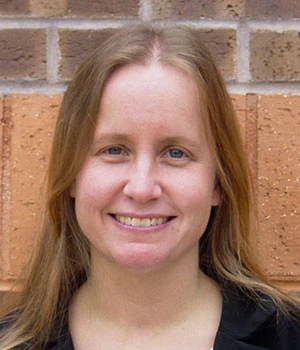
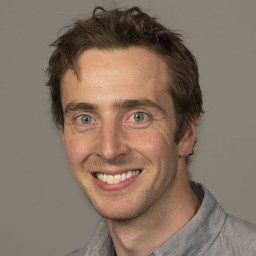
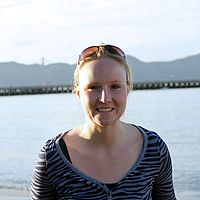
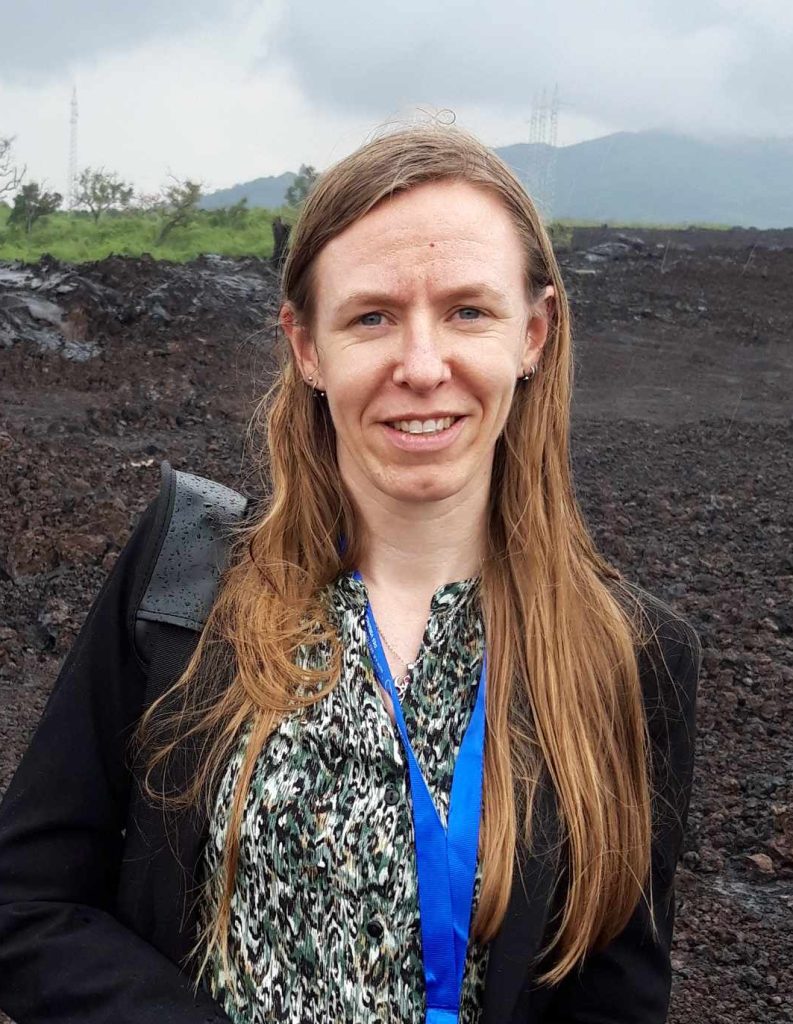
Lindsay McHenry is Professor and Department Chair of Geosciences at the University of Wisconsin-Milwaukee. She holds a Ph.D. from Rutgers University, an M.S. from Dartmouth College, and a B.S. from Dartmouth College. Her research focuses on using volcanic ash composition to correlate archaeological sites in East Africa and identifying terrestrial analogues for Martian surface minerals. Her research interests include tephrostratigraphy for human evolution studies, Mars geology analogs, sulfate mineral formation processes, and paleolimnology of saline-alkaline systems. Recent publications demonstrate strong focus on Martian analog studies using terrestrial environments (Iceland, East African lakes), mineral mapping with remote sensing/ML techniques, and paleolake reconstruction. Work increasingly incorporates drone technology and machine learning for planetary exploration applications.
Professor Victoria C. Smith is a leading volcanologist at the School of Archaeology, University of Oxford. Her research focuses on tephrochronology, using volcanic ash layers to date and correlate sedimentary and archaeological records. She manages Oxford's electron microprobe facilities and cryptotephra laboratory, supporting global research on explosive volcanism. Research Interests : Volcanology, tephrostratigraphy, magmatic processes, and paleoenvironmental reconstruction. Geographic Focus : Italy, Mexico, Japan, Azores, Canary Islands, Ethiopian Rift, Antarctica. Her recent publications highlight collaborations in geochronology, magma evolution modeling, and tephra applications in synchronizing climate-human records. She supervises MSc and doctoral students in Archaeological Science, focusing on volcanic ash as chronological tools.
Helen Roberts is a Professor in the Department of Geography and Earth Sciences at Aberystwyth University , where she has been a key figure since joining as a post-doctoral researcher in 1998 and becoming a Lecturer in 2005. She currently serves as Co-Director of the Aberystwyth Luminescence Research Laboratory (ALRL) and holds leadership roles in international bodies such as INQUA’s Stratigraphy and Geochronology Commission. PhD, University of Liverpool Her research focuses on luminescence dating of Quaternary sediments , with applications in understanding geomorphic change, coastal dynamics, paleoclimate, and human evolution . She has led major projects such as EQUATE and CREDit , funded by Horizon Europe and NERC, and has been involved in international drilling initiatives in Ethiopia and Italy. Her work integrates fieldwork, laboratory innovation, and data modeling to reconstruct environmental change over hundreds of thousands of years. Analysis of her recent publications reveals a strong emphasis on refining luminescence techniques (e.g., pIRIR, TL in calcite), applying them to critical paleoenvironmental archives (lake sediments, loess, glacial deposits), and linking climate variability to human evolution. Her interdisciplinary approach spans geochronology, sedimentology, and paleoanthropology. Fellow of the Learned Society of Wales (2023) Professor Roberts has supervised PhD students, including Svenja Riedesel, and secured significant research grants from NERC, UK Space Agency, and the Welsh Government. She actively contributes to scientific discourse through media engagement and public outreach. Her work supports UN Sustainable Development Goals related to climate action and life on land. She leads and participates in numerous international collaborations and professional committees, reflecting her standing in the Quaternary science community. She is involved in several research groups and laboratories, most notably the Aberystwyth Luminescence Research Laboratory , where she co-directs methodological development and application of luminescence dating techniques. Her team collaborates globally on projects involving terrestrial archives, paleoclimate modeling, and human evolution.
Dr. Daniel Peppe is an Associate Professor in the Department of Geosciences at Baylor University, located in Waco, Texas. He holds a Ph.D. from Yale University and leads the Peppe Research Group, which focuses on paleoclimatology, paleobotany, and paleomagnetism. His research integrates methods from ecology, stratigraphy, and sedimentology to study ancient climates and ecosystems in North America and East Africa. Key initiatives include developing paleoclimate proxies using leaf traits, reconstructing Neogene East African environments linked to hominid evolution, and analyzing Paleocene plant communities' responses to mass extinctions. Education: Ph.D., Yale University Research Interests: Paleoclimatology, Paleoecology, Geoarcheology, Stratigraphy, and Tectonic Processes His lab's work emphasizes field-based research and methodological integration, such as digital leaf physiognomy and paleomagnetic dating. Current projects include studying Pleistocene environments in the Lake Victoria Basin and early Miocene hominoid habitats in Kenya and Uganda. Dr. Peppe advises multiple graduate students (e.g., Dava Butler, Evan Cerna) and has an extensive record of publications across paleontology, geology, and climate science. His group collaborates internationally on projects like the REACHE initiative to understand East African hominoid evolution. Lab facilities at Baylor support fieldwork and analyses of fossils, sediments, and geochemical data. Dr. Peppe’s research contributes to understanding climate change impacts on ecosystems, with implications for modern environmental challenges.
Daniel Adler is an Associate Professor in the Department of Anthropology at the University of Connecticut, where he contributes significantly to Paleolithic archaeology and human evolution studies. He holds a Ph.D. from Harvard University (2002) and leads interdisciplinary research projects in the Caucasus, particularly in Georgia and Armenia. Ph.D., 2002, Harvard University His research focuses on human behavioral ecology, Neanderthal-modern human interactions, lithic technology, zooarchaeology, and the factors behind Neanderthal extinction. He has directed excavations since 1995 in Eurasia, including key projects in Georgia (Akhalkalaki, Ortvale Klde) and Armenia (Nor Geghi 1, Lusakert Cave). His work combines field surveys, excavation, and advanced analytical methods such as obsidian sourcing and tephrochronology. Recent publications reveal a strong trend in understanding Paleolithic technological organization, fire use, landscape dynamics, and chronological frameworks across the Southern Caucasus. His interdisciplinary approach integrates geochemistry, geomorphology, and lithic analysis to reconstruct hominin behavior and environmental contexts during the Middle and Upper Paleolithic periods. Daniel Adler has received no explicitly mentioned scientific awards in the provided text. He teaches courses such as ANTH 2501 (Introduction to Archaeology), ANTH 3514 (European Prehistory), ANTH 4510/5345 (The Neanderthals), and ANTH 5517 (Hunter-Gatherers Past and Present). He runs an archaeological field school in Armenia through UConn’s Office of Study Abroad, supported by the Norian Armenian Programs Committee and external funding, indicating active grant involvement and student mentorship. His research is conducted through the Paleolithic Studies Lab at UConn, where he collaborates with an international team of researchers and students on projects spanning Armenia and the broader Caucasus region.
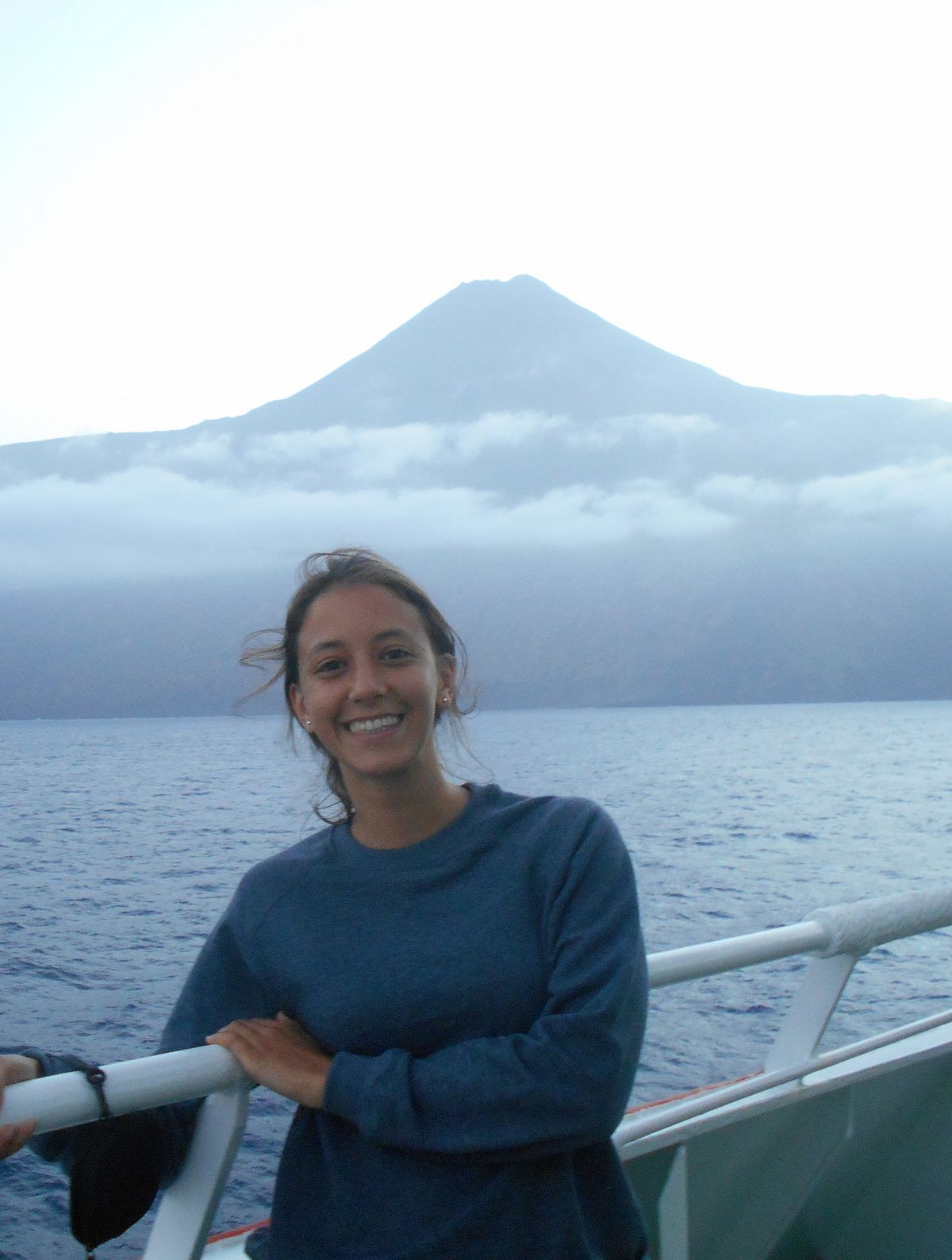
Mariana Andrade is a PostDoc Researcher at GEOMAR Helmholtz Centre for Ocean Research Kiel, affiliated with the Dynamics of the Ocean Floor research division and Magmatic and Hydrothermal Systems department. She holds a PhD in Geology from the University of Lisbon (2023) and has conducted fieldwork across the Azores, Cape Verde, and Spain. Education: PhD (2023), MSc (2018), BSc (2015) in Geology from University of Lisbon Her research focuses on volcano-climate interactions , magma-water dynamics , and tephrostratigraphy in both marine and lacustrine environments. She leads and contributes to projects like VolClimA (DFG), VoRAMS (GEOMAR), and ExTRAP (FCT Portugal), investigating volcanic records through sediment cores and tephra layers. Recent publications (2022-2025) reveal trends in marine tephrostratigraphy , monogenetic volcanic systems , and climate-volcano correlations using multi-proxy sediment analysis. Her field expeditions span RV SONNE and RV METEOR oceanographic missions, plus terrestrial studies in the Azores and Catalan pre-Pyrenees. Scientific awards: DFG Project Funding , GEOMAR Postdoctoral Grant , FCT Portugal Exploratory Grant She collaborates with institutions including University of the Azores, GEO3BCN (Spain), and IVAR (Portugal), while participating in international conferences like EGU General Assembly and Cities of Volcanoes meetings.
Hannes Mattsson is a Lecturer in Bedrock geology at Uppsala University's Department of Earth Sciences, specifically within the Mineralogy Petrology and Tectonics section. His research focuses on volcanic processes, particularly at the world's only active carbonatite volcano, Oldoinyo Lengai in Tanzania, and other volcanic systems across the East African Rift, Iceland, and Cape Verde. Dr. Mattsson's research interests center on carbonatite magmatism and the complex relationship between silicate and carbonatite magmas. His work spans volcanic processes, magma genesis, and the petrological evolution of alkaline magmatic systems. He investigates fractional crystallization, magma mixing, mineral resorption processes, and the formation of volcanic landforms, with particular expertise in the unique natrocarbonatite system of Oldoinyo Lengai. Analysis of his recent publications reveals a consistent research trajectory focused on understanding carbonatite genesis through multiple approaches: experimental petrology, detailed field studies of volcanic deposits, geochemical analyses, and rock magnetic investigations. His work demonstrates the importance of silicate-carbonatite immiscibility in magma evolution and how this process influences eruption styles and volcanic landform development. The research spans multiple continents, with significant contributions to understanding volcanic processes in the East African Rift, Iceland, Cape Verde, and Spain. Dr. Mattsson has published extensively in high-impact journals including Lithos , Journal of Volcanology and Geothermal Research , Earth and Planetary Science Letters , and Bulletin of Volcanology . His work has been widely cited and referenced in policy documents, Wikipedia pages, and news outlets, demonstrating its significance to the geological community. His research involves extensive fieldwork at active volcanic centers, laboratory analyses of volcanic products, and experimental studies of magma processes. Dr. Mattsson frequently collaborates with international research teams, contributing his expertise in petrology and volcanology to multi-disciplinary projects investigating volcanic hazards, magma evolution, and the geological evolution of rift systems.
Christine Lane is a Professor of Geography at the University of Cambridge and a Fellow of Corpus Christi College. She leads the Cambridge Tephra Laboratory, specializing in Quaternary geochronology and explosive volcanism. Her research focuses on climate variability, volcanic impacts, and human-environment interactions in East Africa and beyond. Education: BSc Geology (Cardiff University), MSc Quaternary Science (Royal Holloway), PhD Archaeological Science (University of Oxford). Research Interests: Tephrochronology, paleoenvironmental reconstruction, volcanic ash correlations, human evolution, and climate-driven environmental changes. She has pioneered studies on East African Rift volcanism and its effects on hominin dispersal. Key Projects: DeepCHALLA (Lake Chala sediment studies), Lake Tanganyika Drilling Project, and INTIMATE (paleoclimate synchronization). Her work integrates volcanic, archaeological, and environmental records to understand past climates and human adaptation. Awards: Leverhulme Trust Early Career Fellowship (2012–2015). Grants & Advising: Supervises PhD students on topics like cryptotephra in Ethiopia and volcanic impacts. Secured funding from NERC, the Isaac Newton Trust, and the Cambridge Africa ALBORADA Fund. Labs/Teams: Head of the Cambridge Tephra Laboratory; collaborates with institutions worldwide on tephrochronological frameworks and interdisciplinary climate research.
Faysal Bibi is a Senior Scientist at the Museum für Naturkunde (Leibniz Institute for Evolution and Biodiversity Research) in Berlin and serves as a Lecturer (Privatdozent) at the Institute of Biochemistry and Biology, University of Potsdam. He holds a B.A. in Anthropology from UC Berkeley (2001), an M.Phil. (2006) and Ph.D. (2009) in Geology & Geophysics from Yale University, and completed his Habilitation at Potsdam in 2019. He teaches an annual intensive course on 'Phylogenetics in Evolution and Ecology'. Bibi's research specializes in mammalian evolution with emphasis on ruminants and bovids, African biogeography, hominid paleoenvironments, and Arabian Peninsula evolutionary history. His work integrates paleoecology, phylogenetics, and geometric morphometrics to study fossil records from key African and Middle Eastern sites. Primary research domains include: Pleistocene fauna of Sudan's Atbara Valley, Late Miocene ecosystems in UAE, conservation paleobiology, and ruminant diversification patterns. Bibi co-leads the Amniota Lab focusing on fossil/extant terrestrial vertebrates through anatomical, molecular and ecological methods. Fieldwork spans Africa and the Mediterranean, employing 3D visualization and CT scanning. Major projects include National Geographic/DFG-funded excavations in Sudan documenting Acheulean-to-Middle Stone Age transitions, and UAE Miocene fossil analysis revealing Arabian paleobiogeography. His publications consistently appear in high-impact journals including Science , Nature , and Nature Ecology & Evolution .
Tom Kwasnitschka is a permanent scientist in the DeepSea Monitoring group at GEOMAR Helmholtz Centre for Ocean Research Kiel since 2025, with prior roles at GEOMAR's Technology and Logistics Center (2016-2024) and the ROBEX Helmholtz Alliance (2013-2016). He leads projects like LIGHTHOUSE , MOMO , and MUSE , focusing on deep-sea robotics , 3D photogrammetry , and immersive data visualization . He also serves as a lecturer at Kiel University of Applied Sciences since 2010. Education: PhD in Marine Geology (2012, GEOMAR) on submarine volcanism in Cape Verde; Diploma in Geology/Paleontology (2009, Christian-Albrechts University Kiel). His research spans physical volcanology of submarine systems, tephrostratigraphy , and deep-sea technology . His work integrates 3D modeling , optical and acoustic mapping , and virtual environments for marine exploration. Key projects include digital seafloor reconstruction and deep-sea camera systems . Recent publications focus on hydrothermal vent mapping , volcanic hazard analysis , and immersive fieldwork simulations , reflecting trends in multi-disciplinary marine research and underwater robotics . Awards: AGU Outstanding Student Paper Award (2011) Grants include MUSE (0.15M€) , SPP2100 ASDDSA (0.29M€) , and Helmholtz Validation Fund LIGHTHOUSE (2.37M€) . He has led 13 oceanographic cruises using vessels like RV Alkor and RV Poseidon . As co-founder of allsky.de (2003-2023), he advanced immersive media for science communication . His patents include deep-sea camera stabilization and submersible LED systems .
Professor Jocelyn McPhie is affiliated with the School of Natural Sciences, Earth Sciences at the University of Tasmania . Her research spans Volcanology , Resource Geoscience , and Igneous Petrology , focusing on submarine volcanism, ore deposit formation, and volcanic facies analysis. Her funded projects include studies on the Olympic Dam deposit and Heard Island volcanism . She has supervised numerous PhD and Master's students in topics like explosive eruptions , hydrovolcanic interactions , and volcanic-hosted mineralization . Key grants: Australian Research Council Linkage Projects , BHP Billiton funding Expertise: Argon-Argon dating , tephrostratigraphy , volcanic architecture
Dr Chris Satow is a Senior Lecturer in Physical Geography at Oxford Brookes University, affiliated with the School of Law and Social Sciences. His work bridges Earth systems science, volcanology, and Quaternary environmental change. He teaches core modules including Earth Systems, Oceans and the Marine Environment, and Atmosphere and Climate. BSc Geology and Physical Geography, University of Edinburgh MSc Quaternary Science, University of London (Royal Holloway, UCL, Queen Mary) PhD Quaternary Marine Tephrostratigraphy, Royal Holloway University of London Chris Satow's research centers on the interactions between Earth's spheres, particularly the influence of sea level change on volcanic activity. He uses tephrostratigraphy—volcanic ash deposits—to correlate paleoclimate and archaeological records across the Mediterranean. His work on Santorini aims to test whether glacial-interglacial sea level fluctuations modulate eruptive frequency and style. He also investigates cryptotephra in marine sediments to refine the timing of climatic and ecological shifts. His recent publications under review and in preparation focus on synchronizing marine climate records using ash layers, reconstructing Santorini's volcanic history, and reviewing Aegean Arc volcanism. These works emphasize precise geochronology, interdisciplinary integration, and implications for climate modeling and hazard assessment. Brookes Teaching Innovation Team Award (£5000) NERC Grant in Kind (£54k) for Ar:Ar dating Priming Funding (£6k) for Electron Microprobe analysis Dr Satow leads pedagogic innovation through a student-staff collaborative project to develop a digital research techniques guide, mentoring undergraduates in research practice. He has secured external and internal grants supporting geochemical and geochronological analyses. His research collaborations include experts from Glasgow, Oxford, UCL, Leicester, Cardiff, and Kingston universities. He is a member of the Human Origins and Palaeo Environments (HOPE) research group, contributing to projects on early human dispersals and environmental change.
Dr. Julie Christin Belo is a research scientist at GEOMAR Helmholtz Centre for Ocean Research Kiel, affiliated with the Research Unit for Magmatic and Hydrothermal Systems. She holds a PhD magna cum laude from Kiel University (2012-2015) and completed diploma studies in Geology and Paleontology at the same institution (2006-2012). Her career includes positions as Post-Doctoral Researcher at GEOMAR, University of Heidelberg, and visiting scientist appointments at Lamont Doherty Earth Observatory and Boston University. Belo's research focuses on tephrostratigraphy in marine and terrestrial environments, physical volcanology with emphasis on explosive processes, and volcano-climate interactions. Her investigations span volcanic systems worldwide including the Azores, Central America, Japan, and the Andes. She leads multiple research projects examining volcanic records in marine sediments and their connections to paleoclimate. Her scientific publications demonstrate consistent focus on volcanic processes with recent emphasis on: tephra correlation techniques, reconstruction of volcanic histories from marine records, volcanic impacts on climate systems, and geochemical analysis of eruptive products. Studies frequently integrate field observations, laboratory analyses, and marine sediment core data. Scientific Awards: Island Arc Award 2020 Fulbright Travel Grant (2016-2017) Research Leadership: Belo serves as Principal Investigator for several major projects including VolCLimA (Volcano-Climate Interaction: Azores case study), IBM Tephra (Izu-Bonin Arc tephrostratigraphy), and MarDATA 'Volcanism and Climate' initiative. She has participated in numerous marine research expeditions as sediment laboratory head and scientific team member across the Atlantic, Pacific and Indian Oceans.
Adam Blake Abersteiner serves as a Grant-funded researcher in the Department of Geosciences and Geography at the University of Helsinki, specializing in mantle-derived magmatic systems and volcanic processes across diverse global settings. His research focuses on: Petrological analysis of lamproites and mantle xenoliths Magma storage/transport mechanisms in rift zones Geochemical evolution of oceanic lithosphere Ignimbrite petrogenesis in continental volcanic systems Carbon compound behavior in mantle melts Recent publications (2022-2025) reveal concentrated work on volcanic systems in Iceland, South Africa, Heard Island, and the Carpathian-Pannonian region, utilizing melt/fluid inclusion analysis to decode mantle processes. His research demonstrates strong international collaboration patterns with European and global institutions, particularly evident in multi-author studies examining mantle heterogeneity and magma genesis. Abersteiner actively supervises doctoral research, including the thesis on metasomatic evolution of the Suomenniemi complex. His grant-funded position indicates sustained external research support, though specific funding mechanisms remain unspecified in available records. Current work shows increasing focus on time-sensitive volcanic monitoring and mantle carbon cycling.
Karen Fontijn is an Associate Professor in Volcanology & Mineralogy at Université libre de Bruxelles, focusing on tephrostratigraphic studies of volcanoes in East Africa, Southeast Asia, and South America. Her work integrates field studies with geochronology, petrology, and geochemistry to assess volcanic hazards and resources. Current projects: Pumice Cones (FNRS PDR 2024-2027), Geosciences teaching exchange (ARES 2025-2027) Collaboration network: CSIC Barcelona, Addis Ababa University, University of Dar es Salaam, Dedan Kimathi University of Technology Research interests include: Volcanic hazard assessment through tephrostratigraphy Integration of terrestrial and lacustrine volcanic records Geothermal resources in African rift systems Volcano-human-environment interactions International collaboration frameworks Scientific leadership involves mentoring PhD students and co-leading the ROTTnROCK ERC Synergy project on hydrothermal alteration and volcanic stability. Her recent publications span explosive eruption dynamics, magma reservoir conditions, and CO 2 emissions in rift volcanoes.