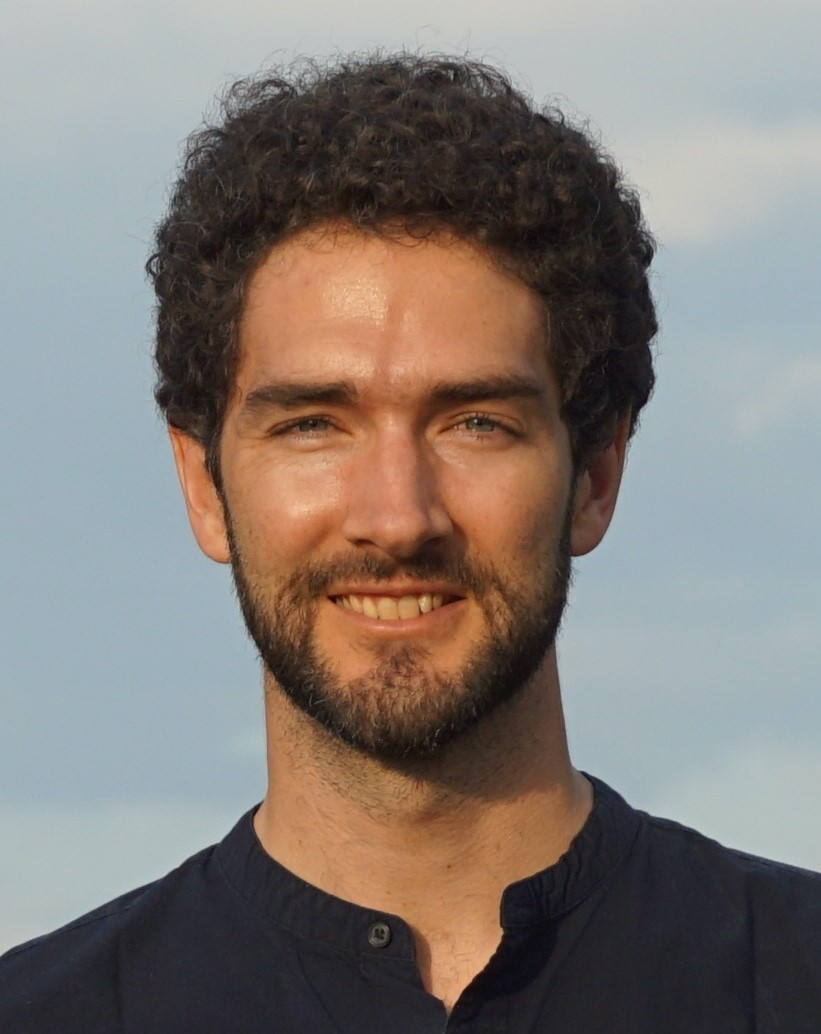
Jonas Kusch is an Associate Professor at the Department of Data Science, Norwegian University of Life Sciences, specializing in numerical analysis and its applications in scientific computing and machine learning. His work focuses on dynamical low-rank approximation, particularly in developing low-rank neural networks with geometry-aware training algorithms that respect the differential geometry of matrix manifolds. Research spans computational quantum mechanics , radiation transport , and machine learning . Key contributions include energy-stable integrators for kinetic equations and multi-fidelity optimization algorithms for fission criticality. Publications emphasize low-rank methods for solving inverse problems, time-dependent systems, and uncertainty quantification in hyperbolic equations.
Dr. Malek Benattayallah is an Honorary Lecturer at the School of Psychology, Plymouth University, and an experienced MRI physicist and clinical scientist currently involved with research activities at the Brain Research & Imaging Centre (BRIC). He previously managed the Exeter MR research centre at Exeter University from 2004 and has extensive experience in medical physics and neuroimaging research. Education: MSc in Medical Physics from Surrey University (1998) PhD in MRI from the University of Nottingham (2002) Dr. Benattayallah's research focuses on functional magnetic resonance imaging, brain activation studies, decision-making processes, tobacco dependence, and medical imaging physics. His work spans cognitive neuroscience, addiction research, and clinical applications of neuroimaging technology, with contributions toward multiple UN Sustainable Development Goals related to health and well-being. His publication record shows a strong emphasis on fMRI applications in cognitive neuroscience, particularly in decision-making processes and addiction studies, with several high-impact papers in journals like Human Brain Mapping and Addiction Biology. His research demonstrates interdisciplinary collaboration across neuroscience, psychology, and medical physics domains. Scientific Recognition: Fellow of the Higher Education Academy (FHEA) Chartered Scientist (CSci MIPEM) Clinical Scientist (registered with Health and Care Professions Council) Member of International Society for Magnetic Resonance in Medicine (ISMRM) Member of Institution of Physics and Engineering in Medicine (IPEM) Dr. Benattayallah serves as an assessor for HCPC, Science Council, and IPEM, and as an ISMRM abstract reviewer. He teaches across multiple academic programs including FRCR (Fellowship of Royal College of Radiologists), MSc Human Neuroscience, and BSc Diagnostic Radiography, covering core modules in medical imaging science and neuroimaging physics. He is actively involved with the Brain Research & Imaging Centre (BRIC) at Plymouth University, where he continues his research in MRI physics and clinical applications, while maintaining his clinical role at University Hospitals Plymouth NHS Trust since 2020.
Scott L. Vandenberg is a Professor of Computer Science at Siena University, where he has been teaching since 1993. He holds a PhD and MS in Computer Science from the University of Wisconsin-Madison and a BA in Math and Computer Science from Cornell University. Prior to joining Siena, he taught at the University of Massachusetts Amherst and had visiting appointments at the University of Washington. His teaching philosophy emphasizes active learning and interdisciplinary connections, with a focus on helping students understand how to learn rather than just memorizing facts. He particularly enjoys teaching Introduction to Computer Science and Database Systems courses for both majors and non-majors. Vandenberg's research spans database systems, computer science education, and scientific data management. His work includes database textbooks (Database Concepts and Database Processing), educational research on CS recruitment and teacher development, and interdisciplinary collaborations applying database techniques to biomedical problems, particularly in tuberculosis research and stem cell biology. His publication record shows a clear progression from foundational database research to educational scholarship and interdisciplinary applications, with recent work focusing on CS education initiatives like CS10K and high school teacher development programs. Jerome Walton Award for Excellence in Teaching (2012) Multiple finalist nominations for Jerome Walton Excellence in Teaching Award (2009, 2005, 2004) Selected for Who's Who Among American Teachers (2004) Multiple IBM Graduate Fellowships and Wisconsin Alumni Research Foundation Fellowships As an advisor, Vandenberg emphasizes student autonomy while providing guidance on course selection and academic planning. He expects students to come prepared with course schedules and to take responsibility for their educational journey, while he provides context and advice based on his extensive experience in higher education.
Andrew Bender serves as an Adjunct Professor in the Neuroscience Program at Michigan State University. His research focuses on lifespan developmental trajectories for brain health and cognitive functioning, investigating how social, vascular, inflammatory, and genetic factors influence longitudinal changes in brain structure and function. Dr. Bender's research interests center on understanding why some individuals maintain neural integrity and cognitive abilities well into older age while others experience pronounced declines. His work extensively utilizes magnetic resonance imaging (MRI) to examine age-related changes in cerebral gray and white matter and subcortical structures, particularly their relationship to memory performance. A significant methodological component of his research involves validation and optimization of neuroimaging processing methods for diffusion tensor imaging (DTI) analysis of white matter pathways, high-resolution imaging of hippocampal subfields, and regional brain volumetry. His recent publication trends reveal a strong focus on Alzheimer's disease neuropathology classification using clinical and MRI measurements, longitudinal developmental trajectories in hippocampal subfield and memory development, and the application of advanced imaging techniques to understand age-related differences in white matter. His research spans cognitive neuroscience, neuroimaging methodology, and the intersection of brain structure with cognitive functioning across the lifespan. Dr. Bender has contributed to significant collaborative efforts including the Hippocampal Subfields Group, advancing standardized approaches to hippocampal segmentation and analysis. Classifying Alzheimer's Disease Neuropathology Using Clinical and MRI Measurements (2024) Disparities in structural brain imaging in older adults from rural communities (2024) Instructing Use of an Effective Strategy Improves Recognition Memory (2023) Dynamic modeling of practice effects across the healthy aging-Alzheimer's disease continuum (2022) His research demonstrates a consistent commitment to understanding the complex interplay between brain structure, cognitive function, and various modifying factors across the human lifespan, with implications for both normal aging and neurodegenerative conditions.
Dr. Dmitry Savostyanov is a Lecturer at the University of Essex, School of Mathematics, Statistics and Actuarial Science (SMSAS). His research focuses on developing efficient algorithms for high-dimensional problems using low-rank tensor product approximations, linear algebra, and numerical methods. He holds a PhD in Computational Mathematics from the Russian Academy of Sciences and a PGCert in Higher Education from the University of Brighton. Qualifications: PhD (2006), MSc (2003), BSc (2001), PGCert (2016). Appointments: Senior Lecturer at University of Brighton (2014–2020), Senior Research Fellow at University of Southampton (2012–2014), and Visiting Research Fellow at University of Chester (2011–2012). His research interests span numerical mathematics, tensor decompositions, and computational methods for high-dimensional systems. Recent work includes applications in epidemiological modeling, quantum control, and NMR simulation. He has collaborated on software tools like the TT-toolbox for tensor train formats. Publications highlight contributions to tensor interpolation, quantum algorithms, and efficient numerical solvers. No scientific awards are explicitly listed, but his work reflects sustained innovation in computational mathematics. No student advisees or lab affiliations are detailed in the provided materials. Grants and funding sections exist but lack specific details.
Arvind Krishna Saibaba is an Associate Professor in the Department of Mathematics at North Carolina State University, within the College of Sciences. He holds a PhD in Computational and Mathematical Engineering from Stanford University (2013). His research focuses on inverse problems, numerical linear algebra, and their applications in medical imaging and geosciences. He is particularly known for developing efficient algorithms for large-scale Bayesian inverse problems and randomized numerical methods. Dr. Saibaba’s work bridges theoretical advancements with practical applications, including parametric kernel approximations, tensor train decompositions, and hybrid projection methods. His recent publications (2023–2025) address cutting-edge topics such as edge-preserving regularization, Monte Carlo diagonal estimation, and non-Gaussian randomized low-rank approximations. He leads research in computational frameworks for dynamic inverse problems and has contributed to geophysical modeling and medical imaging techniques. Grants: Collaborative Research: Randomized Algorithms For Dynamic and Hierarchical Bayesian Inverse Problems RTG: Randomized Numerical Analysis ATD: Collaborative Research: Computationally Efficient Algorithms for Detecting Anomalous Atmospheric Emissions He is affiliated with the Faculty Research Group in Numerical Analysis and Scientific Computing. While no specific awards are listed here, his prolific publication record and grant activity reflect his impactful contributions to computational mathematics.
Nikolay V. Dokholyan is the G. Thomas Passananti Professor of Pharmacology and Professor of Biochemistry and Molecular Biology at Penn State College of Medicine . His research integrates computational and experimental approaches to study molecular mechanisms underlying neurodegenerative diseases (ALS, Alzheimer's, Parkinson's) and cancer . He leads the Dokholyan Laboratory, affiliated with the Huck Institutes of the Life Sciences, focusing on protein and RNA structure prediction , allosteric regulation , and nano-biocomputing agents for disease intervention. Education: Directly inferred from his academic leadership and publications, though formal education details are not explicitly stated in the text. Research Highlights: Decoding protein allostery and RNA folding to control biological function Developing quantum machine learning tools for protein classification and drug discovery Designing RNA/protein nanocomputing agents for programmable cellular behavior Elucidating SOD1 trimer toxicity in ALS progression Engineering light-inducible enzymes for optogenetic control Mapping miRNA dysregulation in ALS for liquid biopsy biomarkers Recent Scientific Awards: American Association for the Advancement of Science (AAAS) Fellow (2019) Grants and Collaborations: National Science Foundation (NSF) grant for quantum AI in drug discovery (2022) Penn State Clinical and Translational Science Institute (CTSI) pilot funding recipient Collaborations with Huck Institutes of the Life Sciences, Penn State Cancer Institute, and interdisciplinary teams Advising: Mentors numerous PhD students and postdoctoral researchers in computational biology, structural biophysics, and nanobiotechnology. His lab emphasizes cross-disciplinary training in biochemistry, bioinformatics, and synthetic biology .
Dr. Felix Ng is a Reader (equivalent to Associate Professor) in Theoretical Glaciology at the University of Sheffield's School of Geography and Planning. He holds a DPhil in Mathematical Glaciology from the University of Oxford and has held prestigious fellowships at St. John's College (Oxford), MIT, and the University of Otago. His administrative roles include Director of the MSc(Res) Polar and Alpine Change programme (2008–2023) and leadership of the ICERS Research Group since 2023. Research Focus: Dr. Ng integrates mathematical modeling with empirical data to study cryospheric processes across scales—from ice crystals to continental ice sheets. His work spans: Antarctic ice-stream dynamics and radar stratigraphy Diffusion mechanisms in ice-core climate records Glacial hydrology (e.g., jökulhlaups) Martian glaciation and landform evolution Subglacial geomorphology and paleo-ice reconstructions He collaborates globally, with fieldwork in Antarctica, Iceland, and the Himalayas. Publications: Recent articles emphasize ice-core signal preservation, Martian glacial history, and subglacial hydrology, reflecting interdisciplinary approaches combining geophysics, planetary science, and climate modeling. Awards: Royal Society–Fulbright Research Fellowship (2001) Leverhulme Trust Research Fellowship (2017–2018) Croucher Science Image Awards (2021) Teaching & Advising: Dr. Ng teaches glaciology, geospatial analysis, and planetary science modules. He has supervised 12+ PhD/MSc students (e.g., Ben Cornford, Adam Hepburn) and directed the MSc(Res) Polar and Alpine Change, training 150+ graduates. He received a University Senate Award for Teaching Excellence (2010). Leadership: He leads the ICERS Research Group and serves as Associate Editor for Frontiers in Earth Science . Past roles include Scientific Editor for Geology and panelist for the International Thwaites Glacier Collaboration.
Dr. Yue Huang is a Lecturer at UNSW Sydney, specializing in neurogenetic disorders with a focus on neurodegenerative diseases such as Huntington's, Parkinson's, and Alzheimer's. Her research integrates clinical and pathological approaches, emphasizing the gut-brain axis, genetic diagnosis, and brain health preservation. She holds an MBBS from Harbin Medical University and a PhD in genetic/proteomic studies of neurological conditions. Education: MBBS, Harbin Medical University (1991) PhD in Neurological Genetics and Proteomics (2003) Postdoctoral training in neuropathology at Neuroscience Research Australia Research Interests: Pathophysiology of neurodegenerative diseases Genetic and pathological diagnosis of rare brain disorders Role of microenvironment in inclusion body formation Gut-brain axis interactions in disease progression Publications: Over 150 peer-reviewed articles, with recent work on Alzheimer's disease mechanisms, biomarkers for stroke outcomes, and Huntington's imaging biomarkers. Research demonstrates interdisciplinary collaboration across neurology, genetics, and clinical practice. Lab/Teams: Affiliated with UNSW's Medicine & Health faculty and Neuroscience Research Australia (NeuRA), contributing to collaborative brain banking initiatives for precision neurology research.
Eric O. Lindsey is an Assistant Professor at the University of New Mexico's Department of Earth and Planetary Sciences within the College of Arts and Sciences. His research focuses on geodetic measurements of Earth's surface deformation using GPS/GNSS and InSAR technologies, particularly in active tectonic and volcanic regions. Lindsey explores tectonic processes, earthquake mechanics, and human-induced land changes, with field projects in Myanmar, Indonesia, Costa Rica, and the U.S. Southwest. He earned his Ph.D. in Geophysics from UC San Diego (2015) and has conducted postdoctoral research including a Fulbright-Nehru fellowship. His work includes advancing InSAR processing techniques, collecting seafloor geodetic data offshore Central America, and developing numerical models of fault behavior. Key research interests: geodesy applications in tectonics, megathrust coupling analysis, anthropogenic land subsidence, and earthquake/volcanic hazard assessment. Current projects involve dense GNSS networks in Myanmar, submarine GNSS installations in the Middle American Trench, and InSAR-based land deformation mapping in coastal cities. Recent studies highlight discoveries like 32-year slow-slip events preceding Sumatran earthquakes and subsidence-driven sea-level rise in major cities. Lindsey mentors students through UNM's E&PS graduate programs, emphasizing fieldwork and computational geophysics training.
Ike C. De La Peña, PhD is an active Associate Professor in the Department of Pharmaceutical and Administrative Sciences at Loma Linda University School of Pharmacy. His academic appointment spans teaching, research, and international service since joining the faculty in 2017. His educational background includes a PhD from Sahmyook University (2012), followed by postdoctoral training at the University of South Florida's Center of Excellence for Aging and Brain Repair (2013-2014) and Loma Linda University (2015-2017). Dr. De La Peña's research program focuses on neuropharmacological mechanisms of obesity-induced cognitive impairment , with secondary emphases on ADHD neurobiology and stroke therapeutics. His work integrates translational approaches using animal models to investigate: Neuroinflammatory pathways in diet-induced cognitive decline Genetic biomarkers for ADHD subtypes Extension of therapeutic windows for stroke treatment He employs innovative scholarship of teaching methods including AI integration and multimedia tools in pharmacy education. Publication trends (2017-2025) reveal a strategic shift toward obesity-cognition research (65% of recent work), with significant contributions to Pharmaceutical Sciences (hot-melt extrusion technology) and Medical Education (interprofessional collaboration studies). His collaborative network spans neuroscience, pharmacology, and global health disciplines. Dr. De La Peña actively mentors undergraduate and graduate researchers while serving on multiple committees including LLU's Research Committee (2018-present) and the American Pharmacists Association's Incentive Grants Review Committee (2021-present). His service extends internationally through interprofessional mission trips to the Philippines and Peru. Current research initiatives include: Novel Combinatorial Approach to Enhance Cognitive Resilience in Obese Individuals (LLU-funded) Latino Semaglutide Study (Novo Nordisk, 2022-2024) Development of High-Affinity D4 Receptor Ligands (High Point University, 2024-2025) He maintains active collaborations with institutions in South Korea, the Philippines, and Spain.
Shravan Veerapaneni is a Professor in the Department of Mathematics at the University of Michigan, within the College of Literature, Science, and the Arts. His research focuses on developing large-scale computational tools for solving differential and integral equations on complex moving geometries that arise in engineering and biophysics. His work spans multiple interdisciplinary areas connecting mathematics, computational science, and applied physics. Education: B.S. from Indian Institute of Technology (2003), Ph.D. from University of Pennsylvania (2008) Previous Position: Research Scientist at Courant Institute of Mathematical Sciences (NYU), 2008-2011 Teaching: Courses include Math 671, Math 371 (Numerical Methods for Engineers), and Math 156 (Applied Honors Calculus II) Professor Veerapaneni's research interests encompass scientific computing, fast algorithms, potential theory, complex fluids, microfluidics, soft-matter, and biomechanics. His core application areas include biomembrane mechanics, blood flow modeling, cilia-driven flows, and microfluidic-chip design. More recently, he has expanded his research to include scalable solvers and machine learning techniques for autonomous vehicle mobility in off-road settings. His work demonstrates a strong emphasis on developing high-order accurate numerical methods with practical applications in biomedical engineering and fluid dynamics. His publications reveal a consistent focus on boundary integral methods, Stokes flow simulations, and optimization problems in complex geometries. The research shows progression from fundamental mathematical methods to increasingly complex applications in biophysics and engineering. His work on vesicle dynamics, microswimmers, and particulate suspensions demonstrates expertise in computational fluid dynamics at microscales. NSF CAREER Award (2015) for project 'Fast Algorithms for Particulate Flows' Professor Veerapaneni has developed computational frameworks for simulating complex fluid-structure interactions, with applications ranging from biological systems (vesicles, cilia) to engineering problems (microfluidic chips, autonomous vehicles). His group has produced significant software contributions including visualization tools for fluid dynamics simulations, as evidenced by the animations of vesicle flows on his website. His collaborative work spans mathematics, engineering, and computer science departments, reflecting the interdisciplinary nature of his research.
Maxim Evgenievich Beketov is a Research Fellow at the Faculty of Computer Science of the National Research University Higher School of Economics (HSE), where he has been working since 2020. He is affiliated with the Institute of Artificial Intelligence and Digital Sciences and the International Laboratory of Stochastic Algorithms and Multidimensional Data Analysis, contributing to cutting-edge research in computational methods and artificial intelligence. His educational background includes: Master's degree (2017) in Applied Mathematics and Physics from Moscow Institute of Physics and Technology Bachelor's degree (2015) in Applied Mathematics and Physics from Moscow Institute of Physics and Technology Beketov's research spans multiple interdisciplinary fields with a strong mathematical foundation. His primary interests include topological data analysis, machine learning, mathematical and Bayesian statistics, differential geometry, and computational neuroscience. He applies these methods to problems in dimensionality reduction, variety assessment, and graph neural networks. His work bridges theoretical mathematics with practical applications in artificial intelligence and neuroscience, particularly in understanding cognitive processes through topological approaches. An analysis of his recent publications reveals a strong focus on topological methods in machine learning, with increasing emphasis on applications to neuroscience and cognitive mapping. His work demonstrates a progression from theoretical mathematical foundations toward practical implementations in spiking neural networks, traffic control systems, and music information retrieval. The interdisciplinary nature of his research connects computer science, mathematics, and neuroscience through topological approaches. His scientific achievements include: High Professional Potential Group (HSE Personnel Reserve), Category: New Researchers (2025) Beketov has been actively involved in academic teaching, offering courses including Introduction to Discrete Differential Geometry and Mathematical Analysis. His research is supported through the HSE University Basic Research Program, as acknowledged in his publications. He collaborates with researchers across multiple institutions, as evidenced by his co-authorship on papers with numerous collaborators. He is a core member of the International Laboratory of Stochastic Algorithms and Multidimensional Data Analysis, where he contributes to projects involving topological data analysis, machine learning, and computational neuroscience. His work in the laboratory focuses on developing advanced mathematical methods for analyzing complex data structures, with applications ranging from cognitive neuroscience to transportation systems.