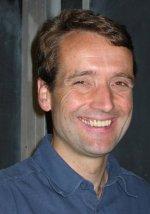
Rupert Klein is a Professor at Freie Universität Berlin in the Department of Mathematics and Computer Science , specializing in Geophysical Fluid Dynamics . His research spans atmospheric dynamics, numerical methods, and gas dynamics of combustion. Research Interests : Geophysical Fluid Dynamics and Atmospheric Modeling Multiscale Asymptotic Analysis Wave Propagation and Turbulence Combustion and Pressure Gain Combustion Climate Dynamics and Data Assimilation Scientific Awards : DRS Award for Excellent Supervision (2014) ECMWF Fellowship (renewed 2017) His recent work includes multiscale models for atmospheric flows, vortex dynamics, and combustion processes. Key collaborations involve DFG SPP 1276, CRC 1029 (TurbIn), and CRC 1114 (SCCS) projects. He contributes to numerical methods for low-Mach-number flows and geophysical simulations.
Prof. Miles Simon is a University Professor at the Institute for Analysis and Numerical Analysis (IAN) at Otto von Guericke University Magdeburg. His research focuses on geometric flows, particularly Ricci flow and mean curvature flow, with emphasis on singular metric spaces, curvature estimates, and geometric evolution equations. He has held academic positions since 1998, including postdoctoral roles at Max Planck Institute, Humboldt University Berlin, and Albert Ludwigs University Freiburg before becoming a full professor in 2011. Education: Completed his PhD at Melbourne University (1997) with a thesis on Ricci flow pinching phenomena. He obtained his Habilitation at Freiburg (2007) and has extensive postdoctoral training across leading institutions. Teaching: Regularly instructs advanced courses in differential geometry, geometric evolution equations, and analysis. Recent courses include Analysis III, Funktionentheorie, Differentialgeometrie II, and seminars on geometric analysis topics. Research Contributions: Over 20 peer-reviewed articles since 2000, focusing on Ricci flow regularity, curvature estimates, soliton dynamics, and geometric limit spaces. Notable work includes extending Ricci flows in 4D with bounded curvature and analyzing singularities in 3D geometries. Leadership: Project leader in DFG's SPP 2026 'Geometry at Infinity' and organizer of international workshops on nonlinear geometric diffusion equations. Active in academic administration and mentoring PhD students. Lab/Team: Supervises graduate researchers including Dr. Florian Litzinger and M.Sc. Priyamvada Vishwamitra, focusing on geometric flow applications and singularity analysis.
Max Planck Institute for Dynamics of Complex Technical SystemsGermany
Dr. Feliks Nüske is a Max Planck Group Leader at the Max Planck Institute for Dynamics of Complex Technical Systems in Magdeburg, leading the Data-driven Modeling of Complex Physical Systems research group. He also holds a position as Guest Professor at Freie Universität Berlin (2023-2024). His research bridges applied mathematics, data science, and molecular simulation to develop novel algorithms for understanding complex physical systems at the molecular level. Dr. Nüske's educational background includes: Ph.D. in Mathematics from Freie Universität Berlin (2012-2017) Postdoctoral research at Universität Paderborn (2019-2022) and Rice University (2017-2019) His research focuses on developing data-driven methods that combine physical insights with machine learning to extract meaningful information from molecular simulation data. Key areas include Koopman operator theory for analyzing nonlinear dynamical systems, dimensionality reduction techniques, tensor methods for efficient computation, and kinetically consistent coarse-graining approaches. His work enables more efficient modeling of complex molecular processes that would otherwise be computationally prohibitive. Dr. Nüske's publication record shows a consistent trajectory of advancing both the theoretical foundations and practical applications of data-driven modeling in molecular science. His recent work emphasizes error analysis for data-driven models, control of stochastic systems, tensor-based dimensionality reduction, and methods to preserve kinetic properties in coarse-grained models. These contributions address critical challenges in scaling molecular simulations to biologically relevant timescales and system sizes. Dr. Nüske actively collaborates with researchers worldwide and has established partnerships with leading institutions including Freie Universität Berlin, Rice University, and TU Ilmenau. His collaborative network spans multiple disciplines, connecting mathematicians, chemists, and computational scientists. Dr. Nüske advises several Ph.D. students at the Max Planck Institute, including Vahid Nateghi, Lei Guo, Minakshi Verma, and Hauke Sprink. He has organized workshops on Uncertainty Quantification for molecular systems and regularly presents at major international conferences including SIAM MS, MTNS, and IMSI workshops. His research group continues to push the boundaries of what's possible in computational molecular science through innovative mathematical approaches.
Weierstrass Institute for Applied Analysis and StochasticsGermany
Martin Eigel is a Researcher at the Weierstrass Institute for Applied Analysis and Stochastics (WIAS) , specializing in numerical methods for stochastic partial differential equations, uncertainty quantification, and machine learning applications in computational mathematics. His work bridges tensor networks, Bayesian inversion, and quantum simulations. Research Interests : Adaptive stochastic Galerkin finite element methods Low-rank tensor approximations for high-dimensional problems Machine learning integration with PDE solvers Quantum circuit simulation techniques Bayesian inverse problems and error control Key Article Trends : His recent publications focus on merging deep learning architectures (e.g., ResNet, CNNs) with stochastic and tensor-based numerical methods for solving parametric PDEs, Bayesian inversion, and quantum systems. Topics include Hamilton-Jacobi-Bellman equations, Langevin dynamics, and risk-averse optimization under uncertainty.
Max Planck Institute for Dynamics of Complex Technical SystemsGermany
Dr. Hussam Al Daas is a Postdoctoral Research Fellow at the Max Planck Institute for Dynamics of Complex Technical Systems since January 2019, specializing in numerical algorithms for large-scale scientific computing. His work bridges theoretical numerical analysis and high-performance implementation. Education: PhD in Applied Mathematics, Inria-Paris and Sorbonne University (2015-2018), funded by TOTAL Master in Fundamental and Applied Mathematics, Paris-Sud University (2012-2014) His research centers on developing communication-avoiding algorithms for sparse linear systems and tensor computations, with emphasis on robust preconditioners (algebraic two-level Schwarz, domain decomposition), Krylov subspace methods, and low-rank approximations. He addresses critical challenges in parallel scalability through rigorous complexity analysis and memory-efficient implementations, particularly for distributed-memory architectures. Analysis of his 2022-2025 publications reveals three dominant trends: (1) Algebraic multilevel preconditioners achieving robustness for ill-conditioned sparse systems, (2) Theoretical communication lower bounds with optimal algorithm design for tensor/matrix operations, and (3) Novel extensions of Krylov methods for sequences of shifted systems and tensor train decompositions. These contributions target reservoir simulation, PDE-constrained optimization, and high-dimensional data problems. Funded by TOTAL during his PhD and currently by the Max Planck Society, his work shows no evidence of student advisement or external grant leadership. He contributes to the Computational Methods in Systems and Control Theory group, focusing on scalable solvers for complex dynamical systems through collaborative software development and algorithmic innovation.
Lennart Risthaus serves as a Researcher at the Department of Engineering Mathematics within the School of Civil Engineering at the University of Duisburg-Essen, Germany. He joined the university in September 2023 after previously working as a Researcher at the Institute of Engineering Mechanics, Continuum Mechanics Division at the Karlsruhe Institute of Technology (KIT) from February 2021 to August 2023. His academic appointments demonstrate a consistent trajectory in computational mechanics research within German technical universities. Dr. Risthaus completed his Bachelor's degree in Mechanical Engineering with a focus on Continuum Mechanics (2014-2018) and Master's degree in Mechanical Engineering with majors in Medical Technology and Applied Mechanics (2018-2021), both from the Karlsruhe Institute of Technology. His educational journey included an Erasmus exchange semester at the Royal Institute of Technology (KTH) in Stockholm and practical experience through internships at Reden B.V. in the Netherlands and Admedes GmbH in Germany, where he worked on finite element simulations and material testing. His research specializes in advanced computational techniques for material science, particularly FFT-based homogenization methods in micromechanics. Risthaus has developed innovative approaches for implementing Dirichlet boundary conditions in FFT-based computational frameworks and pioneered applications of tensor-train formats to enhance computational efficiency. His work bridges theoretical mathematics with practical engineering applications, focusing on solving complex boundary value problems in material behavior analysis. An analysis of his publication record reveals a clear research trajectory toward increasingly sophisticated computational methods for micromechanical simulations. His recent work demonstrates growing expertise in thermal homogenization problems and the integration of tensor-train methods with traditional FFT approaches. The consistent publication in high-impact journals like Computational Mechanics and International Journal for Numerical Methods in Engineering indicates recognition within the computational mechanics community. Risthaus actively contributes to the academic community through presentations at major international conferences including the GAMM Annual Meetings, ECCOMAS Young Investigators Conference, and the International Conference on Computational Plasticity (COMPLAS). His teaching responsibilities include leading exercises and tutorials for Mathematics courses for Civil Engineering students at both undergraduate and graduate levels, demonstrating his commitment to engineering education alongside his research activities.
Sebastian Krämer is a researcher at the Institute for Geometry and Practical Mathematics at RWTH Aachen University, working under the supervision of Prof. Markus Bachmayr and Prof. Lars Grasedyck. His research focuses on tensor networks, low-rank approximations, and numerical methods for high-dimensional problems. He has made significant contributions to the field of tensor train formats and rank minimization techniques. Dr. Krämer's research interests span tensor networks, low-rank approximations, numerical linear algebra, high-dimensional approximation, tensor train formats, and machine learning optimization. His work centers on developing efficient algorithms for tensor decompositions, particularly focusing on alternating least squares methods, iteratively reweighted least squares approaches, and geometric constraints for tensor singular values. His research bridges theoretical numerical analysis with practical applications in high-dimensional data processing and scientific computing. His publication record shows a consistent output of high-quality work in top numerical analysis journals, with recent publications in 2024 demonstrating ongoing active research. His work demonstrates expertise in both theoretical aspects of tensor decompositions and practical implementation of numerical algorithms. He has developed several open-source toolboxes for tensor network arithmetic and tensor train feasibility problems, which have been widely used by the research community. Dr. Krämer has been actively involved in teaching, serving as a lecturer and assistant for various mathematics courses at RWTH Aachen, including Numerical Mathematics for mathematicians and civil engineers. He has also contributed to specialized research schools on high-dimensional approximation and deep learning, developing course materials and providing instruction. His professional activities include regular participation in the GAMM conference since 2017 and peer review activities for SIAM journals since 2015.