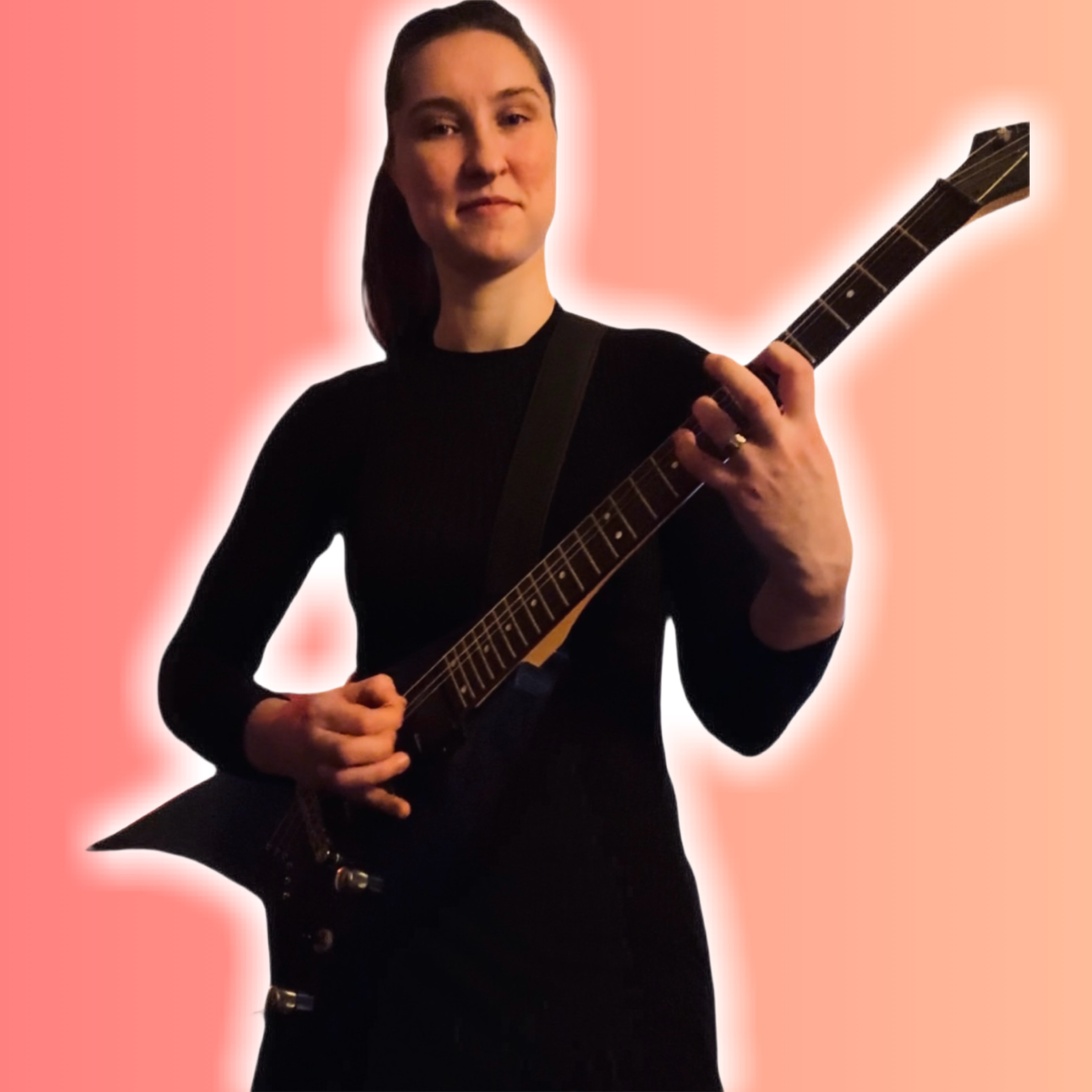
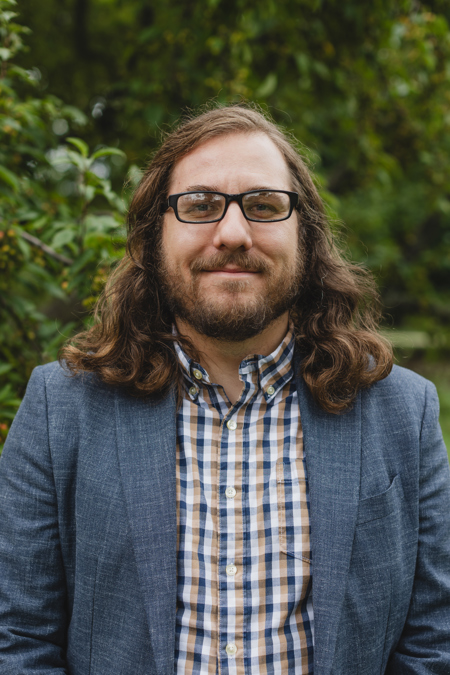
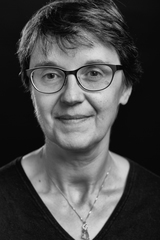
Pierre Humbert is a postdoctoral researcher at Sorbonne Université's Laboratoire de Probabilités, Statistique et Modélisation (LPSM), affiliated with the MARS project. He previously held postdoctoral positions at Laboratoire de Mathématiques d'Orsay (LMO) and the INRIA Celeste team. Humbert completed his PhD in 2021 at ENS Paris-Saclay, focusing on multivariate analysis with tensors and graphs in neuroscience under Professors Nicolas Vayatis, Laurent Oudre, and Julien Audiffren. His research interests span conformal prediction, statistical learning, non-parametric methods, robust statistics, signal processing, and applications in neuroscience. He contributes to federated learning frameworks, graph signal processing, and tensor-based methodologies for analyzing complex data structures. Humbert's recent work emphasizes federated conformal prediction for privacy-preserving distributed learning and robust statistical techniques. His publications frequently address graph Laplacian estimation, EEG signal processing, and tensor decomposition applications in biomedical contexts. He collaborates actively with teams like INRIA Celeste and maintains open-source implementations of his algorithms.
Kathlén Kohn is an Associate Professor in Mathematics at KTH Royal Institute of Technology in Stockholm, Sweden (since December 2024). She holds a PhD from Technische Universität Berlin (2018) and dual Master's degrees in Mathematics and Computer Science from Paderborn University (2015). Her research bridges algebraic geometry, geometric deep learning, and computer vision, focusing on algebraic structures in neural networks and geometric problems in AI. Education: PhD in Mathematics, TU Berlin (2015–2018) Master of Science in Mathematics & Computer Science, Paderborn University (2013–2015) Bachelor of Science in Mathematics & Computer Science, Paderborn University (2009–2013) Research: Kohn explores neural algebraic geometry , applying algebraic techniques to analyze deep learning architectures like polynomial neural networks and self-attention mechanisms. Her work includes minimal problems in computer vision (e.g., PLMP framework), metric algebraic geometry, and invariant theory connections to maximum likelihood estimation. She co-authored the book Metric Algebraic Geometry (2024) and leads the WASP-funded project on 3D scene perception. Recent Articles: Focus on geometric neural network analysis, self-attention mechanisms, and structure-from-motion problems. Key venues include ICML, ICLR, CVPR, and SIAM Journal on Applied Algebra and Geometry. Awards: Wallenberg Prize (2025), SIAM SIGEST Award (2024), Swedish L'Oréal-Unesco Award (2023), Göran Gustafsson Prize (2021), and multiple fellowships including Marie Skłodowska-Curie. Teaching & Outreach: Lectures on algebraic vision, nonlinear algebra, and cryptography. Active in promoting gender equality in STEM through ELLIS and Swedish Young Academy.
Nick Vannieuwenhoven is an Assistant Professor at KU Leuven, affiliated with the Department of Computer Science and the NUMA Division. He serves as the Exchange Coordinator for the Master in Mathematical Engineering and is an Associate Editor for The Electronic Journal of Linear Algebra and SIAM Journal on Applied Algebra and Geometry . His research focuses on tensor decompositions, numerical analysis, Riemannian optimization, and applications in data science. He obtained his PhD in 2015 under Professors Karl Meerbergen and Raf Vandebril, funded by the FWO (Research Foundation Flanders). His postdoctoral research (2015–2021) was also supported by FWO fellowships. His research group investigates tensor decompositions, multilinear algebra, and numerical techniques for data science, with a focus on condition number analysis and Riemannian optimization. Collaborators include experts like Carlos Beltrán, Paul Breiding, and Simon Telen. Current students include Jana Jovcheva, Bram Leys, and David Thorsteinsson, working on manifold-valued function approximation, group-invariant networks, and data-based engineering. Key awards include FWO fellowships for his PhD and postdoctoral studies. Grants include support for postdoctoral researchers via MSCA and FWO schemes. Notable projects involve Tucker compression libraries (ATC) and geometric analysis of tensor networks. His work bridges algebraic geometry, numerical analysis, and machine learning, emphasizing stability and computational efficiency.
Brent Nelson is an Associate Professor in the Department of Mathematics at Michigan State University (MSU). He holds a PhD in Mathematics from the University of California, Los Angeles (UCLA), under the supervision of Dimitri Shlyakhtenko, and a BS in Mathematics from the University of Illinois at Urbana-Champaign (UIUC). His research focuses on free probability, non-tracial von Neumann algebras, free transport, subfactor planar algebras, and bi-free probability. He has held postdoctoral positions at Vanderbilt University and the University of California, Berkeley, and has been recognized with awards including the Pacific Journal of Mathematics Dissertation Prize (2015) and the Distinguished Teaching Award (2018). Key research interests include the structure of von Neumann algebras, free monotone transport, and applications to quantum graphs and operator algebras. He has authored numerous publications in top-tier journals and presented at international conferences such as the Canadian Operator Symposium and the Banff International Research Station workshops. His teaching includes advanced courses on functional analysis, operator algebras, and real/complex analysis at MSU and other institutions. Grants include NSF funding for projects on non-tracial derivations and distributions, and he has organized conferences like the Groundwork for Operator Algebras Lecture Series (2020). His work bridges abstract operator algebra theory with applications in quantum probability and ergodic theory.
Ed Corrigan is a Professor of Mathematics at the University of York, holding this position since 2011. Previously, he served as Principal of Collingwood College, Durham University (2008–2011), and held roles including Head of the Department of Mathematical Sciences at Durham University (1999–2004, 2005–2007, 2011–2015). His academic journey includes a BA (1968) and PhD (1972) from the University of Cambridge, followed by fellowships at Durham University and CERN. His research focuses on Mathematical Physics, particularly classical and quantum integrable systems, integrable defects, and two-dimensional field theories with boundaries. Notable contributions include work on affine Toda field theories, soliton solutions, and defects in field theory. He has coordinated European Networks (1992–2006) and led projects funded by EPSRC and the Royal Society. Corrigan is a Fellow of the Royal Society (FRS, 1995), the Institute of Physics (FInstP, 1999), and the Institute of Mathematics and its Applications (FIMA, 2013). His work bridges theoretical physics and mathematics, emphasizing integrability and exact solutions. He has supervised numerous students and remains active in academic leadership and research.
Greg Blekherman is a Professor in the School of Mathematics at Georgia Tech. He is an associate director of the Algorithms, Combinatorics and Optimization (ACO) program and part of the NSF-Simons Southeast Center for Mathematical Biology. His research focuses on the interplay between convex and algebraic geometry, with applications to optimization and mathematical biology. Education: Ph.D., Mathematics, University of Michigan (2005) B.A., Mathematics, New York University (2000) Research Interests: Applied Algebraic Geometry and Convex Geometry Combinatorics (extremal, algebraic, probabilistic) Optimization (semidefinite programming, sums of squares) Mathematical Biology (robot locomotion, biomechanics) Recent Research Trends: His work bridges algebraic structures and geometric optimization, with recent focus on graph profiles, tropical geometry in extremal combinatorics, and convex hulls of algebraic varieties. Collaborations with robotics teams explore locomotion principles inspired by biological systems. Labs & Collaborations: Active in interdisciplinary projects with Dan Goldman's biology lab and robotics groups, applying geometric mechanics to optimize robot motion patterns.
Frank Lübeck is a Professor at RWTH Aachen University's Lehrstuhl D für Mathematik within the Faculty of Mathematics, Computer Science and Natural Sciences. His research focuses on representation theory of groups, particularly finite groups of Lie type and reductive algebraic groups, with an emphasis on computational methods and the development of computer algebra systems like CHEVIE. He has contributed extensively to understanding character tables, tensor product decompositions, and algorithmic approaches to group theory problems. His work includes foundational studies on Brauer trees, constructive recognition of groups, and the analysis of element proportions in finite Lie type groups. Collaborations with researchers like Geck, Hiss, and Malle have led to influential publications in journals such as Journal of Algebra and Archiv der Mathematik . Lübeck’s tools, such as the EDIM package, address computational challenges in linear algebra and group theory. His research bridges theoretical insights with practical algorithmic solutions, impacting both pure and computational mathematics.
Carlos Amendola is an Assistant Professor (tenure-track) of Algebraic and Geometric Methods in Data Analysis at the Institute of Mathematics of the Technical University of Berlin. Previously, he was a postdoc at TU Munich in Mathematical Statistics and Optimization and Data Analysis groups, and served as a substitute professor at Ulm University. His academic journey includes a PhD from TU Berlin under Bernd Sturmfels and Christian Haase, an M.Sc. from NYU's Courant Institute, and dual B.Sc. degrees from Mexican institutions. B.Sc. in Applied Mathematics, Instituto Tecnológico Autónomo de México B.Sc. in Mathematics, Universidad Nacional Autónoma de México M.Sc. in Mathematics, Courant Institute at New York University Ph.D. in Mathematics, Technical University of Berlin (2017) Amendola's research centers on Algebraic Statistics, with significant contributions to Applied Algebraic Geometry and Nonlinear Algebra. His work explores the intersection of algebraic methods with statistical modeling, particularly focusing on Gaussian mixtures, likelihood geometry, moment varieties, graphical models, and path signatures. He has developed novel approaches connecting tropical geometry with max-linear graphical models for extreme value theory, and has made important contributions to understanding maximum likelihood estimation through algebraic and geometric perspectives. His recent publications demonstrate a strong focus on applying algebraic techniques to statistical problems, with particular emphasis on path signatures, tropical geometry, and graphical models. The research shows a clear trajectory toward developing computational methods for complex statistical models using algebraic geometry, with applications spanning machine learning, causal inference, and extreme value analysis. Amendola serves as an editor for the Algebraic Statistics (AStat) journal since 2022 and has organized major conferences including Algebraic Statistics 2025. He has successfully secured significant research funding through Berlin Mathematics Research Center MATH+ Project AA3-16, DFG Collaborative Research Center CRC/TRR 388, and DFG Priority Program SPP 2458. As an advisor, Amendola currently supervises four PhD students (Janike Oldekop, Kamillo Ferry, Francesco Nowell, and Gabriel Riffo) and two postdocs (Rosa Preiß and Leonard Schmitz). His teaching portfolio includes courses on Algebraic Statistics, Discrete Geometry, and various mathematics subjects at both undergraduate and graduate levels.
Tom Gannon is a Hedrick Assistant Adjunct Professor at the University of California, Los Angeles (UCLA), and will join UC Riverside as an Assistant Professor in July. He earned his PhD in 2022 from the University of Texas at Austin under Sam Raskin. His research focuses on geometric representation theory, with strong connections to algebraic geometry, the Langlands program, homotopy theory, and mathematical physics. Gannon also serves as Deputy Director of the UCLA Olga Radko Endowed Math Circle, promoting mathematics education. Education: PhD in Mathematics (2022), University of Texas at Austin. Research Interests: Geometric representation theory, Langlands program, algebraic geometry, mathematical physics, categorical methods in representation theory, and homotopy-theoretic approaches to algebraic structures. His work often bridges abstract algebra with geometric techniques, emphasizing categorification and applications to quantum field theories. Teaching & Outreach: In 2017, Gannon led a summer mini-course on algebraic number theory at UT Austin, focusing on separable field extensions, Galois theory, and modules over PIDs. He has authored expository articles in the Notices of the AMS and contributed regularly to the AMS Graduate Student Blog. His teaching materials include courses on representation theory of Lie algebras and algebraic number theory. Labs/Teams: Active collaborator with researchers such as Harold Williams and Ben Webster. Engaged in projects with Victor Ginzburg on central D-modules and quantized Coulomb branches.
Yizhe Zhu is an Assistant Professor of Mathematics at the University of Southern California , specializing in theoretical and applied aspects of high-dimensional data analysis. His research bridges mathematics, computer science, and statistics, with a focus on random matrix theory, sparse data structures, and algorithmic analysis for machine learning and privacy-preserving data methods. Research Interests Yizhe Zhu’s work addresses fundamental questions in: Random Matrix Theory : Spectra of sparse and structured matrices, including outlier detection and universality. Graph and Hypergraph Analysis : Community detection, spectral properties, and non-backtracking algorithms for complex networks. Privacy and Data Synthesis : Theoretical frameworks for differentially private synthetic data generation. Tensor Completion : Efficient algorithms for recovering low-rank tensors from sparse observations. Publications Trends His recent research (2024–2025) emphasizes spectral analysis of random structures, optimization in non-convex settings, and privacy-preserving machine learning. Key themes include the interplay between sparsity, spectral theory, and algorithmic robustness in high-dimensional regimes.
Mihaela Vajiac is a Professor and Program Director for Mathematics at Chapman University's Schmid College of Science and Technology. She serves as Director of the Center of Excellence in Complex and Hypercomplex Analysis (CECHA) and organizes the Math/Physics/Computation Seminar. Her educational background includes a Ph.D. from Boston University and a B.S. from the University of Bucharest. Dr. Vajiac's research spans: Complex/Hypercomplex Analysis : Investigating Dirac-type operators, quaternionic systems, and applications in physics and engineering. Algebraic Computational Methods : Developing algebraic tools for PDEs including Maxwell and Cauchy-Fueter systems. Differential Geometry : Exploring integrable systems, curvature invariants, and symplectic structures. Her recent publications focus on bicomplex tensor products, spectral factorization in hypercomplex spaces, and geometric invariants, reflecting sustained innovation in operator theory and Clifford analysis. She co-organizes international workshops like IWOTA 2021 and maintains active collaborations with global researchers.
Hans Z. Munthe-Kaas is a Professor in the Department of Mathematics at the University of Bergen. He holds several prominent academic leadership roles, including Chair of the Abel Prize Committee, Editor-in-Chief of Foundations of Computational Mathematics , President of the Norwegian Mathematical Society, and Project Leader of the RCN-Fripro project CODYSMA and the Lie–Størmer Center. His research lies at the intersection of pure and applied mathematics and computer science, with a focus on the Foundations of Computational Mathematics . Key areas include geometric integration, Lie group integrators, Lie–Butcher theory, structure-preserving algorithms for differential equations, multivariate Chebyshev polynomials, and computational algebra. He has pioneered coordinate-free algorithm design through the SOPHUS project and developed the DiffMan MATLAB toolbox for solving differential equations on manifolds. The recent publications show a strong trend in algebraic and geometric structures in numerical analysis, particularly in Lie–Butcher series , B-series , post-Lie algebras , and aromatic trees , with applications to integration on manifolds and homogeneous spaces. These works combine deep theoretical insights with practical computational implications. His scientific honors include the Esso Prize (1999) for his PhD work on numerical linear algebra and parallel algorithms. He has also led major research initiatives and collaborative projects, securing funding from the Research Council of Norway. Munthe-Kaas has advised students at the master’s level and welcomes new thesis projects. He has been active in teaching at all levels, including international courses at AIMS South Africa, CIMPA Brazil, and Morningside Center Beijing. He is also involved in public outreach through programs like 'Mattesirkelen' for high school students. He leads the Lie–Størmer Center and has developed software such as the SOPHUS C++ library and DiffMan toolbox, reflecting his commitment to bridging theoretical mathematics with computational practice.
Hildeberto Jardón Kojakhmetov is an Assistant Professor in the Dynamical Systems, Geometry and Mathematical Physics (DSGMP) group at the Bernoulli Institute, University of Groningen. His research focuses on dynamical systems with multiple time scales, including applications in control theory, mathematical biology, neuroscience, and network science. He is particularly interested in slow-fast systems, bifurcation analysis, and the interplay between network structures and dynamical behavior. His research interests span theoretical and applied domains, emphasizing geometric singular perturbation techniques, hypergraph models, and the analysis of complex systems. Key areas include epidemic spreading on hypergraphs, co-evolutionary dynamics, and synchronization phenomena in heterogeneous networks. He also explores topological aspects of canards and singularities in fast-slow systems. Recent work trends highlight advancements in understanding multiscale dynamics through novel mathematical frameworks, such as tensor-based Hamiltonian systems and S-tensors for ecological models. His contributions address both foundational theory and practical applications in systems biology and network control. While no scientific awards are explicitly mentioned in available texts, his extensive publication record reflects a strong commitment to advancing nonlinear dynamics and complex systems research. His academic activities include organizing events like the Summer School on Multiscale Modelling and the Floris Takens Seminar.
Monique Laurent is a Tilburg University professor and senior researcher at CWI (Centrum Wiskunde & Informatica), focusing on discrete mathematics and optimization . Her work bridges algebra, geometry, and computer science to solve complex combinatorial and polynomial optimization problems. Part-time full professor at Tilburg University (since 2009) Group leader of Networks and Optimization at CWI (2005-2016) Current member of CWI Management Team Research Focus: Semidefinite programming hierarchies, noncommutative polynomial optimization, quantum information theory, and matrix factorization. Her recent work explores applications in quantum entanglement , graph parameters , and combinatorial data analysis . Key Publications: 15+ articles from 2017-2024 address topics like copositive matrices , sum-of-squares convergence , and hypergraph optimization . Collaborations span institutions in the Netherlands, France, Germany, and the U.S. Awards: 2023 Khachiyan Prize SIAM Fellow (2017) KNAW member (2018) EUROPT Fellow (2021) Grants & Projects: Leads EU-funded initiatives TENORS (2024) and POEMA (2019), with prior NWO and Marie Curie grants. Organizes international workshops on polynomial optimization and quantum information.
Ivan B. Penkov is an Adjunct Professor of Mathematics at Constructor University Bremen, Germany, with a distinguished career in Lie theory, representation theory, and algebraic geometry. He earned his Master's degree from Moscow State University (1982) and Ph.D. from Steklov Mathematical Institute (1987). His academic journey includes tenured professorships at the University of California at Riverside (1991-2004) and a long-standing professorship at Jacobs University Bremen (2004-2023), followed by his current adjunct role. Education: Master in Mathematics, Moscow State University (1982) Candidate of Physical and Mathematical Sciences (PhD), Steklov Mathematical Institute (1987) Penkov's research focuses on representations of finite and infinite-dimensional Lie algebras and superalgebras, generalized Harish-Chandra modules, geometry of supermanifolds, and homogeneous ind-spaces. His work bridges pure mathematics with mathematical physics, emphasizing infinite-dimensional structures and their applications. Recent publications highlight advancements in bounded weight modules for Lie superalgebras at infinity, topological tensor representations, and automorphism groups of ind-varieties of generalized flags. These works reflect his deep engagement with categorification, geometric methods, and infinite-dimensional algebraic structures. Scientific awards and grants include multiple NSF and DFG grants, a Volkswagen Foundation grant, and the Batsheva de Rothschild Fellowship (2023). He has coorganized significant conferences and programs, such as the California Lie Theory Program and the German-Israeli workshop on symplectic geometry and representation theory. Penkov's advisees include PhD and MSc students like Aleksandr Fadeev, Elitza Hristova, Siarhei Markouski, and Todor Milev, many of whom have contributed to Lie theory and algebraic geometry. He has also mentored postdocs and collaborated with institutions worldwide, including Yale University, UC Berkeley, and the Max Planck Institute of Mathematics in Bonn.