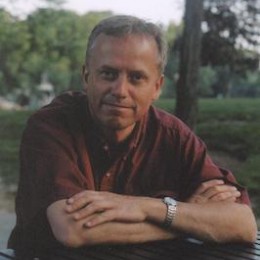
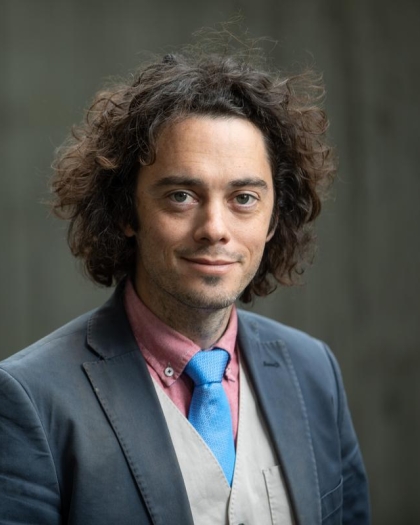
Mikkel N. Schmidt is an Associate Professor in the Department of Applied Mathematics and Computer Science at the Technical University of Denmark (DTU). His research focuses on statistical modeling, Bayesian methods, and their applications in science and industry. He has held visiting roles at Columbia University (2007) and Cambridge University (2008-2009). His work integrates probabilistic modeling with computational inference to address complex problems in diverse fields such as molecular discovery, optical communication, and brain connectivity analysis. Education highlights include visiting scholar and postdoctoral experiences at top-tier institutions. Research interests span statistical methodology development, machine learning applications, and interdisciplinary problem-solving. Current projects involve Bayesian neural networks for molecular discovery and federated learning optimization. Advising efforts include supervising multiple PhD students in areas like molecular discovery and denoising diffusion models. Notable collaborations involve work on materials science, quantum communication, and medical signal processing. His contributions bridge theoretical advancements with practical industrial applications, emphasizing interdisciplinary innovation.
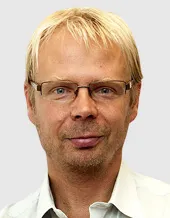
Dr. Guillem Müller Rigat is a Postdoctoral Researcher at the Institute of Photonic Sciences (ICFO), working in the Quantum Optics Theory research group. He holds a PhD in Photonics from the Universitat Politècnica de Catalunya (Spain). His research focuses on quantum information theory and quantum optics, with a particular emphasis on entanglement, Bell inequalities, and many-body quantum systems. He explores topics such as quantum resource certification, symmetry in quantum states, and applications of machine learning in quantum tomography. Müller Rigat’s work bridges fundamental quantum theory and experimental feasibility, addressing challenges in quantum metrology, nonlocality, and chaos. His recent studies include developing methods to infer quantum correlations from observable data and enhancing protocols for entanglement detection in complex systems. He contributes to advancing theoretical frameworks for certifying quantum systems with minimal experimental resources. He is affiliated with ICFO’s Quantum Optics Theory group, where he collaborates on projects involving Bell inequalities, spin-nematic squeezing, and quantum Fisher information. Despite his postdoctoral focus, he actively publishes in high-impact journals, with a strong emphasis on interdisciplinary approaches combining quantum foundations and applied quantum technologies.
Daniel Stilck França is an Associate Professor at the Department of Mathematical Sciences within the Faculty of Natural and Life Sciences at the University of Copenhagen . He is affiliated with the QMATH Centre for Quantum Mathematics and related research networks. His research focuses on quantum information and computation , particularly on noise characterization in quantum systems, its impact on computational tasks, and quantum-inspired convex optimization algorithms. Recent work explores tensor networks and quantum error mitigation limitations. Key publications (2023-2025) address topics like Pauli channel estimation, Hamiltonian parameter learning, and quantum simulator scalability. His work has been featured in Nature Communications , Nature Physics , and ACM/IEEE conferences.
Göran Ekström is the Newberry Professor of Earth and Environmental Sciences at Columbia University's Lamont-Doherty Earth Observatory. He holds joint affiliations with the School of Earth and Environmental Sciences and the Department of Earth and Environmental Sciences. Previously, he was a professor at Harvard University (1990–2006) before moving to Columbia. His research focuses on seismic wave analysis, earthquake mechanics, and environmental geophysics with notable contributions to understanding glacial earthquakes, volcanic processes, and nuclear explosion monitoring. Education: B.S. in Physics (Swarthmore College, 1981), Ph.D. in Geophysics (Harvard University, 1987). Postbaccalaureate studies at Moscow State University and postdoctoral work at Columbia University. He has served as chair of major organizations like the Incorporated Research Institutions for Seismology and EarthScope Steering Committee. Research interests span seismology, tectonophysics, and environmental geology. Notable achievements include discovering glacial earthquakes linked to Greenland ice dynamics and developing the Global Centroid Moment Tensor Project. His work integrates seismic data from global networks to study Earth’s interior structure and tectonic processes. Awards include the Beno Gutenberg Medal (2015) and election to the U.S. National Academy of Sciences (2019). He advises on geohazard monitoring and collaborates with international agencies for seismic treaty verification. Current projects include studies of mantle dynamics using surface-wave tomography and analysis of geophysical signals from extreme events like landslides and volcanic eruptions.
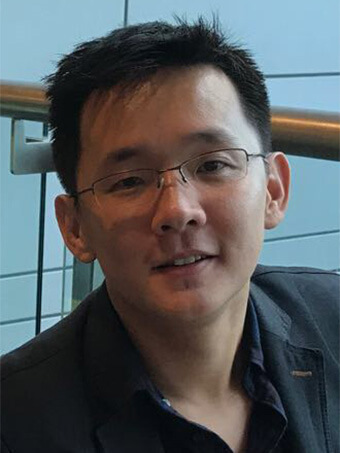
Dr. Alvin J. K. Chua is an Assistant Professor at the National University of Singapore (NUS) under the NUS Presidential Young Professorship. He holds a joint appointment in the Department of Mathematics and a courtesy appointment in the Department of Statistics and Data Science. His research focuses on gravitational-wave astronomy , particularly extreme mass ratio inspirals (EMRIs) as key sources for the LISA mission. He develops computational and statistical methods for modeling GW sources and analyzing detector data, with recent work on machine learning and Bayesian inference techniques. His selected publications highlight advancements in modeling beyond-vacuum-GR effects in EMRIs non-local parameter degeneracies rapid relativistic waveform generation neural networks for GW inference statistical sampling on manifolds These works span gravitational-wave astrophysics , computational relativity , and applied statistics . Scientific recognition includes the NUS Presidential Young Professorship. He collaborates with the LISA Consortium and the North American Nanohertz Observatory for Gravitational Waves (NANOGrav).
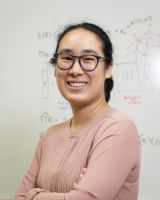
Christina Lee Yu is an Assistant Professor at Cornell University in the School of Operations Research and Information Engineering (ORIE). She holds a PhD and MS in Electrical Engineering and Computer Science from MIT (2017, 2013) and a BS in Computer Science from Caltech (2011). Her research focuses on algorithm design, high-dimensional statistics, causal inference in networks, and reinforcement learning. She is also an Amazon Scholar and has received prestigious awards, including the NSF CAREER Award and Intel Rising Stars Award. Her work is supported by grants from the NSF and Air Force Office of Scientific Research. Education: PhD in EECS, MIT (2017) MS in EECS, MIT (2013) BS in Computer Science, Caltech (2011) Research Interests: Algorithm design and analysis Inference over networks and causal inference Sequential decision making under uncertainty Online learning and reinforcement learning High-dimensional statistics Awards and Honors: NSF CAREER Award (2024) ACM SIGMETRICS Rising Stars Award (2024) Intel® Rising Stars Award (2021) JPMorgan Faculty Research Award (2021) Simons Institute Research Fellow (2020) INFORMS Dantzig Dissertation Award Honorable Mention (2018) Grants and Funding: National Science Foundation (NSF) CAREER Grant Air Force Office of Scientific Research Grant Advising: PhD Students: Sean Sinclair, Tyler Sam, Xumei Xi Collaborators: Mayleen Cortez, Matthew Eichhorn Labs and Collaborations: Member of ORIE, Statistics, CAM, and CS graduate fields at Cornell Amazon Visiting Academic in Fulfillment Optimization (2025)
Kavan Modi is a Professor at the School of Physics and Astronomy, Monash University. His research focuses on quantum information theory applied to dynamics, metrology, computation, thermodynamics, and relativity. He leads the Monash Quantum Information Science (MonQIS) group and serves as Director of the Centre for Quantum Technology at Transport for NSW (2022–2024). Education: B.Sc. Engineering Physics (Embry-Riddle Aeronautical University, 2001), M.A. Physics (University of Texas at Austin, 2004), Ph.D. Physics (University of Texas at Austin, 2008). Postdoctoral positions included the Centre for Quantum Technologies (Singapore, 2008–2011) and Clarendon Lab, Oxford (2011–2013). Joined Monash in 2014. Research interests center on quantum dynamics, non-Markovian processes, and their applications in quantum computing and information science. Projects include developing error correction codes, quantum algorithms for network analysis, and mitigating correlated noise in quantum systems. He has authored over 111 publications, with recent work emphasizing non-Markovian characterization, quantum process tomography, and topology-based quantum algorithms. Awards and grants include leadership in multiple Australian Research Council projects. Advising/Grants: Primary Chief Investigator in projects like 'Quantum Software Platform' (2023–2026) and 'Mitigating Correlated Noise in Quantum Machines' (2020–2021). Supervises graduate students and collaborates globally on quantum information science. Labs/Teams: MonQIS group focuses on foundational and applied quantum research, integrating theory and experimental collaborations.
Sharad Malik is the George Van Ness Lothrop Professor of Engineering at Princeton University's Department of Electrical and Computer Engineering. His research focuses on designing functionally correct and secure computing systems, combining system design with mathematical modeling for verification. He pioneered the Instruction-Level Abstraction (ILA) model for SoC verification and has contributed extensively to Boolean satisfiability (SAT) solvers. Education: PhD (1990), M.S. (1987) in Computer Science from UC Berkeley; B.Tech. (1985) in Electrical Engineering from IIT Delhi. Research Interests: Formal Verification of Digital Systems Hardware Security and Trust Boolean Satisfiability Solvers System-on-Chip (SoC) Design Accelerator-rich Platform Architectures Notable Achievements: IEEE CEDA A. Richard Newton Technical Impact Award (2017) 2013 IEEE/ACM DAC Most Cited Paper Award Princeton President’s Distinguished Teaching Award (2009) Advising & Labs: Leads the Malik Group, advising over 50 graduate students and postdocs. Active in postdoc recruitment and mentorship programs.
Örs Legeza is a physicist and scientific advisor at the Wigner Research Centre for Physics of the Hungarian Academy of Sciences in Budapest, leading the Strongly Correlated Systems Research Group. He holds a visiting professorship at Philipps University Marburg, Germany, and has held fellowships at institutions like ETH Zurich and LMU Munich. His research focuses on developing tensor network state (TNS) methods for strongly correlated quantum systems, with applications in condensed matter physics, quantum chemistry, and nuclear structure calculations. Education: PhD from Budapest University of Technology and Economics (1997). He has collaborated with European institutions such as FAU Erlangen-Nuremberg and has been an Alexander von Humboldt awardee. His work bridges quantum information theory and computational mathematics to advance simulations of complex quantum systems. Research interests include quantum phase transitions, magnetic properties in solids, and ultracold atomic systems. His methods push computational boundaries for larger systems, integrating techniques like density matrix renormalization group (DMRG) and matrix product states (MPS). Notable awards include the 2021 Academy Prize and 2018 Humboldt Research Award. Recent articles explore quantum crystal imaging, tensor network algorithms, and nuclear structure calculations. His work emphasizes interdisciplinary approaches to quantum many-body problems.
Jan Martin Nordbotten is a full-time Professor at the Department of Mathematics, University of Bergen (UiB), with adjunct positions at Princeton University and NORCE. His research focuses on applied mathematics, particularly in porous media, CO2 storage, fluid dynamics, and interdisciplinary applications in hydrology, biomedicine, and ecology. He completed his PhD at UiB in 2004 and became Norway's third youngest professor in 2007. His work emphasizes numerical methods, multiscale modeling, and experimental validation. Affiliations: UiB (full-time), Princeton (adjunct), NORCE (adjunct) Research Group: Center for Sustainable Subsurface Resources Research interests span mathematical modeling of subsurface processes, including flow in fractured media, geomechanics, and phase-field fracture. Notable contributions include analytical and numerical solutions for CO2 leakage, multiphase flow, and development of tools like DarSIA for image processing in porous media. Publications highlight advancements in mixed-dimensional models, finite element methods, and experimental validation of CO2 storage forecasts. His work bridges theoretical mathematics with practical applications in energy and environmental systems.
Athanasios Rontogiannis is an Associate Professor at the School of Electrical and Computer Engineering of the National Technical University of Athens (NTUA). He holds a PhD in Signal Processing from the National University of Athens (1997) and has held roles including Research Director at the National Observatory of Athens (2017–2021). His research focuses on signal processing, machine learning, and hyperspectral image analysis. Education: MEng (Electrical Engineering, NTUA, 1991), M.A.Sc. (University of Victoria, Canada, 1993), PhD (Signal Processing, National University of Athens, 1997). Research interests include adaptive algorithms, sparse representations, and tensor models. He has served on editorial boards of IEEE Transactions on Signal Processing and EURASIP journals, receiving an honorary distinction in 2020. He is a Senior Member of IEEE and affiliated with EURASIP and the Technical Chamber of Greece. Key contributions span hyperspectral unmixing, Bayesian algorithms, and space data exploitation. His work integrates machine learning for applications in space science and signal processing.
Professor Vincent Y. F. Tan holds dual appointments in the Department of Mathematics and the Department of Electrical and Computer Engineering (ECE) at the National University of Singapore (NUS). He is also affiliated with the Institute of Operations Research and Analytics (IORA) and the Institute of Data Science (IDS). His research focuses on Online Decision Making, Multi-Armed Bandits, Reinforcement Learning, Information Theory, and Statistical Signal Processing. Notably, he has been actively publishing in top-tier conferences like NeurIPS, ICML, and IEEE journals, with recent works exploring topics such as low-rank adaptation, off-policy evaluation, and queueing control. Professor Tan has advised numerous PhD students, including Fengzhuo Zhang, Yujun Shi, and Junwen Yang. He has received recognition for his teaching, including a 4.7/5.0 rating for EE5137 Stochastic Processes. His work has led to impactful publications, such as the best paper award at the ICML 2025 workshop on World Models and an oral presentation at ICLR 2025. He currently serves as a Senior Area Chair for NeurIPS 2025 and an Area Editor for the IEEE Transactions on Information Theory. His research group focuses on advancing theoretical and applied aspects of machine learning, with projects funded by grants in areas like distributed optimization and adversarial robustness. He collaborates widely, including with institutions like IIT Delhi and HKUST Guangzhou. Open positions are available for motivated postdocs and students in his research areas.
Prof. David Ham is a Professor of Computational Mathematics at the Department of Mathematics, Faculty of Natural Sciences, Imperial College London. His research focuses on high-level abstractions for scientific computation, particularly in geophysical fluids and numerical software. He leads the Firedrake project and co-developed the dolfin-adjoint framework, which received the 2015 Wilkinson Prize for Numerical Software. Ham holds a BSc (Mathematics) and LLB from The Australian National University, and a PhD from TU Delft. His career includes roles as a NERC Independent Research Fellow and Grantham Research Fellow at Imperial College. He is affiliated with the Grantham Institute, Mathematics of Planet Earth, and Software Performance Optimisation groups. His research spans computational science, including finite element methods, adjoint-based inversion, and parallel computing. Recent work emphasizes differentiable programming integration with machine learning and geophysical modeling. Ham has contributed to numerous grants and projects, including EPSRC and NERC-funded initiatives. He leads development of software tools like Firedrake and Thetis, advancing computational methods for oceanography and geodynamics.
Garnet K. Chan is the Bren Professor of Chemistry and Director of the Rudolph A. Marcus Center for Theoretical Chemistry at the California Institute of Technology. He received his B.S. from the University of Cambridge in 1996 and his M.A. and Ph.D. from the University of Cambridge in 2000. Dr. Chan's research lies at the interface of theoretical chemistry, condensed matter physics, and quantum information theory, focusing on quantum many-particle phenomena and the numerical methods to simulate them. His group has developed numerous methodologies including density matrix renormalization and tensor network algorithms, canonical transformation-based down-foldings, local quantum chemistry methods, quantum embeddings, and new quantum Monte Carlo algorithms. His work addresses problems that appear naively exponentially hard but where understanding of physics, particularly entanglement structure, allows for calculations of polynomial cost. Analysis of his recent publications reveals a strong focus on quantum simulation techniques, particularly tensor network methods applied to strongly correlated systems. His research spans fundamental theoretical developments to practical applications in quantum computing, molecular simulation, and materials science, with increasing integration of machine learning techniques and GPU acceleration in computational chemistry frameworks. Dr. Chan leads an active research group at Caltech dedicated to simulating chemical and physical systems at the level of many-particle quantum mechanics. His group has welcomed numerous researchers including Kasra Hejazi, Zuxin Jin, Zhihao Cui, Ke Liao, Henrik Larsson, and Wenyuan Liu. He teaches courses in Physical Chemistry (Ch 21 abc) and Advanced Quantum Chemistry (Ch 225), contributing significantly to theoretical chemistry education at Caltech.
Abdulkadir C. Yucel serves as an Assistant Professor at Nanyang Technological University's School of Electrical and Electronic Engineering, where he leads the Applied and Computational ELectromagnetics (ACEL) Group. His research spans applied electromagnetics, radar imaging, and AI-driven electromagnetic analysis with applications in smart cities, neurotechnology, and quantum systems. Education: Ph.D. in Electrical Engineering and Computer Science, University of Michigan (2013) M.S. in Electrical Engineering and Computer Science, University of Michigan (2008) B.S. in Electronics Engineering, Gebze Institute of Technology (2005, Summa Cum Laude) Yucel's research focuses on developing advanced computational techniques for electromagnetic analysis, particularly through machine learning applications in radar detection, uncertainty quantification, and integral equation solvers. His team pioneers innovations in tree radar systems for root imaging, through-wall sensing, and bio-electromagnetic analysis for MRI/TMS applications. Recent work integrates deep learning with tensor decomposition to accelerate EM simulations. Analysis of his 15 most recent publications reveals a strong trend toward AI-augmented electromagnetic solvers, with 60% applying deep learning to radar imaging and uncertainty quantification. Key domains include tree defect detection (24%), bio-electromagnetic dosimetry (16%), and accelerated computational methods (28%), demonstrating cross-cutting applications from forest health monitoring to medical safety. Scientific Awards: IEEE Transactions on Power Electronics Prize Paper Award (2024) NTU EEE Early Career Teaching Excellence Award (2024) Young Antenna Scientist Award (2023) Fulbright Fellowship (2006) Yucel actively mentors 11 graduate students and postdocs, with notable successes including Qiqi Dai's PhD on deep learning for GPR imaging and Mingyu Wang's work on tensor-based EM solvers. His research is supported by Singapore's National Research Foundation and industry partnerships, with recent grants focusing on standoff tree radar systems and neural network-accelerated EM analysis. The ACEL Group maintains collaborations with MIT, KAUST, and National Supercomputing Center Singapore. The ACEL Group operates advanced radar testbeds including custom tree radar systems and MRI safety validation platforms, with recent deployments highlighted in NTU's social media and National Supercomputing Center newsletters. Current projects focus on real-time tree health monitoring and AI-driven electromagnetic compatibility analysis for next-generation wireless systems.