Norwegian University of Science and TechnologyNorway
Guillaume Dutilleux is a Professor in the Department of Electronic Systems at the Norwegian University of Science and Technology (NTNU). His research focuses on bioacoustics, environmental acoustics, sound propagation, and noise mitigation in contexts such as wind turbines, railways, and road traffic. He has contributed to interdisciplinary projects, including acoustic tracking of wildlife and automated biodiversity monitoring. Dutilleux teaches courses like TTT4181 (Acoustic Discovery), TTT4290 (Bioacoustics for Biodiversity), and TFE4595 (Electronic Systems Design). He has published extensively in journals such as Applied Acoustics , Journal of the Acoustical Society of America , and Bioacoustics , with recent work addressing time-varying acoustical systems and noise annoyance prediction. His research emphasizes practical applications of acoustics in environmental and technological domains. Leading acoustic experiments on long-range sound propagation and noise impact assessment Developing educational programs in acoustical measurement techniques Collaborating on automated acoustic monitoring for endangered species conservation His work bridges theoretical acoustics with real-world challenges, contributing to both academic discourse and policy-informing studies.
M.Sc. Pascal Esser is a researcher at the Department of Informatics at Technical University of Munich (TUM). He specializes in theoretical computer science, formal methods, and machine learning, with a focus on neural networks and verification techniques. His teaching responsibilities include courses on theoretical computer science fundamentals such as Petri Nets, Automata and Formal Languages, Logic, and Model Checking. He has contributed to research in representation learning, graph neural networks, and probabilistic models, as evidenced by his recent publications. Esser is involved in the development of tools like Automata Tutor and has collaborated on projects such as PaVeS and ConVeY. His work bridges formal methods and artificial intelligence, emphasizing rigorous theoretical foundations while exploring practical applications in neural network verification and algorithm design. Education: Master of Science in Computer Science (degree details unspecified). Research Interests: Formal verification, machine learning theory, neural networks, representation learning, graph algorithms, and theoretical computer science. Professional Activities: Active in teaching advanced undergraduate and graduate courses since 2020, with a focus on foundational topics in informatics and emerging areas like neural network verification. Egger's research trends emphasize interdisciplinary approaches, combining insights from statistical learning theory with algorithmic analysis to address challenges in modern AI systems. His publications highlight advancements in understanding model dynamics, kernel-based methods, and graph neural network architectures. While no specific grants or awards are listed, his sustained academic contributions indicate active engagement in the informatics research community. He is part of a research group at TUM including notable figures like Javier Esparza and Jan Křetínský, contributing to tools and frameworks for automata theory and model checking. His work often intersects with practical software implementations such as the Automata Tutor educational platform and Strix verification tools.
Max Planck Institute for Human Cognitive and Brain SciencesGermany
Dr. Alfred Anwander is a Senior Researcher in the Department of Neuropsychology at the Max Planck Institute for Human Cognitive and Brain Sciences in Leipzig, Germany. His work focuses on diffusion MRI as a biomarker for brain development and plasticity, particularly in language-related pathways and neuroplasticity mechanisms during second language acquisition. He has held research positions at the institute since 2000, contributing to projects such as the DFG-funded "Human microstructural connectomics" and "Dynamic Connectome" initiatives. Education 1991–1996: Diploma in Electrical Engineering from the University of Karlsruhe 1995–2000: MSc (DEA) and PhD in Signal and Image Processing from INSA Lyon (France), with a thesis on model-based color image segmentation. Research Interests Anwander’s research integrates advanced neuroimaging techniques to study structural connectivity in the human brain. Key areas include: Diffusion MRI applications in developmental neuroscience and neuroplasticity Language-related white matter pathways Evolutionary comparisons of brain connectivity in primates Methodological advancements in high-resolution MRI and tractography Grants & Projects DFG project "Human microstructural connectomics: Computational modelling and validation with histology and CLARITY (MiCo-MRI)" DFG project "The dynamic connectome underlying language in the brain (DynaCon)" Evolution of Brain Connectivity (EBC) initiative Labs & Teams He collaborates within the institute’s Cortical Networks and Language Research groups, focusing on interdisciplinary approaches to connectomics and neuroimaging technology development.
Prof. Marc CASTELLA is a Lecturer at Telecom SudParis, part of the SOP (Signal and Optimization Processing) unit. His research focuses on signal processing, particularly in blind source separation, nonlinear reconstruction, and optimization techniques. He has extensively contributed to areas such as sparse signal recovery, neural networks, and tensor decomposition. His work often addresses challenges in noisy environments and nonlinear systems. Recent publications include advancements in clipped signal recovery, motor torque estimation, and global optimization methods. Though no specific awards are listed, his prolific publication record reflects his impactful contributions to signal processing and applied mathematics. He collaborates with researchers like Jean-Christophe Pesquet and Arthur Marmin on projects involving polynomial systems and neural network models. His work is applied in diverse fields from industrial electronics to data analysis.
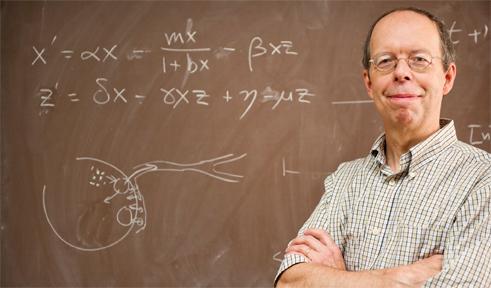
Todd Young is a Professor and Chair in the Department of Mathematics at Ohio University , part of the College of Arts and Sciences . He is also a member of the Quantitative Biology Institute and the Infectious and Tropical Disease Institute . His research integrates dynamical systems theory with biological modeling, particularly in cell cycle regulation, clustering phenomena in yeast, and biomedical informatics. Education: Ph.D. in Mathematics, Georgia Institute of Technology, 1995 M.S. in Mathematics, University of California at Riverside, 1991 M.S. in Engineering Mechanics, University of Kentucky, 1987 B.S. in Mathematics, University of Kentucky, 1985 Research Interests: Todd Young's work centers on the qualitative theory of ordinary and random differential equations , with applications in cell cycle dynamics , biological feedback systems , clustering in populations , and binary classification in biomedical informatics . He develops mathematical models to understand how feedback mechanisms lead to synchronization in yeast and how dynamical systems principles apply to neural and immune responses. His research spans pure theory, such as bifurcation and ergodic theory, to applied problems in public health, like ventilator-associated pneumonia detection. Research Trends: His recent publications reveal a strong focus on mathematical biology , particularly in modeling the cell cycle with feedback and clustering behavior . He increasingly integrates numerical methods and tensor approximation dynamics into his work, collaborating across disciplines in physics, engineering, and medicine. His articles frequently appear in journals like SIAM Journal on Applied Dynamical Systems , Journal of Mathematical Biology , and Nonlinearity , reflecting a blend of rigorous analysis and biological relevance. Scientific Awards and Roles: Joint Editor-in-Chief, Dynamical Systems journal Recipient of the College of Arts and Sciences “Dean's Outstanding Teacher Award” Editorial Board memberships in Discontinuity, Nonlinearity and Complexity and Annual Review Chaos Theory, Bifurcations & Dynamical Systems Founding member of the Quantitative Biology Institute Active member of SIAM, AMS, and MAA Advising and Grants: Todd Young has advised numerous Ph.D., M.S., and undergraduate students, many of whom have pursued academic or data science careers. His research has been funded by the National Institutes of Health (NIH) and the National Science Foundation (NSF) , notably through the NIH-NIGMS R01GM090207 grant on mathematical biology. He emphasizes student training through structured research participation, including exploratory and paid assistantships. Labs and Teams: He leads the Dynamics in Biology Research Group , which includes students and collaborators working on projects ranging from theoretical dynamics to computational biology. The group fosters interdisciplinary collaboration, particularly with biologists and medical researchers at Ohio University and beyond.
Tozammel Hossain is an Assistant Professor at the University of North Texas. His research focuses on Bioinformatics, Health Informatics, Social Media Analytics, Event Forecasting, and Cybersecurity. He holds a Ph.D. and M.S. from Virginia Tech and a B.S. from Bangladesh University of Engineering and Technology. Education: Ph.D., Virginia Tech M.S., Virginia Tech B.S., Bangladesh University of Engineering and Technology Research Interests: Hossain’s work spans interdisciplinary areas including healthcare analytics, geopolitical event prediction, cybersecurity, and machine learning applications. He develops models for continuous blood glucose prediction, gene expression analysis, and ransomware attack detection. His methods often integrate social media data and temporal modeling for public health and security applications. Research Trends: His articles highlight advancements in LSTM networks for healthcare and event forecasting, federated learning in healthcare data, and hybrid systems for geopolitical analysis. Themes include personalized medicine, conflict prediction, and leveraging social media for syndromic surveillance. Labs & Teams: While specific lab affiliations are not listed, his projects suggest collaboration with interdisciplinary teams in healthcare informatics, cybersecurity, and computational biology.
Antoine Tilloy is an Assistant Professor at the Centre Automatique et Systèmes, Mines ParisTech, part of Paris Sciences et Lettres (PSL). He is also affiliated with the Quantic research team at Inria, reflecting his dual academic and research institute role. His work bridges theoretical physics, quantum information, and nuclear engineering, with a focus on tensor networks and quantum field theory. Research Interests: Quantum Field Theory (non-perturbative methods) Tensor Networks for many-body quantum systems Quantum Foundations and Measurement Theory Semiclassical and Quantum Gravity Nuclear Engineering and Fuel Cycle Physics His recent research has explored the application of tensor networks to solve quantum field theories, the philosophical and technical challenges in defining QFT rigorously, and the physics of nuclear fuel recycling. He advocates for a 'pile of dirt' approach—tackling messy, realistic models over highly structured but artificial ones. Scientific Contributions: Active contributor to non-perturbative QFT methods ERC-funded research and postdoctoral supervision Public engagement through blog posts and science communication Advising and Grants: While specific students are not listed, he leads an ERC-funded project and has advertised postdoctoral positions, indicating active mentorship. His research is supported by competitive European funding, underscoring its significance in the field. Labs and Teams: He is a member of the Quantic team at Inria, a leading research group in quantum information and technologies, and conducts his work at the Centre Automatique et Systèmes at Mines ParisTech.
Anders Nymark Christensen is an Associate Professor in the Department of Applied Mathematics and Computer Science at the Technical University of Denmark (DTU), specializing in Visual Computing. His work bridges computer vision, medical imaging, and materials science, with a strong focus on explainable AI in clinical applications and structural analysis of complex materials. Institution: Technical University of Denmark (DTU) School: Department of Applied Mathematics and Computer Science Department: Visual Computing Role: Associate Professor Christensen’s research interests include image analysis, computer vision, explainable AI, ultrasound imaging, fetal medicine, and fiber orientation in composites. He applies advanced computational techniques to solve real-world problems in healthcare and materials engineering, particularly through structure tensor analysis and deep learning. His recent publications highlight a strong trend in developing AI tools for clinical decision support in fetal medicine, structural analysis of food and composite materials, and ultrasound imaging. These works span journals such as Scientific Reports , Food Structure , and IEEE Access , reflecting interdisciplinary innovation. Clinical validation of explainable AI for fetal growth scans Characterization of anisotropy in mozzarella cheese Determining fetal orientations from ultrasound video Structure tensor analysis in composites He supervises several PhD students in projects related to AI in skin lesion analysis, cancer detection, and ultrasound imaging. His collaborative network includes key researchers at DTU such as Anders Bjorholm Dahl, Vedrana Andersen Dahl, and Mads Nielsen. He has been involved in significant research grants and is active in both medical and engineering domains, contributing to open datasets and reproducible research. Christensen leads and contributes to numerous active projects, including: Decision Support AI for Skin Lesions (2024–2027) Fighting Cancer with Generative AI (2024–2027) SONAI: Explainable AI in the Clinic (2022–2026) Deep learning for identifying biomarkers in medical images (2022–2025) His work supports UN Sustainable Development Goals related to health, innovation, and responsible consumption, particularly through advancements in medical diagnostics and sustainable materials.
Chris Ding is a Professor in the Department of Computer Science and Engineering at the University of Texas at Arlington, with a PhD from Columbia University. His research bridges Machine Learning, Data Mining, and Bioinformatics. Affiliations: University of Texas at Arlington; Lawrence Berkeley National Laboratory (staff computer scientist). Research Focus: Clustering algorithms (K-means, spectral clustering), matrix/tensor decompositions (NMF, Tucker), and bioinformatics applications (protein structure prediction, gene expression analysis). Professional Engagement: Organized KDD and ICDM workshops; served on NSF, DOE, and international grant review panels. Key Contributions: Established theoretical links between PCA/NMF and K-means; pioneered SVM use for protein 3D structure prediction. His work emphasizes practical applications in biological networks, dimensionality reduction, and optimization-based machine learning frameworks.
University of Massachusetts Chan Medical SchoolUnited States
Oguz I Cataltepe is a Professor at the T.H. Chan School of Medicine, affiliated with UMass Chan Medical School. His primary appointment is in the Department of Neurological Surgery, with additional appointments in Pediatrics and Radiation Oncology. MD in Medicine from Hacettepe University, Ankara, Turkey His research focuses on neurosurgery and gene therapy applications for central nervous system disorders, particularly in pediatric populations. Additional interests include molecular biology, neurogenetics, and medical therapeutics. His work spans clinical neurosurgery, pathological analysis of neurological conditions, and medical imaging techniques. The 15 most recent publications reveal trends in neurological surgery, gene therapy for CNS diseases (e.g., Tay-Sachs research), and pediatric neurosurgical challenges. Key areas include neuroimaging applications, fatty acid binding protein studies in brain tumors, and innovative surgical techniques across various neurological conditions. Co-authors include prominent researchers like Terence Flotte, Heather Gray-Edwards, and Thomas Smith. Networks reflect collaborations in gene therapy, neurosurgical innovations, and pediatric neurological care.
Weierstrass Institute for Applied Analysis and StochasticsGermany
Patrick Gelß is a Postdoctoral Researcher at Zuse Institute Berlin, working in the AI in Society, Science, and Technology department. He leads the iol.QUANT research group focused on quantum-inspired and tensor-based methods, with affiliations to Freie Universität Berlin and collaborative projects like MATH+ Cluster of Excellence. Diploma in Mathematics/Physics (2013, Freie Universität Berlin) PhD in Mathematics (2017, summa cum laude, Freie Universität Berlin) Postdoctoral roles at Zuse Institute Berlin (2020-present) and CRC 1114 (2017-2022) His research bridges tensor decompositions, quantum computing, and dynamical systems, with notable contributions to: Graph Isomorphism: Continuous optimization approaches via doubly stochastic matrices and Frank-Wolfe algorithms Quantum Simulation: Tensor network representations for quantum circuits and the open-source WaveTrain package KvN Mechanics: Mathematical analysis of existence/uniqueness solutions for bounded domains Fredholm Networks: Novel training paradigms for neural networks using integral equations Scientific achievements include: Developing Scikit-TT for tensor-train computations Organizing major workshops (QML@SC2024, TMQS 2024) Leading the Thematic Einstein Semester 2024 on Mathematics for Quantum Technologies His work spans chemical kinetics, quantum dynamics, and quantum machine learning, with applications to CO oxidation models, exciton-phonon systems, and mutational hierarchies in medicine.
Monique Laurent is a senior researcher at CWI Amsterdam in the Networks and Optimization Group and holds a part-time appointment as a full professor at the Department of Econometrics and Operations Research of Tilburg University. Her academic career spans institutions in France (CNRS, CNET), Germany (Humboldt Fellow at the University of Bonn), and the USA (visiting scientist at Yale). She is a SIAM Fellow (2017) and recipient of the Khachiyan Prize (2023) . PhD in Mathematics, University of Paris Diderot (1986) Research interests: discrete optimization, semidefinite programming, polynomial optimization, quantum information, and algebraic methods. Her work focuses on bridging continuous and discrete optimization, with applications to quantum information. She has organized major workshops such as the Learning Enhanced Optimization research semester at CWI and contributed to the TENORS EU project (2024-2027). Recent publications highlight her contributions to semidefinite programming hierarchies, polynomial optimization, and their applications to graph theory and quantum computing. Key article trends include: Analysis of sum-of-squares and moment matrix hierarchies for polynomial optimization Applications to quantum information, graph stability, and matrix factorization Convergence rates and error bounds for semidefinite relaxations Scientific awards: Khachiyan Prize (2023) SIAM Fellow (2017) Humboldt Fellowship (1991-1992) She has supervised numerous academic initiatives and students, including a master project on polynomial equation solutions at CWI. Her editorial roles include associate editorships for journals like SIAM Journal on Optimization and Numerical Algebra, Control and Optimization .
Prof. Dr. Aurelien Lucchi is an Assistant Professor in the Department of Mathematics and Computer Science at the University of Basel, Faculty of Science. His research group focuses on the intersection of optimization and machine learning, particularly in advancing theoretical understanding and algorithmic design for deep learning systems. His research interests include: Stochastic and non-convex optimization Deep learning theory and generalization Kernel methods and spectral analysis Transformer architectures and training dynamics Batch Normalization and initialization effects Modeling optimization via stochastic differential equations (SDEs) The recent publications (2023–2025) highlight a strong focus on theoretical machine learning, especially in characterizing optimization landscapes, generalization in kernel methods, and the role of noise and adaptive methods in training. There is a clear trend toward using advanced mathematical tools—such as random matrix theory, SDEs, and curvature analysis—to explain phenomena in deep learning. His group actively publishes in top venues including NeurIPS, ICML, ICLR, and AISTATS. Scientific awards and recognitions include: SNF Consolidator Grant (1.7M CHF) Prof. Lucchi leads an active research group with postdoctoral fellows and ongoing projects, including work on quantum machine learning and noise-adaptive optimization. He has secured competitive research funding and mentors early-career researchers. His group has received recent paper acceptances at ICLR 2025, AISTATS 2025 (oral), and NeurIPS 2024, indicating strong momentum in theoretical and algorithmic machine learning. He previously held a scientific research position at ETH Zurich (2014–2021) and earned his PhD from EPFL. The group is currently involved in two major ongoing projects: Designing and Training Hybrid Hierarchical Quantum Neural Networks with Quantum Advantage Noise-Adaptive Optimization Methods and their Robustness Properties
Elizabeth Polgreen is a Lecturer (~Assistant Professor) in the School of Informatics at the University of Edinburgh, where she conducts research in programming languages and formal methods, particularly program synthesis and verification. She is affiliated with the Laboratory for Foundations of Computer Science and contributes to the Programming Languages and Software Engineering research area. Her research focuses on formal program synthesis, leveraging techniques such as symbolic reasoning, genetic algorithms, and large language models to improve the scalability and automation of software verification. She explores applications in code modernization, tensor program lifting, and explainable AI. Her work bridges programming languages, AI, and formal methods to build trustworthy systems. Her recent publications (2020–2025) span top venues including PLDI, CGO, AAAI, CAV, OOPSLA, and NeurIPS, showing a strong trend in neuro-symbolic synthesis, grammar inference, and verification of AI and low-resource code. She has secured competitive funding, including a Royal Academy of Engineering fellowship and an Amazon Research Award. Scientific awards include: Royal Academy of Engineering Research Fellowship Amazon Research Award Best Paper Award at GPCE Distinguished Paper Award from CGO She advises multiple PhD students, including Yixuan Li, Alexander Brauckmann, and José Wesley de Souza Magalhães, often in collaboration with Professor Mike O'Boyle. Her research is supported by grants from the Royal Academy of Engineering and Amazon. She has delivered keynotes, tutorials, and a TEDx talk, contributing actively to outreach and education in formal methods. She leads a research group within the Laboratory for Foundations of Computer Science, focusing on trustworthy systems through synthesis and verification. Her team includes PhD students and collaborators working on cutting-edge topics in program analysis, AI for code, and compiler design.
Nicos Karcanias is a Professor at City, University of London, with expertise in control theory and systems engineering. His research spans mathematical systems theory, polynomial methods, and applications in electrical networks and transportation systems. He has made significant contributions to the field of determinantal assignment problems, structural transformations, and systems of systems. His research interests focus on the theoretical foundations of control systems with applications across various domains. Using algebraic and geometric methods, he has developed novel approaches to problems in system structure, polynomial matrices, and implicit system representations. His work bridges abstract mathematical concepts with practical engineering applications. Analysis of his recent publications reveals a strong focus on determinantal assignment problems, implicit systems, and structural transformations. His work combines deep mathematical insights from multilinear algebra and exterior algebra with practical control engineering applications. There's a clear progression from fundamental mathematical theory to applications in electrical networks, transportation systems, and energy management. Professor Karcanias has collaborated extensively with researchers including Leventides, J., Halikias, G., Limantseva, O., Meintanis, I., and Livada, M. These collaborations have produced significant contributions across theoretical control theory and applied systems engineering. His work demonstrates a consistent integration of mathematical rigor with engineering relevance. His research has been applied in diverse areas including electrical network analysis, bicycle localization systems, and district heating control, demonstrating the versatility and impact of his theoretical contributions. The interdisciplinary nature of his work positions him at the intersection of mathematics, electrical engineering, and systems science.