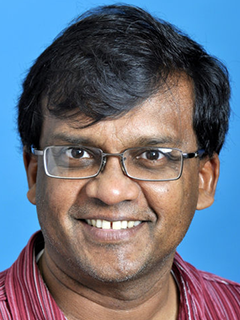
Kamal Premaratne serves as a Professor in the Department of Electrical & Computer Engineering at the College of Engineering, University of Miami. His scholarly work uniquely bridges technical expertise in machine learning and signal processing with social science research on conspiracy theories and political extremism. With numerous publications in both technical and social science journals, he demonstrates an exceptional interdisciplinary approach to understanding complex contemporary phenomena. Professor Premaratne's research spans two primary domains: advanced computational methods and social/political analysis. In computational methods, he focuses on quantum tensor networks for time series analysis, graph neural networks for gesture recognition, and uncertainty quantification in machine learning systems. His social science research examines conspiracy theories including the "White Replacement" theory, QAnon, and "white genocide" narratives, investigating their sociodemographic correlates and relationship to political extremism. His work often employs mixed-methods approaches combining qualitative analysis with quantitative content analysis and network analysis. Analysis of Premaratne's recent publications reveals a strong focus on understanding how conspiracy theories spread on social media platforms and their relationship to political behavior. His technical work shows innovative applications of quantum physics concepts to machine learning problems, creating more interpretable models while maintaining performance. This dual focus demonstrates how computational methods can be applied to social science questions and vice versa. Professor Premaratne actively collaborates with researchers across disciplines including psychology, political science, and communication studies. His research has been published in high-impact journals such as Scientific Reports, Journal of Politics, and Political Science Quarterly. Though specific grant information isn't detailed in the available materials, his extensive publication record suggests substantial research activity. His work has significant implications for understanding political polarization, misinformation spread, and developing more interpretable AI systems.