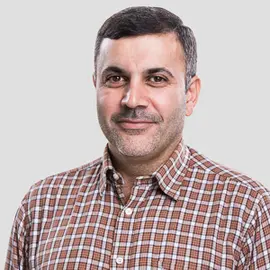
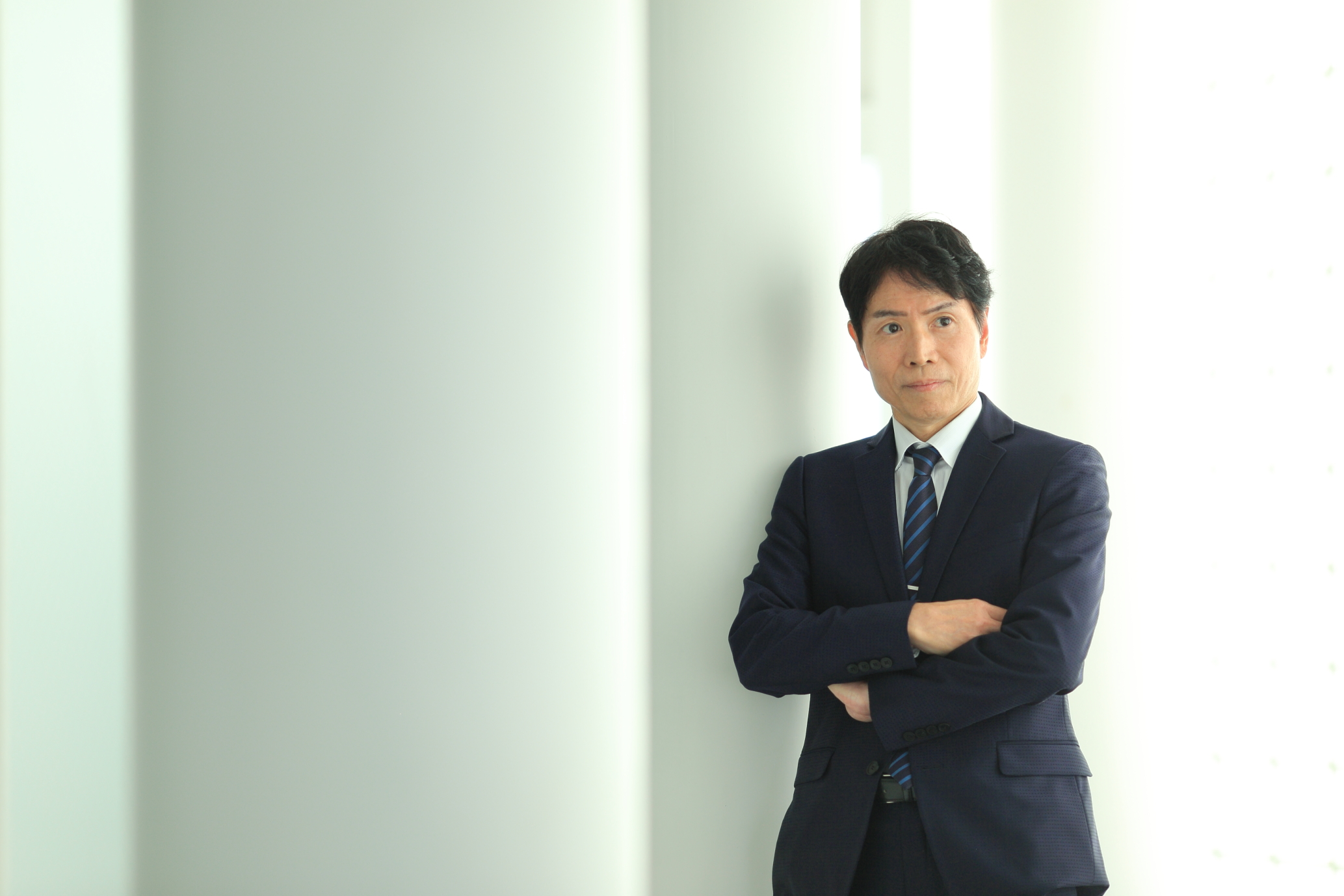
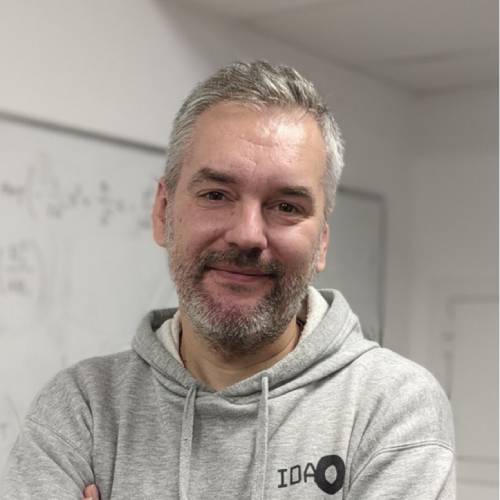
Giuseppe Santoro is a Full Professor at the International School for Advanced Studies (SISSA) , affiliated with the Condensed Matter Theory sector. His research focuses on understanding the dynamics of quantum systems out-of-equilibrium , including thermalization, integrability, and periodically driven systems, as well as nanoscale dissipation in both quantum and classical contexts. Dynamics of closed and open quantum systems Nano-friction and lubrication Quantum annealing and optimal control Topological quantum phenomena His recent publications (2023-2025) highlight expertise in quantum simulation , topological effects , optimal control , and dissipative dynamics , with applications to nanoscale systems and frustrated models. Key themes include quantum annealing , Floquet theory , and many-body localization , reflecting interdisciplinary work at the intersection of quantum physics, materials science, and computational methods.
Bart Vandereycken is an Associate Professor in the Mathematics Department at the University of Geneva, specializing in numerical analysis and scientific computing. His research focuses on large-scale and high-dimensional problems solved using low-rank matrix and tensor techniques, with applications in numerical linear algebra, optimization, and nonlinear eigenvalue problems. He previously held positions as an instructor at Princeton University and postdoctoral researcher at EPF Lausanne and ETH Zurich, and earned his PhD from KU Leuven in 2010. His research interests include Riemannian optimization algorithms, multilevel preconditioning, and machine learning applications. He serves as an associate editor for SIAM Journal on Matrix Analysis and Applications and Linear Algebra and its Applications . Bart organizes the Numerical Analysis seminar with colleagues, and advises students interested in numerical analysis or numerical linear algebra. Recent work emphasizes convexity structures in matrix decompositions, robust preconditioning techniques, and scalable low-rank algorithms for high-dimensional PDEs. His 2024–2025 publications explore advancements in Riemannian optimization schemes, subspace iteration methods, and distributed computing applications of matrix decompositions. Key themes include improving convergence guarantees and developing geodesic-based optimization frameworks for challenging numerical problems.
Dr. Yasser Safa is a Researcher at the Institute of Computational Physics (ICP) within the School of Engineering at Zurich University of Applied Sciences (ZHAW), leading the Multiphysics Modeling and Imaging research group. His work focuses on advanced computational techniques for solving complex engineering problems across energy systems, materials science, and mechanical design. His educational background includes a PhD from École polytechnique fédérale de Lausanne (EPFL) in 2005, where his thesis addressed numerical simulations of thermo-magneto-hydrodynamic phenomena in aluminum reduction cells. This foundation in coupled physics has driven his subsequent research in multiphysics modeling. Dr. Safa's research spans computational mechanics, solid mechanics (particularly nonlinear elasticity and buckling), corrosion engineering, additive manufacturing, metamaterials, and energy systems including fuel cells and wind power. His methodology emphasizes developing validated numerical models for real-world engineering challenges, often involving thin-film mechanics, material degradation, and structural integrity under extreme conditions. Recent work demonstrates increasing focus on renewable energy systems and advanced manufacturing processes. Analysis of his 15 most recent publications reveals strong thematic continuity in computational mechanics applied to energy and materials, with growing emphasis on wind energy systems and corrosion phenomena. His work consistently bridges theoretical mechanics with industrial applications, particularly in micro-fabrication and energy conversion technologies. He has secured and led multiple research projects including ongoing work on corrosion of multiphasic alloys and completed projects on airborne wind power systems, metamaterial wave guides, and additive manufacturing. These projects demonstrate his ability to translate computational expertise into practical engineering solutions across diverse domains. As part of ZHAW's ICP research group, Dr. Safa contributes to developing advanced computational tools for imaging and modeling physical systems, maintaining strong industry connections particularly in energy technology sectors. His current work continues to address critical challenges in material durability and energy system design through sophisticated numerical approaches.
Naonori Ueda is a Research Professor and Deputy Director at RIKEN Center for Advanced Intelligence Project. He also serves as a Visiting Fellow at NTT Communication Science Laboratories, Research Supervisor for Mathematical Information Platform at Japan Science and Technology Agency (JST), and Visiting Professor at Kobe University's Graduate School of System Informatics. His distinguished career spans academia, government research institutions, and industry collaboration, with significant contributions to advancing artificial intelligence and machine learning applications across multiple scientific domains. Dr. Ueda's research interests focus on the intersection of machine learning, artificial intelligence, and physical sciences. He specializes in physics-informed deep learning approaches that integrate governing physical equations with neural network architectures. His work spans geophysical data analysis, remote sensing applications, computational seismology, and environmental monitoring systems. He has pioneered methods for crustal deformation modeling, earthquake prediction, tsunami inundation forecasting, and satellite imagery analysis using advanced machine learning techniques. His research demonstrates how AI can solve complex scientific problems by bridging the gap between data-driven approaches and physical domain knowledge. His publication record reveals a strong trend toward applying machine learning to solve real-world geophysical and environmental challenges. His recent work shows increasing sophistication in physics-informed neural networks that incorporate domain-specific knowledge into deep learning architectures. The publications span high-impact journals like Nature Communications, demonstrating the interdisciplinary significance of his work. His research consistently focuses on practical applications of AI for disaster prevention, environmental monitoring, and scientific discovery. Fellow of IEICE (Institute of Electronics Information and Communication Engineers) Member of Japan Prize field review committee Selection Committee Member for Brilliant Female Research Award (The Jun Ashida Award) Member of Kyoto Prize Selection Committee Dr. Ueda has secured substantial research funding through multiple government-sponsored projects including RIKEN Pioneering Project 'Prediction Science,' JST AIP Acceleration Research projects on weather prediction and drug discovery, and AMED-funded medical research initiatives. His leadership extends to serving as Sub-project Director for Japan's Moonshot R&D Project. He actively mentors researchers through his roles at RIKEN, NTT, and various academic institutions, fostering the next generation of AI scientists. As Deputy Director of RIKEN Center for Advanced Intelligence Project, Dr. Ueda leads one of Japan's premier AI research initiatives. He also serves on the Advisory Board of Kobe University's Mathematical and Data Science Center and Kyoto University's Graduate School of Informatics. His leadership extends to coordinating the AI Seminar at Osaka Industrial Association and supervising the Keihanna 'Edison Society' at the International Institute for Advanced Studies, demonstrating his commitment to bridging academic research with industrial applications.
Prof. Dr. Aurelien Lucchi is an Assistant Professor in the Department of Mathematics and Computer Science at the University of Basel, Faculty of Science. His research group focuses on the intersection of optimization and machine learning, particularly in advancing theoretical understanding and algorithmic design for deep learning systems. His research interests include: Stochastic and non-convex optimization Deep learning theory and generalization Kernel methods and spectral analysis Transformer architectures and training dynamics Batch Normalization and initialization effects Modeling optimization via stochastic differential equations (SDEs) The recent publications (2023–2025) highlight a strong focus on theoretical machine learning, especially in characterizing optimization landscapes, generalization in kernel methods, and the role of noise and adaptive methods in training. There is a clear trend toward using advanced mathematical tools—such as random matrix theory, SDEs, and curvature analysis—to explain phenomena in deep learning. His group actively publishes in top venues including NeurIPS, ICML, ICLR, and AISTATS. Scientific awards and recognitions include: SNF Consolidator Grant (1.7M CHF) Prof. Lucchi leads an active research group with postdoctoral fellows and ongoing projects, including work on quantum machine learning and noise-adaptive optimization. He has secured competitive research funding and mentors early-career researchers. His group has received recent paper acceptances at ICLR 2025, AISTATS 2025 (oral), and NeurIPS 2024, indicating strong momentum in theoretical and algorithmic machine learning. He previously held a scientific research position at ETH Zurich (2014–2021) and earned his PhD from EPFL. The group is currently involved in two major ongoing projects: Designing and Training Hybrid Hierarchical Quantum Neural Networks with Quantum Advantage Noise-Adaptive Optimization Methods and their Robustness Properties
Carl Allen is a Laplace Junior Chair in Machine Learning at École Normale Supérieure, Paris, working in the research group of Stéphane Mallat, Giulio Biroli and Garbiele Peyré. Previously, he was a postdoctoral fellow at ETH Zurich and completed his PhD in Machine Learning in 2021 at the University of Edinburgh under the supervision of Professors Tim Hospedales and Iain Murray. His educational background includes a BSc in Mathematics & Chemistry from the University of Southampton, an MSc in Mathematics and the Foundations of Computer Science (MFoCS) from the University of Oxford, and MScs in Artificial Intelligence and Data Science from the University of Edinburgh. Before transitioning to AI/ML research, he spent several years in Project Finance. Allen's research focuses on mathematically understanding mechanisms behind successful machine learning methods, particularly neural networks. He investigates how machine learning models exploit aspects of data distribution from a probabilistic perspective. His current topics include explaining how VAEs disentangle independent factors of data, identifying mathematical models behind self-supervised learning, and deriving probabilistic interpretations of softmax classification. His PhD work investigated neural representations of discrete objects and their relationships, with a main result explaining how word embeddings can seemingly be added and subtracted (e.g., queen ≈ king - man + woman), which received Best Paper (honorable mention) at ICML 2019. His research spans theoretical foundations of machine learning, with particular emphasis on representation learning, disentanglement, and probabilistic modeling of neural networks. His work connects mathematical principles with practical machine learning applications, aiming to develop more interpretable and reliable algorithms. Allen has received notable recognition including a Best Paper honorable mention at ICML 2019 and a research grant from the Hasler Foundation. He has delivered invited talks at prestigious institutions including Harvard Center of Mathematical Sciences & Applications and Astra-Zeneca. His collaborative work spans multiple institutions, including a notable internship at Samsung AI Centre, Cambridge, where he worked at the intersection of representation learning and logical reasoning. His research has significant implications for developing more interpretable, reliable, and theoretically grounded machine learning systems.
Dr. Marten Reehorst is a theoretical physicist specializing in conformal field theory, quantum field theory, and non-perturbative methods in high energy physics. His research focuses on the conformal bootstrap technique, critical phenomena, and symmetry-breaking mechanisms in frustrated magnets. ORCID ID: 0000-0001-5911-019X Research Interests span theoretical physics, particularly the conformal bootstrap program for analyzing critical systems, quantum field theory models with O(N) symmetry, and computational methods for non-perturbative physics. His work often intersects with lattice field theory and renormalization group analysis. Recent Publications (2021–2025) investigate traceless symmetric O(N) scalars, chiral O(N)×O(2) universality classes, and navigator functions for conformal bootstrap optimizations. These studies emphasize critical exponents, symmetry breaking, and numerical techniques in high-dimensional physics.
Patrick Eppenberger Patrick Eppenberger is an Associate Professor and co-head of the Evolutionary Pathophysiology and Mummy Studies Group at the University of Zurich's Institute of Evolutionary Medicine. He holds a dual background in industrial design and medicine, with a doctorate in medicine (2012), an Executive MBA (2024), and a Habilitation thesis (2023) focused on medical imaging of ancient human remains. His research integrates evolutionary medicine, paleopathology, and advanced imaging technologies to study human health evolution and ancient diseases. Education & Background: Industrial Design Degree, Zurich University of Art and Design (2002) Medical Doctorate, University of Zurich (2012) Executive MBA, University of Zurich (2024) Habilitation Thesis: 'Adaptation of medical imaging modalities for the diagnostic evaluation of ancient human remains' (2023) Research Focus: Eppenberger’s work spans evolutionary medicine, non-communicable disease epidemiology, and the application of cutting-edge imaging techniques (CT, MRI, Raman spectroscopy) to analyze ancient human remains. Key projects include: SNF Weave/Lead Agency project on the PIEZO1 ion channel’s role in red blood cell physiology Experimental mummification and paleoradiology studies Global demographic and economic trends analysis via geospatial methods Imaging Facilities: He leads the IEM Clinical & Investigational Imaging Lab , equipped with portable and advanced stationary imaging systems for on-site archaeological studies and clinical diagnostics. Grants & Collaborations: Co-Principal Investigator in the PIEZO1 ion channel project International collaborations in Egyptology, Japanese mummy studies, and medieval dental anthropology Labs & Teams: His lab develops interdisciplinary methods for studying ancient populations, including multi-modal imaging and experimental replication of embalming techniques.
Manuel Guizar Sicairos is an Associate Professor of Physics at École Polytechnique Fédérale de Lausanne (EPFL) in the School of Basic Sciences (SB), Institute of Physics (IPHYS), and leads the Computational X-ray Imaging group at the Paul Scherrer Institut (PSI). He has held these joint positions since January 2023, following a progression from Postdoctoral Fellow (2010) to Senior Scientist (2021) at PSI. B.Sc. in Physics Engineering, Tecnológico de Monterrey, Mexico (2002) M.Sc. in Electronic Systems, Tecnológico de Monterrey, Mexico (2005) M.Sc. in Optics, University of Rochester, USA (2008) Ph.D. in Optics, University of Rochester, USA (2010) His research centers on computational imaging, particularly for synchrotron X-ray sources, with a focus on phase retrieval, ptychography, coherent diffractive imaging, holography, tomography, and scanning small-angle X-ray scattering (sSAXS). He has co-developed key techniques such as 3D nanoscale ptychography, magnetization vector nanotomography, and small-angle scattering tensor tomography (SASTT). His work emphasizes experimental design, novel imaging configurations, and algorithm development for hyperspectral and dynamic nanotomography. The recent articles highlight a consistent trend in high-resolution 3D imaging of complex materials using correlative X-ray techniques. His publications span topics from integrated circuits and magnetic materials to hierarchical composites, demonstrating expertise in both algorithmic innovation and experimental application. The integration of ptychography with sSAXS and vector tomography enables multiscale, multimodal investigations across materials science and biology. Innovation Award on Synchrotron Radiation (2014, 2021) ICO Prize (2019) Fellow of The Optical Society (2021) Fellow of SPIE SPIE Community Champion (2019) Multiple Optics & Photonics Education Scholarships (2004–2009) He advises PhD students including Fang Wenxuan and Karabay Aknur at EPFL. He has secured institutional support for advancing imaging research at both PSI and EPFL. His group develops open-source algorithms such as those for subpixel registration, Hankel transforms, and tomographic reconstruction (e.g., GridrecMS). He is a confidential advisor for the Respect@PSI campaign, promoting diversity and inclusion in scientific research. His leadership supports large-scale facility research at PSI and academic training at EPFL. He leads the Computational X-ray Imaging group at PSI, which collaborates closely with the cSAXS beamline and focuses on advancing computational methods for synchrotron-based imaging. The team integrates algorithm development with experimental validation, fostering interdisciplinary research across physics, materials science, and bioimaging.
Martin Werner Licht is a Lecturer at École Polytechnique Fédérale de Lausanne (EPFL) in the Department of Mathematics within the School of Basic Sciences. He holds the position of Bernoulli Instructor at EPFL since September 2021, following his time as a Visiting Assistant Professor at UC San Diego from 2017-2021. His educational background includes a PhD in Mathematics from the University of Oslo (2014-2017), and dual Diplom (Master's) degrees in Computer Science and Mathematics from the University of Bonn, Germany (2006-2013). PhD in Mathematics, University of Oslo, Norway (2014-2017) Diplom in Computer Science, University of Bonn, Germany (2006-2013) Diplom in Mathematics, University of Bonn, Germany (2006-2012) Licht's research focuses on finite element methods for partial differential equations, particularly in electromagnetism and general relativity. His work centers on finite element exterior calculus, structure-preserving numerical methods, and geometric analysis. He has made significant contributions to understanding discrete distributional differential forms and smoothed projections in weakly Lipschitz domains. His recent publications demonstrate a strong focus on theoretical aspects of finite element methods, with particular attention to de Rham complexes, Poincaré-Friedrichs inequalities, and geometric transformations. His work bridges pure mathematical theory with practical computational applications, especially in numerical simulations of physical phenomena. Licht has co-organized the international workshop 'Structure-Preserving Numerical Methods for Partial Differential Equations' at the Bernoulli Center in Lausanne (2023) and regularly presents at major conferences including SIAM Annual Meetings and ENUMATH. He has supervised several undergraduate students including Zhao Lyu (who received the 2018 Physical Sciences Dean's Undergraduate Award for Excellence at UC San Diego), Tharindu Fernando, Xinyi He, Jiyue Zeng (who received the 2020 Physical Sciences Dean's Undergraduate Award for Excellence), and Tâm Johan Nguyen. Licht teaches various mathematics courses at EPFL including Analysis III/IV, Numerical Methods for Conservation Laws, and Numerical Approximation for Partial Differential Equations. His teaching reviews note that he is 'easy to understand despite French accent and explains examples very well.'
Dmitry Vetrov serves as a Professor of Computer Science at Constructor University in Bremen, where he founded and leads the Bayesian Methods Research Group. His academic foundation includes graduation from Moscow State University in 2003 and completion of his PhD in 2006, establishing a career centered on advancing probabilistic machine learning methodologies. His educational trajectory features: Undergraduate studies at Moscow State University (2003) Doctoral degree (PhD, 2006) Vetrov's research program critically bridges Bayesian statistics with deep learning architectures, with his group pioneering efficient diffusion model algorithms, loss landscape characterization in neural networks, scalable stochastic optimization tools, tensor decomposition applications for large-scale ML systems, and enhanced conditional text generation frameworks. This work manifests practical implementations across generative AI domains while maintaining theoretical rigor in probabilistic modeling. Analysis of his 2024-2025 publications reveals a concentrated research thrust toward diffusion model innovation, spanning text generation (token embedding smoothing, language model encoding properties), image synthesis (hair transfer, gesture generation), and scientific applications (protein modeling, genetic fine-mapping). Key thematic threads include sampler acceleration, theoretical property analysis of diffusion processes, and robust evaluation frameworks for generative systems. No scientific awards were documented in the source materials. Mentorship outcomes demonstrate significant impact, with three recent PhD students securing research positions at DeepMind. While specific grant details remain undisclosed, the group's prolific output across NeurIPS, ICML, and CVPR indicates sustained research funding. The Bayesian Methods Research Group operates as an integrated innovation hub within Constructor University's academic ecosystem. The research collective he directs maintains active development of Bayesian-deep learning fusion techniques, with current projects emphasizing diffusion model efficiency, theoretical foundations of optimization landscapes, and cross-domain applications in computational biology and multimodal generation.
Laura Grigori is a Professor of Applied and Computational Mathematics at EPFL and Head of the Laboratory for Simulation and Modeling at the Paul Scherrer Institute (PSI), Switzerland. She holds a Ph.D. in Computer Science from Université Henri Poincaré (2001) and has been a leading figure in high-performance numerical algorithms and communication-avoiding methods. Her research focuses on numerical linear algebra, randomized algorithms, and scalable scientific computing for applications in astrophysics, molecular simulations, and exascale systems. Affiliations: EPFL Chair of High-Performance Numerical Algorithms & Simulation; Head, PSI Laboratory for Simulation and Modeling. Education: Ph.D. in Computer Science, Université Henri Poincaré (2001); Postdoctoral Researcher, UC Berkeley/LBNL (2001–2003); Senior Researcher at INRIA (2004–2023). Research Interests: Communication-avoiding algorithms, randomized numerical linear algebra, parallel preconditioners, tensor computations, and exascale computing challenges. Awards: SIAM Fellow (2020), ERC Synergy Grant (2018), SIAM Supercomputing Career Prize (2024), and Best Paper Awards (2016, 2023). Grants & Leadership: PI of the ERC Synergy Project EMC² (Extreme-scale Computational Chemistry); Chair of PRACE Scientific Steering Committee (2021–2022); SIAM SIAG Supercomputing Chair (2016–2017). Labs/Teams: Alpines Group (INRIA/Sorbonne University), EMC² Collaboration (Cancès, Maday, Piquemal).
Amirreza Razmjoo Fard is a PhD student and Researcher at École Polytechnique Fédérale de Lausanne (EPFL), affiliated with the School of Engineering (STI) and the Robot Learning and Interaction (RLI) Group at the Idiap Research Institute. Supervised by Dr. Sylvain Calinon, he focuses on developing adaptive, efficient, and intelligent robotic control methods for contact-rich environments and constrained scenarios. Research Areas: Generative AI (diffusion models, flow matching), Model composition (product of experts), System dynamics, Control theory, Physics-based simulation (Isaac Sim) Key Goals: Bridging theory and real-world applications, enhancing robot autonomy, interaction, and physical intelligence His work spans publications at top robotics conferences like IROS, CoRL, RSS, and ICRA, with a Best Paper Finalist recognition at RSS 2024. Notable methods include CCDP for diffusion policy composition, CDF for differentiable robot geometry, and D-LGP for hybrid planning. He has also collaborated with Honda Research Institute Europe during a six-month internship.
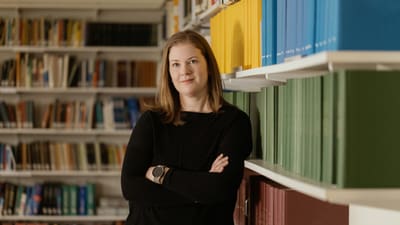
Claudia Lenz is a researcher at the Institute of Forensic Medicine of the University of Basel since 2017. She leads the research group on Forensic Medicine & Imaging and specializes in postmortem imaging techniques, particularly MRI and CT applications in forensic diagnostics. Her research focuses on: Computational forensics Postmortem temperature effects on imaging Automated identification methods Cerebral edema quantification Forensic imaging artifact correction Her recent publications highlight advancements in: 3D bone segmentation for identification Temperature-corrected MRI/CT protocols Optical imaging of postmortem hematomas Quantitative assessment of brain edema Chronological stability of imaging markers Claudia Lenz completed her habilitation in Experimental Medicine at the University of Basel in 2025, holds a PhD in Biophysics (2008-2011), and is certified as a medical physicist by the Swiss Society for Radiobiology and Medical Physics (SGSMP).
Dr. Chao Li is an indefinite-term research scientist at the RIKEN Center for Advanced Intelligence Project (AIP) since 2021, focusing on tensor network learning and its applications in machine learning. His work involves modeling tensor network structure search (TN-SS) as a combinatorial optimization problem, with contributions to algorithms like TNGA and TNLS. He earned his Ph.D. and bachelor’s degrees from Harbin Engineering University in 2017 and 2006, respectively. Dr. Li’s research spans tensor networks, machine learning, and optimization. He has presented at leading conferences like ICML and regularly serves as a senior reviewer for top-tier machine learning venues such as ICML, NeurIPS, and AAAI. The 2022 presentation on TN-SS highlights his work in advancing tensor network methodologies for machine learning tasks, leveraging optimization techniques and exploring applications in neural networks and computational mathematics. Dr. Li is affiliated with the EPFL Center for Intelligent Systems (CIS) through collaborative events with RIKEN AIP, though no specific labs or teams are detailed in the provided text.