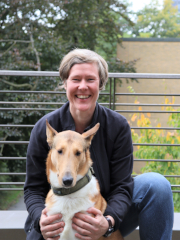
Stefano Markidis is a leading researcher in High-Performance Computing (HPC) and quantum computing. His work focuses on developing advanced simulation frameworks, such as the Neko framework for computational fluid dynamics, and optimizing algorithms for heterogeneous architectures. He collaborates extensively with institutions and researchers globally, contributing to fields like plasma physics, quantum systems, and machine learning applications. His research emphasizes scalability, performance optimization, and the integration of cutting-edge technologies like GPU acceleration and quantum computing. Key research interests include extreme-scale simulations, quantum algorithms, and in-situ data analysis techniques. He has published over 200 articles, with recent work addressing challenges in NISQ systems, tensor network simulations, and CUDA-based performance enhancements. His contributions span theoretical and applied domains, bridging computational methods with real-world applications in fusion energy, materials science, and space exploration. Notable collaborations include projects with Philipp Schlatter, Niclas Jansson, and the NISQ application development community. Markidis also explores hybrid frameworks combining classical and quantum computing, aiming to leverage emerging hardware for scientific breakthroughs.
Fabian Schmidt is a Professor (Forschungsgruppenleiter) at the Max Planck Institute for Astrophysics (MPA) in Garching, Germany. He specializes in cosmology, focusing on dark matter, dark energy, and the evolution of cosmic structures. His research explores the universe's composition, history, and the mechanisms behind primordial density fluctuations. Education: Diplom (equivalent to MSc) in cosmic gamma rays from Humboldt University Berlin, PhD (2005-2009) at the University of Chicago under advisors Scott Dodelson and Wayne Hu. Held fellowships at Caltech (Moore Fellow) and Princeton (NASA CXC Einstein Fellow) before joining MPA in 2013. Research interests include cosmological observables in general relativity, baryon acoustic oscillations (BAO) reconstruction, and field-level inference techniques. His group is funded by the Excellence Cluster Origins and MPA resources, with ongoing work on large-scale structure, gravitational lensing, and dark matter physics. Notable contributions span theoretical cosmology, computational methods for galaxy clustering analysis, and Bayesian forward modeling. His team advises PhD students and postdocs in areas like EFT-based BAO reconstruction, simulation-based inference, and dark matter dynamics. Outreach: Active in public talks (Lange Nacht der Wissenschaften) and collaborations with science journalists. Co-author of Modern Cosmology textbook (2nd ed. 2020, 3rd ed. 2025), addressing topics like inflation and quantum vacuum cosmology.
Max Willsey is an Assistant Professor in the Department of Electrical Engineering and Computer Sciences at the University of California, Berkeley, since 2024. He specializes in program optimization, leveraging techniques from programming languages, databases, and systems to develop robust and accessible compiler frameworks. His research focuses on equality saturation, E-Graphs, and the integration of Datalog with compiler optimizations. He has contributed to advancements in unifying algorithmic approaches, enabling faster and more extensible program analysis. Teaching: CS 164 (Programming Languages and Compilers, Spring 2025), CS 265 (Compiler Optimization, Fall 2024), and CS 294-260 (Declarative Program Analysis and Optimization, Spring 2024). Research Highlights: Development of the egg and egglog projects, co-organizing the EGRAPHS workshop, and leading the EGRAPHS Community for e-graphs researchers. His recent articles highlight trends in unifying traditional hash joins with worst-case optimal joins, applying equality saturation to diverse domains like Datalog and tensor graph optimization, and advancing E-Graphs for program synthesis and formal verification. Scientific Awards: SIGMOD Record Research Highlight, 2024 MIT PL Review Selection, 2024 Distinguished Paper, OOPSLA 2021 and POPL 2021 NSF Graduate Research Fellowship Honorable Mention, 2018 Qualcomm Innovation Fellow, 2019 Service: Committee Member, PLDI 2025, POPL 2025, ASPLOS 2025 Co-organizer, EGRAPHS 2024 and 2023 workshops Interviewer, UC Berkeley Graduate Admissions Committee, 2024
Prof. Dr. Jens Hornbostel is affiliated with the Bergische Universität Wuppertal as a Professor in the Department of Mathematics and Computer Science under the Faculty of Mathematics and Natural Sciences. He actively contributes to the Arbeitsgruppe Topologie and serves as Speaker and Principal Investigator of the DFG-GRK 2240 on algebro-geometric methods in topology. Research focuses on algebraic topology, K-theory, Witt groups, and motivic homotopy theory. Key themes in recent publications include Real Topological Hochschild Homology, Schubert calculus in algebraic cobordism, and tensor-triangulated categories. He is a member of the Journal of Homotopy and Related Structures editorial board and participates in DFG-SPP 1786 and other committees. Former advisees include PhD students Ruth Joachimi and Herman Rohrbach, as well as postdocs like Valentina Kiritchenko and Jeremiah Heller.
Lars Schäfer , Professor at the Faculty of Chemistry and Biochemistry at Ruhr University Bochum , leads the Molecular Simulation Group. His research focuses on the interplay between structure, dynamics, and function of biological macromolecules using computational methods like molecular dynamics (MD) and QM/MM simulations. Key research areas: solvation science, membrane protein dynamics, ABC transporters, and hydration thermodynamics. His group contributes to the Cluster of Excellence RESOLV and utilizes the ZEMOS facility for solvent-driven process simulations. Recent work includes collaborations on oxygen-stable hydrogenases, nanodisc modeling, and force field development (e.g., Martini 3). The group's scientific approach spans from fundamental quantum mechanical studies (e.g., atomic radii calculations) to applied research in pharmaceuticals (e.g., therapeutic protein stabilization). Their simulations provide atomic-level insights into phenomena like liquid-liquid phase separation and ATP-driven membrane transport. Labs & Collaborations : Hosted at the Center for Theoretical Chemistry (ZEMOS). Active in interdisciplinary networks: Integrated Graduate School Solvation Science, RUB Research School, and international partnerships.
Professor Siegfried Müller is a full professor at the Institute for Geometry and Practical Mathematics within the Faculty of Mathematics, Computer Science and Natural Sciences at RWTH Aachen University. His research focuses on developing advanced numerical methods for solving complex fluid dynamics problems, with particular expertise in conservation laws, adaptive multiscale techniques, and multiphase flow modeling. He maintains an active research program with numerous publications in leading computational mathematics journals and collaborates extensively with researchers across multiple institutions. Professor Müller's research interests span a wide range of computational mathematics topics including Conservation Laws, Finite Volume Schemes, Discontinuous Galerkin Methods, Adaptive Multiscale Techniques, and specialized applications in Fluid Dynamics. His work demonstrates particular strength in developing numerical methods for two-phase flow systems, transpiration cooling applications, and surface lubrication phenomena. His research bridges theoretical mathematical analysis with practical engineering applications, particularly in aerospace and mechanical engineering contexts. His recent publications reveal a strong focus on advancing numerical techniques for hyperbolic conservation laws, with increasing emphasis on stochastic methods, multilevel approaches, and coupled system modeling. His work spans both theoretical developments in numerical analysis and practical applications in fluid dynamics, with particular attention to multiphase flow systems and cooling technologies. The publications show a clear progression toward more complex, high-dimensional problems and increasingly sophisticated numerical techniques to address computational challenges. Professor Müller has led and participated in numerous research projects funded by German research organizations including DFG Priority Programmes, BMBF projects, and DFG Research Training Groups. His projects have focused on hyperbolic balance laws, adaptive numerical methods, transpiration cooling, and textured surface lubrication. He has organized multiple workshops on multiresolution methods and active drag reduction, demonstrating leadership in his research community. Professor Müller's research group at RWTH Aachen collaborates closely with engineering departments and industry partners to apply advanced numerical methods to practical engineering challenges. His team has developed specialized computational tools for simulating complex fluid phenomena, particularly in aerospace applications where cooling technologies and fluid-structure interactions are critical. The group maintains strong connections with international research communities in computational mathematics and fluid dynamics.
Professor Angela D. Friederici is a leading cognitive neuroscientist and Director of the Max Planck Institute for Human Cognitive and Brain Sciences in Leipzig, Germany. She holds honorary professorships at the University of Leipzig, University of Potsdam, and Charité University Medicine Berlin. Her work focuses on the neural basis of language processing, syntax, and developmental cognitive neuroscience. Friederici has published over 500 peer-reviewed papers and received numerous accolades, including the APS William James Fellow Award (2023) and the Huttenlocher Award (2021). Education: PhD in Linguistics (1976, University of Bonn), Habilitation in Psychology (1986, Justus Liebig University Giessen). Affiliations: Founding Director of the Max Planck Institute for Human Cognitive and Brain Sciences since 1994. Served as Vice-President of the Max Planck Society (2014–2020). Research Interests: Evolution of language networks, syntax processing, neuroanatomical correlates of language, and developmental trajectories of cognitive abilities. Awards: Includes Leibniz Prize (1997), Wilhelm Wundt Medal (2018), and Gauss Medal (2011). Her recent work explores the neural underpinnings of syntax in humans and primates, with studies on chimpanzee communication and cross-linguistic brain plasticity. Friederici has pioneered methods in neuroimaging and electrophysiology to dissect language networks.
Jun. Prof. Dr. Ziyue Li is a Junior Professor in Machine Learning in Smart Markets at the Information Systems Department of WiSo Faculty, University of Cologne, Germany (2022–present). They also serve as Chief Machine Learning Scientist at EWI, Germany. Their academic career includes researcher positions at Hong Kong Science and Technology Park Corporation/SenseTime (2021–2022), Nokia Bell Labs (2019), and doctoral studies at The Hong Kong University of Science and Technology (2017–2021). Dr. Li's research focuses on high-dimensional data mining , machine learning , and smart mobility . Their work combines tensor analysis, graph modeling, and spatiotemporal prediction to solve complex problems in transportation systems and data analytics. They have developed innovative approaches for passenger flow prediction and travel pattern analysis. Their publications demonstrate a strong focus on tensor-based machine learning methods applied to mobility data. Key trends include Integration of graph theory with tensor decomposition Development of spatiotemporal prediction models Applications in urban transportation analytics Hybrid transfer learning approaches Multi-clustering methods for travel pattern analysis Data completion techniques for complex networks Scientific recognition includes Multiple INFORMS Data Mining Section awards IEEE CASE Best Conference Paper Award Hong Kong Ph.D. Fellowship Scholarship HKUST Excellent Research Award Three Minute Thesis Competition recognition
Eric Leclercq is a researcher at the University of Burgundy, affiliated with the LE2I Lab in Dijon, France. His work spans database systems, social network analysis, and biomedical data integration. He has contributed extensively to polystore systems, tensor decompositions, and category theory applications in data modeling. Fields of Interest : Database Systems, Data Mining, Social Network Analysis, Big Data Analytics, Semantic Web Leclercq's recent research focuses on formal frameworks for data lakes using category theory, multi-level tensor decomposition for social network stratification, and schema migration in multi-model systems. He has published in venues like CAiSE, IDEAS, and RCIS. His collaborations include Annabelle Gillet, Marinette Savonnet, and Nadine Cullot. Notable works include Lambda+ architecture for data processing, polarization analysis in social networks, and tools for tweet collection and biomedical data integration.
Yubao Liu is a Professor at Sun Yat-sen University's School of Data and Computer Science, Department of Computer Science, with a prolific research career spanning over two decades in computer science. His work demonstrates significant contributions to database systems, data mining, and spatio-temporal analysis. Professor Liu's research interests focus on Data Mining , Database Systems , Traffic Flow Prediction , and Graph Neural Networks . His recent work has concentrated on developing advanced techniques for large-scale traffic flow prediction, crowd flow analysis, and spatio-temporal modeling using deep learning approaches. His research bridges theoretical computer science with practical applications in transportation systems and urban computing. Liu's publication record shows consistent high-impact contributions, with recent work emphasizing graph-based neural network architectures for traffic forecasting problems. His research demonstrates a clear evolution from foundational database work to cutting-edge applications of deep learning in transportation and social network analysis. Professor Liu has collaborated extensively with researchers including Weiyang Kong, Kaiqi Wu, Sen Zhang, Genan Dai, and Youming Ge, indicating a strong research group focused on spatio-temporal data analysis and deep learning applications. His academic advising is evident through publications where his students appear as first authors, suggesting an active mentorship role in training the next generation of computer scientists specializing in data-intensive applications.
Philip Taranto is a Lecturer (Assistant Professor) at The University of Manchester's Physics & Astronomy department, where he leads the Quantum Information & Spatiotemporal Phenomena (QuISP) research group. He also serves as an editor for the Quantum journal. Originally from Melbourne, Australia, Taranto completed his undergraduate studies and Masters at Monash University under Dr. Kavan Modi and Dr. Felix A. Pollock, focusing on memory effects in open quantum systems. He then earned his PhD at the University of Vienna under Dr. Marcus Huber, studying quantum thermodynamics and complex temporal correlations. Following this, he held a JSPS Postdoctoral Fellowship at the University of Tokyo in Dr. Mio Murao's group before joining the University of Manchester. Taranto's research centers on quantum complexity, exploring how quantum systems' intricate behaviors can be harnessed for computational advantages. His primary focus areas include quantum information theory, open quantum dynamics, quantum thermodynamics, quantum foundations, correlations & entanglement, stochastic & complex processes, and quantum computation & simulation. His methodological approach heavily relies on the framework of higher-order quantum operations—transformations that act upon transformations themselves—which has proven valuable for developing optimal quantum interactive strategies, clarifying memory effects in open quantum processes, and analyzing foundational notions like causality. He also employs tensor networks, graphical calculus, and semidefinite programming in his research. His recent publications reveal a strong focus on quantum thermodynamics, higher-order quantum operations, and quantum memory effects. Taranto has made significant contributions to understanding the relationship between Landauer's principle and Nernst's unattainability principle in quantum cooling, developing protocols for efficient quantum system cooling with finite resources, and characterizing multi-time quantum processes with classical memory. His work on the quantum switch and higher-order quantum operations has advanced our understanding of quantum causality and indefinite causal order. JSPS Postdoctoral Fellowship (2022-2025) Editor of Quantum Journal (since June 2024) Taranto actively collaborates with multiple research groups globally, including the Murao group at the University of Tokyo, the Huber group at TU Wien, and the Modi group at SUTD Singapore and Monash University. He has worked with prominent researchers such as Simon Milz, Jessica Bavaresco, Marco Túlio Quintino, Felix Binder, Martí Perarnau-Llobet, Patryk Lipka-Bartosik, and Andrea Smirne. He is currently accepting PhD students and encourages collaboration with researchers sharing similar interests. Taranto is also committed to social responsibility, advocating for open science, climate justice, and empowering historically excluded and marginalized groups.
Prof. Marius Pesavento is a Full Professor at the Department of Electrical Engineering and Information Technology, Technische Universität Darmstadt, leading the Communication Systems Group. His research focuses on sensor array processing, MIMO communication systems, adaptive beamforming, and mathematical optimization in networks. He has held academic and industry roles since 2001, including positions at mimoOn GmbH and FAG Industrial Services. Education: PhD (Doktorate) in Electrical Engineering, Ruhr-Universität Bochum (2001–2005) Master of Engineering, McMaster University (1999–2000) Dipl.-Ing. in Electrical Engineering, Ruhr-Universität Bochum (1992–1999) His research interests span robust high-resolution sensor array processing, 4G/5G mobile networks, and network information theory. Notable projects include developing tensor models for ultrasonic sensor calibration and applying machine learning to anomaly detection in network flows. His work bridges theoretical optimization and practical applications in automotive radar, 6G networks, and medical imaging. Labs/Teams: Leads the Communication Systems Group at TU Darmstadt, focusing on interdisciplinary projects in signal processing and communication systems.
Jing Jiang is a prominent researcher at Singapore Management University, specializing in Natural Language Processing (NLP), Computational Linguistics, and Artificial Intelligence. His work spans diverse areas including Vision-Language Models, Machine Translation, Knowledge Graph Reasoning, Sentiment Analysis, and Social Media Discourse Modeling. Key contributions include frameworks for consistent client simulation in mental health counseling and counterfactual contrastive prefix-tuning for many-class classification. He has pioneered methods in zero-shot VQA with interpretable reasoning graphs , cross-lingual understanding with universal syntax , and modularized zero-shot architectures . His research often combines theoretical insights with practical implementations, as seen in works on stereotypical bias in vision-language models (VLStereoSet), tensorized self-attention for dependency modeling, and collaborative relation-augmented attention for knowledge graph completion. Jing Jiang's collaborations span global experts in NLP and AI, with co-authors from institutions like SMU, Waseda University, and Microsoft Research.
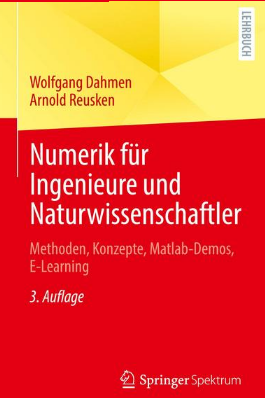
Prof. Dr. Arnold Reusken is a full Professor of Numerical Mathematics at RWTH Aachen University, affiliated with the Institute for Geometry and Practical Mathematics (IGPM). He has held the Chair for Numerical Mathematics since 1997 and maintains an active research and academic profile in computational mathematics. Education: Ph.D. in Mathematics, University of Utrecht (1988) M.Sc. in Mathematics, University of Utrecht (1984) His research focuses on the development and analysis of numerical methods for partial differential equations, with particular emphasis on finite element methods, multigrid solvers, and computational techniques for two-phase incompressible flows and PDEs on surfaces. His work bridges theoretical numerical analysis and practical scientific computing applications in fluid dynamics and interfacial phenomena. He has made significant contributions to trace finite element methods, surface Stokes equations, and unfitted discretizations. The recent publication trend shows sustained activity in numerical methods for evolving surfaces, surface fluid dynamics, and preconditioning techniques. His work often involves rigorous error and stability analysis, demonstrating a strong theoretical foundation. Editorial Roles: Associate Editor, Journal of Numerical Mathematics (2015–present) Associate Editor, IMA Journal of Numerical Analysis (2020–present) Former Associate Editor, SIAM Journal on Numerical Analysis (2016–2021) Former Associate Editor, SIAM Journal on Scientific Computing (2002–2008) Former Associate Editor, Computing & Visualization in Science (2010–2021) Member of Advisory Board, Computing (1997–2009) Prof. Reusken has advised numerous students and researchers, though specific names are not listed in the provided text. He has been involved in collaborative research projects and has secured funding for work in numerical simulation and computational fluid dynamics. He co-authored the influential textbook Numerik für Ingenieure und Naturwissenschaftler , now in its third edition, and has contributed to other key publications in the field. He leads a research group at IGPM focused on numerical methods for interface and surface problems, contributing to both fundamental algorithm development and practical implementation in scientific computing. His team works on cutting-edge methods for simulating complex fluid systems with moving boundaries and topological changes.
Saskia Otto is a researcher at the University of Hamburg's Faculty of Mathematics, Computer Science and Natural Sciences, Department of Biology, specializing in marine ecosystem dynamics and management. With expertise in data science and ecosystem-based management, her work focuses on spatiotemporal dynamics, nonlinear interactions in food webs, and indicator development for marine resource management. Education: B.Sc. in Biology (University of Hamburg), M.Sc. in Biology (Humboldt-Universität zu Berlin), PhD in Hydrobiology (University of Hamburg) Her research employs advanced statistical modeling and computational methods to study Baltic Sea ecosystems, including climate impacts on zooplankton, regime shifts, and holistic ecosystem assessments. She coordinates international projects like BONUS BLUEWEBS and EU-funded MARmaED, emphasizing data-driven marine governance. Notable collaborations include Stockholm Resilience Centre and ICES. She has developed educational tools like RLab 2.0 for statistical analysis training in natural sciences.