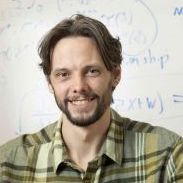
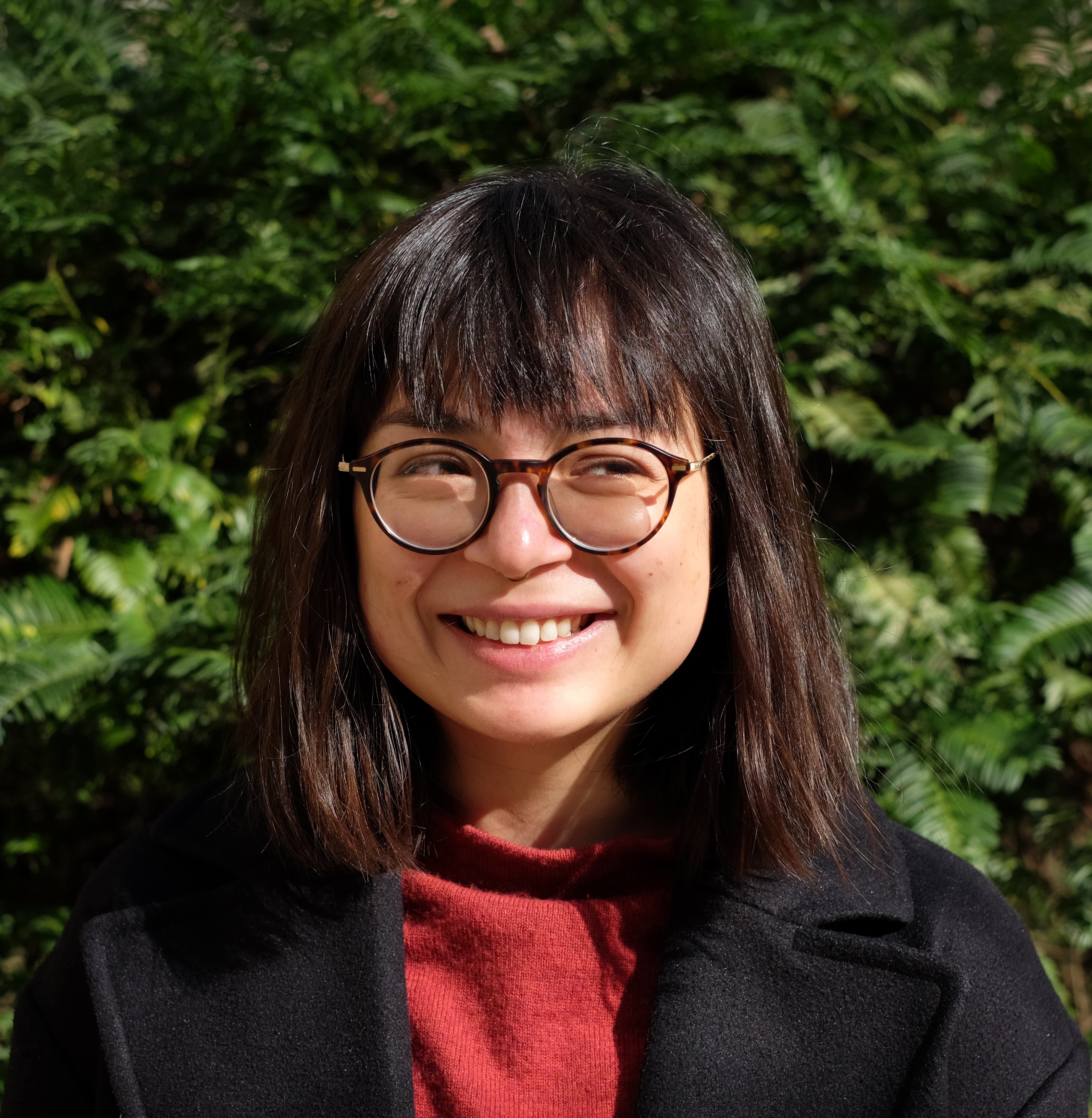
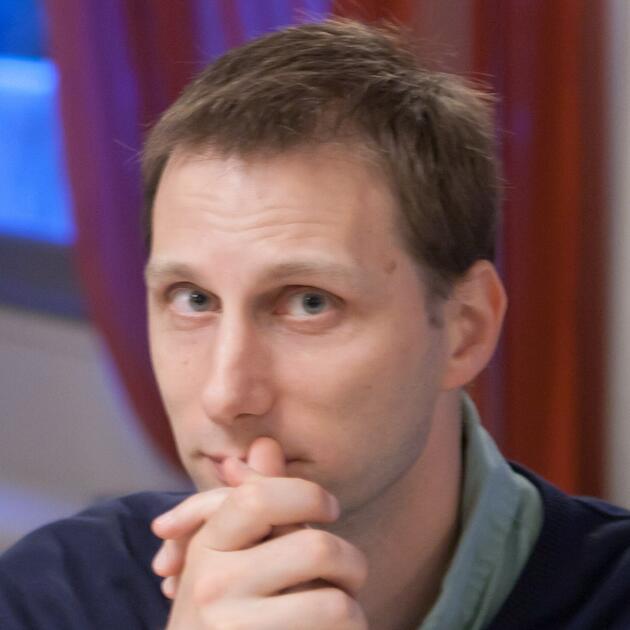
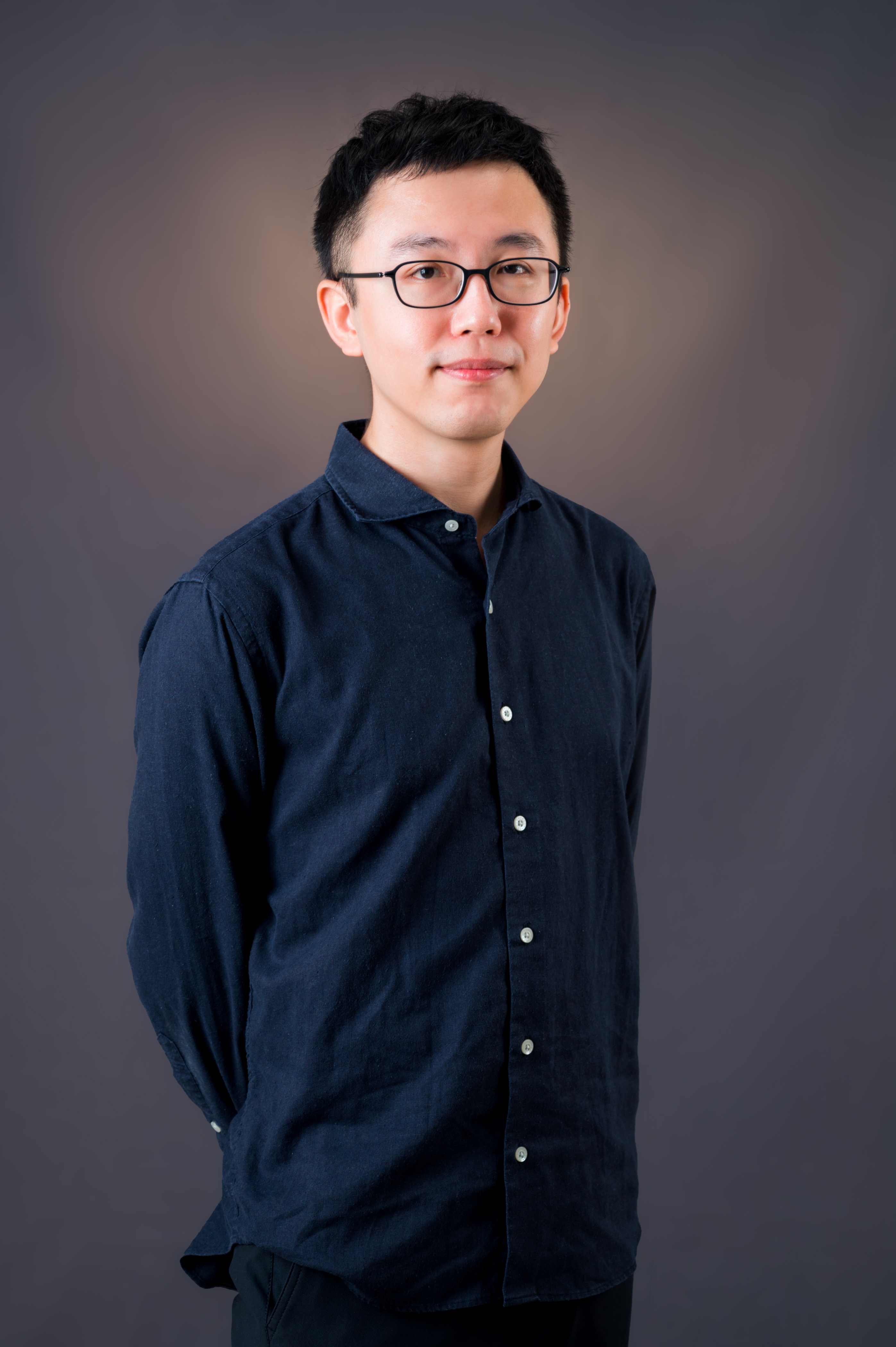
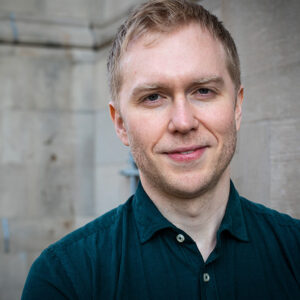
Salah Bourennane is a Lecturer and researcher in the Computer Science department at the Fresnel Institute , with a focus on advanced machine learning and multidimensional signal processing techniques. His research interests span: Machine Learning (deep learning, transfer learning, optimization algorithms) Signal Processing (hyperspectral analysis, tensor decomposition, noise reduction) Medical Imaging (diagnostic systems, brain mapping, cancer detection) Computer Vision (face recognition, surveillance systems, 3D verification) Security Applications (mask detection, concealed object classification, steganalysis) Recent publications highlight his work in: Tensor-driven methods for low-resolution face recognition Hybrid multilinear-linear architectures for camera network identification Deep learning frameworks for medical diagnostics (e.g., breast cancer segmentation, Alzheimer's disease mapping) Optimization algorithms (e.g., grey wolf optimizer variants) for sensor systems and image processing Real-time pandemic response technologies like social distance monitoring His work is implemented within the Fresnel Institute research laboratory, specializing in computer vision and data science applications.
Galen Reeves is an Assistant Professor at Duke University with a joint appointment in the Department of Electrical and Computer Engineering and Department of Statistical Science since Fall 2013, reflecting his interdisciplinary expertise bridging engineering and mathematical sciences. His research establishes rigorous theoretical frameworks at the intersection of information theory, machine learning, and statistical signal processing, focusing on fundamental limits in high-dimensional inference problems. His academic background features elite training across top institutions: PhD in Electrical Engineering and Computer Sciences, University of California, Berkeley (2011) MS in Electrical Engineering, University of California, Berkeley (2007) BS in Electrical and Computer Engineering, Cornell University (2005) Reeves' research centers on mathematical foundations of data science, with seminal contributions to compressed sensing, tensor estimation, and coding theory. He investigates information-theoretic bounds for estimation problems, develops efficient algorithms like approximate message passing, and analyzes generative AI model behavior under recursive training conditions. His work demonstrates how statistical physics approaches solve complex problems in communication theory and high-dimensional statistics. Analysis of his 2021-2025 publications reveals three dominant trends: breakthroughs in channel capacity using Reed-Muller codes, theoretical analysis of generative models and diffusion sampling, and fundamental limits in tensor/matrix estimation. These works consistently integrate information theory with machine learning, emphasizing scalability challenges in high dimensions and algorithmic robustness under heteroskedasticity. His scientific recognition includes: NSF VIGRE fellowship supporting postdoctoral research at Stanford University (2011-2013) NSF CAREER award (2018) for Theoretical Foundations for Probabilistic Models with Dense Random Matrices While no specific students are documented in the source text, his faculty position entails graduate mentorship in both ECE and Statistical Science departments. Research funding primarily stems from the NSF CAREER grant advancing probabilistic modeling, complemented by earlier fellowship support. His collaborations span Stanford University, EPFL, TU Delft, and Microsoft Research. Though no dedicated lab is mentioned, his joint appointment fosters cross-departmental research at Duke, particularly in projects like 'Modeling Traffic with Self Driving Cars' which applies statistical learning to autonomous systems. His work maintains strong ties to industry through past Microsoft Research internships and ongoing computational applications in communications and AI.
Sylvester Eriksson-Bique is an Assistant Professor at the Department of Mathematics and Statistics , University of Jyväskylä , affiliated with the Faculty of Mathematics and Science . His research focuses on geometric analysis, metric geometry, and quasiconformal mappings. Recent publications highlight his work on differentiability in Laakso spaces, conformal dimension, Sobolev spaces, and metric embeddings. Key collaborations include researchers such as Andrea Pinamonti and Tapio Rajala. Research Group: Geometric Mapping Theory Email: sylvester.d.eriksson-bique@jyu.fi Contact: Room MaD 316, +358503074145
Alex Cayco Gajic is a Professor in the Department of Cognitive Studies at École Normale Supérieure , Paris, with affiliations to the ENS Quantitative Biology Centre and the Paris Artificial Intelligence Research Institute . Their research bridges machine learning , mathematical modeling , and systems neuroscience , focusing on cerebellar function and neural dynamics during learning. Education: Ph.D. in Applied Mathematics, University of Washington (2015) B.Sc. in Applied and Computational Mathematics, Caltech (2009) Research interests center on neural coding , dimensionality reduction , and reinforcement learning . Key contributions include elucidating the cerebellum’s role in high-dimensional representations, pattern separation, and task-dependent neural dynamics. Recent work on tensor rank analysis reveals how synaptic changes during motor learning evolve in low-dimensional subspaces. Advising: Supervising PhD students: Leonardo Agueci, Mattia Della Vecchia, Hugo Ninou Collaborating with EMBO Postdoc Heike Stein The lab collaborates with Boris Gutkin , Sophie Deneve , and Srdjan Ostojic within the Group for Neural Theory at Laboratoire de Neurosciences Cognitives . Their work aims to challenge classical views of the cerebellum as a forward model and explore its interactions with the neocortex and basal ganglia in motor and cognitive domains.
François Roueff is a Professor at Télécom Paris, Institut Polytechnique de Paris, and deputy director of the Hadamard doctoral school of mathematics. He works within the Signal, Statistics and Learning (S2A) team at the Information Processing and Communication Laboratory (LTCI). Research interests: statistical signal processing, time series analysis, stochastic processes, wavelet analysis, and machine learning. Students: Supervised 14 PhD theses, including work on topics like quantum key distribution, Hawkes processes, and Markov models. Contact: roueff@telecom-paris.fr Recent publications focus on Hilbert space-valued time series, tensor factorization with missing data, and locally stationary Hawkes processes. His work spans theoretical statistics, applied signal processing, and interdisciplinary applications in geophysics and astrophysics.
Roland Badeau is a Full Professor at Télécom Paris (part of Institut Polytechnique de Paris) within the Signal, Statistics and Learning (S2A) team of the Image, Data, Signal (IDS) Department. His work focuses on statistical modeling of non-stationary signals, particularly in audio and music processing, with applications including source separation, denoising, dereverberation, and automatic music transcription. He has authored over 30 journal papers, 130 conference papers, 4 patents, and a book chapter. Education : Habilitation à Diriger des Recherches (2010), PhD in Signal Processing (2005) from Télécom Paris Research Themes : Stochastic reverberation models, time-frequency analysis, probabilistic latent variable models, audio coding, and biomedical data applications Teaching : Applied Mathematics and Signal Processing at Télécom Paris; Music Signal Processing at Sorbonne Université; Audio-Frequency Analysis at ENS Paris-Saclay Awards : Featured in Stanford's Top 2% Researchers (2024); contributed to a best student paper award at ICASSP 2020 Responsibilities : Supervision of doctoral theses, teaching units, and academic programs like TSIA and Master ATIAM
Gilles Delmaire is an Associate Professor specializing in signal processing, hyperspectral imaging, and environmental science. His research spans topics like super-resolution hyperspectral multisensor fusion , tensor decomposition , and butterfly species classification using advanced computational methods. Key research areas: Signal Processing, Remote Sensing, Environmental Science, and Machine Learning. Recent work focuses on hyperspectral data restoration , insect tracking algorithms , and air quality analysis in Mediterranean regions. Collaborations include institutions in France, Greece, Portugal, and Cyprus, with publications in IEEE, Pattern Analysis and Applications, and Science of the Total Environment.
Krzysztof Podgórski is a Professor and Head of the Department of Statistics at Lund University School of Economics and Management (LUSEM). His research spans applied probability, statistics, and interdisciplinary applications in engineering, finance, and environmental sciences. Key Research Areas: Multivariate non-Gaussian stochastic models Statistical analysis of spatio-temporal random fields Distributions at random crossing events Applications: Mechanical engineering (road modeling) Ocean engineering (wave/ship reliability) Financial econometrics (market linkages, risk analysis) Actuarial sciences (non-Gaussian claims) Methodological Contributions: Include ergodic theory of stochastic processes, extreme value theory, and computational statistics. His recent work explores functional data analysis with periodic splines and matrix variate distributions. Collaborative Networks: Extensive partnerships across theoretical and applied disciplines, with projects involving road dynamics, stochastic fields, and uncertainty quantification.
Einar Malvin Rønquist is a Professor and has served as Head of the Department of Mathematical Sciences at the Norwegian University of Science and Technology (NTNU) since August 2013. He has been a faculty member at the same department since 1999 and is affiliated with the differential equations and numerical analysis (DNA) research group, which he led from 2010-2011. His extensive publication record demonstrates a sustained research career spanning over three decades in computational mathematics. Professor Rønquist's research focuses primarily on numerical methods for partial differential equations, with special emphasis on spectral methods, reduced basis methods, and computational fluid dynamics. His work addresses challenges in high-order approximation, model reduction, and efficient computation for complex physical systems. He has made significant contributions to the development of tensor-product solvers for deformed domains, interface tracking algorithms, and the theoretical foundations of reduced basis methods. His research bridges theoretical mathematics with practical computational applications across engineering and physical sciences, with particular relevance to fluid dynamics, geometric problems, and multi-physics systems. Analysis of Rønquist's publication trajectory reveals a consistent evolution from foundational spectral element methods to advanced model reduction techniques. His work shows increasing sophistication in handling parametric problems and uncertainty quantification while maintaining rigorous mathematical foundations. The publications demonstrate strong contributions to high-order numerical methods, with applications spanning fluid dynamics, geometric problems, and multi-physics systems. Recent work shows particular emphasis on practical computational implementation, including parallel algorithms and efficient solvers for real-world applications that require solving problems on complex or deformed domains. Rønquist has maintained active international collaborations throughout his career, particularly with researchers at MIT (notably Anthony Patera), Université Pierre et Marie Curie (Yvon Maday), and other leading institutions across Europe and North America. His work has appeared consistently in top journals in computational mathematics and scientific computing, including Journal of Computational Physics, SIAM Journal on Scientific Computing, and Computer Methods in Applied Mechanics and Engineering. As department head since 2013, Rønquist has played a significant administrative role in shaping mathematics education and research at NTNU. His leadership extends beyond pure administration, as evidenced by his 2016 commentary in Universitetsavisa regarding the organization of technical cybernetics and electrical power engineering at NTNU, and his 2021 opinion piece in Aftenposten about mathematics examinations. He continues to actively contribute to both the academic and public discourse on mathematics education and research.
Michael James Kastoryano serves as an Associate Professor in the Department of Computer Science at the University of Copenhagen, specializing in Machine Learning research within the department's dedicated Machine Learning section. His work addresses critical challenges in model efficiency and scalability for modern AI systems. His core research spans Machine Learning, Deep Learning, and Computer Vision with emphasis on creating compact representations through tensor decomposition and quantization techniques. Current investigations focus on optimizing visual recognition pipelines and language model pretraining under resource constraints. Analysis of his 2024 publications reveals a consistent trajectory toward efficient deep learning architectures, particularly in visual representation learning and quantized adaptation methods. These contributions target practical deployment barriers for AI models on edge devices while maintaining performance integrity across computer vision and NLP domains.
Dr. Xuhui Huang is the Hirschfelder Chair in Theoretical Chemistry and Professor of Chemistry at the University of Wisconsin-Madison. He also serves as Director of the Theoretical Chemistry Institute and leads interdisciplinary research bridging computational chemistry, biophysics, and machine learning. Education: B.S. (2001) - University of Science and Technology of China Ph.D. (2006) - Columbia University Postdoctoral Fellow (2006-2009) - Stanford University Research Focus encompasses theoretical chemistry and molecular biophysics, particularly: Development of advanced Markov State Models and Generalized Master Equations for biomolecular dynamics Elucidating RNA polymerase conformational changes and molecular recognition mechanisms Creating novel integral equation theories for solvation and deep-learning-based drug discovery frameworks Extracting structural ensembles from heterogeneous cryo-EM datasets Publication Trends reveal his group's emphasis on merging statistical mechanics with machine learning for studying: Protein folding pathways and allosteric regulation RNA polymerase dynamics and error-prone transcription Self-assembly processes and solvation modeling Development of open-source tools like EPIPY and FeatureDock Applications in drug-resistant pathogen targeting and unnatural base pair transcription Scientific Leadership includes: NSF grant recipient for polarizable 3DRISM model development Organizer of CECAM workshops on biomolecular dynamics Educational innovator - developed UW-Madison's 'Machine Learning in Chemistry' course Collaborative Network spans institutions like UCSF, Stanford, MIT, and HKUST, with group alumni transitioning to Bay Area biotech and top graduate programs.
Ian Walter Orzel is a PhD Fellow in the Machine Learning section at the Department of Computer Science, University of Copenhagen . He is affiliated with the SCIENCE AI Centre and contributes to interdisciplinary research bridging machine learning with quantum computing, healthcare diagnostics, and environmental sustainability.
George Atia is an Associate Professor at the Department of Electrical and Computer Engineering, University of Central Florida, directing the Data Science and Machine Learning Lab (DSML). Previously, he was a postdoc at the Coordinated Science Laboratory (CSL) at UIUC and earned his Ph.D. from Boston University, where he was affiliated with the Information Systems & Sciences Lab (ISS) and Center for Information & Systems Engineering (CISE). His research spans big data analytics, sparsity-based learning, controlled sensing, and verifiable planning , with applications in machine learning, cyberphysical systems security, and optical/neural signal processing. His work emphasizes robust algorithms for high-dimensional data, adversarial attacks in machine learning, and inverse problems in optical imaging. Recent projects include tensor completion for visual data recovery and multi-agent reinforcement learning with robustness guarantees. He has secured major funding from NSF, DOE, and ONR, including the NSF CAREER Award. Notable scientific contributions include Robust Tensor Completion for Visual Data Game-Theoretic Frameworks for Cloud Security Adversarial Sample Synthesis in Hierarchical Classifiers Steady-State Policy Synthesis in MDPs His teaching includes graduate courses in random processes and detection theory.
Yen Huan Li is an Associate Professor in the Department of Computer Science and Information Engineering at National Taiwan University's College of Engineering. He leads the Learning Theory and Optimization Methods Laboratory and maintains an active research program in theoretical machine learning and optimization. His research expertise spans machine learning, convex optimization, high-dimensional statistics, and quantum information theory . Professor Li specializes in decision making under uncertainty with weak or no assumptions about reality, developing theoretical frameworks that bridge game theory and machine learning. His recent work focuses on Blackwell approachability, probability forecasting calibration, online prediction algorithms, and optimization methods for strongly convex problems. These theoretical contributions have implications for designing robust machine learning algorithms that perform well under minimal assumptions. Professor Li is actively recruiting students and research assistants interested in theoretical aspects of machine learning and optimization. Prospective students must demonstrate knowledge of relevant theory papers and be prepared to discuss them in depth. His laboratory work emphasizes rigorous mathematical analysis of learning algorithms, with applications spanning from basic theoretical questions to practical algorithm design considerations. The research environment combines deep theoretical investigation with attention to practical implications for machine learning systems.
Aaron Schein is an Assistant Professor in the Department of Statistics and the Data Science Institute at the University of Chicago. His interdisciplinary work bridges statistics, computer science, and social sciences, developing innovative methodologies for analyzing complex data across multiple domains. His educational background includes: PhD in Computer Science from University of Massachusetts Amherst (2019), advised by Hanna Wallach in the Machine Learning for Data Science lab MA in Linguistics (Computational Linguistics) from University of Massachusetts Amherst BA in Political Science from University of Massachusetts Amherst Schein's research focuses on developing statistical models and computational methods for analyzing modern large-scale data in the social and biomedical sciences. His work spans several interconnected areas: Bayesian statistics - developing novel hierarchical Bayesian models for complex data structures Causal inference - designing methodologies for estimating causal effects in observational and experimental settings Machine learning - creating tensor decomposition methods and dynamical systems for high-dimensional data Computational social science - applying data science methods to political science, economics, and international relations Biomedical applications - developing statistical methods for genomics and cancer research His recent publications demonstrate a clear trajectory of methodological innovation applied to substantive problems. Early work focused on Bayesian tensor decomposition for analyzing country-to-country event data in international relations. This evolved into Poisson-randomized gamma dynamical systems for modeling sequential count data. More recently, Schein has conducted large-scale digital field experiments to assess the causal effects of friend-to-friend mobilization on voter turnout in US elections, bridging computational methods with real-world political applications. His work increasingly intersects with large language models and their applications in social science measurement. Aaron Schein has published in top-tier venues including NeurIPS, ICML, ACL, KDD, and PNAS, demonstrating the interdisciplinary impact of his research across computer science, statistics, political science, and biomedical fields. Before joining the University of Chicago, Schein was a postdoctoral fellow in the Data Science Institute at Columbia University, working with David Blei and Donald Green. He has industry experience from internships at Google, Microsoft Research, and policy work at the MITRE Corporation. He also serves as a senior technical advisor at Ocurate and a research affiliate at PredictWise.