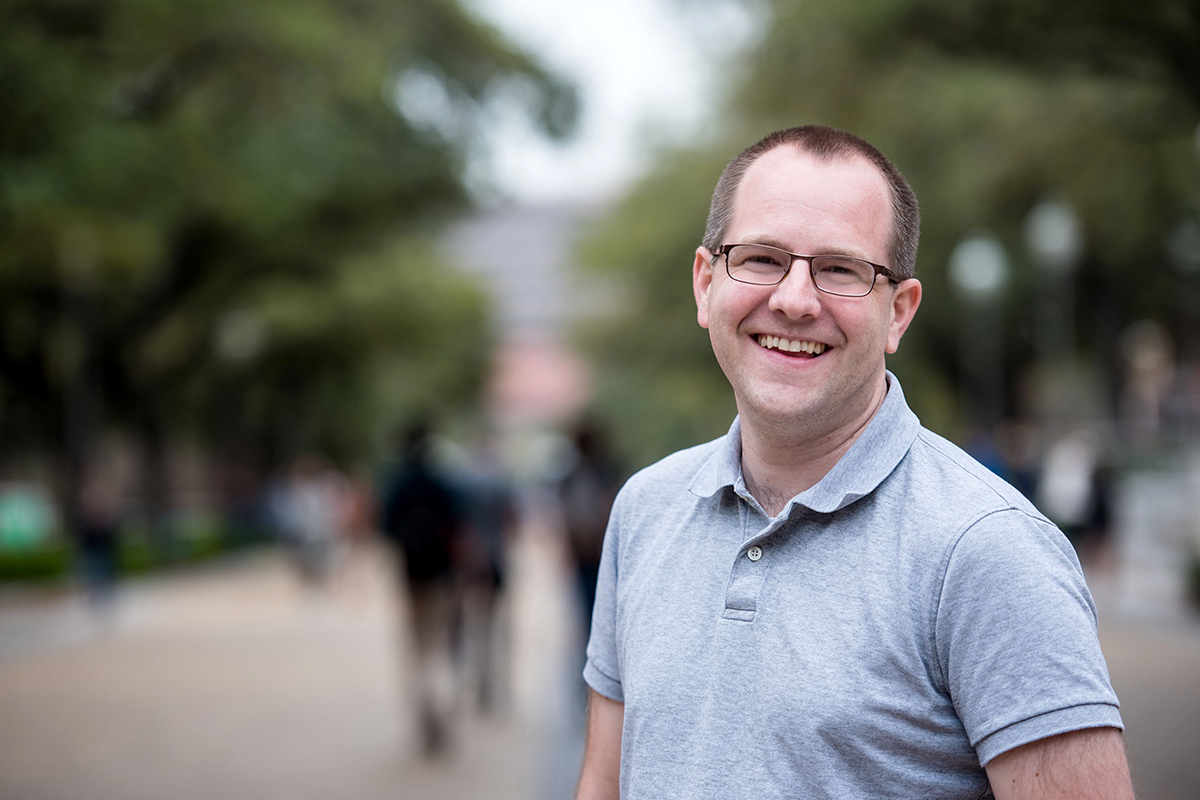
Doron Zeilberger is a Board of Governors Professor and Distinguished Professor of Mathematics at Rutgers University , affiliated with the Department of Mathematics in the School of Arts and Sciences. His research spans algebraic and enumerative combinatorics , experimental mathematics , and symbolic computation , with applications to number theory , probability , and cryptography . His work focuses on automated proof techniques , generating functions , and combinatorial sequences , often implemented via Maple packages like ALLADI.txt , BEUKERS.txt , and AperyLimits.txt . He has explored irrationality proofs , non-transitive dice , and computational models in biology and finance. Recent articles emphasize symbolic algorithms for continued fractions , Diophantine equations , and automated enumeration in combinatorics. He is a pioneer in computational mathematics , advocating for the integration of computers in rigorous mathematical research.
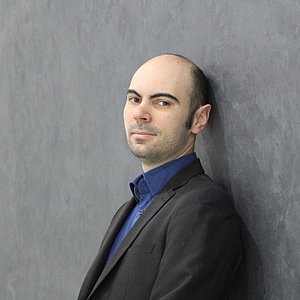
K. Selçuk Candan is a Professor at Arizona State University, Tempe, Arizona, with an extensive research career spanning over two decades in database systems, data mining, and machine learning. His work demonstrates deep expertise in tensor decomposition, causal inference, spatio-temporal analysis, and time series modeling. Candan has maintained a prolific publication record with significant contributions to premier venues including SIGMOD, ICDE, VLDB, and CIKM. His research interests focus on the intersection of data management and machine learning, particularly in developing novel methods for tensor decomposition, causal discovery, and efficient data representation. Candan's work addresses critical challenges in handling high-dimensional data, building robust predictive models, and developing systems for complex decision-making scenarios. Recent research directions include spatio-causal modeling for environmental systems, causal benchmarks, and learned data mapping techniques that bridge traditional database systems with modern machine learning approaches. Analysis of Candan's recent publications reveals a strong trend toward causal inference applications across multiple domains including hydrology, environmental science, and healthcare. His work increasingly integrates deep learning techniques with traditional data management principles, as evidenced by research on diffusion models for time series imputation and learned data mapping for compression. The research demonstrates practical applications in wetland conservation, streamflow forecasting, building fault detection, and medical diagnostics, showing a commitment to solving real-world problems through advanced data science techniques. Candan has established significant collaborative relationships, particularly with Maria Luisa Sapino, Huan Liu, and several other researchers across multiple institutions. His work often appears in top-tier conferences and journals, reflecting the high impact and quality of his research contributions. While specific grant information isn't detailed in the available text, the scope and depth of his research suggest substantial research funding supporting his work in data science and causal inference.
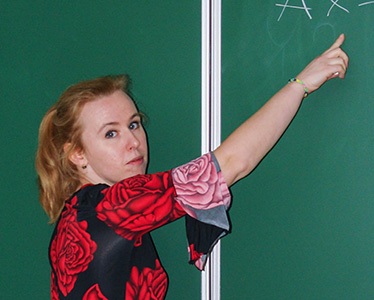
Etienne Vouga is an Associate Professor in the Department of Computer Science and the Institute for Computational Engineering and Sciences (ICES) at the University of Texas at Austin. His interdisciplinary research spans physical simulation, geometry processing, and computer graphics, with applications ranging from special effects in films like The Hobbit and Tangled to Artec's Shapify 3D portrait service. Education: PhD from Columbia Computer Graphics Group Postdoctoral research at Harvard SEAS Professor Vouga's research focuses on physical simulation of thin, elastic materials like cloth, hair, and paper, as they deform and collide. He has made significant contributions to discrete differential geometry, developing algorithms that better understand how geometric properties affect physical behavior of deformable objects. His work bridges computer graphics, computational mechanics, and scientific computing, with applications in special effects, 3D printing, architectural design, and biological modeling. He has pioneered approaches in inverse problems where desired outcomes drive the design process rather than simply simulating physical phenomena. Award Highlights: Best Paper Award at GECCO (2017) for Evolutionary Decomposition for 3D Printing Professor Vouga teaches Computer Graphics: Honors (CS 378H/CS 384G) and Physical Simulation (CS 395T) graduate courses every spring semester. He also serves as head coach of UT's competitive programming teams. His research group has developed several important software tools including Discrete Shell Code for shell simulation and Asynchronous Contact Mechanics Code for robust collision handling. While he is not actively expanding his research group significantly, he remains open to working with exceptional graduate students whose research interests align closely with his work in physical simulation and geometry processing.
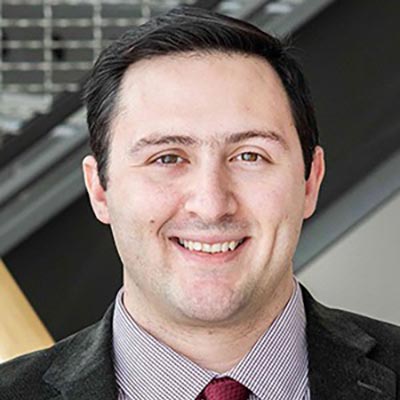
Dr. Thomas Mach is a Postdoctoral Researcher at the Institute of Mathematics , University of Potsdam, Germany, focusing on Data Assimilation under Prof. Melina Freitag. His work bridges theoretical and applied numerical linear algebra. Research Interests Numerical linear algebra for large/structured matrices Krylov subspace methods and iterative eigenvalue solvers Adaptive cross approximation and regularization techniques Applications to inverse problems and parametric systems Publication Trends show expertise in matrix eigenvalue problems, regularization for ill-posed equations, and algorithm design for structured systems. Co-authored works with leading experts like David S. Watkins demonstrate methodological innovation. Awards : SIAM Outstanding Paper Prize (2015) for polynomial root-finding research Academic Service includes co-organizing workshops, serving as Associate Editor for numerical analysis journals, and active participation in international conferences like ILAS, SIAM, and GAMM.
Mark Colarusso is an Associate Professor in the Department of Math and Statistics at the University of South Alabama within the College of Arts and Sciences . His research bridges Lie theory, algebraic geometry, and integrable systems through algebraic and geometric methods. Education Ph.D. in Mathematics, University of California, San Diego Research Interests Mark specializes in the Gelfand-Zeitlin integrable system, analyzing its action on Lie algebras like gl(n) and so(n), and studying K-orbits on flag varieties. His work connects Poisson geometry with representation theory, focusing on algebraic integrability and eigenvalue coincidences. He also explores Lie-Poisson theory for direct limit Lie algebras and geometric structures in algebraic combinatorics. Publication Trends His publications emphasize the interplay between integrable systems and Lie theory, with recurring themes in Poisson geometry, orbit decompositions, and algebraic structures. Collaborations with Sam Evens and Michael Lau highlight interdisciplinary approaches to representation theory and symplectic geometry. Teaching He teaches across the calculus sequence (College Algebra, Differential Equations) and upper-level courses for secondary education teachers, including Abstract Algebra and Axiomatic Geometry.
Iveta Hnetynkova is an Associate Professor at the Department of Numerical Mathematics, Faculty of Mathematics and Physics, Charles University in Prague. She specializes in numerical linear algebra, inverse problems, and regularization methods, with applications in image processing and scientific computing. Education: Doctor of Natural Sciences (RNDr.) from Charles University (2003) Ph.D. in Scientific Computations from Charles University (2006) Habilitation thesis on error-contaminated linear approximation (2019) Research Interests: Krylov subspace methods Total Least Squares (TLS) formulations Noise revealing in discrete inverse problems Tensor generalizations and structured matrices Applications in image processing and jewelry defect analysis Scientific Awards: Visegrad Group Young Researcher Award (2014) J. Jirsa Prize for textbook excellence (2013) I. Babuska Prize (2nd place) (2007) SVOČ Prize in mathematics (2003)
Panagiotis (Panos) Markopoulos is the Margie and Bill Klesse Endowed Associate Professor at the University of Texas at San Antonio (UTSA), affiliated with the Departments of Electrical & Computer Engineering and Computer Science. He directs the Machine Learning Optimization Laboratory and co-leads the Trustworthy AI initiative at UTSA's MATRIX AI Consortium. Previously, he held tenured positions at Rochester Institute of Technology (RIT) and served as a Visiting Faculty at the Air Force Research Laboratory (AFRL). Education: Ph.D. in Electrical Engineering, SUNY Buffalo (2015) M.S. in Electronic and Computer Engineering, Technical University of Crete (2012) Engineering Diploma in Electronic and Computer Engineering, Technical University of Crete (2010) His research focuses on trustworthy and reliable artificial intelligence , machine learning from limited/corrupted data , federated learning , continual learning , multimodal data fusion , and quantum machine learning . Recent work explores efficient solutions for dynamic environments, privacy-preserving AI, and healthcare applications. His publications emphasize L1-norm methods for robust signal processing and machine learning, particularly in tensor analysis , quantum computing , remote sensing , and neural network optimization . He has secured funding from the NSF, NGA, AFOSR, and AFRL. Honors: Margie and Bill Klesse Endowed Professorship (2022) AFOSR Young Investigator Program Award (2019) IEEE Senior Member (2021) He actively contributes to academic leadership through roles such as Chair of the Signal Processing and Learning Concentration at UTSA, Founding Director of two research laboratories, and Core Faculty Member in the UTSA School of Data Science and MATRIX AI Consortium.
Xinjue Wang is a Doctoral Researcher at the Department of Information and Communications Engineering, Aalto University, affiliated with the Esa Ollila Group. Research Interests: Her work focuses on signal processing, machine learning, and wireless communication, with emphasis on robust algorithms for massive access, graph neural networks, and tensor regression models. Publications Trends: Recent publications include studies on covariance-based matching pursuit, graph neural network sensitivity, and millimeter wave tracking, presented at top conferences like ICASSP and EUSIPCO, and published in journals such as IEEE Transactions on Signal and Information Processing over Networks. Collaborations: Collaborates with researchers including Esa Ollila, Sergiy A. Vorobyov, and Jari Miettinen.
Rasmus Bro is a Professor at the University of Copenhagen , Faculty of Sciences , and leads the Design and Consumer Behavior section within the Department of Food Science . He is a world-renowned expert in chemometrics and machine learning applied to analytical chemistry and food supply chain optimization . Research Focus : Chemometrics, Process Analytical Technology (PAT), multi-way analysis, fluorescence spectroscopy, and data-driven modeling of biological systems Teaching : Director of the International MSc course Advanced Chemometrics and International PhD School of Chemometrics (12 ECTS annually) Leadership : Founder and leader of the ODIN research consortium (2001–), connecting academia and industry (Arla, Dupont, Chr. Hansen) His work bridges machine learning with analytical chemistry to enhance food quality and safety. He has developed open-source MATLAB toolboxes for multi-way analysis and maintains key web resources like ChemoBro and Chemometrics World . Scientific Awards : 10th Herman Wold Gold Medal (2011) Nils Foss Excellence Prize (2016) IEEE Best Paper Award (2001) Elsevier Chemometrics Award (2000) PhD Cum Laude (University of Amsterdam, 1998) Beyond academia, Bro co-founded MedicoMetrics Aps and serves as a consultant to firms like Foss Analytical and Eigenvector Research . His 2003 US Patent on biological sample classification remains widely cited.
G.J.T. Leus is a Professor at Delft University of Technology's Faculty of Electrical Engineering, Mathematics and Computer Science, where he leads research in the Signal Processing Systems department. His work spans foundational algorithms and applied systems across wireless communications, medical imaging, and network analysis. With over 498 research outputs including journal articles, conference papers, and patents, he maintains an active research program in cutting-edge signal processing methodologies. Research interests focus on: Signal Processing Systems : Advanced algorithms for spectral estimation, array design, and sensor optimization Computational Imaging : Ultrasound techniques for medical diagnostics including carotid artery visualization Graph-Based Methods : Graph neural networks for localization and topology identification Wireless Technologies : OTFS modulation, MIMO systems, and phased array design Recent publications (2023-2025) demonstrate strong emphasis on: Integration of deep learning with tensor decompositions for channel estimation Fundamental limits in estimation theory using Cramér-Rao bound frameworks Topological signal processing extensions to simplicial complexes Computational imaging innovations for medical ultrasound Academic leadership includes editorial roles for the Eurasip Journal on Advances in Signal Processing , keynote presentations at major conferences (e.g., Asilomar 2023), and supervision of graduate researchers. Current projects involve multi-sensor systems for network localization, ultrasound imaging with limited transceivers, and robust graph neural architectures.
Dr. Jonathan Lorand is a Lecturer at the Department of Mechanical and Process Engineering at ETH Zürich , where he teaches Applied Category Theory for Engineering I and II . He is affiliated with the Frazzoli Group at the Institute for Dynamic Systems and Control, focusing on systemic thinking through category theory and its applications in engineering and interdisciplinary domains. Lecturer at ETH Zürich Affiliated with Frazzoli Group Co-author of a textbook on applied category theory Member of CODEWIND and Demos Institute boards Research Interests His work bridges applied category theory with practical systems modeling and optimization. Key areas include monotone co-design theory for engineering systems, duality involutions in categorical frameworks, and geometric representation theory. He has contributed to understanding isotropic structures in symplectic and Poisson geometry, as well as categorification techniques for negative information and resource management. Publications & Collaboration His publications span pure and applied mathematics, including work with collaborators like Andrea Censi, Eugene Frazzoli, and Alan Weinstein. He is co-developing a textbook and learning resources for practitioners in applied category theory.
Juan Antonio Becerra González serves as Full Professor in the Department of Signal Theory and Communications at the University of Seville, where he leads the Radiocommunication Systems research group. His professional activities span cutting-edge wireless communications research, industry contract projects, and academic mentorship. His research focuses on wireless communications systems with specialization in: Digital predistortion techniques for power amplifier linearization Sparse signal processing and Volterra series modeling 5G/6G communication systems and NB-IoT sensor networks Visible light communications (DCO-OFDM) Machine learning applications for nonlinear system identification Recent publications demonstrate consistent innovation in reducing computational complexity while maintaining performance in digital predistortion architectures. Analysis of his 15 most recent publications reveals strong concentration in microwave engineering applications (40%), signal processing theory (30%), and wireless communications systems (30%). Key trends include increasing integration of machine learning techniques (2018-2025), expansion into visible light communications (2025), and growing interdisciplinary work in biomedical applications like emotion recognition. His research is supported through active leadership of three industry contract projects for GPRS/NB-IoT sensor data prototypes and participation in five national R&D projects including PID2021-123090NB-I00 (brain-machine interfaces) and P20_01173 (AI emotion recognition). He maintains a highly collaborative supervision model with consistent co-authorship on publications. The Radiocommunication Systems research group provides experimental facilities for developing pre-industrial communication prototypes, power amplifier testbeds, and virtual reality setups for interdisciplinary applications. Professor Becerra González emphasizes practical implementation through projects involving hardware validation and low-cost educational tools.
Mirfarid Musavian Ghazani is a Deep Learning Research Engineer at Halmstad University , affiliated with the School of Information Technology . His research focuses on representation learning for Electronic Health Records (EHR) using Graph Transformer models and anomaly detection in multivariate time series for disease outbreak surveillance. Education : MSc in Mathematics and Computer Science from Skolkovo Institute of Science and Technology (2020). Prior Experience : Led trajectory prediction projects for autonomous vehicles and indoor image localization at Skoltech's MobileRobotics Lab; worked on tensor networks and brain-computer interfaces during internships. Research Interests : Representation learning Reinforcement learning Generative models Graph neural networks Tensor decompositions Digital signal processing
Kaj Munhoz Arfvidsson is a doctoral student and Research Engineer at the Division of Decision and Control Systems, KTH Royal Institute of Technology. He is supervised by Jonas Mårtensson and affiliated with the Wallenberg AI, Autonomous Systems and Software Program (WASP) and the Integrated Transport Research Lab (ITRL). Education : M.Sc. in Systems, Control and Robotics from KTH (2024) His research focuses on formal methods/verification , cooperative autonomy , and intelligent transportation systems , with an emphasis on bridging theoretical guarantees and practical deployment in safety-critical connected mobility scenarios. Key article trends include temporal logic , Hamilton-Jacobi reachability , C-V2X communication , and testbed development for autonomous vehicles and robot swarms. He collaborates with the Integrated Transport Research Lab and is part of the WASP program , working on advanced verification techniques and coordination strategies for autonomous systems.
Anqi Dong is a Postdoctoral Fellow at KTH Royal Institute of Technology. They hold a BSc in Mechanical and Automation Engineering from Harbin Institute of Technology (2017) and a PhD in Mechanical and Aerospace Engineering from the University of California, Irvine (2023), supervised by Prof. Tryphon T. Georgiou. They were a visiting scholar with Prof. Li Qiu from 2023 to 2024 and are now co-supervised by Prof. Karl H. Johansson and Prof. Johan Karlsson at KTH. Education: BSc: Mechanical and Automation Engineering, Harbin Institute of Technology (2017) PhD: Mechanical and Aerospace Engineering, University of California, Irvine (2023) Research Interests: Anqi Dong's work focuses on control theory, optimal transport, and data-driven modeling of dynamical systems. Their research applies advanced mathematical frameworks to problems in multi-agent coordination, 3D scene understanding, and biomedical imaging. Key areas include tensor-based analysis, network learning, and computational methods for system identification. Recent Publications: Their 2025 studies explore dynamic optimal transport, neural network interpretability, and vessel segmentation, while 2024 contributions address temporal hypergraphs and toll station optimization. All work emphasizes interdisciplinary applications of mathematical and computational tools.