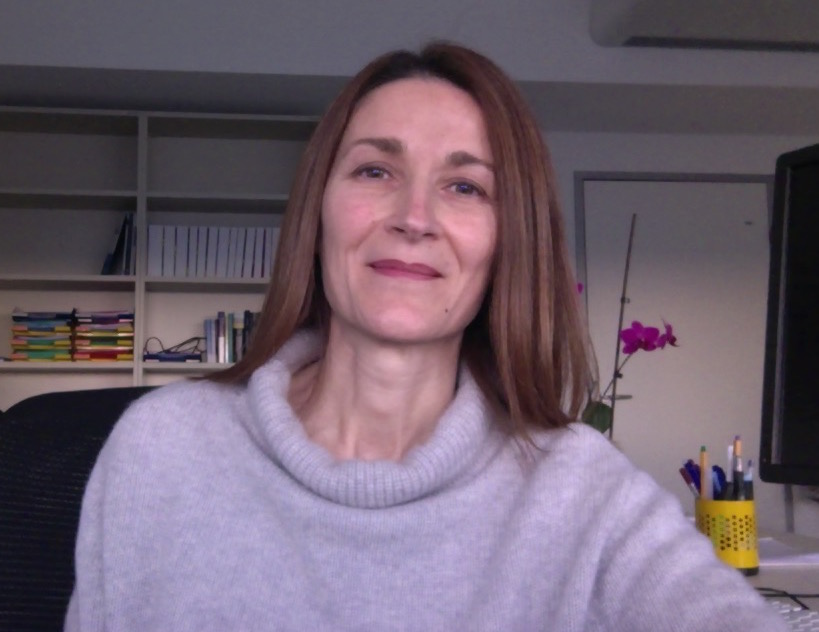
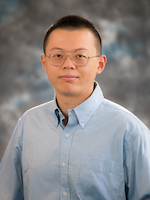
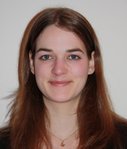
Paola Cristofori is an Associate Professor in the Department of Physical, Computer and Mathematical Sciences at the University of Modena and Reggio Emilia. Her research focuses on Algebraic Topology, Differential Geometry, and Manifold Theory, with contributions to PL topology, 4-manifolds, and combinatorial structures like crystallization theory. She teaches courses in Geometry, Linear Algebra, and Algebraic Topology for undergraduate and graduate programs in Mathematics, Civil Engineering, and Strategic Sciences. Her work emphasizes topological invariants, combinatorial methods in manifold classification, and applications of colored graphs. Key areas include trisections of 4-manifolds, Kirby diagrams, and G-degree theory. She collaborates extensively on projects involving geometric topology and computational topology tools. Dr. Cristofori’s teaching spans foundational topics in linear algebra, Euclidean geometry, and advanced algebraic topology, emphasizing rigorous proofs and practical applications. Her research is published in top journals and includes over 40 articles, reflecting her deep engagement with low-dimensional topology and geometric structures.
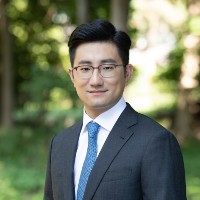
Sung Hoon Choi is an Assistant Professor in the Department of Economics at the University of Connecticut, part of the College of Liberal Arts and Sciences. His research focuses on developing econometric tools for analyzing big data, machine learning applications, and forecasting using high-dimensional panel datasets. He holds a Ph.D. in Economics from Rutgers University (2021), an M.A. in Applied Statistics from Yonsei University (2016), and a B.A. in Statistics from the University of California, Berkeley (2013). His research interests include econometric theory, financial econometrics, and high-frequency data analysis. Notable areas of concentration are large panel data and factor models, high-dimensional data techniques, and volatility matrix analysis. He teaches courses such as Econometrics I and III for Ph.D. students, and Python programming for economists at undergraduate and master's levels. Recent publications focus on volatility modeling using factor structures, high-frequency financial data, and panel data econometrics. His work addresses challenges in structural information analysis, standard errors for clustered panels, and feasible generalized least squares methods. He collaborates with researchers like Donggyu Kim and Jushan Bai, contributing to leading journals like the Journal of Econometrics and Econometric Theory .
Dr Alex Sherman is a Lecturer at UNSW Sydney in the School of Mathematics & Statistics . He previously held postdoctoral positions at the University of Sydney with Kevin Coulembier and at Ben-Gurion University of the Negev with Inna Entova-Aizenbud. His research focuses on representation theory and supergeometry , with applications to Lie superalgebras , modular representation theory , and tensor categories . He has published extensively on topics such as ghost distributions, Duflo-Serganova functors, and the geometry of spherical supervarieties. Email: alex.sherman@unsw.edu.au Location: Room 4111, The Red Centre, UNSW Sydney, NSW 2052 In 2025 , he will lecture the Linear Algebra stream of MATH1241. He organizes the UNSW Pure Maths Seminar and Algebra Seminar , and has co-organized courses on Kazhdan-Lusztig equivalences and tensor categories.
Athanasios Rontogiannis is an Associate Professor at the School of Electrical and Computer Engineering of the National Technical University of Athens (NTUA). He holds a PhD in Signal Processing from the National University of Athens (1997) and has held roles including Research Director at the National Observatory of Athens (2017–2021). His research focuses on signal processing, machine learning, and hyperspectral image analysis. Education: MEng (Electrical Engineering, NTUA, 1991), M.A.Sc. (University of Victoria, Canada, 1993), PhD (Signal Processing, National University of Athens, 1997). Research interests include adaptive algorithms, sparse representations, and tensor models. He has served on editorial boards of IEEE Transactions on Signal Processing and EURASIP journals, receiving an honorary distinction in 2020. He is a Senior Member of IEEE and affiliated with EURASIP and the Technical Chamber of Greece. Key contributions span hyperspectral unmixing, Bayesian algorithms, and space data exploitation. His work integrates machine learning for applications in space science and signal processing.
Abdulkadir C. Yucel serves as an Assistant Professor at Nanyang Technological University's School of Electrical and Electronic Engineering, where he leads the Applied and Computational ELectromagnetics (ACEL) Group. His research spans applied electromagnetics, radar imaging, and AI-driven electromagnetic analysis with applications in smart cities, neurotechnology, and quantum systems. Education: Ph.D. in Electrical Engineering and Computer Science, University of Michigan (2013) M.S. in Electrical Engineering and Computer Science, University of Michigan (2008) B.S. in Electronics Engineering, Gebze Institute of Technology (2005, Summa Cum Laude) Yucel's research focuses on developing advanced computational techniques for electromagnetic analysis, particularly through machine learning applications in radar detection, uncertainty quantification, and integral equation solvers. His team pioneers innovations in tree radar systems for root imaging, through-wall sensing, and bio-electromagnetic analysis for MRI/TMS applications. Recent work integrates deep learning with tensor decomposition to accelerate EM simulations. Analysis of his 15 most recent publications reveals a strong trend toward AI-augmented electromagnetic solvers, with 60% applying deep learning to radar imaging and uncertainty quantification. Key domains include tree defect detection (24%), bio-electromagnetic dosimetry (16%), and accelerated computational methods (28%), demonstrating cross-cutting applications from forest health monitoring to medical safety. Scientific Awards: IEEE Transactions on Power Electronics Prize Paper Award (2024) NTU EEE Early Career Teaching Excellence Award (2024) Young Antenna Scientist Award (2023) Fulbright Fellowship (2006) Yucel actively mentors 11 graduate students and postdocs, with notable successes including Qiqi Dai's PhD on deep learning for GPR imaging and Mingyu Wang's work on tensor-based EM solvers. His research is supported by Singapore's National Research Foundation and industry partnerships, with recent grants focusing on standoff tree radar systems and neural network-accelerated EM analysis. The ACEL Group maintains collaborations with MIT, KAUST, and National Supercomputing Center Singapore. The ACEL Group operates advanced radar testbeds including custom tree radar systems and MRI safety validation platforms, with recent deployments highlighted in NTU's social media and National Supercomputing Center newsletters. Current projects focus on real-time tree health monitoring and AI-driven electromagnetic compatibility analysis for next-generation wireless systems.
Ilaria Perugia is a University Professor (Univ.-Prof.) and Chair of Numerics of PDEs at the Department of Mathematics, Faculty of Mathematics, University of Vienna. She also serves as Deputy Head of the Research Platform Erwin Schrödinger International Institute for Mathematics and Physics. Her research focuses on numerical methods for partial differential equations with applications in computational physics and engineering. Professor Perugia's primary research interests include: Numerical methods for PDEs Finite element methods Discontinuous Galerkin methods Trefftz methods Virtual element methods Space-time methods Computational electromagnetics Wave propagation problems Nonlinear reaction-diffusion problems Her work spans theoretical analysis, algorithm development, and practical implementation of numerical methods for solving complex physical phenomena. Her recent publications demonstrate a strong focus on space-time methods, virtual element methods, and structure-preserving discretizations for wave equations, heat equations, and other PDEs. She has made significant contributions to the development of stable and efficient numerical schemes that preserve important physical properties of the underlying continuous problems, particularly in the context of wave propagation and computational electromagnetics. Professor Perugia leads a research group comprising several researchers and students including Mattia Corti, Matteo Ferrari, Monica Nonino, Andrea Scaglioni, Paul Stocker, Enrico Zampa, and Marco Zank. Her group actively collaborates on projects related to numerical analysis and scientific computing, with particular emphasis on developing novel discretization techniques for challenging PDE problems.
John van de Wetering is an Assistant Professor at the Theoretical Computer Science group of the Informatics Institute, University of Amsterdam, working with the QuSoft research center. He co-authored the open-access book Picturing Quantum Software and developed the PyZX quantum compiler. His research spans quantum computation and quantum foundations, focusing on diagrammatic methods like the ZX-calculus and ZH-calculus. Quantum circuit optimization and verification Quantum foundations via algebraic/compositional methods Co-creator of PyZX His recent publications explore multi-qutrit systems, completeness of graphical calculi, and quantum state representations. Supervises students in quantum computing, including Lia Yeh and Sarah Li. Directs the new Master's program in Quantum Computer Science at UvA. Actively contributes to open-source projects and international conferences. Notable collaborations include Aleks Kissinger, Neil J. Ross, and QuSoft researchers. Uses GitHub for DiZX development (qudit extension of PyZX). No explicit scientific awards mentioned.
Matthias Schlottbom is an Associate Professor specializing in Mathematics of Computational Science, with a focus on numerical methods and their applications in physics, biology, and engineering. His research integrates advanced computational techniques with interdisciplinary problems, including radiative transfer, photonic crystals, and chemotaxis modeling. Research Interests: Schlottbom’s work spans numerical analysis, finite element methods, and machine learning. He develops high-order discretization schemes, iterative solvers for anisotropic transport, and mathematical frameworks for biological network formation. Publications: Recent articles highlight his contributions to accelerating radiative transfer simulations, extending component mode synthesis for Helmholtz equations, and analyzing diffusion limits in kinetic models. His work often bridges computational mathematics with practical applications in photonics and multiscale systems. Collaborations: He actively collaborates on datasets for optical simulations, radiative transfer algorithms, and photonic crystal modeling, contributing to open-access repositories like 4TU.Centre and Zenodo. Activities: Schlottbom has organized workshops such as the Kinetic Theory Workshop in the Netherlands and delivered keynotes on residual minimization and data-driven methods for transport equations. Scientific Awards: No specific awards or fellowships are mentioned in the provided materials. Advising & Grants: Details about students, advising roles, or grant funding are not included in the available data.
Michael Anshelevich is a Professor of Mathematics at Texas A&M University, affiliated with the College of Arts & Sciences. His research focuses on Functional Analysis, Operator Theory, and Free Probability, with contributions to non-commutative stochastic processes, orthogonal polynomials, and operator-valued distributions. He holds a Ph.D. from the University of California, Berkeley (2000) and a B.S. from the California Institute of Technology (1994). His work bridges combinatorial methods with advanced probability theory, addressing topics like free Lévy processes and free convolution powers. Research interests span non-commutative probability frameworks, including free stochastic measures, Fock space representations, and applications of combinatorial structures to stochastic calculus. Recent articles explore exponential products in operator algebras, Hermite polynomials in Brownian motion contexts, and depth-two actions in Fock spaces. His contributions to free probability include extending classical limit theorems to non-commutative settings and analyzing multiplicative free convolutions. Publications highlight interdisciplinary connections between functional analysis and stochastic processes, with a focus on operator-valued distributions and Jacobi parameters. While no specific awards are listed, his extensive bibliography reflects sustained impact in mathematical physics and operator theory. Advising and grants sections remain unspecified, though his research often involves collaborative projects in stochastic analysis and free probability.
Ankit Kariryaa is a Tenure Track Assistant Professor at the Department of Computer Science and Department of Geosciences and Natural Resource Management , University of Copenhagen. His work bridges Machine Learning and Environmental Informatics , focusing on remote sensing, geospatial analysis, and ecological modeling. University of Copenhagen, Denmark Machine Learning Section, Department of Computer Science Geography, Land, Environment and Society, Department of Geosciences Kariryaa specializes in applying deep learning and computer vision to environmental challenges. His research includes: Automated tree detection and biomass estimation via satellite imagery Multi-modal geospatial representation learning Monitoring farmland tree decline and carbon sequestration potential Agroforestry system mapping using AI Developing AI tools for climate policy and sustainability Recent work trends show a focus on quantum-inspired machine learning , environmental monitoring , and cross-cultural AI applications . His 15 most recent publications span topics in remote sensing , ecological modeling , and AI ethics , with methods ranging from neural networks to tensor-based learning. He collaborates across disciplines, notably with researchers in ecology , climate science , and quantum computing . His outreach includes seminars on AI in agroforestry and ecosystem management , while his team contributes to global tree resource databases like TreeSense.
Daniele Venturi is a Professor of Applied Mathematics at the University of California, Santa Cruz, where he has been faculty since 2015, rising from Assistant Professor to full Professor by 2021. Previously, he was a Research Assistant Professor at Brown University from 2010-2015. His academic journey began at the University of Bologna, where he earned both his combined B.S./Sc.M. in Mechanical Engineering (2002) and Ph.D. in Applied Physics with a focus on thermo-fluid dynamics (2006). University of Bologna: B.S./Sc.M. Mechanical Engineering (2002), Ph.D. Applied Physics (2006) Brown University: Research Assistant Professor (2010-2015) UC Santa Cruz: Assistant to Associate to Full Professor (2015-present) Professor Venturi's research spans multiple cutting-edge areas in computational mathematics. His primary interests include stochastic modeling and uncertainty quantification, numerical tensor methods for high-dimensional PDEs, data-driven modeling approaches, approximation of functional-differential equations, and theoretical/computational fluid dynamics. His work bridges theoretical mathematical frameworks with practical computational implementations, particularly focusing on overcoming the curse of dimensionality in complex systems. His recent research has been heavily focused on hierarchical tensor methods for solving high-dimensional partial differential equations. The analysis of his publication record reveals a strong emphasis on developing computational frameworks that address high-dimensional challenges in uncertainty quantification and model reduction. His work frequently intersects machine learning techniques with traditional numerical methods, particularly in developing physics-informed neural networks and multifidelity modeling approaches. A consistent theme across his publications is the development of mathematical frameworks that maintain computational tractability while preserving physical fidelity in complex systems. Professor Venturi has secured substantial research funding from major agencies including the Air Force Office of Scientific Research (AFOSR), Department of Energy (DoE), National Science Foundation (NSF), Army Research Office (ARO), and Defense Advanced Research Projects Agency (DARPA). His most significant current grant is a 2024-2029 AFOSR MURI award totaling $7.5M as co-PI for 'Tensor Network for simulating kinetic systems.' 2024-2029: AFOSR MURI, $7.5M (co-PI) 2023-2027: DoE, $3.8M (co-PI) 2023-2026: AFOSR, $2.5M (co-PI) 2020-2025: NSF TRIPODS, $2.3M (co-PI) At UC Santa Cruz, Venturi teaches a range of courses including Fundamentals of Uncertainty Quantification, Applied Dynamical Systems, Nonlinear Dynamical Systems, and Numerical Methods for Differential Equations. His teaching spans both undergraduate and graduate levels, reflecting his expertise across theoretical and computational mathematics. His lecture notes for these courses are publicly available and demonstrate his commitment to pedagogical excellence in complex mathematical subjects.
David Hong is an Assistant Professor in the Department of Electrical and Computer Engineering at the University of Delaware. He holds a PhD from the University of Michigan, where he was an NSF Graduate Research Fellow, and previously served as an NSF Postdoctoral Research Fellow at the University of Pennsylvania. His research focuses on developing robust methods for analyzing heterogeneous and high-dimensional data, particularly through low-rank matrix and tensor techniques. Applications span medical imaging, radar systems, genomics, and astronomy. He emphasizes theoretical guarantees and practical algorithms for signal extraction and inverse problems. Education: PhD in Electrical Engineering and Computer Science (University of Michigan), NSF Postdoctoral Research Fellowship (University of Pennsylvania). Research Interests: Low-rank matrix/tensor methods, heterogeneous data analysis, unsupervised learning, and applications in healthcare, imaging, and sensor systems. His work addresses noise robustness, scalable algorithms, and real-world deployment challenges. Scientific Awards: Recipient of the NSF Postdoctoral Research Fellowship (2020) and NSF Graduate Research Fellowship (2015). Advising & Grants: Advisor to graduate students in machine learning and signal processing (no named advisees listed). Active NSF grant recipient for foundational and applied research in data science. Labs/Teams: Engaged in interdisciplinary collaborations through the University of Delaware's Center for Computational Research and Data Science initiatives.
Hossein Valavi is a Lecturer and Assistant Director of Undergraduate Studies at Princeton University, contributing to advancements in computer architecture and hardware acceleration. His research focuses on in-memory computing, neural networks, and energy-efficient systems, with notable work in reconfigurable architectures and mixed-signal processing. He has received multiple teaching awards, including recognition for innovative pandemic-era Car Lab courses and collaborative work honored by the Edison Patent Award. His academic contributions span academic positions since 2018, emphasizing both research and pedagogical excellence. Key technical areas include scalable in-memory computing systems, analog neural network accelerators, and low-power matrix factorization algorithms. His work addresses critical challenges in data movement reduction and hardware-software co-design for modern computing systems. Awards: Teaching Excellence Awards (2021, 2023), Edison Patent Award (2023) Grants & Projects: Leading developments in in-memory computing accelerators and embedded microprocessor designs Research teams under his guidance have produced impactful IP in semiconductor layouts, CNN accelerators, and programmable architectures, aiming to bridge theoretical computer science with practical hardware implementations.
Kejun Huang is an Assistant Professor in the Department of Computer and Information Science and Engineering at the University of Florida's Herbert Wertheim College of Engineering. His primary research area is Machine Learning, with additional interests in algorithms, computer vision, and data science. He received his Ph.D. in Electrical Engineering from the University of Minnesota in 2016. His research focuses on machine learning, signal processing, optimization, and statistics. Recent work tackles unsupervised learning challenges and AI-powered medical research through NIH-funded projects. Dr. Huang's publications demonstrate consistent focus on optimization techniques for tensor decomposition, dictionary learning identifiability, and nonnegative matrix factorization. Key themes include algorithmic efficiency and theoretical guarantees in machine learning models.
Diane Guignard is an Assistant Professor in the Department of Mathematics and Statistics at the University of Ottawa. Her research focuses on numerical analysis, partial differential equations, and computational methods with applications to mechanics and stochastic systems. She holds a position in a leading mathematics department and can be contacted at dguignar@uOttawa.ca . Her research interests include finite element methods, model reduction, uncertainty quantification, and optimal transport-based mesh adaptation. She explores nonlinear approximation theories for high-dimensional anisotropic functions and develops computational frameworks for thin structures and colloidal flow simulations. Her work bridges numerical analysis with practical engineering challenges, emphasizing adaptive algorithms and error estimation techniques. Her recent publications (2021-2024) highlight contributions to goal-oriented mesh adaptation, stochastic field approximations on surfaces, and large deformation analyses of prestrained plates. These studies emphasize interdisciplinary approaches combining mathematical rigor with computational innovation. Dr. Guignard has not been explicitly noted for awards in the provided materials. Her advising record is currently unspecified, though her research group likely engages in advanced numerical methods and computational mechanics projects.