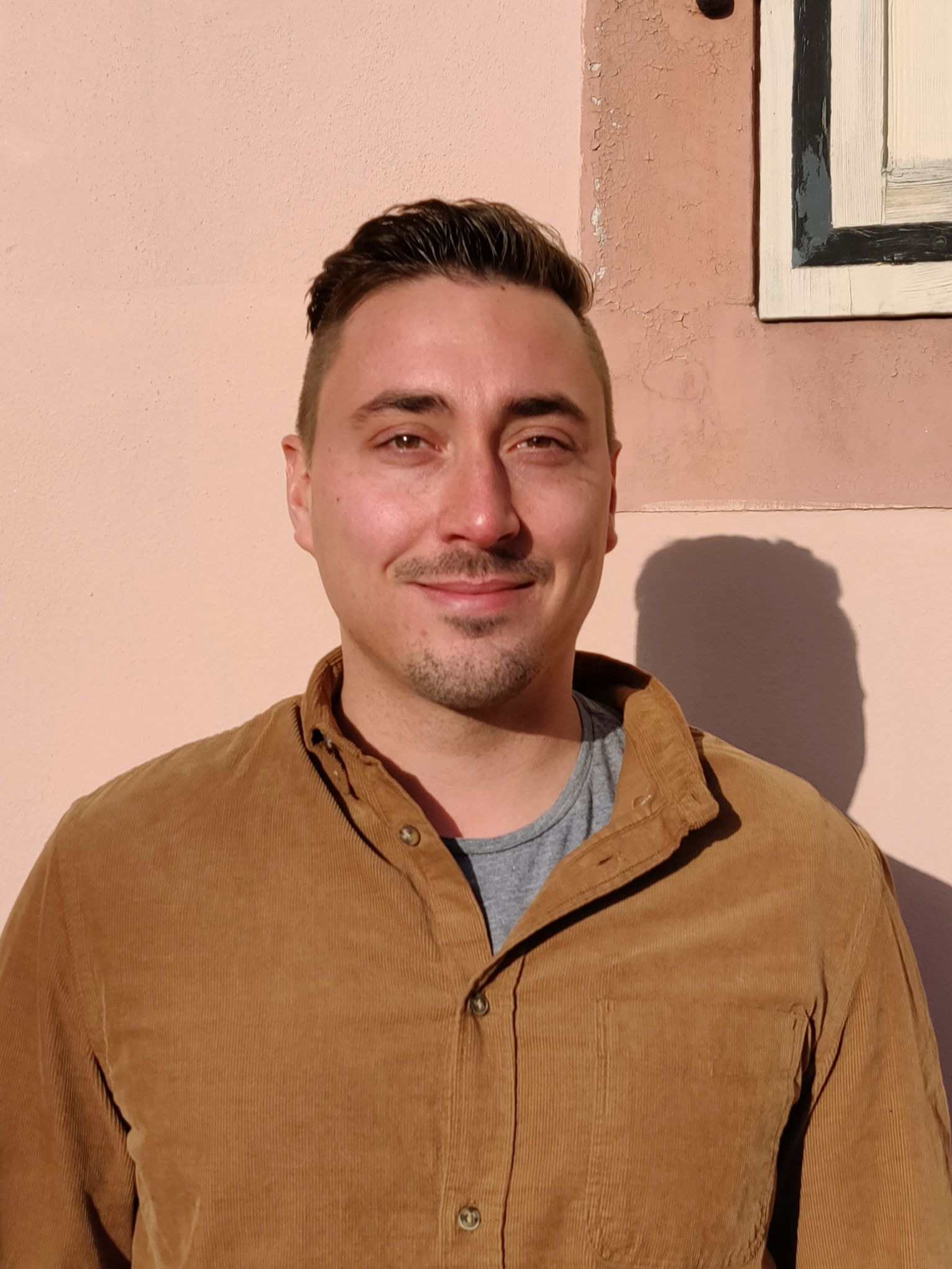
Professor Ignacio Cirac is Director at the Max Planck Institute for Quantum Optics and leads the Theory Division. His pioneering work in quantum information theory has fundamentally advanced quantum computing and quantum simulation frameworks. Research breakthroughs include: Developing theoretical foundations for quantum computers and quantum networks Creating new algorithms for quantum communication Designing quantum simulation methods for many-body systems Establishing theoretical tools for quantum entanglement characterization His group develops concepts for quantum gates and algorithms implemented by experimental physicists worldwide. Current investigations focus on quantum simulation of solid-state systems using ultracold atoms in optical lattices, advancing understanding of magnetism and superconductivity. Major Awards: Wolf Prize in Physics (2013) Niels Bohr Medal (2013) Prince of Asturias Prize (2006) Benjamin Franklin Medal (2009) Quantum Electronics Prize (2005)
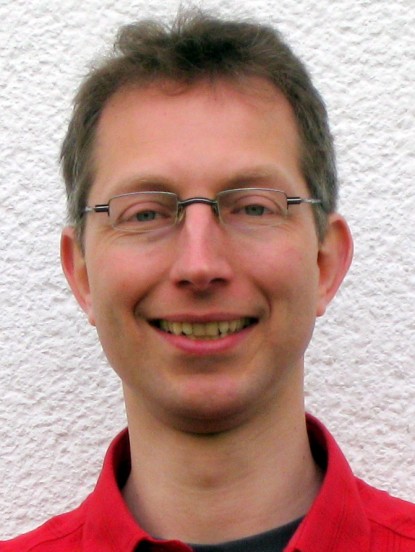
Sebastian Krämer is a researcher at the Institute for Geometry and Practical Mathematics at RWTH Aachen University, working under the supervision of Prof. Markus Bachmayr and Prof. Lars Grasedyck. His research focuses on tensor networks, low-rank approximations, and numerical methods for high-dimensional problems. He has made significant contributions to the field of tensor train formats and rank minimization techniques. Dr. Krämer's research interests span tensor networks, low-rank approximations, numerical linear algebra, high-dimensional approximation, tensor train formats, and machine learning optimization. His work centers on developing efficient algorithms for tensor decompositions, particularly focusing on alternating least squares methods, iteratively reweighted least squares approaches, and geometric constraints for tensor singular values. His research bridges theoretical numerical analysis with practical applications in high-dimensional data processing and scientific computing. His publication record shows a consistent output of high-quality work in top numerical analysis journals, with recent publications in 2024 demonstrating ongoing active research. His work demonstrates expertise in both theoretical aspects of tensor decompositions and practical implementation of numerical algorithms. He has developed several open-source toolboxes for tensor network arithmetic and tensor train feasibility problems, which have been widely used by the research community. Dr. Krämer has been actively involved in teaching, serving as a lecturer and assistant for various mathematics courses at RWTH Aachen, including Numerical Mathematics for mathematicians and civil engineers. He has also contributed to specialized research schools on high-dimensional approximation and deep learning, developing course materials and providing instruction. His professional activities include regular participation in the GAMM conference since 2017 and peer review activities for SIAM journals since 2015.
Prof. Dr. Katharina Kormann is a Professor in Numerical Mathematics at the Department of Mathematics, Ruhr University Bochum. She leads the Numerics and Scientific Computing research group, focusing on developing structure-preserving numerical methods and high-performance computing techniques for partial differential equations. Her work has applications in plasma physics and quantum dynamics. Research interests include numerics of high-dimensional problems, efficient algorithms for supercomputers, and low-rank tensor approximations. She coordinates projects like the PDExa initiative and the SNuBIC Research Unit, involving dynamical low-rank approximations for two-particle systems. Team members: Dr. Ivo Dravins (PostDoc), Omar Malik, Tileuzhan Mukhamet, and Lukas Hensel (PhD students), and Victoria Grieß (student assistant). Labs/Teams: Kormann Group within the Numerics division of the Floer Center of Geometry. No specific grants or awards are listed, but her research is supported through collaborative projects and institutional resources.
Alexander Tichai is an ERC Group Leader at the Technical University of Darmstadt's Institute of Nuclear Physics, leading the DeformedNuclei research group. His academic journey includes a PhD in Physics (2017) and dual bachelor's and master's degrees in Physics and Mathematics from TU Darmstadt. Prior to his current role, he held postdoctoral positions at CEA Saclay/Université Paris-Saclay (2018-2019) and TU Darmstadt (2019-2025). His research focuses on nuclear many-body theory , including open-shell nuclei, symmetry-broken correlation expansions, and tensor factorization techniques. He specializes in ab initio methods for nuclear structure and dynamics, with applications to neutron stars, neutrinos, and dark matter. Key techniques include coupled-cluster theory, Bogoliubov perturbation methods, and low-rank matrix decompositions. His work bridges theoretical physics and computational science, addressing challenges in heavy-nuclei simulations and precision nuclear modeling. Collaborations include the EUSTRONG and ChiralEFT4DM projects, supported by ERC funding. Tichai’s research also explores interdisciplinary applications like eigenvector continuation and quantum information entropy. He advises the DeformedNuclei research group at TU Darmstadt and contributes to the STRONGINT initiative. His publications emphasize computational advancements for nuclear many-body problems, including data compression and numerical stability in large-scale simulations.
Dr. Alf Gerisch is a Senior Lecturer at the Department of Mathematics, Technical University of Darmstadt, where he leads the Numerical and Scientific Computing Group. His research focuses on mathematical modeling, numerical simulation, and analysis of biological, material, and natural science processes, particularly in tumor models, cell adhesion, bone fracture healing, and multiscale mechanical properties of tissues. He has organized and contributed to numerous international conferences, including ENUMATH2025 and ECMTB 2024. His work integrates advanced numerical methods like peer time integration schemes and uncertainty quantification, with applications in biomedical systems and soft matter. Education: Ph.D. in Numerical Analysis (2001, University of Halle-Wittenberg), M.Sc. in Applied Mathematics (1997, University of Dundee). Research Interests: Dr. Gerisch advances numerical methods for taxis-diffusion-reaction systems, develops computational frameworks for uncertainty quantification, and models biological processes such as tumor invasion and cell migration. His projects include leadership of the DFG-funded Multiscale structure-functional modeling of musculoskeletal mineralized tissues (2009–2016) and membership in SFB Transregio 154 and 146. Publications: Over 50 peer-reviewed articles, including contributions to journals like Journal of Computational Physics , Bulletin of Mathematical Biology , and Computer Methods in Biomechanics and Biomedical Engineering . Recent work explores nonlocal models of cell adhesion and data-driven approaches for gas networks. Teaching: Offers courses in numerical linear algebra, mathematical biology modeling, scientific programming, and finite element methods. Consultation hours via Zoom during lecture weeks. Grants & Projects: Co-led DAAD-funded research visits to India (2017), and collaborates internationally on biomechanical and computational biology initiatives. Labs/Teams: Active in the Numerical Analysis and Scientific Computing research group, contributing to the Kardos adaptive Finite Element software and the asymptotic homogenization framework for composite materials.
Carsten Carstensen is a Professor at the Humboldt University of Berlin, affiliated with the Faculty of Mathematics and Natural Sciences and the Institute of Mathematics. His research focuses on numerical analysis, finite element methods, computational mechanics, and adaptive algorithms. He has contributed significantly to the development and theoretical analysis of numerical techniques for solving complex mathematical models in solid and fluid mechanics, including studies on linear elasticity, Stokes equations, and non-Newtonian fluids. His work emphasizes error estimation, method robustness, and optimal convergence rates. His research interests include the application of advanced finite element methodologies such as hybrid high-order (HHO) methods, virtual elements, and mixed formulations. He also explores eigenvalue problems, nonlinear partial differential equations, and plasticity models, with a particular attention to the interplay between mathematical theory and computational implementation. Recent studies highlight his efforts to unify error analysis frameworks and improve adaptivity in numerical simulations. While no scientific awards are explicitly listed, his extensive publication record reflects a deep engagement with foundational and applied aspects of computational mathematics. His advising and grants activities are not detailed in the text, but his research spans collaborations on topics such as microstructure modeling and numerical algorithms for elastoplasticity. He is based at the Institute of Mathematics, contributing to its research on differential equations and computational engineering.
Prof. Dr. rer. nat. Patrick Kürschner is a faculty member at the Mathematisch-Naturwissensch. Zentrum of Leipzig University of Applied Sciences (HTWK Leipzig) . He teaches mathematics and programming for engineering programs including Civil Engineers, BIM, INB, INM, and BIK. His office hours are on Tuesdays from 2:00-3:00 p.m. and by appointment. Research Focus : His work centers on Numerical and applied multilinear algebra with applications to large-scale eigenvalue problems, systems of equations, matrix equations, and matrix functions. He specializes in preconditioning techniques and low-rank approaches for matrix/tensor methods, solution methods for polynomial equations, mathematical systems and control theory (particularly model order reduction and linear-quadratic control), numerical optimization, digital signal processing, data science, and machine learning. Publication Trends : Dr. Kürschner's research spans Numerical Linear Algebra , Control Theory , and Scientific Computing . His work addresses problems in Large-scale Matrix Equations , Model Order Reduction , Polynomial System Solutions , and Low-rank Approximation for applications in Engineering and Data Science . Recent publications focus on efficient numerical methods for Lyapunov and Sylvester equations, time-limited balanced truncation, and connectome regression techniques.
Peter Oswald is a Professor and holds a Bonn Research Chair at the Hausdorff Center for Mathematics, affiliated with the Institute for Numerical Simulation at the University of Bonn. His research lies at the intersection of approximation theory, function spaces, and numerical methods for partial differential equations, with a focus on wavelets, splines, and multiscale computational techniques. University: University of Bonn School: Hausdorff Center for Mathematics Department: Institute for Numerical Simulation Email: oswald@ins.uni-bonn.de His research interests include Approximation Theory, Function Spaces and Applied Harmonic Analysis, Multiscale Methods in Scientific Computing, Numerical Methods for PDEs, Finite Elements, Splines, Wavelets, and Mathematical Modelling. These areas reflect a deep commitment to both theoretical foundations and computational applications in modern applied mathematics. The analysis of his recent publications reveals a consistent focus on iterative and subspace correction methods, preconditioning in sparse grid contexts, function space theory (especially Besov and Hilbert spaces), and the mathematical underpinnings of finite element and wavelet-based discretizations. His work often bridges pure and computational mathematics, with increasing exploration of stochastic and randomized algorithms in numerical linear algebra and high-dimensional problems. Peter Oswald has not been mentioned as having formal advisees in the provided texts, and no scientific awards are listed. However, his extensive collaboration with Michael Griebel and publication in prestigious journals and book series (e.g., Springer Series in Computational Mathematics) underscores his active and influential role in the mathematical community. He is involved in advanced research on space splittings, iterative solvers, and high-dimensional function approximation, contributing to both theoretical developments and practical computational frameworks. His work supports broader efforts in scientific computing, uncertainty quantification, and the numerical solution of complex physical models.
Max Pfeffer is an Assistant Professor at the Institute for Numerical and Applied Mathematics within Georg-August-Universität Göttingen (since 2023). He previously held research and adjunct positions at TU Chemnitz, SimulaMet Oslo, Johannes-Gutenberg-Universität Mainz, and MPI MiS Leipzig. His work bridges numerical mathematics with data science applications. Current affiliations: Universität Göttingen (Junior Professor), TU Chemnitz (Adjunct Professor) Collaborators: Martin Stoll (TU Chemnitz), Evrim Acar Ataman (SimulaMet), Markus Bachmayr (Mainz), Bernd Sturmfels (MPI MiS) Research Focus Matrix/Tensor factorizations for high-dimensional data Riemannian optimization on manifolds Cancer classification through machine learning Quantum chemistry numerical methods for matrix product states Parametric PDE solutions for biomedical applications Recent Publications Highlight His 2023-2025 publications demonstrate cross-disciplinary impact: tensor decompositions for temporal data analysis, Gaussian process acceleration with tensor structures, and biomedical applications in melanoma gene selection. The work intersects numerical mathematics, machine learning, and quantum computing. Academic Background PhD in Mathematics (2018), M.Sc. (2014), B.Sc. (2011) from TU Berlin DFG-funded project on constrained matrix/tensor factorizations (2021-2023)
Gerlind Plonka-Hoch is a Professor of Applied Mathematics and Deputy Director of the Institute for Numerical and Applied Mathematics (NAM) at the University of Göttingen. She leads research in numerical analysis and signal processing, with a focus on mathematical methods for image reconstruction and analysis. Her work bridges theoretical mathematics with practical applications in medical imaging and data science. Professor Plonka-Hoch's research spans several key areas in applied mathematics: Numerical Fourier analysis and fast algorithms Wavelet theory and sparse signal representation Regularization methods and nonlinear diffusion Applications in signal and image processing, particularly medical imaging Phase retrieval and parameter estimation problems Her recent publications demonstrate a strong focus on medical imaging applications, particularly using Optical Coherence Tomography (OCT) data. She has developed innovative approaches combining wavelet analysis, deep learning, and sparse representation techniques for image reconstruction and classification. Her work on ESPIRA (Estimation of Signal Parameters by Iterative Rational Approximation) has provided new methods for reconstructing exponential sums from limited data, with applications across multiple scientific domains. Professor Plonka-Hoch leads an active research group at the University of Göttingen, mentoring several doctoral students including Dr. Yurii Kolomoitsev, M.Sc. Benjamin Kocurov, M.Sc. Anahita Riahi, M.Sc. Yannick Nicola Riebe, and M.Sc. Janina Schmidt. Her working group has produced numerous publications on numerical methods and their applications, with a strong emphasis on both theoretical foundations and practical implementation.
Gianluca Ceruti is a researcher at the Mathematical Institute of Eberhard Karls University of Tübingen. His work focuses on numerical analysis and scientific computing, particularly in dynamical low-rank approximation and tensor networks. He is involved in projects related to wave phenomena and quantum system dynamics. Research Interests: Dynamical low-rank approximation, tensor networks, uncertainty quantification, and numerical methods for differential equations. Key Collaborations: Jonas Kusch, Christian Lubich, Lukas Einkemmer, Martin Frank. His recent publications address stability analysis, rank-adaptive integrators, and time integration of tree tensor networks. Contact: ceruti@na.uni-tuebingen.de .
Willi Freeden is a Professor affiliated with the Mathematics Department at the University of Kaiserslautern . He specializes in Mathematical Geodesy , Inverse Problems , and Potential Theory with applications in Gravimetry , Magnetometry , and Geothermal Exploration . 1970s-1980s: Mathematics and Geography studies at RWTH Aachen, habilitation in 1980 1980s: Visiting Professor at Ohio State University Since 1994: Leads the Geomathematics Group at University of Kaiserslautern Research Focus : Geomathematics as a key technology for geothermal energy and earth resource exploration . His work bridges geodetic measurements with mathematical modeling using spherical harmonics , wavelets , and mollifier methods . Scientific Awards : No specific awards mentioned in the provided text.
Manuel Torrilhon serves as Professor and head of the Research Lab for Applied and Computational Mathematics (ACoM) at RWTH Aachen University, where he has held a full professorship since 2010. He currently leads the Department of Mathematics as its elected Speaker for the 2024-2026 term, overseeing academic strategy and research initiatives within the Faculty of Mathematics, Computer Science and Natural Sciences. His academic foundation includes: Diplom-Ingenieur in Engineering Physics from TU Berlin (1994-1999) PhD in Applied Mathematics from ETH Zurich (2004) Postdoctoral research at HKUST (2004/05) and Princeton University (2005/06) Research Assistant Professor at ETH Zurich (2007-2010) Professor Torrilhon's research pioneers mathematical modeling in continuum physics and kinetic gas theory , with seminal contributions to the Boltzmann equation, rarefied gas dynamics, and magnetohydrodynamics. His work develops advanced numerical methods for nonlinear hyperbolic systems , particularly entropy-stable high-order schemes and multi-scale time integrators. The ACoM lab under his direction bridges theoretical mathematics with engineering applications through computational frameworks like fenicsR13 for moment equation solvers. His methodologies enable high-fidelity simulations of micro-flows, plasma instabilities, and electron transport phenomena critical to aerospace and materials science. Analysis of his 2025-2024 publications reveals dominant trends in entropy-conservative numerical schemes for kinetic equations, multirate time integration for stiff systems, and moment-method extensions to polytropic gases and shallow flows. These works consistently address computational challenges in rarefaction effects, non-equilibrium thermodynamics, and high-enthalpy regimes, demonstrating cross-cutting applications from microfluidics to plasma physics. Scientific recognition includes: EURYI Award (Pre-ERC) from European Science Foundation (2006) As director of ACoM, Professor Torrilhon secures research funding for computational mathematics projects and mentors graduate students in numerical analysis and kinetic theory. His lab maintains strong collaborations with engineering departments for applied validation of mathematical models, particularly in micro-flow devices and plasma containment systems. Current grants focus on adaptive solvers for multi-scale kinetic problems and inverse methods for electron probe microanalysis. The Research Lab for Applied and Computational Mathematics (ACoM) operates as an interdisciplinary hub developing open-source computational tools like fenicsR13. The team specializes in tensor-based numerical methods for moment equations, with ongoing projects in X-ray emission modeling, Richtmyer-Meshkov instability simulations, and thermodynamically consistent electrolyte solvers. ACoM maintains strategic partnerships with aerospace research institutes for hypersonic flow validation and with materials science centers for nanoscale transport studies.
Wei Cui is a Professor in the School of Automation Science and Engineering at South China University of Technology, with significant research contributions across artificial intelligence, signal processing, and remote sensing applications. Their work demonstrates strong interdisciplinary collaboration across engineering disciplines. Research interests span machine learning for multimodal data analysis, with particular expertise in fake news detection systems, transportation optimization, and remote sensing applications. Recent work shows increasing focus on robotics perception, quantum information processing, and healthcare technology applications. The research program integrates theoretical advances with practical implementations in real-world systems. Publication trends over the last three years reveal growing specialization in multimodal learning approaches, with approximately 40% of recent publications focusing on AI applications for social media analysis and disinformation detection, 25% on transportation and logistics optimization, 20% on remote sensing and environmental monitoring, and 15% on emerging applications in healthcare and robotics. Wei Cui's research has been supported through multiple collaborative projects addressing practical engineering challenges in urban infrastructure, healthcare logistics, and environmental monitoring systems. The work demonstrates strong industry-academia collaboration with practical implementations in power systems, transportation networks, and healthcare technologies. Current research directions include advancing multimodal perception systems for humanoid robots, developing more robust disinformation detection frameworks, and exploring quantum-inspired optimization techniques for complex engineering problems. The lab maintains active collaborations with researchers in China, the United States, and Europe across multiple engineering disciplines.
Xianta Jiang is a research-focused academic at Simon Fraser University's School of Computing Science, specializing in rehabilitation engineering and biomedical computing. With a prolific publication record spanning from 2006 to 2025, Jiang has established expertise in force myography, prosthetic control systems, and human-computer interaction for medical applications. Jiang's research interests center on biomechanics, wearable sensor technologies, and surgical training systems. Their work bridges computer vision with rehabilitation engineering, particularly in facial image processing applications for medical contexts. Recent publications demonstrate a strong focus on diffusion models and generative AI techniques applied to medical image restoration and prosthetic control. The research trajectory shows a clear evolution from fundamental biomechanics research (early work on ankle joint power estimation and gait analysis) to more complex applications involving AI-driven prosthetic control and facial image processing. The 2023-2025 publications reveal a strategic pivot toward leveraging advanced computer vision techniques for medical applications. Jiang collaborates extensively with M. Stella Atkins, Bin Zheng, and Carlo Menon, forming a core research group at Simon Fraser University focused on biomedical computing applications. This collaborative network spans multiple publications in high-impact venues including IEEE Transactions, Sensors, and Frontiers journals.