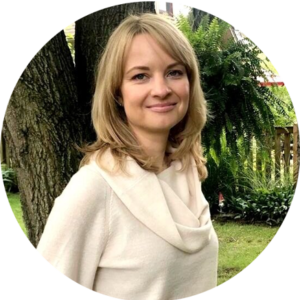
Zoltán Szabó is a John S. Saden Professor of Philosophy at Yale University, with secondary appointments in Linguistics. His research focuses on Philosophy of Language, Metaphysics, and the intersection of Lexical Categories with Ontological Commitments. Key Research Areas: Semantics of Modality, Tense and Aspect, Semantic Compositionality, Ontological Disagreement, Logical Form, Contextualism Selected Publications: A Reader’s Guide to Classic Papers in Formal Semantics (2022), Philosophy of Language (2018), Semantics vs. Pragmatics (2005) Professional Leadership: Co-organizer of SALT 33 (2023), Co-series Editor of Studies in Linguistics and Philosophy , Member of Editorial Boards for Semantics and Pragmatics and The Journal of Semantics Academic Background: Ph.D. in Linguistics and Philosophy from MIT (1995), Research Scholar at Hungarian Academy of Sciences (1989-1991) Conference Engagements: Delivered lectures at NYU, MIT, University of Barcelona, and other institutions on topics including Semantic Categories, Modals, and Ontological Commitment
Stephen M. Dickey is a Professor at the University of Kansas's Department of Slavic and East European Languages and Literatures, specializing in Slavic linguistics. His research focuses on verbal aspect in Slavic languages, cognitive linguistics, and Russian functional grammar, with particular attention to South Slavic culture and literature. He holds a Ph.D. in Slavic Linguistics from Indiana University (1997). Teaching interests include Bosnian/Croatian/Serbian language, Russian grammar, and South Slavic literature. He has contributed extensively to scholarly publications, focusing on aspectual systems, grammaticalization, and Slavic language structures. His work has been supported by grants from the Centre for Advanced Study (Oslo) and the Fulbright-Hays program. Dr. Dickey serves on the editorial boards of the Journal of Slavic Linguistics and Contrastive Linguistics . His research bridges historical and cognitive approaches, examining the evolution of Slavic aspectual systems and their implications for language universals. He has authored/co-authored studies on prefixation, imperatives, and comparative aspectual analysis across Slavic languages.
Stéphane Robert is a Research Professor and Director of Research 1st class at the Centre National de la Recherche Scientifique (CNRS), working at the Language, languages and cultures of Subsaharian Africa (LLACAN) laboratory. He has been with CNRS since 1992, becoming Director of Research in 1998 and achieving 1st class status in 2009. His educational background includes: 1996: Habilitation in Linguistics, University Paris 7 1989: PhD in Theoretical Linguistics, University Paris 7 1985: MA in African Linguistics, University Paris 3 1984: M2 in Theoretical linguistics, University Paris 7; BA in African Linguistics, University Paris 3 1983: Agrégation de grammaire 1982: BA in Indian Studies (Sanskrit), University Paris 3 1981: MA in Classic Studies (Ancient Greek), University Paris 4 1980-1985: Ecole Normale Supérieure (Paris) Dr. Robert's research focuses on African linguistics, particularly Atlantic languages, information structure and its interfaces, general semantics, grammaticalization and morphosyntactic categories, cognitive linguistics, typology, language in cognitive sciences, corpus annotation for poorly documented languages, theoretical linguistics, and TAM (tense, aspect and modality) and spatial deixis. His work bridges theoretical linguistics with cognitive science and has significant implications for understanding language diversity and evolution. His scientific awards include: 2013: Chevalier de la Légion d'honneur 2012: Elected Corresponding Member of the Royal Academy of Belgium for Overseas Sciences (Section of Human Sciences) 1994: CNRS Bronze medal for linguistics Dr. Robert has secured significant research funding including the H2020 "DReaM" project (2018-2020), ANR's "Sénélangues" project (2009-2014), and multiple contracts for the "Langues de France" database. He serves on the editorial board of the Belgian Journal of Linguistics and regularly peer-reviews for numerous linguistic journals.
Maribel Romero is a Professor in the Department of Linguistics at the University of Konstanz since 2007. She holds a Ph.D. from the University of Massachusetts Amherst (1998), with a dissertation on focus and reconstruction effects in wh-phrases. Previously, she taught at the University of Pennsylvania (1998–2007), progressing from Assistant to Associate Professor. Her research focuses on formal semantics, syntax-semantics interfaces, and semantics-pragmatics interactions. Key areas include negation, questions, epistemic bias, copular sentences, and superlatives. She has pioneered work on counterfactual conditionals, polar question bias, and clausal embedding restrictions across languages. Romero has led major projects funded by DFG, ERC, and the Nuance Foundation. Notable initiatives include the Questions at the Interfaces research unit and the Meaning-Driven Combinatorial Restrictions AHRC-DFG project. She has also held editorial roles for Journal of Semantics and Language and Linguistics Compass , and serves on advisory boards for the DFG and Leibniz-ZAS. Teaching responsibilities span introductory linguistics to specialized courses in semantics/pragmatics (e.g., Intensional Semantics , Computational Semantics ). She has also contributed to summer schools at Stanford and Humboldt University Berlin.
Prof. Jan-Wouter Zwart is a Professor of Theoretical Linguistics at the Faculty of Arts, University of Groningen. His research focuses on syntax, linguistic typology, and morphological strength, with a particular emphasis on Germanic languages and cross-linguistic syntactic structures. He holds an office at the Harmony building (Room 1315.0401) and can be reached via c.j.w.zwart@rug.nl. Research Interests: - Syntax and its interface with morphology and semantics - Typological studies of alignment systems and verb positioning - Historical developments in Dutch and Afrikaans syntax - Formal syntactic theory and syntactic derivation mechanisms - Methodological approaches to linguistic analysis Recent work explores coordination structures, modal adverb placement, and rethinking alignment typology. His contributions appear in leading venues like the Oxford Research Encyclopedia of Linguistics and Syntax-focused volumes. No scientific awards are explicitly mentioned, though his extensive publication record indicates academic recognition. He has no listed advisees or grants in the provided texts. His professional activities are centered at the University of Groningen without external roles.
Wataru Uegaki is a Reader (Associate Professor) and UKRI Future Leaders Fellow at the University of Edinburgh’s Department of Linguistics and English Language, part of the School of Philosophy, Psychology and Language Sciences. He holds a PhD from MIT (2015) and previously taught at Leiden University. His research focuses on formal semantics and pragmatics, exploring how word meanings interact with grammatical structures across languages. He leads two major projects: the UKRI-funded Logic in Semantic Universals (2022-2025) and the AHRC/DFG MECORE project (2021-2024), investigating clausal embedding restrictions and cross-linguistic modal generalizations. Uegaki teaches semantics and pragmatics at undergraduate and graduate levels, emphasizing empirical and theoretical approaches. He has supervised over 20 students, including PhD candidates James Engels and Fred Whibley. His work combines experimental methods with theoretical frameworks, contributing to semantic universals and evolutionary linguistics. Collaborators include institutions in Edinburgh, Konstanz, Amsterdam, and beyond. He maintains active research profiles on his website and Google Scholar .
Dr. Tomasz Niestorowicz serves as Assistant Professor in the Department of Romance Linguistics at the Institute of Linguistics, Faculty of Humanities, John Paul II Catholic University of Lublin. His academic work focuses on Spanish linguistics with particular emphasis on contrastive analysis between Spanish and Polish language systems. His primary research interests include the contrastive analysis of temporal-aspectual systems in Spanish and Polish, and glottodidactic issues related to interlanguage development and grammatical competence acquisition in second language learning. His work frequently examines lexical borrowing phenomena, phraseological units, and tense-aspect oppositions across these languages. Analysis of his publication record reveals consistent focus on Spanish-Polish linguistic comparisons, particularly regarding verb systems, temporal reference, and second language acquisition challenges. His research demonstrates strong methodological orientation toward contrastive analysis with practical applications in language teaching. Medal of the National Education Commission Rector's Team Award (2nd Degree and I stopnia) Multiple Erasmus+ staff mobility scholarships Dr. Niestorowicz has supervised numerous bachelor's theses (over 30 documented between 2015-2025) focusing on Spanish linguistics topics including lexical borrowing, phraseology, dialectal variations, and contrastive studies. He has participated in Ministry of Education-funded research projects and organized international linguistic conferences. His academic service includes editorial roles for publications such as 'Nuevos estudios de lingüística románica' and 'Hispanismo joven en Polonia'.
Sapountzaki Galini is an Assistant Professor at the Department of Special Education, University of Thessaly, specializing in Greek Sign Language (GSL). She has held this position since January 2012 and teaches courses on GSL linguistics and methodology. Her work focuses on language acquisition in deaf communities, educational accessibility, and technology-enhanced learning platforms for sign languages. Education: PhD in Linguistics (2005) from the University of Bristol Diploma in GSL Interpreting (1997) Bachelor’s in Philology (1994) from the Athens School of Philosophy Research Interests: Dr. Sapountzaki’s work bridges theoretical linguistics and applied education. She explores grammar structures in GSL, particularly tense/aspect markers, and advocates for bilingual education for deaf students. Her projects include developing e-learning platforms like SL-ReDu for GSL recognition and assessment, emphasizing 3D modeling and multimodal data fusion. She also examines the impact of language deprivation on deaf children and strategies for remote GSL instruction during crises like the pandemic. Grants & Advising: No specific grants listed, but her work is supported by projects like SYNENNOISI and DIANOIMA. She has advised on curricula for deaf education programs and collaborates with institutions like the Neuropsychology Laboratory and Pedagogical Institute. Her teaching spans special education teacher training and interpreter education. Labs/Teams: Collaborates with the Institute of Speech Processing (ISL) and the University of Thessaly’s Special Education Committee. Active in designing GSL video texts and accessibility tools for public schools.
Dr. Pilar Valenzuela is a Professor in the Department of World Languages and Cultures at Wilkinson College of Arts, Humanities, and Social Sciences , Chapman University. Her work focuses on Panoan and Kawapanan languages of the Peruvian Amazon, including Shiwilu (Jebero) and Amahuaca , with expertise in linguistic typology, phonology, morphosyntax, and language revitalization . Education: Pontifical Catholic University of Peru (BA in Hispanic Linguistics & Literature, Diploma in Anthropology) University of Oregon (MA and PhD in Linguistics) Research Highlights: She has published three books and numerous articles on synchronic and historical syntax , verb borrowing , and ethnobiological taxonomies . Her PhD dissertation on Shipibo-Konibo grammar won the Mary R. Haas Book Award . Awards & Grants: Recipient of the Wang-Fradkin Professorship (2006-2008) and a National Science Foundation grant (DEL BCS-0853285) for documenting Kawapanan languages. In 2012, she received the Global Engagement Research Award from Chapman University. Teaching: Offers courses in Spanish linguistics, advanced grammar, and documenting Shiwilu , a critically endangered language. Collaborates with Chapman undergraduate students on creating a trilingual (Shiwilu-Spanish-English) dictionary . Publications: Recent work explores lexical tone in Amahuaca , temporal constructions , and body-part terminology in Pano-Takana languages.
Martina Martinović serves as an Assistant Professor in the Department of Linguistics at McGill University, where her research program centers on theoretical syntax and morphology through empirical fieldwork on Wolof (West-Atlantic, Senegal) since 2011 and Igala (Volta-Niger, Nigeria) since 2021. She investigates cross-linguistic variation to uncover universal principles of grammatical structure, specifically how syntactic operations interface with morphological and phonological modules. Education: Ph.D. in Linguistics, University of Chicago (2015) Her primary research examines the building of syntactic structures and the role of morphology in their final shape, challenging purely syntactic analyses for phenomena that may be morphological. Key investigations include A'-movement effects, cartographic/non-cartographic operations, copular sentences, information structure syntax, and tense-aspect semantics. Her secondary focus explores phonetics/phonology, particularly word-accentual systems across languages. Analysis of her 15 most recent publications (2016-2024) reveals dominant Wolof-focused research on copular constructions, control phenomena, and movement operations, with increasing incorporation of Igala and Ch’ol data. This work consistently demonstrates how morphological operations constrain syntactic possibilities, advancing understanding of grammar modularity in understudied language families. No scientific awards are documented in available materials. Regarding academic mentoring and research funding, the provided texts contain no information about graduate students, postdoctoral researchers, or grant-supported projects.
Fabio Del Prete is a Research Officer at the Cognition, Languages, Language, Ergonomics (CLLE) laboratory, affiliated with the University of Toulouse Jean Jaurès . His work bridges formal semantics, modal logic, and linguistic theory through rigorous analysis of natural language phenomena. Research Themes : Formal Semantics of Tense, Aspect, and Modality; Temporal Connectives; Scalar Approximation Adverbials; Modal Logic; Discourse Semantics; Event Concatenation Key Collaborations : Universitat Pompeu Fabra (Barcelona), Oxford University Press, Walter de Gruyter, CNRS Research Trends in his recent work include: Event concatenation in Sicilian verbal constructions Modal logic foundations for natural language semantics Cross-linguistic studies of temporal connectives Sign language temporal processing Italian polysemous adverbials Counterfactual conditionals in Romance languages Scientific Contributions include: Formal analysis of Sicilian Doubly Inflected Constructions Modal logic frameworks for temporal semantics Discourse presupposition models Experimental studies on temporal connectives Academic Activities span lectures at Universitat Pompeu Fabra, contributions to Genericity (Oxford University Press), and collaborative studies with leading institutions like ILLC Amsterdam and Institut Jean-Nicod.
Dr. Yan Jiang is a Professor at SOAS University of London's School of Languages, Cultures and Linguistics, specializing in Chinese linguistics with particular expertise in Mandarin and Shanghainese dialects. With a publication record spanning from 1998 to 2025, Jiang has established themselves as a leading scholar in the fields of pragmatics, semantics, and syntax of Chinese languages. Dr. Jiang's research interests center on the intricate relationship between form and meaning in Chinese languages. Their work explores sentence-final particles, counterfactual conditionals, rhetorical structures, and lexical meaning construction, with particular attention to how pragmatic context influences interpretation. Specializes in temporal semantics of sentence-final particles in Shanghainese Investigates the pragmatic functions of connectives and adverbs in Mandarin Chinese Examines counterfactual reasoning patterns across Chinese varieties Studies the rhetorical traditions in Chinese discourse Analysis of Dr. Jiang's publication record reveals a consistent trajectory from theoretical linguistics toward more applied and interdisciplinary work. While early publications focused on formal semantics and logical structures in Chinese, recent work has expanded into translation studies, discourse analysis, and educational applications of linguistic research. Their scholarship bridges traditional Chinese linguistic analysis with contemporary Western linguistic theory. Dr. Jiang has supervised multiple doctoral students including Li (2024), Xue (2023), Zhou (2023), and Wang (2021), whose theses address topics ranging from lexical meaning construction to tense and aspect in Shanghainese. This mentorship demonstrates Jiang's active role in training the next generation of Chinese linguistics scholars.
Kirsten A. Jeppesen Kragh is an Associate Professor and Head of Studies at the Department of English, Germanic and Romance Studies, University of Copenhagen. She holds a PhD in French linguistics from 2006 and has been Deputy Head of Department since 2019. University of Aarhus (BA 1988, MA 1991) University of Copenhagen (MA 1993, PhD 2006, Dr.Phil. 2010) École Normale Supérieure (literature studies in Paris) Her research focuses on grammatical paradigms, perception verbs, deixis, and grammaticalization processes in Romance languages. Current projects examine: Temporal marking of subjunctive forms Modal variation after perception verbs Linguistic analysis of doctor-patient communication Functional grammar in French Language typology Linguistic theory Recent publications analyze: Deictic relative clauses in French Progressive periphrases in Romance languages Diasystematic variation in Romance languages Grammaticalization of perception constructions Language policy in antibiotic resistance discourse Notable scientific contributions include: 2010 Talent Development Program for Young Researchers 2010 Mentor Program for Young Female Researchers 2008-2011 Danish Research Council Scholarship for grammaticalization research She has served as: Editor for Studia Linguistica Romanica (2022→) Chairman of the Study Board for French Studies (2011-2012) Member of Expert Panels at Charles University (2019-2020)
Jan Juhl Lindschouw serves as Associate Professor in French Linguistics at the Department of English, Germanic and Romance Studies within the Faculty of Humanities, University of Copenhagen. His academic career spans over 15 years at the institution, including postdoctoral research supported by the Carlsberg Foundation and current leadership in linguistic research networks. Education: PhD in French Linguistics (2007), University of Copenhagen Master in Foreign Language Acquisition (2014), University of Copenhagen MA in French and Spanish (2003), University of Copenhagen BA in French with Spanish (1999), University of Copenhagen Research stay at École Normale Supérieure de Lyon (2005) His research centers on French grammar through synchronic and diachronic lenses, with emphasis on verb syntax including tense, mood, and aspect systems. He investigates why genetically related Romance languages evolve at different rates from Latin, examines grammaticalization processes, and studies language variation using large electronic corpora. Additional focus areas include second language acquisition of informal French, academic writing transitions between educational levels, and intercultural communicative competence. Recent publications (2022-2025) reveal strong thematic continuity in written/oral French development across educational stages, particularly the secondary-tertiary transition for Danish learners. His work integrates empirical corpus analysis with introspective methodologies, addressing grammatical competencies, academic literacy, and pragmatic development within French as a foreign language contexts. Awards: Educator of the Year 2008, Department of English, Germanic and Romance Studies Lindschouw supervises BA projects, theses, and assignments on French linguistics topics with preference for comparative Romance-Danish analyses. His research has been funded by the Carlsberg Foundation (2008-2013) for the project 'Language Change Scenarios in Romance Languages'. He serves on examination boards for French higher education and contributes to national educational policy discussions. He actively participates in international research networks including DIACHRO (diachronic French studies), the Danish Grammaticalization Network, and linguistic variation consortia, while maintaining collaborations with institutions like Uppsala University and Gammel Hellerup Gymnasium.
Prof. Dr. Malte Zimmermann is a Full Professor of Semantics and Theory of Grammar at the Department of Linguistics, University of Potsdam. He is also a faculty and board member of the African Linguistics School (ALS), which biannually convenes in West African countries to advance formal linguistics knowledge among African scholars. His editorial roles include Associate Editor for Natural Language and Linguistic Theory and former Associate Editor for Linguistics and Philosophy . His educational background includes: Ph.D. in General Linguistics, Universiteit van Amsterdam (2002) M.A. in German Language and Linguistics/English/Anglistic/Philosophy, Universität zu Köln (1998) Abitur, Gymnasium Athenaeum, Stade/Niedersachsen (1989) Zimmermann's research centers on the interface between linguistic form and meaning, with specialization in formal semantics and grammar theory. His work spans quantification, tense, question semantics, discourse particles, and information structure, with particular emphasis on semantically under-researched West African languages (Chadic, Kwa, Grassfield Bantu). His research combines theoretical analysis with experimental methods, notably through projects like 'ExQ' examining embedded question interpretation across European and Non-European languages. He has led field research in Ghana, Cameroon, and Nigeria, challenging assumptions about language universals through empirical investigation of linguistic diversity. His publication trajectory reveals consistent focus on cross-linguistic semantic variation, particularly in focus interpretation, quantifier scope, and information structure phenomena. Recent work demonstrates growing integration of experimental methodologies with traditional formal approaches, with frequent comparisons between German, English, and diverse African languages. His investigations into serial verb constructions have been especially influential, uncovering hidden syntactic variability beneath surface similarities across languages like Akan and Igbo. As a supervisor, Zimmermann has guided numerous doctoral students to completion, with recent graduates including Giuliano Armenante (2024), Eva Shipova (2024), and Mareike Philipp (2023). His research has been supported by substantial funding including: SFB1287 Limits of Variability in Language, 'Limits of variability in interpretation' (2017-2021) SPP 1727 XPRAG.de, 'Exhaustiveness in embedded questions across languages' (2017-2020) SPP 1727 XPRAG.de, 'Exhaustivity in it-clefts' (2014-2017) DFG-Network 'Questions in Discourse' (2012-2016) SFB632 Information Structure projects (2007-2015) He leads the Potsdam semantics group (including Peter Sutton, Giuliano Armenante, Jeanne Lecavelier, Anna Struck, and Carla Bombi) which conducts fieldwork in West Africa. Currently, he co-directs the SFB-project on the 'Limits of Variability in Interpretation,' examining scope ambiguities, reconstruction, and bare NP interpretation across German, English, Akan, Igbo, and Medumba. His collaborative work with Edgar Onea (Graz) and Tatjana Scheffler exemplifies his commitment to bridging theoretical linguistics with empirical fieldwork and experimental validation.