Olivier Ratle is a Senior Lecturer in Organisation Studies at the Faculty of Business and Law , University of the West of England, where he has taught since 2007. His work spans critical management studies, research methodology, and academic labor dynamics, with a focus on neoliberal university structures. Research Interests : Politics of methodology in management research Early-career academic precarity Critical career studies Rhetorical analysis of academic debates Publications : Recent works analyze 'targets and terror' in academic governance, academic arrhythmia, and reimagining academic careers through critical lenses. His co-edited 2023 book Doing Academic Careers Differently explores alternative academic trajectories. Teaching : Specializes in research philosophies, organization theory, and critical management, fostering student reflexivity about power structures in society.
Anna Forsman is an Associate Professor in Public Health Sciences at the Faculty of Education and Welfare Studies , Åbo Akademi University, with a secondary affiliation as Associate Professor in Public Health at Sahlgrenska Academy, University of Gothenburg. Her work focuses on mental health promotion , early interventions , and school well-being , particularly through multi-professional collaboration and co-creation methods . She leads projects like SAMSYN and PLEX-WELL , emphasizing family-school dynamics and life-course perspectives . Her research integrates quantitative methods and developmental psychology , examining how peer relationships , teacher support , and academic motivation influence mental well-being. She has published extensively on school engagement , mathematics motivation , and health inequalities , with recent studies analyzing perfectionistic profiles in adolescents and self-regulatory efficacy in primary education. Scientific awards include the Ann-Mari Finnilä's Prize (2015), Per Brahe Prize (2018), and Årets handledarpris (2015). Current projects span 2024–2028, funded by institutions like Vasa stad and Högskolestiftelsen i Österbotten , with a focus on digital welfare tools and social innovations .
Raffaella Bernardi is an Associate Professor at the Faculty of Engineering, Free University of Bozen-Bolzano, Italy. She previously held academic positions at the University of Trento and the Free University of Bozen-Bolzano. Her research is centered on Computational Linguistics, with a focus on the interplay between language and reasoning in multimodal and conversational contexts. Research Interests: Her primary research areas include Natural Language Processing, Visually Grounded Conversational Models, Large Language Models (LLMs), Vision-Language Models (VLMs), and the cognitive abilities of AI systems. She investigates how language and reasoning interact, particularly in dialogue and multimodal settings. The analysis of her 15 most recent publications reveals a strong emphasis on multimodal reasoning, human-AI interaction, and the cognitive evaluation of language models. Her work frequently explores how AI systems understand and generate language in context, particularly in grounded and interactive environments. There is a consistent trend toward benchmarking, evaluation, and understanding the reasoning capabilities of modern LLMs and VLMs. Fellow of ELLIS (European Laboratory for Learning and Intelligent Systems) Best Paper Award, INLG 2023 Best Paper Nomination, Clic-it 2020 Best Paper Nomination, NL4AI 2020 Raffaella Bernardi has supervised numerous PhD and Master’s students, including Leonardo Bertolazzi, Claudio Greco, Alberto Testoni, and Sandro Pezzelle. She has been involved in significant research projects, often funded by industrial partners like SAP and EU initiatives. She has also been active in organizing scientific events and serving in leadership roles within the ACL and AILC communities. She leads a research group focused on multimodal language understanding and grounded interaction. Her team has developed benchmarks such as BD2BB (Be Different to Be Better) to evaluate the complementarity of language and vision in AI systems.
Prof. Dr. Christian J. Merz is a Professor at the Department of Cognitive Psychology, Institute of Cognitive Neuroscience, Ruhr University Bochum. He leads the department as Commissary head since August 2023 and has been a Principal Investigator in the SFB 1280 'Extinction Learning' since 2017. Prior roles include Interim Professor (W2) at Trier University (2014-2015) and various postdoctoral and research positions at Ruhr University Bochum and Justus Liebig University Giessen. His academic credentials include a Habilitation (2017) and a Dr. rer. nat. (2011) from Ruhr University Bochum, focusing on stress hormones' influence on fear conditioning and emotional learning. Research expertise spans Psychoneuroendocrinology (stress hormones, sex differences) Psychophysiology (fMRI, EEG, physiological responses) Emotional learning mechanisms (fear conditioning, extinction learning) Clinical applications in anxiety disorders and behavioral addictions Notable achievements include organizing major conferences (e.g., 2020 European Meeting on Human Fear Conditioning) and securing DFG grants for projects on stress hormone effects. His work bridges basic neuroscience and clinical implications, with 200+ peer-reviewed publications. Active in teaching, he leads courses on cognition, stress, and neurobiology at both undergraduate and graduate levels. Professional service includes roles in German Psychological Society committees and editorial work for Biological Psychology. Recognized with teaching awards and international grants, Merz maintains a highly cited research trajectory (over 15k citations).
Dr. Valerie Jentsch is a Principal Investigator at the Collaborative Research Center (SFB) 1280 'Extinction Learning' at Ruhr University Bochum (RUB). She holds a PhD in Neuroscience (summa cum laude, 2017) and has extensive experience in cognitive and clinical psychology research. Her primary affiliation is the Department of Cognitive Psychology within the Faculty of Psychology at RUB, where she has been a postdoctoral researcher since 2017 and a PI since 2021. Education: PhD (2017): 'The impact of cortisol on the neural circuitry of associative learning and extinction retrieval' at RUB M.Sc. Clinical Psychology (2013): 'Stress-induced cortisol and emotion regulation' at RUB B.Sc. Psychology (2010): 'Stress and reconsolidation of autobiographical memories' at RUB Study Abroad: University of Barcelona (2012) Research Focus: Stress neurobiology, emotion regulation, fear conditioning, psychophysiology (SCRs, pupillometry, HRV), and sex differences in stress responses. Her work bridges cognitive neuroscience with clinical applications, particularly in understanding how stress hormones modulate emotional processes and memory consolidation. Awards & Grants: 2024 DFG Grant: Neuroendocrine modulation of cognitive emotion regulation 2021 DFG Subproject: Stress hormone effects on extinction memories DAAD Travel Grants (2018, 2016) for international conferences Teaching & Outreach: Leads seminars on stress, cognition, and emotion regulation at both B.Sc. and M.Sc. levels. Engages in science communication via podcasts, YouTube, and RUB's public outreach programs. Chairs the Early Career Researchers group at SFB 1280, fostering collaboration and mentorship. Labs/Teams: Principal Investigator in SFB 1280's Project A09, collaborating with neuroimaging and behavioral research teams. Active in interdisciplinary networks like Berlin-Bochum Memory Alliance.
Rina Dutta is a Professor in Psychiatry and Consultant Psychiatrist at King's College London, affiliated with the Institute of Psychiatry, Psychology & Neuroscience (IoPPN) and the National Affective Disorders Service at the Maudsley Hospital. She holds leadership roles as Academic Career Development Lead for the NIHR Maudsley Biomedical Research Centre and inaugural Deputy Director of the King’s Clinical Academic Training Office (KCATO). Her research focuses on self-harm, suicidal behavior, and the impact of social media on youth mental health, leveraging natural language processing (NLP) and big data analytics. Dr. Dutta’s work bridges clinical practice and academic innovation, with a strong emphasis on training the next generation of researchers. Her studies include the 3S-YP cohort examining social media/smartphone use and self-harm in youth, and collaborations on perinatal self-harm identification via NLP. She has been recognized for her contributions to mental health data science and has engaged in public discourse through media platforms like BBC radio. Key awards include an MRC Doctoral Training Fellowship and a Clinician Scientist Fellowship from the Academy of Medical Sciences/Health Foundation. Her research has addressed critical topics such as bullying’s role in self-harm, autism spectrum disorder comorbidity risks, and temporal patterns in suicide support forum activity.
Dr. Uwe Mayer is an Associate Professor at the Center for Mind/Brain Sciences (CIMeC) and the Department of Cellular, Computational and Integrative Biology (CIBIO) at the University of Trento, Italy. His research focuses on the neurobiology of comparative cognition in birds, particularly examining hippocampal function, brain asymmetry, and neuronal mechanisms of behavior. 2019: Italian national habilitation to Associate Professor in Physiology 2012: PhD at University of Bielefeld, Germany 2008: M.Sc. in Systems Biology of Brain and Behavior 2006: B.Sc. in Biology His work includes studies on domestic chicks' hippocampal activation, numerical cognition, and social interactions using electrophysiology and molecular neurobiology. Research trends highlight avian spatial navigation, environmental exploration, and sensory processing. Scientific awards: Best poster at Avian Cognition Conference (2022) Best poster at DS DAY 2020 (2020) Best poster at DZG Annual Meeting (2012) Mayer serves as editorial board member for Frontiers in Behavioural Neuroscience and Frontiers in Physiology . He reviews for journals like Nature Communications and Neuroscience .
Brendon Larson is a Professor at the Department of Environment and Resource Studies, University of Waterloo, Canada. His research focuses on the social dimensions of biodiversity conservation in the Anthropocene, emphasizing the intersection of ecological practices with cultural, ethical, and communicative frameworks. Research Interests: Reconceptualizing conservation, invasive species dynamics, assisted migration, novel ecosystems, metaphor analysis in environmental communication, and stakeholder engagement in urban-rural ecological management. Teaching: Offers an introductory ecology course and a field course on natural history at the Bruce Peninsula. Key Publications: Investigate invasive species management, climate adaptation strategies, and the role of language in shaping conservation discourse. His recent studies address: Pragmatic frameworks for invasive species in cities (2015) Empirical analyses of public and professional attitudes (2015) Novel approaches to ecological restoration (2015) Critical evaluations of metaphorical language in conservation (2014) While no specific scientific awards or student advisement details are mentioned, his work bridges ecological practice with social integration, policy clarification, and Indigenous perspectives.
Gilda M. Agacer is an Associate Professor in the Department of Accounting at Monmouth University, affiliated with the Leon Hess Business School. She holds a Ph.D. and MBA from the University of South Carolina and a B.A. from the University of the East, Philippines. Her academic work focuses on accounting education and ethical practices in accounting. Ph.D., University of South Carolina M.B.A., University of South Carolina B.A., University of the East, Philippines Her research interests include managerial accounting, cost accounting, governmental and not-for-profit accounting, ethics, environmental accounting, and assurance of learning. She has conducted cross-cultural studies on ethical decision-making and auditor independence, particularly in international contexts such as the Middle East and between the Philippines and the United States. The recent scholarly articles reflect a strong emphasis on ethics in business education and auditing practices across diverse cultural and regional settings. Her work bridges pedagogical assessment with real-world ethical challenges in accounting, contributing to both academic and professional discourse in emerging economies and comparative education. Scientific Awards: Service Award, Leon Hess Business School (2005) Teaching Award, Leon Hess Business School (2002) Summer Research Grants from the Leon Hess Business School Business Council (2004, 2006, 2008) Dr. Agacer has been actively involved in curriculum development and assessment, particularly in evaluating student learning outcomes in business education. Although no formal list of advisees is provided, her teaching portfolio includes key courses such as Managerial Accounting, Financial Accounting, and Accounting for Managers at both undergraduate and graduate levels. She has received institutional research support through multiple summer grants, indicating sustained scholarly engagement. There is no mention of formal research labs or collaborative teams, but her work appears to be individually and regionally focused, often presented at academic conferences like the Mid-Atlantic American Accounting Association and international forums in Berlin.
Dr Gethin Hughes is a Reader (equivalent to Associate Professor) and Head of Department in the Department of Psychology at the University of Essex. He joined the university in September 2012 after completing his PhD at Goldsmiths, University of London (2008) and postdoctoral positions at the University of Oxford and Université Paris Descartes. His leadership roles include Director of Education (2021-2024), Employability Development Director (2018-2019), and Director of Undergraduate Recruitment (2015-2017). His research spans five primary areas: Sense of Agency : Investigating the feeling of control over actions using behavioral, EEG, and brain stimulation methods, with implications for schizophrenia and autism Metacognition : Studying confidence in perception/action and links to anxiety/depression Action Understanding : Examining how object/person knowledge influences action interpretation via EEG/TMS Multisensory Integration : Exploring individual differences in sensory sampling rates and links to delusional beliefs Neurodiversity : Researching ADHD decision-making and autism communication differences His recent publications (2021-2025) demonstrate a strong focus on neural correlates of agency using EEG/TMS methodologies, with increasing emphasis on social cognition applications and clinical connections to schizophrenia spectrum disorders. Key trends include temporal binding window modulation, sensory attenuation mechanisms, and cross-population studies involving neurodivergent individuals. Dr Hughes actively supervises doctoral and master's students in psychology, with current advisees including Niharika Madala, Jamie-Louise Williams, and James Heffer. His successful supervision record includes 7 awarded PhDs and 2 MSc degrees since 2019, covering topics from autism communication to temporal perception. He secured research funding from the Bial Foundation (2019) for his "Sense of Agency in the Ouija Board Experience" project.
Mohamed F. Mokbel is a Professor at the University of Minnesota with a distinguished career in spatial databases and big spatial data management. His research spans over two decades with more than 260 publications in top-tier venues including ICDE, SIGMOD, VLDB, and GIS conferences. He has established himself as a leading researcher in trajectory data management, mobility data science, and scalable spatial processing systems. Dr. Mokbel's research interests focus on the intersection of spatial databases, big data, and machine learning. He has pioneered work in trajectory data management systems, developing frameworks like ST-Hadoop for processing spatio-temporal data at scale. His recent research explores the application of large language models to trajectory analysis, spatial data cleaning systems with spatial awareness, and innovative approaches to mobility data science. His work addresses fundamental challenges in handling massive spatial datasets while maintaining efficiency and accuracy. His publication record reveals significant trends toward integrating machine learning with spatial data management, particularly in trajectory imputation using BERT models (KAMEL system) and applying NLP techniques to trajectory analysis. Recent work shows increasing focus on urban mobility applications, privacy considerations in location data, and the development of specialized frameworks for processing different types of spatial data at scale. Dr. Mokbel has mentored numerous students who have become productive researchers in their own right, with many publications featuring students as first authors. His collaborative network is extensive, with frequent co-authorship with researchers like Walid G. Aref, Ahmed Eldawy, and Amr Magdy, indicating strong research group leadership. He has contributed significantly to the spatial database community through systems like RASED for monitoring OpenStreetMap updates, KAMEL for trajectory imputation, and Sparcle for spatial data cleaning. His work bridges theoretical database concepts with practical applications in transportation, urban planning, and location-based services.
Azeem Ahmad is a Researcher at the Department of Physics and Technology , UiT The Arctic University of Norway. His work focuses on advanced imaging techniques in ultrasound, microwaves, and optics , particularly in the areas of quantitative phase microscopy , acoustic microscopy , and photonic chip engineering . Key research areas: Quantitative phase imaging, acoustic wave modeling, biomedical diagnostics, interferometry, machine learning integration, and photonic device optimization Collaborative projects: Developments in label-free histology, super-resolution microscopy, and noise reduction algorithms Recent publications: 2025 studies on subsurface damage detection in ceramics and acoustic transducer modeling His work bridges optical engineering , biomedical applications , and computational imaging , with affiliations to the Ultrasound, Microwaves and Optics and Optical Nanoscopy research groups.
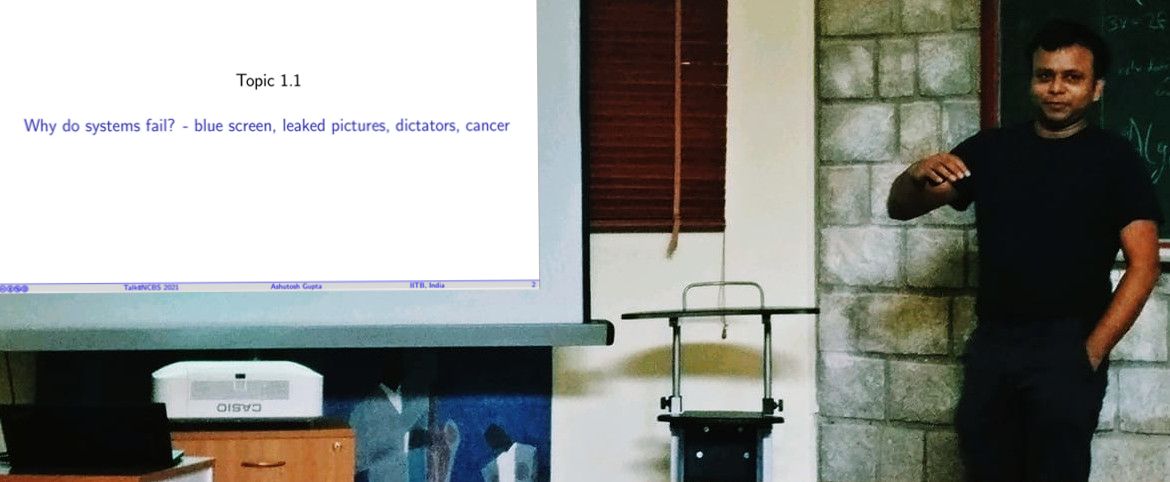
Ashutosh Gupta is an Associate Professor in the Department of Computer Science and Engineering at the Indian Institute of Technology Bombay, where he has been a faculty member since 2018. His research focuses on formal methods for software verification, particularly in the areas of model checking, constraint solving, and automated reasoning for both sequential and concurrent programs. He teaches advanced courses including Automated Reasoning (CS433), Analysis of Concurrent Programs (CS766), and Logic for Computer Science (CS228). Dr. Gupta received his Ph.D. in Computer Science from Technical University of Munich (TUM) in 2011, with affiliations during his doctoral studies at TUM, Max Planck Institute for Software Systems (MPI-SWS), and École Polytechnique Fédérale de Lausanne (EPFL). Prior to joining IIT Bombay, he served as a faculty member at Tata Institute of Fundamental Research (TIFR) in Mumbai and completed post-doctoral research in the Henzinger group at IST Austria. His research interests span formal verification of sequential and concurrent software, modeling of biological systems, and constraint solving including constraint logic programming, decision procedures, and automated theorem proving. He has developed several verification tools including VAJRA, HSF, and InvGen. His work bridges theoretical foundations with practical applications, particularly in verifying safety-critical systems and biological processes. Dr. Gupta's publication record shows a consistent trajectory of high-impact research in top venues like POPL, CAV, TACAS, and AAAI. His recent work has expanded into neural network verification, reinforcement learning verification for medical devices, and applying formal methods to biological systems, demonstrating both depth in core verification techniques and breadth in application domains. Best Paper Award at TACAS 2015 Best Paper Award at TACAS 2009 Dr. Gupta actively mentors numerous students through course projects, research presentations, and specialized workshops like SATfest. He has supervised students working on SAT/SMT solvers, verification of concurrent programs, and applications of formal methods to biological systems. His teaching philosophy emphasizes hands-on experience with verification tools and encourages students to engage with cutting-edge research through reading and presenting recent conference papers. He maintains active research collaborations with institutions including TUM, MPI-SWS, EPFL, IST Austria, and TIFR, reflecting his continued integration into the international formal methods research community.
Nadine Cascino is a Lecturer in Psychology at the University of Toulouse - Jean Jaurès, specializing within the Cognition, Languages, Ergonomics (CLLE) research unit. Her academic career spans over three decades, demonstrating evolution from social psychology of unemployment in the 1990s to specialized ergonomics research in high-stress work environments. Her research trajectory shows a progression from foundational work on unemployment psychology, examining self-esteem, work meaning, and career transitions among job seekers, toward increasingly specialized applications in occupational health and ergonomics. This transition reflects both continuity in her focus on work-related psychological phenomena and adaptation to emerging research needs in workplace safety and efficiency. Dr. Cascino's primary research interests include occupational health, quality of life at work, professional stress, workload assessment, and work-life balance. Her methodological approach is distinctly multidisciplinary, integrating psychophysiology, social psychology, and cognitive ergonomics to develop comprehensive assessments of work environments. She has made significant contributions to understanding how work organization impacts employee well-being, particularly in safety-critical industries like air traffic control. Her publication record demonstrates consistent scholarly output across multiple domains. Early work focused on unemployment psychology, while recent publications emphasize shift work organization and aerospace ergonomics. This evolution showcases her ability to apply psychological principles to increasingly complex work settings while maintaining focus on human factors and well-being. Methodological innovation in workload assessment Integration of multiple disciplinary perspectives Application to safety-critical industries Longitudinal research perspective spanning decades Dr. Cascino maintains a productive research partnership with Claudine Mélan, with whom she has co-authored numerous publications examining shift work, air traffic control, and workload assessment. Her work bridges theoretical psychology with practical applications for improving work organization and employee well-being, particularly in high-stress occupations.
Dr. Gaia Lapomarda is a researcher at the Institute of Psychology, University of Innsbruck, based in the Department of Affective Neuroscience. Her work integrates neuroscience and psychology to explore how emotional states influence cognition and perception, with a strong focus on clinical applications. Research Interests: Affective neuroscience and emotion regulation mechanisms EEG-based biomarkers of emotional processing Neuroimaging of psychiatric disorders (bipolar disorder, borderline personality disorder) Impact of childhood trauma on brain structure and function Temporal perception and sensory processing under emotional states Her research bridges basic neuroscience with clinical psychiatry, employing advanced techniques like multimodal neuroimaging (mCCA+jICA), machine learning for biomarker discovery, and EEG-based investigations of neural oscillations. A recurring theme is how affective states modulate fundamental cognitive processes like time perception and visual processing speed. Key Findings from Publications: Dr. Lapomarda's work reveals altered thalamic-parahippocampal circuits in schizophrenia/bipolar disorder, demonstrates sustained EEG changes post-emotion regulation, and identifies structural brain patterns predicting trauma-related symptoms in borderline personality disorder. Her 2025 study on language comprehension adds a novel social dimension, exploring how perceived speaker identity influences sentence processing.