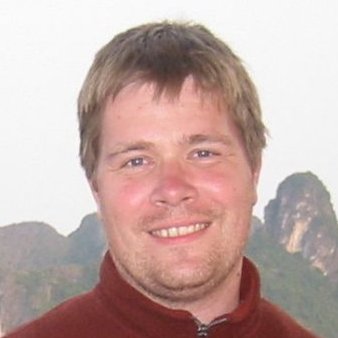
Pascal Vincent is an Associate Professor at the Department of Computer Science and Operational Research , University of Montreal, and a key member of the Montreal Institute for Learning Algorithms (MILA) . He holds a PhD in Computer Science from the University of Montreal and has been pivotal in advancing machine learning and artificial perception. Education: PhD in Computer Science (University of Montreal, 2003) His research spans machine learning , deep learning , representation learning , and neural networks , focusing on unsupervised methods and geometrically inspired algorithms. He explores how intelligent systems can autonomously build meaningful representations from raw data, driven by principles like the manifold hypothesis . Key projects include generative stochastic networks , contractive autoencoders , and high-dimensional sequence transduction . His work has resulted in 15+ recent publications in top venues like NIPS, ICML, and CVPR. Scientific Awards : Best student-paper award at ICML 2012 Honorable mention at NIPS 2011 Funded by FCI, FRQNT, CRSNG, CIFAR, and IBM Pascal has supervised 15+ doctoral and Master’s students , including Florian Bordes, Tom Bosc, and Nicolas Boulanger-Lewandowski, across topics like representation learning and generative models . He is also a co-founder of the UNIQUE (Union Neurosciences & Intelligence Artificielle Québec) research consortium.
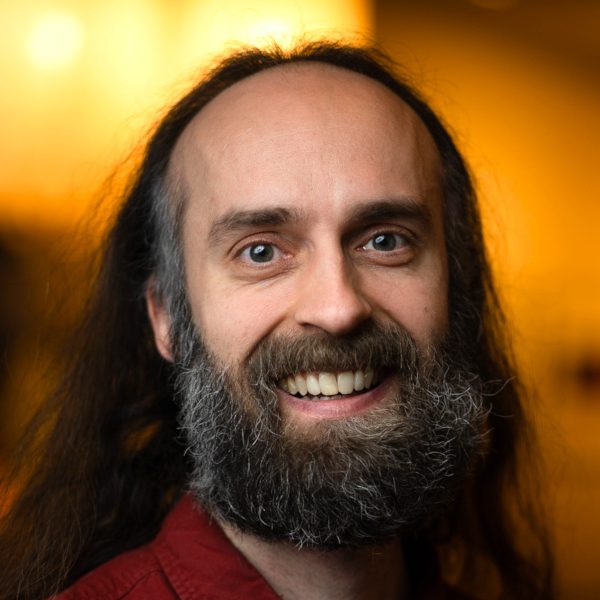
Gustav Eje Henter is an Assistant Professor at KTH Royal Institute of Technology, holding roles as the Head of Research at Motorica AB and a Core Team Member of the Wallenberg Research Arena (WARA) for Media and Language. He is the Secretary of the ISCA SynSIG (Special Interest Group on Speech Synthesis) and a Co-Organiser of the GENEA Workshops on Embodied Agents' Non-Verbal Behavior. His research focuses on speech synthesis, gesture generation, and multimodal interaction, with contributions to TTS systems, neural networks, and embodied AI. He leads Digital Futures, a cross-disciplinary research center addressing societal challenges through digital technologies. This center is a collaboration between KTH, Stockholm University, and RISE. His work spans foundational research to industrial applications, emphasizing ethical AI, privacy in voice conversion, and human-robot interaction. Key research themes include causal reasoning in LLMs, adversarial privacy techniques, and benchmarking frameworks like the GENEA Leaderboard. He has organized international workshops (GENEA 2021-2024) and contributed to standards in TTS evaluation methodologies. His technical innovations include HiFi-Glot for formant synthesis and Matcha-TTS for fast waveform generation. His research integrates audio, gesture, and motion synthesis with deep learning, addressing challenges in spontaneous speech synthesis, multimodal coherence, and listener perception. He advocates for rigorous evaluation practices and open challenges to advance the field's reproducibility and real-world applicability.
Mikael Johansson is a Professor at Kungliga Tekniska Högskolan (KTH), specializing in Control Technology . He teaches and coordinates courses such as Distributed Optimization (FEL3311) and various advanced-level degree projects in computer science, electrical engineering, and systems engineering. His research spans Control Systems , Machine Learning , and Optimization , with a focus on asynchronous algorithms, federated learning, and applications in energy systems and construction. His work includes 15 recent publications on topics like neural networks, distributed optimization, and battery technology. Notable areas of contribution are in asynchronous learning, federated learning with privacy constraints, and quasi-Newton methods for optimization. His research bridges theoretical advancements with practical applications in urban design, healthcare, and autonomous systems.
Prof Apostolos Antonacopoulos is a Professor of Pattern Recognition at the University of Salford, leading the PRImA research Lab (Pattern Recognition and Image Analysis). He holds a PhD from UMIST (1995) and has held academic roles at the University of Liverpool and Salford. His expertise spans Document Analysis, Computer Vision, and AI applications in Cultural Heritage. Education: PhD in Computer Science, University of Manchester Institute of Science and Technology (UMIST), UK (1995) Research Interests: Digitisation of historical documents and large-scale data Image Analysis and Pattern Recognition AI-driven solutions for cultural heritage preservation Performance evaluation frameworks for OCR systems Recent Projects: Leading a £750K ONS-funded project (2020–2025) digitising UK census reports Europeana Newspapers (€4M EU project, 2012–2015) for European Digital Library SUCCEED (€1.8M EU project, 2013–2015) for digitisation competencies Awards and Roles: IAPR/ICDAR Young Investigator Award (2005) Former President of International Association for Pattern Recognition (IAPR) Editorial roles in IJDAR and IEEE Transactions on Multimedia Labs/Teams: Director of PRImA Lab, collaborating with institutions like British Library and Wellcome Library. Active in industry partnerships for digitisation solutions.
André Sant'Anna is an Assistant Professor of Philosophy at Underwood International College, Yonsei University in Seoul, South Korea. He earned his PhD from the University of Otago Department of Philosophy in 2018 and has held postdoctoral positions at the University of Geneva (Switzerland, 2023-2025), University of Cologne (Germany, 2022-2023), and Washington University in St. Louis (USA, 2020-2021). He currently serves as President of the Eurasian Memory Network (EMN) and is a member of the Steering Committee of the Philosophy of Memory Organization (PhOMO). Dr. Sant'Anna's research focuses on the philosophical intersections between memory, perception, imagination, and metacognition. His work examines the nature of episodic memory, particularly the phenomenology of remembering, the relationship between memory and imagination, and the role of metacognition in memory processes. He has made significant contributions to debates on the continuity versus discontinuity between memory and imagination, the nature of autonoetic consciousness, and the puzzle of alethic memory. His recent publications demonstrate a strong focus on developing metacognitive approaches to memory phenomena, challenging existing paradigms, and bridging philosophical analysis with empirical findings from cognitive science. His work has appeared in leading journals including Synthese , Philosophy and the Mind Sciences , and International Journal of Philosophical Studies . Dr. Sant'Anna has received recognition through editorial roles including PhilPapers Editorships on Theories of Memory. He has co-edited significant works like Current Controversies in Philosophy of Memory (2022) and is contributing to The Oxford Handbook of Philosophy of Memory (forthcoming). His collaborative research extends across international boundaries, with frequent co-authorship with prominent scholars including Kourken Michaelian, Denis Perrin, and César Schirmer dos Santos. His work has been translated into multiple languages, including Portuguese, making philosophical memory research accessible to broader academic communities.
Prof. Julijana Gjorgjieva is a tenured W3 Professor of Computational Neuroscience at the School of Life Sciences Weihenstephan, Technical University of Munich (TUM). She leads an independent research group at the Max Planck Institute for Brain Research and is affiliated with the Bernstein Center for Computational Neuroscience. Her research focuses on the principles governing neural circuit development, balancing learning plasticity with functional stability through computational and theoretical approaches. Key interests include synaptic organization, energy-efficient neural computation, and evolutionary optimality principles. Education & Career: B.Sc. Mathematics, Harvey Mudd College (2006) M.A.St. in Applied Mathematics, University of Cambridge (2007) Ph.D. Applied Mathematics, University of Cambridge (2011) Postdoctoral Fellowships: Harvard University (2011-2014), Brandeis University (2014-2016) Max Planck Research Group Leader (2016-2022) W2/W3 Professor at TUM since 2016 Research Interests: Computational neuroscience, theoretical modeling of neural circuits, synaptic plasticity mechanisms, homeostatic regulation, and the interplay of development and evolution in shaping brain architecture. She employs mathematical frameworks to study how circuits achieve robustness while enabling adaptive learning. Awards: Heinz Maier-Leibnitz Prize (2022) Eric Kandel Young Neuroscientist Prize (2021) ERC Starting Grant (2018) Multiple postdoctoral and early-career fellowships Grants & Funding: Includes DFG Collaborative Research Center on Neural Homeostasis, HFSP grants, and EU Horizon 2020 initiatives. Active in mentoring and promoting computational neuroscience through programs like Neuromatch Academy. Labs & Collaborations: Leads a multidisciplinary lab integrating experimental and theoretical approaches. Collaborates with institutions such as the Max Planck Society and international computational neuroscience networks.
Brooke Foucault Welles is a Professor in the College of Arts, Media and Design at Northeastern University, where she also serves as Interim Dean and Director of the Network Science PhD program. Her research focuses on how social networks and communication technologies shape power dynamics, particularly in contexts of marginalization and social justice. PhD in Media, Technology and Society from Northwestern University MS and BS in Communication from Cornell University Her research spans multiple domains including: Network science of AI and social systems Digital activism and social movement dynamics Health information and (mis)information flows Open source community structures Race/ethnicity in digital contexts Computational social science methodologies Recent publications focus on attention dynamics in social networks, hate speech protection mechanisms, and open-source software sustainability. Her work has been supported by grants from the NSF, NULab, and Chan Zuckerberg Initiative. Awards include: McGannon Book Award (2021) for #HashtagActivism Best Paper Honorable Mention at CSCW 2019 She leads the Communication Media and Marginalization Lab (CoMM Lab) which includes PhD students and postdocs from diverse disciplines. Her advising approach emphasizes interdisciplinary collaboration and methodological training in both quantitative and qualitative approaches.
Hakan Karateke is the Kanuni Süleyman Professor for Ottoman and Modern Turkish Studies at the University of Chicago, affiliated with the Department of Near Eastern Languages and Civilizations. He has taught at UChicago since 2009 and serves as Admissions Chair. His research focuses on Ottoman cultural history, philology, and the evolution of Turkish language and historiography. Ph.D., University of Bamberg (1998) His methodological expertise bridges philology and historical analysis, emphasizing textual interpretation and contextual reconstruction. He is currently working on a monograph about 19th-century Ottoman historiography and a multi-year project tracing the cultural history of the Ottoman Turkish language. Recent publications include analyses of Evliya Çelebi’s travel account construction, Ottoman anti-Judaism discourse, and protocol evolution. He co-edits two major academic series: 'Ottoman and Turkish Studies' (Academic Studies Press) and 'The Ottoman Empire and its Heritage' (Brill). His courses cover Ottoman cultural history, language studies, and Near Eastern empires. Research themes span: Ottoman historiography transformation Language perception shifts Inter-ethnic relations Manuscript analysis Political rhetoric Ceremonial studies
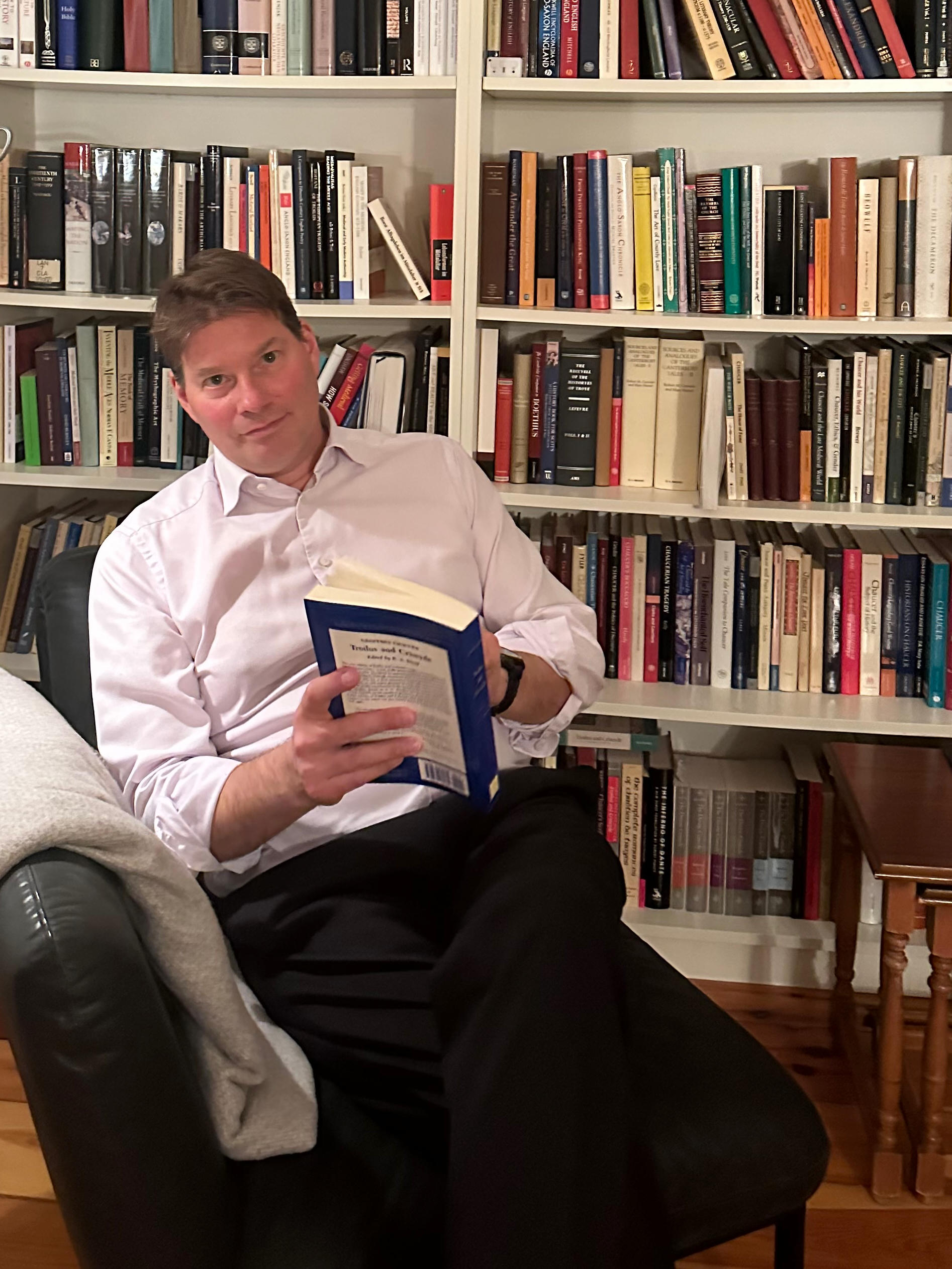
Prof. Dr. Wolfram R. Keller is a Professor at the Department of English Philology, Faculty of Philosophy and Humanities, Freie Universität Berlin. His research focuses on medieval and early modern English/Scottish literature, classical reception, and theories of authorship, with special emphasis on temporal structures in literary works. His research explores the transformation of classical traditions in medieval and Renaissance texts, particularly through the lens of hybridity and temporality. Key areas include Chaucer's dream visions, Shakespearean chronologies, Trojan narratives, and intersections of literature with economics and music. Recent work examines how texts strategically reinvent antiquity to address contemporary concerns. Keller leads multiple collaborative research initiatives, including as Principal Investigator for DFG Research Group FOR 2305 Diskursive Representations (2016-2023) examining discursive innovations, and the Excellence Cluster Temporal Communities (2020-present) studying time as a literary construct. His publications demonstrate consistent engagement with how medieval/early modern authors reframe classical tropes to negotiate cultural identity. He directs projects on 'Troynovant Revisited' (DFG 2023–present) analyzing hybridization of classical antiquity in English literature, and 'Shakespearean Chronologies' (Einstein Circle 2016-2019) investigating asynchronous temporalities. His interdisciplinary approach connects literary studies with philosophy, musicology, and economic history.
Dr. Yves Boubenec is an Associate Professor at École Normale Supérieure (ENS)-PSL University, Paris, France. He serves as Head of the LSP Neuro Platform and Director of Studies at the Department of Cognitive Studies. Academic Rank: Associate Professor Institution: ENS-PSL Departments: Cognitive Studies (ENS), LSP Neuro Platform Email: yves.boubenec@ens.psl.eu Research Focus: Boubenec investigates neural mechanisms of auditory perception and cognition using integrated methodologies spanning single-neuron electrophysiology to large-scale neuroimaging. His work reveals how context, learning, and multisensory interactions shape sound encoding in mammalian neocortex. Primary Research Themes Context-dependent auditory encoding Perceptual attention mechanisms Task-driven neural plasticity Self-supervised learning models Population-level cortical dynamics Human/ferret auditory comparisons Publication Trends: Recent work (2024-2025) examines speech production networks, premotor auditory categorization, and algebraic structures in sound learning. Earlier studies (2018-2022) focus on population gating, hierarchical auditory coding, and self-voice mechanisms. 2025 Self-voice frequency analysis Hierarchical ferret auditory cortex mapping Temporal window constraints 2024 Premotor category hemodynamics Self-supervised sound structures Human speech cortical encoding Methodological Expertise: Combines awake ferret functional UltraSound, Neuropixels recordings, and computational modeling to analyze neural representations across spatial scales. Specializes in translating animal model findings to human auditory processes.
Nicolai J. Foss is a Professor of Strategy at the Department of Strategy and Innovation, Copenhagen Business School (CBS). He holds additional roles as Honorary Adjunct Professor at the University of Southern Denmark, External Chair of the Danish Institute for Advanced Studies (2020–2025), and Professor II at the Norwegian School of Economics. A Knight of the Order of the Dannebrog, he previously held the Rodolfo Debenedetti Chair of Entrepreneurship at Bocconi University (2016–2019). His academic journey includes degrees from the University of Copenhagen (M.Sc., 1989) and a PhD from CBS (1993). He has held visiting professorships at Warwick, Hong Kong Polytechnic University, and others. Research interests focus on strategic management (resource-based view, microfoundations), organizational design (knowledge processes, open innovation), entrepreneurship (cross-country analyses, strategic entrepreneurship), and social science methodology. He has authored over 266 journal articles, 109 book chapters, and 26 books, with a Google Scholar h-index of 116 and ~60,000 citations. Recognitions include Clarivate’s Highly Cited Researcher status since 2018 and being ranked the 13th most cited living business scholar globally. Professional contributions include founding CBS’s Department of Strategic Management and Globalization (2005), directing World Class Environment programs at CBS, and serving on ERC panels and the Strategic Management Society board. He co-founded influential think tanks like the Danish Research Unit for Industrial Dynamics and CEPOS. His work is featured in outlets like the Wall Street Journal and Forbes , and he has been a columnist for Danish newspapers Børsen and Berlingske .
Zachary Oberfield is Professor and Chair of Political Science at Haverford College, where he teaches courses in American politics, public policy, criminal justice reform, bureaucracy, the presidency, and Congress. He has previously held academic positions at Temple University and the City College of New York. B.A., Political Science, Hobart and William Smith Colleges Ph.D., Political Science, University of Wisconsin-Madison His research centers on organizational change, leadership, and street-level bureaucracy, with a particular focus on public institutions such as schools and police departments. He investigates how frontline public servants are socialized, how diversity climates affect agency performance, and how reforms in criminal justice and education unfold in practice. His recent publications span topics including school finance fairness, charter school governance, police workforce development, and racial bias in public management. His work employs longitudinal and comparative methods, often analyzing policy implementation over time and across institutional contexts. He has published in leading journals such as American Educational Research Journal , Public Administration Review , and Journal of Public Administration Research and Theory , as well as with major university presses. Zachary Oberfield is actively engaged in contemporary policy debates, contributing to public discourse through outlets like the Washington Post 's Monkey Cage blog. His current research examines criminal justice reforms in Delaware County, PA. He advises on public sector leadership and organizational reform, though no formal students are listed. He has not received any explicitly mentioned scientific awards. He is affiliated with the Department of Political Science at Haverford College, contributing to both teaching and administrative leadership as department chair.
Alla Sheffer is a Professor and Associate Head of Faculty Affairs in the Department of Computer Science at the University of British Columbia, Faculty of Science. She is affiliated with multiple research centers including CAIDA (Centre for Artificial Intelligence Decision-making and Action), the Institute of Applied Mathematics, and ICICS (Institute for Computing, Information and Cognitive Systems). B.Sc., Hebrew University, Jerusalem (1991) M.Sc., Hebrew University, Jerusalem (1995) Ph.D., Hebrew University, Jerusalem (1999) Postdoctoral Research Associate, University of Illinois, Urbana-Champaign (1999-2001) Assistant Professor, Technion, Israel (2001-2003) Assistant Professor, University of British Columbia (2003-2008) Associate Professor, University of British Columbia (2008-present) Professor Sheffer's research focuses on geometry processing, addressing algorithmic challenges in digital shape modeling and manipulation. Her work primarily deals with discrete geometry representations, specifically meshes (polygonal model representations), with applications in computer graphics and computer-aided engineering. She utilizes tools from computational and differential geometry, discrete mathematics, and graph theory to generate, manipulate, and edit discrete geometric models. Her research spans virtual and augmented reality, visual computing, and 3D modeling, with significant contributions to sketch-based modeling, mesh processing, and cloth simulation. The 15 most recent publications reveal a consistent research trajectory in geometry processing, with recent work focusing on vector sketch processing, VR drawing tools, and advanced mesh manipulation techniques. Her work demonstrates a strong connection between human perception and computational methods, particularly in the interpretation of freehand sketches and the generation of perceptually-accurate geometric representations. The recurring themes across her publications include flowlines, curve networks, mesh parameterization, and the application of perceptual studies to improve algorithmic outputs. Eurographics Fellow ACM Fellow IEEE Fellow Royal Society of Canada Fellow SIGGRAPH Academy Member UBC Killam Research Prize NSERC Discovery Accelerator Supplement IBM Faculty Award Professor Sheffer has supervised numerous doctoral and master's students, with recent theses focusing on geometric mesh processing, vector sketch interpretation, VR drawing tools, and garment modeling. Her research group maintains strong connections with industry through various partnerships and has received substantial grant funding to support their innovative work in geometry processing and computer graphics. She teaches courses in computer graphics, geometric modeling, and video game programming, contributing significantly to both undergraduate and graduate education in computer science.
Dr. Leif Langsdorf is a Researcher at the Department of Psychology within the Faculty of Philosophy I at Martin Luther University Halle-Wittenberg. His work focuses on cognitive processes related to multitasking, motivation, and cognitive control, utilizing both behavioral methods and electrophysiological techniques including EEG. Langsdorf's research interests center on understanding how motivation affects multitasking abilities, particularly examining how reward processing influences cognitive control in dual-task situations. His work investigates whether motivated individuals show faster reaction times in simple response tasks and explores the underlying cognitive processes that enable this enhanced performance. His research employs a range of methodologies from cognitive psychology and EEG to examine the physiological processes during multitasking. His publication record shows a consistent focus on reward effects in dual-task paradigms, with recent work examining the neural correlates of task switching, temporal dynamics of reward utilization, and the application of neuromodulation techniques like tDCS to influence task coordination. His research has appeared in journals including Journal of Cognitive Neuroscience, Attention Perception & Psychophysics, and Acta Psychologica. Langsdorf actively supervises thesis work on multitasking and motivation, guiding students through research on how motivation impacts multitasking capabilities. His work has been presented at multiple conferences including TeaP (Experimental Psychology conference) and HexKop. He collaborates extensively with Prof. Torsten Schubert and other researchers at the university, including Sebastian Kübler, Daniel Darnstaedt, and Maryam Talarposhti, forming part of a research group focused on cognitive control and task switching phenomena.
Marte Tonning Otterlei is an Associate Professor in the Department of Social Sciences at the University of Stavanger, affiliated with the Faculty of Social Sciences. Her work focuses on child welfare systems, parental experiences in care proceedings, and dialogue-based decision-making processes. She holds a PhD in Social Work and has extensive experience in qualitative research methodologies. Key research interests include family reunification dynamics, communication practices during care transitions, and systemic challenges faced by child welfare workers. Her work emphasizes understanding the emotional and psychological impact of state interventions on families, particularly through positional analysis frameworks. Recent publications explore innovative dialogue processes for reunification after care orders, grief management in child removal contexts, and the ethical dimensions of parental notification systems. She has contributed to international conferences on child welfare equity and social justice issues. Media engagement includes analyses of terminology's impact on care removal perceptions and studies on worker isolation in high-stress cases. Her 2022 monograph Perspektiver på omsorgsovertakelser synthesizes findings from multiple studies on care transition processes. Collaborations include work with Redd Barna on child participation initiatives. Research outputs emphasize actionable insights for improving family participation, worker well-being, and systemic empathy in child welfare practices. Current projects address communication frameworks for difficult conversations in care proceedings.