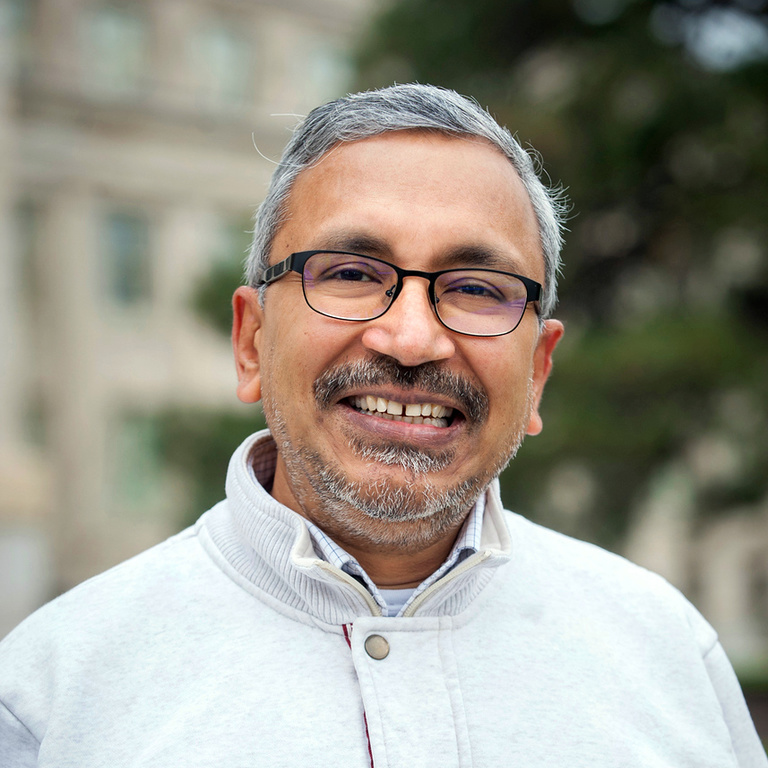
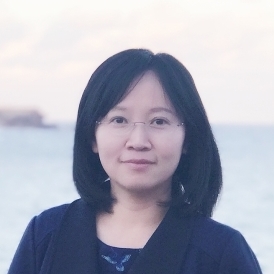
Mengyi Wei is a researcher at the Chair of Cartography and Visual Analytics at the Technical University of Munich (TUM). Their work bridges AI ethics with human-computer interaction, computational social science, and visual analytics. Research focuses on ethical challenges in AI systems, including risk perception, social media discourse analysis, and knowledge discovery in digital platforms. Publications highlight interdisciplinary approaches to mapping AI ethics narratives, analyzing real-world AI incidents, and exploring human-AI collaboration in visual storytelling. Notable achievements include the Best Paper Award at HICSS-56 (2023) . They supervise students in projects like Mining Twitter for AI Ethical Implications and collaborate extensively on AI auditing frameworks.
Yulan He is an active researcher in Natural Language Processing and Computational Linguistics with numerous publications in top-tier conferences including ACL, EMNLP, and COLING from 2023-2025. Their work spans both theoretical advancements in Large Language Model architectures and practical applications in healthcare, social media analysis, and information retrieval. Research interests focus on Large Language Model optimization , including improving faithfulness in rationale generation, enhancing reasoning capabilities, personalizing outputs to user preferences, and optimizing computational efficiency. Significant contributions include frameworks for debiasing opinion summarization, improving depression detection in clinical interviews, and developing methods for Theory-of-Mind reasoning in LLMs. Their work addresses critical challenges in LLM reliability, interpretability, and efficiency. Analysis of recent publications reveals consistent focus on bridging the gap between theoretical LLM capabilities and practical applications , with particular attention to healthcare contexts, social media analysis, and complex reasoning tasks. Their research demonstrates how to make LLMs more reliable, efficient, and aligned with human needs across diverse domains. Scientific contributions include: Novel frameworks for LLM faithfulness and reasoning (Drift, EnigmaToM) Efficient inference methods (SCOPE, PECAN) Bias mitigation techniques (LASS, Rehearse With User) Personalization approaches (PROPER) Healthcare applications (Explainable Depression Detection) As evidenced by senior authorship positions across numerous publications, Yulan He leads research projects and likely supervises graduate students in NLP research. Their work demonstrates strong technical expertise combined with practical problem-solving approaches to real-world NLP challenges.
Nicole Eikmeier is an Associate Professor at Grinnell College , holding the Luebke-Sproehnle Endowed Chair in Computer Science . Her research focuses on network science , particularly higher-order interactions , spectral clustering , and dynamic network modeling . She teaches courses in algorithms, theory, and the societal implications of technology. Education: Ph.D. in Mathematics, Purdue University (August 2019) B.A. in Computer Science and Mathematics, Concordia College (May 2012) Nicole’s research examines the structure and dynamics of complex networks. She develops models for nonuniform hypergraphs , analyzes centrality measures in dynamic systems , and investigates the topological properties of higher-order networks . Her work bridges theoretical mathematics and applied computer science, with implications for social, epidemiological, and technological systems. Her publications span topics like COVID-19 transmission modeling in educational institutions , tensor decomposition for dynamic topic analysis , and stochastic processes on tree networks . She has presented at premier conferences including ACM SIGKDD and IEEE ICDM . Scientific Awards: NSF Grant Research Corporation for Science Advancement Grant Luebke-Sproehnle Endowed Chair Nicole actively explores educational frameworks integrating ethics into computer science curricula and investigates alliances and leadership in competitive networks . She maintains affiliations with institutions like the Alan Turing Institute .
Professor Sriram Pemmaraju is a faculty member at the Department of Computer Science, College of Liberal Arts, The University of Iowa. He leads research in theoretical computer science and computational epidemiology , focusing on distributed graph algorithms and healthcare network analysis. Research examines resource trade-offs in distributed systems (rounds, messages, bandwidth) Co-founder of the Computational Epidemiology Group , CDC-funded MInD Healthcare collaboration Teaching: Undergraduate courses in algorithms, data structures, and discrete math; graduate courses in distributed algorithms, approximation algorithms, and computational epidemiology. Current Fall 2025 course: Computer Science I: Fundamentals . Research trends: His work bridges Distributed Systems: Spanning tree sampling, APSP optimization, ruling sets Healthcare Networks: Vaccine allocation, infection source detection, temporal cascade modeling Students: Mentored 3 current PhD advisees and 12 former PhD students now at Amazon, Google, IIT Madras, and other institutions.
Rocco Tripodi is a Researcher at Ca' Foscari University of Venice's Department of Environmental Sciences, Computer Science and Statistics. He holds a Ph.D. in Computer Science (2015) from the same institution, focusing on game-theoretic models for Natural Language Processing (NLP). His roles include teaching courses such as Deep Learning for NLP, Introduction to Coding, and Database Systems. He has also served as an Assistant Professor at the University of Bologna (2021–2024) and collaborated with labs like Sapienza NLP and the European Centre for Living Technology (ECLT). His research spans NLP, machine learning, and computational linguistics, with a focus on lexical semantics, game theory applications, and ethical AI. Research Interests : His work addresses challenges in lexical semantics, including word sense disambiguation, semantic role labeling, and cross-lingual NLP. He explores game-theoretic frameworks for text analysis and develops tools for cultural heritage (e.g., historical text analysis). Recent projects include evaluating large language models (e.g., ChatGPT), detecting sensitive data in text, and tracing historical biases through diachronic embeddings. Publications : Tripodi's research trends focus on NLP fairness, multilingual models, and historical discourse analysis. Notable contributions include frameworks for abuse detection evaluation (AAA), multilingual semantic role labeling (UniteD-SRL), and diachronic analysis of antisemitic language in 19th-century French texts. His work bridges technical NLP advancements with societal impact, such as ethical AI and cultural heritage preservation. Labs & Collaborations : Active in interdisciplinary projects like ODYCCEUS and Polifonia, he collaborates with institutions to apply NLP to social sciences and humanities. His labs emphasize practical applications, such as transforming text into knowledge graphs (Text2AMR2FRED) and analyzing historical textiles using spectroscopic methods.
Elynn Chen is an Assistant Professor in the Department of Technology, Operations, and Statistics (TOPS) at the Leonard N. Stern School of Business, New York University, where she has been a faculty member since September 2021. Her research bridges statistics, machine learning, and operations research with applications in business, economics, and healthcare. Her educational background is highly interdisciplinary: Ph.D. in Statistics, Rutgers University B.A. in Economics, Peking University B.S. in Computer Science, Tsinghua University Professor Chen's research is centered on developing novel methodologies for data-driven decision-making and complex data analysis. Her primary interests include: Tensor learning for multi-dimensional data representation Reinforcement learning with applications in societal domains such as healthcare and education Transfer learning and knowledge fusion across heterogeneous tasks High-dimensional time series and matrix-variate factor models She emphasizes algorithmic innovation and statistical rigor in addressing real-world challenges. Her recent publications reveal a consistent focus on advanced statistical learning methods. She has made significant contributions to tensor decomposition, reinforcement learning in heterogeneous environments, and high-dimensional network modeling. Her work combines theoretical depth with practical applications in international trade, clinical treatments, and corporate finance. Her scientific recognition includes: NSF Postdoctoral Research Award DMS-1803241 She actively mentors students and postdoctoral researchers, fostering a collaborative research environment. Her group works on cutting-edge topics such as tensor-view graph neural networks and dynamic matrix factor models. She has received research support through prestigious postdoctoral appointments at UC Berkeley (advised by Prof. Michael I. Jordan), Princeton University (with Prof. Jianqing Fan), and OpenAI. She leads a vibrant research team focused on: Tensor learning Reinforcement learning for social applications Transfer and knowledge fusion She welcomes highly motivated individuals to join her research group.
Dr. Siwei Liu is an Assistant Professor at the School of Natural and Computing Sciences, University of Aberdeen, UK. He previously held a postdoctoral position at MBZUAI and completed his PhD with the Terrier team under the supervision of Prof. Iadh Ounis and Prof. Craig Macdonald. He is actively involved in research, teaching, and PhD supervision. His research focuses on advancing artificial intelligence methods, particularly in graph neural networks, large language models, and recommender systems, with applications in bioinformatics, biomedical image analysis, and multi-modal single-cell data. He is a co-founder and main contributor to the open-source Beta-Recsys project, promoting reproducibility and evaluation in recommendation systems. Dr. Liu's recent publications (2020–2025) reflect a strong trajectory in deep learning for biomedical applications and intelligent systems. Key themes include GNNs for gene-disease and RNA-disease association prediction, cold-start recommendation using heterogeneous graphs, pre-training strategies, and hybrid Transformer-Mamba architectures for radiology report generation. His work appears in top-tier venues such as IEEE TPAMI, ACM Transactions, and Briefings in Bioinformatics. He teaches courses in Data Mining and Visualisation and Natural Language Processing, contributing to the education of future AI practitioners. While no specific awards or student names are listed, his active research and leadership in open-source initiatives highlight his growing impact in the AI and biomedical informatics communities.
Mohammed Eunus Ali is a Senior Lecturer in the Department of Software Systems & Cybersecurity within the Faculty of Information Technology at Monash University, Australia. He holds a PhD in Computer Science and Software Engineering from the University of Melbourne and has previously served as a Professor at the Bangladesh University of Engineering and Technology (BUET), where he led a research group in Data Science and Engineering for over a decade. He has also held research positions at Monash University, Swinburne University, the University of Melbourne, and RMIT University. PhD : Computer Science and Software Engineering, University of Melbourne (2010) M.Sc. Engg. : Computer Science and Engineering, Bangladesh University of Engineering and Technology (2002) B.Sc. Engg. : Computer Science and Engineering, Bangladesh University of Engineering and Technology (1999) Dr. Ali’s research spans data management, analytics, and learning , with a strong focus on spatio-temporal data, geo-social networks, and multimodal high-dimensional data . His work enables applications in urban computing, intelligent transportation systems, and smart, sustainable cities . In recent years, he has expanded into Generative AI and large language models (LLMs) , exploring their role in enhancing geo-spatial query processing, SQL generation, and data engineering tasks. His publications appear in top-tier venues such as ACL, TKDE, VLDB, ICDE, SIGSPATIAL, and IEEE Access . His recent publications reflect a strong trend toward AI-driven solutions for real-world spatial and health problems , including blood glucose prediction for diabetics, seismic intensity forecasting, eco-friendly route planning, and LLM-based code generation. These works demonstrate a convergence of deep learning, spatio-temporal analytics, and real-world system design . Scientific Awards: Bangladesh University Grants Commission Award (2012) ADC Best Poster Award (2016) SSTD Best Demo Award (2017) ADC Best Paper Award (2022) Dr. Ali actively contributes to the research community as a Program Committee Member for premier conferences including SIGMOD, VLDB, ICDE, and SIGSPATIAL . He is a Senior Member of the ACM and currently supervises PhD students, focusing on cutting-edge topics in data science and AI. His collaborative research network spans institutions in Australia and Bangladesh, contributing to advancements in both academic and applied domains. His work aligns with the UN Sustainable Development Goals , particularly in the areas of sustainable cities, innovation, and quality education.
Ricardo Gonçalves is an Assistant Professor at the Department of Computer Science, Faculdade de Ciências e Tecnologia , Universidade Nova de Lisboa. He is also a researcher at NOVA LINCS , focusing on knowledge representation and reasoning within artificial intelligence. His research interests include Knowledge Representation and Reasoning Logic Programming Non-Monotonic Reasoning Answer Set Programming He has published extensively on forgetting mechanisms in logic programming and knowledge integration techniques. Recent publications emphasize Answer Set Programming optimizations Knowledge forgetting operators Neural-symbolic integration Stream reasoning with deep learning
Ling Cai is an Assistant Professor in the Geography Department at the University of California Santa Barbara, specializing in Geographic Information Science with a focus on knowledge graphs and spatial reasoning. Their research spans multiple domains including GIScience, medical informatics, computer vision, and transportation systems, demonstrating strong interdisciplinary capabilities. Ling Cai's research interests center around Geospatial Artificial Intelligence , with particular expertise in knowledge graph construction , spatial reasoning , and geospatial representation learning . Their work bridges theoretical advances in machine learning with practical applications in geographic information systems. Recent research has focused on the KnowWhereGraph initiative, developing ontologies and knowledge graphs that enable interdisciplinary knowledge discovery through geospatial enrichment. The publication record shows significant contributions to spatial knowledge representation , including hyperbolic embedding models for qualitative spatial and temporal reasoning, general-purpose representation learning of polygonal geometries, and advancements in geographic question answering. Their work demonstrates how machine learning can enhance spatial reasoning capabilities in knowledge graphs. Developed the HyperQuaternionE model for qualitative spatial and temporal reasoning Contributed to the KnowWhereGraph ontology for interdisciplinary knowledge discovery Advanced techniques for geographic question answering systems Explored applications of knowledge graphs in emergency management Ling Cai's collaborative work extends across multiple domains, with recent publications in medical informatics examining electronic health record accuracy and in transportation systems researching EV charging scheduling. This breadth demonstrates the versatility of geospatial AI approaches across diverse application areas.
Shuai Ma is a researcher at Beihang University , School of Computer Science and Engineering, China. His work spans database systems , machine learning , and natural language processing , focusing on temporal knowledge graphs, graph neural networks, and privacy-preserving federated learning. He received his PhD from the University of Edinburgh , UK, in 2011. Research interests include graph theory , spatiotemporal data analysis , data mining , and anomaly detection . His recent publications address: 2025 : Technology mapping for ASICs, temporal network motifs, and 3D geometry compression. 2024 : Knowledge graph completion, scene mining for e-commerce, and secure aggregation for federated learning. Article trends reveal expertise in graph neural networks , temporal data processing , and privacy-aware systems . Collaborations with institutions like Concordia University and industry leaders underscore his interdisciplinary impact.
Dimitris Plexousakis is a Professor in the Department of Computer Science at the University of Crete, School of Sciences, with an extensive publication record spanning over three decades from 1993 to 2025. His scholarly work comprises 240 publications, demonstrating sustained research productivity and leadership in his field. He maintains active collaborations with prominent researchers including Haridimos Kondylakis, Theodore Patkos, and Giorgos Flouris, primarily through European research networks such as ERCIM. Professor Plexousakis's research focuses on the intersection of semantic technologies, artificial intelligence, and knowledge representation. His work centers on semantic web technologies, knowledge graphs, and argumentation frameworks, with significant contributions to database systems and deception detection in text. His recent publications demonstrate a clear trajectory toward integrating large language models with structured knowledge representation, particularly in visual object state recognition and neurosymbolic AI approaches. His research bridges theoretical computer science with practical applications in knowledge management and intelligent systems. The analysis of his 15 most recent publications (2023-2025) reveals a strong emphasis on knowledge graph technologies, with particular focus on partitioning strategies (DIAERESIS framework), object-state recognition, and the integration of large language models with structured knowledge. His work consistently addresses scalability challenges in semantic technologies while maintaining theoretical rigor. There is a clear interdisciplinary trend connecting computer vision, natural language processing, and formal knowledge representation methods. Through his ERCIM News publications and collaborative projects, Professor Plexousakis has contributed to European research initiatives in semantic technologies and knowledge management. His work appears in premier venues including the Journal of Web Semantics, Semantic Web journal, and major conferences such as ISWC, ESWC, and CAiSE, reflecting his standing in the semantic web research community. His research group appears to focus on knowledge representation and reasoning, with particular expertise in semantic technologies for practical applications. The consistent pattern of mentoring junior researchers as co-authors suggests active supervision of graduate students and postdoctoral researchers in the Department of Computer Science at the University of Crete.
Professor Wenjie Zhang is a faculty member at the School of Computer Science and Engineering, University of New South Wales (UNSW), Australia . She holds the ARC Future Fellowship and serves as Head of the Data and Knowledge Research Group and Deputy Head of School (Research). Her research spans Databases, Big Data, Data-centric AI, Machine Learning, and Graph Data Processing , with a focus on spatial-temporal data, uncertain data analysis, and scalable graph algorithms. Affiliation: University of New South Wales, Australia Roles: ARC Future Fellow, Head of Data and Knowledge Research Group, Deputy Head of School (Research) Research Interests include: Dynamic graph analytics (heterogeneous, multi-dimensional, bipartite graphs) Spatial-social data processing & keyword search AI/ML integration for database optimization Foundational work on large language models for data science Scientific Leadership : 2025 PC Chair for ICDE and ADC conferences Associate Editor for IEEE TKDE and VLDB Journal Steering committee member for DASFAA and ADC conferences Research Funding : $495,000 ARC Discovery Project (DP230101445) for cloud-based temporal graph processing $35M ARC Centre of Excellence for cellular systems modeling $5M FRIASA Hub for fire-resilient infrastructure Industry grants totaling $1.01M–$2M for AI trust, mining IoT, and financial risk detection Scientific Recognition : Recipient of the CORE Chris Wallace Award , multiple best paper awards at ICDE/DASFAA, and ACM SIGMOD Research Highlight for influential database work.
Dr. Masahiko Itoh serves as Professor at Hokkaido Information University's Department of Information Media, where he leads research in information visualization and user interface design. His academic journey spans prestigious institutions including Hokkaido University (where he earned his PhD in Information Science), University of Tokyo, and National Institute of Information and Communications Technology. Dr. Itoh's research focuses on information visualization , user interface design , and 3D collaborative systems , with particular expertise in spatiotemporal data visualization, VR/AR technologies, and big data analytics. His work bridges theoretical foundations with practical applications across domains including news analysis, financial data, and cultural heritage preservation. His publication record demonstrates consistent contributions to visualization conferences and journals, with recent work emphasizing collaborative VR environments, spatiotemporal network analysis, and techniques for visualizing probabilistic search results. Dr. Itoh's research has evolved from foundational work in 3D information collaboration to cutting-edge applications in immersive analytics and multi-modal data exploration. Scientific Awards: Outstanding Paper Award of DEIM 2011 Outstanding Award of the 72nd National Convention of IPSJ (June 2010) Dr. Itoh maintains active research collaborations through multiple grants from Japan Society for the Promotion of Science and industry partners like Teikoku Databank Ltd. He advises graduate students through his visualization seminar, with the first cohort graduating in 2021. His professional service includes extensive conference organization and reviewing activities for IEEE Pacific Visualization and other major venues in the visualization community. Dr. Itoh leads the Itoh Visualization Laboratory, which focuses on developing innovative visualization techniques for complex data analysis, with particular emphasis on collaborative approaches that enhance understanding of stochastic structural changes in data.
Antoni Ligęza is a Professor at the Department of Applied Informatics, Faculty of Electrical Engineering, Automatics, Computer Science and Biomedical Engineering, AGH University of Science and Technology in Kraków. His research focuses on artificial intelligence, business process modeling, constraint programming, and knowledge engineering. He actively explores explainable AI methodologies, including grammatical evolution and temporal logic-based approaches.