David P. Helmbold is a Professor in the Computer Science Department at the University of California, Santa Cruz. He received his PhD in Computer Science from Stanford University in 1987, where he specialized in parallel algorithms and debugging of parallel programs. He has been a faculty member at UC Santa Cruz for over 25 years. Research Focus Helmbold's research centers on theoretical machine learning and computational learning theory. His primary interests include: Boosting methods and ensemble learning Online learning algorithms and regret minimization Theoretical foundations of semi-supervised learning Applications in computer vision, game AI, and power optimization Analysis of irrelevant variables in learning systems Publication Trends Helmbold's recent work (2009-2012) focuses on advancing theoretical machine learning, particularly in semi-supervised learning, Monte Carlo methods for game AI, and feature relevance analysis. His publications demonstrate a consistent bridge between theoretical frameworks and practical applications, spanning computer vision, geospatial analysis, and algorithmic game theory. Professional Recognition Helmbold is a long-standing member of the computational learning theory community, having hosted the COLT conference and served on its steering committee. No specific awards are mentioned in the source material.
Neil Garrett is a Research Lecturer (Assistant Professor) in the Psychology Department at the University of East Anglia, where he is also a Visiting Lecturer and member of the Cognition, Action and Perception and Social Cognition Research Groups. He is actively involved in research and accepts PhD students, indicating ongoing academic engagement. Research Lecturer, Psychology Department, University of East Anglia Visiting Lecturer, School of Psychology, UEA Member, Cognition, Action and Perception Research Group Member, Social Cognition Research Group Neil Garrett's research focuses on how beliefs and motivation emerge from learning processes. He employs computational modeling, neuroimaging, behavioral experiments, online games, and economic theory to understand decision-making and its neurobiological basis. His work spans cognitive and affective neuroscience, with applications in clinical disorders such as depression and schizophrenia. His recent publications reveal a strong emphasis on belief updating, optimism bias, decision heuristics, and neural mechanisms of motivation. Articles span journals like Nature Communications , eLife , and Journal of Neuroscience , reflecting interdisciplinary and high-impact research. Topics include biased belief updating, foraging decisions, habenula-insular circuits, and computational psychiatry, indicating a cohesive research program in cognitive-affective neuroscience. Sir Henry Wellcome Research Fellow UCL IMPACT Scholar in Experimental Psychology Published in Nature Neuroscience , Nature Communications , eLife , PNAS Contributor to Aeon Magazine , The Conversation , and NBC Garrett has led research projects funded by the Wellcome Trust and British Academy, focusing on information sharing motivations and neural mechanisms in clinical disorders. He collaborates widely, particularly with Tali Sharot, and has advised or co-authored with multiple early-career researchers. He is active in academic dissemination, having spoken at the Pavlovian Society conference. His lab investigates cognitive and neural mechanisms of belief and decision-making, likely involving computational and behavioral methodologies.
Prof. Alfred Stein is a Full Professor in Spatial Statistics and Image Analysis at the Department of Earth Observation Science, Faculty ITC, University of Twente. He earned his MSc in Mathematics and Information Science from Eindhoven University of Technology and a PhD in Spatial Statistics from Wageningen University. His career spans roles at Wageningen University (1988–2002), ITC (2002–present), including leadership positions as department head, vice-rector research, and portfolio holder for education. Education: MSc (Eindhoven University of Technology), PhD (Wageningen University) Leadership: Department Head (Earth Observation Science), Vice-Rector Research (2008–2012), Portfolio Holder Education (2012–) His research focuses on Spatial and Spatio-Temporal Statistics , emphasizing Bayesian inference , data quality , image analysis , and fuzzy techniques . Key application domains include agriculture, health, urban land use, coastal systems, hazards, and wildlife. He has mentored over 30 PhD students since 1998, with 11 currently under supervision. Recent research trends highlight AI-driven remote sensing for glacier mapping, urban livability, and disease modeling. Publications span Deep Learning for SAR tomography, Bayesian hierarchical models for health data, and multitemporal SAR analysis for environmental monitoring. Awards include the Best Paper Award (2019) and ISARA Founder's Award (2020) . Scientific Awards Best Paper Award (2019) ISARA Founder's Award (2020) As Editor-in-Chief of Spatial Statistics and associate editor for multiple journals, he leads academic discourse. Collaborations include the University of Cape Town and University of Pretoria as Honorary Professor. His work contributes to UN Sustainable Development Goals, particularly in climate action and sustainable cities.
Tuukka Ruotsalo serves as Associate Professor in the Machine Learning Section at the Department of Computer Science, University of Copenhagen. His research bridges human cognition with computational systems through brain-computer interfaces and physiological computing. As Academy Research Fellow at University of Helsinki (2019-2024), he maintained dual institutional affiliations while leading cutting-edge work in neuro-linguistic modeling and affective relevance. His research focuses on brain-computer interfaces for information retrieval , where he pioneers methods to decode cognitive states from neural signals to improve search systems. Key areas include affective relevance modeling that integrates emotional states into search algorithms, and neuro-linguistic reconstruction that translates brain activity into language. His work on fairness-relevance tradeoffs in recommender systems established Pareto frontier evaluation frameworks now widely adopted in ethical AI research. Recent publications demonstrate how physiological signals like EEG and galvanic skin response can create more adaptive human-information interaction systems. Ruotsalo's scientific recognition includes the prestigious Academy Research Fellow position. His publications in IEEE Transactions on Human-Machine Systems , Journal of the Association for Information Science and Technology , and Communications Biology reveal growing interdisciplinary impact. His advising spans cognitive neuroscience and machine learning students, with notable collaborations across the SCIENCE AI Centre. Current projects include the TreeSense initiative for remote sensing of global tree resources and development of quantum-inspired neural architectures. His lab leverages the department's powerful compute cluster for large-scale physiological data analysis.
Alex X. Liu is a Professor in the Department of Computer Science & Engineering at Michigan State University (2016-2022), currently serving as Chief Information Security Officer and President of Midea Software Engineering Institute. His academic career includes roles as Associate Professor (2012-2016) and Assistant Professor (2006-2012) at the same institution. He holds a Ph.D. and M.S. in Computer Science from The University of Texas at Austin, and a B.S. in Computer Science from Jilin University, China. Education Ph.D. in Computer Science (UT Austin, 2006) M.S. in Computer Science (UT Austin, 2002) B.S. in Computer Science (Jilin University, 1996) Liu's research focuses on Dependable computing , Networking algorithms , Cloud computing , Mobile computing , Privacy computing , and Computer/network security . His work spans secure systems, network protocols, and resource optimization in distributed environments. Recent publications address quantum neural networks , microservices autoscaling , RFID tag recognition , network traffic classification , and hybrid physical-layer authentication , demonstrating expertise at the intersection of AI and network security. Key trends include deep learning applications for cloud systems and robust security protocols. Scientific Awards IET Fellow (2021) IEEE Fellow (2019) ACM Distinguished Scientist (2019) Withrow Distinguished Scholar Awards (Senior 2019, Junior 2011) NSF CAREER Award (2009) IEEE & IFIP William C. Carter Award (2004)
Richard Naud is an Assistant Professor in the Department of Cellular and Molecular Medicine at the Faculty of Medicine, University of Ottawa, with a cross-appointment in Physics at the Faculty of Science. He holds dual research positions at the Center for Neural Dynamics (CND) and Brain and Mind Research Institute (BMRI), focusing on computational approaches to decode neural signaling mechanisms and develop brain-machine interfaces. His educational background includes: PhD in Neuroscience from École Polytechnique Fédérale de Lausanne (EPFL), 2011 MSc in Physics from McGill University, 2006 BSc in Physics from McGill University, 2004 Dr. Naud's research investigates how neurons encode information through spikes, bursts, and silences using mathematical models and statistical analysis of electrophysiology data. His lab develops computational protocols for synaptic dynamics analysis, studies dendritic computation in neurological diseases, and creates neuromorphic algorithms for spiking neural networks. Current work emphasizes serotonin system dynamics, burst coding mechanisms, and neural network simulations for demyelinating conditions. Analysis of his recent publications reveals three dominant research vectors: (1) Burst coding as an independent information channel beyond firing rates, (2) Serotonin-mediated value coding in decision systems, and (3) Neuromorphic implementation of biologically plausible learning rules. His work bridges theoretical neuroscience with clinical applications in stroke recovery and neurological disorders. Dr. Naud leads the Neural Coding Lab, which actively recruits postdoctoral fellows, graduate students, and undergraduates for projects in neural coding theory, computational psychiatry, and neuromorphic engineering. The lab maintains collaborations with experimental neuroscience groups for model validation and develops open-source tools like SRPlasticity for synaptic dynamics analysis.
Thomas Blaschke is a Research Fellow at the Department of Geoinformatics - Z_GIS, University of Salzburg. His work bridges geospatial technologies, remote sensing, and sustainable urban systems, emphasizing object-based image analysis (OBIA) as a transformative paradigm in geographic information science. Research Areas : Geoinformatics, Remote Sensing, Spatial Research, Physical Geography, Cartography Blaschke’s publications highlight advancements in OBIA techniques, sustainable landscape management, and urban monitoring using geospatial technologies. His 2014 paper on Geographic Object-based Image Analysis (GEOBIA) demonstrates its integration into modern remote sensing workflows. He has received prestigious awards including the Christian-Doppler-Preis , Marie Curie Research Grant , and Fulbright Professorship , underscoring his international impact. His projects often involve interdisciplinary collaborations, supported by grants from institutions like the European Commission and University of South Carolina. Scientific Awards : Christian-Doppler-Preis des Landes Salzburg Marie Curie Research Grant Förderungspreis der Österreichischen Geographischen Gesellschaft Fulbright Professorship Provost Grant of the University of South Carolina
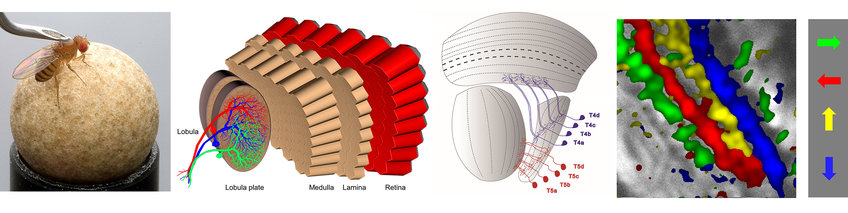
Prof. Dr. Alexander Borst is Director of the Department "Circuits - Information - Models" at the Max Planck Institute for Biological Intelligence in Martinsried, Germany. His research focuses on understanding neural computation in the visual system of Drosophila, particularly how direction-selective motion detection circuits process visual information to guide behavior. Education: Diploma in Biology, University of Würzburg (1981) Doctoral thesis with Martin Heisenberg, University of Würzburg (1984) Habilitation and private lecturer, University of Tübingen (1989) Prof. Borst's research employs a multidisciplinary approach to investigate neural information processing at the level of individual neurons and small circuits. His department uses the fruit fly Drosophila as a model system due to its computationally tractable visual system, with circuits containing fewer than 100 neurons that can be genetically manipulated and observed. The research integrates anatomical reconstructions, physiological characterization, behavioral analysis, and computational modeling to build a comprehensive understanding of visual processing. Analysis of Prof. Borst's recent publications reveals a consistent focus on motion vision mechanisms in Drosophila, with particular emphasis on directional selectivity, neural circuit organization, and the molecular basis of visual processing. His work demonstrates how specific subpopulations of T4 and T5 cells are directionally tuned to cardinal directions and how ON and OFF pathways segregate motion processing. The publications highlight the integration of experimental techniques like 2-photon calcium imaging with computational modeling to understand circuit function. Scientific Awards: Valentino Braitenberg Award in Computational Neurobiology (2014) FENS Award (2014) Member of the HHMI Scientific Advisory Board (2018) Member of the Bavarian Academy of Sciences (2012) EMBO Member (2011) Member of the German Academy of Sciences Leopoldina (2011) Human Frontier Science Program (HFSP) Prize (2006) Prof. Borst has led his department since 2001, first at the Max Planck Institute of Neurobiology and now at the Max Planck Institute for Biological Intelligence. His research has been supported by numerous grants from German and international funding agencies. He has mentored many students and postdoctoral researchers who have established successful careers in neuroscience. His department includes multiple research groups focusing on different aspects of neural computation in the Drosophila visual system. His laboratory comprises several specialized teams working on neurogenetics, molecular characterization, electrophysiology, 2-photon functional imaging, tethered and free behavior analysis, and computational modeling. These teams collaborate closely to investigate how visual information is processed from photoreceptors to behavioral output, with particular focus on motion detection circuits and their developmental and molecular underpinnings.
Lars Pforte is a Lecturer in the Faculty of Science & Engineering at Maynooth University, affiliated with the Mathematics and Statistics department. He holds a PhD in Mathematics and a Masters Degree in Geocomputation. PhD in Mathematics Masters in Geocomputation His research spans both pure mathematics and applied geospatial analysis. Key areas include: Representation theory of finite groups Urban airspace traffic management (UTM) Road safety analysis Data imputation in space-time series While his recent publications focus on algebraic structures like symplectic modules for the Klein-four group and permutation module vertices, he also applies Bayesian statistical methods to urban analytics and transportation safety. No scientific awards are explicitly mentioned in the available information.
Nadya Malenko is Professor of Finance and Wargo Family Faculty Fellow at Boston College Carroll School of Management. She serves as President of Finance Theory Group, Research Associate at NBER, Research Fellow at CEPR, and Research Member of ECGI. Her research focuses on corporate finance, corporate governance, private equity, and organizational economics, with significant contributions to understanding board dynamics, shareholder voting, and proxy advisory firms. Ph.D. in Finance, Stanford University MA in Economics (summa cum laude), New Economic School MSc in Applied Mathematics (with honors), Lomonosov Moscow State University Her research explores: Corporate board communication and decision-making Shareholder democracy and voting mechanisms Proxy advisory firm economics Private equity governance Organizational structure implications Indexing's governance effects Recent publications examine board dynamics over startup life cycles, proxy voting controversies, and shareholder democracy. Her work has received multiple Brattle Group prizes, WFA and CICF Best Paper Awards, and ECGI Finance Prizes. Associate Editor: Journal of Finance, Journal of Financial Economics, Review of Financial Studies Leadership roles: American Finance Association, European Finance Association, Midwest Finance Association Featured in Wall Street Journal, Bloomberg, Financial Times, and Forbes As Editor of ECGI Working Paper Finance Series and active conference participant, she shapes academic discourse through committee roles at major finance conferences and mentoring doctoral students.
André Mata is an Associate Professor at the Faculty of Psychology, University of Lisbon, where he coordinates the Masters in Cognitive and Social Psychology. His academic work focuses on social cognition, judgment and decision-making, metacognition, and moral psychology. Research Interests: Social Cognition, Judgment & Decision-Making, Metacognition, Reasoning, Moral Judgment Projects: Fighting pluralistic ignorance to defeat prejudice (PTDC/PSI-GER/7592/2020), Psychology of the living and the dead (BIAL 2020) His recent publications explore motivated reasoning, bias blind spots, prediction-comprehension discrepancies, and metacognitive biases in science perception. Articles often examine self-other differences, social amplification of cognitive distortions, and moral judgment mechanisms. He teaches modules such as Judgment and Decision under Uncertainty , Motivated Thinking , and Societal Challenges: Psychological Themes . His work is affiliated with CICPSI and ProAdapt research groups at the University of Lisbon.
Howard Nusbaum is a Professor in the Psychology Department within the Social Sciences Division at the University of Chicago. His research has focused since 1986 on perceptual learning, attention, and working memory, with significant contributions to understanding speech perception, auditory processing, and more recently, the science of wisdom. His laboratory employs a wide range of methods including high-density EEG, fMRI analysis, auditory brainstem recordings, and sophisticated speech analysis tools. Education: BA in Computer Science and Psychology from Brandeis University (1976) PhD in Cognitive Psychology from State University of New York at Buffalo (1981) Postdoctoral training in Speech, Hearing, and Sensory Communication from Indiana University (1984) Nusbaum's research investigates how humans learn and process speech and other auditory information, with particular emphasis on the role of attention, working memory, and sleep in perceptual learning. His laboratory has made groundbreaking contributions, including the first scientific evidence for sleep consolidation of generalized learning, the first behavioral evidence for functional effects of sleep consolidation in songbirds, and the discovery that adults can learn perfect pitch with this learning dependent on working memory capacity. His recent work has expanded to explore the cognitive neuroscience of wisdom, investigating how self-transcendent experiences contribute to wise reasoning. Nusbaum's publication record demonstrates consistent high-impact research across cognitive neuroscience, with recent work spanning from basic mechanisms of speech perception to broader questions about wisdom and decision-making. His research shows an evolving trajectory from foundational work on perceptual learning and speech processing toward more complex questions about higher cognitive functions and their neural underpinnings, with publications extending into 2025. Scientific Awards: 2018 Stella M. Rowley Professor of Psychology 2014 Fellow, The Psychonomic Society 2012 Llewellyn John and Harriet Manchester Quantrell Award for Excellence in Undergraduate Teaching 2009 Fellow, Association for Psychological Science 2007 Future Faculty Mentorship Award Nusbaum has successfully mentored numerous graduate students and postdoctoral trainees who have gone on to become tenured faculty at prestigious institutions worldwide. His NIH-funded research on 'Structure and Process in Speech Perception' has supported his work for many years. His laboratory provides comprehensive training in behavioral research methods, signal processing, statistical analysis, human electrophysiology, and computational modeling. The APEX (Attention, Perception, and Executive-function eXperience) lab at the University of Chicago, which Nusbaum directs, is equipped for high-density EEG measurements, fMRI data analysis, auditory brainstem recordings, and a wide range of speech analysis tools. The lab conducts research with human participants, including nap studies with polysomnography. Nusbaum also contributes to the UChicago Center for Practical Wisdom, reflecting his expanding research interests into the cognitive neuroscience of wisdom.
Associate Professor Zhidong Li is a prominent researcher at the Data Science Institute within the Faculty of Engineering and Information Technology at University of Technology Sydney (UTS), Australia. With over a decade of experience in data science and machine learning, he leads impactful research bridging theoretical advancements with practical applications across multiple critical infrastructure domains. Dr. Li earned his PhD from the University of New South Wales, Sydney, Australia, and previously served as a senior engineer at Data61, CSIRO (Commonwealth Scientific and Industrial Research Organisation), Australia's federal government agency for scientific research. His research spans machine learning, data mining, pattern recognition, image processing, and human-computer interaction with applications in water, gas, traffic, urbanization, visitor economy, agriculture, environment, finance, property market, railway, law, electric and health sectors. His work particularly focuses on developing interpretable AI models, temporal point processes, and practical applications for smart infrastructure management. His extensive publication record reveals strong thematic consistency in applying advanced machine learning techniques to infrastructure management problems, with particular emphasis on water systems. His research demonstrates progression from fundamental algorithm development toward increasingly sophisticated applications with real-world impact, especially in temporal modeling, graph neural networks, and fairness in AI systems. Scientific Awards 2022 R&D Excellence Award NSW Water Award 2021 UTS Medal for Research Impact for the Vice-Chancellor's Awards for Research Excellence 2018 Australian Museum Eureka Prize for Excellence in Data Science 2019 Victorian iAwards - Industrial & Primary Industries Merit for 'Predictive Analytics for Water Pipe Maintenance' Multiple AWA research innovation awards (NSW, National, QLD) Dr. Li actively supervises Masters and PhD students and leads numerous funded research projects across diverse sectors. His collaborative approach is evident through partnerships with water utilities, transport agencies, and various CRC projects focusing on Food Agility, Digital Finance, and Smartcrete. His work on the world's first independently-audited ethical talent AI in partnership with Reejig demonstrates his commitment to translating research into real-world solutions that address societal challenges while maintaining ethical standards.
Professor Majella Kilkey is a Professor of Social Policy and Director of Research at the University of Sheffield's School of Sociological Studies, Politics and International Relations. She holds additional roles as Director of the CDT in New Horizons in Borders and Bordering and leads the ESRC-funded Centre for Care. Her research focuses on migration studies, transnational families, care systems, aging, gender, and geopolitical transformations. She has earned a PhD, MA, and BSSc (Hons). Her work emphasizes marginalized groups such as migrant care workers, asylum seekers, and older migrants. Key projects include the ESRC-funded 'Storying Life Courses for Intersectional Inclusion' (2022–2025) and the EU H2020 projects MIMY and MIGREC. She also leads research on borders and care within the Centre for Care. Her publications span transnational care dynamics, migration policies, and Brexit's societal impacts. Funded grants total over £10 million, including leadership in projects addressing migrant youth integration, Serbia’s migration challenges, and care systems’ bordering processes. She co-founded the University of Sheffield’s Migration Research Group and supervises PhDs on topics like transnational care networks and asylum seeker transitions.
Leong Shu Min is a Lecturer in the School of Information Technology at Monash University Malaysia. She holds a Ph.D. in IT from Monash University Malaysia (2023), focusing on privacy-preserving and emotional understanding of human faces using machine learning. She earned her Master of Engineering Science (2020) and B.Eng. (Hons) in Electronics with Computer specialization (2018) from Multimedia University. Her research emphasizes face analysis, emotion recognition, and security-related image processing. Education Ph.D., IT, Monash University Malaysia (2019–2023) M.Eng.Sc., Multimedia University (2018–2020) B.Eng., Multimedia University (2014–2018) Research Interests Her work centers on facial recognition systems, emotion analysis, and privacy-preserving techniques. She explores Local Binary Pattern algorithms and micro-expression recognition, aiming to enhance security and ethical AI applications. Recent projects include detecting synthetic music and uncovering biases in video-based emotion recognition systems. Projects Chief Investigator in the Æinstein: Adversarial AI amongst Materials Discovery Domains project (2024–2026), focusing on AI-driven material discovery and ethical AI challenges. Advising She has been accepting PhD students since 2020, mentoring research in facial analysis and machine learning applications.