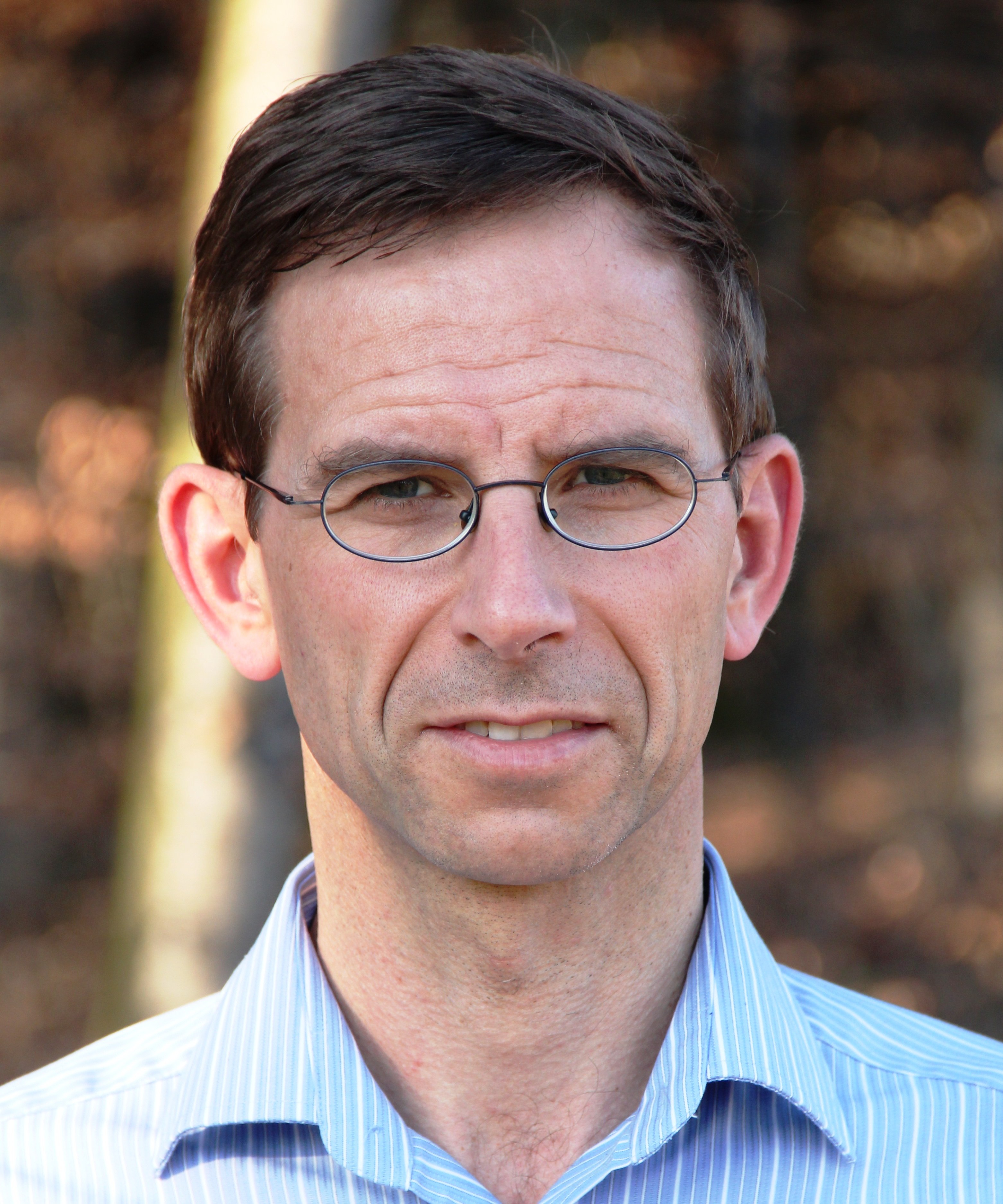
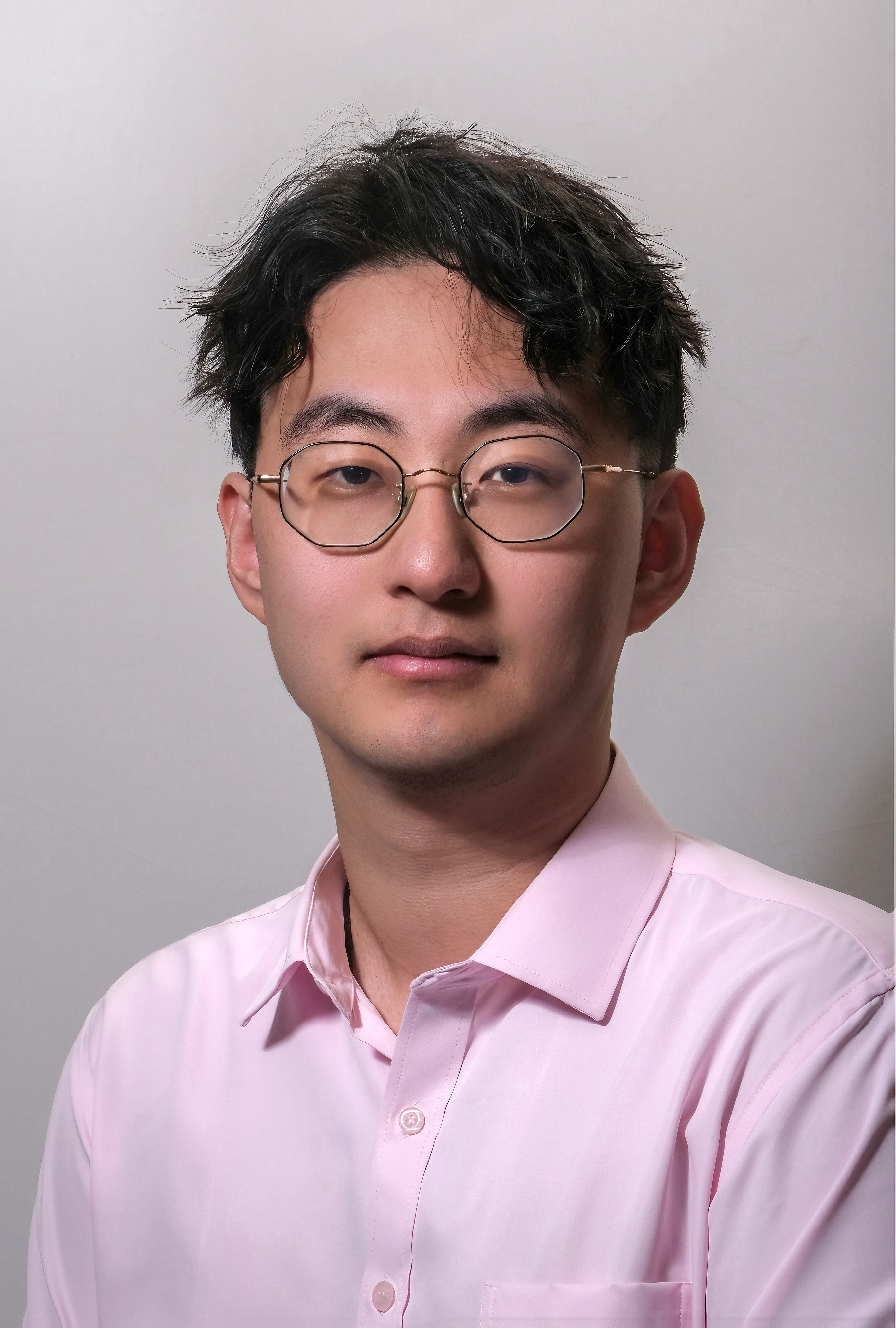
Tove Helldin is a Senior Lecturer at the School of Informatics, University of Skövde, Sweden. Her research focuses on anomaly detection , topic modeling , and human-computer interaction , particularly in telecommunications networks and decision support systems . She has led projects in AI for climate adaptation and future sepsis diagnostics , emphasizing team effectiveness and trust calibration in automated systems. PhD in Computer Science (2014), University of Skövde Licentiate in Computer Science (2012) MSc in Computer Science (2009) Her scientific work spans interactive machine learning , visualization of causal relationships , and transparency in military threat evaluation . She has contributed to automotive UI design and fighter aircraft automation , with publications in venues like ACM Computing Surveys and IEEE conferences. Notably, her work explores topic modeling applications in network monitoring and interpretable AI frameworks.
Mohamed Faouzi Atig is a Professor in Computer Systems at the Department of Information Technology, Uppsala University. His career spans roles as Senior Lecturer (2018-2021), Associate Senior Lecturer (2014-2018), and Researcher (2012-2018) at the same institution. He obtained his Doctoral Degree in Computer Science from the University of Paris Diderot-Paris 7 (2010) and a Master in Engineering from Tunisia Polytechnic School (2005). Current Role: Professor in Computer Systems Institution: Uppsala University Research Focus: Model checking, verification of infinite-state systems, weak memory models, automata theory, string constraints, concurrent program analysis His research explores formal methods for concurrent programs, weak memory models (TSO/PSO/POWER), automata theory for verification, and SMT solvers for string constraints. Recent work integrates graph neural networks with word equation solving and advances stateless model checking techniques. Key article trends include Weak Memory Model Verification (TSO, PSO, POWER) Stateless Model Checking Algorithms String Constraint Solvers (TRAU, Norn) Timed Automata and Multi-Pushdown Systems Mohamed Faouzi Atig has led collaborations on fence insertion procedures, timed pushdown automata, and database-driven system verification. His contributions are recognized through publications in top-tier conferences and journals.
Da Xu is an Assistant Professor of Management Information Systems at the School of Business Administration, University of Mississippi. He previously served as an Assistant Professor at California State University, Long Beach. His academic journey includes a Ph.D. in Business Administration from the University of Utah (2020), an M.S. in Management Science from University of Science and Technology of China (2014), and a B.S. in Management Information Systems from Zhejiang University of Finance & Economics (2011). Ph.D. Business Administration - University of Utah (2020) M.S. Management Science - University of Science and Technology of China (2014) B.S. Management Information Systems - Zhejiang University of Finance & Economics (2011) His research focuses on predictive analytics and deep learning applications in health informatics , with particular emphasis on online digital platforms and data mining for business intelligence . His work addresses critical challenges in patient management, disease progression prediction, and data quality improvement across healthcare and business domains. Recent publications demonstrate expertise in chronic disease modeling , including hepatitis B deterioration paths , hip fracture outcomes , and cardiovascular patient records . He employs advanced techniques like attention-based deep learning , graph neural networks , and hierarchical multilabel classification to solve complex healthcare analytics problems. He actively contributes to academic discourse through presentations at premier conferences including Conference on Information Systems and Technology (CIST) , Workshop on Information Technologies and Systems (WITS) , and INFORMS Workshop on Data Science . His research appears in top journals such as Journal of Management Information Systems and IEEE Journal of Biomedical and Health Informatics .
Professor Klaus Berberich is a faculty member at htw saar (Saarland University of Applied Sciences), where he serves as Professor in the Databases & Information Systems department within the Faculty of Engineering. He is the Laboratory manager of the software laboratory (SWL) and Chairman of the examination boards for Practical Computer Science, Communication Informatics and Production Informatics. His research focuses on Information Retrieval, Machine Learning, Data Mining, and Web Archives, with significant contributions to knowledge graphs, temporal information retrieval, and neural information retrieval models. Professor Berberich has developed innovative approaches for quantity extraction from web tables, structuring text into tables, and knowledge graph querying. His publication record shows a consistent trend toward increasingly sophisticated neural approaches to information retrieval, evolving from traditional temporal search techniques to modern deep learning models. Recent work demonstrates strong integration of knowledge graphs with neural information retrieval systems, particularly in handling quantities and temporal aspects of information. Professor Berberich has received numerous prestigious awards throughout his career: 2020: Test of Time Award, ECIR 2020 2018: Honorable Mention for Best Poster Award, WWW 2018 2017: Prominent Paper Award, Artificial Intelligence Journal 2014: Highly Commended Poster Presentation Award, IIiX 2014 2013: Honorable Mention for Best Paper Award, CIKM 2013 2011: Best Demo Award, WWW 2011 2009: Best Late-Breaking Result Award, WSDM 2009 As an active researcher and educator, Professor Berberich serves on numerous program committees for major conferences including WSDM, CIKM, SIGIR, and ICTIR. He has been a consistent reviewer for prestigious journals in the field and is a member of the executive committee of the Information Retrieval specialist group of the German Informatics Society. His teaching portfolio includes courses in Databases, Information Retrieval, Data Science, Machine Learning, and Deep Learning. Professor Berberich leads the software laboratory (SWL) at htw saar and has been instrumental in developing research infrastructure for knowledge-centric tasks, including the GYANI indexing infrastructure. His research group has made significant contributions to temporal information retrieval, particularly in the context of web archives and news archives.
Dr. Steffen Frey is an Assistant Professor in the Scientific Visualization and Computer Graphics group within the Bernoulli Institute at the University of Groningen's Faculty of Science and Engineering. He also maintains an affiliation with the Faculty of Medical Sciences/UMCG in the Robotics and image-guided minimally-invasive surgery (ROBOTICS) research group. His work bridges computer science with practical applications in medical and geoscientific domains. His research interests focus on scientific visualization, computer graphics, and interactive visualization techniques. Dr. Frey specializes in developing novel methods for flow estimation, temporal interpolation, parameter sensitivity analysis, and visualization of complex scientific data, particularly in porous media and fluid dynamics. His work often involves creating scalable solutions for big data visualization problems and applying visualization techniques to medical applications such as bone cement simulation. Analysis of his recent publications reveals a strong focus on machine learning approaches to scientific visualization, particularly in temporal interpolation and ensemble data analysis. His work combines traditional computer graphics techniques with modern deep learning methods to solve challenging visualization problems in scientific domains. The research demonstrates increasing sophistication in handling complex multi-dimensional datasets while maintaining interactive performance. 2019 IEEE Scientific Visualization Contest Winner Dr. Frey actively collaborates with researchers internationally, as evidenced by his co-authorship with scientists from various institutions worldwide. His work contributes to multiple Sustainable Development Goals, particularly those related to clean water and sanitation through his porous media flow research. He has supervised multiple students through research projects and thesis work, though specific names are not listed in the provided materials.
Teague Henry is an Assistant Professor at the University of Virginia with joint appointments in the Department of Psychology (Quantitative Psychology program) and the School of Data Science . His work bridges network science, dynamical systems modeling, and Bayesian estimation to analyze complex data in neuroscience, clinical science, and natural language processing. Methodological expertise: Graph theory, exponential random graph models, functional neuroimaging Substantive applications: Autism, ADHD, semantic networks, social media topic analysis His research spans functional connectivity, network psychometrics, and language networks, with a focus on cross-disciplinary similarities in network data. Recent publications emphasize time-series modeling, imputation methods, and neurodevelopmental disorders. Software development: R packages like gimme and netjack Future student advising: Plans to recruit graduate students starting 2022-2023
Haitao He is a Reader in Transport and AI at Loughborough University, UK, and leads the Transport AI Innovation Centre (TRAICE). He holds a BSc (First-Class Honours), MPhil, and PhD, and is a Fellow of the Higher Education Academy (FHEA). His research focuses on AI-driven solutions for smart cities and sustainable urban mobility, including traffic simulation, machine learning, and digital twinning. He develops methodologies in traffic flow theory, agent-based modeling, and deep learning to address challenges in automation, electrification, and shared mobility. Research Interests: AI in transportation, micro-mobility, sustainability, and data-driven urban planning. Projects: UKRI Future Leaders Fellowship on net-zero urban transport, TraffEase (Manchester Prize), and BusMONITOR (KTP with Vectare). His expertise spans predictive traffic analytics, micro-mobility patterns, and infrastructure optimization. He has been awarded the UKRI Future Leaders Fellowship and has contributed to projects like SignBus (Swiss National Science Foundation) and WEAVE (highway weaving section design). Key Achievements: Developed TRAICE to advance transport AI, published over 30 articles on topics like traffic flow modeling and pandemic mobility impacts. Haitao advises on PhD and postdoctoral research, focusing on AI and transport intersections. His work integrates academic and industry collaborations, driving innovation in smart mobility and policy-making.
Tao Hu is an Assistant Professor in the Department of Geography at Oklahoma State University (OSU), serving since 2021. He holds a PhD (2015) and BS (2009) in Geography from Wuhan University, China. Prior to OSU, he worked as a Postdoctoral Research Fellow at Harvard University's Center for Geographic Analysis (2019–2021) and Kent State University (2016–2019). Research Focus: Leverages geospatial big data (remote sensing, social media, smartphone mobility) and GeoAI models to address health disparities, environmental health, and urban sustainability challenges. Key Contributions: Over 60 peer-reviewed articles, including 5 ESI Highly Cited Papers (top 1%). Research supported by NSF, USDA, and ESIP. His work spans FAIR workflow systems, disaster public perception analysis (e.g., Ohio train derailment), heat vulnerability modeling, and healthcare accessibility via mobility data. He emphasizes reproducible GIScience and societal impact through actionable insights. Teaching includes courses on GIS in public health, health geography, and programming for geospatial applications. His lab integrates geospatial AI with health equity, environmental justice, and smart city initiatives.
Dr. Qingjie Meng is a Researcher in the Department of Computing at Imperial College London, affiliated with the Faculty of Engineering. Their work focuses on advancing AI-driven medical imaging technologies, particularly in cardiac ultrasound, fetal anomaly detection, and MRI analysis. Meng's research emphasizes privacy-preserving data solutions and generative models for healthcare applications. Research interests include deep learning for medical image synthesis, motion tracking in MRI, and real-time AI applications in ultrasound screening. Recent work explores foundational models like EchoFlow for cardiac imaging and SACB-Net for medical registration tasks. Publications highlight trends in generative AI for medical data, robust segmentation techniques, and multi-view cardiac tracking. Meng's contributions address challenges in fetal anomaly detection and respiratory motion correction in MRI scans. No awards or advising roles are explicitly listed in the provided text. Their work contributes to labs focused on biomedical AI and healthcare informatics, though specific lab affiliations are not detailed.
Michael Gruninger is a Professor in the Department of Mechanical and Industrial Engineering at the University of Toronto, serving as Associate Chair of Undergraduate Studies. He holds a PhD and MSc in Computer Science from the University of Toronto and a BSc in Computer Science from the University of Alberta. His research focuses on semantic integration, process modeling, and mathematical logic applications in manufacturing and enterprise engineering. He contributed to the ISO 18629 standard for Process Specification Language. Research interests include ontologies, semantic web technologies, knowledge representation, and formal methods. He leads the Semantic Technologies Laboratory, advancing theories in mereotopology, spatiotemporal ontologies, and ontology engineering. Recent work emphasizes automated spatial reasoning in robotics and standards-based ontology development. Publications span ontology validation, mereological foundations, and applied semantic technologies. His work bridges theoretical computer science with practical enterprise systems and smart city applications. No awards are explicitly listed, though his contributions to ISO standards reflect industry impact. Advising and grants: No specific students/grants detailed here. His lab focuses on semantic technologies with applications in manufacturing and urban systems. Collaborations include NIST and the Industrial Ontologies Foundry.
Narada Dilp Warakagoda is an Associate Professor at the University of Oslo, affiliated with the Section for Autonomous Systems and Sensor Technologies. His research focuses on Artificial Intelligence, Autonomous Systems, Computer Vision, Robotics, Machine Learning, and Deep Learning, with notable contributions to underwater acoustics, renewable energy forecasting, and unmanned vehicle control systems. He collaborates extensively with researchers across disciplines to advance applications in environmental monitoring, energy systems, and autonomous technologies. His work integrates advanced machine learning techniques with domain-specific challenges, such as synthetic aperture sonar analysis, spatio-temporal wind forecasting, and reinforcement learning for autonomous navigation. He has published in leading journals and conferences, addressing topics like probabilistic solar irradiance prediction, graph-based wind energy modeling, and deep learning for seabed munitions detection. Warakagoda’s research bridges theoretical advancements with practical implementations, emphasizing applications in robotics, environmental science, and defense technologies. His projects often involve interdisciplinary teams, reflecting his commitment to solving real-world problems through innovative AI-driven solutions.
Prof. Torsten Braun is a Professor and Head of the Communication and Distributed Systems (CDS) research group at the Institute of Computer Science, University of Bern. His research focuses on advanced networking technologies, edge computing, and machine learning applications in telecommunications. He leads projects addressing challenges in 5G/6G networks, federated learning optimization, and intelligent systems for smart cities. His work integrates theoretical frameworks with practical implementations, emphasizing distributed systems, service-oriented architectures, and IoT security. Key research areas include edge caching strategies for VR/AR applications, trajectory prediction using reinforcement learning, and resilient network design against jamming attacks. Braun has contributed to innovations in vehicular networks (V2X), RAN intelligence, and decentralized machine learning frameworks. He holds leadership roles in developing adaptive resource management systems for edge-cloud environments and has pioneered solutions for energy-efficient federated learning in heterogeneous IoT ecosystems. Publications span topics like spatial-temporal point cloud sensing, mobility-aware service orchestration, and secure positioning systems. His team explores cross-disciplinary applications such as LoRaWAN-based urban heat monitoring and blockchain-inspired public key infrastructures for IoT (Veritaa-IoT). Braun actively engages in standardization and industry collaborations to advance next-generation network architectures.
Roles & Affiliations: Dr. Mengchu Li is an Assistant Professor in the School of Mathematics at the University of Birmingham. Previously, he served as a Postdoctoral Research Fellow in the Department of Statistics at the University of Warwick (Feb 2023–Sept 2024), and completed his PhD in Statistics at Warwick under Prof. Yi Yu. Education: PhD in Statistics, University of Warwick (2023) MASt in Mathematical Statistics, University of Cambridge (2019) BSc in Mathematics and Economics, Durham University (2018) Research Interests: Focuses on statistical theory and methodology for heterogeneous data analysis, particularly in high-dimensional settings and under privacy constraints. Key areas include change point analysis, robust statistics, differential privacy, and transfer learning. His work emphasizes minimax optimality and explores fundamental trade-offs between data contamination, privacy, and statistical performance. Research Trends in Articles: Recent work spans federated learning with privacy guarantees, robust change point testing in high-dimensional settings, and privacy-preserving network analysis. His papers often bridge statistical theory with applications in machine learning and distributed systems. Awards & Honors: Harrison Award (2023) for highly commended PhD thesis NeurIPS 2022 Scholar Award Teaching & Service: Taught graduate courses on statistical inference and computation at Birmingham. Previously led tutorials in mathematical statistics and linear modeling at Warwick. Active reviewer for Annals of Statistics , Biometrika , NeurIPS , and other top venues. Contributed to the R package changepoints for change-point detection methods. Labs & Collaborations: Engaged in interdisciplinary research through workshops on heterogeneous data (2024) and change point analysis (2023). Collaborates with institutions like the Alan Turing Institute and Warwick’s Statistics department.
Johan Hulleman is a Senior Lecturer at the University of Manchester's Division of Psychology Communication and Human Neuroscience. His research focuses on Visual Search, Visual Attention, and Methodology. He holds a PhD in Experimental Psychology from the University of Nijmegen (The Netherlands) and a BSc in Medical Biology from the University of Utrecht. Education: PhD in Experimental Psychology, University of Nijmegen BSc in Medical Biology, University of Utrecht Research interests include exploring how visual attention operates in complex tasks, error mechanisms in search processes, and the application of transcranial electrical stimulation (tES) to enhance cognitive performance. His work contributes to the UN Sustainable Development Goals by advancing understanding of neurological conditions like neurofibromatosis type 1 through electrophysiological studies. Recent articles highlight stochastic error analysis in visual search, cross-cultural reading direction effects, and meta-analyses of tES applications. Collaborations include projects with the University of Liverpool and Vrije Universiteit Amsterdam. He co-led the 'Application of Novel Techniques to Enhance Cognitive Performance' project (2020–2023), focusing on transcranial electrical stimulation. Teaching includes courses on psychological statistics and conceptual issues in psychology.
Dr. Stamos Katsigiannis is an Associate Professor in the Department of Computer Science at Durham University. His research focuses on bioinformatics, health informatics, affective computing, machine learning, and GPU computing applications. He holds a PhD in Computer Science from the National and Kapodistrian University of Athens (Greece), with prior roles including Postdoctoral Research Fellow and Lecturer at the University of the West of Scotland (2016-2020). Education: BSc (Hons) Informatics and Telecommunications, National and Kapodistrian University of Athens (Greece) MSc Computer Science, Athens University of Economics and Business (Greece) PhD Computer Science, National and Kapodistrian University of Athens (Greece) Research Interests: Bioinformatics, health informatics, affective computing (e.g., emotion recognition using EEG/ECG signals), machine learning applications in medical imaging and video quality, GPU-accelerated algorithms for biomedical data analysis, and biometric identification systems. His work bridges computational methods with healthcare, education technologies, and human-computer interaction. Advising & Students: Supervising postgraduate students in AI-driven healthcare, computer vision, and affective computing. Recent collaborations include projects on AI-generated content detection (De-Factify 4.0), chest X-ray image analysis (CLN network), and trajectory prediction using graph neural networks. Labs/Teams: Active in Durham's AI research groups, contributing to interdisciplinary projects in medical imaging, cybersecurity, and educational technology. Collaborates internationally in EU-funded initiatives and UK parliamentary AI governance consultations (AGENCY project).



/naradadw/narada.png)