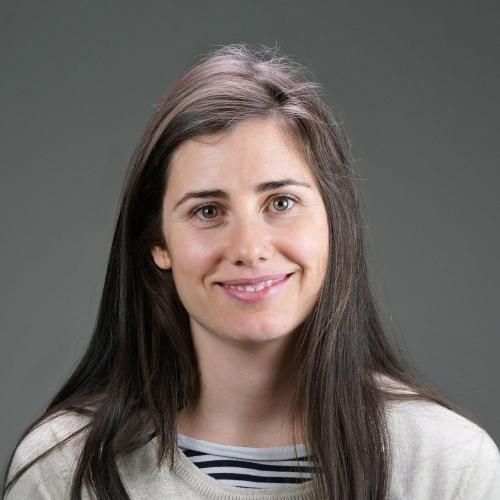
Claudia Poch Pérez Botija is a researcher affiliated with the School of Language and Education at Universidad Nebrija. Her work focuses on Psychobiology , particularly in cognitive neuroscience and neurophysiological mechanisms of memory and attention. Doctorate: Universidad Autónoma de Madrid (2015) Thesis: Neural oscillatory activity associated with attention orientation in working memory Supervisors: Dr. Pablo Campo Martínez-Lage, Dr. Luis Carretié Arangüena Key research areas include working memory dynamics , emotional processing , neural oscillations (alpha/gamma), and language cognition . Her studies often employ EEG/ERP techniques to explore memory-perception interactions and bilingual cognitive control. Recent publications reveal trends in: Pattern separation mechanisms during memory encoding Cross-modal integration in illusory perception Emotional primacy effects in memory recognition Lesion studies of temporopolar regions in epilepsy patients Neurogenetic influences on fear conditioning (D2 receptor variants) Alpha/gamma oscillation modulation in attentional processes She contributes to understanding mnemonic discrimination , semantic memory impairment in neurological conditions, and neural correlates of bilingualism . Her work bridges basic cognitive mechanisms with clinical applications in temporal lobe epilepsy. Active in the CINC Nebrija Research Center on Cognition and CEDI Research Group , she investigates interrelations between cognition, education, and individual differences.
Prof. Dr. Sc. Ivana Herceg Bulić is a Full Professor at the Department of Geophysics, Faculty of Science, University of Zagreb. She is based in office 318 and can be reached at +385 1 460 5932 or ihercegb@gfz.hr. Her academic career is centered on meteorology and climatology with a particular focus on urban climate systems and their interaction with broader climate patterns. Her research interests span several key areas in atmospheric science: Urban climatology and urban heat island effects Climate change impacts on urban environments ENSO teleconnections and North Atlantic climate variability Climate modeling and predictability Forest fire risk assessment in relation to climate conditions Bioclimatic conditions in urban settings Prof. Herceg Bulić's publication record demonstrates a strong focus on urban climate challenges in Croatia and the broader Mediterranean region. Her recent work examines heat load in cities like Zagreb and Dubrovnik using multi-scale approaches that combine mobile measurements, satellite imagery, and climate modeling. She has increasingly focused on climate change impacts, future projections, and adaptation strategies for urban environments, particularly examining how local climate zones influence thermal conditions. Her research also maintains a strong connection to broader climate dynamics, particularly examining how tropical sea surface temperatures influence European climate patterns through atmospheric teleconnections. Prof. Herceg Bulić actively contributes to several significant research projects related to climate science in Croatia, including those examining urban climate adaptation and climate change impacts. Her work bridges fundamental climate science with practical applications for urban planning and climate resilience. She teaches across multiple academic levels: Undergraduate: Dynamic Meteorology II, Introduction to Geophysical Fluid Dynamics Graduate: Selected Chapters in Meteorology, Selected Topics in Climatology, Seminar in Climatology Doctoral: Atmospheric Predictability and Climate System Modelling, Seminar in Geophysics
Odile Sauzet is an Adjunct Professor at Universität Bielefeld , affiliated with the Faculty of Health Sciences and the Working Group 3 Epidemiology & International Public Health . She also holds positions in the Faculty of Economics (Chair of Statistics and Data Analysis) and the Faculty of Business Administration and Economics (Department of Empirical Methods).
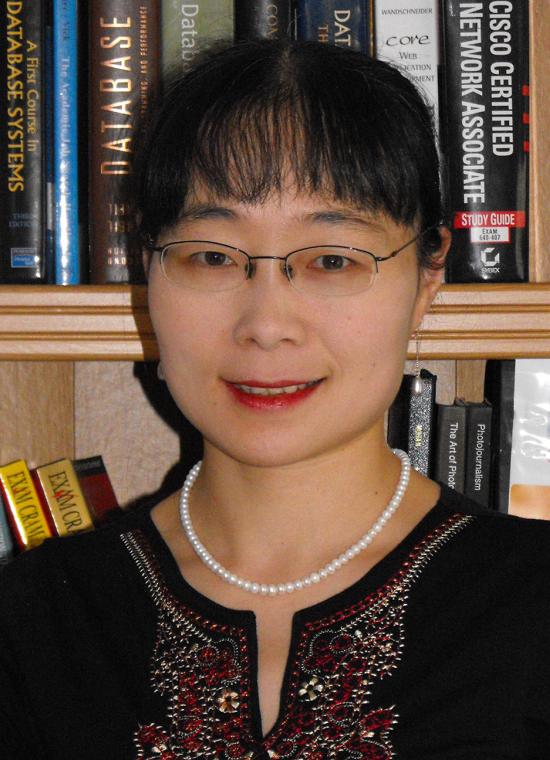
Yuqing Melanie Wu is a Professor of Computer Science at Pomona College and is on leave for the 2025–2026 academic year. Her research spans database theory, query languages, and graph data management, with a focus on semi-structured and temporal data. Ph.D., University of Michigan, Ann Arbor MS, Indiana University, Bloomington MS/BA, Peking University, Beijing, China Her work explores query optimization for tree and graph structures, data representation, security in data repositories, and social media analytics. She has contributed to relation algebra formalisms, temporal clique enumeration, and semantic web applications in healthcare. Recent research trends include relation algebra on trees , graph query optimization , temporal data processing , and cross-platform social media analysis . American Council of Education Fellowship (2021–22) Pomona College Wig Distinguished Professorship (2021) Best Paper Award at 26th British National Conference on Databases (2009) Multiple teaching awards including Trustee’s Teaching Award and WIC Inspirational Teacher Award She has secured grants from the NSF ( $297,592 ), NIH ( $731,750 ), and Indiana University ( FRSP ), focusing on query processing, semantic web health technologies, and XML security.
Hao Xing is a scientific researcher and post-doctoral fellow at the Institute for Cognitive Systems (ICS), Technical University of Munich (TUM), working with Prof. Gordon Cheng since May 2024. Previously, he served as a research assistant at the Munich Institute of Robotics and Machine Intelligence (MIRMI) and completed his PhD under Prof. Darius Burschka from 2019. His educational background includes: Master of Science in Mechanical Engineering from Technical University of Munich Bachelor of Engineering in Mechanical Engineering from Hefei University of Technology, China Xing's research focuses on Robot Vision , Human Action Recognition , and Graph Convolutional Networks , with significant contributions to Human-Object Interaction Recognition , Scene Understanding , and Visual Depth Estimation . His work leverages machine learning to develop robust algorithms for human activity analysis and robotic perception, emphasizing spatio-temporal modeling and uncertainty handling in real-world scenarios. Analysis of his 13 recent publications (2019-2025) reveals a dominant focus on graph-based approaches for action recognition and segmentation, with increasing emphasis on open-world applications, uncertainty modeling, and healthcare integration. His research spans computer vision, robotics, and medical applications, demonstrating strong interdisciplinary impact through collaborations in surgical robotics and patient monitoring systems. Xing actively mentors students through master's thesis projects in Stereo Matching, Human Activity Segmentation, and Monocular Depth Estimation, requiring expertise in deep learning frameworks and computer vision algorithms. While no major grants are explicitly mentioned, his thesis topics indicate active research funding in geometric vision and human activity analysis. He operates within the Institute for Cognitive Systems (ICS) at TUM, a key unit in MIRMI's robotics ecosystem focused on advancing human-robot interaction through vision-based scene understanding and motion generation capabilities.
Nikolaj Tatti is a Visiting Professor at Aalto University's Department of Computer Science , affiliated with the Helsinki Institute for Information Technology (HIIT) and the Adj. Prof. Gionis Aris research group . His work focuses on algorithmic analysis of temporal networks and graph theory. Research Interests: Temporal network analysis Graph decomposition and density Segmentation algorithms Pattern discovery in time-series data Interactive data analysis frameworks Publication Trends (2018-2021): Research spans Temporal Networks (dynamic hierarchies, cascade reconstruction), Graph Theory (density, decomposition), and Data Mining (periodic patterns, event detection). Collaborative work with Aris Gionis and Polina Rozenshtein dominates his publications. Technical Collaborations : Works with multidisciplinary teams including researchers from ACM Transactions on Knowledge Discovery and IEEE conferences.
Kaiguang Zhao is an Associate Professor of Environmental Modeling and Spatial Analysis at The Ohio State University's School of Environment and Natural Resources. His research focuses on mapping, monitoring, modeling, and managing terrestrial environments across scales, especially in the context of global environmental changes. He employs a combined toolset including geotechnology, spatial analysis, machine learning, biophysical & climate modeling, ecological modeling, Bayesian statistics, and eddy-covariance to characterize ecosystem status and changes. Ph.D. in Forestry, Texas A&M University, 2008 M.S. in Geography, Beijing Normal University, 2004 B.S. in Physics, Beijing Normal University, 2001 Dr. Zhao's research interests span remote sensing & GIS, spatial modeling, data analytics, environmental modeling, climate change, and machine learning applications to environmental systems. His work particularly emphasizes developing geospatial applications using hyper spectral imaging, high-resolution imagery, hyper-temporal remote sensing, and lidar to characterize ecosystem structure and functioning. His research addresses critical questions about carbon storage in forests, ecosystem disturbance patterns, vegetation community mapping, climate change impacts on vegetation activities, and climate regulation services from forestry and land-use activities. His extensive publication record demonstrates strong trends in applying advanced statistical and machine learning methods to environmental remote sensing data. His work increasingly focuses on integrating multiple data sources and developing novel algorithms for environmental monitoring, with particular emphasis on crop modeling, water quality assessment, carbon cycling, and climate change impacts. The research shows a clear trajectory toward more sophisticated modeling approaches that combine physical principles with data-driven techniques. 2022 Best Paper award for 'Mapping crop types in fragmented arable landscapes using AVIRIS-NG imagery and limited field data' published in the International Journal of Image and Data Fusion Dr. Zhao actively seeks self-motivated graduate students with quantitative and computational backgrounds to apply their skills to environmental issues in natural or human-dominated ecosystems. His research has been supported by numerous grants focused on environmental monitoring, climate change impacts, and sustainable resource management. While specific grant details aren't listed in the provided text, his extensive publication record suggests substantial research funding across multiple environmental domains. His work involves collaboration with various research teams and laboratories focused on remote sensing, environmental modeling, and climate change research. He has developed significant computational tools including the Rbeast package for Bayesian Change-Point Detection and Time Series Decomposition, indicating leadership in developing methodological approaches for environmental data analysis.
Ido Dagan is a Professor at the Department of Computer Science at Bar-Ilan University , Israel, and founder of the Natural Language Processing (NLP) Lab . He is a Fellow of the Association for Computational Linguistics and served as ACL President (2010) and Executive Committee member (2008–2011), leading the establishment of Transactions of the Association for Computational Linguistics . Dagan’s research focuses on applied semantic processing , including textual entailment , natural semantic representation , multi-text information consolidation , and interactive text summarization . His recent work addresses attributable text generation , summary-source alignment , and cross-sentence argument detection , with applications to fact verification and hallucination detection. Key trends in his publications include cross-document coreference resolution , question-answering systems , semantic parsing , and interactive summarization . Notable collaborative projects involve UI trajectory analysis and long-context QA with Arman Cohan and Jacob Goldberger. Scientific Awards Fellow, Association for Computational Linguistics (ACL) President, ACL (2010) Executive Committee, ACL (2008–2011) Advising & Collaborations Dagan has supervised numerous PhD, MSc, and postdoctoral students since 1997, including Shachar Mirkin and Shmuel Amar . He collaborates with researchers like Ori Ernst , Avi Caciularu , and Aviv Slobodkin , with grants from institutions like IBM Haifa Scientific Center and AT&T Bell Laboratories .
Søren Knudsen is an Assistant Professor at the Digital Design Department, IT University of Copenhagen and holds a Marie Curie Fellowship for postdoctoral work at the University of Copenhagen. He serves as Academic Director of the Human Data Interaction Lab. Positions: Assistant Professor, Marie Curie Postdoctoral Scholar Affiliations: IT University of Copenhagen, University of Copenhagen Key Roles: Academic Director, Human Data Interaction Lab His research centers on information visualization and human-computer interaction , particularly in face-to-face and online contexts. He explores how large-area displays and social media can enhance data comprehension and collaborative discussion. Notable work includes surveys on interactive visualization techniques for large displays, frameworks for data visualization education , and EMR-based algorithms for healthcare performance evaluation. His publications span journals like IEEE Transactions on Visualization and Computer Graphics and PLOS ONE . Awards and honors: Marie Curie Fellowship He collaborates across disciplines, with ties to healthcare analytics, educational technology, and computer science departments. His recent studies address challenges in visualization design handoff , proxemics , and ubiquitous data interaction .
Torunn Berg is a Professor in the Department of Chemistry at the Norwegian University of Science and Technology. She specializes in atmospheric chemistry, mercury pollution, and environmental monitoring, with a focus on Arctic and Antarctic regions. Her work involves long-term trend analysis, mercury cycling, and trace metal deposition studies. Research Interests: Berg's research spans atmospheric mercury dynamics, environmental chemistry, and climate interactions. She investigates mercury deposition in polar regions, bioaccumulation in marine ecosystems, and the role of environmental factors in mercury cycling. Her work often employs moss and snowpack analysis for pollution monitoring. Advising: Berg has supervised numerous master’s and doctoral students, including projects on mercury speciation, Arctic environmental chemistry, and trace metal interactions. Her collaborations extend to institutions like Zeppelin Observatory and NILU (Norwegian Institute for Air Research). Publications: She has authored over 20 academic articles in journals like Science of the Total Environment , Atmospheric Chemistry and Physics , and Environmental Science and Technology . Her work includes studies on mercury fluxes, snowpack interactions, and marine bioaccumulation.
Prof. Viktor Beneš is a distinguished academic at the Department of Probability and Mathematical Statistics , Faculty of Mathematics and Physics, Charles University, Prague. His work bridges stochastic geometry and point process theory with applications in neurophysiology , materials science , and public administration . Key research themes include space-time modeling , nonlinear filtering , and statistical inference for complex systems. His recent publications focus on spatio-temporal dynamics in biological and physical systems, unions of interacting discs for spatial modeling, and stochastic microstructure analysis in polycrystalline materials. Collaborative projects span Bayesian geostatistics , survival analysis , and neuronal signal processing . Key contributions to stochastic modeling of neurophysiological experiments Developed nonlinear filtering methods for doubly stochastic processes Led international research on Markov point processes with perfect simulation
Dr. Tom Hart is a Senior Lecturer in Conservation and Ecology at the School of Biological and Medical Sciences, Oxford Brookes University. He specializes in behavioral landscape ecology within environmental change contexts, spanning population studies, conservation genetics, and technology-driven solutions like event cameras and drones. Teaches Animal Biology and Conservation BSc courses Leads MSc modules in Conservation Ecology Develops remote monitoring systems for extreme environments His research focuses on Antarctic and sub-Antarctic marine predators, particularly penguins, using genetic analysis to map population structures and inform policy decisions on protected areas. Collaborations include Adrian Smith (Oxford), Gemma Clucas (Cornell), Heather Lynch (Stony Brook), and organizations like British Antarctic Survey and Natural England. Recent projects funded by National Geographic Society and DEFRA (totaling £452,358) aim to enhance Southern Ocean predator conservation through camera networks and address avian flu risks. His work integrates citizen science via Penguin Watch and AI-driven analysis of remote sensing data. Key publications emphasize spatio-temporal dynamics of penguin colonies, disease ecology , and climate change impacts on Southern Ocean species. Current studies explore mercury contamination, drone monitoring protocols, and adaptive evolution in penguins.
Craig Coburn serves as Full Professor in the Department of Geography and Environment at the University of Lethbridge, where he has advanced from Assistant Professor (2002) to Associate Professor (2009) and Full Professor (2019). With over 20 years of remote sensing expertise, his work centers on fundamental physics of optical remote sensing, particularly surface bidirectional reflectance properties and low-cost instrument development for agricultural and environmental applications. His academic foundation includes: B.Sc. (Honours) in Geography from University of Saskatchewan (1994) M.Sc. in Geography from University of Alberta (1996) Ph.D. in Geography/Remote Sensing from Simon Fraser University (2002) Dr. Coburn's research spans remote sensing physics , instrumentation , and image processing , with pioneering work in bidirectional reflectance distribution function (BRDF) characterization. He has designed world-leading goniometers for surface reflectance measurement and developed affordable camera systems for UAVs, aircraft, and high-altitude balloons. His focus on low-cost remote sensing solutions enables global calibration of satellite instruments while advancing agricultural monitoring and ecological studies, particularly in riparian zones. Current efforts explore novel image processing techniques for complex spatial-spectral data structures. Recent publications (2022-2025) reveal expanding applications in forest disturbance mapping, satellite calibration validation, air quality monitoring, and post-fire ecosystem recovery. Key trends include multi-sensor time-series analysis for environmental change detection, vicarious calibration using Railroad Valley test sites, and global particulate matter characterization – demonstrating his transition from foundational physics to operational environmental solutions. No scientific awards were explicitly documented in the source materials. Dr. Coburn has secured significant research funding including: Riparian Cottonwood Forests Study (Alberta Ingenuity Centre, $250,000/3yrs) examining environmental dynamics with Derek Peddle and Stewart Rood Cattle Wintering Sites Monitoring (Prairie Farm Rehabilitation Administration, $45,000/3yrs) as Principal Investigator Rocky Mountain Watershed Analysis (Alberta Ingenuity Centre, $318,000/3yrs) with Derek Peddle and Matthew Letts Previous work included Mountain Pine Beetle detection (2005) and National Land Information System ground truthing (2006). His laboratory specializes in BRDF instrumentation, maintaining advanced goniometer systems for surface reflectance measurement and developing UAV-deployable sensors for agricultural and ecological applications. As Past President of the Western Canadian Association of Geographers and Associate Editor of the Journal of Applied Remote Sensing, he actively shapes the remote sensing community while leading the NSERC CREATE AMETHYST training program.
Anthony Robinson is a Professor of Geography at University Park, Penn State , where he serves as Director of Online Geospatial Education Programs and Co-Director of the GeoGraphics Lab . He is also the E. Willard and Ruby S. Miller Professor in Geography and holds leadership roles in professional organizations, including Vice Chair of the ICA Commission on Geovisualization and Chair of the AAG Cartography & Mapping Specialty Group . Robinson's research focuses on designing and evaluating geovisualization tools to enhance the utility and usability of geographic information. His work spans domains such as epidemiology, crisis management, national security, and higher education , with a particular emphasis on visualizing absence in big spatial data and analyzing viral maps in social media . He has pioneered geovisual analytics systems using eye-tracking studies and map symbol standardization for emergency management. He teaches the popular MOOC 'Maps and the Geospatial Revolution' on Coursera, which has enrolled over 150,000 students globally since 2013. His publications address user-centered design , collaborative geospatial frameworks , and educational technology innovations . Robinson has led initiatives like the Inaugural Community Mapping Day and is a key figure in advancing geospatial education and research infrastructure at Penn State. Scientific Awards : E. Willard and Ruby S. Miller Professorship in Geography Leadership Roles : Director of Online Geospatial Education, Co-Director of GeoGraphics Lab, Past President of NACIS, Vice Chair of ICA Commission Research Themes : Cartographic design, geospatial cognition, social media geospatial analysis, and crisis informatics
Megan Peters is an Associate Professor at the University of California, Irvine, with appointments in both the Department of Cognitive Sciences and the Department of Logic and Philosophy of Science within the School of Social Sciences. She serves as president and co-founder of Neuromatch.io and is a Fellow in the Brain, Mind & Consciousness program at the Canadian Institute for Advanced Research (CIFAR). Her research focuses on the intersection of perception, metacognition, and subjective experience, employing methodologies including fMRI, computational modeling, and artificial intelligence. Peters investigates how humans form metacognitive judgments about their perceptions and decisions, examining the neural and computational mechanisms underlying confidence, uncertainty, and conscious awareness. Her work spans theoretical frameworks in philosophy of science to practical applications in neuroscience methods. Peters' recent publications reveal a strong emphasis on metacognitive processes across various domains, with particular attention to how uncertainty is represented in the brain and communicated through behavior. Her research integrates computational neuroscience with philosophical approaches to consciousness and perception, creating a unique interdisciplinary perspective. She has made significant contributions to understanding the representational geometry of psychological spaces, the dynamics of perceptual decision-making, and the development of novel methods for analyzing neural data. Fellow, CIFAR Brain Mind & Consciousness Program As co-founder and president of Neuromatch.io, Peters has created a global platform for computational neuroscience education that has democratized access to advanced training. Her leadership in organizing large-scale virtual conferences has demonstrated innovative approaches to scientific collaboration across geographical boundaries. Through her work with Neuromatch, she has mentored numerous students and early-career researchers in computational neuroscience methods. Peters maintains active involvement in the consciousness science community, regularly participating in and organizing events such as the Metacognitive Science Satellite meeting and CCN (Cognitive Computational Neuroscience) conferences. Her research laboratory investigates fundamental questions about how the brain generates subjective experiences and metacognitive awareness, with implications for both theoretical understanding and potential clinical applications.