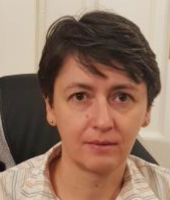
Sergiu Nisioi is an Associate Professor at the Faculty of Mathematics and Computer Science, University of Bucharest, with expertise in computational linguistics, machine translation, and text simplification. He bridges cognitive science with NLP through eye-tracking and EEG research, while also exploring sound art and digital autonomy via initiatives like HYPHA.ro. Current projects include PN-IV-P2-2.1-TE-2023-2007 (text complexity/readability), Legal Document Processing , and Europarl Dialectal Corpora Research spans computational psycholinguistics , LSTM-based translation models , and algorithmic composition for sound art His work integrates interdisciplinary methodologies, combining EEG signal processing for architecture data with the University of Architecture, and DSP for ecological projects at chlorophylla.live.
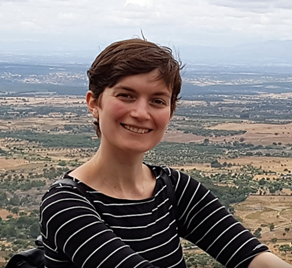
Ana-Sabina Uban is an Associate Professor at the Faculty of Mathematics and Computer Science, University of Bucharest . She earned her Ph.D. in Computer Science in 2020 under the supervision of Professor Liviu Dinu with a thesis on distributional and stylistic aspects of natural language. She teaches and coordinates courses in natural language processing, AI, and machine learning for both computer science and digital humanities students. Education: Ph.D. in Computer Science, University of Bucharest (2020) – Thesis: "Distributional aspects of natural language. Semantic and stylistic dimensions of text" Research Interests: Dr. Uban’s research is strongly interdisciplinary, bridging natural language processing , computational linguistics , psychology , and cognitive science . She explores historical computational linguistics , distributional semantics , and multilingualism , while also investigating explainability in AI models and mental health disorder detection using social media data. Research Trends & Publication Focus: Her recent publications span clinical NLP , mental health detection , historical linguistics , and multilingual cognate identification . A recurring theme is the application of advanced NLP techniques—such as transformer models, contrastive learning, and ensemble classification—to real-world problems in health, literature, and historical language study. Teaching & Student Supervision: Dr. Uban currently teaches and coordinates the following courses: Bio-medical NLP – Master’s level (English) Artificial Intelligence – Bachelor’s level for Mathematics students Practical Introduction to Machine Learning – Master’s level for Digital Humanities students Natural Language Processing 1 & 2 – Master’s labs and projects Contact: auban@fmi.unibuc.ro
Professor Marian-Gabriel Hâncean holds a faculty position at the University of Bucharest's Faculty of Sociology and Social Work. His research focuses on network science, particularly social networks analysis, organizational sociology, and the interplay between societal structures and health outcomes. He leads the GraphNets research team, which explores applications ranging from migration corridors to climate impact on disease spread (e.g., the COSMOS project). Research Interests: Social Network Analysis, Sociology of Organizations, Organizational Behavior, Public Health, Complex Systems Key Projects: COSMOS Project (climate & mobility's role in pandemic spread), migration corridor analysis, and global health policy studies His work bridges mathematical modeling with sociological theory, addressing contemporary challenges like pandemic dynamics and organizational efficiency. Recent collaborations include transnational social field sampling and multinational pandemic response strategies.
Dr. Timenko Artur Valentynovych serves as Senior Lecturer at Zaporizhia National Technical University's Department of Computer Systems and Networks within the Faculty of Computer Science and Technologies. Holding a specialist degree in Computer Systems and Networks (2010), he maintains active roles in both teaching and research. His educational background includes graduation from Zaporizhia National Technical University in 2010 with specialization in Computer Systems and Networks. Professional development is evidenced through continuous research output and curriculum development activities. Research focuses on Internet of Things , computer networks , and neural networks , with particular emphasis on protocol verification, device interoperability, and embedded system optimization. Recent work explores semantic chatbots for IoT management, air quality monitoring systems, and MQTT protocol compatibility analysis. His methodology integrates formal verification techniques with practical hardware implementation. Publication trends from 2020-2024 reveal consistent contributions to IoT infrastructure (45%), network protocols (30%), and AI applications (25%). Key journals include Shipbuilding & Marine Infrastructure and Scientific Notes of Vernadsky University. Research demonstrates strong industry relevance with applications in smart homes, environmental monitoring, and critical systems. Teaching responsibilities encompass Python programming basics, computer network design, IoT fundamentals, and wireless technologies. His laboratory guidelines for Embedded Computer Systems and IoT disciplines reflect practical, hands-on pedagogy. Current projects involve developing automated temperature control systems and network anomaly detection using hybrid neural networks. Professional activities include active participation in Ukrainian academic conferences and international collaborations through ZNTU's research infrastructure. His work contributes to the university's strategic focus on digital innovation and sustainable technology development.
Ioana Cristina PLAJER is a Lecturer at the Department of Mathematics and Computer Sciences, Faculty of Mathematics and Computer Sciences, Transilvania University of Brașov. Her work focuses on image processing, multispectral imaging, artificial intelligence, machine learning, formal languages, and compiler design. She has contributed to both theoretical and applied research, including advancements in spectral data analysis, medical imaging segmentation, and automata theory applications in diverse fields like dog breeding risk assessment and game design. Dr. PLAJER's research explores the intersection of computational methods and real-world challenges, particularly in remote sensing, medical diagnostics, and compiler optimization. Her publications span topics such as satellite data fusion, neural cellular automata for texture synthesis, and deep learning models for improving X-ray angiogram quality. She actively participates in international conferences, presenting work at venues like the IEEE Emerging Technologies and Factory Automation (ETFA) and the International Symposium on Signals, Circuits and Systems (ISSCS). Her technical contributions include developing algorithms for NDVI computation from hyperspectral imagery, creating datasets like DACIA5 for agricultural monitoring, and advancing techniques for tumor segmentation in CT scans. These efforts highlight her commitment to bridging algorithmic innovation with practical applications in healthcare and environmental science.
Alexandru TOPÎRCEANU is a Professor at Polytechnic University of Timisoara . His research spans multiple domains including Network Science , Complex Systems , and Computational Epidemiology . Key contributions include modeling opinion dynamics, social network analysis, and applications of network medicine in respiratory diseases. Academic Rank: Professor Email: alexandru.topirceanu@cs.upt.ro Main Research Areas: Machine learning, Complex networks, Agent-based modeling His work on temporal social networks and network medicine demonstrates interdisciplinary applications in political forecasting and biomedical research. Publications highlight collaborations with international researchers like Radu Marculescu, focusing on opinion poll prediction and drug interaction analysis. Scientific awards include the MERIT Diplomas 2022 . Notable projects: PollStream: Agent-based interaction models for opinion polls IMPRESS: Temporal social network opinion prediction INCEPTION: IoT-Complex Networks integration for COPD management
Diana Borza is a lecturer in computer science, active since 2014, with a focus on computer vision , facial feature analysis , and perception systems . Her research applies to soft biometrics , human behavior understanding , and visual surveillance . She teaches courses including Computer Networks , Computer Vision and Deep Learning , and Object-Oriented Programming . Projects: MULTIFACE (PN-II-RU-TE-2014-4-1746, 2015-2017) DEEPSENSE (PN-III-P1-1.1-TE-2016-0440, 2018-2020) Research interests span computer vision, deep learning, and their interdisciplinary applications. Her work explores: Facial feature analysis for biometric recognition Human behavior modeling through video surveillance Efficient model ensembling and knowledge distillation Multimodal sentiment analysis and online learning dynamics Recent publications emphasize temporal action detection, attention mechanisms, and adaptive networks. Key themes include: Dynamic facial/body tracking Pedestrian attribute recognition Micro-expression detection Periocular biometrics Energy-efficient AI Scientific contributions : Received Romanian Ministry of Education grants for MULTIFACE and DEEPSENSE projects Developed models for real-time micro-expression detection and hair segmentation Published extensively on soft biometrics and human behavior analysis
Lecturer Dr. Horea Adrian Grebla is affiliated with the Department of Computer Science at Babeș-Bolyai University, Faculty of Mathematics and Computer Science. He teaches courses including Cloud Applications Architecture , Advanced Database Chapters , and Data Collection and Modeling for master's programs in computer science. His instructional responsibilities include both lectures and labs, with grading components combining quizzes, projects, and exams. He utilizes platforms like PostgreSQL and Oracle for database-related coursework. Research interests include: Temporal data modeling and implementation Database schema design for cloud applications Advanced database operations (CRUD with history tracking) Historical data analysis and reporting Database transaction management Temporal attribute modeling in relational DBMS Courses emphasize practical implementations of temporal databases, with projects requiring: Design of entities with transaction/valid time attributes Scripting for data population and modification Complex temporal query operations Team-based project execution Contact: horea.grebla@ubbcluj.ro
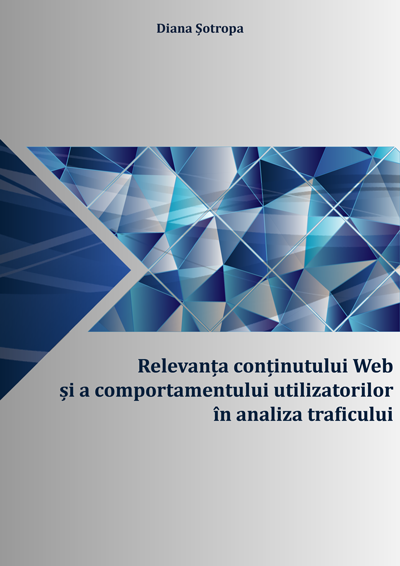
Dr. Diana - Florina Șotropa is a Lecturer at the Faculty of Mathematics and Computer Science , Babeș-Bolyai University. She teaches courses in Web Programming and coordinates bachelor's thesis projects, emphasizing rigorous research methodology and adherence to deadlines. Her email contact is diana.sotropa@ubbcluj.ro and diana.sotropa@cs.ubbcluj.ro. Her research focuses on applying Formal Concept Analysis (FCA) to diverse domains, including: Static code analysis for detecting programming errors Improving electronic health record systems User behavior analysis in educational platforms 3D visualization of life tracks via VR Recent work explores FCA integration with static analysis tools to identify code complexity in junior developers and enhance medical diagnostics. She collaborates extensively on tools like FCA Tools Bundle for knowledge discovery and visualization. Publications span prestigious venues such as the International Conference on Conceptual Structures , SYNASC , and ENASE , with a focus on bridging FCA theory with practical applications in software engineering and healthcare.
Andrei Terian is a full professor and Prorector at Lucian Blaga University of Sibiu, holding a position in the Department of Romanian Studies within the Faculty of Letters and Arts. His academic career combines administrative leadership with profound scholarly contributions focusing on Romanian literature, comparative studies, and digital humanities. His research spans critical theory, quantitative analysis of literary trends, and the intersection of culture with political systems. Education: While not explicitly detailed, his academic roles imply advanced degrees culminating in habilitation (doctor abilitat). Administrative Roles: Serves as Prorector overseeing institutional strategy and academic affairs. Research interests center on Romanian literary history, transnational literary connections, and the application of digital methods to humanities. His work critically examines national literary canons, the impact of German cultural models on Romania, and the evolution of gender studies in academia. Recent projects include analyzing Romanian LLM development and reinterpreting canonical authors via transnational frameworks. Publications demonstrate a focus on redefining Romania's place in global literary discourse through quantitative studies (e.g., genre evolution in 20th-century novels), historical analysis of communist-era literary systems, and theoretical engagements with tragedy and postmodernism. His work frequently bridges empirical data with critical theory, advocating for interdisciplinary and methodologically innovative approaches. Labs/Teams: Leads the Center for Linguistic, Literary, and Cultural Studies (Centrul de Studii Lingvistice, Literare și Culturale) at ULBS. Grants/Projects: Involved in EU-funded initiatives like the TRANSHIROL project exploring transnational literatures.
Lecturer Catalin V Rusu is a faculty member at the Transylvanian Institute of Neuroscience (TINS) , where he directs the Applied Computational Intelligence Laboratory . His research spans biologically inspired neural systems , spiking neural networks , and machine learning applications in structural diagnostics . Rusu teaches courses like Advanced Programming Methods and Object-Oriented Programming . Research Interests Modeling cortical microcircuits and self-organizing neural systems Spiking neural networks for autonomous robotics (ROBBY framework) Damage detection in beam structures using frequency shifts and ML Predictive modeling for student attention and academic progress Probabilistic planning and reinforcement learning Teaching Requirements Students must bring laptops with Java/Python environments (JDK 8+/Python3) and IDEs (IntelliJ/PyCharm) Git setup required for collaborative coding sessions Hands-on sessions with extended durations (100 minutes with breaks) Contact Transylvanian Institute of Neuroscience (TINS) Str. Ploiești 33, Cluj-Napoca, Romania Email: rusu@bet-you-can-guess-it.much-obvious-very-wow
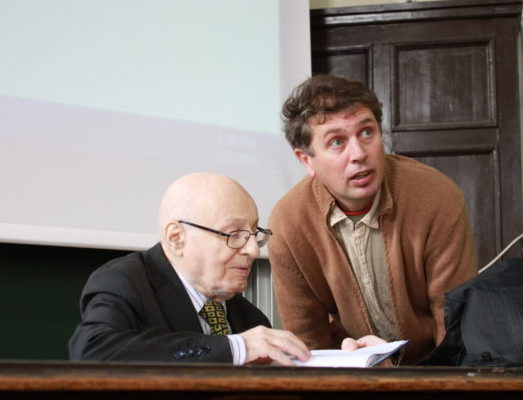
Liviu P. Dinu is a Professor at the Faculty of Mathematics and Computer Science, University of Bucharest, with a career spanning three decades. He holds a PhD (2003) and Dr. habil (2014) in Computer Science and has served as Director of the Human Language Technologies Research Center. His work bridges computational linguistics, natural language processing, and bioinformatics. PhD: 2003, University of Bucharest (supervisor: Solomon Marcus) Dr. habil: 2014, University of Bucharest Bachelor’s: 1994, University of Bucharest His research explores computational methods for historical linguistics, including cognate identification, semantic change analysis, and proto-word reconstruction. He also investigates applications of NLP in mental health (depression/gambling detection), financial text analysis, and DNA sequence similarity. Recent work focuses on multimodal transformers, few-shot learning, and AI-generated text detection. Article trends reveal interdisciplinary work in historical linguistics , mental health informatics , and bioinformatics . He employs rank distance , ensemble methods , and deep learning frameworks across applications from semantic divergence to emotion detection in Romanian tweets. Scientific awards include the Grigore C. Moisil Prize (2007, Romanian Academy) and In Hoc Signo Vinces Prize (2005, National Research Council) . He has supervised 7 completed PhDs and mentors ongoing students at the Interdisciplinary Doctoral School (ISDS) and Computer Science Doctoral School. Current projects involve multi-agent systems for authorship attribution , algorithms for graph structure identification , and linguistic tools for historical analysis . His lab collaborates internationally on DNA sequence analysis and cross-lingual semantic laws research.
Ionut Sandric is an Associate Professor and PhD holder at the Faculty of Geography of the University of Bucharest (UniBuc), Romania. He is affiliated with the Department of Regional Geography and Environment, specializing in Geographic Information Systems (GIS), Remote Sensing, and Spatial-Temporal Modelling. His work focuses on statistical methods, geostatistical analysis, and uncertainty propagation in environmental assessments. Teaches courses in environmental statistics, geostatistics, GIS programming, and remote sensing applications. Collaborates with institutions like the Academy of Economic Sciences (Bucharest) and West University of Timisoara, where he teaches GIS-related subjects. Engages in interdisciplinary research integrating spatial data analysis, programming (Python), and environmental planning. His research emphasizes practical applications of GIS and remote sensing in environmental impact assessment and spatial decision-making. He has contributed to curricula development for master’s programs in integrated environmental assessment and geospatial technologies.
Professor Mihai Daniel NIȚĂ is affiliated with the Department of Forest Engineering at the Faculty of Silviculture and Forest Engineering, University of Brașov (UNITBV). His research focuses on Geospatial Modelling, Remote Sensing, GIS applications, and Watershed Management. He has extensive expertise in analyzing historical forest cover changes using satellite imagery and assessing forest dynamics in mountainous regions. Research Interests: Remote sensing techniques for forest monitoring GIS applications in environmental management Historical analysis of forest management practices Watershed conservation strategies Climate-forest interaction dynamics Policy implications of forest connectivity Publications trends reflect a focus on long-term environmental changes using multi-temporal satellite data, post-war deforestation patterns, and policy-relevant spatial analysis. Recent work emphasizes the legacy effects of historical land use practices on modern ecosystems. No scientific awards or grants were explicitly listed in the provided text. His advising record appears incomplete in the current dataset. His work is centered at the Department of Forest Engineering with potential involvement in interdisciplinary research teams focused on environmental and geospatial sciences.
Professor Mihai IVANOVICI is affiliated with the University of Transilvania in Brasov, Romania, serving in the Department of Electronic and Computers within the Faculty of Electrical Engineering and Computer Science . His research focuses on image processing, remote sensing, fractal analysis, and texture characterization , with applications in agriculture, biomedical engineering, and space technology. He leads projects integrating artificial intelligence into FPGA-based systems for cosmic radiation sensing and agricultural monitoring. Notable contributions include the DACIA5 dataset for crop identification and studies on vegetation indices using hyperspectral data. His work bridges theoretical analysis with practical implementations in domains like precision agriculture and satellite technology. Research Highlights: Developed fractal analysis models for soil roughness estimation and image segmentation Designed hardware accelerators for AI applications in gaming and space systems Explored EEG-based brain signal complexity linked to visual stimuli Awards: No awards explicitly listed in the provided texts. Grants & Collaboration: Active in EU-funded educational initiatives like InnEO’Space PhD for training young Earth Observation researchers. Collaborates with institutions on projects like the ATLAS New Small Wheel read-out controller ASIC. Contact: Located at Str. Institutului 10 (Corp L3) and Str. Politehnicii 1 (Corp N) in Brașov.