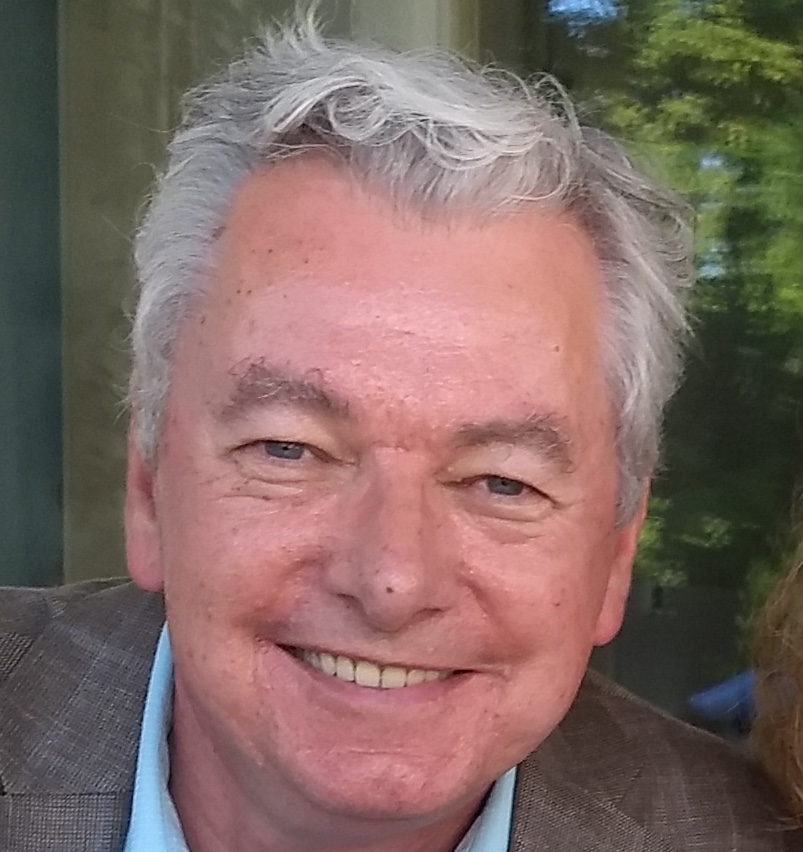
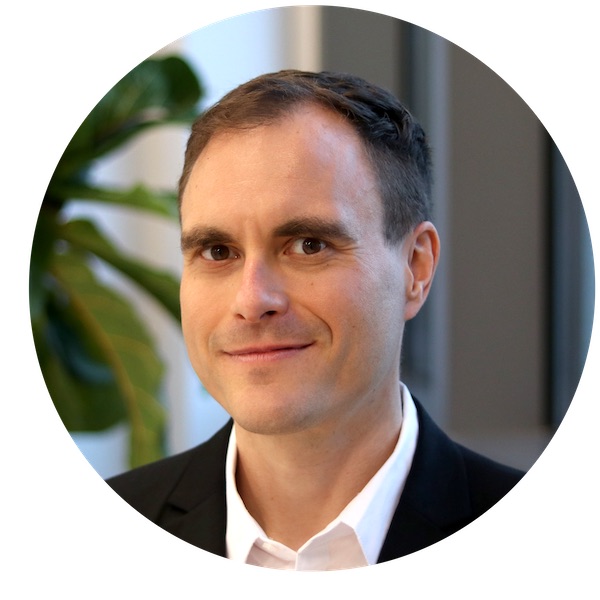
Padhraic Smyth is a Distinguished Professor and Hasso Plattner Endowed Chair in Artificial Intelligence at the University of California, Irvine (UCI), holding joint appointments in the Department of Computer Science and Department of Statistics. He leads the DataLab research group, focusing on machine learning, AI, and their applications in climate science, healthcare, and education. His research spans probabilistic modeling, deep learning, and human-AI collaboration. Education: PhD in Electrical Engineering from the California Institute of Technology (1988), MSEE (1985), and BEng (1984). Prior to UCI, he worked at NASA's Jet Propulsion Laboratory (1988–1996). Research Interests: Machine learning, AI, pattern recognition, Bayesian methods, climate science applications, algorithmic fairness, and human-AI interaction. He has published over 200 papers and co-authored textbooks like Modeling the Internet and the Web . Awards: ACM Fellow, IEEE Fellow, AAAI Fellow, AAAS Fellow, and ACM SIGKDD Innovation Award recipient. He has held leadership roles in UCI's Center for Machine Learning and Data Science. Key Projects: Human-AI collaboration frameworks, robustness in deep learning, climate modeling using spatio-temporal data, and AI fairness with missing attributes. Collaborates with institutions like NASA and industry partners (e.g., Google, eBay). Labs/Teams: Director of UCI’s Data Science Initiative and HPI Research Center in Machine Learning. Supervises a vibrant PhD program with over 30 alumni in academia and industry.
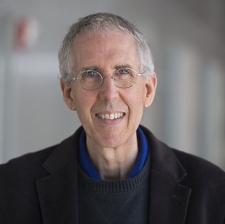
Alfred O. Hero, III is the John H. Holland Distinguished University Professor of Electrical Engineering and Computer Science and the R. Jamison and Betty Williams Professor of Engineering at the University of Michigan, Ann Arbor. He is currently on leave from the University of Michigan as a Program Director in the CISE Directorate at the National Science Foundation. His primary appointment is in the Department of Electrical Engineering and Computer Science (EECS), with secondary appointments in the Department of Biomedical Engineering and the Department of Statistics. He is also affiliated with the UM Center for Computational Medicine and Bioinformatics (CCMB), the UM Graduate Program in Applied and Interdisciplinary Mathematics (AIM), the UM Applied Physics Program, and the Michigan Institute for Data Science (MIDAS), which he co-founded from 2015-2018. Hero's research focuses on data science, developing theory and algorithms for multimodality data collection, fusion, analysis and visualization that use statistical machine learning and distributed optimization. His work has applications in wearable technologies for personalized health and predictive medicine, spatio-temporal networks in biology, climate, and social discourse, anomaly detection, and data analysis for international security. His recent research interests include high dimensional spatio-temporal data analysis, multimodal data integration, statistical signal processing, and machine learning, with particular emphasis on predictive mathematical models for biological and physical sciences, social networks, network security and forensics, and personalized health and disease. His recent publications demonstrate a strong focus on high-dimensional statistical methods, contrastive learning, neural network optimization, change detection in temporal graphs, and applications in microbiome analysis and epidemic modeling. The research spans theoretical foundations in information theory and statistical learning while addressing practical applications across multiple domains. Scientific Awards: IEEE Signal Processing Society Best Paper Award (1998) Best Original Paper Award from Journal of Flow Cytometry (2008) Best Magazine Paper Award from IEEE Signal Processing Society (2010) SPIE Best Student Paper Award (2011) IEEE ICASSP Best Student Paper Award (2011) IEEE Signal Processing Society Technical Achievement Award (2014) IEEE Signal Processing Society Society Award (2015) IEEE Fourier Award (2020) University of Michigan Distinguished Faculty Achievement Award (2011) Hero has advised over 60 PhD students and 30 postdocs in areas including modeling, computation, and inference for large scale time varying data in the biosciences. He has received significant research funding from the Department of Energy, Army Research Office, Air Force Office of Scientific Research, and National Science Foundation. He has held leadership positions including President of the IEEE Signal Processing Society (2006-2007), Director of Division IX (Signals and Applications) on the IEEE Board of Directors (2009-2011), and Chair of the Committee on Applied and Theoretical Statistics of the US National Academies (2018-2020).
University of California , Santa Barbara (UCSB)United States
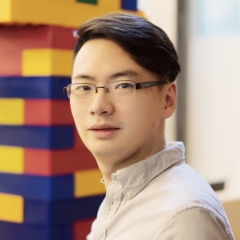
Shiyu Chang is an Associate Professor in the Department of Computer Science at the University of California, Santa Barbara , focusing on machine learning with applications in natural language processing and computer vision . He previously worked as a research scientist at the MIT-IBM Watson AI Lab alongside Prof. Regina Barzilay and Prof. Tommi Jaakkola, and earned both his B.S. and Ph.D. in Computer Science from the University of Illinois at Urbana-Champaign , advised by Prof. Thomas S. Huang. Education : PhD, University of Illinois at Urbana-Champaign BS, University of Illinois at Urbana-Champaign His research centers on enhancing AI systems through human-AI interaction , aiming to improve interpretability , transferability , and adversarial robustness in LLMs. Recent work includes LLM watermarking defense , uncertainty decomposition , and self-denoised smoothing for model robustness. His publications span premier venues like ICML , NeurIPS , CVPR , and ACL , with recurring themes in diffusion models , LLM optimization , and ethical AI (e.g., hallucination detection, unlearning frameworks). He actively mentors students, several of whom are marked as advisees (☆) in his publications.
Prof. Catherine O'Sullivan is a Professor of Particulate Soil Mechanics at Imperial College London's Department of Civil and Environmental Engineering, part of the Faculty of Engineering. She leads the Geotechnics Section and serves as Editor-in-Chief of the ASCE Journal of Geotechnical and Geoenvironmental Engineering. Her research focuses on particulate soil mechanics, employing Discrete Element Modelling (DEM) and micro-CT imaging to study sand behavior, reservoir sandstones, and internal erosion. Notable recognitions include the 2016 Shamsher Prakash Research Award and the 2021 President’s Teaching Innovation Award. Education : PhD in Civil Engineering, University of California, Berkeley (2002) MEngSc in Civil Engineering, University College Cork (Ireland) BEng (Civil Engineering), University College Cork (Ireland) Research Interests : Prof. O'Sullivan's work integrates computational and experimental methods to explore granular material behavior. Key areas include DEM validation, μCT analysis, and pore network modeling. Her group collaborates across disciplines, involving physicists and mechanical engineers alongside civil engineers. Awards & Recognition : 2015 Geotechnique Lecture Student Choice Supervision Award (nominated twice) 2023 Alert Geomechanics Special Lecture Advising & Grants : She supports PhD and postdoctoral researchers through Imperial scholarships and fellowships. Her students often explore particulate soil behavior, with many securing prestigious awards. Labs & Teams : Leads the Geotechnics Section at Imperial, fostering interdisciplinary research in geomechanics and computational modeling.
Sidi Wu is a Researcher affiliated with ETH Zürich's Institute of Cartography and Geoinformatics. Their primary role is as Staff of the Professorship for Cartography, contributing to academic research and technical operations within the department. They are based at HIL G 23.2, Stefano-Franscini-Platz 5 in Zürich, Switzerland, and can be reached at sidiwu@ethz.ch. Research interests center on advancing AI-driven cartographic methods, historical map analysis, and environmental spatial dynamics. Specific focuses include generative AI applications in map-making, semantic segmentation of historical documents, and leveraging digitized maps for ecosystem studies. They also explore steganography in image translation and cross-domain adaptation techniques for geospatial data. Recent work emphasizes innovations in automated map storytelling systems, spatio-temporal context modeling using transformers, and weakly supervised learning approaches for map segmentation. Their studies frequently bridge cartography with environmental science disciplines like hydrology and urban morphology. No scientific awards or grants are explicitly listed in the provided information. While no advisees are documented here, their research collaborations likely involve student contributions. They are part of the core team at the Institute of Cartography and Geoinformatics, contributing to cutting-edge projects in geomatics and computational cartography.
Qimin Liu is an Assistant Professor at Boston University, serving as Lab Director of the Quantitative Psychopathology Laboratory. He holds a PhD in Psychological Sciences from Vanderbilt University with specializations in Clinical Science and Quantitative Methods. His research focuses on emotional disturbances across development, statistical methodology development, and health equity with an emphasis on intersectional marginalization. He has expertise in analyzing intensive longitudinal data and has published extensively on topics like irritability, suicidality, and mental health disparities among sexual and gender minority populations. Dr. Liu’s work frequently integrates advanced statistical techniques such as latent variable modeling, network analysis, and machine learning. His recent studies explore the temporal dynamics of affect, the impact of stigma on mental health, and the role of childhood adversity in psychiatric outcomes. Notable contributions include developing methods for analyzing zero-inflated longitudinal data and creating algorithms for digital phenotyping of mood disorders through mobile device usage patterns. His scholarship emphasizes bridging clinical phenomena with rigorous quantitative approaches, addressing gaps in understanding how social determinants and individual differences shape mental health trajectories. He has collaborated on large-scale datasets like the Collaborative Psychiatric Epidemiological Surveys and contributed to interdisciplinary research on public health outcomes among aging sexual minority men. Dr. Liu’s methodological innovations include the DACF framework for ceiling/floor effect data and the lamme package for log-analytic multiplicative effects modeling. He actively publishes in high-impact journals such as Psychological Methods and Journal of Abnormal Psychology , focusing on both empirical findings and statistical best practices.
Shang-Tse Chen is an Associate Professor at the Department of Computer Science and Information Engineering and Graduate Institute of Networking and Multimedia , National Taiwan University . He leads the NTU AI Security Lab , focusing on applied and theoretical machine learning with emphasis on cybersecurity, adversarial ML, and ML privacy/fairness. Education: PhD in Computer Science (Georgia Tech, 2019), BSc in CSIE (NTU, 2010) Awards: K. T. Li Young Researcher Award (2025), IBM PhD Fellowship (2018), KDD Best Student Paper Runner-Up (2016), NSF SaTC Grant (2017-2021) His research spans adversarial ML, certified defenses, model inversion attacks, and intersection with differential privacy/fairness. Recent work includes physical adversarial attacks on object detectors and practical defenses using JPEG compression. He teaches courses like Security and Privacy of Machine Learning and Introduction to Medical Informatics . Key publication trends show focus on adversarial robustness (ICML/NeurIPS/ICLR), cybersecurity applications (ACSAC), and ML fairness (ACL/EMNLP). Collaborations include industry partnerships with Intel Labs and Symantec. Scientific Awards: K. T. Li Young Researcher Award (2025) ACM TiiS Best Paper Honorable Mention (2020) IBM PhD Fellowship (2018) KDD Audience Appreciation Award Runner-Up (2018) Symantec Fellowship Runner-Up (2016) KDD Best Student Paper Runner-Up (2016) NSF Grant (2017) He advises 13 current students (PhD/MS/Undergrad) and has mentored alumni now at CMU/UC Berkeley. The lab actively recruits postdocs and students across levels.
Oswald Lanz is a tenured full professor at the Faculty of Engineering of the Free University of Bozen-Bolzano , leading the Visual Computing Lab . He holds a Ph.D. in Computer Science and a Mathematics degree from the University of Trento. Prior to his current role, he was a researcher and head of research at FBK Trento. He is an endowed professor collaborating with Covision Lab , an AI hub in Bressanone, and coordinates the board of professors for the PhD in Computer Science program since 2025. His research focuses on Computer Vision, Deep Learning, and Video Analytics , with applications in sports technology, medical imaging, and industrial automation. Key achievements include the Amazon AWS Machine Learning Research Award (2020) , ACM Multimedia Best Paper (2015) , and Best Student Paper at ICIAP (2007) . He co-organized the ELLIS-VISMAC Winter School (2025) and chaired ICIAP 2019 . His work spans novel view synthesis, action recognition, and anomaly detection, supported by patents in video tracking and detection. He teaches courses like Deep Learning and Artificial Intelligence in undergraduate and graduate programs. Recent projects such as 5VREAL integrate 5G, edge computing, and AI for sports analysis. His collaborations bridge academia and industry, exemplified by his role in Covision Lab and multidisciplinary initiatives like DSS4LCO for food supply chains. Lanz’s publications emphasize spatiotemporal modeling, neural architecture search, and hybrid machine vision systems.
Yasushi Sakurai is a Professor in the Department of Translational Datability at Osaka University's Institute of Scientific and Industrial Research, co-leading the Sakurai and Matsubara Laboratory within the Center for Industrial Science and AI. His research mission focuses on transforming society through real-time prediction of natural and social phenomena using large-scale data analytics, with emphasis on practical technological implementation. His research spans time-series big data analysis, dynamic learning systems, and real-time information provision. Key areas include tensor stream mining, EEG-based healthcare applications, cybersecurity anomaly detection, and multi-omics cancer subtyping. The lab specializes in developing deployable technologies that optimize social activities through predictive modeling of evolving data streams. Recent publications (2023-2025) reveal concentrated innovation in time-series data stream processing, with dominant themes in tensor analytics, frequency-domain forecasting, and causal modeling. His team produces high-impact work accepted at premier AI venues (ICLR, AAAI, KDD, WWW), consistently featuring oral presentations that highlight technical novelty and societal relevance. Scientific Awards: FY2024 Minister of Education, Culture, Sports, Science and Technology Award for Science and Technology (Research Category) for dynamic learning and real-time data stream analysis Professor Sakurai mentors graduate students including Naoki Chihara (DEIM2024 Outstanding Paper Award winner), Yuka Tamura (DEIM2024 Student Presentation Award winner), and Ren Fujiwara. His lab maintains active industry-academia partnerships focused on practical technology deployment, with research directly addressing real-world challenges in healthcare monitoring and cybersecurity. The Sakurai and Matsubara Laboratory operates as a dynamic research unit within Osaka University's Center for Industrial Science and AI, structured around specialized teams for tensor stream analysis, medical data mining, and network dynamics. Current projects emphasize real-time prediction systems with immediate societal applications, supported by strong industry collaboration frameworks.
Scott T. Acton is the Lawrence R. Quarles Professor and Chair of Electrical and Computer Engineering at the University of Virginia, with a courtesy appointment in Biomedical Engineering. He leads the VIVA lab, specializing in biological image analysis, machine learning, and AI for education. His research spans medical imaging, signal processing, and computer vision. Professor Acton holds a B.S. (Virginia Tech, 1988), M.S. (UT Austin, 1990), and Ph.D. (UT Austin, 1993) in Electrical Engineering. He has authored over 325 publications and served as Editor-in-Chief of IEEE Transactions on Image Processing and General Co-Chair of the IEEE International Symposium on Biomedical Imaging. His research interests include bioimage analysis, machine learning applications, and medical imaging technologies. The VIVA lab focuses on problems like cell tracking in bacterial biofilms, gait recognition using LiDAR, and AI-driven classroom activity analysis. Awards: IEEE Fellow (2013), All-University Teaching Award (2009), Outstanding Young Electrical Engineer (1996). Courses Taught: How the iPhone Works, Digital Image Processing, Signals and Systems. Labs/Teams: VIVA - Virginia Image and Video Analysis lab. Recent work emphasizes AI for education (e.g., automated classroom activity classification) and medical imaging advancements like 3D biofilm segmentation and LiDAR-based human identification. His contributions bridge engineering and healthcare, with applications in neuroscience and clinical decision support.
Jeff Schneider is a Research Professor at the Robotics Institute within the School of Computer Science at Carnegie Mellon University. His research focuses on active learning, data mining, reinforcement learning, optimization, and intelligent control , applied to industrial and commercial challenges. Current PhD Students : Anoushka Alavilli, Benjamin Freed, Tejus Gupta, Albert Xu, Brian Yang Current Masters Students : Wen-Tse Chen, Xintong Duan, Aman Mehra, Vedant Mundheda, Zhouchonghao Wu Past PhD Students : J. Andrew Bagnell, Viraj Mehta, Matthew Tesch Past Masters Students : Ravi Tej Akella, Swapnil Pande, Siddharth Venkatraman Schneider's research bridges machine learning and autonomous systems , particularly in reinforcement learning , multi-robot coordination , and self-driving car technology . His work emphasizes practical applications of learning algorithms in real-world scenarios. His recent publications highlight advancements in offline reinforcement learning , multi-agent policy coordination , and behavior planning for autonomous vehicles . These studies often integrate deep learning and probabilistic modeling to address complex control and decision-making problems. Labs: Auton Lab CMU Center for Autonomous Vehicle Research Consulting & Industry Impact: Schneider has consulted for organizations like Uber ATG, Psychogenics, and Schenley Park Research, applying machine learning to domains such as self-driving cars , nuclear fusion , marketing , and drug discovery .
Gordon Geoffrey J. is a Professor at Carnegie Mellon University, specializing in Machine Learning , Artificial Intelligence , and Computer Science . His research spans Reinforcement Learning , Domain Adaptation , Graph-based Planning , and Relational Learning , with significant contributions to Adversarial Learning , Deep Learning Dynamics , and Mobile Sensor Networks . He has pioneered algorithms like ARA* and Anytime Dynamic A* for efficient planning under constraints. Key research areas: Transfer Learning , Bayesian Knowledge Tracing , Multi-agent Systems , Database Optimization His work has been cited thousands of times across foundational topics in AI and robotics, demonstrating sustained impact in algorithm design and applications to complex systems.
Associate Professor Jiwon Kim is a leading researcher in Transport Engineering at the University of Queensland's School of Civil Engineering. She serves as Director of Higher Degree by Research and was a DECRA Fellow from 2019-2022. Holding degrees from Korea University and Northwestern University, she specializes in AI/ML applications for transportation systems. PhD, Northwestern University BS & MS, Korea University Her research focuses on Artificial Intelligence and Machine Learning applications in transportation, including: Deep learning for traffic management Reinforcement learning in mixed traffic environments Multi-agent systems for urban mobility optimization Spatiotemporal trajectory analysis Recent publications demonstrate expertise in: Eco-driving strategies Traffic incident prediction Queue length estimation Crash risk modeling Scientific recognition includes: ARC DECRA Fellowship (2019-2022) She supervises doctoral students in: Transportation data analytics Autonomous vehicle systems Intelligent traffic management Current projects explore real-time traffic monitoring, synthetic mobility data generation, and connected vehicle technologies.
Professor Ian Davidson is a faculty member in the Department of Computer Science at the University of California Davis, College of Engineering. His research focuses on machine learning, data mining, and constraint programming, with applications in neuroscience, healthcare, and social networks. He emphasizes rigorous algorithm design and human-in-the-loop learning paradigms. Editorial Board Member: ACM TKDD, IEEE TKDE, Springer DMKD Conference Leadership: PC Chair (SDM 2012), Vice/Area Chair (IEEE ICDM, ACM KDD, SIAM DM, ECML/PKDD 2013-2015) Research Interests: Human-in-the-loop learning (active, transfer, and transductive frameworks) Constraint programming and spectral methods for clustering and classification Applications in neuroimaging analysis, intelligent tutoring systems, and social impact domains Fairness in machine learning and clustering algorithms Tensor decomposition and matrix factorization techniques Interdisciplinary collaborations in neuroscience and healthcare Recent publications highlight his work on fairness-aware clustering with constraint programming, advanced spectral methods for brain connectivity analysis, and explainable AI frameworks. His research often combines theoretical rigor with practical applications in clinical domains. Scientific Awards: Best Paper Award, SIAM Data Mining Conference 2005 Best Paper Award, ECML/PKDD 2006 Best Paper Award, ICDM 2006 Students & Collaborators: Former students: Xiang Wang (IBM Watson), Buyue Qian (Xi'an Jiaotong University), Tom Kuo (Google), Sean Gilpin (Google) Current advisees: Aubrey Guess, Zilong Bai, Erin McGinnis, Zheng Fang, Hongjing Zhang
David J. Crandall is the Luddy Professor of Computer Science at Indiana University's Luddy School of Informatics, Computing, and Engineering. He serves as Director of the Luddy Artificial Intelligence Center and leads the IU Computer Vision Lab. With joint appointments in Informatics, Cognitive Science, Data Science, and Statistics, his work spans computer vision, machine learning, and AI. He holds a Ph.D. from Cornell University and previously worked at Eastman Kodak Research Labs. His research focuses on developing statistical and machine learning methods to analyze visual information, including object recognition, human activity analysis in video, 3D reconstruction, social media mining, and computational studies of visual attention. Key applications include egocentric vision systems, social robotics for healthcare, and cross-disciplinary collaborations with developmental psychology. Recent publications demonstrate strong emphasis on egocentric video analysis (Ego4D), human-robot interaction (CHI/HRI), and explainable AI (IJCAI). Medical imaging, nanoscale security systems, and computational social science represent emerging interdisciplinary directions. His work consistently integrates deep learning with real-world applications in health, environmental monitoring, and cultural analytics. Tracy M. Sonneborn Award (2024) Distinguished Member of the ACM (2023) Luddy Professorship (2021) NSF CAREER Grant (2013) Trustees Teaching Award (2017) He has advised over 20 Ph.D. graduates, with current students working on computer vision, robotics, and AI ethics. Major grants include $20M for the NSF AI Institute on Engaged Learning, $4.4M for trusted AI research, and funding from NIH, Google, ONR, and NASA. He directs the Computer Vision Lab and collaborates with Selma Sabanović's robotics group on social agents for older adults.